REVIEW · ATHENS
Athens: History of Rebellion Walking Tour
Book on GetYourGuide →Operated by Culture Hunters · Bookable on GetYourGuide
History in Athens has a habit of repeating itself. This 2.5-hour walk links Ottoman rule to modern social justice so the city makes more sense than a stack of guidebooks. I especially liked how the tour connects major landmarks to what people were fighting for, and how Exarchia shows up as more than a “cool neighborhood.” One thing to consider: it’s a lot of standing and walking, so bring comfortable shoes and plan for a slow, steady pace.
The biggest win for me was the way the guide (often Maelle) turns politics into a human story you can track stop by stop. You get clear context on recent Greek history and you can ask questions along the way, not just listen and move on. If you’re hoping for a purely ancient-only Athens day, this one may feel like a sharp left turn.
In This Review
- Key highlights you’ll feel in real life
- Why This Athens Walk Starts in Monastiraki and Talks Back to History
- Monastiraki Square: Finding the Thread That Runs Through Athens
- Ottoman-Era Athens to Syntagma Square: Protest as a City Center Habit
- From Kolonaki to the Academy of Athens: Respectable Streets, Uncomfortable Context
- Exarchia and Exarchion Square: The Neighborhood Where Resistance Has a Home
- The Guide Makes It Click: Clear, Interactive, and Human
- Price and Value for $44.04: Why 2.5 Hours Is Enough
- Who Should Book This Tour (and Who Might Prefer Another One)
- Practical Tips: Wear for Walking, Bring for the Sun
- Should You Book the Athens History of Rebellion Walking Tour?
- FAQ
- Where does the Athens History of Rebellion Walking Tour start?
- Where does the tour end?
- How long is the walking tour?
- What languages are available for the guide?
- What is included with the ticket?
- Is the tour suitable for people with mobility impairments?
- How much does it cost per person?
- What should I bring for the walk?
- Is there free cancellation?
Key highlights you’ll feel in real life
- Ottoman-era resistance to today’s protest culture, connected through the streets you already want to see
- Syntagma Square and the Hellenic Parliament area, explained as more than a photo stop
- Exarchia explained on-the-ground, with attention to refugees, LGBTQ+ community, artists, and activism
- A guide-led style with discussion, where questions are welcome and stories come with meaning
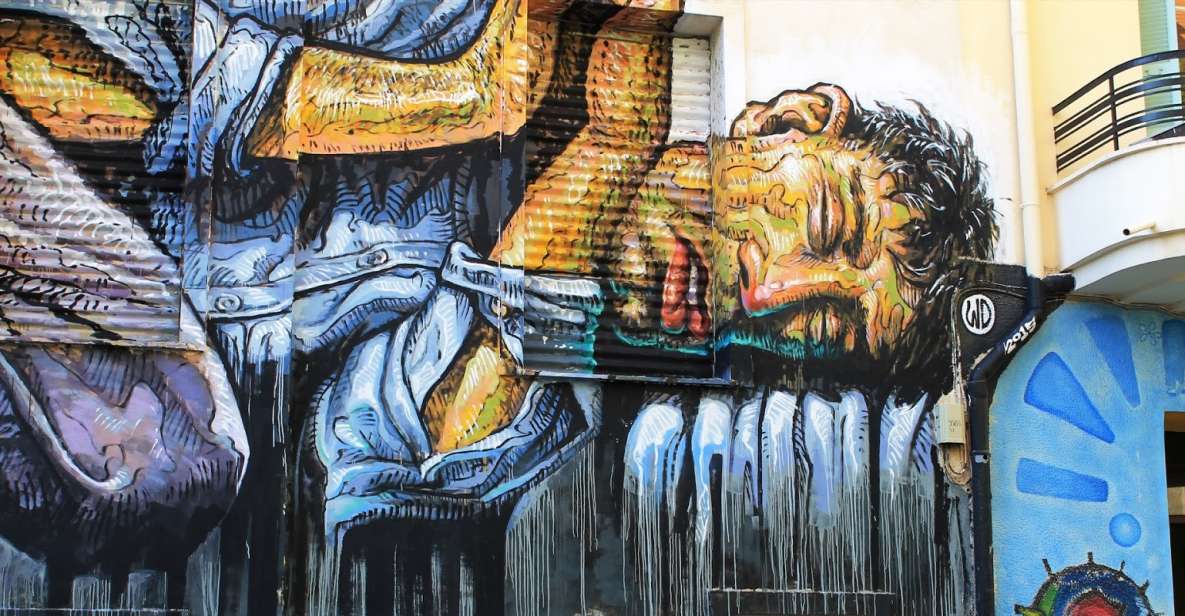
- Street-level details, including how street art can point to resistance (like graffiti by WD)
- Practical Athens recommendations after the walk, not just dates and facts
Why This Athens Walk Starts in Monastiraki and Talks Back to History
Athens can feel like two different cities at once: the postcard classics, and the lived-in places where people argue, organize, and demand change. This tour stitches those halves together. Instead of treating history as something finished, it shows rebellion as a thread that keeps running through the city.
You’ll begin in Monastiraki, then move toward Syntagma Square, the center of modern protest energy. After that, the route shifts into Exarchia, a neighborhood known for activism and for welcoming groups often pushed to the margins. The point is not to turn you into a political expert. It’s to help you read Athens with better instincts: who had power, who didn’t, and how people respond when systems feel unfair.
If you like your travel with stories that make you look twice at a street sign, a memorial, or a building façade, this works. If you want a quiet, straightforward “see the sights” loop, you might find the tone too opinionated and personal.
You can also read our reviews of more walking tours in Athens


Monastiraki Square: Finding the Thread That Runs Through Athens
Your tour meets in Monastiraki Square, in front of Pantanassa Church. Your guide will be holding a sign that says Athens City of Rebellion, and the walk starts right where locals and visitors both filter through.
Monastiraki is already an orientation point for many first-timers. The advantage here is that the guide uses it as a launchpad: you’re not just getting a lesson on the past, you’re being taught how to notice the city’s layers. You’ll take a few minutes simply in this area, then you’ll move onward toward the next stops as the story shifts from Ottoman-era Athens to the Greek Revolution and beyond.
This early part matters because it sets the tour’s rhythm. You’ll hear how resistance formed before modern borders did, and you’ll understand why today’s protest culture doesn’t feel random to Athenians. It also helps you connect sites you might otherwise walk past without a second look.
What to expect in this stretch:
- a short guided setup in Monastiraki,
- a quick pass by the Metropolitan Church of Athens,
- and then a first stop that slows you down just enough to read the city like a text.
Ottoman-Era Athens to Syntagma Square: Protest as a City Center Habit
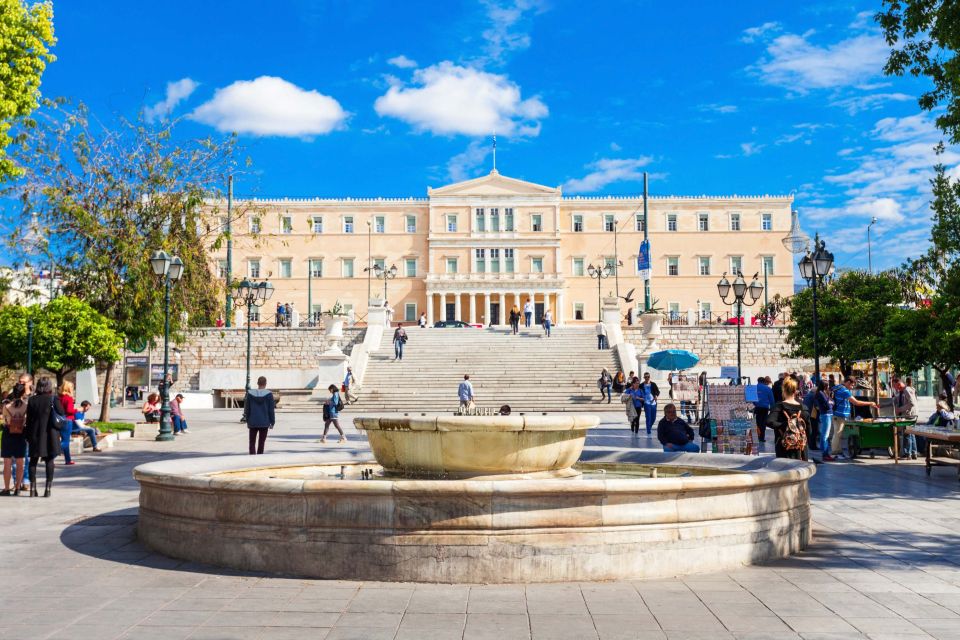
As you head toward Syntagma, the tour leans into one of Athens’ most important contrasts: formal government space versus public pressure. Syntagma Square isn’t only a busy meeting point or a landmark for photos. Here, it’s framed as a symbol of how people gather, demand, and make their voices visible.
You’ll spend time around Syntagma Square itself, then move toward the Hellenic Parliament area. Even when you’re just passing through or pausing briefly, the guide ties the setting to the actions and ideals of people who fought for freedom in the face of fascism, violence, and oppression. That’s a heavy statement, but it’s also why the locations matter. In Athens, the buildings aren’t neutral backdrops—they’re part of the political story.
Then you’ll stop at the Tomb of the Unknown Soldier. This is one of those places where travelers often rush for a quick glance. On this tour, it gets more meaning: it helps you connect national memory with the ideas of sacrifice and defense that show up repeatedly in modern protest narratives.
A key practical tip: this section is where you’re most likely to look around and think, Okay, I get what you mean. Slow down. Let the guide’s framing sink in before you move on to the next street.
From Kolonaki to the Academy of Athens: Respectable Streets, Uncomfortable Context

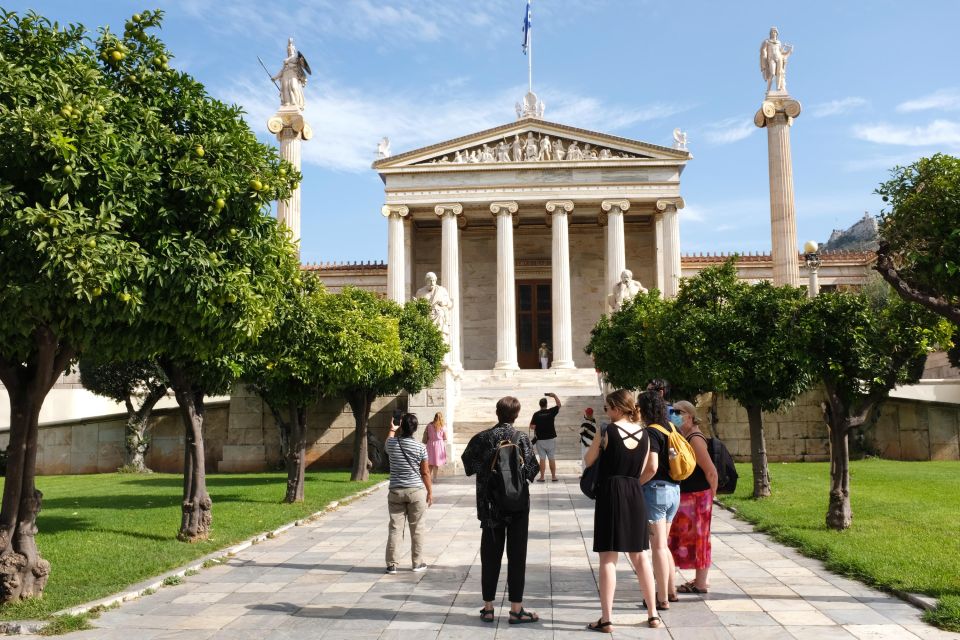
After the center-of-power stops, the route carries you through the general direction of Kolonaki, then toward the Academy of Athens. Kolonaki can read as polished and controlled compared to places like Exarchia. That contrast is exactly why this part of the walk works.
You’re walking through a city that contains soft power and hard power side by side. A fancy neighborhood doesn’t erase social conflict. It can even mask it. The guide uses these shifts to show how Athens’ struggles don’t stay in one district, and how ideas spread through the whole city—not only the areas tourists already know.
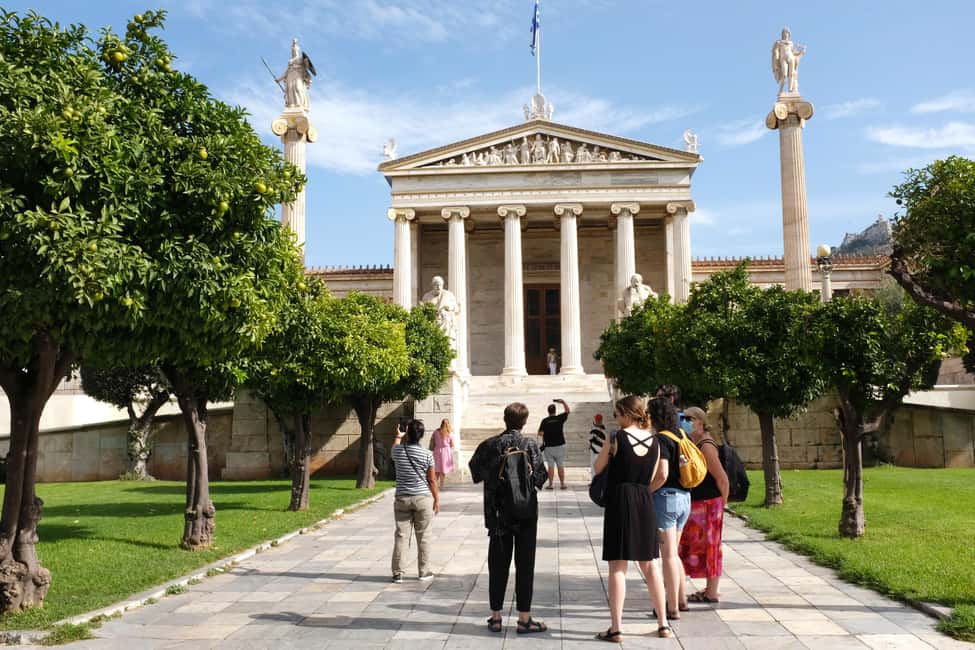
At the Academy of Athens, you’ll get a guided stop that’s short but pointed. The focus is on how Greece’s modern state and its public institutions connect to conflict and disagreement. You don’t need a background in modern Greek politics to follow along, because the guide keeps returning to plain themes: power, rights, and who gets to write the rules.
This section also helps if you’re pairing your rebellion walk with other Athens days. It gives you language for conversations you’ll have while visiting other sites: how national identity forms, and how people respond when ideals don’t match reality.
Exarchia and Exarchion Square: The Neighborhood Where Resistance Has a Home
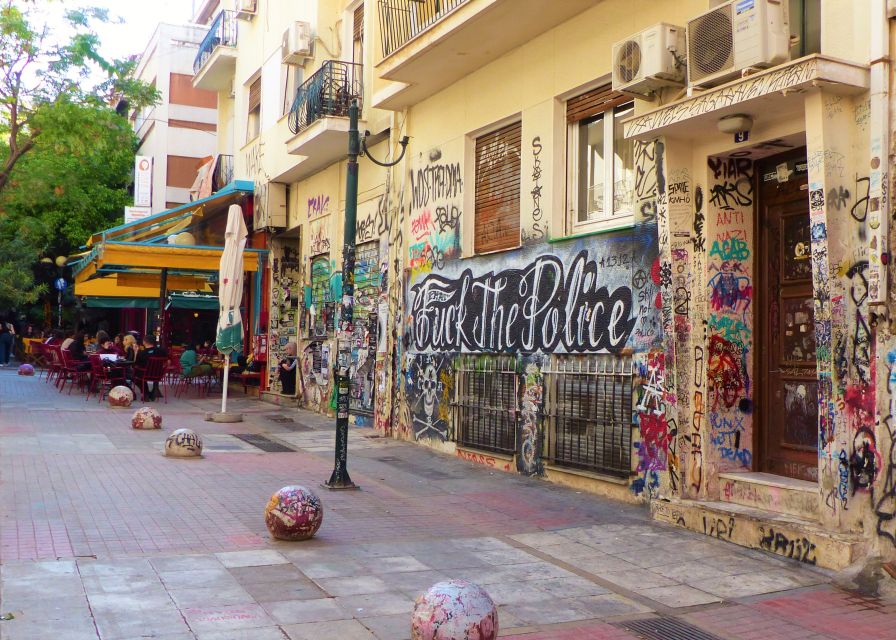
Then comes the part most people remember most: Exarchia. The tour spends time here with a guided look at why this neighborhood became a hotbed of resistance and activism—and why it still draws people who don’t fit the mainstream.
In Exarchia, you’ll get a guided stop that points out how the community has welcomed anarchists, refugees, the LGBTQ+ community, and artists. That combination matters because it explains Exarchia as more than a stereotype. It’s described as a real social space where different groups share space and tension at the same time.
You’ll also hear about the neighborhood’s struggles connected to police repression and gentrification—issues that many cities wrestle with, but Athens ties to very specific local history. One helpful detail the guide highlights is street art. In particular, you may get a mention of graffiti connected to street artist WD, used as a kind of visual shorthand for political messaging you might miss if you’re only scanning for architecture.
The walk also includes extra stops within this area—small, short guided moments and one “secret” stop—that help you slow down and read the neighborhood’s signals: walls, corners, and the feel of the streets. The tour finishes at Plateia Exarcheion, and by then Exarchia stops feeling like a detour. It becomes the point.
You can also read our reviews of more historical tours in Athens






The Guide Makes It Click: Clear, Interactive, and Human
This tour is powered by storytelling, but not in a fluffy way. The best feedback comes from one theme: the guide makes modern Greek history feel ordered and understandable, and the group can ask questions along the way.
The guide (often Maelle) uses a style that mixes clarity with empathy. You’ll hear explanations of political movements over roughly the past 200 years, starting with resistance under Ottoman rule and extending to contemporary social conflicts. What lands is the way the guide connects those events to daily life—how people talk, what people fear, and why certain neighborhoods become magnets for activism.
You’ll also pick up practical, on-the-ground tips. Several people mention that the guide shares recommendations for where to eat and what to see next, including places that feel less obvious than the usual Athens checklist. That matters because a good tour shouldn’t end when you stop walking—it should help you keep exploring with better choices.
And yes, there’s emotion in the route. Just don’t expect a lecture. You’ll be invited to think, talk, and notice. If you’re open to that tone, the tour feels personal instead of academic.
Price and Value for $44.04: Why 2.5 Hours Is Enough
The price is $44.04 per person for about 2.5 hours. On its face, that’s not cheap compared to a generic city walk. But this one includes something more rare: guided interpretation of modern political history in real city spaces.
Here’s what you’re buying with your ticket:
- A route that doesn’t stay stuck in ancient monuments
- Access to a guide who can connect Ottoman-era resistance to today’s activism
- Extra time in Exarchia, not just a quick drive-by
- Room for conversation and deeper questions (especially in smaller groups)
Also, the tour offers private or small groups. That’s not a throwaway detail. Smaller groups make it easier to ask questions and get answers tailored to what you actually want to know. Many people also say the tour ends up being one of their best Athens experiences, mostly because it changes how they read the city afterward.
If your Athens time is short, the 2.5-hour length is also smart. You can fit it early in your trip to “set your glasses” for the rest of your days.
Who Should Book This Tour (and Who Might Prefer Another One)
This is a strong fit for you if:
- you want Athens to include modern Greece, not just antiquity
- you enjoy history that explains today’s neighborhoods
- you like discussions and questions, not only dates and timelines
- you care about social justice themes and how they shape the city
It may not be the right choice if:
- you need a fully accessible route, because it’s not suitable for people with mobility impairments
- you want a low-commitment walk with minimal standing, since you should plan to be on your feet for a good portion of the 2–3 hour window
- you prefer strictly neutral sightseeing without political framing
One more check before booking: if you’re uncomfortable with the idea that history connects directly to current social issues, this route will feel too direct for you. But if you like Athens the way it really is—messy, political, and alive—you’ll likely love it.
Practical Tips: Wear for Walking, Bring for the Sun
You’ll do a lot of walking and standing, so pack like you mean it. The basics are simple: comfortable shoes, sun hat, sunscreen, and water.
Also, keep an eye on your energy. This tour carries emotional weight, especially when it reaches themes tied to oppression and violence. Give yourself a little mental space and don’t cram it between two other high-intensity activities.
If you’re the type who likes to capture photos, plan for it, but don’t treat every stop as a snapshot mission. The guide points out things that are easy to miss if you’re just holding your phone up. Put your phone down for a few seconds now and then. That’s often when the story lands.
Should You Book the Athens History of Rebellion Walking Tour?

My take: book it if you want Athens to make sense as a living city with a political pulse. This is one of the best ways to learn the modern side of Greece without feeling like you’re trapped in a classroom. The route—from Monastiraki toward Syntagma and into Exarchia—lets you see how rebellion is not a museum topic. It’s part of what people still navigate today.
Skip it if you’re chasing only ancient highlights or if you want minimal walking and minimal politics. And if you’re sensitive to conflict-focused themes, go in with eyes open.
If you can do one “different Athens” experience, this is the one that tends to change how you see everything after it.
FAQ
Where does the Athens History of Rebellion Walking Tour start?
The tour starts in Monastiraki Square in front of Pantanassa Church.
Where does the tour end?
The tour ends back in Monastiraki Square at the meeting point.
How long is the walking tour?
It lasts about 2.5 hours.
What languages are available for the guide?
The tour is available in English and French.
What is included with the ticket?
You get a walking tour and a live guide.
Is the tour suitable for people with mobility impairments?
No, it is not suitable for people with mobility impairments.
How much does it cost per person?
The price is $44.04 per person.
What should I bring for the walk?
Bring comfortable shoes, a sun hat, sunscreen, and water.
Is there free cancellation?
Yes, you can cancel up to 24 hours in advance for a full refund.
You Might Also Enjoy


More Walking Tours in Athens



More Tours in Athens


More Tour Reviews in Athens
- All Day Cruise -3 Islands to Agistri,Moni, Aegina with lunch and drinks included
★ 5.0 · 4,958 reviews