REVIEW · ATHENS
BEST 7-Day CLASSICAL GREECE: Corinth Olympia Delphi Meteora more!
Book on Viator →Operated by WARMPENGUIN · Bookable on Viator
Seven days, many of Greece’s best-known ruins. This classic Greece itinerary strings together the big names—Acropolis, Mycenae, Epidaurus, Olympia, Delphi, Meteora, and Thermopylae—plus stops that feel more lived-in than checklist tours. The standout setup is that you travel with your own private driver, so the day’s route stays smooth while you have some flexibility to move at your pace.
Two things I really like: you get 4-star or boutique hotel stays with breakfast, and the transport level is built for comfort (from a Mercedes sedan up through bigger Mercedes vans depending on your group). One consideration: entrance fees and licensed site guides aren’t included, and your driver can explain on the way but can’t enter the archaeological sites for you—so budget for tickets and think about where you want an expert guide.
In This Review
- Key things to know before you go
- A private road trip through Greece’s key classical stops
- Price and what you’re truly paying for
- Day 1 in Athens: Acropolis, Museum, and Poseidon at sunset
- Day 2 Corinth and Mycenae: engineering, empire, and Agamemnon’s walls
- Day 3 Epidaurus, Mystras, and Sparta: healing, Byzantine power, and lunch breaks that matter
- Day 4 Olympia to Delphi’s coast: athletes, bridges, ports, and a quieter evening
- Day 5 Delphi plus Hosios Loukas: the Oracle’s terraces and a museum that adds context
- Day 6 Meteora: monasteries on sandstone pillars, with time to look
- Day 7 Thermopylae return: the Leonidas battle, plus a break by the sea
- Who should book this classical Greece tour
- Should you book this 7-day Classical Greece route?
- FAQ
- FAQ
- Are entrance fees included in this tour price?
- Do I get a private driver the whole time?
- Can the driver enter archaeological sites with me?
- What kind of hotels are included?
- Is lunch included?
- Does the tour include pickup from the airport?
- Is the tour accessible for most people?
- Which transportation options are included?
- What’s included for tickets?
- Can I cancel for free?
Key things to know before you go
- Private-driver pace across Athens, the Peloponnese, Delphi, and Meteora means less stress than constant switching and figuring out buses.
- Hotel included, breakfast included helps you actually enjoy early mornings at the sites.
- Entrance fees are extra, so bring a plan for tickets (or add a licensed guide at the sites you care about most).
- Meteora includes at least two monasteries so you get the full feel, not just a quick viewpoint stop.
- Sunset option at the Temple of Poseidon gives Athens a satisfying ending day.
- Mobile ticket and a professional English-speaking driver keep the logistics tidy.
A private road trip through Greece’s key classical stops
This is a “see a lot, without feeling rushed” style tour. You’re not hopping between strangers all day, and you’re not stuck in one rigid rhythm either. The backbone is a professional English-speaking driver plus a Mercedes sedan/minivan/Sprinter depending on group size and package level. That matters because the route covers a wide swath of Greece—Athens, the Peloponnese, western coast ports, Delphi, and up to Meteora—where independent travel can turn into a game of connections.
Also, you don’t just get ruins. The itinerary mixes in practical variety: ports for lunch, Byzantine sites, and real small-town evenings. That’s a big part of why this kind of classical tour can feel more human.
One fine point to keep in mind: the driver can inform you en route and at stops, but the tour notes are clear that the driver cannot enter archaeological sites with you. If you want someone who can go beyond “here’s what it was” and also answer the why/how questions inside the site, you’ll want to add an expert, licensed archaeological guide for one or more locations.
You can also read our reviews of more tours and experiences in Athens

Price and what you’re truly paying for
The listed price is $4,144.61 per person for about 7 days. That’s not cheap, but it’s also not just for sightseeing tickets and bus fare. What you’re buying is the whole package of transport + included lodging + a professional driver—the parts that cost money and also eat up time and energy when you plan it yourself.
Here’s the value breakdown in plain terms:
- Included: private vehicle (Mercedes sedan/minivan/Sprinter based on package), driver throughout the day, hotel stays (minimum 4-star or boutique) with breakfast.
- Sometimes included depending on package: a lunch option (for the Platinum option, there’s mention of a 3-course lunch).
- Not included: entrance fees to sights, and expert licensed archaeological guides (available on request).
When I look at tours like this, I treat the “extra” costs as part of the real budget. Greece’s big classical sites usually require paid entry, and Meteora and major museum stops can add up. If you like depth, you might also want to pay for a guide at 1–2 key sites—think Acropolis, Delphi, or Epidaurus—where the right explanation can change how you experience the place.
If your group prefers to sleep well and move comfortably, this price often starts to make more sense. If you’re cost-focused and happy with buses and self-guided museum walks, independent travel can be cheaper—but it comes with more planning and more friction.
Day 1 in Athens: Acropolis, Museum, and Poseidon at sunset
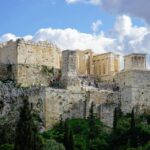
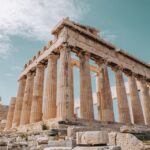
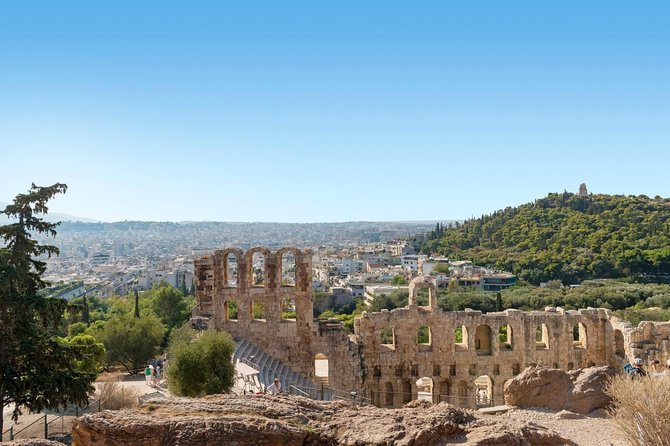
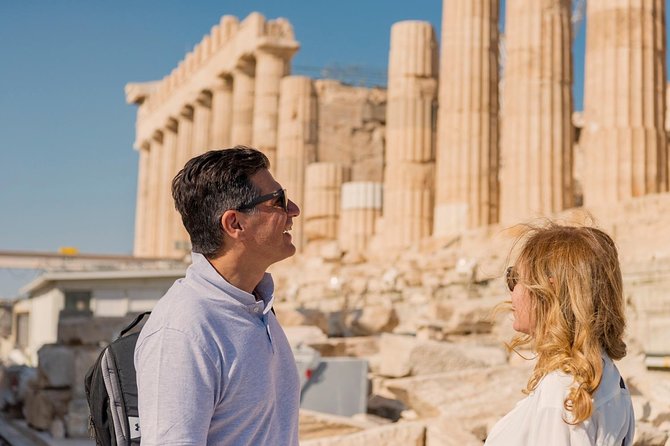
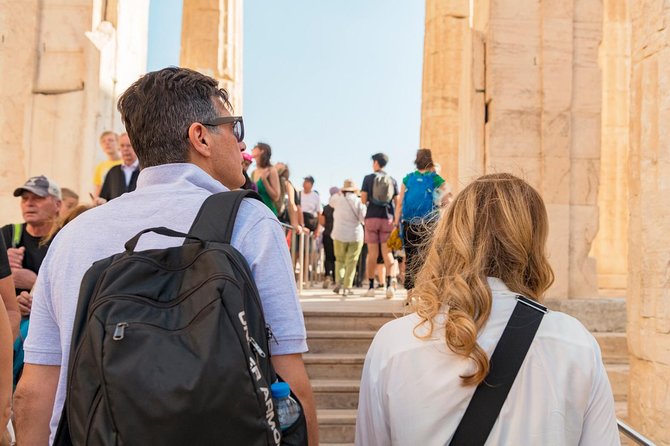
Your Athens day is built around the core hits, but it’s arranged so you don’t just cram. The Acropolis is first—about 1 hour 30 minutes on the rock, with the Parthenon plus key associated temples like the Temple of Nike and the Erechtheion. This is the moment where the whole classical story clicks into place, because the architecture sits exactly where it was meant to be seen. If you’ve ever read about Athens and wondered what “on a hill” actually means, this is the answer.
After that, you head to the Acropolis Museum (about 1 hour). I like pairing these two because the museum is where you understand what you’re actually looking at. It houses many masterpieces from the Acropolis site, so you’re not stuck staring at stones that feel a bit anonymous.
Then the day widens out into Athens proper:
- Syntagma Square (20 minutes): Parliament, plus the changing of the guard with the Evzones in traditional uniform.
- The Academy of Athens stop (20 minutes): a quick look at the Athenian Trilogy—University, Academy, and Library.
- Panathenaic Stadium (about 20 minutes): the marble stadium tied to the Marathon idea and known as Kallimarmaro.
- Temple of Zeus Olympios (20 minutes): colossal scale, tied to Zeus and associated with the ancient wonders idea.
- Hadrian’s Arch (Arco Di Adriano) (20 minutes): another classic “big-name landmark in one viewpoint” stop.
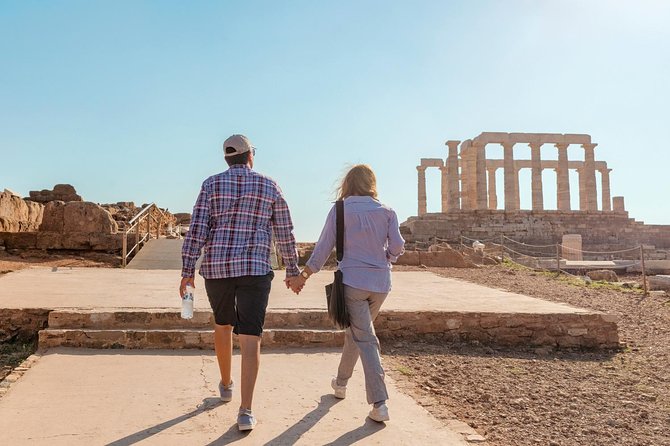
Finally you get the soft landing: the Temple of Poseidon on the clifftop at the tip of the Athens Peninsula. This is listed as around 2 hours, and it’s specifically flagged as best at sunset. Practical note: bring a layer if the evening air turns cool, and give yourself time to slow down here. This is one of those places where you understand why ancient sailors treated the shoreline like a storybook return point.
Day 2 Corinth and Mycenae: engineering, empire, and Agamemnon’s walls
Day 2 pushes west and south into the Peloponnese story, starting with a quick engineering stop: Corinth Canal (about 20 minutes). Even though it’s short, I like it because it shows how Greece’s geography keeps reshaping travel routes—from ancient times to modern infrastructure.
Next comes Ancient Corinth (about 1 hour). You stroll through the preserved remains of a city-state that mattered, with temples, markets, and fountains—and there’s also a reference to Paul’s presence in the area. The site works best if you let yourself move slowly at your own pace. You’re not just looking at columns; you’re walking streets that still read like a city plan.
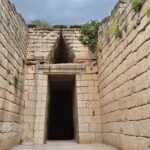
Then you move to Mycenae (about 1 hour), one of the most important stops for understanding early Greek civilization. You go through the massive city walls and enter via Lion’s Gate into the throne room area. The tour also highlights the treasury of Atreus and points you toward the modern on-site museum with artifacts uncovered there.
If you like visual “how it was built” moments, Mycenae is a strong pick because the scale of the fortifications does a lot of storytelling for you—especially if you’re used to ruins that feel more like scattered stones.
You end the day in Nafplio (about 1 hour 30 minutes), a coastal town with a medieval feel and views toward the Venetian castle of Bourtzi. For me, the value of a stop like Nafplio is simple: it keeps this tour from turning into nothing but history monuments. You get craft shops and a seaside promenade vibe, and it’s a good evening base before the next round of big sites.
Day 3 Epidaurus, Mystras, and Sparta: healing, Byzantine power, and lunch breaks that matter
This day is about variety in the best way: ancient Greek sanctuary + Byzantine UNESCO ruins + a taste of Sparta.
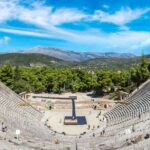
First, you visit the Sanctuary of Asklepios and the Theatre of Epidaurus (about 1 hour 30 minutes). This is the one place in the itinerary that’s almost guaranteed to make people slow down. The theatre is famous for its acoustics, and the site context—the sanctuary and healing center—turns the experience from “pretty ruins” into “this is where people came for belief and healing.” There’s time here to test that acoustics idea with a poem or a song, which is exactly the kind of interactive moment a classical site can offer.
After that, you head to Mystras (listed as Mystras/Mystra, about 1 hour 30 minutes). It’s a UNESCO site and formerly a Byzantine seat of power, with palaces, churches, monasteries, and extensive streets and fortifications. I like Mystras because it feels layered. Athens and Peloponnese classics give you Greek antiquity; Mystras helps you see how that region kept evolving after antiquity.
Lunch and a change of tempo happens in Sparta (about 1 hour 30 minutes). You get time to explore the town and ancient ruins, plus a museum and even an olive oil museum. That last detail might sound oddly specific, but it’s actually a clue that Sparta is more than a name in a history book. It’s a place with local identity, and a quick museum stop helps you move past stereotypes before you head onward.
The day ends with travel onward to Olympia for the evening, setting you up for one of the itinerary’s emotional peaks the next morning.



Day 4 Olympia to Delphi’s coast: athletes, bridges, ports, and a quieter evening
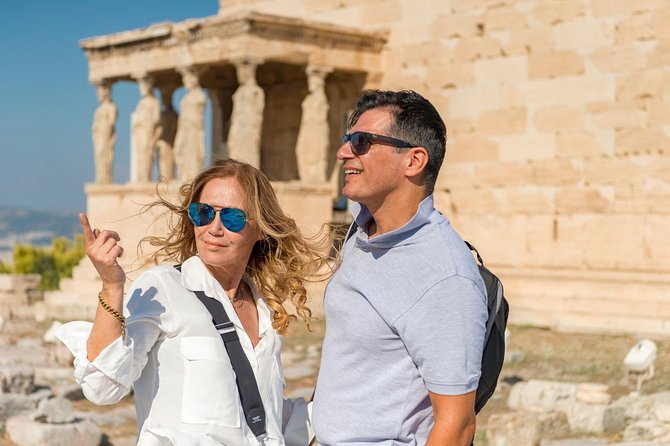
Olympia is scheduled as your morning anchor: the Archaeological Site of Olympia (about 2 hours). It’s famous for the Olympic Games of antiquity, and the tour points out training locations and the tunnel route athletes used to emerge in the stadium. That tunnel detail can change how you experience the stadium. Instead of imagining spectators and shouting, you picture the athletes’ final moments before competition.
You also get key structures like the Temple of Zeus and Hera, the workshop of Phidias, and an extensive museum with significant masterpieces. Even if you’re not an “artifact person,” the museum can help you understand how many of these major sites were built to honor gods and institutions, not only to show off architecture.
After Olympia, the tour shifts into travel drama, but in a fun way. You cross the Rion–Antirion Bridge (about 20 minutes). It’s a long suspension bridge and offers a strong “engineering meets coast” contrast to ancient sites.
Then come two stops that are really about pacing and atmosphere:
- Nafpaktos Old Port (about 1 hour 30 minutes): Venetian port views and a lunch stop.
- Galaxidi (about 2 hours): a sea town feel near the ancient Delphi port area, with pretty streets, cafes, restaurants, and a more authentic vibe than the more touristic core.
I like days like this because they remind you that Greece isn’t only monuments. The coast towns give you a chance to reset your brain before Delphi starts asking for your full attention.
Day 5 Delphi plus Hosios Loukas: the Oracle’s terraces and a museum that adds context
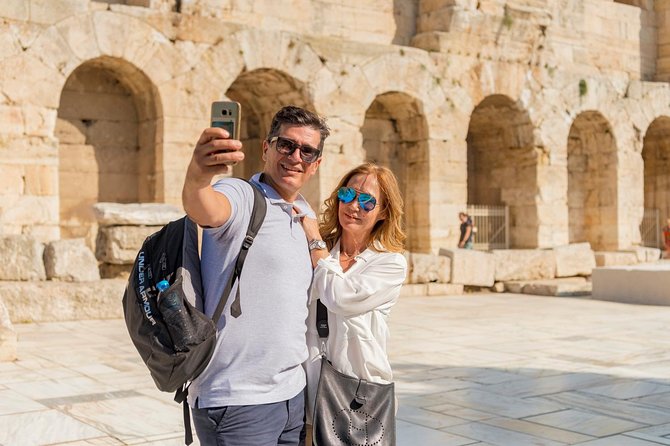
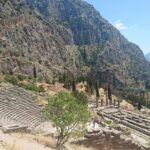
Delphi is the heart of “classical Greece” for many people, and this day gives it serious time: about 2 hours at Delphi itself. The site is terraced along the hillside, and the itinerary emphasizes preserved remains, including the 4th-century BC Temple of Apollo where the Oracle spoke, plus the Castalian spring associated with mythology.
You also pass by structures tied to the civic and athletic side of the myth cycle: theatre, treasury buildings, temples of Athena, and the gymnasium where athletes gathered and even bathed in sacred waters. If you’re the type who likes seeing how religion, politics, and sports braid together, Delphi is built for that.
A good add-on is the Delphi Archaeological Museum (listed on this day for about 1 hour), because it collects finds that go back to at least 1500 BC and includes notable pieces like the Naxos Sphinx and the Bronze Charioteer. Even if you don’t know all the characters yet, standing in front of objects like these helps your brain sort what’s important.
Between Delphi moments, there’s Monastery of Hosios Loukas (about 1 hour). It’s UNESCO-listed and described as one of the best preserved Byzantine monasteries, including architecture and impressive frescoes. The notes also say it’s optional, so you can skip it if you want a more strictly classical-only day.
Then you finish with Arachova (about 1 hour 30 minutes) for lunch and craft shop time, plus views over the olive-filled Pleistos river valley. Arachova isn’t just about food. It’s a change in elevation and a reminder that Delphi wasn’t a standalone “stage set.” It lived inside a working, farming region.
Day 6 Meteora: monasteries on sandstone pillars, with time to look

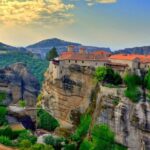
Meteora day is set up as a slow climb in both the literal and emotional sense. You ascend toward monasteries above, built on natural sandstone rock pillars up to 1,312 feet high. The itinerary notes that six monasteries remain from the 14th century, and you visit at least two—often Grand Meteora Monastery, plus Varlaam or Agiou Stefanou.
This is one of those stops where timing and footwear matter, even if the tour doesn’t spell out every detail. When you’re moving between monastery areas on stairs or uneven paths, good shoes become less of a recommendation and more of a comfort requirement. And because you’re in a religious site, you’ll want to follow whatever rules are in place regarding clothing and behavior.
What makes this tour’s Meteora portion valuable is that it doesn’t treat monasteries like postcard photos only. It also includes learning about the hermits and monks who lived there, alongside the views. That context helps you understand why someone would choose this kind of isolation in the first place.
After Meteora, you head to Kalambaka (about 1 hour 30 minutes) for traditional lunch in the main square area. This is the practical reset point. You’ve walked, you’ve looked up, you’ve climbed enough for one day. Kalambaka is where you come down and eat like a human again.
Day 7 Thermopylae return: the Leonidas battle, plus a break by the sea
Your final day starts with a stop in Veroia (about 1 hour 30 minutes), then you head south toward Thermopylae.
Thermopylae is scheduled with a monument stop plus entry to a newly built Visitor’s Center (about 1 hour). The visitor center recreates the ancient battle where King Leonidas led the 300 Spartans in 480 BC. That format can be a helpful bridge if your first instinct is to stare at a battlefield sign and wonder what happened beyond the headline.
Then you get a break with Kamena Vourla (about 1 hour 30 minutes) for lunch or a sea-side pause in local villages before returning to Athens.
This final pattern matters. After a week of classical sites, you don’t want your last hours packed with another “big must-see.” A lunch stop near the sea gives your body and mind time to land the trip.
Who should book this classical Greece tour
This tour fits well if you:
- Want a high-comfort base with hotels and a driver, and you don’t want to micromanage transport between regions.
- Care about major classical sites like Acropolis, Corinth, Mycenae, Epidaurus, Olympia, Delphi, and Meteora and like seeing them in a logical geographic order.
- Appreciate that the itinerary also includes Byzantine UNESCO context at Mystras and Hosios Loukas, not just one era.
It may feel less ideal if you:
- Want the cheapest possible way to see Greece and you’re comfortable with full independent planning.
- Plan to skip paid site entry entirely. Entrance fees aren’t included, so you’ll still want budget money for tickets.
One more practical note on planning: WarmPenguin’s team includes people like David and Yiannis, and past planning experiences described a hands-on approach that keeps things moving via email, WhatsApp, and even video chats. If you like a partner who helps iron out your route details before you arrive, that’s a plus.
Should you book this 7-day Classical Greece route?
If your dream is to hit Greece’s biggest classical hits—Athens through Delphi to Meteora—without turning your trip into a logistics project, I think this tour is worth serious consideration. The combination of 4-star/boutique lodging + private Mercedes transportation + a driver throughout the day is the core strength, and the itinerary’s pacing does a decent job of mixing major sites with towns where you can breathe.
Before you book, do two quick checks:
- Decide where you want an expert licensed archaeological guide (if anywhere). For many people, adding a guide to one of the top sites can be the difference between a “wow, ruins” visit and a “I get it now” visit.
- Budget for entrance fees, since they’re not included.
If you want an efficient, comfortable, classic-route experience, this is a strong match.
FAQ
FAQ
Are entrance fees included in this tour price?
No. Entrance fees are not included, and you’ll also need to pay for access to sights that require tickets.
Do I get a private driver the whole time?
Yes. The tour includes a professional English-speaking experienced tour driver throughout the day, and it’s set up as a private tour for only your group.
Can the driver enter archaeological sites with me?
No. The tour notes say the driver can inform you en route but cannot enter archaeological sites. Licensed archaeological guides can be added on request for one or more sites.
What kind of hotels are included?
The tour includes accommodation at minimum 4-star or boutique style hotels, with breakfast included.
Is lunch included?
It depends on the booking option. A Platinum package mentions a 3-course lunch. There’s also a lunch option you can add later on request, with vegetarian dishes available.
Does the tour include pickup from the airport?
Pickup is offered, and pickup from the airport and areas outside Athens is available on request, but it may require a supplement.
Is the tour accessible for most people?
The tour states that most travelers can participate.
Which transportation options are included?
Depending on group size and package, you’ll use a Superior or Gold or Platinum class vehicle such as a Mercedes sedan, Mercedes minivan, or Mercedes Sprinter.
What’s included for tickets?
The tour includes mobile ticket support, but admission fees are still not included.
Can I cancel for free?
Yes, you can cancel for a full refund if you cancel at least 24 hours in advance.
You Might Also Enjoy


More 7-Day Experiences in Athens
More Tour Reviews in Athens
- All Day Cruise -3 Islands to Agistri,Moni, Aegina with lunch and drinks included
★ 5.0 · 4,958 reviews