REVIEW · ATHENS
Athens: Peloponnese Highlights Day Trip and V.R. Audio Guide
Book on GetYourGuide →Operated by SIGHTS OF ATHENS-GRAY LINE · Bookable on GetYourGuide
Ancient Greece in one long day. This Athens to Peloponnese tour strings together Mycenae, Epidaurus, and Nafplion with an easy coach ride plus a VR audio device and an 8–10 language narration to help the sites click. You’ll get a structured day that still leaves breathing room in the pretty port city at the end.
I especially like two things here. First, the Corinth Canal stop gives you a fast, photo-worthy view of engineering that links the Aegean and Ionian seas. Second, Epidaurus comes with a built-in story about the theater’s famous acoustics, and the time there is long enough to sit, look, and actually test the idea.
One drawback to consider: the day runs 11 hours and the schedule is tight, so your Nafplion time may feel a bit rushed if you want a long meal or extra strolling up toward the fortresses. Also, the audio/VR tech is generally helpful, but some GPS moments can be hit-or-miss.
In This Review
- Key highlights to look for
- How this 11-hour Peloponnese day trip stays worth your time
- Getting picked up in central Athens without stress
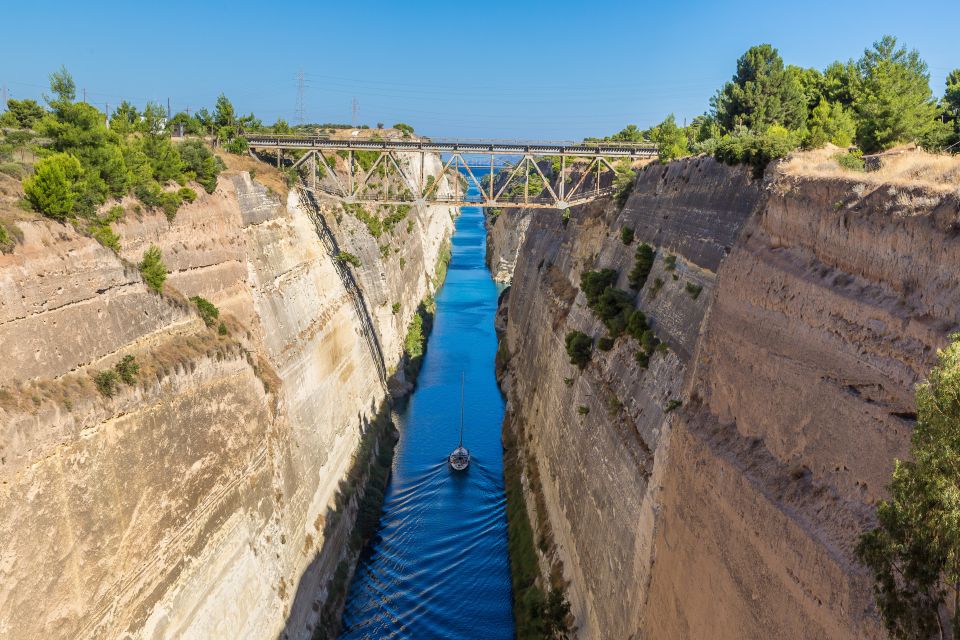
- Corinth Canal: a short stop with big geographic meaning
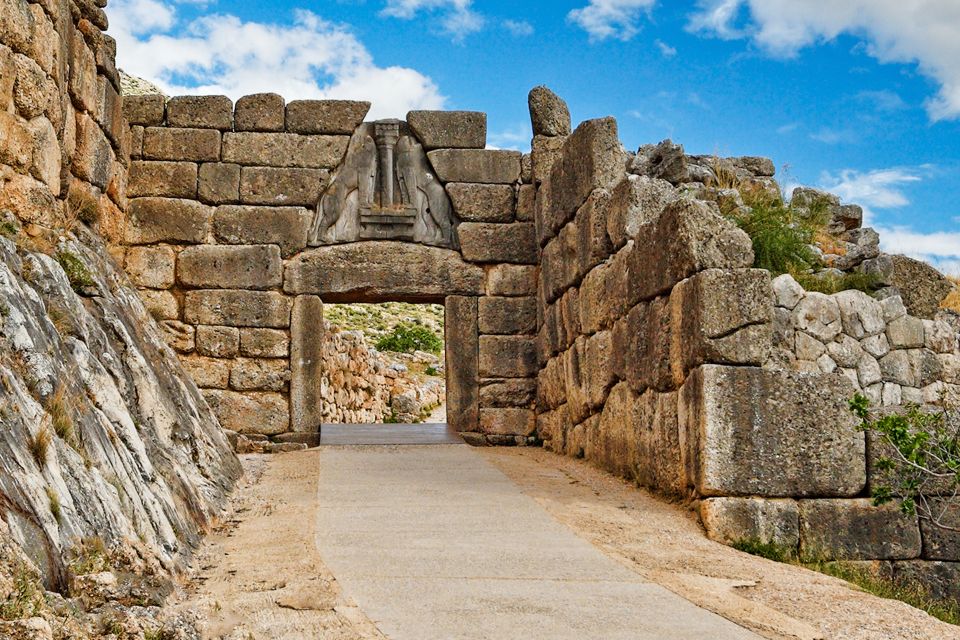
- Mycenae: Acropolis views, Agamemnon’s tomb, and Cyclopean walls
- Using the VR audio device across Mycenae and Epidaurus
- Epidaurus Theater: where acoustics become the main character
- Nafplion: Venetian lanes, fortresses, and real break time
- The ride back and how to plan your energy
- Price and value: what your $33.31 actually covers
- Who should book this tour, and who might prefer something else
- Should you book this Athens to Peloponnese highlights day trip?
- FAQ
- What stops are included on this day trip?
- How long is the tour?
- Is food included?
- What pickup times and locations are offered in Athens?
- What languages are available for the audio guide?
- Is this tour suitable for people with mobility impairments?
Key highlights to look for
- Corinth Canal: a quick engineering photo break that matters for understanding Greek geography
- Mycenae’s key ruins: the Acropolis, Agamemnon’s tomb, and Cyclopean walls in one visit
- Epidaurus acoustics: the classic coin-drop concept and a theater that held 14,000
- VR + audio across the day: multi-language guidance that helps you connect scenes to the real stone
- Nafplion with free time: Venetian lanes, neoclassical buildings, and optional beach time at Arvanitia
How this 11-hour Peloponnese day trip stays worth your time
This tour makes the big argument for day trips: you trade the slow part (driving yourself) for a guided sequence of stops that would take serious planning on your own. For $33.31 per person, you’re not just buying transportation. You’re getting an organized route, a driver, a live English-speaking tour leader, and a VR device plus an audio guide in multiple languages—plus, if you choose the option that includes entry fees, the main sites are covered.
The real value is how the day is paced around “recognizable anchors.” You don’t just hop from photo to photo. You hit a canal (place + geography), then Mycenae (power + myth + walls), then Epidaurus (architecture + sound), and finish in Nafplion (city texture + where people live and eat). That keeps your brain engaged the whole ride back toward Athens.
Just know the rhythm: it’s a full-day loop. If you love long meals, you’ll want to use your Nafplion time wisely.
You can also read our reviews of more guided tours in Athens



Getting picked up in central Athens without stress
Pickup points are in central areas, which is a big deal when you’re trying to avoid wasted taxi time. You can be picked up around Plaka / the Melina Mercouri Monument (07:45), the Greek Parliament (07:50), Omonoia Square (08:00), or Karaiskaki Square (08:05). You wait at the sign for the blue SIGHTS OF ATHENS hop-on, hop-off buses.
Once you’re loaded, you’ll head about one hour toward the Peloponnese before the first major stop. This early drive matters because it lets you see the canal and then get to Mycenae while you still have energy for walking around an archaeological area.
A small practical tip: bring a hat and comfortable shoes. You’ll be on foot in Mycenae and Epidaurus long enough that flip-flops won’t feel friendly.
Corinth Canal: a short stop with big geographic meaning

The Corinth Canal is the first headline moment, and it’s a smart one for a day trip: a focused 20-minute break for photos, a quick look, and then back onto the coach. You’re seeing a cut that connects the Aegean Sea to the Ionian Sea, which is a helpful mental shortcut for understanding why this part of Greece has always mattered strategically.
What you’ll get in such a short window is not a full deep history lecture—it’s the visual hook. The walls, the narrow channel, and the sense of scale make it easier to picture how movement of people and goods shaped the region long before modern roads.
If you’re the type who likes to stretch legs, use this stop. You’ll likely need the reset before Mycenae.
Mycenae: Acropolis views, Agamemnon’s tomb, and Cyclopean walls
Mycenae is where the tour earns its name. You get about 2.5 hours at the archaeological site, which is a good amount for a first-timer because it lets you see the major highlights without feeling like you’re sprinting.
Expect to move through the Mycenaean Acropolis and learn about key features such as:
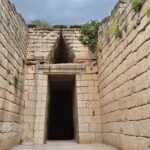
- the tomb of Agamemnon
- the ruins of the Cyclopean walls that were built to protect the city
- the broader story of Mycenaean power in ancient Greece
There’s also an Archaeological Museum option at Mycenae if you want to go deeper. If you’re more of a “see it first, museum later” person, you might skip it until Epidaurus or Nafplion, but if you love artifacts and context, you’ll probably enjoy staying for some museum time.
One thing I like about the way this stop is framed is that it balances myth with physical evidence. Even if you know the legends already, the stone walls and the acropolis layout give you a clearer sense of how defensible and important the settlement really was.
Practical caution: Mycenae involves uneven ground and walking outdoors. Stay aware of footwear and sun, and take your time climbing to viewpoints.
Using the VR audio device across Mycenae and Epidaurus
The tour’s signature tool is the Virtual Reality device plus an audio guide in multiple languages (the included set lists English, French, German, Italian, Spanish, Russian, Portuguese, Polish, Chinese, and Japanese).
Here’s the practical way to think about it: you’re not using VR like a video game. You’re using it as a story layer. As you stand in front of ruins, it helps connect what you’re seeing to what it used to look like and what it was used for.
It also helps a lot if you’re traveling with mixed comfort levels in ancient history. Someone who’s more arts-and-culture focused still gets a guided narrative, while the “I want facts” person gets enough structure to keep moving.
That said, don’t assume it’s perfect. Some people found GPS on the VR not always accurate, and the audio guidance has room to improve in how it’s delivered on site. The good news: even with a few imperfect moments, you still have the live English-speaking tour leader and the actual monuments themselves do most of the work.
If the device is acting up, don’t waste your whole time troubleshooting. Use it when it’s working, then switch to looking and reading on your own.
You can also read our reviews of more tours and experiences in Athens




Epidaurus Theater: where acoustics become the main character
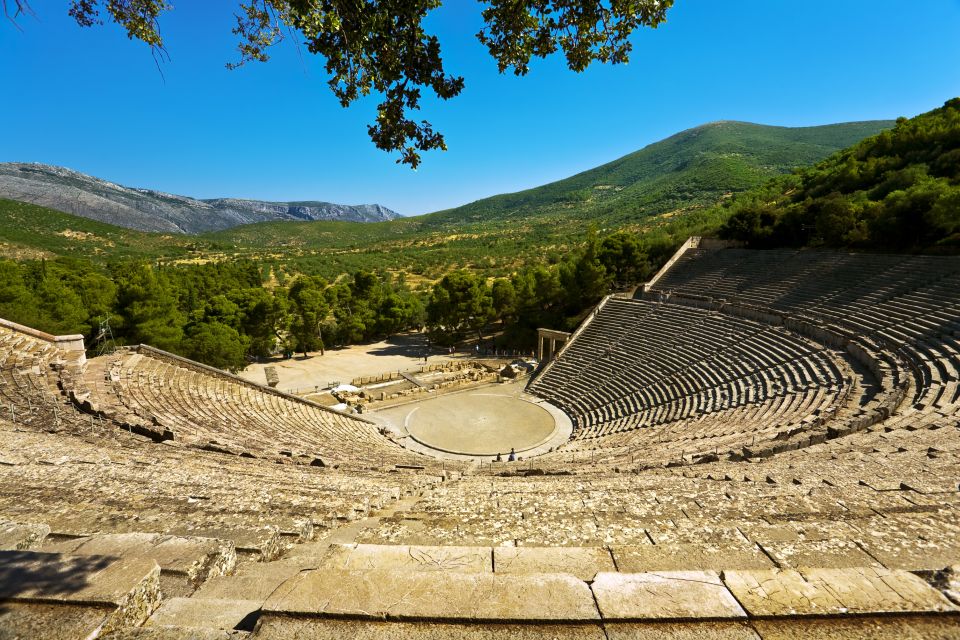
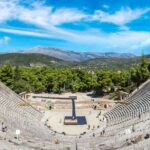
Epidaurus is the classic “architecture that behaves like magic” stop. You’ll spend about 2 hours there, which is enough time to sit, orient yourself, and enjoy the theater as a whole structure rather than just snapping pictures from the entrance.
This theater is a 4th-century Greek landmark and one of the best-preserved Classical theaters in existence. It’s known for acoustics in a very specific way: the idea that a coin dropped in the theater’s center can be heard from the highest seats.
You’ll also get some clear context while you’re there:
- it held up to 14,000 people
- restored Corinthian pilasters flank the entrance
- it’s used for performances of Ancient Greek drama during the annual Hellenic Festival
When you actually sit in the space, it becomes easier to understand why this mattered. Epidaurus isn’t just a pretty ruin; it’s a designed space for voice, rhythm, and audience connection. Even if you’re not a drama buff, you’ll feel the logic of the design in your body.
Plan on using your time here to do two things: find a good viewing spot in the seating and slow down enough to listen to how the space carries sound.
Nafplion: Venetian lanes, fortresses, and real break time
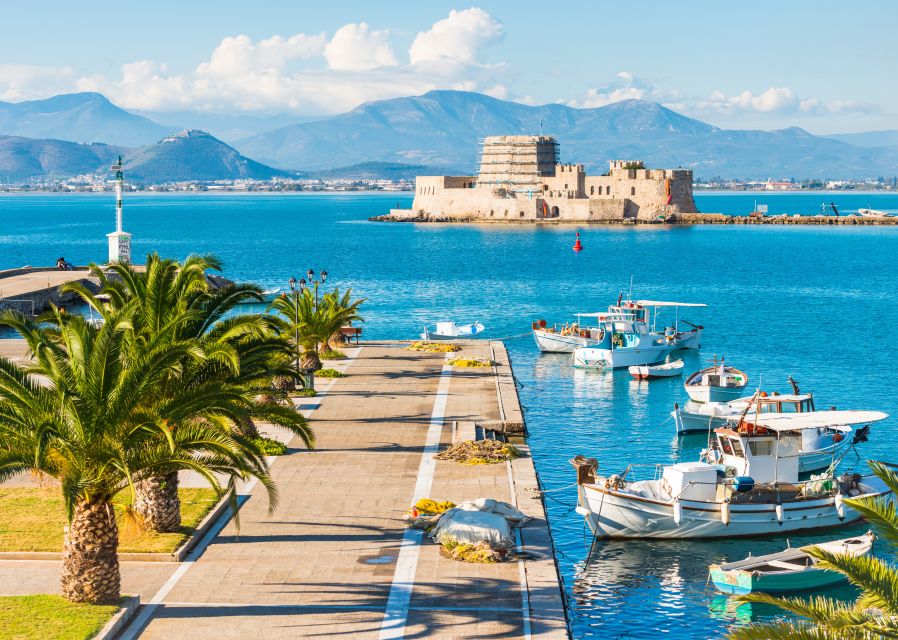
Nafplion is your payoff city. You’ll get around 1.5 hours there for a break, photos, and strolling. It’s a place with layers: it was the first capital after Greek Independence, and it’s been a major port since the Bronze Age. That long timeline shows up in the streets, architecture, and the way the town sits under fortifications.
Nafplion also has a strategic defense story, because it has three fortresses:
- Palamidi, the massive one
- Akronafplia, the smaller fortress
- Bourtzi, the water castle on an islet west of the old town
In the old town, you’ll walk past elegant Venetian houses and neoclassical mansions, then drift toward the quayside cafes where you can stop for coffee. If you want a beach reset, there’s also Arvanitia beach nearby, and in summer a swim is possible.
What I like most about this stop is that it’s not locked into a rigid museum cadence. You can choose your own pace: shop a bit, grab a traditional restaurant meal, or just sit with the view and let the day cool down in your head.
The trade-off is time. Because the tour has other fixed stops later, some visitors wished for a little more than the allotted Nafplion window. If food is your priority, don’t wait until the last 20 minutes to place your order.
The ride back and how to plan your energy
After Epidaurus, the coach ride back takes about 2 hours to return you to Athens drop-off points. This is where good pacing pays off. You’ll likely be tired from walking, sun exposure, and the mental effort of processing ruins.
Bring a small snack if that helps you. The tour doesn’t include food and drinks, and while there is free time in Nafplion for coffee or lunch, you’ll feel better if you’ve already covered yourself earlier in the day.
If your phone is your primary camera and you use the VR device as well, also consider battery life. Some people noted the vehicle experience wasn’t always ideal for charging, so having a power bank is a smart, low-cost insurance policy.
Price and value: what your $33.31 actually covers
At about $33.31 per person, this day trip can feel like a bargain if you want structure. You’re paying for:
- roundtrip air-conditioned minibus transport
- a driver
- an expert tour leader (English live guidance)
- a VR device
- an audio guide in multiple languages
- pickup from central Athens locations
- entry fees if you select the option that includes them
Not included: food and drinks.
Here’s how I’d judge the value. If you were to hire a private driver or build this itinerary yourself, you’d lose a lot of time and convenience. The VR/audio layer also adds value if you’re the kind of traveler who likes a guide story while standing in front of the stones.
If you already know the sites well and don’t care about the multi-language audio, you might feel less thrilled by the tech. But for most first-timers—or anyone short on time—this setup hits the sweet spot.
Who should book this tour, and who might prefer something else
This is a great fit if you:
- want to see Mycenae, Epidaurus, and Nafplion without worrying about route planning
- like guided structure but still want some freedom for lunch and strolling
- enjoy mixing myths and facts through a multi-language audio/VR format
- appreciate a tour leader who keeps things moving and answers questions (people often praised guides such as George, Christopher, Angela, Irene, and Nancy)
You might want to think twice if you:
- need a slower pace or long meals every stop
- have mobility limitations, since it’s not suitable for people with mobility impairments
- dislike any day tour format where much time is spent on the coach
Should you book this Athens to Peloponnese highlights day trip?
I’d book it if your goal is maximum ancient-world impact with minimal planning. The route makes sense, the time at Mycenae and Epidaurus is long enough to be meaningful, and Nafplion offers a real reset with streets, cafes, and fortresses.
I’d hesitate only if you’re very sensitive to tight schedules or if you’re hoping for lots of extra time in Nafplion for a relaxed meal. In that case, you may still enjoy the day, but you’ll want to treat Nafplion as a scenic pause rather than a second full vacation.
If you want a clear, guided taste of Argolis-Peloponnese in one go, this tour is a solid choice.
FAQ
What stops are included on this day trip?
You’ll visit the Corinth Canal (photo stop), the archaeological site of Mycenae, Epidaurus (the theater), and the city of Nafplion. The day also includes coach travel between stops.
How long is the tour?
The duration is listed as 11 hours.
Is food included?
No. Food and drinks are not included, but there is free time in Nafplion for coffee or lunch.
What pickup times and locations are offered in Athens?
Pickup options include Plaka / Melina Mercouri Monument at 07:45, the Greek Parliament at 07:50, Omonoia Square at 08:00, and Karaiskaki Square at 08:05. You wait at the sign of the blue SIGHTS OF ATHENS hop-on, hop-off buses.
What languages are available for the audio guide?
The audio guide is included in English, French, German, Italian, Spanish, Russian, Portuguese, Polish, Chinese, and Japanese.
Is this tour suitable for people with mobility impairments?
No, it is listed as not suitable for people with mobility impairments.
You Might Also Enjoy



More Self-Guided Tours in Athens
More Guided Tours in Athens
More Tour Reviews in Athens
- All Day Cruise -3 Islands to Agistri,Moni, Aegina with lunch and drinks included
★ 5.0 · 4,958 reviews