REVIEW · ATHENS
The History of Athens: Greek Mythology Private Tour
Book on Viator →Operated by Withlocals · Bookable on Viator
Myths walk right through Athens streets. In this private half-day walk, you connect Greek gods and stories to modern Athens, from Monastiraki’s stalls to the Academy of Athens and a working market scene.
I especially like the private guide format (it’s just you and your local host), because you can steer the pace and ask follow-ups. I also love the stop choices: Monastiraki for texture and shopping energy, then the Varvakios market for food, colors, and the daily rhythm of locals.
One possible drawback: this isn’t a fixed script. On a hot day, you may spend time in full sun, and the quality of the mythology focus can vary by guide—so go in with a clear goal and speak up if you want more myth detail.
In This Review
- Key things to know before you go
- Why This Private Athens Myth Walk Feels Different
- Getting Oriented: Monastiraki Start and Plaka Finish
- Stop 1: Monastiraki and the Art of Browsing Like a Local
- Stop 2: The Academy of Athens—Myths Next to Modern Learning
- Stop 3: Varvakios Central Municipal Market for Real Senses
- The Zeus Thread: How Guides Link Gods to Places
- Private Guide Quality: How to Make It a Win
- Price and Value: Is $199.62 Worth It?
- Practical Stuff That Actually Impacts Your Day
- Should You Book This Greek Mythology Private Tour?
- FAQ
- How long is the tour?
- Is this a private tour?
- What does it cost per person?
- Where does the tour start and end?
- What language is the tour offered in?
- Are tickets included for the stops?
- Is the tour carbon-offset?
Key things to know before you go
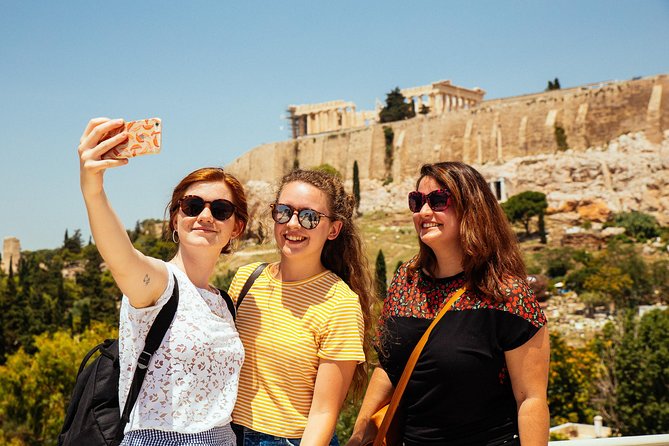
- Private, small-group feel: only you and your local guide for the full 3 hours (about).
- Myth + real neighborhoods: Greek gods get tied to everyday spots, not just museum stops.
- Market time matters: Monastiraki and Varvakios bring Athens down to earth with local shopping and street eats nearby.
- Landmark stop included: the Academy of Athens is a major built landmark, established in 1926.
- Flexible routing possible: your guide may add or swap additional stops depending on the route.
- CO2 neutral: emissions are offset as part of the tour offering.
Why This Private Athens Myth Walk Feels Different
This tour works because it treats mythology like a street-level experience. You’re not just collecting facts in front of stones. Your guide connects the stories you’ve heard—gods, legends, and how Athenians talk about them—to places you can actually stand in, look at, and walk through.
The private format helps a lot. In a group tour, you sometimes get swept along. Here, you can ask for clarification, ask how a myth fits the city, or slow down when a street view or shop window deserves a second look. Guides you might meet on this kind of tour have been praised for energy and local insight, including people like Makram, Markella, and Ioannis.
Still, the “private” part cuts both ways. If you want a very strict, mythology-heavy lesson, you’ll want to be proactive. A guide who prefers broad storytelling may not focus as tightly as you expect, and that can affect how satisfying the tour feels.
You can also read our reviews of more private tours in Athens


Getting Oriented: Monastiraki Start and Plaka Finish
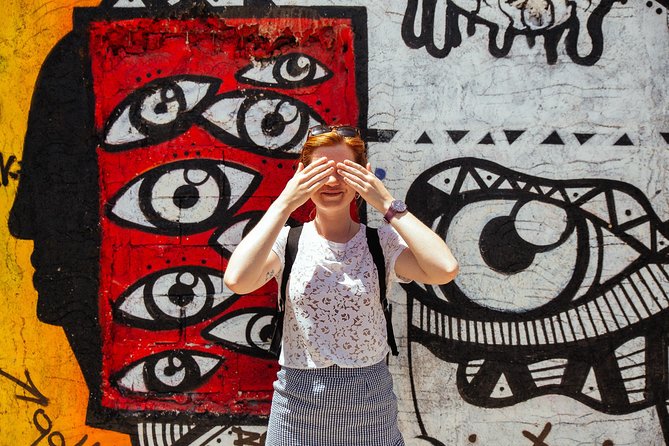
You start near Panepistimiou 37 and you finish in Plaka, one of the most atmospheric bases for evening wandering. That start-to-finish combo is smart: it moves you from an active central area into the older neighborhood vibe where you can naturally continue your day.
Plaka is also where it’s easiest to keep the myth theme going after the tour ends. If your route includes a stop around Anafiotika, you can catch a view over Athens and hear Zeus legends tied to the atmosphere of the place.
A small heads-up for your day planning: the tour is about 3 hours on foot, and you should bring a moderate-walking mindset. If you’re sensitive to heat, plan water and shade breaks rather than assuming the guide will constantly find shelter.
Stop 1: Monastiraki and the Art of Browsing Like a Local
Monastiraki is the kind of neighborhood that instantly tells you you’re in Athens, not a theme park. You’ll spend time around a dense mix of shops and stalls—everything from souvenirs and everyday goods to furniture-like finds and oddball items, including army surplus gear. It’s eclectic on purpose, and that’s part of the value.
Why this stop is more than a quick break:
- It trains your eye. Once you see how locals shop and bargain, later sights on your trip feel easier to interpret.
- It’s a culture filter. Myths become easier to “place” when you understand the modern city’s flow—people, commerce, street chatter, and the rhythm of errands.
The likely drawback here is simple: Monastiraki can be busy, and the walking can feel a bit stop-and-start. If you’re hot or crowded-out, say so early. A good guide will adjust where they pause and what they point out.
Stop 2: The Academy of Athens—Myths Next to Modern Learning
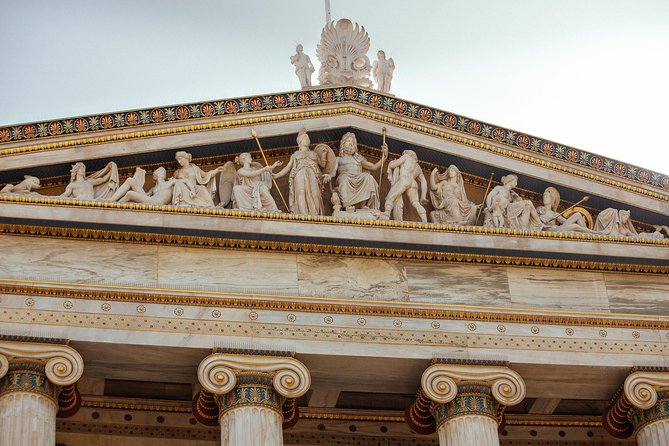
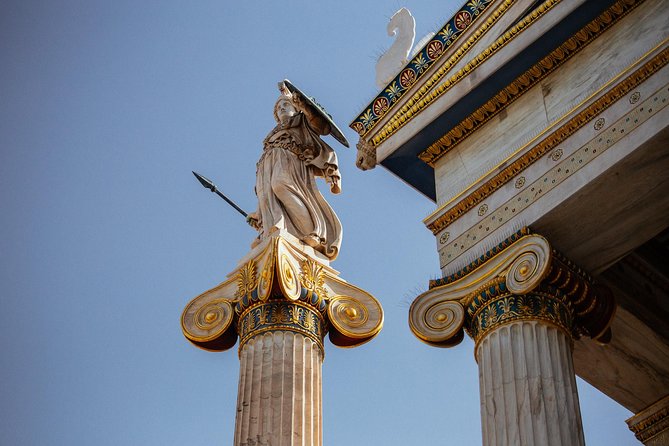
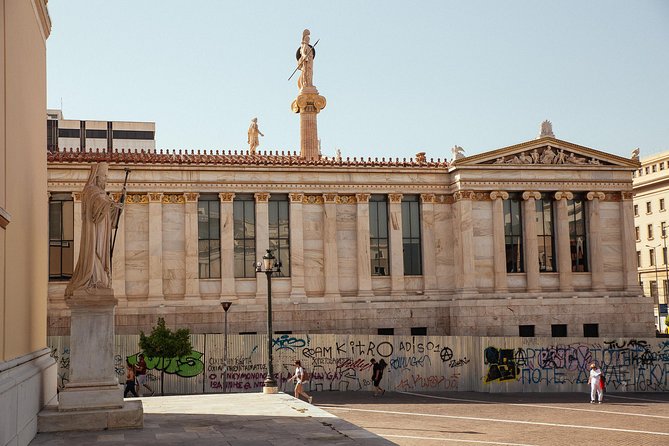
The Academy of Athens is a major landmark and a fascinating contrast to the market energy. It’s Greece’s national academy and the country’s highest research establishment, established in 1926 under the Ministry of Education.
This stop helps your trip in two ways. First, it anchors your “myth time” in Athens’ intellectual life. Second, it gives you a break from constant visual noise. After Monastiraki’s variety, the Academy’s presence feels like a different Athens—more formal, more architectural, and often calmer.
Even though it’s tied to the tour’s myth-and-stories approach, it still works as a standalone sight. You’ll get a sense of how Athens doesn’t only live in ancient layers; it also builds institutions that shape how people think.
Stop 3: Varvakios Central Municipal Market for Real Senses
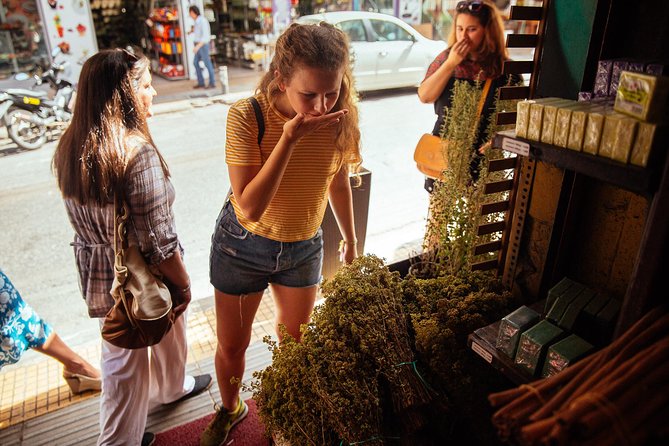
If you want to understand Athens beyond headlines, Varvakios Central Municipal Market is a strong choice. This is a working market scene where you can see locally sourced seafood and meats, plus fruits and vegetables—and you’ll also find street food culture around the area.
Why it’s worth including on a mythology tour:
- Food is identity. Myths don’t only live in temples. They live in daily habits: what people buy, what they cook, and what they treat as special.
- You learn the city’s “present tense.” A story about gods lands differently when you’re also watching how locals live.
This stop is about exposure and atmosphere, and your time there is short (around 20 minutes). If you’re the type who loves lingering, you may want to do a quick follow-up visit on your own after the tour, when you can slow down and snack without a schedule.
You can also read our reviews of more historical tours in Athens




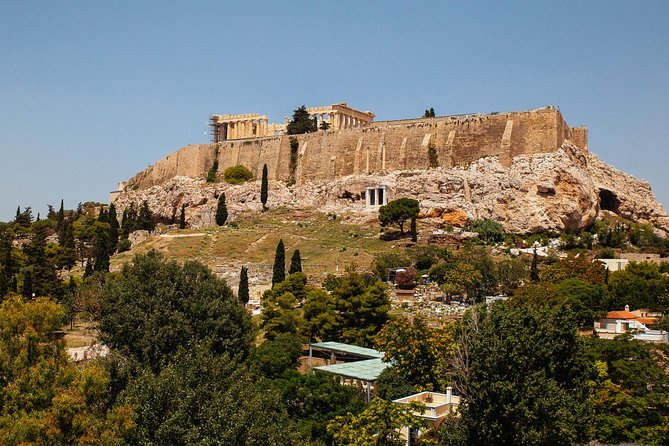
The Zeus Thread: How Guides Link Gods to Places
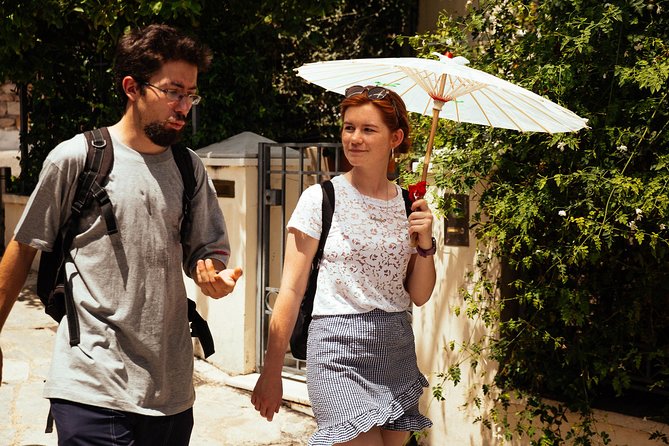
The tour’s core idea is connecting historic sites and modern spots to the Greek gods you hear about in stories. Your guide brings these connections together in a way that helps Athens feel coherent instead of random.
You’ll also hear Zeus legends as part of the experience (especially around the closing area near Plaka and Anafiotika, depending on the route). That’s a good anchor because Zeus is such a recognizable figure: once you have a strong Zeus story in your head, other myth references start to click as you walk around Athens.
What you should do to get the best result: ask your guide to point out the “why” behind the connection. For example, don’t just accept that a place is linked to a god—ask what the link means. The best guides turn that question into a clear story you can remember.
Private Guide Quality: How to Make It a Win
This is where the tour can shine—or frustrate. The tour is private, so the personality and style of your guide matters a lot.
In the good scenarios, guides bring two ingredients together:
- Energy and local knowledge in motion (not just lectures)
- Practical pacing, like being aware of sun and timing, and adjusting if you’re tired
In the less satisfying scenarios, you might feel you didn’t get enough mythology detail, or that the route didn’t line up with what you expected. One guide may love long storytelling pauses; another may keep things moving and hit more myth beats.
Here’s the simple way to steer it:
- Ask at the start: How myth-heavy is today? What gods will we focus on?
- If you’re stuck in harsh sun, interrupt. You don’t need to wait until the end. A guide can usually move you a few steps to shade without derailing the tour.
- If you’re hoping for specific themes (child-friendly storytelling, more myth depth, or more local market talk), say it early so the route can match your interest.
And one more practical thought: because you’re walking through neighborhoods rather than just standing in a line outside one attraction, your comfort matters. Wear breathable clothes. Bring water. Do not treat this like a sit-down museum visit.
Price and Value: Is $199.62 Worth It?
At $199.62 per person for about 3 hours, this is not a budget group tour. You’re paying for privacy and for a guide who can tailor the experience to your pacing and interests.
So when is the price a good deal?
- You care about myths connected to real places, and you want a guide to explain the links in plain language.
- You want market and neighborhood orientation, not only major monuments.
- You’ll use the private time to ask questions and keep going after the tour with better context.
When might the price feel steep?
- If your guide’s style turns more into general city sightseeing than mythology storytelling, you may feel under-served for the cost.
- If you’re only after famous landmark photos, you could compare value with other tours that focus tightly on one area (and sometimes cost less).
One way to protect your money: go in with a clear expectation and talk about it right away. A quick check-in can turn an “okay” tour into a strong one.
Practical Stuff That Actually Impacts Your Day
Heat and walking pace are the big real-world variables here. One strong piece of advice from the experience vibe: don’t be shy about asking to step into shade. If you plan clothing for summer walking, you’ll enjoy the stories more because you won’t be fighting discomfort.
Also note a schedule reality: some places that sound perfect on paper can be closed on certain days. If you’re traveling on a day when museums or public buildings tend to close, ask your guide to adapt the route on the fly.
For meeting and transit: the start is at Panepistimiou 37 and it’s described as near public transportation. That’s helpful for getting there without stress, especially if you’re juggling other plans in Athens.
Fitness level is listed as moderate. Translation: comfortable walking shoes and no “I’ll stop every five minutes” expectations, but it’s not a mountain climb either.
Should You Book This Greek Mythology Private Tour?
Book it if:
- You want a private, flexible half-day in Athens that ties myth and stories to neighborhoods you can actually explore.
- You’re excited about market culture, especially Monastiraki and Varvakios.
- You like the idea of ending in Plaka with a stronger sense of what you’re seeing.
Skip or reconsider if:
- You only want a strict mythology lesson with no city wandering. This tour can vary by guide and routing style.
- You’re extremely heat-sensitive and you prefer fully shaded, monument-only routes.
If you do book, your best move is simple: set your expectation upfront. Ask what gods you’ll cover, tell your guide your comfort priorities, and be ready to ask follow-up questions. With that approach, you’ll turn the “walking” part into the whole point of the experience.
FAQ
How long is the tour?
It runs for about 3 hours (approx.).
Is this a private tour?
Yes. It’s a private tour with only you and your local guide.
What does it cost per person?
The price is $199.62 per person.
Where does the tour start and end?
It starts at Panepistimiou 37, Athina 105 64, Greece and ends in Plaka, Athens, Greece.
What language is the tour offered in?
The tour is offered in English.
Are tickets included for the stops?
Admission tickets are listed as free for the main stops shown (Monastiraki, the Academy of Athens, and Varvakios Central Municipal Market). Entrance to attractions not included may not be covered.
Is the tour carbon-offset?
Yes. The tour is listed as CO2 neutral, with carbon emissions offset.
You Might Also Enjoy
More Private Tours in Athens

More Tours in Athens

More Tour Reviews in Athens
- All Day Cruise -3 Islands to Agistri,Moni, Aegina with lunch and drinks included
★ 5.0 · 4,958 reviews