REVIEW · ATHENS
Athens: Acropolis and Parthenon Guided Walking Tour
Book on GetYourGuide →Operated by ATHENS WALKING TOURS · Bookable on GetYourGuide
One trip, and the Acropolis suddenly feels readable. This guided walk connects the sites from the Theatre of Dionysus up to the Parthenon, with a licensed English guide and clear audio through provided headsets. I especially like how the route builds step by step so the myths and architecture stop feeling random, and how the focus stays on the monuments that matter most. The main drawback to plan for is the crowds and strict entry timing, plus security checks that can add waiting time during peak periods.
You’ll meet right on the pedestrian approach near Hadrian’s Arch at Dionyssiou Areopagitou Street, where guides like Eva and Victor (plus others) are known for keeping groups moving without losing the story thread. Expect a lot of uphill walking, standing, and close-up looking at stone details, so comfortable shoes and sun protection matter. If you want a calm, low-effort stroll, this tour may feel a bit intense, even though the pace is designed to be manageable.
In This Review
- Key highlights worth your time
- Why this Athens Acropolis and Parthenon guided walk feels different
- The practical vibe
- Getting to the meeting point at Dionyssiou Areopagitou (and staying calm)
- Quick checklist so you don’t bake
- South slope first: Dionysus Sanctuary and Theater before the main climb
- Stop-by-stop: what each early stop adds
- Propylaea, Temple of Athena Nike, and the Erechtheion: the architecture becomes a story
- What to watch for as you move
- Parthenon time: how the guide makes the loud crowd manageable
- A smart photo tip
- Expect security and timing realities
- Where the tour connects to the rest of Athens
- Acropolis Museum option: when it helps (and when you might skip it)
- Price and value: what you get for about $38.39
- Who should book this Acropolis and Parthenon walking tour
- Who should skip it
- Final verdict: should you book?
- FAQ
- FAQ
- Do I need to buy my own Acropolis ticket?
- Does the tour include the Acropolis Museum?
- Where do I meet the guide?
- What time should I arrive at the meeting point?
- How long is the tour?
- What should I bring?
- Is the tour wheelchair accessible?
Key highlights worth your time
- Licensed English guides who explain what you’re actually seeing at each stop
- Headsets so you can hear the narration clearly in busy areas
- South-slope approach that sets context before you reach the Parthenon
- Up-close landmark sequence from Dionysus sites to Propylaea, Athena Nike, Erechtheion, and Parthenon
- Iconic summit viewpoints over Athens for photo-ready city panoramas
- Optional Acropolis Museum add-on if you choose the ticket option
Why this Athens Acropolis and Parthenon guided walk feels different
The Acropolis is one big postcard, but it’s also a stack of buildings with specific roles in religious life, politics, and myth. What makes this tour work is that it doesn’t just point at famous stone. It connects the pieces so you start seeing patterns: entrances, sacred spaces, ceremonial buildings, and the “why” behind each monument.
The two biggest wins for me are the human guidance and the headsets. With crowds thick around the main sights, hearing the explanation matters as much as seeing the view. This tour gives you that audio clarity, which means you can keep your eyes on the buildings instead of craning toward the guide.
You can also read our reviews of more walking tours in Athens



The practical vibe
This is a walking tour that ends on the Acropolis, not a long bus circuit. You’ll spend time outdoors on uneven historic ground and in sun exposure, so you’re trading comfort for access and understanding. It’s a smart swap if you want the most meaning per hour.
Getting to the meeting point at Dionyssiou Areopagitou (and staying calm)

You meet at 3 Dionyssiou Areopagitou Street, at the start of the pedestrian walkway that leads to the Acropolis from Hadrian’s Arch area near Syngrou Avenue. Look for an orange sign that says Athens Walking Tours. Arrive 20 minutes early so you can check in and avoid stress when entry times are strict.
The tour starts with the group moving into the Acropolis area promptly. If you show up late, you risk missing the timed entry, and the tour fee becomes non-refundable if you can’t enter due to an invalid ticket.
Quick checklist so you don’t bake
Bring:
- passport or ID card
- comfortable shoes
- sunglasses, hat, and sunscreen
Don’t bring:
- baby strollers
- luggage or large bags
Also, if you’re sensitive to crowds, pick a time that feels comfortable for you. The tour runs rain or shine, and the stone doesn’t care about your weather preferences.
South slope first: Dionysus Sanctuary and Theater before the main climb
The tour begins on the south slope area, and that choice is a big deal. Rather than jumping straight to the Parthenon, you start with earlier sacred context. It’s easier to understand the Acropolis when you know what people were doing there before the iconic temples.
You’ll visit the Dionysus Sanctuary and Dionysus Theater during this opening section. Even if the theater building itself is only part of what you’ll see, the setting helps you picture Athens as a living city where festivals, performance, and worship overlapped.
Then you continue walking up the slope toward the main monuments, and the city views begin to open up. This is a good moment for photos because you’re already gaining perspective, not just reaching the top at the end.
You can also read our reviews of more guided tours in Athens



Stop-by-stop: what each early stop adds
- Theatre of Dionysus: helps you place the Acropolis in the world of celebration and storytelling.
- Asklepieion area: brings in the idea that the Acropolis wasn’t only about major temple worship.
A possible drawback here is that it’s also when the heat can feel sharp. Go slow, hydrate if you brought water, and save energy for the key stone stops ahead.
Propylaea, Temple of Athena Nike, and the Erechtheion: the architecture becomes a story

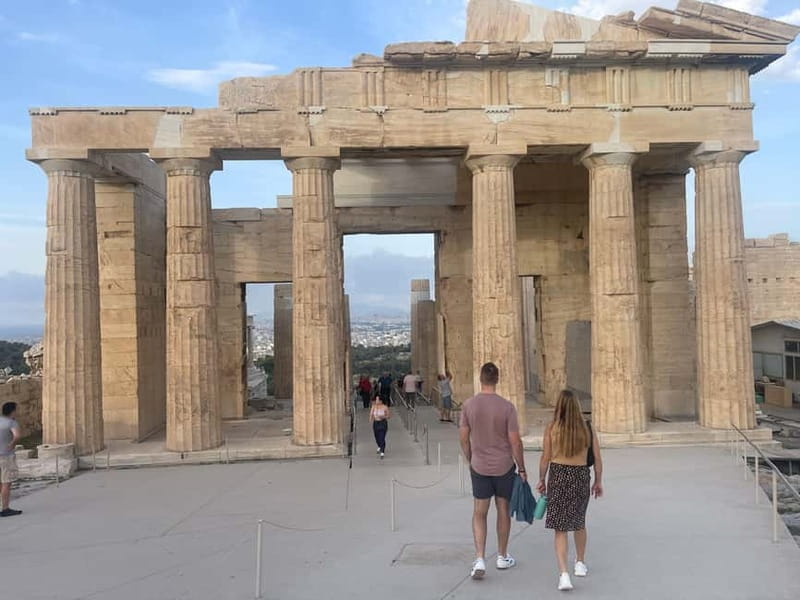
Once you’re moving through the main approach, the tour starts doing something clever: it teaches you to read the layout like a map. The Propylaea acts like the gateway mindset, and it gives you a clearer sense of how visitors would have experienced movement and arrival. Even today, it’s the kind of structure that makes you slow down because it frames where you’re going next.
Next comes the Temple of Athena Nike. This stop matters because it’s smaller and more delicate-looking than the Parthenon, but it carries major symbolism. You’ll learn the connection between Athena, victory themes, and how Athenians used architecture to communicate civic identity.
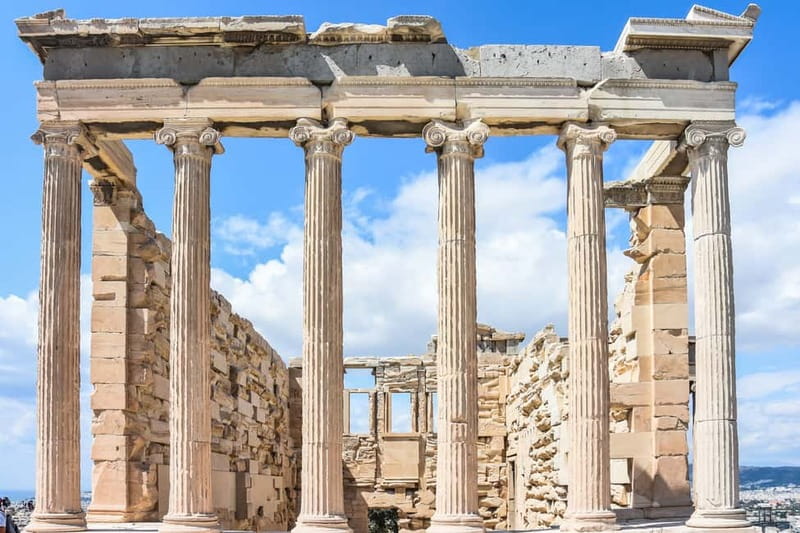
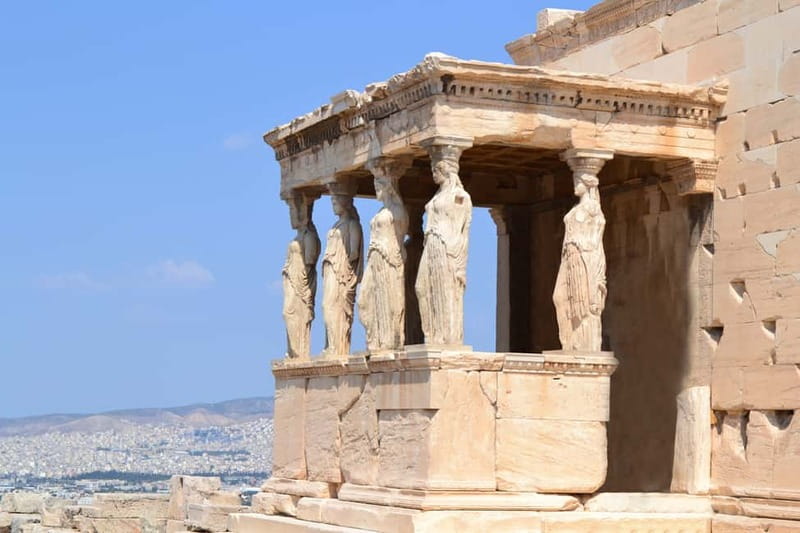
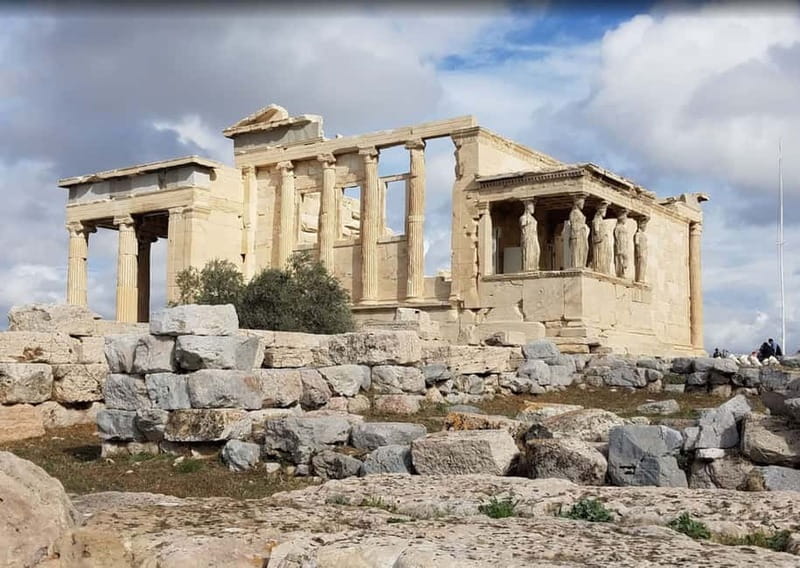
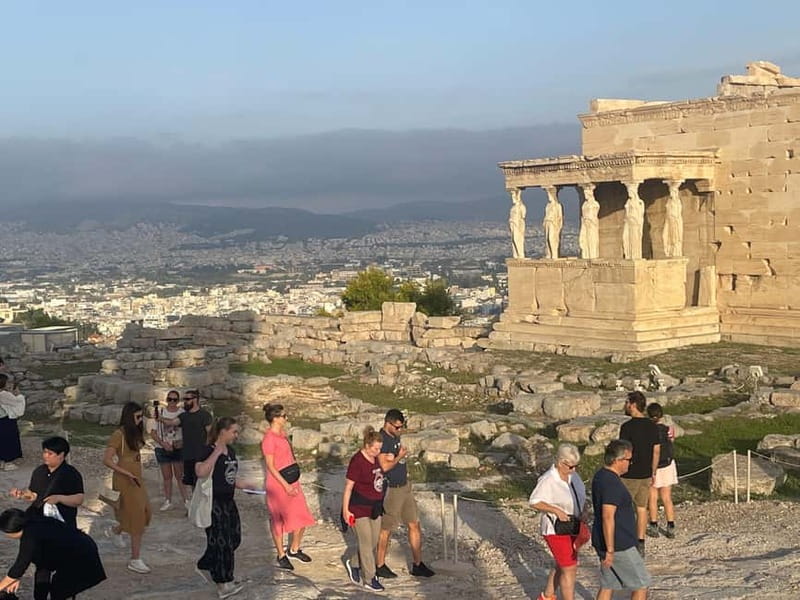
Then you reach the Erechtheion, a site famous for its distinct design and sacred associations. This is one of those stops where the explanation can turn “I see columns” into “I understand why this space had multiple meanings.” Guides also tend to tie in myth details at points like this, which helps the stone feel less like a museum object.
What to watch for as you move
Here’s what you’ll gain if you pay attention:
- how entrances and thresholds shape the route
- how different temples highlight different purposes
- how myths attach to specific spaces, not just to the city in general
You’ll also get periodic glimpses of Athens’ scenic hills in the broader framing of the area, including views toward Filoppapos, Mars, and Pnyx. Even if you don’t explore those hills today, noticing them from the Acropolis helps you understand why Athenians built where they did.
Parthenon time: how the guide makes the loud crowd manageable
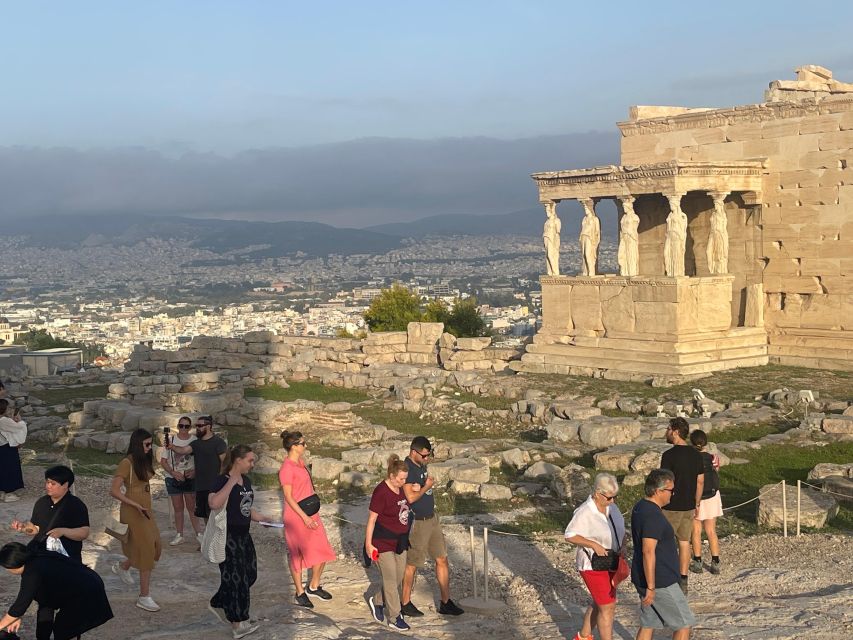
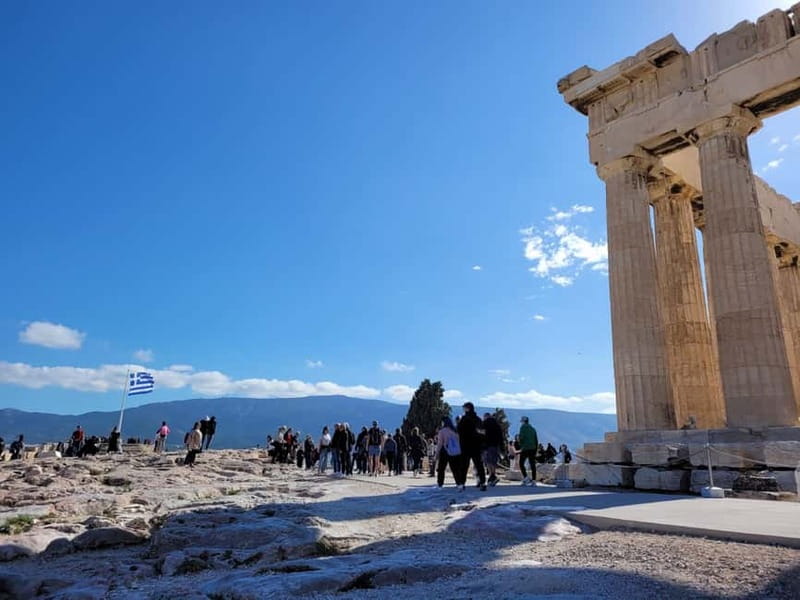
The big moment is the Parthenon, and you’ll get time to stand, look, and absorb the key ideas. With a guided narration, the Parthenon stops being only a name. You start recognizing it as a statement of Athens: power, belief, artistry, and civic pride wrapped into one structure.
You also get a bit of breathing space to take in the site, since the Parthenon portion includes a longer guided walkthrough compared to many other stops. The surrounding area can be crowded, so the tour’s earphones help you stay locked on what matters instead of getting distracted by people moving around you.
A smart photo tip
If you care about photos, consider booking a later time when the light can feel more forgiving. One guide-led experience I saw highlighted that late afternoon can bring better photo conditions, often linked with the golden hour idea. Even if the crowd never disappears, better light improves everything.
Expect security and timing realities
This is still the Acropolis, which means airport-style security checks. During busy periods, plan for possible waits of 30 minutes or more. The tour enters the Acropolis immediately after it begins, so your ticket needs to match your tour time exactly. If you select the option without tickets, you’re responsible for purchasing your entry admission yourself from the official site.
Where the tour connects to the rest of Athens
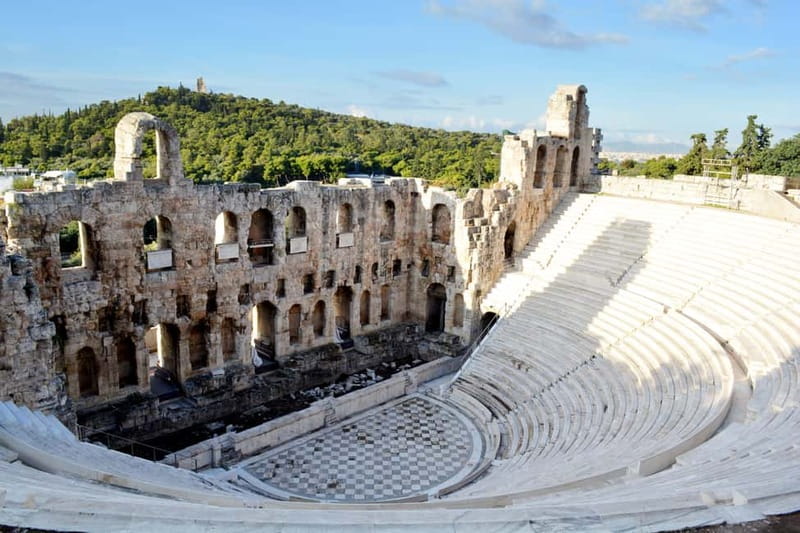
The Acropolis doesn’t sit alone. As you move through the area, you’ll also get points of reference tied to Athens landmarks beyond the immediate monuments. The tour description includes connections you’ll likely hear about during the walk and stops, such as the Odeon of Herodes Atticus and the Ancient Agora, plus the National Observatory of Athens area. You’re not doing a full city tour, but you’re getting bearings.
This matters because Athens can feel like a museum city where everything is close on a map but hard to connect emotionally. A guided Acropolis visit helps you build a mental grid so later exploring feels easier.
Acropolis Museum option: when it helps (and when you might skip it)
The tour includes an option for Acropolis Museum entry and a museum tour, if you choose the ticket option. If you want to go one step deeper into how artifacts relate to the buildings you saw, the museum can be a strong follow-up. It’s especially useful when you’re looking at sculptures and architectural fragments and want them explained in context.
If you’re short on time, or you already know you want to spend your limited hours just soaking in the Acropolis and views, you might prioritize the summit experience and skip the museum add-on. Just know that the museum choice is part of the ticket option, not automatic.
Price and value: what you get for about $38.39
At around $38.39 per person, this tour isn’t the cheapest way to see the Acropolis. It is also not a premium-priced private guide. For me, it lands in the value zone because you’re paying for:
- a local licensed guide who talks you through myths and historical facts
- headphones that improve comprehension in real crowd noise
- structured time at the main monuments rather than wandering and guessing
You also get an Athens map and Athens Guide magazine for ideas on what to do next. That kind of small add-on seems minor until you’re trying to plan your remaining hours in Athens and need a quick way to decide what makes sense.
Where the value can drop is if you already have a great guide already planned for another part of Athens, or if you strongly prefer self-guided exploring with a mobile app and don’t want to follow a set walking route. But if you’re visiting for the first time, or you feel overwhelmed by the sheer scale of the site, guidance is often what turns tickets into understanding.
Who should book this Acropolis and Parthenon walking tour
This is a great match for you if:
- it’s your first real look at the Acropolis
- you want clear explanations tied to specific monuments, not general overview talk
- you care about hearing the story even in crowded outdoor spaces
- you want a walk that ends on the Acropolis so you can linger afterward for photos
From the guide-focused experiences I’ve seen, families can also make it work when they have the stamina. Still, it’s not a low-walk tour, and the site involves steps and uneven terrain.
Who should skip it
If you have mobility impairments or use a wheelchair, this tour isn’t suitable based on the provided info. And if you want to roll in with strollers or large bags, this one won’t fit your day.
Final verdict: should you book?
If you want the Acropolis to feel like more than a photo stop, I’d book this. The licensed guidance plus headsets is the core reason it’s worth the money, and the route helps you understand what you’re seeing from the first slope climb through the Parthenon.
I’d only hesitate if you hate crowds, you’re already set on a self-guided plan, or you’re arriving without flexibility for security lines and strict entry times. Otherwise, this is a solid way to get real value out of a short Athens window.
FAQ
FAQ
Do I need to buy my own Acropolis ticket?
It depends on the option you select. If you choose without tickets, you buy your Acropolis admission ticket yourself from the official website. If you choose with tickets, everything is handled for you.
Does the tour include the Acropolis Museum?
The Acropolis Museum entry ticket and a museum tour are included only if you select the option that includes museum admission.
Where do I meet the guide?
You meet at 3 Dionyssiou Areopagitou Street. Look for the orange sign displaying Athens Walking Tours near the pedestrian walkway leading to the Acropolis from the Hadrian’s Arch area.
What time should I arrive at the meeting point?
Arrive 20 minutes prior to the tour departure time. Entry times are strict, and latecomers may not be able to enter.
How long is the tour?
The duration is listed as 2 to 3.5 hours, depending on the start time you choose.
What should I bring?
Bring a passport or ID card, comfortable shoes, sunglasses, a sun hat, and sunscreen. The tour also runs rain or shine, so dress for the weather.
Is the tour wheelchair accessible?
No. The tour is not suitable for mobility impairments or wheelchair users, and strollers are not allowed.
You Might Also Enjoy




More Walking Tours in Athens




More Tours in Athens

More Tour Reviews in Athens
- All Day Cruise -3 Islands to Agistri,Moni, Aegina with lunch and drinks included
★ 5.0 · 4,958 reviews