REVIEW · ATHENS
Acropolis: Acropolis and Parthenon Guided Walking Tour
Book on GetYourGuide →Operated by Athens Walks Tour Company · Bookable on GetYourGuide
Athens history sits under your feet. This Acropolis guided walking tour turns major ruins into a clear story you can follow, with wireless audio so you do not miss the details. You’ll climb toward the Parthenon and earn big views over modern Athens and the classical world.
What I really like is the way the route is built like a timeline: Theatre of Dionysus to Propylaea to Erechtheion, with the myths and architecture stitched together as you walk. I also love that the tour runs with a licensed guide plus skip-the-line entry, which saves you stress when lines are long.
One consideration: the hill is real and the walking adds up. It’s also not suitable for wheelchair users, so plan on comfortable shoes and a steady pace if you have mobility limits.
In This Review
- Key Things to Know Before You Go
- From Theatre of Dionysus to the Parthenon: The Big Idea
- Meeting Point at Porinou 5: Easy Start, Clear Direction
- Theatre of Dionysus: Where Drama Became Public Life
- Asklepieion + Odeon of Herodes Atticus: Religion, Healing, and Spectacle
- Temple of Athena Nike: Victory as a Design Message
- Propylaea: The Grand Entrance Gateway
- Erechtheion and the Caryatids: Myth, Architecture, and Attitude
- Parthenon Time: The Crown Jewel and the View
- Ending at the Acropolis Museum: Put the Pieces Together
- Price and Value: What You’re Paying For at About $36
- Guide Quality: Why Names Like John and Hermes Keep Showing Up
- Timing and Crowds: Morning Beats Late, Most of the Time
- Who This Tour Fits Best
- Tips to Make Your Visit Smoother
- Should You Book This Acropolis Tour?
- FAQ
- How long is the Acropolis and Parthenon guided walking tour?
- Where do I meet the guide?
- Does the tour include skip-the-line entry?
- Is the Acropolis Museum included?
- What does the tour include for hearing?
- What should I bring with me?
- Is the tour wheelchair accessible?
Key Things to Know Before You Go

- Wireless hearing devices help you stay tuned, even when the Acropolis gets loud and crowded
- Skip-the-line access can be a big quality-of-life upgrade on busy days
- The route is story-driven, starting at Theatre of Dionysus and ending near the Acropolis Museum
- Parthenon viewpoints give you the big-picture Athens moment, not just close-up ruins
- Optional Acropolis Museum time can add helpful context if you pick that version
- Guides matter, and many groups report top-tier storytelling and humor from names like John, Hermes, Alexia, and Dionysus
From Theatre of Dionysus to the Parthenon: The Big Idea

If you only have a day or two in Athens, the Acropolis can feel like a blur of stone and labels. This tour fixes that problem by walking in a logical sequence and explaining why each spot mattered. You start where Greek drama began and end where Athenian power was staged in marble.
The pacing is also designed for short attention spans and long lines. Expect a walk with frequent guided stops, not a speed-run. You’ll get wireless hearing devices, which means you can keep moving without constantly craning your neck to catch every sentence.
You can also read our reviews of more walking tours in Athens



Meeting Point at Porinou 5: Easy Start, Clear Direction

The meeting point is at Athens Walks tour office at Porinou 5, 11742. The good news: it’s only about a two-minute walk from the Acropolis metro station, so you can arrive without wrestling with complicated transfers.
This matters because the Acropolis is packed most days. When you start on time and in the right place, the rest of the climb feels calmer. Some guides are known for keeping groups together tightly, which is exactly what you want on crowded paths.
Practical tip: arrive a few minutes early. Even if you are on the dot, Athens crowds can shuffle your timing, especially if street traffic is slow.
Theatre of Dionysus: Where Drama Became Public Life
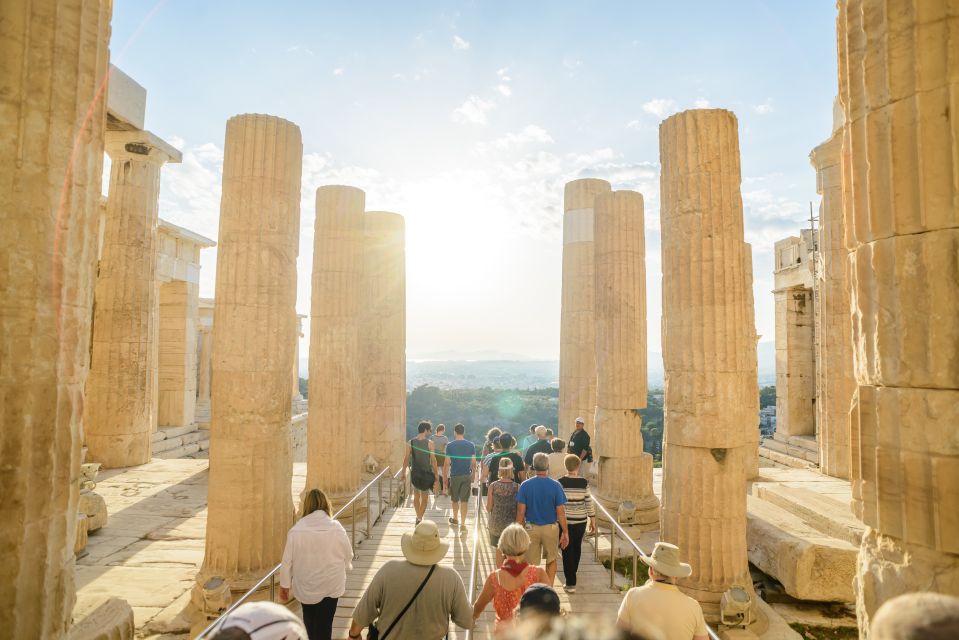
Your first major stop is the Theatre of Dionysus, known as the birthplace of drama and the oldest Greek theatre still in existence. Standing among the ancient seating is one of those experiences that clicks fast. You can look across the stone tiers and immediately picture performances happening there, with thousands watching.
This stop is more than a photo-op. It sets the theme for the whole tour: Ancient Athens used art and politics together. Theatre was not some niche hobby. It was a civic stage.
How long you’ll linger here: about ten to fifteen minutes of walking into the area plus a guided moment. The storytelling angle is what makes it worth your time, not just the stones.
Asklepieion + Odeon of Herodes Atticus: Religion, Healing, and Spectacle
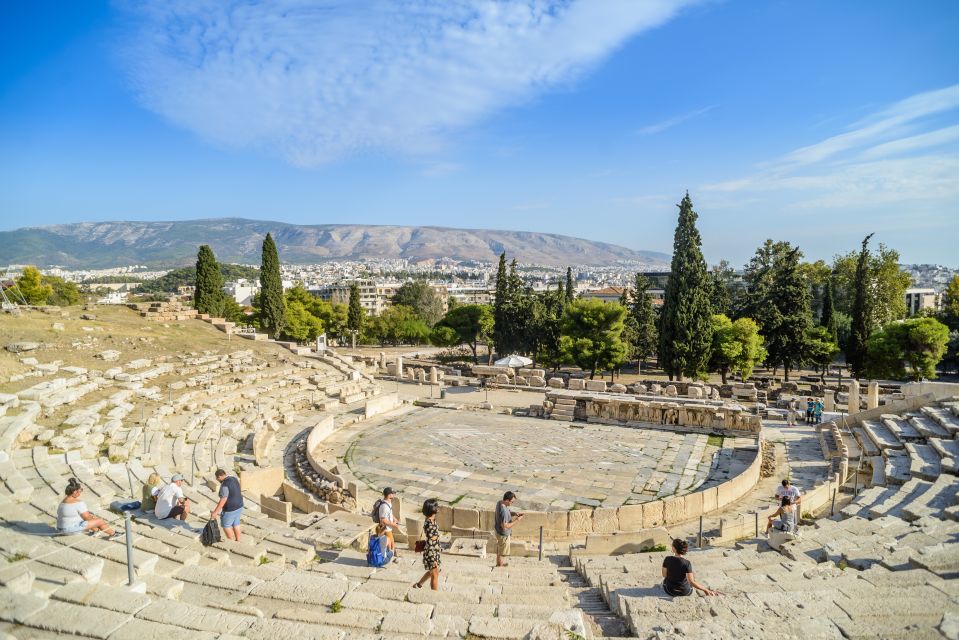
Next up is a quick stop at the Asklepieion of Athens. Think of it as a different kind of sacred space. Instead of dramatic performances, you’re introduced to the idea of healing tied to the divine.
Then you move to the Odeon of Herodes Atticus. This theatre/odeon is famous for its association with cultural events and large-scale gatherings. Even if you do not know the architecture terms, you’ll feel the purpose: this is where entertainment and public life met.
A useful takeaway here: Athens did not build monuments randomly. People designed spaces for community rituals, learning, worship, and performance. Once you see that pattern, the climb to the top reads like a connected city plan rather than isolated ruins.
Temple of Athena Nike: Victory as a Design Message
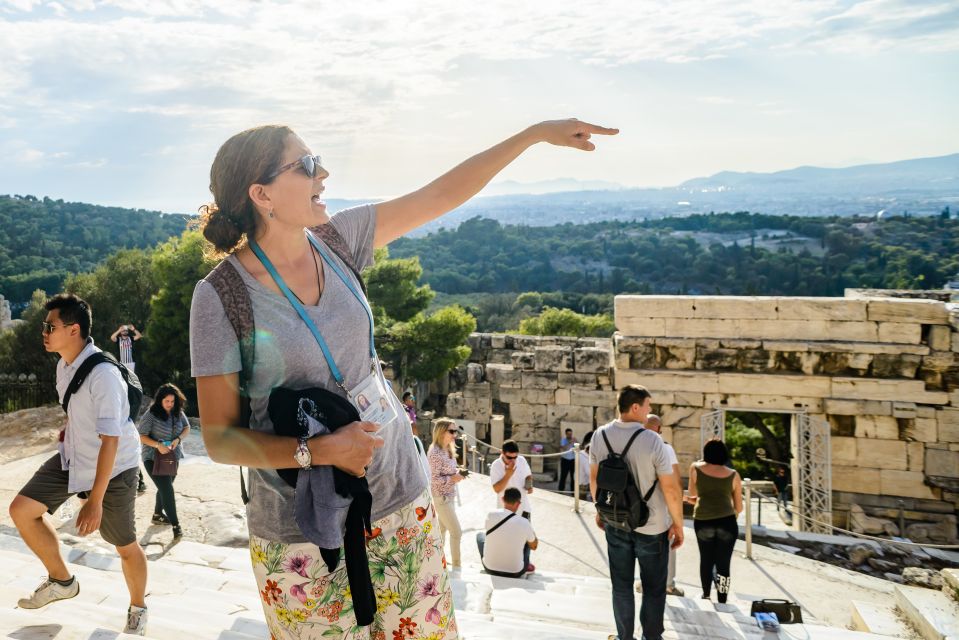
You’ll visit the Temple of Athena Nike, guided for about ten minutes. This is a key moment because Athena is the anchor of what comes later. You’re not just going to the Parthenon as a standalone masterpiece. You’re following a larger political-religious message.
What to look for: the way the temple ties into the idea of victory. In your head, connect it to the Parthenon as a statement of Athenian strength and identity. The guide’s job is to translate symbolism into plain language you can remember.
This stop is usually short, but that’s a plus. It keeps you moving toward the big sights without losing the plot.
You can also read our reviews of more guided tours in Athens



Propylaea: The Grand Entrance Gateway
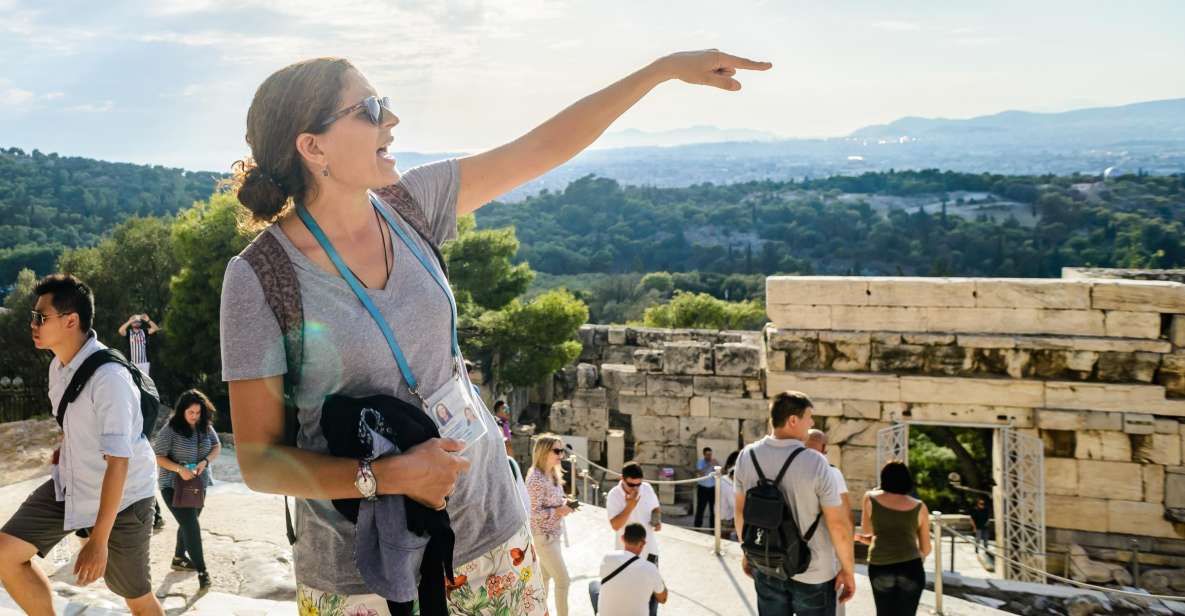
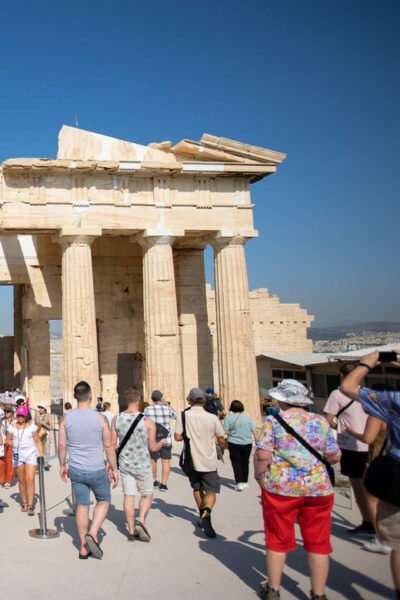
Propylaea is where the Acropolis starts feeling like a destination, not a hill you climb. You’ll get a guided walkthrough of about fifteen minutes focusing on its imposing gateway character, plus its symmetry and how it controls your approach.
In practical terms, Propylaea acts like a transition: you’re moving from the city up into sacred space. The guide’s explanations here help you understand why people back then treated arrival as part of the experience.
If you’re dealing with crowd pressure, this is a mental reset. You’re getting your bearings fast because the entrance is a clear landmark.
Erechtheion and the Caryatids: Myth, Architecture, and Attitude
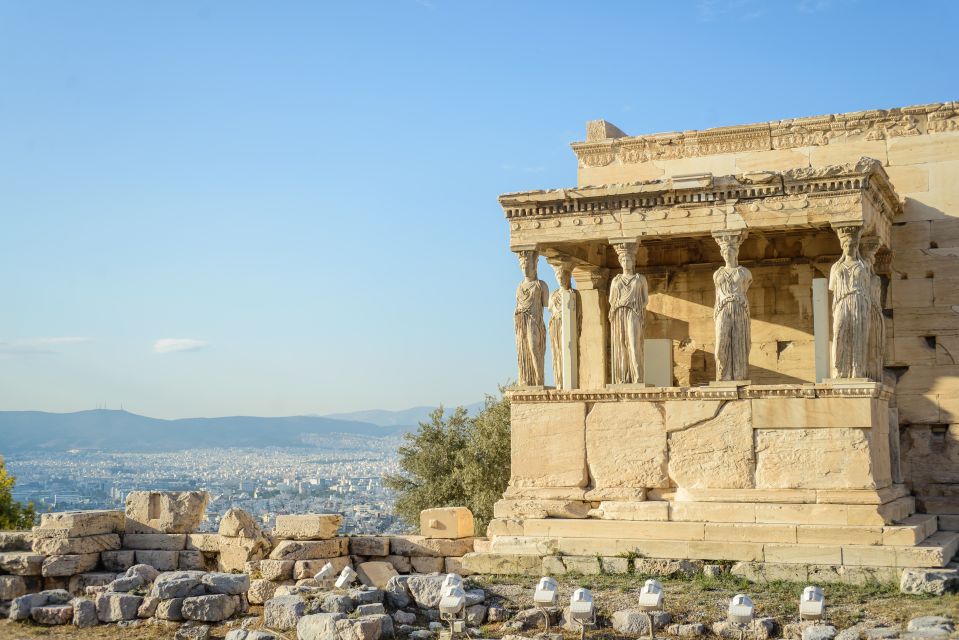
Erechtheion is one of the most memorable parts of the tour for many people, and for good reason. You’ll spend around fifteen minutes here, focusing on the Caryatids, the famous female figures used as supporting columns.
What’s great about this stop is that it rewards both your eyes and your imagination. You’re not only looking at carved stone; you’re learning the stories and legends connected with the sanctuary. The tour also brings in the contest between Athena and Poseidon for patronage of the city, which makes the place feel alive.
A small caution: Erechtheion areas can be busy. That’s exactly where wireless audio helps. But also remember one lesson from real groups: if you drift too far from your guide, hearing can get harder. So do not let the crowd pull you a few steps away from the front line.
Parthenon Time: The Crown Jewel and the View
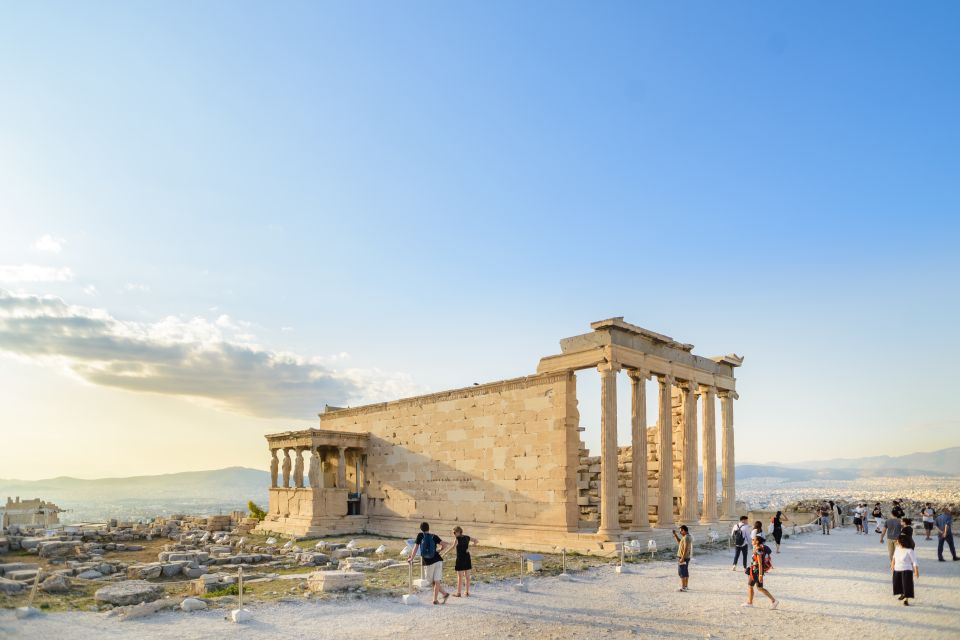
Then comes the Parthenon, your big finale stop. Plan on about thirty minutes of guided time here, plus the built-in chance to absorb the views.
This is where you should slow down a little. The Parthenon is famous for precision and design, but it hits harder when you understand its purpose. The tour frames it as a sanctuary for Athena and as a symbol of Athens’ power and influence in the ancient world.
And yes, the views matter. The Acropolis hill gives you panoramas across modern Athens and the places where classical civilization once shaped everyday life. It’s the moment your brain switches from reading history to seeing it mapped onto real geography.
Ending at the Acropolis Museum: Put the Pieces Together
Your tour wraps up back at the meeting point area, with the finish at the Acropolis Museum (Μουσείο Ακρόπολης). Depending on the option you choose, you may also get guided time in the museum, with skip-the-line entry in English.
This part is valuable because the stones you see on the hill are only half the story. Museums help you connect fragments to full artworks, and you start noticing details you might miss while you’re staring at giant architecture. If you pick the museum add-on, the guide can help you interpret what you’re looking at rather than leaving you to guess.
If you do not choose the museum option, the walk still ends in a practical zone. You can easily continue your Athens day nearby rather than feeling stranded after the climb.
Price and Value: What You’re Paying For at About $36
The price is about $36.14 per person. For a top site like the Acropolis, that number only feels fair because of what’s included.
Here’s what you’re getting for your money:
- A licensed live guide (the real difference-maker on the Acropolis)
- Wireless hearing devices, so you can actually follow the story while moving
- Skip-the-line entry options, which can prevent a big chunk of your day from disappearing into queues
- A guided route that hits major highlights instead of leaving you to figure it out alone
- Optional Acropolis Museum guidance, if you select that version
Is it the cheapest thing on your Athens list? No. But you’re paying for time saved, clarity gained, and a guided narrative that makes the monuments more than just an impressive backdrop.
Guide Quality: Why Names Like John and Hermes Keep Showing Up
One of the strongest signals from what you’re likely to experience is the emphasis on storytelling and group leadership. People often call out guides by name, including John (described as an archaeologist guide), Hermes, Alexia, Dionysus, Komissa, Anastasia, Artemis, and others.
Even if you do not get the same guide, the pattern is clear: the best tours here do two things well. First, they explain what the sites are. Second, they make you care about why Athenians built them that way. When guides add humor and pacing control, you end up with a tour that feels like a guided walk through a living story, not a lecture while you’re trying not to get stuck behind another group.
Timing and Crowds: Morning Beats Late, Most of the Time
The Acropolis is crowded by nature. If you have flexibility, consider booking early. Some groups report that starting in the morning meant the area felt less packed as the tour went on.
Also, be prepared for occasional event days at nearby museums. That can influence crowd flow. The key is not to panic. A good guide knows how to manage group movement so you can still enjoy the stops.
Practical tip: bring sun protection seriously. A sun hat and sunscreen are recommended, and you will feel the difference. Water is not listed as included, so if you need it for your personal pace, plan accordingly.
Who This Tour Fits Best
This is a strong choice if:
- You have just 1–2 days in Athens and want a structured overview
- You prefer a live archaeologist-style narrative rather than self-guiding with an app
- You want the Parthenon viewpoint experience without getting lost in logistics
- You like myth and context tied directly to the stones
You might want to think twice if:
- You have mobility issues that make steep, crowded walking hard
- You want long, unhurried stays at only one or two monuments rather than a curated route
- You expect a silent, personal museum-like experience (the Acropolis is social by default)
Tips to Make Your Visit Smoother
- Wear comfortable shoes. This is repeated for a reason: you’ll be walking uphill.
- Bring a sun hat and sunscreen. The hill sun can feel relentless.
- Keep close enough to the guide when using the wireless audio. Farther back can mean weaker clarity.
- If you plan to add Acropolis Museum time, choose the version in English if that’s your preference. You can also use the guided option to get more out of what you’re seeing.
Should You Book This Acropolis Tour?
Book it if you want the smart Athens shortcut: a guided, story-led climb that covers the key monuments, includes wireless hearing support, and uses skip-the-line access when you select that option. The real value is not just reaching the Parthenon. It’s understanding what you’re looking at as you go, stop by stop.
Skip booking only if your schedule is extremely tight for walking, you want a totally independent experience, or you struggle with the physical reality of a busy, uphill site. If you can handle that, this is one of the more efficient ways to turn the Acropolis from impressive stone into a clear, memorable Athens story.
FAQ
How long is the Acropolis and Parthenon guided walking tour?
The duration is listed as 2 to 4 hours. Exact starting times depend on availability.
Where do I meet the guide?
Meet your guide at Athens Walks tour office at Porinou 5, 11742. This is about a two-minute walk from the Acropolis metro station.
Does the tour include skip-the-line entry?
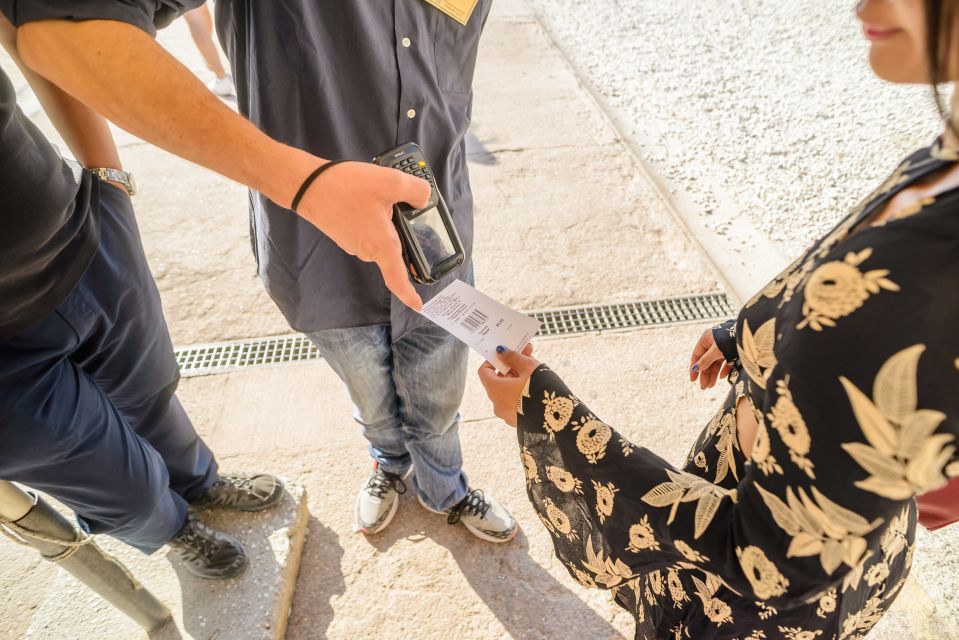
It offers skip-the-line entrance tickets through a separate entrance if you select the ticket option. There is also skip-the-line entry to the Acropolis Museum if that option is selected.
Is the Acropolis Museum included?
The museum visit is included only if you choose the option that includes the Acropolis Museum (English version). The tour can include guided museum time and skip-the-line museum entry with that option.
What does the tour include for hearing?
Wireless hearing devices are included to help you hear your guide clearly.
What should I bring with me?
Bring a passport or ID card, comfortable shoes, a sun hat, and sunscreen.
Is the tour wheelchair accessible?
No. The tour is not suitable for wheelchair users.
You Might Also Enjoy



More Walking Tours in Athens




More Tours in Athens

More Tour Reviews in Athens
- All Day Cruise -3 Islands to Agistri,Moni, Aegina with lunch and drinks included
★ 5.0 · 4,958 reviews