REVIEW · ATHENS
Acropolis monuments & Parthenon Walking Tour with Optional Acropolis Museum
Book on Viator →Operated by Athens Walks Tour Company · Bookable on Viator
One hill, three eras of Athens. This guided Acropolis walk is built around the big-name monuments—then adds the stories that make them click, from the Theatre of Dionysus to the Parthenon. I love that you get skip-the-line handling early, so the day starts with momentum instead of standing around.
I also like the small-group feel, capped at 20 people. You’ll hear the guide clearly thanks to the whisper audio system, which matters when you’re talking while walking and looking up.
The main drawback to plan for is the physical side: expect steep climbs and plenty of standing. Bring shoes you’d trust on uneven stone paths, and don’t treat this like a casual stroll.
In This Review
- Key things you should know before you go
- First Step: Meeting Near Porinou 5 (and Getting Into the Flow)
- Getting the Layout: How the Route Turns Monuments Into a Story
- Theatre of Dionysus and Herod’s Odeon: Start Where the Crowd Roared
- Propylaea: The Acropolis’s Grand Entrance Moment
- Temple of Athena Nike (Victory Temple): Look for the Design Details
- Parthenon Time: The Stop Everyone Photos, But a Guide Makes It Make Sense
- Erechtheion: The Caryatids You’ll Remember After You Leave
- Acropolis Hill: Where Views Meet the Practical Reality of Time
- Optional Acropolis Museum: The Artifact Payoff After the Hilltop
- Guides, Audio, and Why the Small-Group Size Matters
- Price and Ticket Strategy: What You Pay, and How to Decide
- What to Bring (So the Tour Doesn’t Feel Like a Battle)
- Who This Tour Is Best For (and Who Might Prefer DIY)
- Should You Book the Acropolis Monuments and Parthenon Walk with Museum?
- FAQ
- How long is the Acropolis monuments and Parthenon walking tour?
- Is the tour offered in English?
- What group size should I expect?
- Does the tour include tickets?
- What are the ticket prices if I don’t choose the with-tickets option?
- Where is the meeting point, and where does the tour end?
- Is this tour very physical?
- Is there an audio system?
- Are there age-based discounts I can use?
- What happens if weather is poor or the minimum group number isn’t met?
Key things you should know before you go
- Skip-the-line access so you start seeing monuments fast
- Small groups under 20 with an audio system that keeps you in the loop
- Two options: Acropolis only, or Acropolis plus the Acropolis Museum
- A focused route that hits Propylaea, the Parthenon, and the Erechtheion
- Useful ticket options (pay once with the tour, or buy separately online)
- End point depends on your choice: finish at the museum if you add it
First Step: Meeting Near Porinou 5 (and Getting Into the Flow)
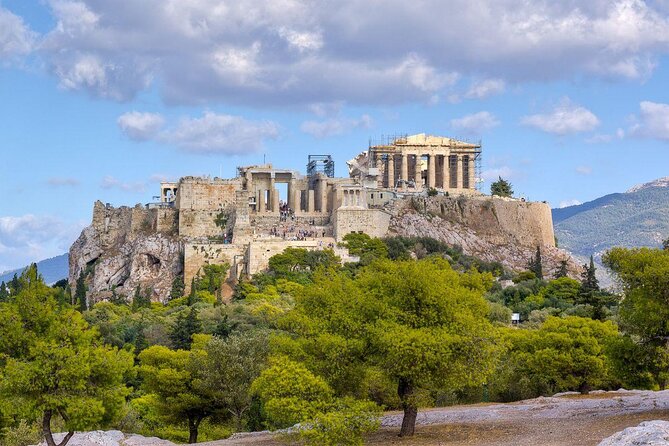
You’ll meet at Porinou 5 in Athens (check-in is close to the Acropolis area), and there’s even Wi‑Fi nearby if you need a quick moment to sort tickets. The tour is designed for a clean start: you check in, meet your licensed guide, and then head to the Acropolis.
Most tours begin early, which is a big deal on a hot day and helpful when you’re trying to beat crowds. It also sets the pace for the whole route—walk, stop, listen, then move on before the hill feels like a full-on workout.
Your finish depends on the option you pick. Go for Acropolis plus museum and you’ll end at the Acropolis Museum. Choose Acropolis only and you’ll finish at the Acropolis monuments area.
You can also read our reviews of more walking tours in Athens



Getting the Layout: How the Route Turns Monuments Into a Story
This is not just a “look at this, photo here” loop. The guide’s job is to connect what you’re seeing to why it mattered, and that’s what turns the Acropolis from a list of famous buildings into something you can actually understand.
You’ll move along the slopes and key viewpoints, with the guide explaining what the ruins were, what they did, and how the different structures relate to each other across time. In practice, it feels like a walking lecture with breaks built in for looking—plus time for photos.
One smart bonus: the guide system uses a whisper-style setup (and headsets for larger groups), so you’re not stuck competing with wind, footsteps, and your own head turning nonstop.
Theatre of Dionysus and Herod’s Odeon: Start Where the Crowd Roared

The tour kicks off with the Theatre of Dionysus Eleuthereus. Even though it’s in ruins, the setting explains a lot—this is where theatrical life and civic festivals were tied together. You don’t need to know Greek drama ahead of time; the guide gives you the scene so the space makes sense.
From there, you’ll visit the Odeon of Herodes Atticus, the Roman-era stone theater structure completed in 161 AD and later renovated in 1950. What I like about this stop is how it gives you a time contrast: the Acropolis wasn’t a single moment in time. It kept getting re-used, re-shaped, and repurposed as Athens changed.
Short stops here are on purpose. You get quick context early, then the tour escalates toward the hilltop monuments where you’ll spend longer.
Propylaea: The Acropolis’s Grand Entrance Moment
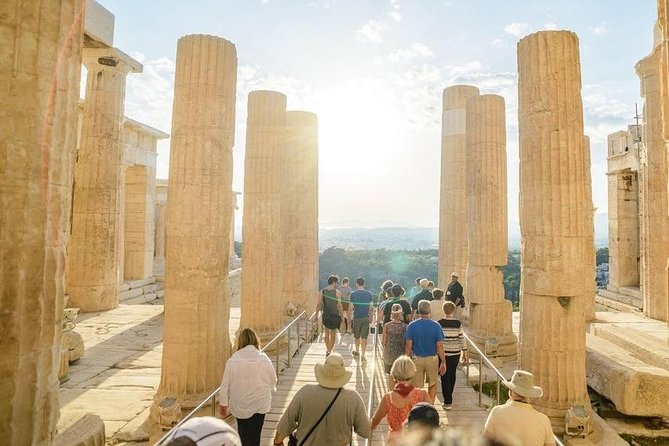
Next comes the Propylaea, the grand gateway into the Acropolis. This is one of those places where a guide helps immediately, because the “wow” is partly architectural design and partly symbolic scale.
When you’re standing in front of it, you get why this was the approach route people would have experienced. The guide’s focus is practical: what you’re looking at, how it worked as an entrance sequence, and what makes Propylaea so recognizable even in fragments.
If you’re the type who wants to understand the logic of a site instead of only admiring it, this is a good stop to lean into.
Temple of Athena Nike (Victory Temple): Look for the Design Details
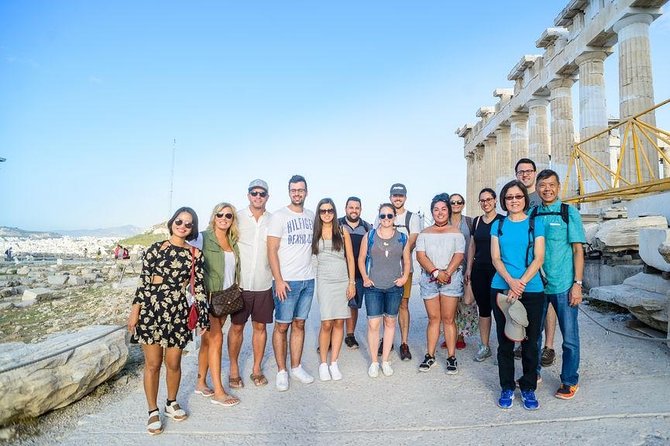
The route includes the Temple of Athena Nike, commonly called the temple of Victory. It’s set up to reward careful looking: the guide points out features that are easy to miss when you’re rushing for a picture.
This temple is dated to around 420 BC and is described as an early fully Ionic temple on the Acropolis. That matters because Ionic style is a specific architectural language—so when you’re told what makes it Ionic, the stones stop feeling random.
Short time here works well. You’ll get the key points without getting stuck in one spot too long, and then you’ll move on with a better eye for the rest.
You can also read our reviews of more museum experiences in Athens



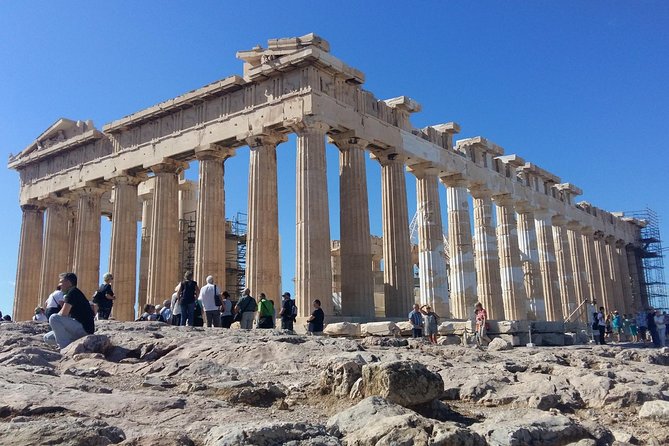
Parthenon Time: The Stop Everyone Photos, But a Guide Makes It Make Sense

The Parthenon is why most people plan this day in the first place. Even if you’ve seen it in books and on postcards, standing there in real scale changes things.
A guided visit helps because the Parthenon is more than one building. It’s a system of design choices—placement, proportions, and artistic programs—that were meant to project meaning. The guide takes you through the story behind what it represented and how the design supported that message.
You’ll have time to look and breathe while still moving with the group. Plan for lots of standing; it’s hard to avoid on the Parthenon approach. The upside is that the views reward patience, and the audio helps you keep listening while you glance around.
Erechtheion: The Caryatids You’ll Remember After You Leave
The Erechtheion is where attention shifts from large-scale architecture to striking human-form details. It’s especially famous for the caryatid statues—female figures that stand in for columns.
This is a great stop if you love art and sculpture, because the guide helps you slow down just enough to notice what your phone camera might overlook. You’ll get a sense of how the statues fit into the temple’s layout and why that kind of sculptural work mattered on a ceremonial hill.
Even with short timing, this stop usually lands. The Erechtheion isn’t only pretty; it’s informative, and it gives you a “this is real craftsmanship” moment.
Acropolis Hill: Where Views Meet the Practical Reality of Time
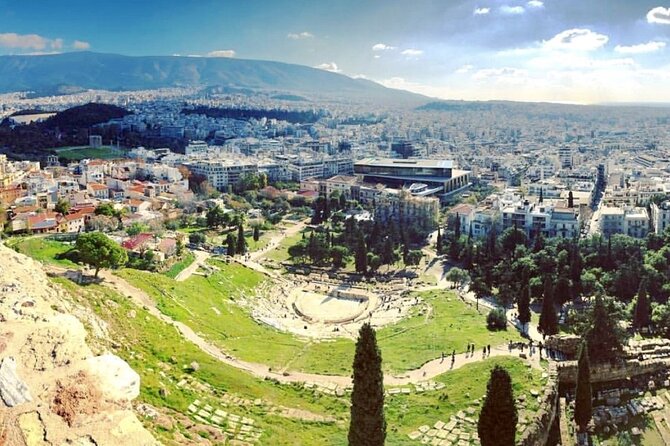
After the major monuments, you’ll spend time on the Acropolis area itself, consolidating what you’ve seen. This is where you can take another pass at the viewpoints and try to connect the buildings to the way the hill rises and falls.
One thing I’d plan for: if you’re sensitive to steps and uneven stone, pace yourself. The tour is described as requiring moderate physical fitness, and in real life that means you should expect steep sections and a lot of looking upward.
The good news is that the tour flow is built for comprehension. You’re not just wandering; you’re moving because the route is telling you how the site works.
Optional Acropolis Museum: The Artifact Payoff After the Hilltop
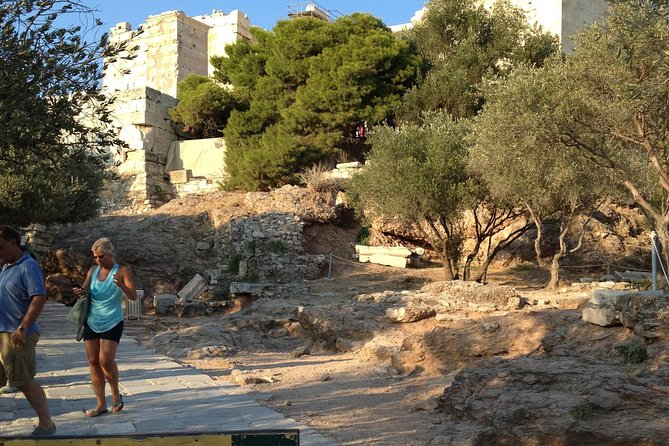
If you add the museum option, you’ll transfer from the open air into the Acropolis Museum, which is designed to show the site through objects and displays. This is where you start matching what you saw outdoors to the smaller pieces that carry the finer details.
The museum visit highlights what you might not notice at the monuments: inscriptions, fragments, and sculptural work that helps explain how the buildings were decorated and used. In particular, the museum option is noted for covering Parthenon friezes, which is exactly the kind of information that changes how you see the Parthenon itself.
The timing matters too. The experience is guided for about an hour, which usually means the guide hits the biggest points so you don’t lose the thread. After the guided portion, you can spend more time on whatever caught your attention—this flexibility is a real value.
There’s also an extra perk that doesn’t always require another ticket: the area under the museum that shows unearthed remains can be accessed from the outside. If you want one more “wait, this is still archaeology happening” moment, it’s worth checking.
Guides, Audio, and Why the Small-Group Size Matters
The tour uses a licensed professional guide, and the group stays small (under 20). That’s not only for comfort. It also makes it easier for the guide to keep the pace manageable and answer questions without losing control of timing.
You’ll hear the guide clearly through the whisper system for better listening, especially in groups larger than five. In other words, you’re not stuck guessing what’s important while everyone strains their neck for photos.
One detail I genuinely appreciate: the guide approach tends to be story-forward. Some guides you might encounter include people like Lisa, Aidli, Anna, Dionysus, John D, Helen, Dorina, Aphrodite, and Lydia. Each comes with their own style, but the goal stays the same: help you understand what the monuments were for, not just what they look like.
Price and Ticket Strategy: What You Pay, and How to Decide
The tour price is listed at $42.33 per person for about four hours. That’s the guide and the structure of the walk—including skip-the-line handling and the small-group setup.
The big variable is whether you pick the option that includes admission tickets. If you book without entrance tickets, you’ll need to purchase them yourself online in advance:
- Acropolis entrance: €30 per adult from April 2025, and €10 per adult from November to March
- Acropolis Museum entrance: €20 per adult from April 2025
So what’s the value? If you’re planning to visit both the Acropolis and the museum anyway, bundling the ticket option often makes the day smoother and reduces hassle. If you already know your entry plans and you’re careful with online purchasing, buying tickets separately can work, but you’ll want to plan ahead for exact dates.
Discounts can matter a lot. EU citizens under 25 can get free entrance; others under 25 have a 50% discount for Acropolis tickets. For that, you’ll need IDs or passports. If you’re traveling with someone under 18, bring a passport or ID to help reduce the Acropolis ticket price when applicable.
What to Bring (So the Tour Doesn’t Feel Like a Battle)
This is an outdoor monument day, so the basics win:
- comfortable shoes
- hat and sun cream
- a plan for hydration (the tour time is long enough to feel it)
Also, if you qualify for youth discounts (especially EU under 25), bring passports or photo copies. You don’t want a discount to disappear at the gates because someone forgot proof.
And since you’ll be listening while walking, keep your ears clear—avoid taking in too much music that competes with the guide audio.
Who This Tour Is Best For (and Who Might Prefer DIY)
This tour is ideal for first-timers to Athens and anyone who wants context, not just views. If you’re history-inclined, the guided route helps you connect architecture with the culture behind it.
It also suits you if you’re visiting for a short time and want a strong hit list of sites without planning every step.
On the other hand, if you love slow wandering and you’re comfortable reading independently, you might feel like you could do parts solo. Still, even then, having a guide for the Parthenon and Erechtheion can be the difference between seeing monuments and understanding them.
Should You Book the Acropolis Monuments and Parthenon Walk with Museum?
Book it if you want the most efficient way to experience the Acropolis with context, and especially if you’re curious about what you’re looking at beyond the classic skyline photo. The small-group size, skip-the-line flow, and clear audio system are practical reasons this tour works well.
Choose the museum option if you like seeing how outdoor ruins connect to objects inside the collections—especially if Parthenon friezes are on your must-see list. If you’re tight on time or you know you’ll explore museums another day, the Acropolis-only option still gives you the core monuments and routing.
Bottom line: if you’re going to spend time on the hilltop, paying for a structured guided explanation is usually the smartest way to make the day feel worth it.
FAQ
How long is the Acropolis monuments and Parthenon walking tour?
It’s approximately 4 hours.
Is the tour offered in English?
Yes, English is listed as the language option.
What group size should I expect?
The tour is limited to small groups of less than 20 people per guide.
Does the tour include tickets?
It depends on the option you choose. The tour includes entrance tickets only if you book the option with admission tickets. Otherwise, you’ll need to buy tickets online in advance.
What are the ticket prices if I don’t choose the with-tickets option?
Acropolis entrance is €30 per adult from April 2025 and €10 per adult from November to March. Acropolis Museum entrance is €20 per adult from April 2025.
Where is the meeting point, and where does the tour end?
You start at Porinou 5, Athina 117 42, Greece. If you book the option with the museum, the tour ends at the Acropolis Museum on Dionysiou Areopagitou 15, Athina 117 42, Greece. If you book Acropolis only, it ends at the Acropolis monuments.
Is this tour very physical?
It’s described as requiring moderate physical fitness. Expect steep climbs, standing, and walking on outdoor paths.
Is there an audio system?
Yes. A whisper tour guide system is used for better listening (with audio support for groups larger than five).
Are there age-based discounts I can use?
Yes. EU citizens under 25 have free entrance to the Acropolis, while others under 25 have a 50% discount. Under-18 participants should bring passport/ID to support reduced pricing. IDs or passports are required at entry.
What happens if weather is poor or the minimum group number isn’t met?
This experience requires good weather. If it’s canceled due to poor weather, you’ll be offered a different date or a full refund. If the minimum number of travelers isn’t met, you’ll also be offered a different experience/date or a full refund. Free cancellation is available up to 24 hours in advance for a full refund.
You Might Also Enjoy


More Walking Tours in Athens




More Tours in Athens

More Tour Reviews in Athens
- All Day Cruise -3 Islands to Agistri,Moni, Aegina with lunch and drinks included
★ 5.0 · 4,958 reviews