REVIEW · ATHENS
6 Day Religious & Classical Tour of Thermopylae, Meteora, Delphi, Olympia, Mycenae, Nafplio, Epidaurus, ancient Corinth From Athens
Book on Viator →Operated by Ancient Greece Tours & Transfers · Bookable on Viator
Six days is plenty to hit Greece’s big faith-and-classics sites. This private Athens-to-Peloponnese loop pairs Thermopylae and the Thermopylae museum with Meteora monasteries, Delphi’s oracle sanctuary, Olympia’s games, and ancient Corinth through St. Paul’s era. I like how it runs in a calm, comfortable private luxury vehicle schedule, and I love the built-in breaks that keep the day from turning into nonstop museum-sprinting. One thing to weigh: site entrance fees and meals are not included, so your real total depends on how much you add for tickets and food.
A major plus here is the human factor. In their own words and examples, the guide Tas is cited for in-depth commentary and for adjusting the plan to match your interests without fuss. And it’s not just ancient stones—there’s even an option to enjoy a home-cooked-style meal at La Belle Helene with Konstantina, which feels like the kind of practical local detour that makes this route more than a checklist.
In This Review
- Key highlights worth your attention
- Why this Athens-to-Corinth route makes sense
- Day 1: Thermopylae’s battle story and sulfur-spring recovery
- Day 1 evening in Meteora: monasteries, villages, and sunset time
- Day 2 in Meteora: completing the set (and saving your energy)
- Day 3 in Delphi: the oracle sanctuary plus a museum that explains the art
- Day 4 in Olympia: Zeus, Hera, and the Olympic Games origin story
- Day 4 evening in Nafplio: fortress views and a slow-town feel
- Day 5: Epidaurus theater acoustics and Mycenae’s gold-age power
- Day 6 in ancient Corinth and the Isthmus Canal: Acrocorinth and the Apostle Paul link
- What’s included, what isn’t, and how that affects your budget
- Small details that can make or break your comfort
- Should you book this Thermopylae–Meteora–Delphi–Olympia–Corinth tour?
- FAQ
- What time does the tour start in Athens?
- Does the tour include pickup and drop-off?
- Is accommodation included?
- Are entrance fees included?
- Is a licensed tour guide included inside museums and sites?
- What about meals and drinks?
- What is the cancellation policy?
- What dress code do I need for churches and museums?
Key highlights worth your attention
- Thermopylae museum + Leonidas monument: a modern way to understand the 480 BC battle, not just the postcard site.
- Meteora at sunset: monasteries plus golden light over Kalambaka and Kastraki, with time to stroll town shops.
- Delphi’s oracle world: Apollo Temple area, treasuries, and a museum that puts the sculpture and carvings into context.
- Olympia beyond the ruins: Zeus and Hera sites plus museum options, including a dedicated Olympic Games history museum.
- Epidaurus theater acoustics: one of the easiest places to experience “wow” without needing extra activities.
- Ancient Corinth with religious context: Acrocorinth views, the Agora, and the Bema connected to Apostle Paul.
Why this Athens-to-Corinth route makes sense
This itinerary is built like a spine: you start near Athens, head to Thermopylae, then work down into central Greece (Meteora, Delphi) and the Peloponnese (Olympia, Nafplio, Epidaurus, Mycenae, Corinth). You’re not bouncing through random back roads—distances are long, but the plan stays logical, with hotel check-ins built in.
Because it’s private, you control the pace inside the day. If you want a slower walk around the town squares after a major site, you can do that without the pressure of a big group shepherding everyone along.
You can also read our reviews of more tours and experiences in Athens
Day 1: Thermopylae’s battle story and sulfur-spring recovery
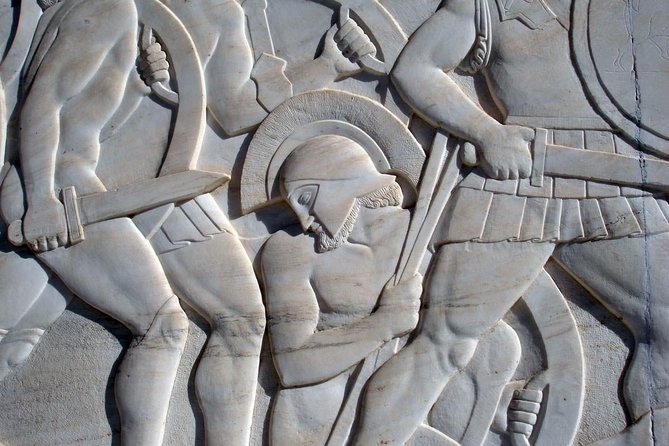
Thermopylae hits fast. You start with the Battle of Thermopylae context—Greek city-states led by Leonidas of Sparta versus Xerxes’ Persian Empire—and then you move into the place’s myth layer with the Gates of Fire idea tied to hot sulphur springs and the cavernous entrances of Hades.
The monument of King Leonidas is a standout: a brass Spartan king with spear and shield, created by sculptor Vasos Falireas and erected in 1955. It’s not just decorative; it visually anchors the battle narrative when the landscape itself is quieter than you might expect.
Right after that, I like that you get the Thermopylae museum. The museum is dedicated to the 480 BC battle and helps you understand why this narrow coastal passage mattered so much to Greek and later Western history. Then you get a chance to treat yourself with the hotsprings.
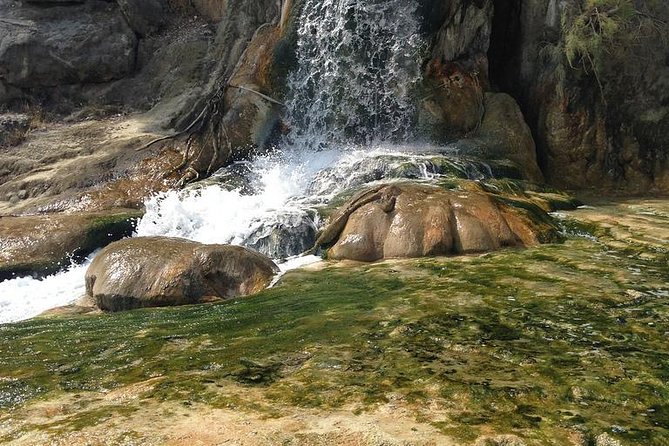
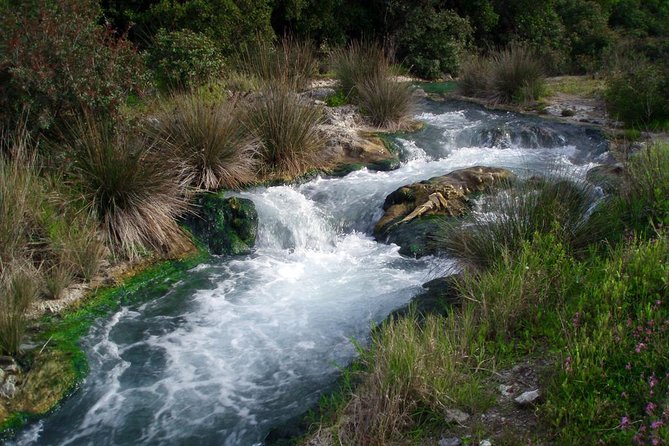
The hot springs portion is described like a healing-spa setup, with hydrotherapy facilities focused on balneotherapy. If you’ve been doing long travel days, this is a practical reset before Meteora—especially since Meteora is all about stairs, viewpoints, and walking.
A timing reality to know: this day includes driving to Meteora and hotel check-in. If your hotel room is far from the center, ask your driver where you’ll want to base yourself—Kalambaka and Kastraki are both mentioned, and they can feel very different in evening convenience.
Day 1 evening in Meteora: monasteries, villages, and sunset time
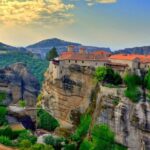
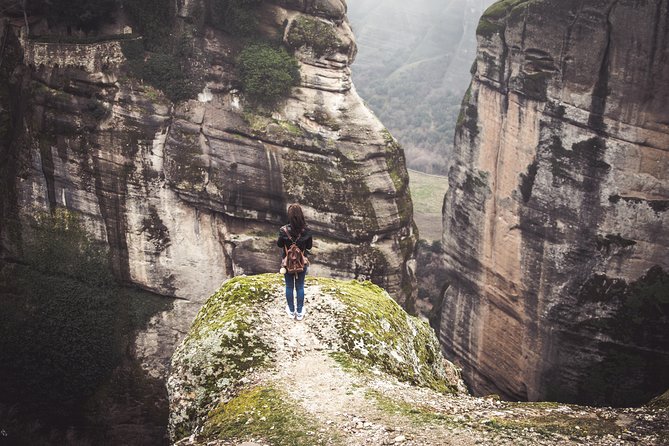
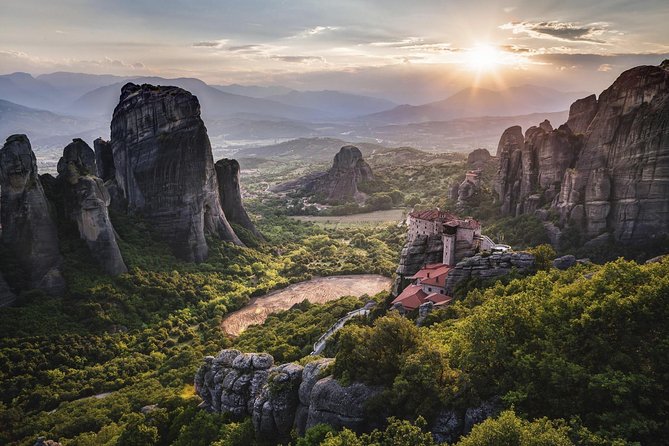
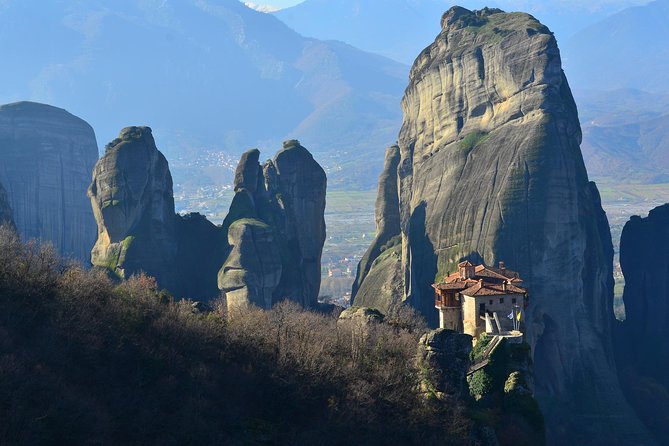
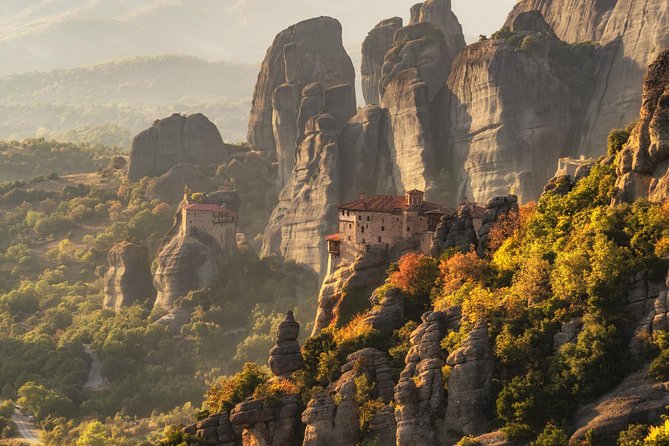
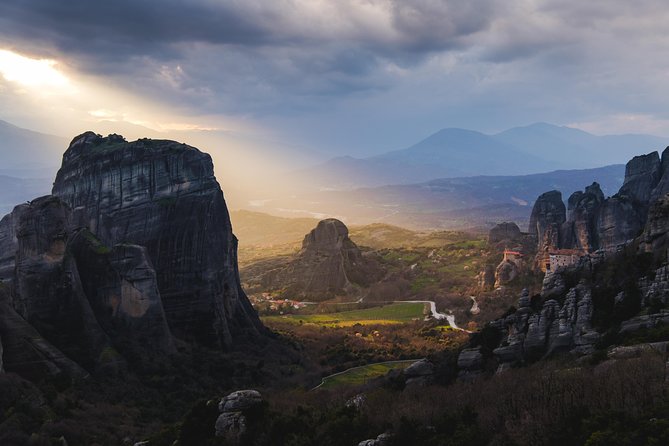
Meteora is built on dramatic vertical scale: monasteries perched in rock towers above Kalambaka. You visit the Hanging Monasteries, typically 1 to 2 monasteries on the first day, then you have time in Kalambaka and Kastraki before dinner.
I like the way this itinerary gives you both sightseeing and breathing room. You’ll get a late lunch/early dinner at a traditional taverna, then there’s time to stroll village shops for handmade souvenirs—something easy to do because you’re already in town after the monastery visits.
The Meteora sunset is a big deal here. Even if you’ve seen photos, seeing the rock formations change color while the monasteries sit high above is a memorable experience. It’s also one of those moments that feels worth the early planning, because the timing matters.
One practical consideration: monasteries mean more walking and more stairs than you might expect, plus dress rules for worship sites. Start the day with comfortable shoes and plan to cover knees and shoulders.
Day 2 in Meteora: completing the set (and saving your energy)
Day 2 is the follow-through day in Meteora. After breakfast, you visit the remaining Hanging Monasteries, with a specific list that may include St Nicolaos, Rousanou, Varlaam, the Grand Monastery of Metamorphosis Sotiros, St Trinity, and St Stefanos. That’s a full slate, so the best strategy is simple: pace yourself and take breaks when the group rhythm speeds up.
Lunch happens back in Kalambaka or Kastraki at a traditional Greek taverna. Coffee is mentioned too—small but helpful—because Meteora walking can wear you out fast when the day warms up.
Then you drive to Delphi and check in. If you’re the type who likes evening plans, Arachova is offered as an option for dinner. Even if you just stay flexible, it’s nice that the itinerary doesn’t force a single script.
Day 3 in Delphi: the oracle sanctuary plus a museum that explains the art
Delphi is where religion and classical culture overlap in a very concrete way. You start with Delphi’s identity as the home of Pythia, consulted for major decisions across the ancient classical world. Delphi was considered the center of the world, represented by the Omphalos stone monument kept in Apollo’s temple.
The archaeological site is packed. You’ll see the Temple of Apollo area, the Ancient Theater, the Stadium, and the Athenian Treasury, along with the Gymnasium and the Sanctuary of Athena Pronaia. If you’ve ever wondered how Greeks managed to connect religion to games and public life, Delphi gives you the answer through physical layout.
Then comes the museum, and this is where the experience gets more satisfying. The Delphi Archaeological Museum houses important artifacts from excavations at Delphi, including the Frieze of the Treasury of Sifnias, the Naxian Sphinx (dated to 560 BC), and metopes connected to the Athenian Treasury. The Omphalos is also referenced as part of what’s tied to the oracle setting.
I also appreciate seeing smaller, human-scale stories in the art. The statues of Kleobis and Biton, plus the famous Charioteer, bring you closer to what people admired and feared, not just what officials declared.
After the site, there’s time to enjoy lunch on the Caldera at Delphi overlooking Itea and Amfissa. This matters because Delphi can feel emotionally intense; a view and a slow meal help you digest what you just saw. Then you continue onward by driving to Olympia and checking in.

Day 4 in Olympia: Zeus, Hera, and the Olympic Games origin story
Olympia is the heavy hitter for classical sports. This ancient sanctuary on the Peloponnese hosted the original Olympic Games founded in the 8th century BC, with ruins that include training areas, a stadium, and temples for Hera and Zeus.
The Temple of Zeus is the anchor. It’s described as a model of the fully developed Doric Greek temple, built in the second quarter of the 5th century BCE. Next you visit the Temple of Hera (Heraion), built around 590 BCE, and there’s a neat modern connection: the Olympic flame is lit in the ruins by the god Apollo in tradition.
Other structures add variety. The Philippeion is the only circular building inside the Altis, completed after Philip II’s victory at Chaironeia, with Alexander the Great’s involvement noted. You also see the Hippodrome and later Stadium, the Palaestra, and the Workshop of Pheidias, tied to the huge chryselephantine statue of Zeus.
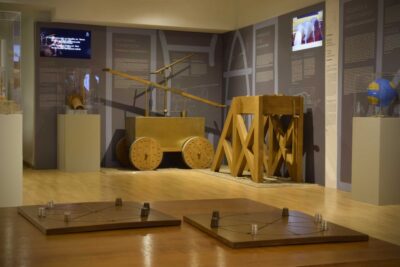
What I like is that the itinerary doesn’t stop at the stones. There are museum options, including the Archaeological Museum of Olympia and the Museum of the History of the Olympic Games in Antiquity, based on a collection tied to Georgios Papastefanou. There’s also the museum of Archimedes with interactive replicas and inventions, which helps make the classical world feel less dusty.
If you want an evening treat, there’s an option for dinner at La Belle Helene with Konstantina’s home-cooked Greek meals. That kind of meal plan is a good way to keep your day from feeling like only sightseeing and no local warmth.
Day 4 evening in Nafplio: fortress views and a slow-town feel
After Olympia, the route moves to Nafplio, a seaport town known for a waterfront, cobblestone streets, historic buildings, and fortresses including Palamidi and Bourtzi. It also holds modern history significance—it was the first capital of the modern Hellenic Republic after the 1821 War of Independence.
Palamidi Castle is the big vertical moment. It’s described as a Venetian fortress on a 216 m hill with 999 steps to the top. I know it sounds like a gimmick, but the point is real: when you reach the view, you understand why forts mattered here.
You also have stops around Freedom Square, Bourtzi (the water castle), Constitution Square, and the First Hellenic Parliament. There’s an Anastasios of Nafplia church mentioned for its dome and wall paintings, plus St Spyridon church tied to the assassination of Ioannis Kapodistrias in 1831.
This is one of the stops where you can slow down on purpose. The itinerary includes lunch at tavernas and time for gelato (Antica Gelateria di Roma) and loukoumades (Pergamonto). Even if you skip one of these snacks, the structure tells you Nafplio is for wandering, not just checking off monuments.
Day 5: Epidaurus theater acoustics and Mycenae’s gold-age power
Day 5 starts with breakfast in Nafplio, then it’s time for Palamidi fortress and Acronafplia/Arvanitia. That’s a nice choice if you skipped the climb the day before or if you want different light and a different view angle.
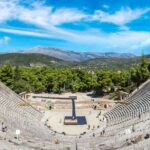
Then you drive to Epidaurus. Epidaurus is famous for its amphitheater and astonishing acoustics. The idea is simple and fun: you can test the theater by dropping a coin or pin sound, and it’s described as audible even if you’re in the last seats. For me, that’s one of the most accessible “try it yourself” moments in Greece.
You’ll also see the Epidaurus Archaeological Museum with reconstructions and columns with inscriptions, then the Asclepius sanctuary. This is the ancient medicine retreat dedicated to Asclepius, giving you a religious angle that isn’t about prophecy or war. It’s about healing practices and sanctuary life.
After Epidaurus, you drive to Mycenae. Mycenae is presented as King Agamemnon’s mythical kingdom from Homer’s epics, and as the key late Bronze Age center rich in gold.
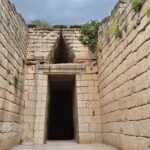
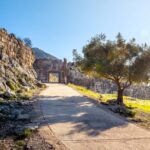
At Mycenae you get Lions Gate, royal grave circles (A and B), and Cyclopean Walls built from massive limestone boulders. Then you’ll walk through the Royal Palace with its Throne Room Suite, Grand Staircase, and areas for officials, plus the Treasury of Atreus. That beehive tomb around 1250 BC is one of the most impressive structures on the route, and it’s a good match to Epidaurus: both are about belief systems, but one is about political power and the other is about healing and worship.
You also see the Tomb of Clytemnestra and the Mycenaenean Archaeological Museum with gold grave goods, burial masks, jewelry, weapons, worship idols, and frescoes. If you like artifacts as much as architecture, this museum time can be a highlight.
Then it’s onward to Ancient Corinth for check-in and a late lunch/early dinner on a terrace overlooking the Temple of Apollo.
Day 6 in ancient Corinth and the Isthmus Canal: Acrocorinth and the Apostle Paul link
The final day mixes elevation, religious history, and engineering.
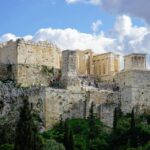
First up is Acrocorinthos, the acropolis of ancient Corinth. It’s described as a monolithic rock overseeing Corinth, with impressive dominant views over the Corinthian gulf and southwest Peloponnese coast. The itinerary notes a system of three circuit walls reinforced by towers, plus Peirene Spring inside the walls, and traces of the Temple of Aphrodite.
Then you’ll see the Frankish Tower and preserved remains of churches, mosques, houses, fountains, and cisterns. This makes Acrocorinth feel layered: you’re not only seeing ancient Greek structure, you’re seeing how later periods reused and reworked strategic ground.
After that, you drive back to Ancient Corinth and visit the Corinth archaeological museum, the Temple of Apollo (around 560 BCE), and the Agora. The Agora is where the religious and civic world meets—shops, small temples, altars, and the Bema, the podium from where Apostle Paul addressed the Corinthians in 52 AD.
You’ll also find mention of Roman buildings, plus the Theatre and Odeon/Asklepieion. Then comes a Christian-era focal point: St Paul’s church with a mosaic mural depicting Saul’s vision from Christ as he traveled to Damascus.
The day doesn’t end in the past. You drive to Ancient Diolkos, described as an ancient passageway from the time of Periander (tyranny), then you reach the Isthmus Canal. It’s presented as an important 19th-century engineering project with a catalytic role for Mediterranean trade.
Finally, there’s a stop at Kechries Port tracing St Paul’s footsteps, and a lunch by the Saronic Sea at the Baths of Helen of Troy. Then you head back to Athens and drop you at your chosen location. It’s a satisfying close because you leave with both the religious thread and the real geography thread.
What’s included, what isn’t, and how that affects your budget
The big value here is the private setup: hotel pickup and drop-off in Athens, transportation by private luxury vehicle, professional tour drivers with in-depth knowledge, bottled water, refreshing wipes, WiFi on board, and fresh handmade Greek biscuits. There are also skip-the-line tickets on request, plus mobile ticket usage.
But there’s a budget reality: accommodation for five nights is not included, and entrance fees and food and drinks are not included. Also, a licensed tour guide to accompany you into sites and museums is an additional cost on request. So when you look at the price of $2,358.13 per person, treat it as the cost of transport, planning, and driver-led interpretation—not the cost of all museums and meals.
If you want the smoothest experience, plan for entrance fees and at least a couple of sit-down meals each day. And if you’re the type who loves context and wants inside-the-site commentary, ask whether you want the licensed guide component added where it makes the most sense for you.
Small details that can make or break your comfort
Dress code matters on this route. The tour requires covered knees and shoulders for places of worship and selected museums—so pack light layers or plan a quick solution for those moments.
Also pay attention to walking intensity. Meteora monasteries, Acrocorinth, and big archaeological sites all involve steps and uneven ground. Good shoes are not optional here; they’re what lets you enjoy the views instead of thinking about your feet.
Finally, use the private nature of the day. The examples from the guide Tas show that adjustments can happen when interests change. If you want more museum time on a certain day, or you want an earlier lunch stop, this format is built for that kind of small course correction.
Should you book this Thermopylae–Meteora–Delphi–Olympia–Corinth tour?
I’d book it if you want a focused religious-and-classical circuit without juggling logistics. You’ll like it most if you enjoy seeing how Greek religion connects to public life—prophecy at Delphi, sanctuaries like Asclepius, and early Christian references in Corinth.
I would skip or at least think hard if you’re strict on budget for entrances, meals, and the optional licensed guide. Also, if you hate long drives, this route is intense, even with a private vehicle.
If you’re aiming for value, this tour makes sense when you plan ahead for the extras and take advantage of the driver’s commentary, especially on art-heavy days like Delphi and Olympia.
FAQ
What time does the tour start in Athens?
The start time is 10:00 am, with pickup arranged from your Athens hotel lobby.
Does the tour include pickup and drop-off?
Yes. There’s hotel/port pick-up and drop-off service, and you’ll be returned to your Athens accommodation at the end.
Is accommodation included?
No. The tour does not include 5 nights accommodation. You can request hotel reservation.
Are entrance fees included?
No. Entrance fees to the sites are not included.
Is a licensed tour guide included inside museums and sites?
Not automatically. The tour includes driver-led commentary, and a licensed tour guide to enter sites and museums is an additional cost on request.
What about meals and drinks?
Food and drinks are not included, though the itinerary includes time for lunch and dinner options in towns along the route.
What is the cancellation policy?
Free cancellation is offered if you cancel up to 24 hours in advance of the experience’s start time, with full refund if canceled at least 24 hours before.
What dress code do I need for churches and museums?
You need knees and shoulders covered—no shorts or sleeveless tops—otherwise entry may be refused.
You Might Also Enjoy
More 6-Day Experiences in Athens
More Tours in Athens
More Tour Reviews in Athens
- All Day Cruise -3 Islands to Agistri,Moni, Aegina with lunch and drinks included
★ 5.0 · 4,958 reviews