REVIEW · ATHENS
Athens:Acropolis – Historical Center Walking Tour in Spanish
Book on GetYourGuide →Operated by TOP TOURS GREECE · Bookable on GetYourGuide
One of Athens quickest history fixes starts early. This Spanish-guided Acropolis and Historical Center walking tour links the big monuments to real street-level Athens, with time to see Plaka up close. I especially like the way the route is set up to reduce crowd pressure by entering through the south slope side, and I also like that you get headphones plus an official licensed guide like Efi or Andrea who explain what you’re looking at, not just where it sits.
The Acropolis stops are the star, with the Teatro de Dionisio, Propylaea, Temple of Athena Nike, and a direct stop in front of the Parthenon. Then you glide into the Old Town for outside looks at the Ancient Agora, end with the Tower of the Winds, and finish at the Mitropolis of Athens. One thing to watch: the tour does not include your Acropolis entrance ticket, and you must have it for the 08:00–09:00 time slot.
In This Review
- Key Things That Make This Tour Worth Your Time
- Athens Acropolis Walking Tour: A Smart Early Start That Actually Matters
- Entering the Acropolis: Dionysus, Athena vs. Poseidon, and Propylaea
- Temple of Athena Nike and Caryatids: Small Details With Big Impact
- Parthenon Stop: Harmony Explained in Plain Terms
- Views From the Top: Hadrian, Zeus, Odeon of Herod Atticus, and the Hills
- Old Town to Plaka: Ancient Agora Outside Views and a Photo-Friendly Walk
- Tower of the Winds and Mitropolis: The Final Lesson in Daily Athens
- Price and Value: Is $57 a Good Deal?
- Logistics That Can Affect Your Day (Without Turning It Into Stress)
- Best Fit: Who Will Enjoy This Tour the Most?
- Should You Book This Acropolis + Plaka Tour?
- FAQ
- Is the Acropolis entrance ticket included?
- What language is the tour guide?
- Where do we meet?
- How long is the tour?
- Does the price include food or drinks?
- Is the tour suitable for mobility issues?
Key Things That Make This Tour Worth Your Time

- South slope entry strategy to help you avoid the thickest main-access crowds
- Licensed Spanish guide with headphones, so you can actually hear the story
- Parthenon explanation on site, focused on why it was built and what harmony means
- From Acropolis to Plaka, not just monuments, but the feel of Athens streets
- Tower of the Winds finale, including why it’s called one of the oldest meteorological observatories
Athens Acropolis Walking Tour: A Smart Early Start That Actually Matters
This tour starts early, because Athens’ best site also draws the biggest crowds. What I like here is the practical workaround: instead of rushing the main entrance, you enter the Acropolis through a side route on the south slope. The payoff is not magic, just better pacing. You get to see older layers of the site while the busiest wave is still forming.
You’ll meet at the lower gate of the Acropolis, just a few meters from the Acropolis Museum. From there, the guide leads you into the sacred rock and builds context as you go. This matters, because the Acropolis is impressive even without explanations—but it becomes much more satisfying when you understand the logic of the layout and the myths tied to places like the top viewpoint.
The tour runs about 4 hours, which is a realistic amount of time to cover the core highlights without turning it into a speed march. You’re on foot the whole time, so comfortable shoes are a must, especially if your visit date is warm or you’re sensitive to uneven stone.
You can also read our reviews of more walking tours in Athens


Entering the Acropolis: Dionysus, Athena vs. Poseidon, and Propylaea
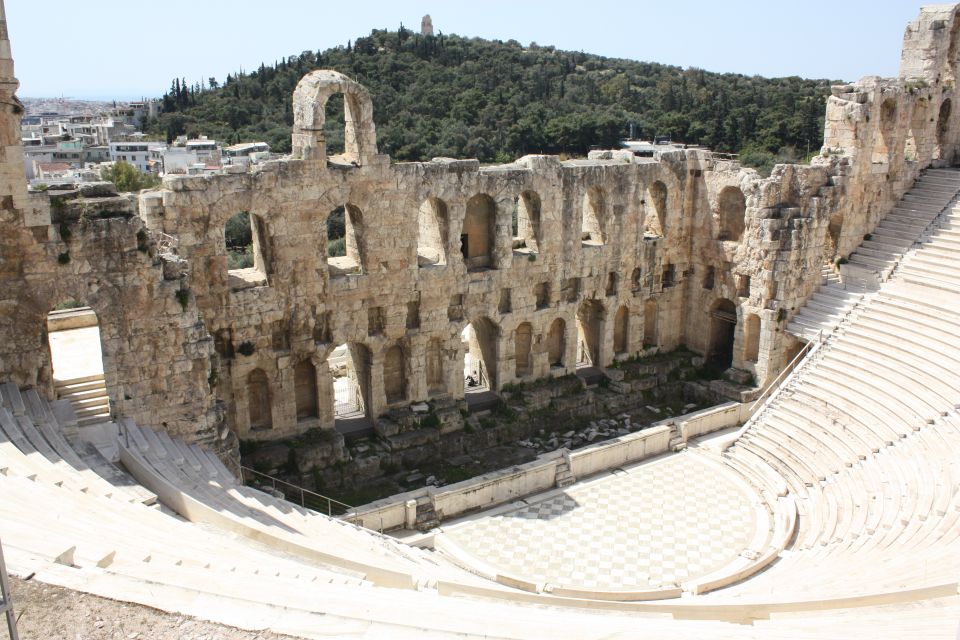
Your Acropolis story begins with mythology and early theater. One of the first stops is Teatro de Dionisio—often pointed out as the oldest theater in the world—where the ancient city staged culture on a massive scale. Even if you don’t remember every Greek term, the guide’s job is to help you connect the physical space with the idea that Athens built public life into stone.
Then comes the “why Athens” moment: the dispute between Athena and Poseidon, which is tied to how Athena became the city’s patron. This isn’t just trivia. Once you hear it and then look at where the city’s power concentrated, you start seeing the Acropolis as political theater as much as religious ground.
After that, you’ll go through the Propylaea, the monumental entrance that functioned like a filter. The guide frames it as a defensive funnel and as a psychological setup: you’re meant to arrive, pause, and feel the shift in scale before you reach the heart of the complex. That’s exactly the kind of detail that turns “walking inside ruins” into a guided experience.
Temple of Athena Nike and Caryatids: Small Details With Big Impact
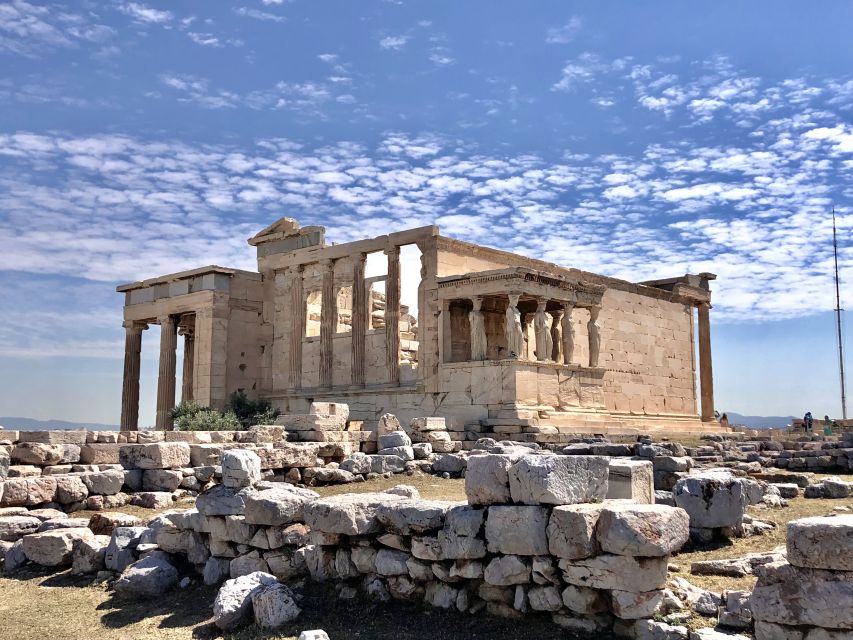
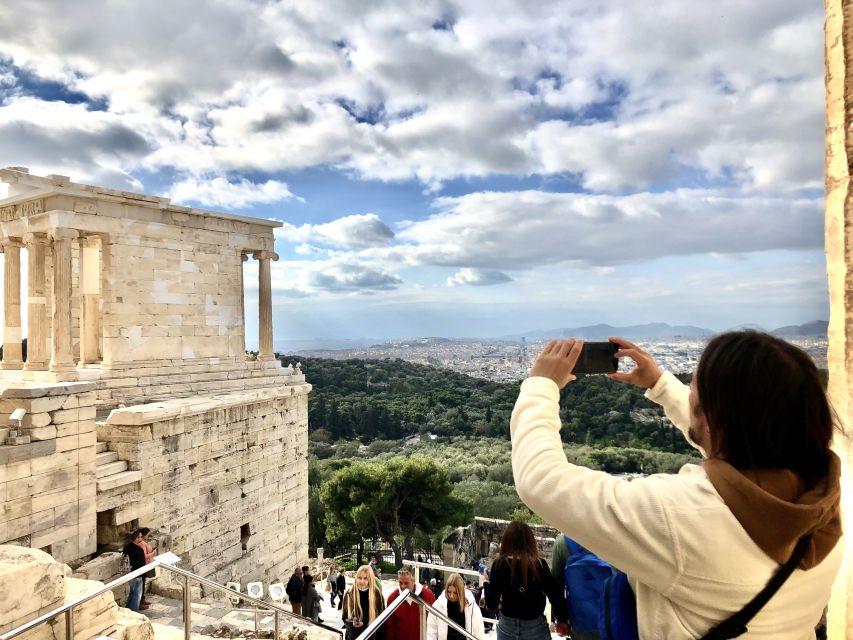
Not every stop on the Acropolis is “the biggest.” That’s why I appreciate the inclusion of the Temple of Athena Nike. It gives you a chance to notice how the ancient builders shaped aesthetics with precision, rather than only chasing the largest structures.
The highlight here is the guide calling your attention to the marble female columns, the Caryatids. From a distance they’re striking, but up close they become a lesson in design choices—what mattered enough to sculpt, and how the Athenians balanced strength with elegance.
If you like architecture, this part is where the tour earns points. A good guide helps you see that “pretty” was also a deliberate statement. Even with limited time, you’re not just moving from one famous icon to the next.
Parthenon Stop: Harmony Explained in Plain Terms
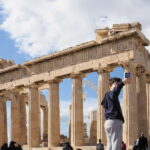
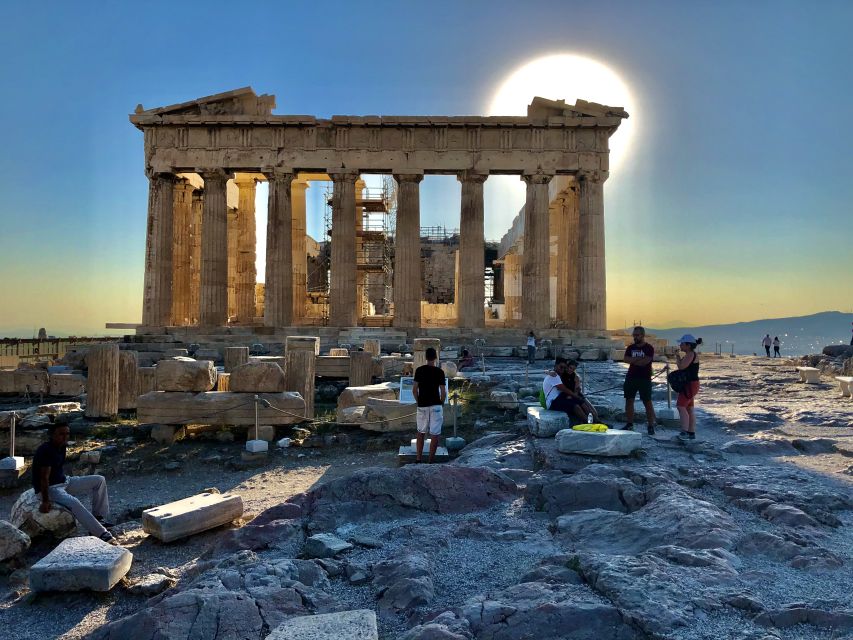
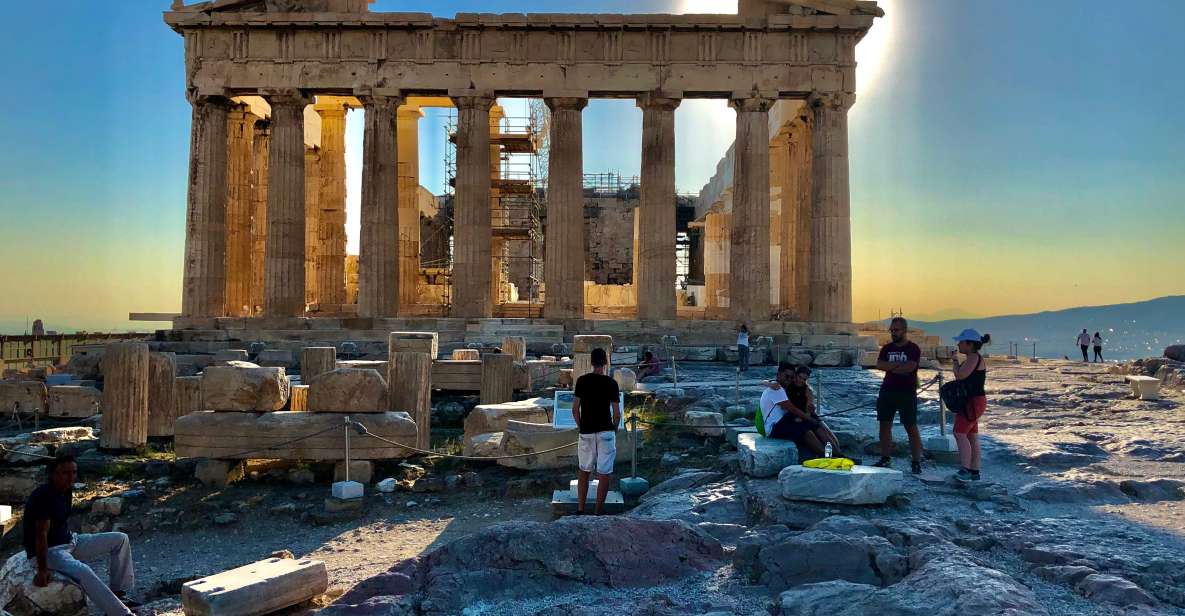
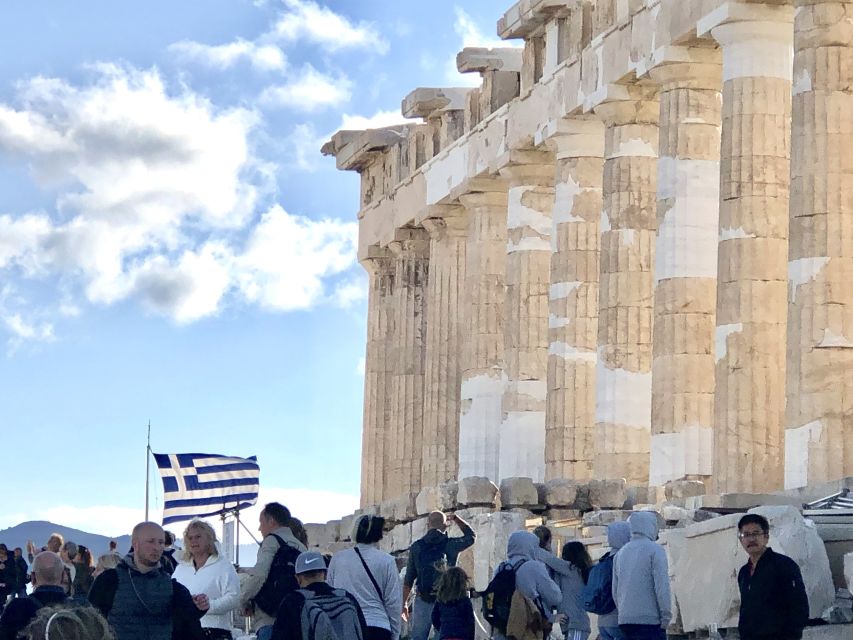
You’ll stop right in front of the Parthenon. This is the moment most people imagine, but what makes this tour feel different is how the guide explains why it was built—about 2,500 years ago—and why its worldwide reputation is tied to harmony and architectural balance.
The Parthenon can feel like a single postcard view if you only look at it as a photo stop. Here, the guide uses the monument as a lesson in intention. You learn how the structure communicates power and identity, and how the design principles were meant to be read by the people who stood here.
I also like that the pacing includes time to reset. One review specifically praised how the guide lets you rest and take photos, which is smart on an intense site. On the Acropolis, you don’t want every minute to be a sprint.
Views From the Top: Hadrian, Zeus, Odeon of Herod Atticus, and the Hills
After the central monuments, the tour widens. From the top, you’ll get views and context tied to landmarks across Athens, including the Arch of Hadrian and the Temple of Zeus. You’ll also hear about the Odeon of Herod the Attic, which is still associated with the Athens festival today—so the ancient “performance culture” link isn’t stuck in the past.
The guide also points out the National Observatory and several surrounding hills, including Lycabetus, Philopappos, and Areopagus. Even if you’re not planning to hike those exact slopes, this is valuable because it gives you spatial bearings. Athens can feel confusing unless someone helps you connect the skyline to the names.
This is also where a little humor or clarity from the guide helps. Different guides bring different energy, and names like Efi and Andrea came up in Spanish-language guides who were described as clear, eloquent, and patient. When the explanations are well paced, the view becomes part of the learning, not a break from it.
You can also read our reviews of more historical tours in Athens





Old Town to Plaka: Ancient Agora Outside Views and a Photo-Friendly Walk
Once the Acropolis portion is done, the day changes tone. You head into the Old Town and down into Plaka, which is widely considered Athens’ most picturesque and photogenic neighborhood. This is where you get a break from “temple math” and start seeing how locals and visitors move through streets.
Along the way, you pass outside the Ancient Agora. You won’t be inside every space (entrances depend on your ticket and the day’s flow), but you do get the key sightlines and context. The guide points out the area connected with famous philosophers—Socrates, Plato, and Aristotle—and you learn about the idea of their presence in civic life, not just in books.
Then Plaka takes over. Expect classic winding lanes, viewpoints, and plenty of opportunities to pause. If you care about photos, this is one of the easier parts of the tour to savor because the street rhythm is slower than the Acropolis steps.
Tower of the Winds and Mitropolis: The Final Lesson in Daily Athens
The last stretch feels very Athens again—less monumental, more cultural. You’ll visit the Tower of the Winds, described as the oldest meteorological observatory in the world. Even if you’re not a weather nerd, it’s a fun reminder that ancient Greeks weren’t only building temples. They measured the environment and turned observation into public knowledge.
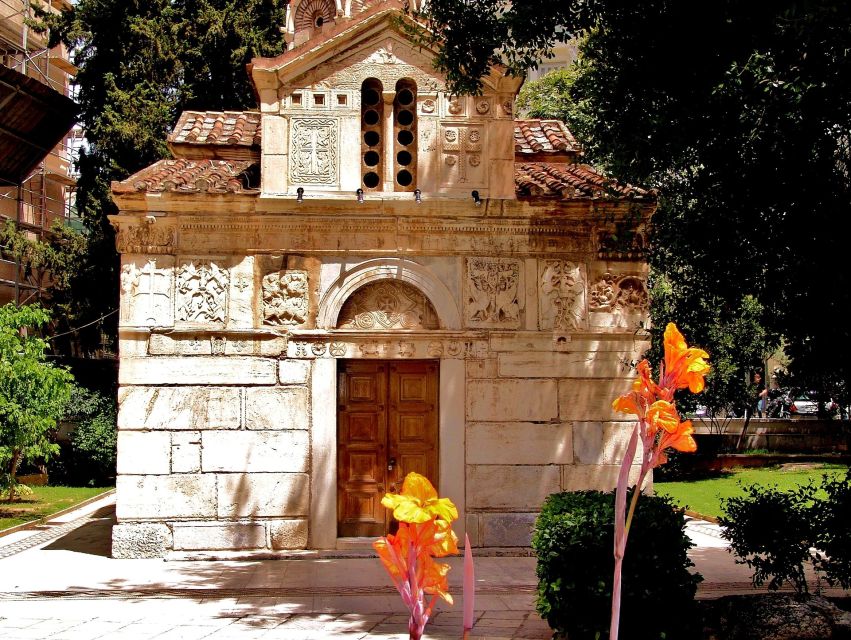
From there, you end at the Mitropolis of Athens, a church where the marriage of Queen Sofía with Juan Carlos took place. This creates a bridge between ancient and modern Athens, and it’s also where the guide talks about the Orthodox religion that predominates in Greece.
That church stop gives the tour a satisfying close. By the time you reach it, you’ve already covered myths, civic life, architecture, and public space. Ending with a living religious and cultural site helps the whole day feel less like a museum checklist and more like a human story.
Price and Value: Is $57 a Good Deal?

At $57 per person for about 4 hours, the biggest value question is what’s included versus what’s on you.
- Included: a licensed Spanish guide and headphones.
- Not included: Acropolis entrance fees (you must have your own 08:00–09:00 time-slot ticket).
- Not included: food and drinks.
So is it worth it? I think it can be, because the Acropolis is not a “wander and hope” site. You get a guide who explains the major structures with clear on-site context, and you also cover more than just the headline Parthenon. You finish with the Tower of the Winds and Mitropolis, plus Plaka and Old Town.
If you already have a ticket and you like structured sightseeing, this price looks reasonable for a guided, multi-stop morning/early-afternoon that includes sound equipment and a route designed to manage crowds. If you don’t yet have your ticket, you’ll need to handle that step early, or the schedule won’t work smoothly.
Logistics That Can Affect Your Day (Without Turning It Into Stress)
This is a walking-heavy tour. It’s not suitable for people with mobility impairments, and the activity also doesn’t allow baby carriages or electric wheelchairs. If mobility is a concern, you’ll want to choose an alternate plan that fits your pace.
Bring comfortable shoes, because the Acropolis surfaces and stair-like areas don’t forgive poor footwear. Also, since the guide communicates in Spanish, plan to stay close to your guide’s instructions and ask questions at natural pauses.
One more practical note: because headphones are included, you can focus on the guide without turning your head every sentence. That’s a small thing, but it’s the difference between enjoying the story and straining to hear it while tourists mill around.
Best Fit: Who Will Enjoy This Tour the Most?
This tour is ideal if you:
- want a structured first-time Athens introduction that still leaves room to look up and take photos
- enjoy history tied to real places, not just names
- prefer a Spanish guide and want the guidance to connect mythology, architecture, and civic life
It’s also a good match for people who like smaller groups. Several experiences praised the group size as reduced, which usually means fewer people to block your view and more chance to ask for clarification.
If you’re traveling solo, a smaller group can feel less intimidating. If you’re traveling with friends, it’s easier to keep the pace together because the guide controls the flow.
Should You Book This Acropolis + Plaka Tour?
If you’re spending only a limited amount of time in Athens, I’d book it—especially if you want the Acropolis experience to come with context and you also care about seeing Plaka and finishing with the Tower of the Winds and Mitropolis.
I’d think twice if:
- you don’t plan to secure the Acropolis entrance ticket for the 08:00–09:00 slot
- you need accessibility accommodations not supported by this format
- you’re set on a self-guided Acropolis visit without a guide’s structure
A simple test: if you want to stand in front of the Parthenon and understand what you’re looking at, this tour is built for that. If you just want the Instagram version and you’re okay with lots of silent walking, you might not get as much out of the guided time.
FAQ
Is the Acropolis entrance ticket included?
No. You need to obtain an Acropolis entrance ticket yourself for the 08:00–09:00 time slot. The tour notes that they can manage tickets for you at the official cost if needed after booking, but you should plan for the time slot.
What language is the tour guide?
The guided tour is in Spanish, and headphones are included so you can follow along easily.
Where do we meet?
You meet at the lower gate of the Acropolis, a few meters from the Acropolis museum. The guide holds a sign with the office logo.
How long is the tour?
The duration is 4 hours.
Does the price include food or drinks?
No. Food and drinks are not included.
Is the tour suitable for mobility issues?
It is not suitable for people with mobility impairments, and electric wheelchairs are not allowed. The activity also does not allow baby carriages.
You Might Also Enjoy


More Walking Tours in Athens


More Tours in Athens


More Tour Reviews in Athens
- All Day Cruise -3 Islands to Agistri,Moni, Aegina with lunch and drinks included
★ 5.0 · 4,958 reviews