REVIEW · ATHENS
2 Day Private Tour Of Delphi, Thermopylae & Meteora From Athens
Book on Viator →Operated by Ancient Greece Tours & Transfers · Bookable on Viator
Two days is all it takes for three big stops. This private Athens tour strings together Delphi, Thermopylae, and Meteora with a driver who keeps the pace moving and the stories clear. You’ll check off two UNESCO World Heritage stops without the hassle of figuring out buses and timing.
What I really liked: the comfort and rhythm of a private car with Wi-Fi and A/C for long drives. And Delphi feels like a real place, not just ruins—because you get time at the archaeological site and the museum, including highlights like the Omphalos and the treasury metopes.
One consideration: this is a packed two-day loop with an overnight in Kalambaka or Kastraki, so you’ll want to plan your lodging and budget for meals and tips.
In This Review
- Key highlights worth knowing
- Two UNESCO Days: Delphi and Meteora in One Private Loop
- Getting There Comfortably from Athens: Wi-Fi, A/C, and a Real Pickup Plan
- Day 1 at Delphi: Oracle Power, the Omphalos, and Treasury Metopes
- Thermopylae: Leonidas, the Gates of Fire, and a Battle Museum That Changes the Tone
- Meteora Sunset and Two Villages: Kalambaka and Kastraki
- Day 2: Finishing the Monasteries, Then Back to Athens
- Price and Value: What $767.70 Buys You (and What It Doesn’t)
- Who This Tour Fits Best (and Who Should Plan Differently)
- Should You Book This 2-Day Delphi, Thermopylae & Meteora Tour?
- FAQ
- Is this tour fully private?
- What’s included in the tour price?
- Do I need to book an overnight stay for Kalambaka or Kastraki?
- How many monasteries will I visit at Meteora?
- Will I have Wi-Fi during the drives?
- Can I cancel and get a full refund?
Key highlights worth knowing
- Fast-track entry at Delphi for the site and museum, so you spend less time stuck in lines
- Private pickup and drop-off in Athens, including hotel, Airbnb, and even the port
- Onboard Wi-Fi, A/C, and bottled water so the drives feel manageable
- Thermopylae with the Leonidas monument and dedicated battle museum
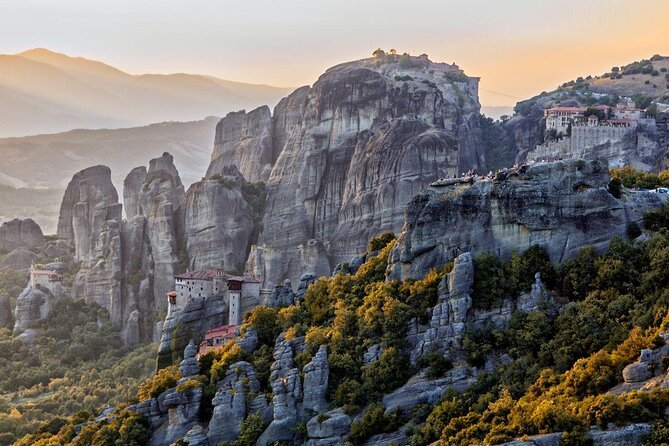
- Meteora monasteries across two days, including named stops like St Nikolaos and Varlaam
- Sunset time in Meteora, plus a late lunch/early dinner at a traditional taverna
Two UNESCO Days: Delphi and Meteora in One Private Loop
If you like ancient Greece but hate the chaos of group schedules, this route is a smart fit. You’re putting Delphi and Meteora into a tight window, with the trip structured so you don’t just “see” places—you get enough time to actually read the sites as you walk.
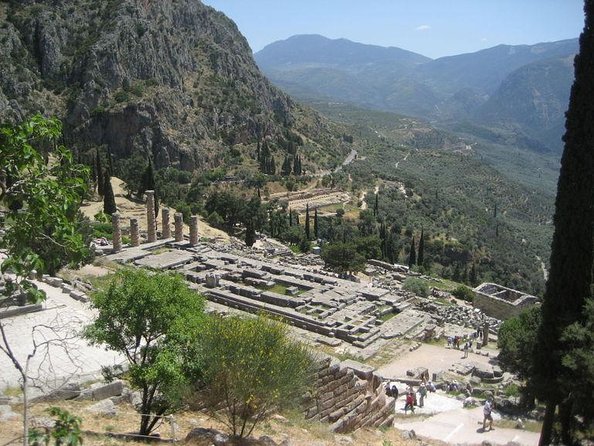
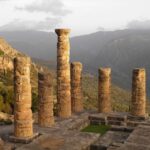
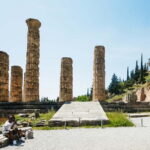
Delphi is where the ancient world came to ask for answers. It was home to the sanctuary connected with Pythia, the oracle consulted about major decisions across the classical world. The site is also tied to events like the Pythian games, which helps you understand Delphi as more than a pretty backdrop. And yes, it includes that famous sense of “center of the world,” represented by the Omphalos stone monument kept in Apollo’s temple.
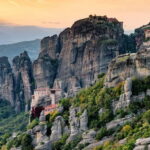
Meteora is a completely different mood. Instead of temples and treasuries, you’re surrounded by cliff-top monasteries and the landscape feels like it was built for dramatic views. On day one, you’ll get Meteora sunset, and on day two you’ll finish the remaining monasteries—so the experience doesn’t feel like a rushed checklist.
This matters because you’re not just collecting stamps. You’re seeing how Greek culture moved from oracles and civic games at Delphi to monastic life in Meteora’s suspended world—while Thermopylae sits in the middle as the historic hard stop.
You can also read our reviews of more private tours in Athens

Getting There Comfortably from Athens: Wi-Fi, A/C, and a Real Pickup Plan
The biggest practical win here is the private logistics. Your driver/guide picks you up and drops you at your Athens hotel, Airbnb, or the port, meeting you at the lobby or entrance. For airport or port arrivals, the driver meets you holding an Ancient Greece Tours sign, so you’re not wandering around looking for the right face.
Inside the vehicle, you get what makes long road days easier: Wi-Fi, A/C, and bottled water. That might sound like small stuff, but on this kind of route it changes how you experience the day. You can message home, check maps, or just pass the time without living off cell-data stress.
Also, the tour is fully private, meaning you’re not squeezed into random pacing. It’s only your group, which helps when you want to pause for photos, ask questions, or move at a slower walking tempo around sites.
One more detail that’s quietly helpful: the tour uses mobile tickets. When you’re trying to get into timed entry areas, less paper juggling is always good.
Day 1 at Delphi: Oracle Power, the Omphalos, and Treasury Metopes
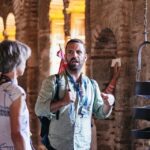
Delphi is the kind of place where a good guide changes everything. The sanctuary grew wealthy because people came for answers, and the functions of the oracle expanded over time into cultural events and the Pythian games. When you understand that, the ruins stop looking like disconnected stones and start making sense as a system.
On this day, you’ll visit both the Delphi archaeological site and the Delphi Archaeological Museum. One of the nicest parts of the plan is that you’re not forced to “choose one.” The museum helps you connect what you see outside to the sculptures and artifacts recovered from the excavations.
At the archaeological site, key highlights include:
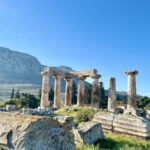
- Temple of Apollo and the surrounding sanctuary spaces
- Ancient Theater and the Stadium, which show Delphi wasn’t only spiritual—it was athletic and civic too
- The Sanctuary of Athena Pronaia, which adds depth to Delphi’s religious geography
- Omphalos, the stone monument used as a symbol of Delphi being the center point
Then the museum brings you closer to the art that once explained ideas visually. You’ll see works tied to specific treasury buildings and myth scenes, including the Frieze of the Treasury of Sifnias and the Metopes of the Athenian Treasury. These metopes cover major legends such as Theseus and the Minotaur and Heracles battling famous foes.
A few objects that help you picture Delphi’s mind-world:
- The Naxian Sphinx (dated to 560 BC), an early artistic take on a lion-bodied, winged, female-headed creature
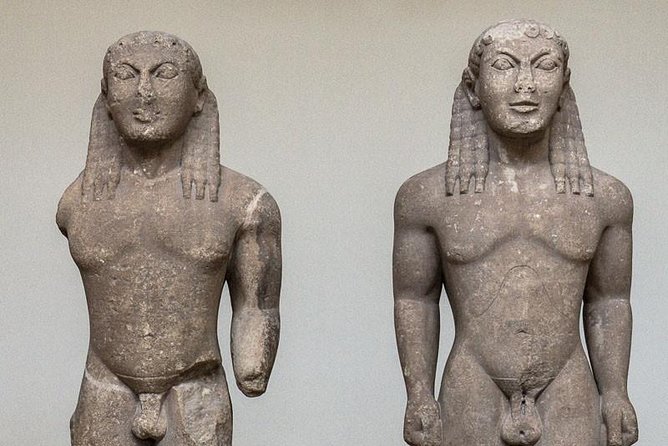
- Kleobis and Biton, brothers from Argos in kouros-type form
- The famous Charioteer statue tied to a four-horse chariot complex
- The Statue of Antinoos, connected to Hadrian’s favorite and revived neoclassical style from the 2nd century AD
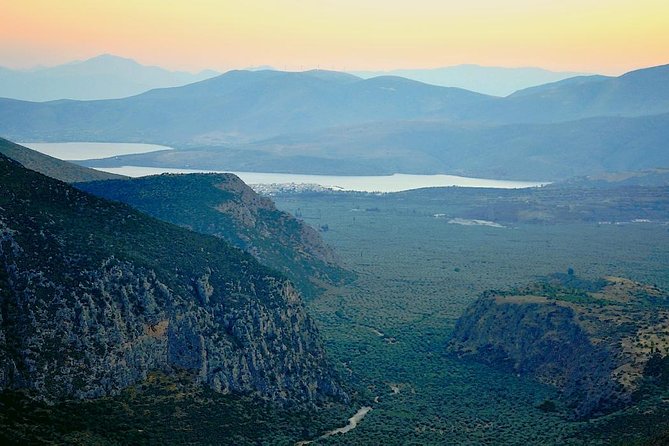
On top of all that, there’s built-in time for lunch with views. You’ll eat on the caldera at Delphi, overlooking Itea and Amfissa. The lunch itself isn’t included, but the pause is. It’s a good reset after walking and looking closely for the small details—because Delphi rewards attention.
One tip for you: when you’re at Delphi, don’t just rush to the biggest name spots. Spend a bit of time scanning the carvings and sculptural details. That’s where your brain starts “translating” myth into architecture.
Thermopylae: Leonidas, the Gates of Fire, and a Battle Museum That Changes the Tone
Thermopylae hits differently than Delphi. Delphi asks for answers; Thermopylae reminds you what happened when history went loud.
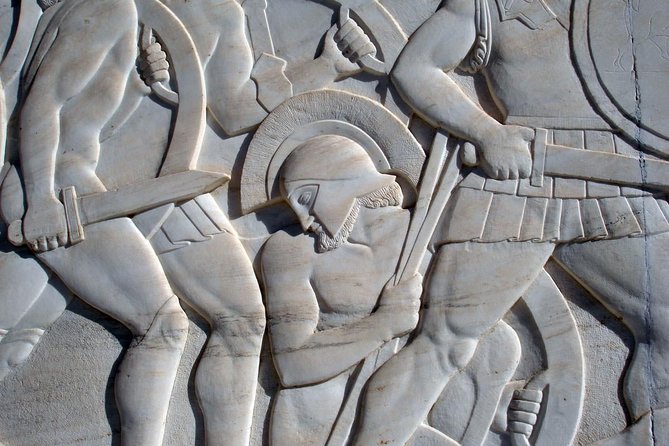
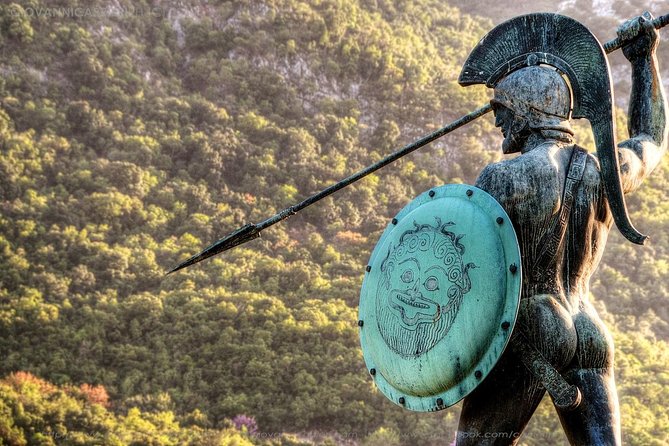
You’ll stop at the area connected with the famous 480 BC battle between an alliance led by Leonidas of Sparta and the Persian forces of Xerxes. That context matters because Thermopylae isn’t just a scenic pass—it’s a turning point tied to what people describe as the fate of western civilization as they knew it.
The highlights here include:
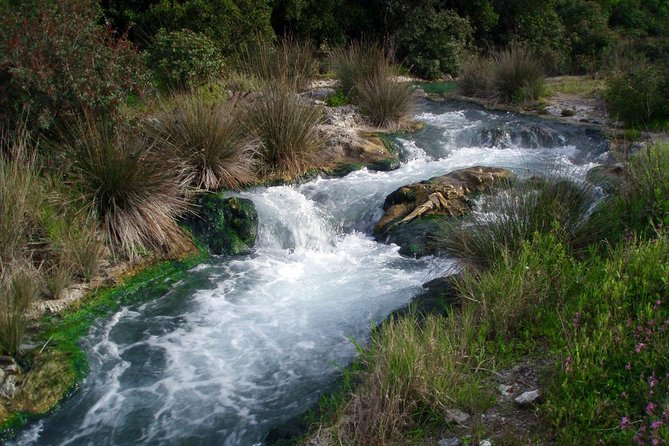
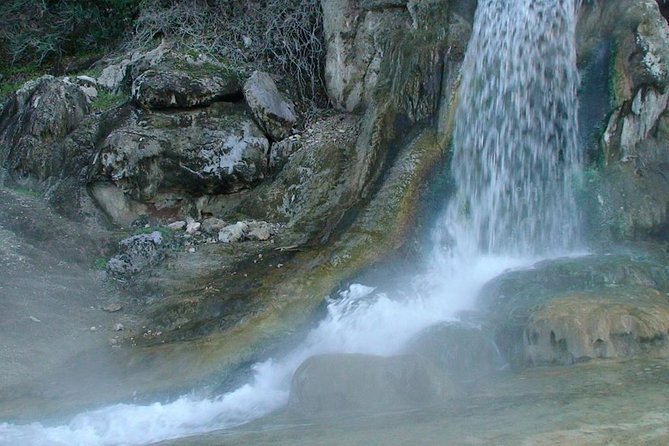
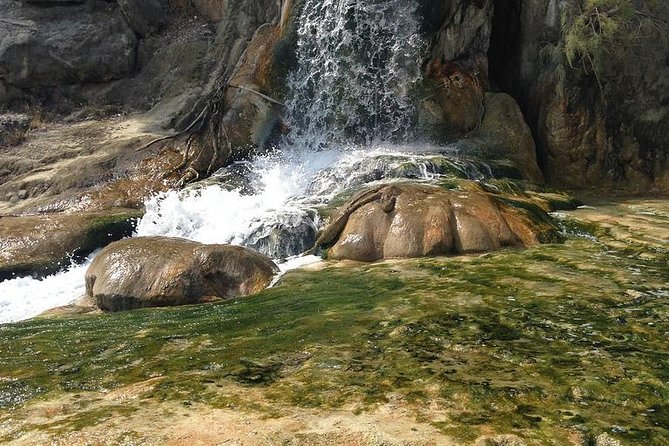
- The Gates of Fire, tied to hot sulphur springs and Greek myth associations with Hades
- The monument of King Leonidas (erected in 1955), featuring a brass Spartan King with spear and shield
- Thermopylae museum, dedicated to the battle and its long-running historical impact
Thermopylae is also home to the hot springs. The description emphasizes hydrotherapy facilities and recognized springs, but even if you don’t use the spa side, the hot-springs character is part of the place’s identity. You’re in a setting where the geography and mythology work together.
Practical note: this is the leg where you’ll be grateful for a private driver. The timing depends on driving conditions, but the tour keeps you moving so you don’t burn your day bouncing between transit points.
Meteora Sunset and Two Villages: Kalambaka and Kastraki
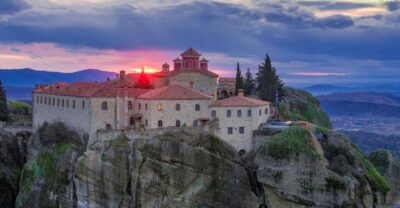
Then you roll toward Meteora, check in at your chosen hotel, and shift from “ancient sanctuary” to “cliff-top monasteries.” Meteora is famous for its hanging monasteries, and this tour treats it like a two-day experience rather than a single sprint.
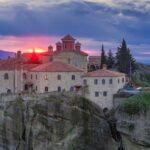
On day one, you’ll visit 1 to 4 monasteries (the exact number depends on the plan), plus you’ll have time in Kalambaka and Kastraki. The tour also builds in the Meteora moment most people come for: sunset. That’s not just for photos. It changes how you read the monasteries, because the light and shadows make the heights and the rock formations feel even more intense.
You’ll also include time for a late lunch/early dinner at a traditional taverna, then stroll around village shops where you can pick up handmade souvenirs.
If you’re deciding what to do at Meteora, here’s how I’d think about it: prioritize the monasteries you care about most visually and spiritually, and don’t over-optimize. Meteora works when you slow down enough to notice the setting—stone, steps, and the way the monasteries feel like they’re attached to the cliffs rather than sitting on the ground.
And yes, plan for walking. This area is not “sit and watch” sightseeing, even if you’re not doing anything extreme. Comfortable shoes are your best friend.
You can also read our reviews of more tours and experiences in Athens


Day 2: Finishing the Monasteries, Then Back to Athens
Breakfast happens in Meteora, then you continue with the remaining monastery visits. This is where the split plan really helps. Instead of trying to cram everything into day one, you get a second day to finish the set with less pressure.
The monasteries named for day two include:
- St Nicolaos
- Rousanou
- Varlaam
- Metamorphosis Sotiros (Grand Monastery)
- St Trinity
- St Stefanos
After that, there’s lunch at a traditional Greek taverna in Kalambaka or Kastraki, plus coffee. Then you drive back to Athens, which is about a 5-hour ride, with arrival and drop-off taking a short additional amount of time.
This return leg is long, so think of day two as a “finish strong” day. You’ll have plenty to see, but the driving time also shapes your energy level. If you’re the kind of person who likes one last scenic moment, use your midday timing for photos near the town areas, not only for cliff-top monastery viewpoints.
Once you’re back in Athens, the tour returns you to your chosen hotel, Airbnb, or apartment.
Price and Value: What $767.70 Buys You (and What It Doesn’t)
Let’s talk money in a grounded way. At $767.70 per person for a fully private 2-day tour, you’re paying for transportation, private driver/guide expertise, and time-saving entry steps.
Here’s what’s included that usually costs time or stress if you do it yourself:
- Private pickup and drop-off in Athens (hotel/Airbnb/port)
- Private transportation in a first-class vehicle with Wi-Fi, A/C, and bottled water
- Fast-Track entry tickets for the Delphi site & museum
- Professional driver/guide with in-depth knowledge of ancient and modern Greek history
- Mobile ticket delivery
Here’s what you should budget separately:
- Overnight accommodation (not included). The tour can suggest and help reserve a hotel if you request it.
- Food and drinks, including lunch at Delphi and the taverna meals
- Tips & gratuities
- A licensed tour guide inside sites and museums is listed as an additional cost on request
Also, a small detail that matters for your expectations: the tour provides a professional driver with history knowledge, but if you want someone specifically licensed to escort you into the sites and museum, you’ll need to ask and budget extra.
So who gets the best value? You’ll feel it most if:
- You want to see Delphi and Meteora without juggling multiple transfers
- You care about understanding what you’re looking at, not just collecting photos
- Your travel group values privacy enough to pay for it
Who might find it less ideal? If you’re traveling solo on a super tight budget, you may want to build your own plan. But if you’re spending more than a day figuring out logistics, this private structure starts to look less like a splurge and more like sanity.
Who This Tour Fits Best (and Who Should Plan Differently)
This works well for couples, families, and small groups who want a high-contact itinerary with minimal friction. It’s also designed for most travelers, with a note that you should dress appropriately for temples and religious sites (no sleeveless tops, no shorts, no short skirts, or revealing clothing).
If you’re coming from Athens and want an efficient “ancient-to-monastery” storyline, this itinerary delivers. Delphi gives you myth, oracle culture, and art. Thermopylae grounds it in a major battle with a museum that helps you understand why the story mattered. Meteora then shifts the tone into cliff-top devotion and views.
If you dislike early starts or hate long drives, this might feel intense. You’re also spending at least one night away from Athens, in Kalambaka or Kastraki—so choose that hotel thoughtfully if you want to sleep well after day one.
One more practical piece: Meteora and Delphi involve religious and historic spaces, so I’d plan a small clothing adjustment day. Keep a light cover-up or a spare layer handy so you’re not scrambling when you reach a temple.
Should You Book This 2-Day Delphi, Thermopylae & Meteora Tour?
I’d book it if you want the “best of” classic Greece route with the hard parts handled: private transport, pickup and drop-off, and fast entry at Delphi. It’s also a great match if you enjoy stories while you walk, because the guide style on this kind of tour can really lift how the sites land.
I’d hesitate if you’re trying to minimize costs or you’re not interested in monastery visiting as a two-day experience. The tour doesn’t hide what it is: a structured road trip with an overnight stop and meal/tip costs on top.
If your priority is maximum meaning per hour—Delphi’s oracle world, Thermopylae’s battle context, and Meteora’s cliff monasteries—this is a strong choice.
FAQ
Is this tour fully private?
Yes. It’s a private 2-day tour, meaning only your group participates. You also get pickup and drop-off service to your Athens hotel, Airbnb, or the port.
What’s included in the tour price?
The tour includes fully private transport, a professional driver/guide, and a first-class vehicle with Wi-Fi, A/C, and bottled water. Delphi site and museum entry are handled with fast-track tickets. The tour does not include overnight accommodation or food and drinks.
Do I need to book an overnight stay for Kalambaka or Kastraki?
Overnight accommodation is not included. The provider can suggest and make a hotel reservation upon request.
How many monasteries will I visit at Meteora?
On day one, you’ll visit the hanging monasteries (1 to 4 monasteries). On day two, you visit the remaining monasteries, including St Nicolaos, Rousanou, Varlaam, Metamorphosis Sotiros (Grand Monastery), St Trinity, and St Stefanos.
Will I have Wi-Fi during the drives?
Yes. The tour vehicle includes Wi-Fi, plus A/C and bottled water.
Can I cancel and get a full refund?
Yes, you can cancel for a full refund up to 24 hours before the experience’s start time. If you cancel less than 24 hours before, the paid amount is not refunded.
You Might Also Enjoy
More Private Tours in Athens

More Tours in Athens


More Tour Reviews in Athens
- All Day Cruise -3 Islands to Agistri,Moni, Aegina with lunch and drinks included
★ 5.0 · 4,958 reviews