REVIEW · ATHENS
Athens Social and Political Walk
Book on GetYourGuide →Operated by Planetwonk Experiences · Bookable on GetYourGuide
Democracy here is messy, and that’s the point. This Athens social and political walk uses documentary-style storytelling and real city stops to explain how Greece went from a symbol of democracy to a global cautionary tale after 2008.
I especially like the cause-and-effect approach: the guide connects religion, language, Europe, and the economy to what you see around the city. I also like that the talk stays practical and interactive, not just lecture mode, with plenty of room for questions and humor.
One thing to consider: this is politics-first. If you want a pure sightseeing stroll with minimal context, the themes can feel heavy for a walking tour.
In This Review
- Key highlights to plan your Athens day
- Democracy on trial, block by block
- Your guide: political science, with street humor
- Starting near Planetwonk and heading straight into power
- Maximos Mansion and the Presidential Palace: where authority lives
- National Garden to Parliament: calm space, loud stakes
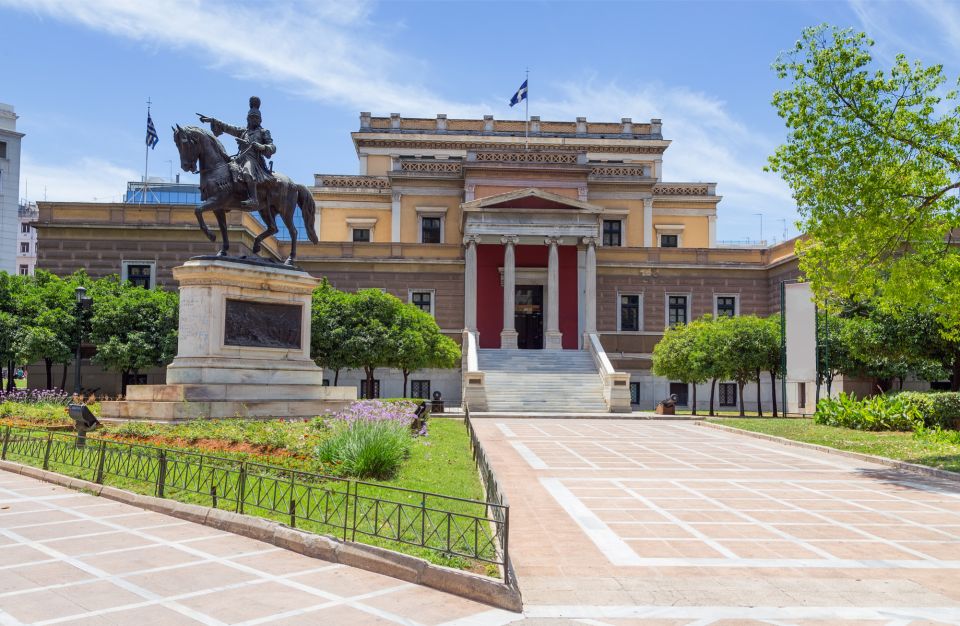
- National Historical Museum area: history as an active argument
- Detours into quieter streets: the point of “real Athens”
- Korai 4 (1941–1944): when memory becomes a political skill
- Panepistimiou and the university corridor: youth, language, and Europe
- National Metsovio Polythechnic: student politics with real consequences
- Ending at 28is Oktovriou 42: a handy launch point
- Price and timing: is $47 worth 2.5 hours?
- Who should book this Athens social and political walk
- Should you book it or skip it?
- FAQ
- How long is the Athens Social and Political Walk?
- How much does the tour cost?
- Is the tour guided in English or Spanish?
- What’s included with the tour?
- Where does the tour start and finish?
- Who leads the tour?
- What topics does the tour focus on?
- Is the tour wheelchair accessible?
- Is there free cancellation?
- Can I reserve and pay later?
Key highlights to plan your Athens day
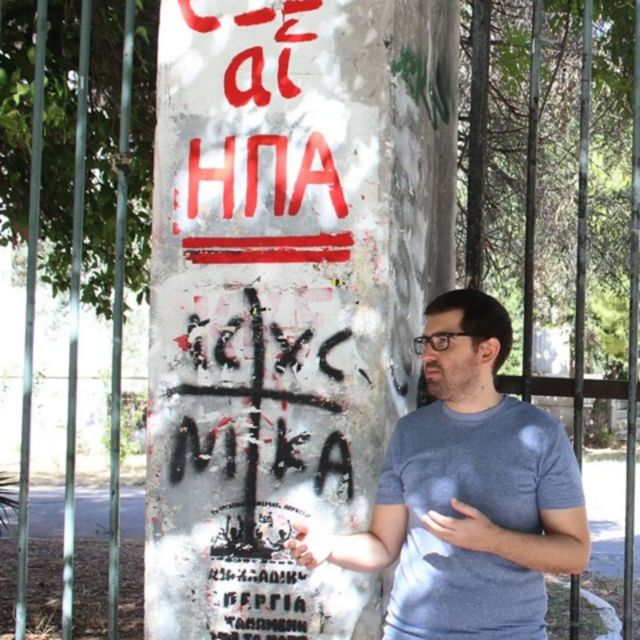
- Political-scientist storytelling that links past events (since 1821) to current social and political tensions
- Central government landmarks that make the idea of power feel real, not abstract
- Surprising themes like religion and language as drivers of political identity
- A photo slideshow included to reinforce the big ideas after the walk
- English and Spanish live guiding for clearer discussion and Q&A
- Small-group energy has shown up on departures, which helps questions land well
Democracy on trial, block by block
Athens has a talent for turning big ideas into everyday arguments. That’s exactly what this walk leans on: instead of treating politics as distant history, it reads it off the city in the same places where Greeks debate, remember, and negotiate power.
You start with the kind of question you’ve probably heard in different forms—how the cradle of democracy became a problem case in European discussions after 2008. Then the tour keeps pressing that theme through time, from the independence-era foundations of the modern Greek state to the present day.
You can also read our reviews of more walking tours in Athens


Your guide: political science, with street humor
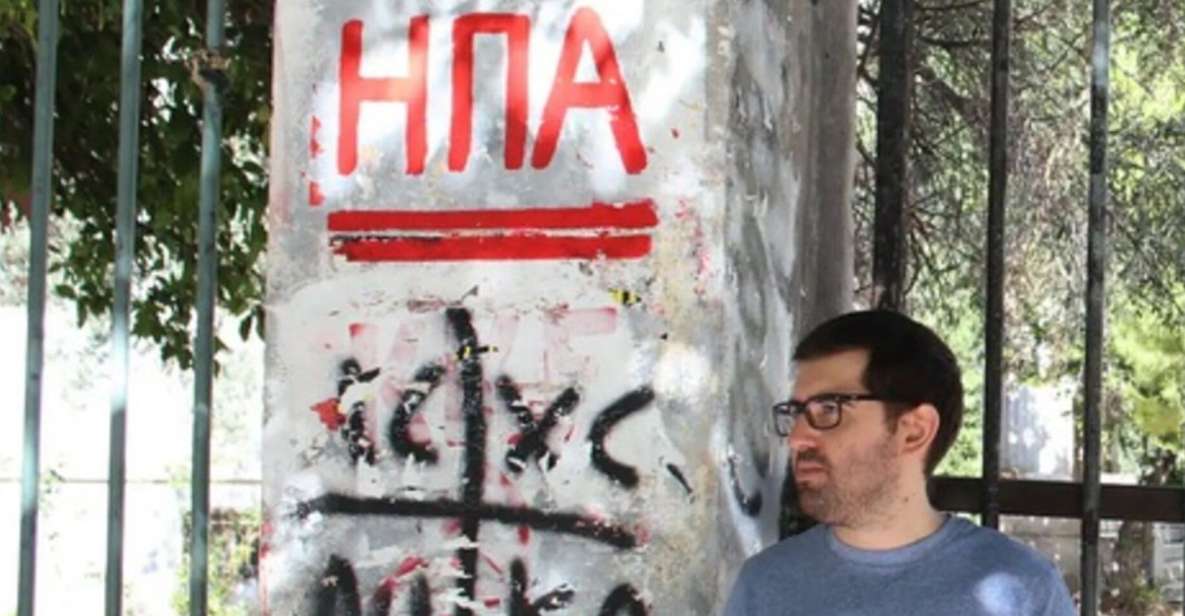
The tone here is one of the main reasons people rate it so highly. You’re led by a political scientist, and names like Isaac show up frequently in recent groups, with a teaching style that stays approachable and often funny.
In many departures, the guide doesn’t just name events. He explains how political forces translate into culture—how ideas become institutions, and how institutions shape daily life. In recent groups, the guide has also handled comparisons beyond Greece, giving context so the discussion doesn’t float off into theory.
If you’re the type who likes to ask why something happened—rather than just what happened—this format tends to fit well.
Starting near Planetwonk and heading straight into power
You begin at the tour’s meeting point, Athens Social and Political Walk – Planetwonk. From there, the walk quickly shifts into a part of Athens where governance isn’t hidden behind museums—it’s on full display in stone, marble, and official buildings.
That matters because the tour keeps returning to one key idea: politics is not only voting. It’s also symbols, language, religion, public memory, and who gets to claim the story of the nation.
As you move, the guide builds an internal map for you. Soon you’re no longer thinking of Athens as a postcard city—you’re seeing it as a civic stage with plot twists.
Maximos Mansion and the Presidential Palace: where authority lives
As you walk past Maximos Mansion and the Presidential Palace, the focus shifts to what the modern Greek state looks like when it’s at full power. Even without needing deep architectural knowledge, you get a sense of how authority is staged and how that staging influences public attitudes.
This section works best if you listen for the logic behind the buildings. The tour treats political authority like a system with habits—how it responds in good times, and how it strains when economies wobble or identities clash.
If you’re trying to understand why Greek political life can feel intense, this is where the tour starts giving you the tools. It frames disputes as predictable outcomes of how institutions and identities have evolved.
National Garden to Parliament: calm space, loud stakes
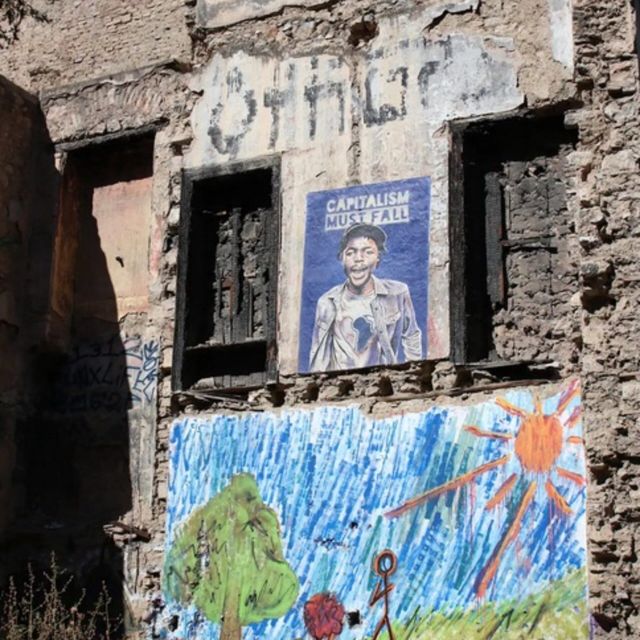
The walk then threads past the National Garden before reaching the Hellenic Parliament. That change in mood is useful. The garden gives you a breath between heavy themes, and the Parliament stop snaps you back into the core question: what does democracy look like when it’s under pressure?
At this point, the guide’s documentary-style method really clicks. You’ll hear about the long arc of political development, then watch the story connect to the present—especially how Europe and the economy enter the conversation when national systems feel tested.
This is also where you start picking up recurring themes:
- political identity shaped by religion and language
- public trust tested during economic crises
- tensions between national self-image and external expectations
You don’t need to already know Greek party history to follow it. The guide keeps translating big ideas into something you can picture while walking.
- All Day Cruise -3 Islands to Agistri,Moni, Aegina with lunch and drinks included
★ 5.0 · 4,958 reviews




National Historical Museum area: history as an active argument
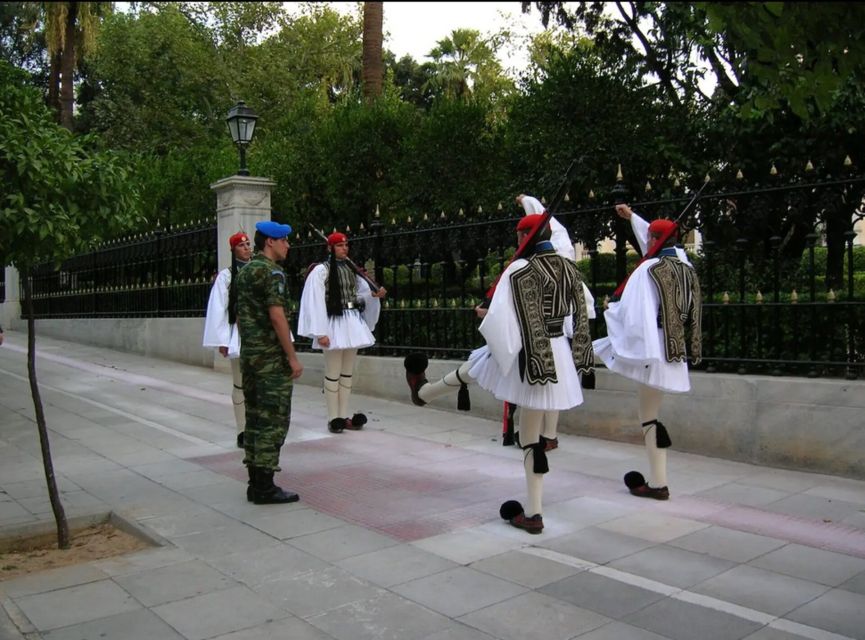
Next you move toward the National Historical Museum area. Here the discussion leans into memory and interpretation—how history becomes a political tool, and how people use stories about the past to argue for the future.
The value of this stop is that it helps you understand why Greece doesn’t treat its history like a sealed chapter. Instead, the tour frames history as a living argument that shows up in schooling, media, and party politics.
This is also where the tour tends to bring in concepts that can sound abstract at first—like neoliberalism—and makes them feel connected to real choices people had to live through. If you’ve ever felt confused by headlines about austerity, reforms, and anger, this section is designed to steady you.
Detours into quieter streets: the point of “real Athens”
Between big official landmarks, you’ll take a few turns into lesser-visited streets—short detours that matter. These are the moments where you see how political identity shows up in the city’s everyday texture rather than only at government sites.
You might not get a new statue at every step, but you do get a shift in perspective. The tour nudges you to notice that social and political change doesn’t happen only in parliaments. It happens in neighborhoods, in language choices, in religious life, and in who feels heard.
If you like street-level clarity—where the city itself explains the theme—these detours are a highlight rather than a filler.
Korai 4 (1941–1944): when memory becomes a political skill
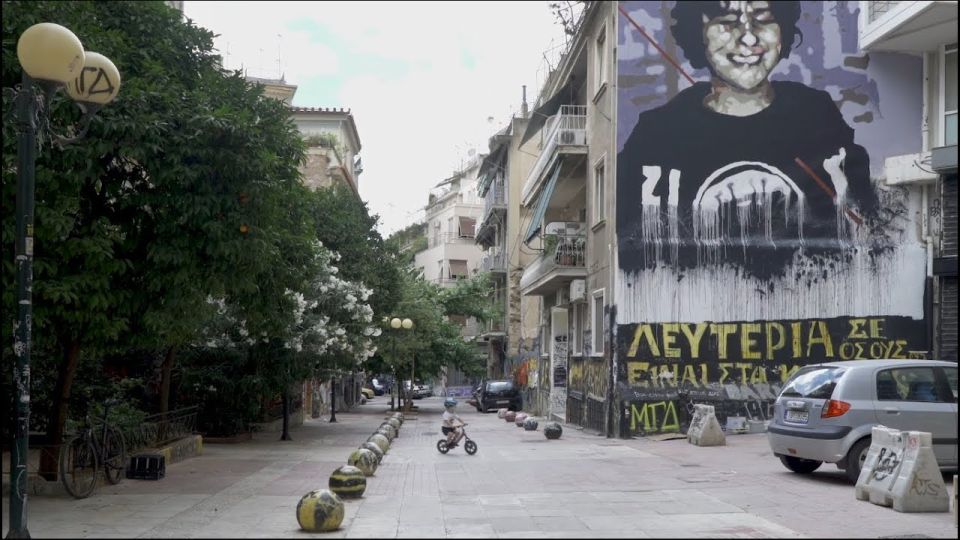
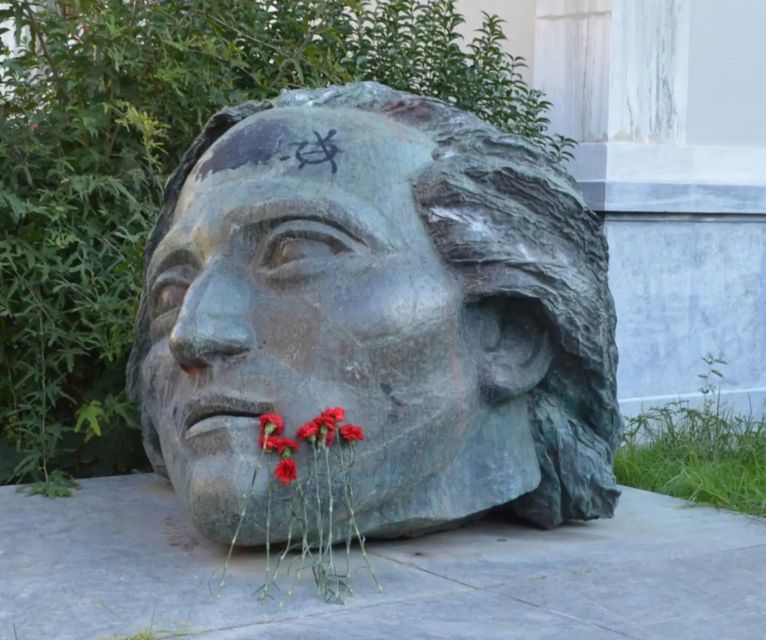
A major stop is Korai 4 | Memorial Site 1941-1944. The name alone tells you why it matters: these years are tied to the occupation period and the darker parts of WWII-era Greek memory.
This part of the walk doesn’t treat memorials like passive plaques. It frames remembrance as part of politics—how communities decide what to honor, what to mourn, and what lessons to carry forward.
That’s one reason this tour feels different from a typical “WWII facts” experience. You leave with the sense that memory isn’t just about the past. It’s also how Greece talks about resistance, legitimacy, and civic values in later decades.
Panepistimiou and the university corridor: youth, language, and Europe
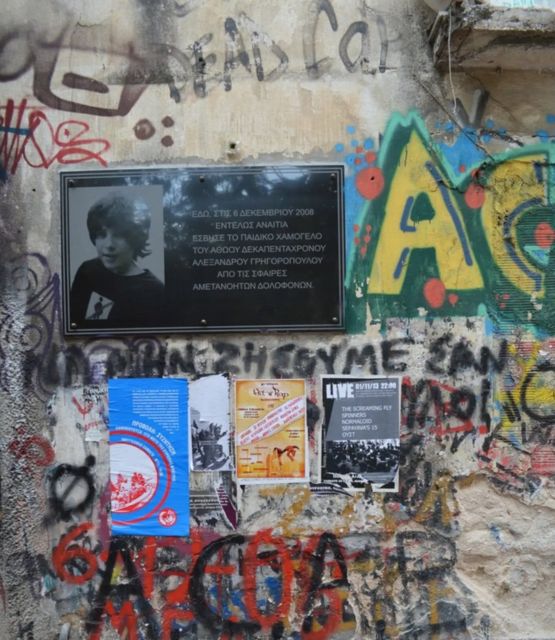
As you continue along Panepistimiou, the tour’s themes widen to include youth politics and cultural identity. This is where education and public debate come into the story, not as side notes, but as central forces in how modern Greece evolves.
The guide often ties these sections to Europe and to broader political patterns across countries, helping you see why Greek debates sometimes feel uniquely intense—and sometimes feel familiar to anyone who’s watched democracies struggle elsewhere.
If you’re the kind of visitor who wants Greece explained beyond slogans, this part is a good payoff. You’ll likely come away thinking more clearly about how language, religion, and political ideology shape who feels included in the nation’s story.
National Metsovio Polythechnic: student politics with real consequences
The walk finishes with National Metsovio Polythechnic as a key theme stop. In the context of modern Greek political history, student activism has often been a turning point, and this is the place where the tour brings that idea into focus through the city’s real geography.
This isn’t just about a past event. The guide uses it to talk about how protest, institutions, and ideology collide—then how those collisions echo through later crises and political shifts.
If you’ve ever wondered why some societies react to economic shocks with mass anger, student movements, or sudden political realignments, this section helps you connect the dots.
Ending at 28is Oktovriou 42: a handy launch point
The tour ends at 28is Oktovriou 42, Athina 106 82, Greece. That location can work well because it keeps you in a central zone where you can easily pivot into dinner, a museum visit, or just a final wander while the themes are still fresh in your head.
I like ending this way on a walking tour because it avoids the usual problem: you don’t feel stranded at the far edge of the map. You’re still set up to continue living in the city, not just moving through it.
Price and timing: is $47 worth 2.5 hours?
At $47 per person for a 2.5-hour walk, this is positioned as a value buy for anyone who wants context, not just motion. The price works because the experience isn’t only the walking time. You also get a slideshow with photos and extra info that reinforces the points you heard on the street.
It’s also a good deal for people who learn best with conversation. The tour is live-guided, and the format encourages questions, so you can clarify what you didn’t fully catch while moving.
The one trade-off is mental pace. If you prefer tours that are mostly visual, you’ll need to be in the mood for ideas. Bring curiosity, not just comfortable shoes.
Who should book this Athens social and political walk
This is a smart pick if you want to understand Greece in a way that sticks—through the interplay of politics, society, and identity. It’s also excellent if you’ve followed European news around Greece and want to replace headlines with a clearer timeline.
You’ll likely enjoy it most if you:
- like politics as a human story
- want a modern explanation tied to historical moments
- enjoy getting context for why events led to specific outcomes
It may feel less satisfying if you want a relaxed walk that avoids controversy. Here, controversy is part of the lesson.
Should you book it or skip it?
Book it if you’re curious about why modern Greece debates democracy, Europe, and the economy so intensely—and you want those themes mapped onto real Athens landmarks. The mix of documentary-style analysis, street exploration, and a photo-based recap is a strong combination for learning on the go.
Skip it only if your ideal Athens tour is mostly scenic with minimal political framing. This walk is built to make you think, not just to take photos.
If you decide to go, I’d plan one extra hour after the tour for a café break or a slow walk. Give yourself time to turn what you heard into your own opinion.
FAQ
How long is the Athens Social and Political Walk?
The tour lasts 2.5 hours.
How much does the tour cost?
It costs $47 per person.
Is the tour guided in English or Spanish?
Yes. The live guide offers Spanish and English.
What’s included with the tour?
You get a slideshow with photos and extra information on the issues discussed during the experience.
Where does the tour start and finish?
It starts at Athens Social and Political Walk – Planetwonk, and it finishes at 28is Oktovriou 42, Athina 106 82, Greece.
Who leads the tour?
A live tour guide leads the experience, and the tour is guided with documentary-style analysis and interactive storytelling.
What topics does the tour focus on?
The walk covers Greece’s social and political evolution from the inception of the modern state (including independence-era context) to today, including topics like religion, language, Europe, and the economy.
Is the tour wheelchair accessible?
Yes, the tour is wheelchair accessible.
Is there free cancellation?
Yes. You can cancel up to 24 hours in advance for a full refund.
Can I reserve and pay later?
Yes. You can reserve now and pay later to keep your travel plans flexible.
You Might Also Enjoy

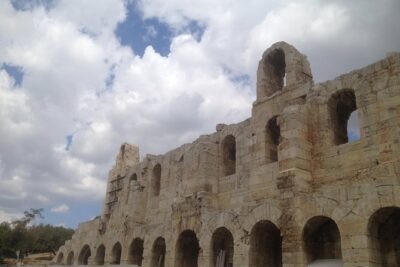
More Walking Tours in Athens

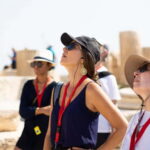

More Tour Reviews in Athens
- All Day Cruise -3 Islands to Agistri,Moni, Aegina with lunch and drinks included
★ 5.0 · 4,958 reviews