REVIEW · ATHENS
Athens: Acropolis Tour with Licensed Guide
Book on GetYourGuide →Operated by ATHENS WALKING TOURS · Bookable on GetYourGuide
Acrópolis and a guide: that combo turns ruins into real stories. I like the licensed, English-speaking guidance and the way myths and architecture connect as you climb, plus the easy photo angles from key viewpoints. The main thing to plan around is timing: security checks and strict entry times mean you need to show up early and be ready to move when they call your group.
I also love that the tour doesn’t just march straight to the Parthenon. You start with a practical meet-up with restrooms and traditional Greek bites, then you loop through major spots like the Theatre of Dionysus and the Asklepieion, so you get more than one headline monument in a tight 2 hours. One possible drawback: the uphill walk and uneven stone makes this a tough fit if you have mobility limits or you’re traveling in sandals.
In This Review
- Key takeaways before you go
- Why a licensed Acropolis guide beats wandering on your own
- Skip-the-line entry and the security reality
- The start: snack stop, restrooms, and what to expect before you climb
- Stop-by-stop: Theatre of Dionysus to Odeon of Herodes Atticus
- Theatre of Dionysus: where theater drama got its start
- Asklepieion of Athens: the altar side of the story
- Odeon of Herodes Atticus: stone as a stage
- Propylaea and the approach to the sacred center
- Erechtheion and the Parthenon: the two stops most people remember
- Erechtheion: why details matter
- Parthenon: viewpoint time with context
- Photo angles and pacing: how this tour keeps you from rushing
- What $38 buys you (and when it’s worth it)
- Who this tour suits best (and who should choose another plan)
- What to bring: small items that keep your day smooth
- FAQ
- FAQ
- How long is the Acropolis tour?
- Is there an option for entry tickets included?
- How does skip-the-line access work?
- Where do I meet the guide?
- What’s the walking like?
- Is this tour suitable for wheelchair users or mobility impairments?
- What should I bring and wear?
- Should you book this Acropolis Tour with a Licensed Guide?
Key takeaways before you go

- Skip-the-line entry with realistic security timing: expect possible waits even with the service.
- A route through the Theater of Dionysus and side entrances so you see more than the Parthenon alone.
- Myth + architecture explained on the move, not in a long lecture.
- Pacing that includes shade moments, which matters on hot Athens days.
- Tight, no-wait entry rules: latecomers can miss the timed access.
Why a licensed Acropolis guide beats wandering on your own

The Acropolis looks simple from far away. Up close, it’s a whole layered world—temples, theaters, altars, and political history stacked on top of each other. A licensed guide matters because they give you the “why” behind what you’re seeing, not just the “what.”
I especially like how a good guide turns the myths into something you can picture while you stand in the right spot. Instead of hearing vague names, you connect stories to real landmarks: the places tied to theater drama at the Theatre of Dionysus, the religious symbolism around the sacred complex, and the reasons the Parthenon and Erechtheion look the way they do.
You also get better pacing. On the Acropolis, it’s easy to burn 30 minutes staring at a wall while crowds press in. With a guide, you get a planned sequence, stops that make sense, and time at the key highlights so you can actually take photos without sprinting the whole circuit.
You can also read our reviews of more guided tours in Athens



Skip-the-line entry and the security reality
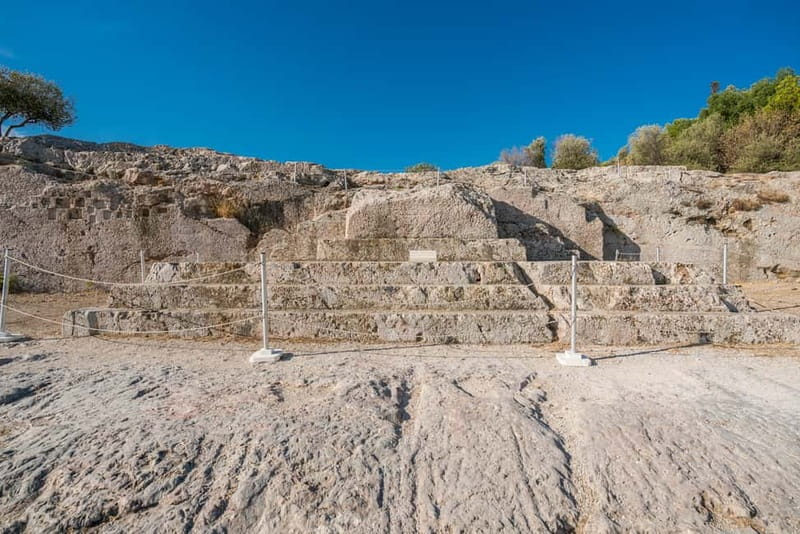
This tour offers skip-the-ticket-line access, and that’s a big advantage during peak season. But the fine print is important: even with the service, you might still wait at airport-style security. Expect typical waits in the range of 0 to 10 (or sometimes 30) minutes, and on rare busy days it can be longer.
Here’s the practical takeaway: don’t treat the phrase skip-the-ticket-line as skip-everything. It means you avoid one line, not all friction. If you’re sensitive to delays or you hate standing still in the sun, build a buffer into your morning.
Also note the strict timing rule. If your timed entry window is missed, the tour can’t wait for late arrivals. That’s not a “maybe” situation—it’s the rule. So if you’re combining this with other sites, keep your schedule flexible enough that you can arrive early.
The start: snack stop, restrooms, and what to expect before you climb

Tours often begin near the base area on Dionysiou Areopagitou, and the exact meeting point can vary by option. What I like is that the meet-up spot is set up for real people: traditional Greek delicacies, restrooms, and the ability to grab water or snacks before you start climbing.
This matters because the Acropolis walk is short but steep. Even if you’re fit, you’ll feel it in summer. Starting with water and a full bladder is the kind of small prep that saves your whole experience.
What you wear also matters. The tour doesn’t allow sandals or flip-flops, and you’ll want comfortable shoes with grip. The top sections include craggier stone, and you’ll be stepping uneven ground while trying to listen and look up at the same time.
Stop-by-stop: Theatre of Dionysus to Odeon of Herodes Atticus
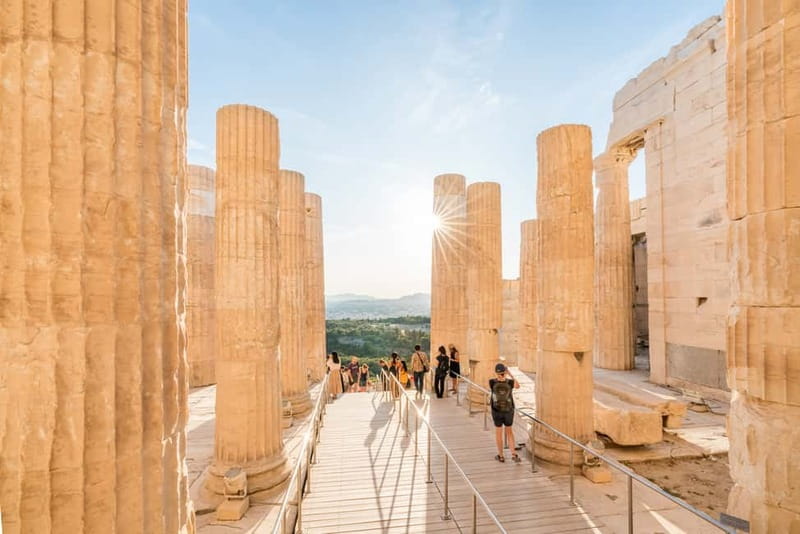
Your tour moves through the sacred complex in a sequence that helps you understand how Athens used public space. You’ll enter and explore with a licensed English guide, walking a short set of uphill segments and short walks between major stops.
Theatre of Dionysus: where theater drama got its start
One highlight is passing through the Theatre of Dionysus, which the tour frames as the birthplace of theater drama. You’ll see the space in context, not just from one angle. The guide can connect what theater meant in ancient Athens—community, civic identity, and storytelling—to what you’re physically standing in.
This is also a good mental warm-up for the myths. The Acropolis isn’t only about gods in stone; it’s about how Athenians used performance and public life to make meaning.



Asklepieion of Athens: the altar side of the story
You’ll also see the Altar of Asclepius area (the Asklepieion), which gives the tour a different tone from temples and monuments. It’s a reminder that this sacred hill wasn’t only art and politics—it also connected to healing and religious practice.
Guides who do this well help you notice details you’d miss if you were wandering. You start to recognize the theme: each structure has a job in the larger city story.
Odeon of Herodes Atticus: stone as a stage
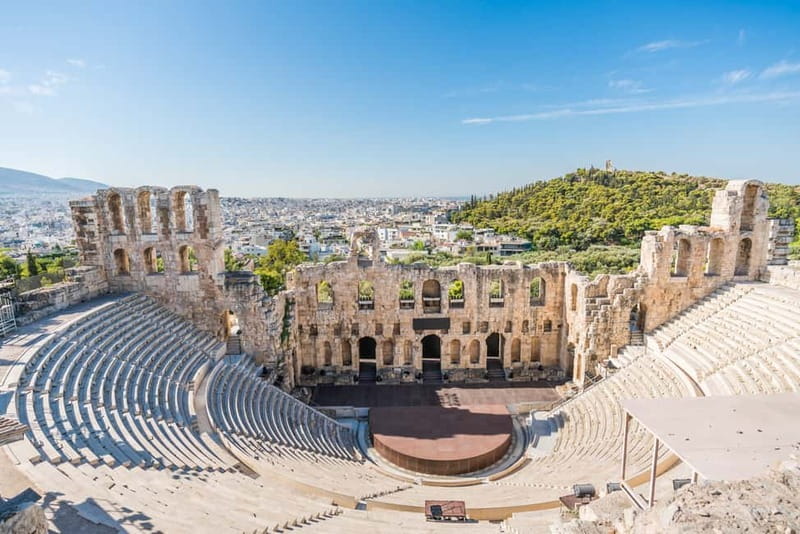
Another stop is the Odeon of Herodes Atticus. Even if you know nothing about ancient architecture, you can feel the intent of the design—an event space meant for attention and sound.
In a short tour window, this stop is valuable because it reinforces one of the biggest takeaways of the Acropolis: Athens loved public gatherings, and they built them into their sacred spaces.
Propylaea and the approach to the sacred center
As you continue, you reach Propylaea, the gateway area. This is where the tour helps you shift from “viewing ruins” to understanding movement. It’s not random wandering—there’s a logic to how visitors were funneled into the most important areas.
For photos, gateways and approach paths are often the best moments. You get layered views, plus a sense of scale that’s hard to capture when you’re only standing in one spot.
Erechtheion and the Parthenon: the two stops most people remember

If you do only one thing at the Acropolis, it’s the Parthenon. Still, the tour’s rhythm makes the Parthenon hit harder because you visit other structures first and learn what makes each one distinct.
Erechtheion: why details matter
You’ll reach the Erechtheion after Propylaea. This stop helps you appreciate that the Acropolis isn’t just one building. It’s a sacred complex where different structures served different roles and carried different meanings.
Erechtheion is often remembered for its architectural character, and a guide makes that easier to notice. Instead of simply looking at stonework, you start spotting the reasons the design feels the way it does.
Parthenon: viewpoint time with context
Then you get to the Parthenon, with guided time plus walking through the highlight areas. This is where the myth-and-history pieces snap into focus.
You’ll also get a chance for sweeping city views from the top. Athens spreads out below you, and the vantage points make the climb feel worth it. The guide will typically help you find angles where the light and structure line up, so you don’t waste precious time stepping in the wrong direction.
One practical note: because entry times are strict, the pace stays efficient. You won’t have an all-day drift around the complex. That’s the trade. The upside is that 2 hours can feel like you learned a lot without wearing yourself out.
Photo angles and pacing: how this tour keeps you from rushing

The Acropolis is crowded. That’s just the setting. What you can control is whether you spend the whole experience squeezed into bottlenecks.
This tour’s route and stop order help with that. You get multiple points where the guide can steer you to better angles, and you aren’t trapped only at the Parthenon. You see the side areas tied to theater, healing, and civic life—so your photos don’t all look like the same postcard.
Pacing is another big deal. Several guides are praised for slowing down when it’s hot and giving the group chances to sit in shade. That’s not a luxury; it’s a comfort strategy. It also makes it easier to listen, because you’re not overheating while someone talks about myths.
If you want good photos, come prepared to move quickly when the group shifts. Your “best shot” might be 2 minutes long at the right spot. Wearing grippy shoes and bringing water makes you fast without being stressed.
What $38 buys you (and when it’s worth it)
For $38 per person, you’re paying for three things that matter on the Acropolis:
- A licensed English guide who explains what you’re seeing (so the site has meaning, not just shapes).
- A planned route that includes multiple major stops in a compact 2-hour format.
- Optional pre-paid skip-the-line ticket if you choose that add-on, which can simplify your day.
The value part is timing. On a crowded hill, time spent figuring out where to go and how to interpret what you see is time you could spend looking at the Parthenon and the Erechtheion with context. A guide helps compress the learning curve without turning the whole day into a classroom.
If you’re the kind of person who reads signs slowly or wants history in plain language, this is a strong deal. If you’re more of a quick-see photographer and you don’t care much about stories, you might feel the 2 hours is “guided,” not “wandering.” But even then, the route through Dionysus and Asklepius side areas is hard to replicate casually without research.
Who this tour suits best (and who should choose another plan)
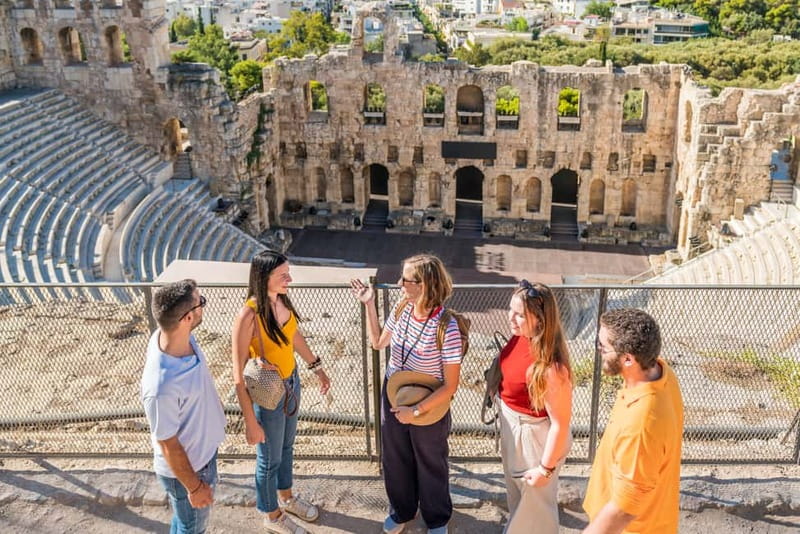
This tour is a great fit if you want:
- An efficient Athens highlight in about 2 hours
- Myth stories tied to real structures
- Better logistics than trying to self-navigate through a crowded site
It’s also not for everyone. It’s not suitable for pregnant women and it isn’t suitable for people with mobility impairments, wheelchair users, or anyone who needs easier pacing and flatter ground. The walking, uneven stone, and uphill approach are part of the experience.
If you’re visiting with kids who can handle short walking stints, you may find the guide’s explanations make things more digestible—some guides are noted for interactive storytelling and keeping a group engaged. Still, you’ll need to match your child’s stamina to the pace.
What to bring: small items that keep your day smooth

This tour is outdoors and runs rain or shine. Pack for sun and heat because the hill is exposed.
Bring:
- Comfortable shoes (no sandals or flip-flops)
- Sunglasses and a sun hat
- Drinks and water
- Sunscreen
If you tend to get stomach discomfort in the heat, the snack stop at the start helps. Still, plan to sip water often. On the Acropolis, it’s easy to lose track of time while you’re listening and taking photos.
FAQ
FAQ
How long is the Acropolis tour?
The tour duration is 2 hours.
Is there an option for entry tickets included?
Yes. If you choose the option with ticket, everything is included. If you choose without ticket, you purchase your admission from the official site https://hhticket.gr/ and your entry time matches the tour schedule.
How does skip-the-line access work?
The tour includes skip-the-ticket-line access. You may still have to wait for security checks. Typical waits are listed as 0 to 10 or 30 minutes, with longer waits possible on rare busy days.
Where do I meet the guide?
The meeting point may vary depending on the option you book. The tour notes that there are multiple starting location options, and your exact meet-up spot is tied to your booking.
What’s the walking like?
It’s a walking tour with uphill and uneven stone. The itinerary includes short walks between several stops inside the Acropolis area.
Is this tour suitable for wheelchair users or mobility impairments?
No. It’s not suitable for people with mobility impairments and it is not suitable for wheelchair users.
What should I bring and wear?
Wear comfortable shoes (sandals and flip-flops are not allowed) and bring sunglasses, a sun hat, sunscreen, and water or drinks.
Should you book this Acropolis Tour with a Licensed Guide?
If you want the Acropolis to feel like a place with meaning—not just a bunch of impressive rocks—book it. The combination of a licensed guide, a route that includes Dionysus and Asklepius side areas, and the tight 2-hour pacing makes this a smart value use of limited time in Athens.
Book it with extra care if you’re timing-sensitive. Security can still take time, and strict entry windows mean you should arrive early and stay flexible. If you need easier terrain or a slower, flatter walk, you’ll likely be better off choosing a different format designed for mobility limits.
You Might Also Enjoy



More Guided Tours in Athens

More Tours in Athens


More Tour Reviews in Athens
- All Day Cruise -3 Islands to Agistri,Moni, Aegina with lunch and drinks included
★ 5.0 · 4,958 reviews