REVIEW · ATHENS
4-Day Tour of Mycenae, Epidaurus, Olympia, Delphi & Meteora
Book on GetYourGuide →Operated by CHAT TOURS · Bookable on GetYourGuide
Five UNESCO stops in four days—okay, wow. This tour strings together Mycenae, Epidaurus, Olympia, Delphi, and Meteora with a licensed guide, museum time, and smart breaks like the Corinth Canal photo stop and a stop in Nafplio. The result is a fast-moving route that still leaves room to understand what you’re seeing.
I especially like the structure: guided visits at the big ruins, then time to breathe, eat, and reset. I also really appreciate the practical touch of headphones during attraction visits, which makes it much easier to follow the guide without shouting over crowds and buses.
One drawback to plan for: the driving days are long, and the tour uses a half-board hotel setup, so you’ll want to manage expectations about repetitive buffet dinners and scheduled timing. Think of it as a history sprint with comfy breaks, not a slow, sleepy Greece vacation.
In This Review
- Key highlights to look forward to
- Why this 4-day route works: Peloponnese to Delphi to Meteora
- Day 1: Corinth Canal views, Mycenae’s gold kingdom, and Epidaurus’ miracle theatre
- Day 2: Olympia for Zeus and athletes, then a modern bridge hop to Delphi
- Day 3: Delphi’s Oracle setting and the bronze Charioteer in the museum
- Day 4: Meteora monasteries in the clouds, with the dress rules you can’t ignore
- Hotels, meals, and the buffet reality of half-board
- Getting around: long drives, comfortable coaching, and what to pack
- Who should book this tour, and who should think twice
- Price and value: does $747 make sense for 4 days of UNESCO-level stops?
- Should you book this tour
- FAQ
- What sites are included on this 4-day tour?
- Are entrance fees included?
- Is lunch included?
- What is included in the hotel stay?
- Where do I meet the tour, and what time does it start?
- What are the language options?
- What should I wear for Meteora?
Key highlights to look forward to
- Licensed guide + headphones so the story stays clear at noisy sites
- Epidaurus’ acoustics at a theatre that’s unusually intact
- Delphi Museum’s Charioteer bronze statue dedicated to Apollo
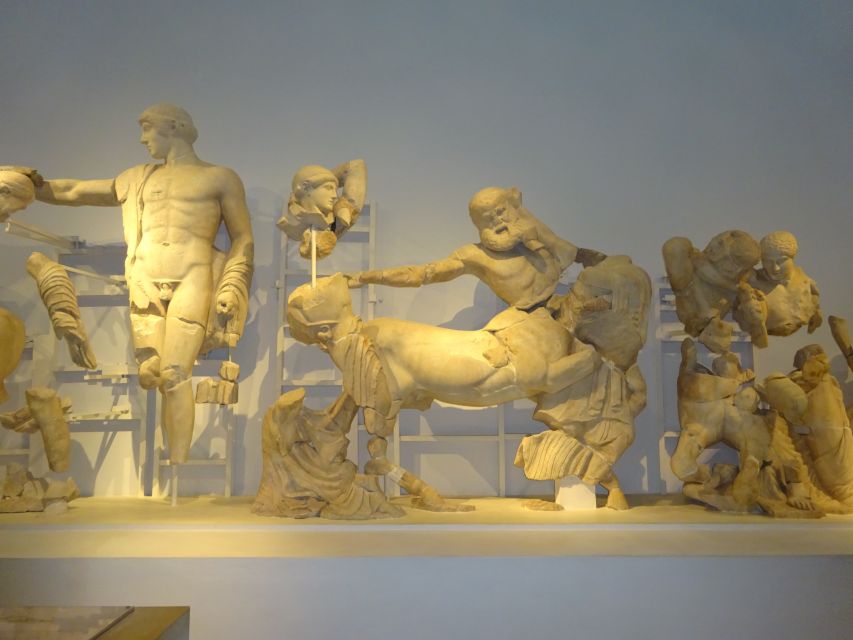
- Olympia’s stadium and museum tied directly to the Olympic Games myth
- Rio–Antirrio bridge crossing for a modern palate cleanser between ancient days
- Two Meteora monasteries plus real-world dress rules for entry
Why this 4-day route works: Peloponnese to Delphi to Meteora
This itinerary takes you from the Peloponnese to central Greece fast, which is exactly what you want if your calendar is tight. You start with the Mycenaean world (Mycenae), then pivot to Greek religious culture and performance (Epidaurus and Delphi), then end with Christian monastic life on Meteora. It’s not just “see ruins.” It’s seeing how Greek meaning shifts over time.
The tour also does a nice job blending big-ticket sites with small but useful breaks. Nafplio is a good example: it’s a chance to walk streets and get a real town moment, instead of being stuck only on highways and ticket lines. And the Rio–Antirrio bridge stop is a clever reset after full-on ancient days.
You’ll still move at a brisk pace. But if you like your history organized into a readable timeline, this one makes sense.
You can also read our reviews of more tours and experiences in Athens

Day 1: Corinth Canal views, Mycenae’s gold kingdom, and Epidaurus’ miracle theatre
Day 1 kicks off with an 8:30 AM departure from Hotel Amalia Athens (with optional earlier pick-up between 7:30 and 8:15 from selected central hotels that have bus access). Then it’s straight west along the coast.
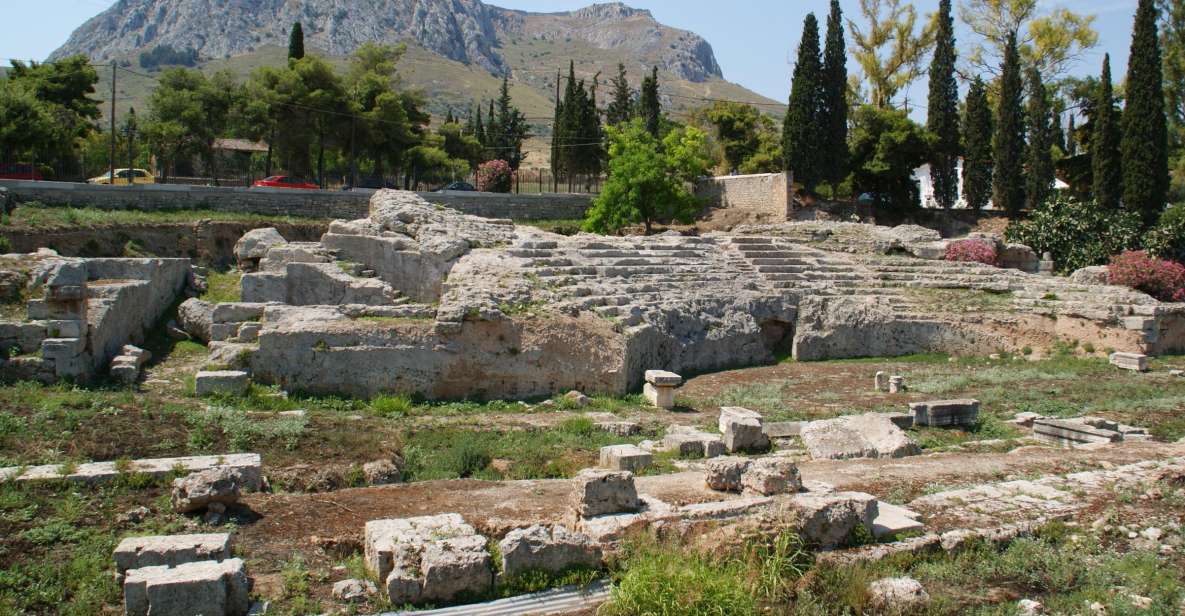
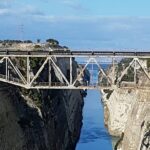
First you hit the Corinth Canal for a short photo stop. Even if you’re not a “big views” person, it’s a good mental warm-up: you see the narrow waterway slicing through the land, and it helps orient you before you jump into the ancient mainland story.
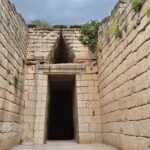
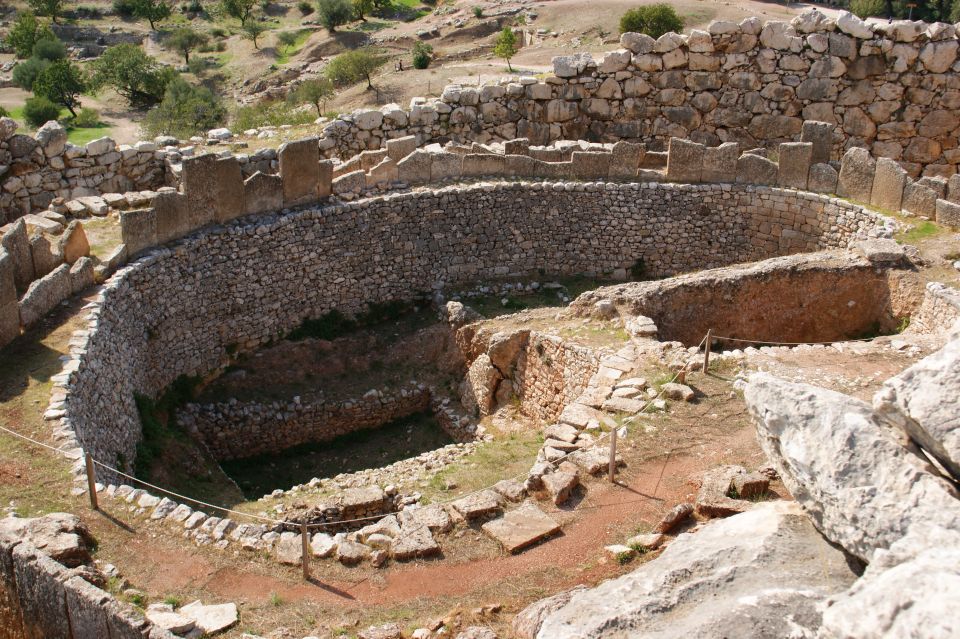
Next comes Mycenae, introduced as the legendary kingdom of Agamemnon, Homer’s world made stone. You get a guided visit for about an hour, which is long enough for a proper orientation without burying you in facts. You also get free time to handle lunch on your own before continuing.
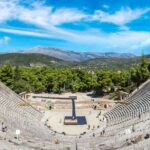
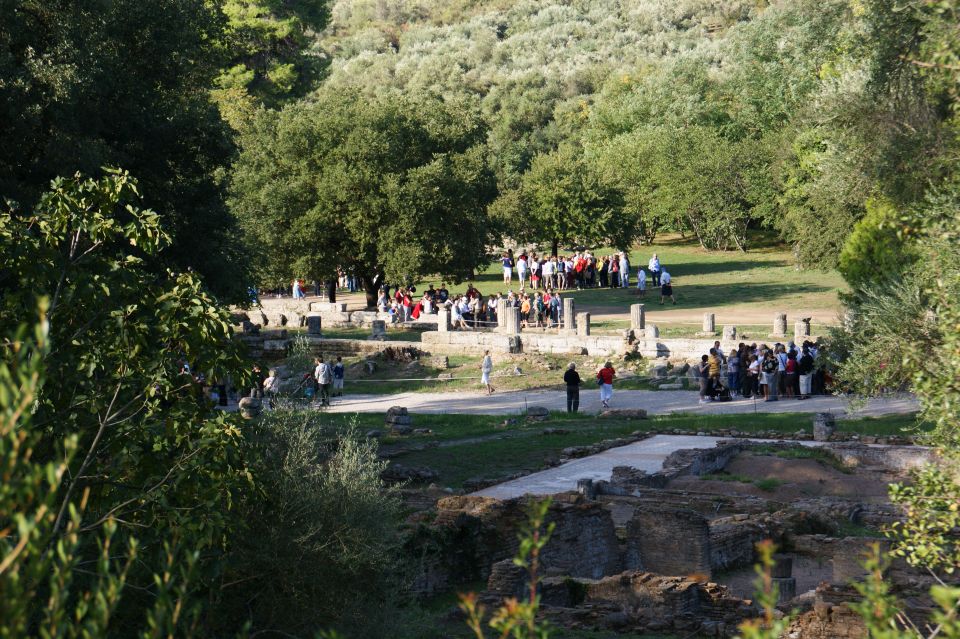
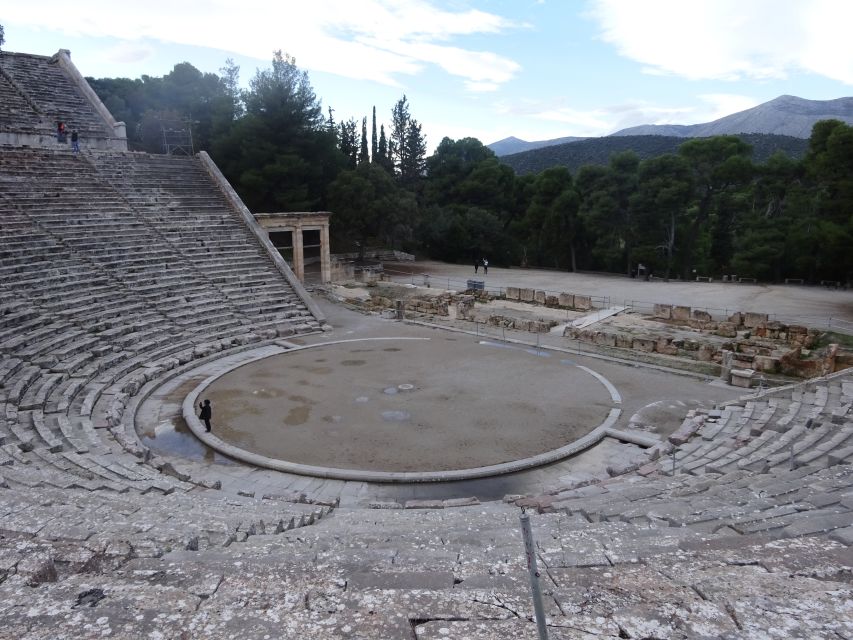
Then you move to Epidaurus at Palaia Epidaurus, and the theatre is the star. What makes this stop feel special is that the theatre is described as well-preserved, including its cavea made of limestone and poros staircases. The guide also points out why people still care: the theatre is famous for its exceptional acoustics.
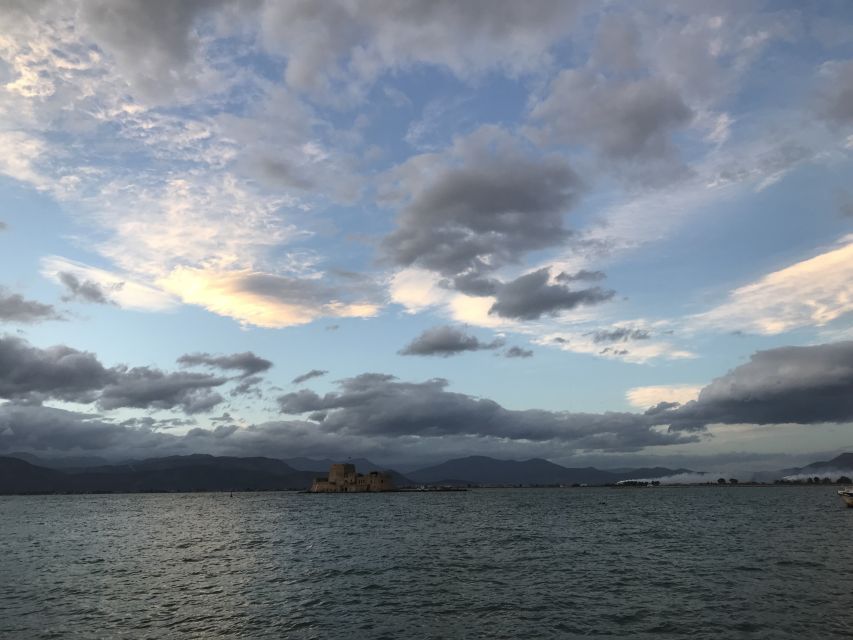
Finally, you drive to Nafplio, noted as the first capital of Greece in 1829, and you get free time to explore before dinner and overnight at your 4-star hotel.
Small heads-up for planning: the tour notes that the first overnight may be provided in Olympia. That’s not a deal-break, but it can affect how quickly you feel “settled” on night one.
Day 2: Olympia for Zeus and athletes, then a modern bridge hop to Delphi
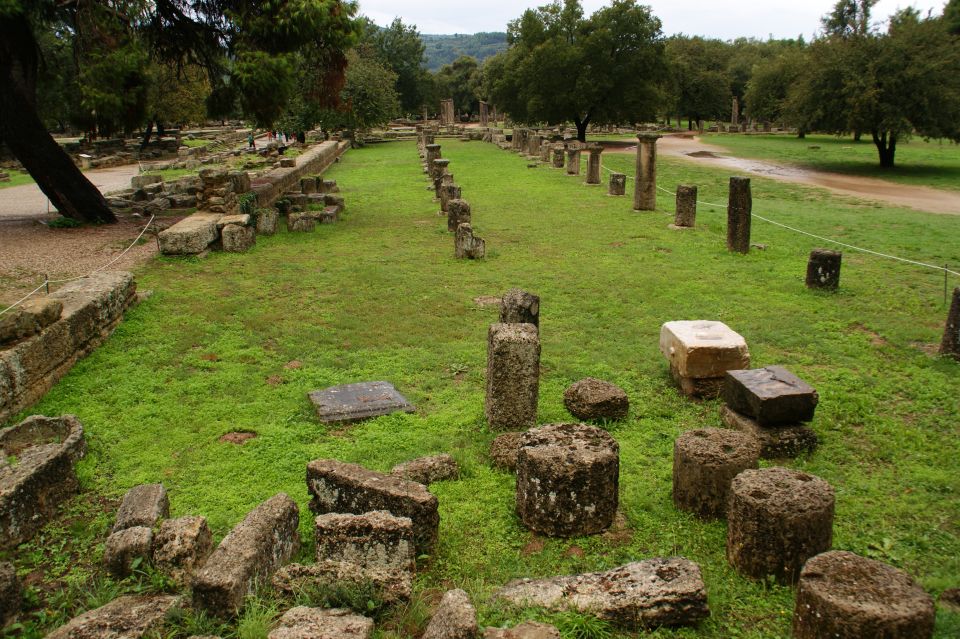
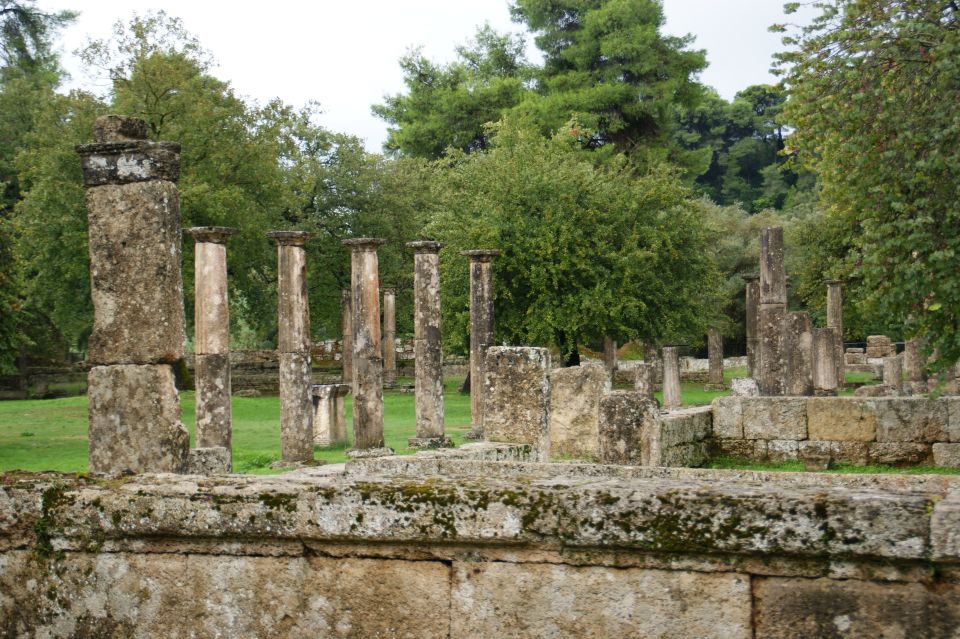
After breakfast, you head to Olympia, the sanctuary that became the religious and athletic center of ancient Greece. The Olympic Games connection is built into the story: these were held every four years to honor Zeus, and Olympia’s fame grew from that mix of worship and competition.
You’ll visit both the archaeological site and the museum with a guided tour. This matters because Olympia is big. Without context, it can feel like scattered stone. With it, you start seeing patterns: where rituals happened, how the athletic culture fit the sacred space, and why the games mattered beyond sports.
Then comes a smart detour into the modern world. You drive via Patras, cross over the water via the Rio–Antirrio bridge, and continue through Nafpaktos before reaching Delphi for dinner and overnight. That bridge crossing—described as a state-of-the-art suspended bridge, considered among the longest and most modern in Europe—works as a psychological breather. Your brain gets a non-ancient storyline for a while.
It’s a long day on the road, but you’re not stuck with empty time. The guide’s job is to keep the route meaningful, including what you see along the way.
Day 3: Delphi’s Oracle setting and the bronze Charioteer in the museum
Delphi is where the tour leans into “why people cared.” The sanctuary sits at the foot of Mount Parnassos, within a setting formed by the twin rocks of the Phaedriades. Delphi had the famous oracle and was considered the center of the world—and that idea shapes everything you’ll see.
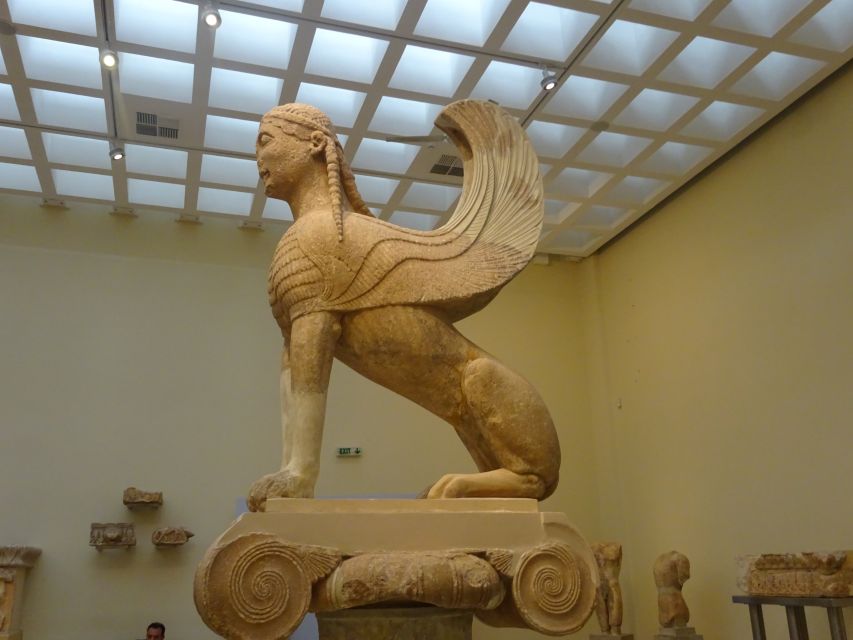
You get guided visits at both the archaeological site and the Delphi Museum. The museum stop is especially valuable because you get to connect myth and power to actual objects. One highlight is the bronze statue of the Charioteer, dedicated to Apollo by Polyzalos, the tyrant of Gela, in 478 B.C. after he won the chariot race at the Pythian Games. It’s the kind of artifact that makes ancient religion feel personal. Not abstract. Not just for scholars.
After Delphi, you drive to Kalabaka (the base for Meteora). Dinner and overnight are included, and you’re positioned perfectly for the next day’s rock-monastery spectacle.
If you want the day to feel energetic rather than exhausting, do this: at each stop, pick one “must-see” moment and let the rest roll by. Delphi can pack a lot in; your attention is your best souvenir.
Day 4: Meteora monasteries in the clouds, with the dress rules you can’t ignore
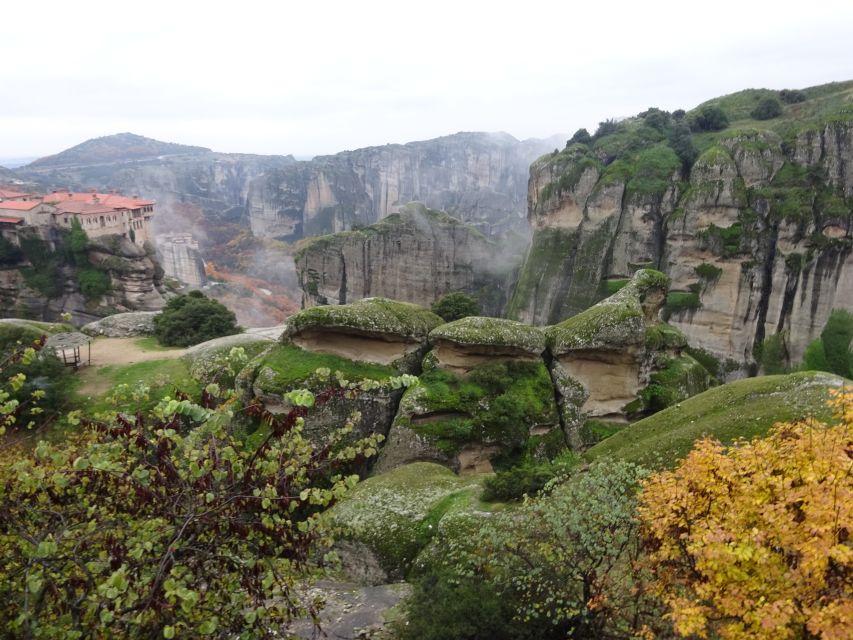
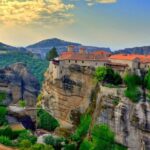
Meteora is the day that usually sells itself. The name means suspended in air, and the tour explains it as a whole community of monasteries—24 in total—with the biggest and most important group linked to the Grand Meteoron. You also get a vivid sense of how hard monastery life was up here: monks used nets or retractable wooden ladders as long as 40 meters to reach the fertile valleys below for growing grapes, corn, and potatoes.
UNESCO frames Meteora as a unique cultural heritage phenomenon, but what you’ll actually feel is scale and nerve. These monasteries are perched above the valleys, and you’re looking at decisions made over centuries under extremely strict geography.
The itinerary includes guided visits to two monasteries. Important practical note from the tour information: at Meteora, men must wear long trousers, and women must dress with a skirt or dress. This isn’t optional. Bring clothing that meets the rule, and if you’re traveling in warm weather, plan for it.
You’ll then drive back to Athens, passing Thermopylae for a photo stop. Arrival back in Athens is listed as about 19:00.


Hotels, meals, and the buffet reality of half-board
This tour includes three nights in 4-star hotels, with breakfast and dinner as part of the half-board plan. Wi-Fi is available both on the coach and at the hotel, which helps when you want to plan your next day or upload photos after a long drive.
Now, the honest part. Dinner is typically a hotel buffet, and multiple experiences note that the food can be “good to average,” with some days feeling repetitive. Breakfasts tend to get better marks than evening meals. Lunch is not listed as included, and on day one you’re specifically given free time for lunch on your own.
If your stomach prefers variety, you’ll likely enjoy doing a bit of self-planning:
- Use any listed free time to eat somewhere local when the timing works
- Keep simple snack options for the busier stretches (as long as you’re eating during allowed times/stops)
- Don’t treat every dinner as a culinary event—treat it as fuel
Also, the hotel pattern can vary by night. Some people loved their specific property, while others felt that “4-star” quality can shift a bit across the days. It’s still generally comfortable, just don’t expect every meal to be a standout.
Getting around: long drives, comfortable coaching, and what to pack
You’ll spend real time on a coach. The itinerary contains multiple long driving blocks, including the Peloponnese-to-Olympia-to-Delphi transitions. People who’ve done this route before often describe the roads as scenic but windy, so if you get motion sickness easily, take that seriously.
The good news: transport is described as highly rated, and you’re traveling by air-conditioned bus with an experienced driver. You also get headphones during attraction visits, plus skip-the-ticket-line during site stops.
Packing tips are not fluff here. The tour advises:
- Comfortable shoes
- Sun hat
- Long-sleeved shirt
- Long pants
Those long layers matter for two reasons: day heat and Meteora’s monastery entry rules. Bring clothes that won’t make you suffer for the sake of a photo.
Also note the tour has a luggage allowance: one medium suitcase and one small carry-on on multi-day tours. And there are restrictions like no oversize luggage, no pets, and no smoking.
Who should book this tour, and who should think twice
This fits best if you want a guided, structured path through major Greek heritage points without having to coordinate transport and tickets yourself. It also fits well if you enjoy mythology as explanation, not as decoration.
It’s especially well suited to people who like a guide to connect the dots. In past departures, guides have included names like Eustasis, Rose, Xenia, Joy, Christina, Stathi, Nancy, Evi, and Helen—and that consistent praise is a clue: the storytelling is often what makes the monuments stick.
You should think twice if:
- You have mobility issues (the tour notes it’s not suitable for mobility impairments and wheelchair users)
- You feel claustrophobic
- You get motion sickness on windy roads
- You’re expecting lots of free time in towns
Also, there’s a child/student discount rule that requires a valid passport or ID for discounted entry. If you’re booking for younger travelers, confirm your documents early.
Price and value: does $747 make sense for 4 days of UNESCO-level stops?
At $747 per person for a 4-day tour, the value comes from what’s bundled. You’re not just paying for transport. The package includes:
- A licensed guide
- Entry fees to attractions and museums
- 4-star hotel stays (three nights)
- Breakfast and dinner at the hotel
- Headphones during visits
- Wi-Fi on the coach and at the hotel
When you total those pieces, the price starts to look more realistic, especially because you’re covering a lot of ground: Mycenae, Epidaurus, Olympia, Delphi, and Meteora, plus key museums and guided time at each.
Is it the cheapest way to see Greece? No. But it’s often the least stressful way to see the top sites in a short time window without handling every logistical detail yourself.
The main “hidden cost” is your time and stamina. Long drives mean you trade flexibility for efficiency.
Should you book this tour
I’d book this tour if you want the classic highlights—and you want them organized. If you like having someone explain why Epidaurus mattered (and not just that it exists), you’ll feel the value fast. If Meteora and Delphi are on your must-see list and you don’t want to plan transportation between them, this route is built for you.
I wouldn’t book it if you crave deep free time, slow wandering, or a “choose-your-own-adventure” pace. This is scheduled travel with guided stops, not a flexible hop-on-hop-off day.
If you decide to go, I’d prep one simple thing: plan your clothing for Meteora on day four and protect your energy for the driving days. Do that, and the “packed” feel becomes a feature, not a complaint.
FAQ
What sites are included on this 4-day tour?
You’ll visit Mycenae, Epidaurus, Olympia (archaeological site and museum), Delphi (archaeological site and museum), and Meteora (guided visits to two monasteries). There are also photo stops at Corinth Canal and Thermopylae, plus a stop in Nafplio.
Are entrance fees included?
Yes. Entrance fees to attractions and museums are included, and the tour includes headphones during the attraction visits and skip-the-ticket-line.
Is lunch included?
Lunch is not included. Day one specifically includes free time for lunch on your own expense.
What is included in the hotel stay?
The tour includes three nights in 4-star hotels with breakfast and dinner included (half-board). An environmental fee of €10 per room per night is paid directly to the hotel reception.
Where do I meet the tour, and what time does it start?
The meeting point is Hotel Amalia Athens, and the listed start time is 8:30 AM. Optional pick-up from selected central hotels with bus access runs from 07:30 to 08:15, with an important 08:15 departure time only from Hotel Amalia Athens.
What are the language options?
The live tour guide is available in English and French.
What should I wear for Meteora?
At Meteora, men must wear long trousers, and women must dress with a skirt or dress. Plan for this rule ahead of time.
You Might Also Enjoy

More 4-Day Experiences in Athens
More Tours in Athens

More Tour Reviews in Athens
- All Day Cruise -3 Islands to Agistri,Moni, Aegina with lunch and drinks included
★ 5.0 · 4,958 reviews