REVIEW · ATHENS
Acropolis Monuments guided tour with German Speaking Guide
Book on Viator →Operated by Athens Walks Tour Company · Bookable on Viator
One hill, five thousand layers of meaning. This German-speaking Acropolis walk turns the ruins into a story you can actually follow, with help from a licensed archaeologist. Parthenon time feels focused (not just photos), and the licensed archaeologist approach keeps the details clear instead of overwhelming. One thing to consider: you’ll likely need to pay the Acropolis/Parthenon entrance fee on the day unless you chose the option that includes tickets.
I also like how this is set up for a small group, so you’re not stuck staring at someone’s hat while trying to learn what you’re looking at. You get a mobile ticket, a clear meeting point near the metro, and a tour length that fits well into an Athens afternoon. The main trade-off is physical: it’s a walking visit with moderate physical fitness needed, so wear good shoes and plan to climb.
In This Review
- Key things to know before you go
- Why a German-speaking Acropolis tour makes a real difference
- Meeting point and timing: plan your afternoon on the hill
- Stop 1: Athens Walks office to the first views
- The Parthenon: your 45 minutes of must-see clarity
- Theater of Dionysus: when Athens invented modern-style drama
- Erechtheion and the Porch of the Caryatids: worship as architecture
- Temple of Athena Nike and the Propylaea gateway: the Acropolis as a front door
- Herodes Atticus Odeon and Asclepius: Athens as culture and care
- How the guide keeps it clear: fewer facts, better understanding
- Price and value: is $46.26 a smart spend?
- Who this tour fits best (and who should rethink)
- Practical tips that make the tour smoother
- Should you book the Acropolis Monuments guided tour with a German-speaking guide?
- FAQ
- How long is the Acropolis Monuments tour?
- What’s the price per person?
- Is the Parthenon entrance fee included?
- Do I need to print anything?
- Where do I meet the guide?
- Is this a group tour?
- Do I need to speak German?
- What should I wear?
- Is the tour physically demanding?
- Can I cancel, and when?
Key things to know before you go
- German-speaking, licensed guidance that keeps the story understandable, not overly academic
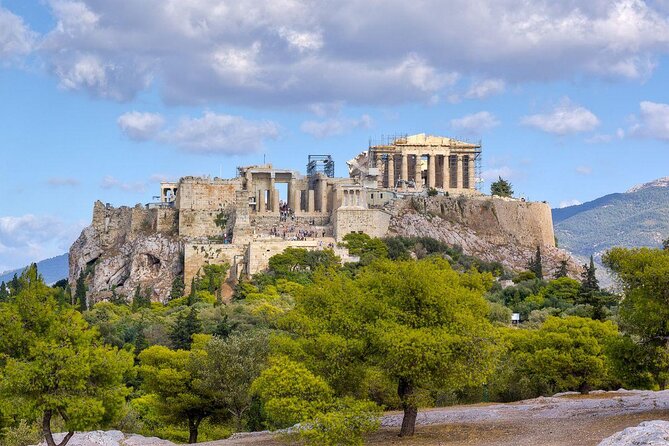
- Parthenon-focused viewing that helps you read the building layout, not just admire it
- Small-group pacing that’s designed for crowds at this site
- Theater + temples + gateways in one walk, so you leave with context
- Entrance fees are usually not included unless you book the ticket option
- Smart logistics near Acropolis metro, with a mobile ticket for easier entry
Why a German-speaking Acropolis tour makes a real difference
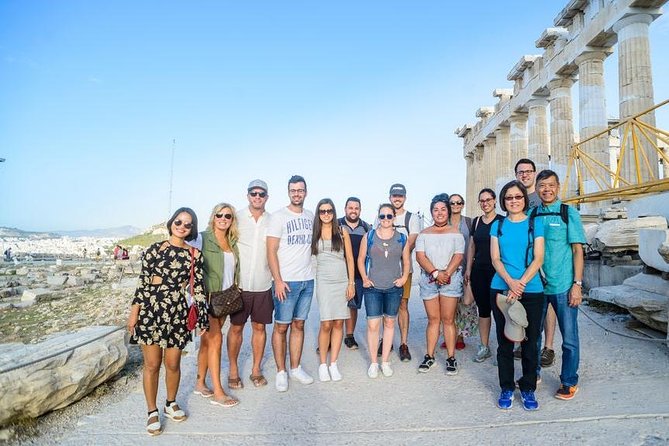
The Acropolis is famous for a reason, but it’s also famous for a reason that annoys people: it’s crowded, and the stones don’t come with labels that explain the why. What I like about this tour is that the guide doesn’t just point. They translate the site into a timeline you can picture.
I particularly appreciated how the guide frames the Acropolis as more than one monument. You’re not only looking at the big star. You’re also seeing the stage where drama started (the Theater of Dionysus), the places where worship shaped civic life (temples along the hill), and the architectural “front door” feeling created by the Propylaea gateway.
A bonus is the German-language delivery. If you’re comfortable in German, you get to absorb more in less time. That matters on the Acropolis, where your attention is constantly being pulled by views, crowds, and the sheer scale of the structures.
You can also read our reviews of more guided tours in Athens



Meeting point and timing: plan your afternoon on the hill
This tour begins at the Athens Walks office area near the Acropolis metro. The meeting spot is listed on Athanasiou Diakou street 16, about a 5-minute walk from Acropolis metro station, and you return there at the end.
Dress-wise, the guidance is a bit split (formal is mentioned, smart casual is also mentioned). Either way, the practical move is to dress neatly and comfortably for walking. Think: breathable top, layers if it’s breezy up on the hill, and shoes that don’t mind uneven stone.
The tour runs about 2 hours and has a maximum group size listed as up to 25 travelers, with an overall cap also shown as 50. In practice, that small-group target is what helps you get answers instead of just being swept along.
Also pay attention to a practical detail: the tour uses a mobile ticket and you can present a paper or electronic voucher. That’s useful when you’re juggling Athens transit, photos, and sunscreen.
Stop 1: Athens Walks office to the first views
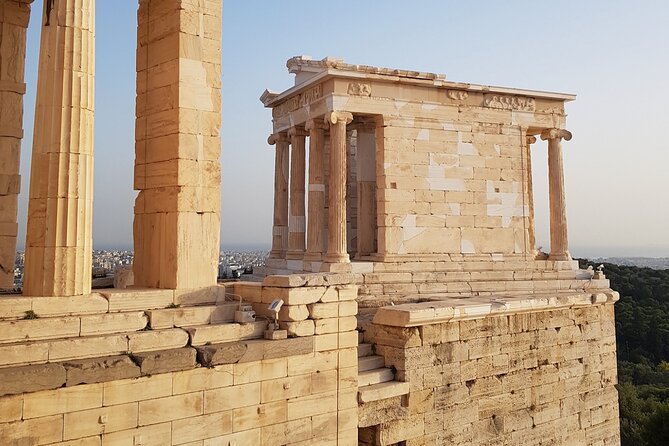
Your first steps are local. You start at the Athens Walks meeting point, then begin moving into the Acropolis zone while the guide sets the framework for what you’ll see next.
This is one of those “nothing happens yet” periods that actually matters. When your guide explains how the hill is organized and why certain structures were placed where they were, you stop treating the Acropolis like a random collection of ruins. Instead, it starts to feel like a designed landscape.
It’s also a good moment to ask quick questions. On the Acropolis, big questions tend to pop up fast: Who built what? When did things change? Why are some parts missing? A guide who’s comfortable handling questions in German (and seems to do it politely and clearly) makes this early segment useful.
The Parthenon: your 45 minutes of must-see clarity
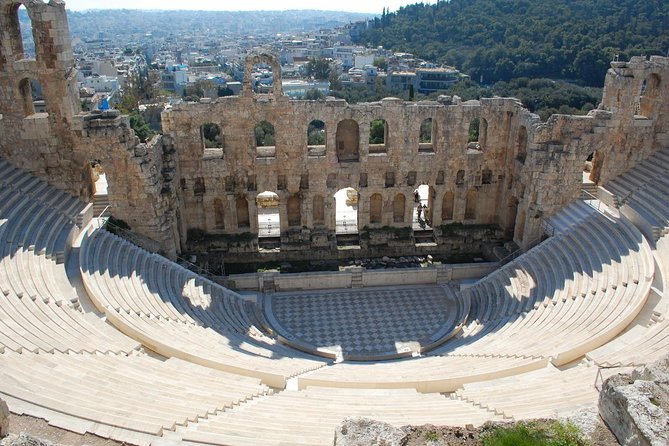
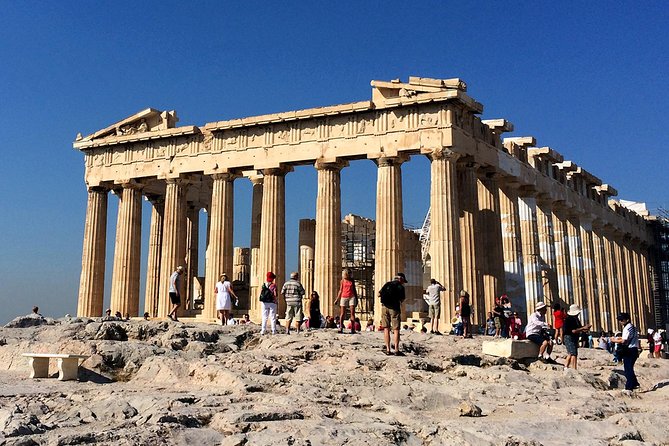
The biggest star here is the Parthenon, the temple of Athena that basically defines the word Acropolis for many people. What I value is that you get time to orient yourself before you go deep on meaning.
During the Parthenon portion, expect the guide to walk you through the building as a system: the religious purpose, the political message, and the visual impact. If you try to do this alone, crowds and angles can scramble your understanding. With a guide, you get a mental map fast, so what you see starts to click.
One practical note: the standard ticket for the Parthenon is not included unless you booked an option with entrance tickets. That means you should be ready to pay on the day if you’re using the basic option. If you prefer less stress, choose the ticket-included option when you book.
Even if the Parthenon is what you came for, you’ll likely leave knowing more than “it’s impressive.” You’ll understand why this monument became such a symbol and why it’s part of the Acropolis story rather than the whole story.
Theater of Dionysus: when Athens invented modern-style drama
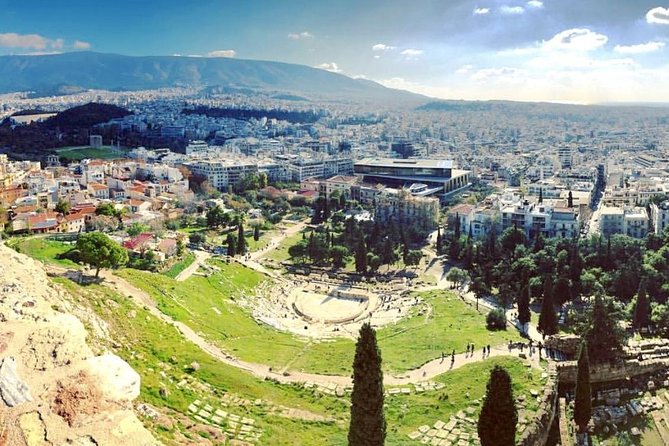
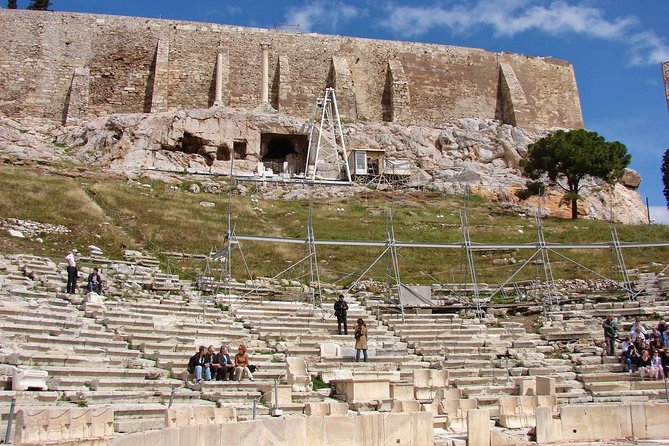
Then you move to the Theater of Dionysus, one of those spots that changes how you think about ancient Athens. Yes, this is still ruins. But the feeling is different here. You’re looking at the setting for performance, debate, and community life.
This stop is described as a shorter visit, but it’s timed well. You usually get just enough explanation to understand how the theater fit into the religious and civic world. And because the theater connects to music, speech, and storytelling, it’s an easier idea to grab than some of the more purely architectural parts of the Acropolis.
I like that the guide treats it as more than scenery. When you understand this was about ritual and community, the stones don’t feel dead. They feel like a stage that once mattered.


Erechtheion and the Porch of the Caryatids: worship as architecture
Next comes the Erechtheion, including the remains of the Porch of the Caryatids. This is where the Acropolis shifts tone. Instead of focusing purely on a single iconic temple shape, you get a sense of a sacred complex with overlapping meanings.
The Caryatids are famous because they’re instantly recognizable, but the real win on a guided visit is context: why this area mattered, what the structures were doing, and how the worship spaces worked as part of a larger religious landscape.
This stop is also a good reminder that the Acropolis wasn’t frozen in one moment. Over time, different functions and cults shaped how the hill was used and what people valued there. That’s the kind of big-picture takeaway that makes the rest of Athens feel more readable too.
Temple of Athena Nike and the Propylaea gateway: the Acropolis as a front door
You’ll also see the Temple of Athena Nike (often nicknamed the wingless victory), plus the gateway experience created by the Propylaea.
I find this part helpful because it shows the Acropolis as something you enter, not something you stumble upon. The gateway and nearby structures create a sense of arrival. Even when only parts remain, the layout tells you where the ancient visitor’s attention was meant to go.
The Temple of Athena Nike matters because it reinforces the theme of victory, identity, and civic pride. The Propylaea gateway helps you understand how the Acropolis staged its symbolism for people coming up from the city.
If you’ve ever visited ruins and felt like you were always guessing what was “the main entrance,” this section reduces that uncertainty quickly.
Herodes Atticus Odeon and Asclepius: Athens as culture and care
The tour description also includes references to the Odeon of Herodes Atticus and the Healing Temple of Asclepius. Even without a long lecture at each point, this is valuable because it reminds you that the hill wasn’t only about one type of activity.
- The Odeon side highlights cultural life, performance, and public gatherings.
- The Asclepius angle connects the sacred with healing, showing how religion supported everyday hopes and needs.
When a guide connects these ideas, the Acropolis stops being just “the Parthenon hill.” It becomes a layer-cake of what mattered to different people at different times.
How the guide keeps it clear: fewer facts, better understanding
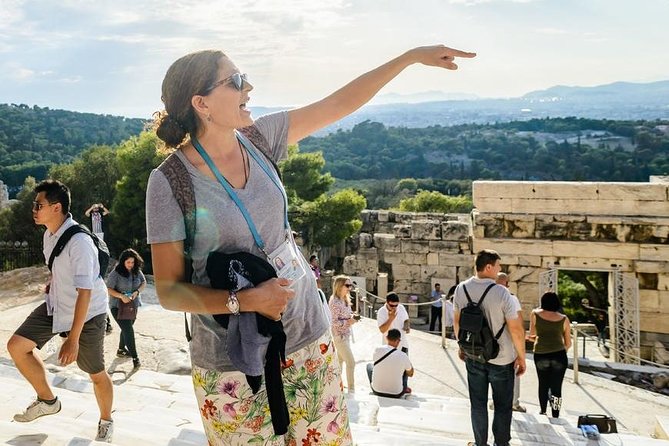
One of the best-reviewed strengths here is how the guide makes the Acropolis understandable without turning it into either a dry lecture or a shallow highlights reel. I’m especially glad when a guide breaks big history into clear chunks, because that’s how you keep your attention in a place where your brain wants to wander into photo mode.
You’ll also benefit from a guide who can answer questions patiently. On a site like this, people tend to ask the exact right things: why something is missing, how buildings relate, what different functions were, and what the big changes over time meant. Clear, respectful answers make the experience feel personal instead of scripted.
In German, that clarity matters even more. When you can follow the explanation without constantly translating in your head, you get to focus on the place.
Price and value: is $46.26 a smart spend?
At $46.26 per person for about 2 hours, this tour isn’t trying to compete with the cheapest option. The value comes from the human part: a licensed guide with the ability to interpret the site and connect the monuments into a story you can recall later.
Here’s how I think about it:
- If you’re going to visit the Acropolis anyway, you’ll probably pay entrance fees separately unless you choose the ticket-included option.
- A guided visit helps you understand what you’re looking at, which can easily turn a frustrating crowded experience into a satisfying one.
- Small-group structure (listed up to 25) helps you stay oriented and ask questions.
So the real cost question isn’t only the price. It’s whether you want to pay in your time and confusion, or pay in your ticket and get clarity. If you enjoy learning but don’t want an all-day archaeology marathon, this length and format usually fit well.
Also, the tour is commonly booked about 50 days in advance on average. If you’re traveling in peak season, booking early is a smart move.
Who this tour fits best (and who should rethink)
This works best if you:
- want a guided, German-speaking explanation rather than self-guided wandering
- like history in a structured but readable way
- value seeing multiple key spots on one hill, not only the Parthenon
- can handle a moderate amount of walking and standing
It may be less ideal if you:
- only want a free-and-flexible schedule with no guidance
- struggle with hills, steps, and walking (moderate fitness is required)
- need fully assured entrance-ticket inclusion (check whether you booked the ticket option, since entrance fees are generally not included by default)
Practical tips that make the tour smoother
A few things I’d do before you show up:
- Wear shoes you trust on uneven stone. The Acropolis is not a flat museum floor.
- Bring water and plan for sun. Even in an afternoon walk, the hill can feel exposed.
- If you care about paying once and getting in fast, consider booking the option that includes entrance tickets so you’re not handling the fee at the last moment.
- If you’re sensitive to crowds, remember that a guide’s pacing helps, but you’ll still be in one of Athens’ busiest areas.
If you want photos, don’t chase every perfect shot. Use the guide’s moments to learn where to look, then snap your pictures when your brain has the right context.
Should you book the Acropolis Monuments guided tour with a German-speaking guide?
If you like structure, and you want to leave the Acropolis understanding more than you arrived with, I think this is a good booking. The biggest reasons are the licensed guidance, the short-but-focused Parthenon time, and the way the tour links theater, temples, and gateways into a coherent picture.
Book it if you want a smart, manageable 2-hour experience that makes the site feel alive and readable. Skip it only if you’re determined to go purely on your own schedule, or if you prefer a longer deep-archaeology format.
If you’re traveling with German comfort, this one is especially worth it because you’ll spend your energy on the stones, not on translation.
FAQ
How long is the Acropolis Monuments tour?
It runs for about 2 hours (approx.).
What’s the price per person?
The price is listed as $46.26 per person.
Is the Parthenon entrance fee included?
Entrance fees are not included unless you book an option with entrance tickets. The Parthenon ticket is not included for the standard option and needs to be paid on the day.
Do I need to print anything?
No. You can present either a paper or an electronic voucher, and the tour uses a mobile ticket.
Where do I meet the guide?
The meeting point is at the Athens Walks office area on Athanasiou Diakou street 16, about a 5-minute walk from Acropolis metro station.
Is this a group tour?
Yes. It’s a small group, with a maximum size listed as up to 25 travelers, and an overall cap shown as up to 50 travelers.
Do I need to speak German?
Yes. The tour is described as having a German-speaking licensed guide.
What should I wear?
A dress code is mentioned as formal, and smart casual is also listed. In practical terms, dress neatly and be prepared to walk.
Is the tour physically demanding?
It requires a moderate physical fitness level and involves walking.
Can I cancel, and when?
Free cancellation is available. You can cancel up to 24 hours in advance for a full refund.
You Might Also Enjoy


More Guided Tours in Athens

More Tours in Athens


More Tour Reviews in Athens
- All Day Cruise -3 Islands to Agistri,Moni, Aegina with lunch and drinks included
★ 5.0 · 4,958 reviews