REVIEW · ATHENS
Athens Highlights: Myths & Philosophers Walking Tour
Book on Viator →Operated by Be a Greek · Bookable on Viator
Philosophy meets Athens on foot. This private 4-hour walking tour connects ancient thinkers with real city landmarks, from the Academy of Athens to the Areopagus hill myths overhead. I love the private Q&A feel, where your guide turns big ideas into back-and-forth talk instead of a lecture. I also love how the pacing leaves room to notice the setting, like pausing outside the Hellenic Parliament for the Presidential Guard tradition. The main consideration: it runs only if weather cooperates, and some days that 4 hours on your feet can feel like a lot.
Guides matter here, and it shows. Bianca is repeatedly praised for making philosophy feel alive (and even tailoring the pace and shade stops), while John, Gianni, and Effrosyni also get called out for warmth and clarity in different ways. You’ll start near Panepistimio and end on Areopagus Hill, with coffee or tea and bottled water included as you move between stops. A few key sights require separate entrance tickets, so budget for that if you plan to go inside at the stops that charge.
In This Review
- Key highlights to know before you go
- Why this Athens walk feels different from a typical sightseeing tour
- Start near Panepistimio, finish on Areopagus Hill
- The Academy of Athens: where ideas start with coins
- Outside the Hellenic Parliament: the Presidential Guard tradition
- National Garden: democracy, physics, astronomy, ethics
- Ermou Street and a church-named square: Hermes and street mythology
- Ancient Agora: Stoics, the Poikile Stoa, and big questions
- Tower of the Winds: Aiolos and the weather of ideas
- Anafiotika and the Cynics: philosophy in small streets
- Areopagus Hill: myths of the Olympian gods with the Acropolis in view
- Guides and the pace: why Bianca keeps getting praised
- Price and value: what $102.80 buys you in Athens
- What you’ll actually do during those 4 hours
- Who should book this tour (and who might consider a shorter option)
- Should you book the Athens Highlights: Myths & Philosophers Walking Tour?
- FAQ
- FAQ
- How long is the Athens Highlights: Myths & Philosophers Walking Tour?
- Is this tour private or a group tour?
- Where does the tour start and end?
- What language is the tour offered in?
- What’s included in the price?
- Are entrance fees included?
- Which stops are free?
- Which stops require admission tickets not included?
- Is the tour suitable for most travelers?
- What happens if the weather is bad?
Key highlights to know before you go
- Private, question-friendly format so you can ask about Socrates, Plato, and the pre-Socratics instead of just listening
- Myths tied to places, with storytelling around gods like Hermes and Aiolos (keeper of the winds)
- Academy and Agora context that connects philosophical movements to what you see on the street
- Short stop timing (often 15 minutes, one 20 minutes) that keeps things moving without rushing
- Free and paid sights mixed in, so you get plenty of value even if you skip one ticketed stop
- End-view finale on Areopagus Hill, pairing myths about the Olympian gods with a standout city perspective
Why this Athens walk feels different from a typical sightseeing tour
Athens can be loud with history. But this experience takes the stories you already hear about ancient Greece and links them to the people who tried to explain the world in words, logic, and ethics. You don’t just pass sites. You pause, ask, and connect myth to philosophy to the actual location you’re standing on.
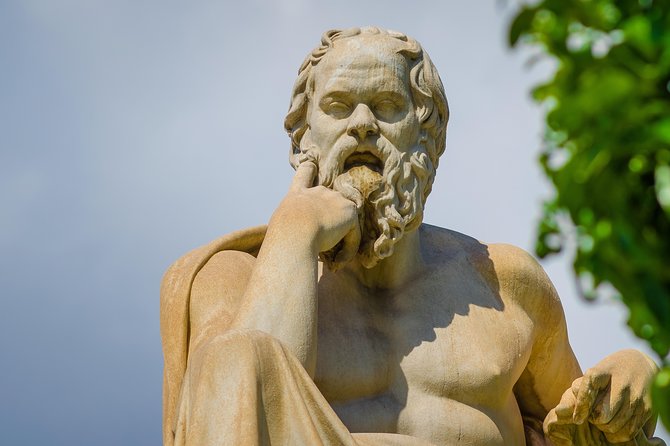
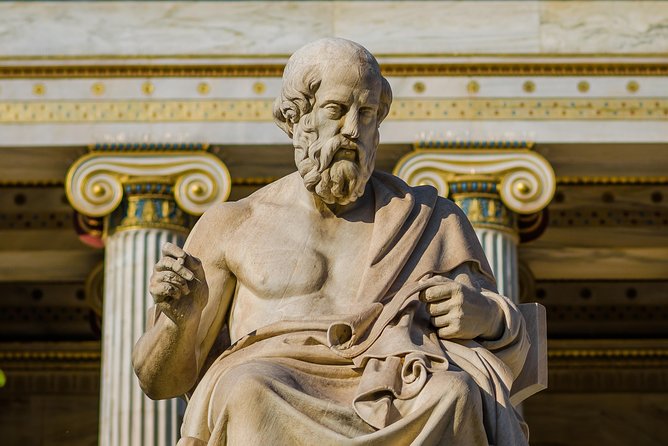
The best part is how your guide handles the subject. The guides here repeatedly get praised for turning philosophy into conversation. That matters if you’re new to the topic, but it matters even more if you studied it once (or you just like questions that start an argument in your head). Expect Socrates, Plato, and early thinkers like Thales of Miletus to come up in a way you can follow without a textbook.
And yes, the “myths” part is not decoration. It’s the bridge. You’ll hear how Greeks used stories about gods to interpret nature, human behavior, and the rules of the universe. The walking format also helps: it keeps the ideas tied to real streets and real sightlines.
You can also read our reviews of more walking tours in Athens


Start near Panepistimio, finish on Areopagus Hill
You meet near PanepistimioAthens, and the tour ends on Areopagus Hill. This routing is smart because it naturally shifts your day from city edges and institutions toward the elevated viewpoint where the Acropolis context becomes impossible to miss.
It also helps with logistics. The experience notes that it’s near public transportation, and service animals are allowed. If you’re trying to fit this into a busy Athens itinerary, starting centrally and finishing high makes it easier to plan your next move.
Tip that’s worth taking seriously: because this is a walking tour of about 4 hours, build in a little buffer before and after. You’ll have short stops, but you’re still moving between them at a human pace.
The Academy of Athens: where ideas start with coins
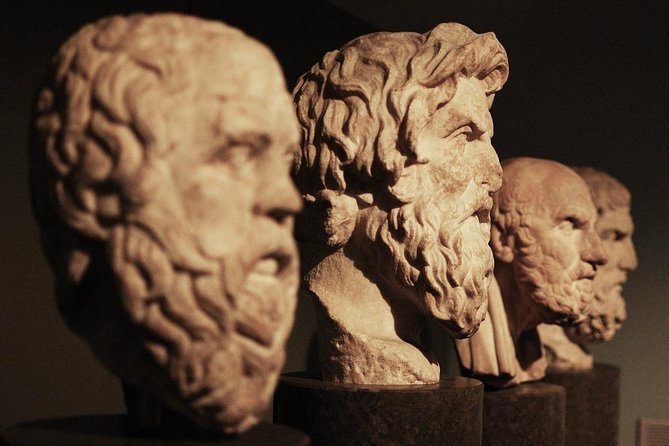
Your first major stop is the Academy of Athens area. You’ll see the Trilogy of Athens and get a time-travel-style look at philosophical movements of ancient Greece. This is a good opener because it frames the whole day: philosophy isn’t just names on a list. It’s arguments, schools, and shifting ways of thinking.
There’s also a museum element tied to this area: the museum is described as housing one of the greatest collections of coins, ancient and modern, in the world. Even if you only skim, it’s a memorable reminder that everyday objects and public life carried philosophical meaning too. One key note: admission at this stop is not included, so if you want to go inside, plan for that extra cost.
Time on-site is about 15 minutes. That’s short, but it works as an orientation moment. You’ll leave with a mental map of how the day’s thinkers connect to the Athens you’re walking through.
Outside the Hellenic Parliament: the Presidential Guard tradition
Next you’ll be outside the Hellenic Parliament. This is one of those “yes, it’s famous, but it’s famous for a reason” stops. You’ll watch the Changing of the Presidential Guard, and your guide uses the moment to point you toward older traditions in Greece and how public ritual becomes part of national identity.
This stop is free, and the time is about 15 minutes. Expect to stand in a place where you can actually watch rather than just scroll past it. It’s also a nice change of tempo: the philosophy talk continues, but the visual drama of the ceremony makes it easier to reset your brain.
If you get restless waiting for a ceremony, keep in mind the tone of the tour: your guide is there to connect what you’re seeing to what it means, not just to fill time.
National Garden: democracy, physics, astronomy, ethics
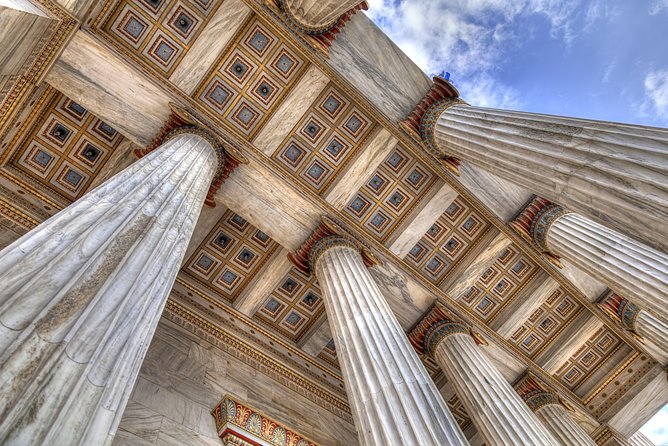
Walking into the National Garden is like switching from monuments to ideas you can apply. This stop is described as a place to learn about democracy, physics, astronomy, ethics, and other applied sciences that stem from Greek philosophy.
It’s one of the more “think while you walk” parts of the experience. Gardens naturally slow you down, and that makes it easier to compare ancient ideas with modern life. The guide can talk about ethics without making it abstract because you’re not trapped in a building or a lecture hall.
This stop is free and timed at about 15 minutes. It’s long enough to cover the main themes without turning into a pause that drains the rest of your day.




Ermou Street and a church-named square: Hermes and street mythology

Next comes Ermou Street, with stories around Hermes, the mischievous god. That’s a fun contrast to the more logic-heavy philosophers because Hermes sits in the realm of cleverness, messages, and trickster energy. It’s the kind of myth that explains how Greeks thought about communication and movement.
You’ll also hear about a square named after a church within it. That detail matters because it shows how Athens keeps layering newer religious landmarks onto older cultural meaning. Even if you’ve visited Plaka area before, this “name origin” angle makes you notice more than you’d expect.
This section is free, about 15 minutes. It’s also a good “people-watching” breather between ticketed, more structured sites.
Ancient Agora: Stoics, the Poikile Stoa, and big questions
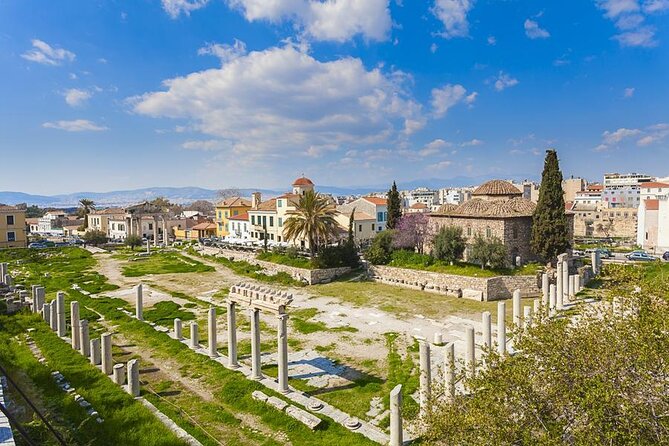
Then you head toward the Ancient Agora of Athens. This area is framed as the place where Stoic philosophy was born in the Poikile Stoa. That’s a great example of the tour’s approach: it gives you a specific philosophical claim anchored to a physical location, so you don’t just remember names—you remember where the ideas were argued.
This stop’s admission ticket is not included. Still, you can get a lot from the outdoor explanation and the atmosphere. If you want to go inside, treat it like an add-on rather than something the tour automatically covers.
Time here is about 15 minutes. Stoicism can sound severe if you only hear the slogans. The guide’s job is to show you the thinking behind the approach—especially how it connects to ethics and the goal of living well under pressure.
Tower of the Winds: Aiolos and the weather of ideas
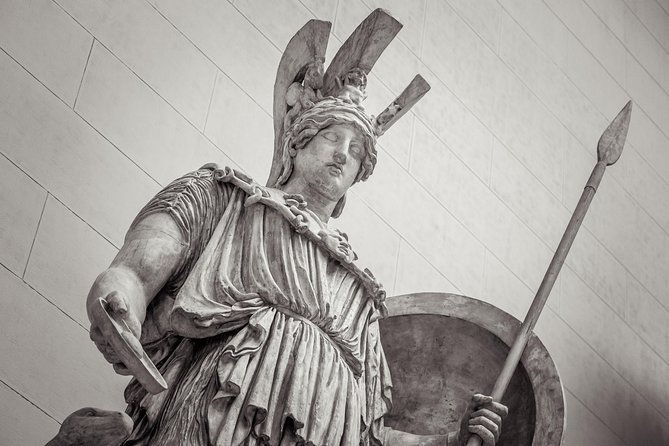
Next up is the Tower of the Winds. It’s a visually distinctive stop, and your guide uses it to explain Aiolos, the keeper of the winds.
This is one of the best spots for myth-to-science crossover. You’re literally looking at a structure tied to the elements, and the explanation turns it into a story about how people understood nature before modern meteorology.
Admission here is not included. Time is about 15 minutes, which is perfect for a focused explanation plus a few photos. And because this is in the earlier middle of the tour, it often works as a mental reset: nature myths feel less heavy than ethics debates, even when they’re still deep.
Anafiotika and the Cynics: philosophy in small streets
In Plaka area near Anafiotika (on the foot of the Acropolis), the tour shifts to the Cinic philosophers. This is where the experience gets charming. You’re in a neighborhood-like setting rather than a big landmark plaza, and that makes the philosophical conversation feel more human.
This stop is free and timed at about 20 minutes, which is longer than most others. That extra time helps because the guide can talk about what the Cynics valued—often directly connected to how people live, not just what they say in public.
If you like learning that feels grounded in daily behavior, this is a strong part of the day. It’s also a nice buffer before the final viewpoint.
Areopagus Hill: myths of the Olympian gods with the Acropolis in view
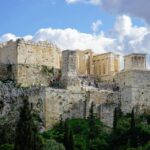
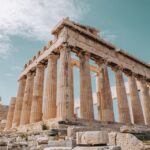
The tour concludes on Areopagus hill with a breathtaking view of the Acropolis and myths about the Olympian gods. This ending works because it gives you both. You get the view, and you get the story framework your guide has been building all day.
You’ll be about 15 minutes at the end point, and it’s enough time to let the explanation land. By now you’ve heard about early philosophers, Socrates and Plato, and mythic characters tied to nature and human behavior. Seeing the Acropolis in the background gives all of that context a sharper edge.
If you’re the type who likes to sit with an idea after a tour rather than rush to the next place, this ending is a good match.
Guides and the pace: why Bianca keeps getting praised
Most tours give you facts. This one gives you a guided conversation. That shows in how people describe their experience with Bianca especially. She’s repeatedly mentioned as making philosophy accessible, adjusting her pace to your questions, and finding good places to talk, including shady spots to keep the conversation comfortable.
Other guides get credit too. John is praised for warm, engaging storytelling and for speaking in a way that treats you like a person, not a student. Gianni is noted for well-planned timing and arriving at a lunch restaurant on time for reservations. Effrosyni is praised for energy and for keeping younger participants engaged.
One practical takeaway: because it’s private, your group’s interests actually steer the day. If one person wants basic explanations and another wants deeper points, the best guides handle both.
Also, don’t be surprised if the tour runs a little long. In at least one case, the experience went beyond the official 4 hours because the conversation continued. Plan your evening with a bit of flexibility if you can.
Price and value: what $102.80 buys you in Athens
The price is listed as $102.80 per person for about 4 hours. That sounds straightforward, but the real value is in what you get with that time: a private walk, English-language guidance, coffee or tea, bottled water, and a format built for questions.
You also get a mobile ticket. That’s a small thing, but it reduces friction when you’re moving through a big city. And there are group discounts, which helps if you’re traveling with friends or a small family cluster.
The other value piece is the “stop mix.” You get free stops (like the Presidential Guard area, the National Garden, and several street and hill viewpoints), plus ticketed sites where you can decide how much you want to pay to go inside. You’re not forced into paying entrance fees at every location.
One note: because some key sites do require separate entrance tickets, check your priorities before you book. If you strongly want museum time inside ticketed stops, you’ll want to budget extra.
What you’ll actually do during those 4 hours
Think of the tour as a series of short “idea scenes.” Each stop is roughly 15 minutes, with one around 20 minutes. Between them, you’re walking and resetting, so the day stays lively.
At most points, your guide does three things:
- Connects what you’re seeing to a specific philosophical theme
- Adds myth context to explain why those themes mattered to ancient Greeks
- Leaves time for questions so you can steer the conversation
That last part is the difference-maker. If you’ve ever felt annoyed by tours where you’re not allowed to ask anything, this format fixes that. The private nature makes it feel closer to a one-on-one lesson in public space than a bus-tour lecture.
Who should book this tour (and who might consider a shorter option)
This is a great match if you:
- Like myths but want them explained through actual Greek philosophical ideas
- Want Athens sights with meaning, not just photos
- Prefer a private guide who can tailor the pace and answer questions
- Travel with teens or young adults who enjoy discussion
It may be less ideal if:
- You’re only looking for fast, high-volume sightseeing
- Your group struggles with 4 hours of walking and standing, especially if the weather is warm
- You dislike tours where ideas take up equal time as the scenery
One suggestion that comes up in the experience style: some people consider that 4 hours could be long for certain groups. If you’re sensitive to long durations, plan your day so you don’t have another heavy activity right after.
Should you book the Athens Highlights: Myths & Philosophers Walking Tour?
If you want Athens to make you think, this tour is a strong yes. The blend of philosophers like Thales of Miletus, Socrates, and Plato with myths tied to real places is exactly how the city rewards curious travelers. I’d book it when your schedule allows time on your feet and when you can enjoy the idea-to-location connection without rushing.
Book it especially if you love asking questions. The private format and guides like Bianca (and the others praised for warm, clear storytelling) turn the day into a conversation you’ll remember after the photos fade.
Skip or reconsider if entrance fees inside multiple sites would feel like a hassle or if you’re looking for a shorter, purely sightseeing-heavy outing.
FAQ
FAQ
How long is the Athens Highlights: Myths & Philosophers Walking Tour?
It lasts about 4 hours.
Is this tour private or a group tour?
It’s a private walking tour, so only your group participates.
Where does the tour start and end?
It starts at PanepistimioAthens (106 79, Greece) and ends on Areopagus Hill (Theorias 21, Athina 105 55).
What language is the tour offered in?
The tour is offered in English.
What’s included in the price?
The tour includes coffee and/or tea and bottled water. You also receive a mobile ticket.
Are entrance fees included?
No. Entrance fees to points of interest are not included. Some stops specifically note admission tickets are not included, while others are free.
Which stops are free?
Hellenic Parliament (Changing of the Presidential Guard), National Garden, Ermou Street, the square area tied to the Church of the Pantanassa, Anafiotika, and Areopago are listed as free.
Which stops require admission tickets not included?
Admission tickets are listed as not included for the Academy of Athens, Ancient Agora of Athens, and the Tower of the Winds.
Is the tour suitable for most travelers?
Most travelers can participate.
What happens if the weather is bad?
This experience requires good weather. If it’s canceled due to poor weather, you’ll be offered a different date or a full refund.
You Might Also Enjoy



More Walking Tours in Athens

More Tours in Athens

More Tour Reviews in Athens
- All Day Cruise -3 Islands to Agistri,Moni, Aegina with lunch and drinks included
★ 5.0 · 4,958 reviews