REVIEW · ATHENS
Athens: Acropolis, Parthenon Guided Walking Tour
Book on Viator →Operated by Athenian Tours · Bookable on Viator
The Acropolis is huge, but the route helps. I love how this guided climb turns the top of Athens into a step-by-step story—Theater of Dionysus, Propylaea, the Parthenon, then the Erechtheion—so you know exactly what you are looking at. I also like the earphones for clearer narration on bigger groups, plus the option that can reduce ticket-office waiting. One thing to plan for: admission is not included unless you select the ticket option, and the hill is steep with no elevator on group tours.
Group size stays under 24, and you will often move with a pace that keeps you together on crowded, uneven ground. Guides can also adjust the order of stops if conditions make it uncomfortable, so don’t assume the sequence never changes.
This tour is a smart fit if you want the essentials in about two hours, but it does involve real walking uphill. Bring solid shoes, and expect slippery spots if it rains.
In This Review
- Key things to know before you go
- Why This Acropolis Walk Feels Shorter Than It Looks
- Price and What You Really Pay For (Tickets, Guide, and the Line Factor)
- Meeting Point and Hill Logistics That Actually Affect Your Day
- Stop-by-Stop: Dionysus Theater to Herodion, Then Up
- Theater of Dionysus
- Roman Herodion theater
- Propylaea Gate and Temple of Athena Nike: The View Part
- Propylaea
- Temple of Athena Nike views
- Parthenon and Erechtheion: What to Notice Beyond Photos
- Parthenon dedicated to Athena
- Erechtheion and its asymmetrical design
- Guides, Earphones, and Pacing: Why Group Size Matters
- Timing Tips: Morning Crowds vs Late Afternoon Calm
- What to Pack for a Steep, Outdoor 2-Hour Climb
- Should You Add the Acropolis Museum?
- Final Verdict: Book It or Skip It?
- FAQ
- How long is the Athens Acropolis, Parthenon guided walking tour?
- Does the tour include Acropolis admission tickets?
- Is skip-the-line access included?
- Are earphones provided?
- Where does the tour start and end?
- Is the tour suitable for children?
- Is the tour accessible for people with mobility impairments?
- Can I bring a stroller?
- What should I bring for the climb?
- Can guides change the order of stops?
- What if my plans change?
Key things to know before you go
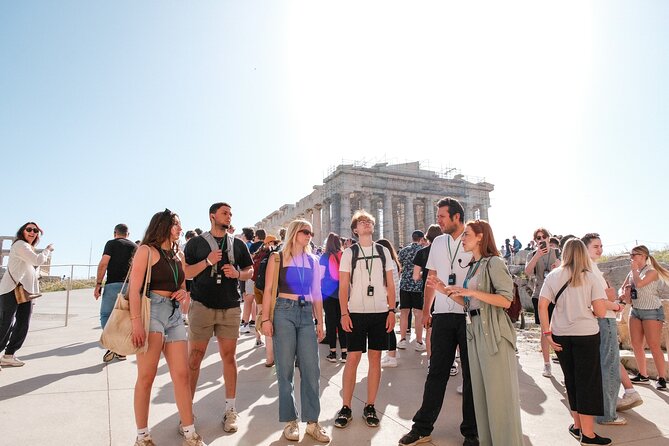
- Skip ticket-office lines (ticket option): Waiting can be reduced when you select the entry-tickets add-on.
- Earphones for groups over five: Clear audio is easier even when the site is loud.
- Four main highlights in one circuit: Dionysus Theater, Propylaea, Parthenon, and Erechtheion.
- No elevator on the hill: The climb is part of the experience.
- Slippery stone risk in rain: Plan for careful footing.
- Max group size 24: It stays guided and controlled, not chaotic.
Why This Acropolis Walk Feels Shorter Than It Looks
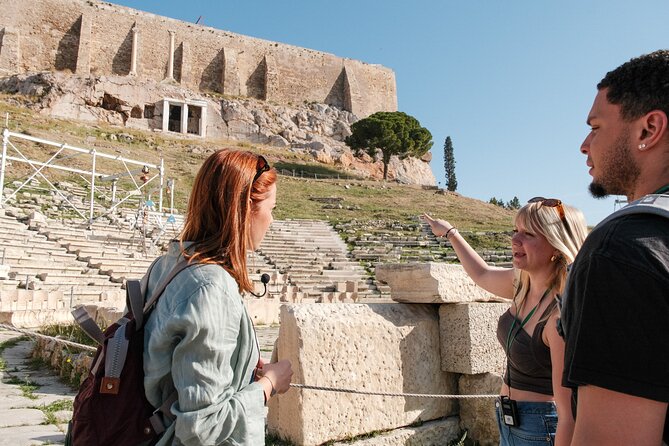
At the Acropolis, the hardest part is not the monument itself. It is the scale. From below, it can feel like a giant open-air museum spread across a steep hill. This tour helps because it gives you a clear route and tells you what matters at each stop, rather than hoping you can piece it together on your own.
The experience is also designed for flow. You are guided from one area to the next instead of wandering between crowds and signage. Even the “outdoor classroom” vibe works here: you get the context for what you’re seeing while the views pull you forward toward the next landmark.
Duration is around two hours, which is a big deal. Athens can swallow your whole day with transit, lines, and museum time. This tour keeps the focus tight: key stops, enough explanation to make it meaningful, and time to keep your day from turning into a marathon.
You can also read our reviews of more walking tours in Athens


Price and What You Really Pay For (Tickets, Guide, and the Line Factor)
The listed price is $41.13 per person for a guide-led tour of about two hours. That price covers the guide and the guided experience. Admission pricing is separate unless you pick the option that includes tickets.
That distinction matters more than it sounds. The Acropolis entry ticket is listed as €30 per person when not included, and the Acropolis Museum ticket as €20 (if you add that museum option separately). So, the “cheap” version is only cheap if you are comfortable handling tickets yourself. The ticket-included option can be a time-saver when lines are long.
You also have to understand what “skip the line” means here. The tour can skip waiting at ticket offices when the option is selected. But there is also a clear warning that nobody can skip the lines to enter the Acropolis itself. Translation: you may save time on paperwork/booths, but you still need to respect site entry rules and queues.
Value-wise, I think the best use of your money is this: pay attention to your own tolerance for waiting and your group’s energy. If you are traveling with limited time, the ticket add-on can be worth it. If you like to control your schedule and you are happy waiting briefly, the ticket-free option can work.
Meeting Point and Hill Logistics That Actually Affect Your Day
The tour starts at Mitseon 2, Athina 117 42, Greece, and it ends at Acropolis of Athens. It is near public transportation, which helps if you are combining this with other Athens sights.
If you choose the option without entry tickets included, the provider buys in advance to avoid queuing, and you are asked to carry some cash. If you choose to buy tickets yourself, you’ll need to arrive on time. The tour depends on being ready before you start moving uphill with the group.
Two practical limits shape what happens on the hill:
- There is no elevator use for group tours.
- Strollers are not allowed on the Acropolis.
On top of that, the Acropolis hill can be slippery, especially when it rains. The site also notes there is no cafe-bar on-site, only a water fountain. So bring your own bottle, plus a hat and sunglasses. Umbrella weather means you’ll want extra care for footing, not just shade.
One more detail that people often forget: audio quality can suffer in very crowded times. The tour provides disposable earphones for groups over five, but if the site is jammed, your hearing can still be impacted by surrounding equipment and noise. That’s not a deal-breaker, just a reality—Acropolis days are loud.
Stop-by-Stop: Dionysus Theater to Herodion, Then Up
This walk builds credibility fast. Instead of jumping straight to the Parthenon, you start in the area tied to performance and spectacle.
Theater of Dionysus
You will see the Theater of Dionysus, and the point is not just that it exists. It is that this is where famous ancient comedies and tragedies were first performed. That context helps you look at ruins like evidence, not like decoration.
There is also a practical benefit: this opening stop helps you get your bearings while the group is still fresh. If your feet are feeling cautious, it is easier to ease into the climb before you hit the bigger uphill sections.
You can also read our reviews of more guided tours in Athens



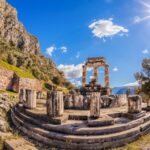
Roman Herodion theater
Next comes the Herodion theater, built in memory of Herodes Atticus’s wife. This stop is a helpful reminder that ancient Greece did not simply freeze in time. Roman additions and reinterpretations continued to shape how performance spaces were used.
If you like seeing how different periods layered on top of each other, this two-stop opening is the right warm-up before the iconic temples.
Propylaea Gate and Temple of Athena Nike: The View Part
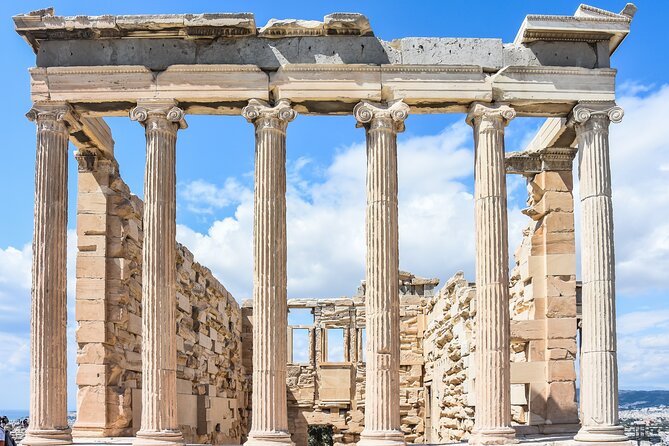
After the theater area, the tour moves toward the heart of the Acropolis approach: Propylaea, the gateway.
Propylaea
You climb up to the Propylaea gateway, and it is one of those moments where the Acropolis stops feeling like a hill and starts feeling like a plan. The gateway frames the route ahead and sets up the way you’ll experience the temples—like scenes arranged along a path.
Temple of Athena Nike views
You will also take in the Temple of Athena Nike. The key here is the perspective. Even if you are not an architecture nerd, you will notice how the view ties the city together with the sacred space above it.
This stop is also a good place to slow down mentally. Crowd energy can be intense at the Acropolis. Pausing near a viewpoint makes you process what you’re seeing instead of just walking past it.
Parthenon and Erechtheion: What to Notice Beyond Photos
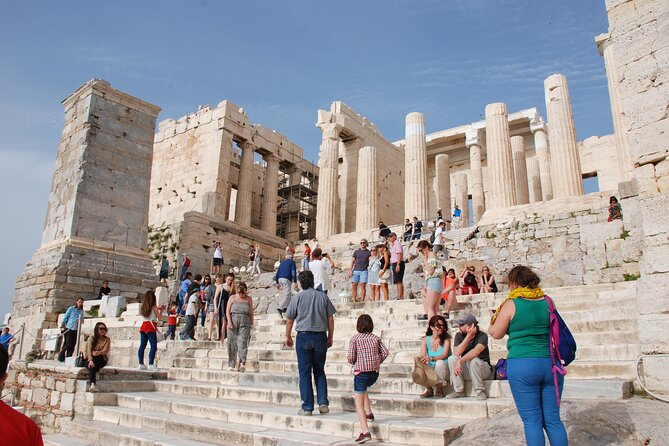
The big two here are the Parthenon and the Erechtheion, and this tour gives you enough time at each to notice details that photos often flatten.
Parthenon dedicated to Athena
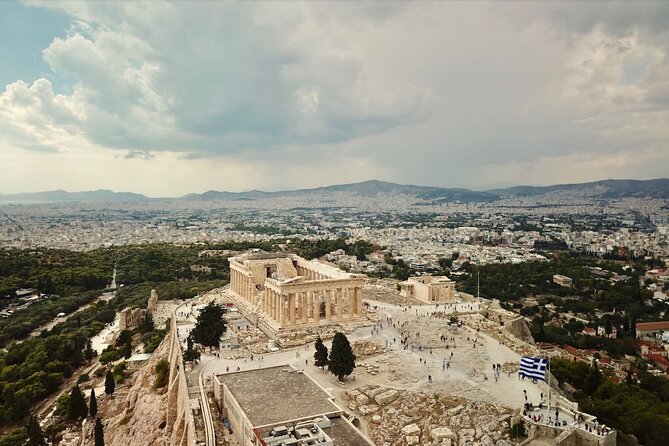
You head to the Parthenon, dedicated to Athena, the patron goddess of Athens. The tour’s timing gives you about 30 minutes here, which is valuable. You will have a chance to look slowly at proportions, and you’ll also hear the Doric order angle described in a way that helps it click visually.
The Parthenon is famous, yes. But a guided explanation makes the difference between seeing a symbol and understanding what makes it work—especially the way the structure communicates authority through form.
Erechtheion and its asymmetrical design
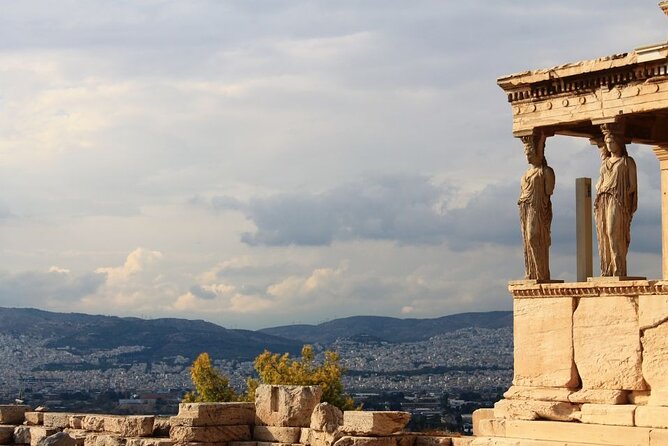
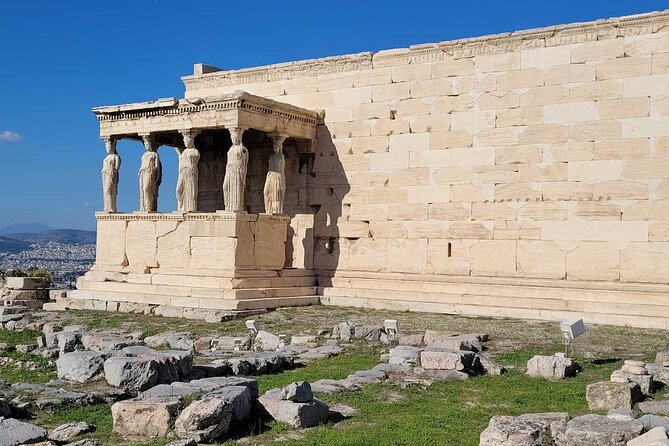
Finally, you reach the Erechtheion, famous for its asymmetrical composition and for its sculpted female figures (the tour highlights the six supporting figures). This is the moment where you can stop thinking only about “main temple” Athens and start noticing the creative quirks of sacred architecture.
The time here is about 20 minutes, which sounds short until you remember that the site is steep and uneven. It is just enough time to look carefully and then take a breather before continuing through the crowd flow.
Guides, Earphones, and Pacing: Why Group Size Matters
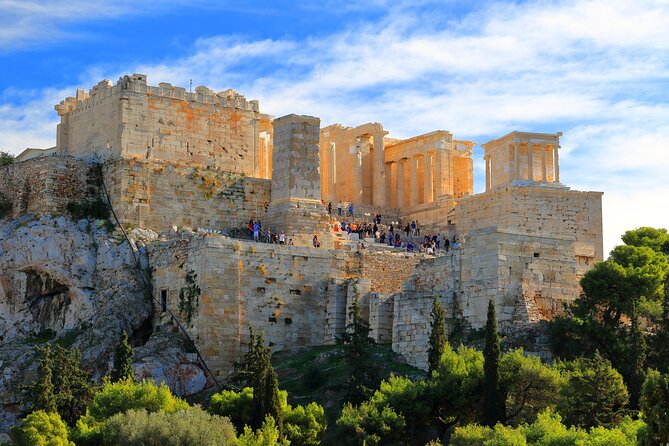
One reason this tour earns strong ratings is how it handles the reality of the Acropolis: it is crowded, and it is physical.
The tour caps at 24 travelers, and earphones are provided for groups over five. That combination helps you stay oriented and keeps your guide’s narration clear. It also reduces that annoying problem of standing behind someone taller while trying to follow what matters.
You’ll also see signs of practical guiding in how the stops feel. Past guide performances highlighted clear, entertaining delivery and pacing that does not burn everyone out at once. Some guides also made a point of using shade and stopping for rest when the route got steep, and at least one guide made sure the group had a restroom stop before heading up.
You might also run into names like Dimitri, Burnie, Iris, Ani, John, Orestes, Simon, Kat, Angel, and Natasha. You won’t know which one you’ll get until you meet up, but the takeaway is consistent: the best guides on this route manage energy, keep the group together, and explain what you see without turning it into a lecture you have to translate in your head.
Timing Tips: Morning Crowds vs Late Afternoon Calm
The Acropolis is one of those places where timing changes your whole brain.
If you start in the morning, you should expect intense crowd pressure. One common pattern is cruise ship arrivals piling into the same hours, and that can make it hard to focus on detail. If you are booking, consider planning for a later start when possible, because the walk feels more manageable and the views are easier to enjoy.
Even in less crowded periods, you’ll still share space with many tour groups. The best approach is mental: wear your patience like a hat. Your guide’s pacing and the short stop durations are built for crowd reality, not fantasy empty ruins.
What to Pack for a Steep, Outdoor 2-Hour Climb
This is not a lazy stroll. The tour is on a relatively steep hill and includes uneven terrain. The tour notes it can be slippery at certain spots, especially when raining.
Pack like you are going for a real walk:
- Solid shoes with grip
- Water bottle (there’s a water fountain, not a cafe-bar)
- Hat and sunglasses
- Umbrella if the forecast calls for rain
Strollers are not allowed, and the tour is not suitable for people with mobility impairments. It is also not suitable for children under 6.
If you are sensitive to steep climbs, treat this as a workout. You can still enjoy it, but pick your footwear and your rhythm carefully.
Should You Add the Acropolis Museum?
A number of people pair the Acropolis with the Acropolis Museum, and it makes sense. The museum helps you reconnect what you saw on the hill with artifacts and reconstructions that explain the original looks more clearly.
This tour description focuses on the hilltop circuit and does not guarantee museum time, but if you want the full story, you can plan the museum on the same day. One practical advantage of doing it after your Acropolis visit is that you’ll leave with better questions while the architecture and myths are still fresh.
If you plan to add the museum, factor in ticket time and your own energy level. Two hours on the hill can be surprisingly draining.
Final Verdict: Book It or Skip It?
I would book this Acropolis, Parthenon guided walking tour if you want:
- A guided route that keeps you oriented on a huge, steep site
- Earphones for clearer narration in groups over five
- Expert storytelling tied to the main monuments and key theaters
- A practical, about-two-hours format that fits into a real itinerary
I would think twice if you:
- Hate stairs and uneven terrain, since there’s no elevator for group tours
- Need full mobility support, because the tour is not suitable for people with mobility impairments
- Plan to visit during the busiest hours and you get stressed by crowds (late afternoon is often easier)
If you do book, I’d lean toward selecting the option that includes admission when you value time. If you are flexible and comfortable with ticket timing, the ticket-free option can still work since tickets are handled in advance to reduce waiting. Either way, show up ready to climb, bring water, and use your guide’s explanations to turn landmark photos into real understanding.
FAQ
How long is the Athens Acropolis, Parthenon guided walking tour?
It’s about 2 hours.
Does the tour include Acropolis admission tickets?
Admission is not included unless you select the option with entry tickets. If you select tickets, the guide will hand them to you in paper form at the meeting point.
Is skip-the-line access included?
With the option selected, you can skip waiting at the ticket offices. The tour also notes that no one can skip the lines to enter the Acropolis.
Are earphones provided?
Disposable earphones are provided for groups of over five people.
Where does the tour start and end?
It starts at Mitseon 2, Athina 117 42, Greece and ends at Acropolis of Athens, Athens 105 58, Greece.
Is the tour suitable for children?
It is not suitable for children under 6 years old.
Is the tour accessible for people with mobility impairments?
No, it is not suitable for people with mobility impairments.
Can I bring a stroller?
No. Strollers are not allowed on the Acropolis.
What should I bring for the climb?
Bring a bottle of water, plus a hat and sunglasses. If it’s rainy, bring an umbrella, and plan for slippery stone spots.
Can guides change the order of stops?
Yes. Guides may change the order of sites to help you avoid discomfort and feel comfortable.
What if my plans change?
You can cancel for a full refund if you cancel at least 24 hours before the experience starts. If you cancel less than 24 hours before, the amount you paid won’t be refunded.
You Might Also Enjoy




More Walking Tours in Athens


More Tours in Athens

More Tour Reviews in Athens
- All Day Cruise -3 Islands to Agistri,Moni, Aegina with lunch and drinks included
★ 5.0 · 4,958 reviews