REVIEW · ATHENS
Private Tour of Apostle Paul’s Footsteps in Ancient Corinth
Book on Viator →Operated by Colours of Greece · Bookable on Viator
Walking Paul’s route through Corinth feels strangely personal. This private 5–6 hour outing connects big geography (the Corinth Canal and Isthmus) with the places that shaped Paul’s letters, from the Agora to Acrocorinth, then finishes at the modern Apostolos Pavlos Church. You’re not stuck in a large group shuffle; your guide sets the pace and makes the story click in context.
What I like most is how the day mixes impressive ruins with clear “why it mattered” explanations—especially at the Agora and Bema area where Paul’s public moment in Corinth gets grounded in the city’s layout. I also like the practical structure: comfortable transport, bottled water, and time built in so you can look around without feeling rushed. One thing to plan for: entrance fees are not included for Ancient Corinth and the Archaeological Museum (extra cost), and there isn’t a separate licensed site guide included for those museum/ruin interiors.
In This Review
- Key things you’ll notice on this Apostle Paul Corinth tour
- Entering Corinth via the Isthmus: Canal engineering and the Diolkos shortcut
- Kenchreai Port and Phoebe: Paul’s sea route made human
- Ancient Corinth (Archaia Korinthos): the Agora, the Bema, and the Temple of Apollo
- Corinth Archaeological Museum: turning ruins into real daily life
- Acrocorinth fortress: Temple of Aphrodite views plus strategy on top
- Apostolos Pavlos Church: ending with a modern mosaic story
- Price and value: what $169.03 includes, and what costs extra
- How the guide experience shapes the whole day
- Who should book this Corinth Paul tour from Athens
- Should you book? My straight answer
- FAQ
- How long is the Private Tour of Apostle Paul’s Footsteps in Ancient Corinth?
- Is this tour private?
- What’s the starting point and is pickup included?
- Is airport pickup included?
- What language is the tour offered in?
- What is included in the tour price?
- Are entrance fees included?
- What vehicle do groups use?
- Are child seats available?
- What should I bring or wear?
- What if the tour is canceled due to weather or I need to cancel?
Key things you’ll notice on this Apostle Paul Corinth tour
- Corinth Canal + Diolkos first, so you understand the “shortcut” that made Corinth a power center
- Kenchreai (Kechrees) port tied to Paul’s movement by sea and the role of Phoebe
- Agora and Bema emphasis, plus the contrast between local pagan life and early Christianity
- Museum stop that helps you connect artifacts to what you see in the ruins
- Acrocorinth fortress for both strategic views and the Temple of Aphrodite story
- Modern Apostolos Pavlos Church mosaic as a reflective ending to the day
Entering Corinth via the Isthmus: Canal engineering and the Diolkos shortcut
Most people think Corinth is just “ancient ruins.” This day starts by showing why Corinth mattered long before Paul arrived. You begin at the Isthmus of Corinth, the narrow land bridge linking mainland Greece to the Peloponnese. In antiquity, it acted like a natural boundary, and that mattered for trade and movement.
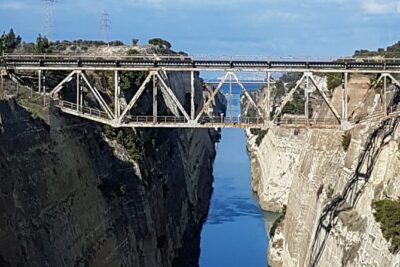
Then you get the modern shock-and-awe: the Corinth Canal, cut in 1893 through the 6.3-kilometer-wide isthmus. Even with a short stop, you’ll get real perspective—steep limestone walls, close-up water views, and the sense that this region has always been about moving goods and people efficiently.
A short hop away is the Diolkos, an ancient stone-paved trackway that predates the canal by more than 2,000 years. The idea was simple and smart: instead of sending ships around the Peloponnese, they could be hauled overland across the isthmus. Walking along what remains, you’ll feel how ancient engineers solved the same problem modern engineering later retooled.
Practical tip: wear shoes with good grip. This early walking is brief, but it’s on real ground, not museum floors. Also, Greek sun can hit fast—bring your hat and sunscreen.
You can also read our reviews of more private tours in Athens

Kenchreai Port and Phoebe: Paul’s sea route made human
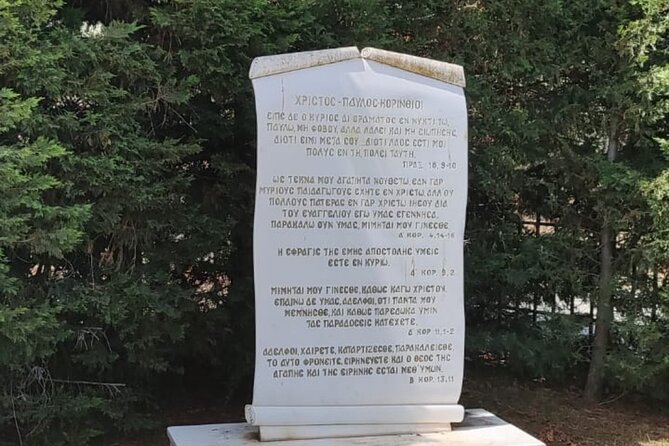
Next you head to Ancient Port of Kenchreai (Kechrees), the eastern port area tied to Paul’s visits around the early 1st century. This is one of those stops that works best if you let it sink in: ports aren’t just geography. They’re where people arrive, stories travel, and communities grow.
The port connection here is specific. Paul is described as disembarking during his first visit to Corinth around 51 A.D. Later, this is also where he set sail for Ephesus, and where his letter to the Romans was entrusted to Phoebe, a prominent Christian woman described as a deaconess of the local church.
Even though only modest traces remain, the value of the stop is the way your guide connects the physical place to the human chain of events. This is where the tour often earns its “moving experience” reputation. If you like your history with real stakes—people choosing where to go and how to spread ideas—this section will hit.
Want a good mindset for this stop? Treat it like a staging area. The day will soon move into ruins, but this is where you remember Paul wasn’t walking through a postcard. He was traveling through a world of shipping routes and tight timing.
Ancient Corinth (Archaia Korinthos): the Agora, the Bema, and the Temple of Apollo
Now you move into the heart of it: Ancient Corinth. This is where the tour becomes less about “places in general” and more about “why those exact places shaped a message.”
You’ll spend time around the Agora, the city’s marketplace and civic center. For a Christian visitor, the Agora matters because it reflects everyday life—the kinds of settings where ideas spread, where public disagreements happened, and where Paul wrote to real communities.
Nearby is the Bema, a raised platform. Paul is believed to have stood there—addressing the community and facing Roman authority in a trial setting before the Roman proconsul. You don’t need a dramatization to feel the weight of it. Standing in a city that was built for public speech makes the Bema idea feel concrete.
Your guide also connects the spiritual clash of the time: local pagan beliefs versus early Christianity. That contrast matters because Corinth wasn’t a blank religious sheet. The city was religiously layered, and that shows up in landmarks like the Temple of Apollo nearby.
One caution: this stop requires entrance fees (part of the extra cost for archaeological sites). Also, your included tour doesn’t include a separate licensed guide inside the sites. So plan on your tour driver providing interpretation—helpful, and often detailed—but you may want to download any official site info you can before you arrive so you can follow along.
Corinth Archaeological Museum: turning ruins into real daily life
After walking through Ancient Corinth, the Archaeological Museum of Corinth is the kind of follow-up that stops the day from feeling like a scavenger hunt. The museum was built in 1932 to preserve artifacts uncovered during excavations.
You’ll get time to move at a human pace—about 45 minutes—and it’s built for filling in the gaps the ruins can’t fully answer. Highlights include items tied to the Sanctuary of Asklepios and finds spanning different eras, including prehistoric material.
Here’s why this museum stop is smart for Paul-focused travelers: it gives you objects and context that help you picture what people in Corinth actually used and valued. Ruins show structures. A museum helps you see the lived texture behind those stones.
If you’re the type who likes to take photos, this is also a good time to slow down. You’ll often come out of the museum with sharper questions about what you saw outside.
Acrocorinth fortress: Temple of Aphrodite views plus strategy on top
Next is Acrocorinth, the fortified acropolis above ancient and later Corinth. This is one of the stops people consistently remember because it combines practical defense with serious religious significance.
You’ll see fortification layers from multiple eras—Greek, Byzantine, Frankish, Venetian, and Ottoman. That means the hilltop wasn’t just “ancient.” It kept being used and reshaped as power changed hands.
The big spiritual note here is the Temple of Aphrodite, a sanctuary associated with priestesses—described as communities of up to 1,000 priestesses in some accounts. Even if you don’t walk through a fully preserved temple today, the place itself helps explain why religion and politics were intertwined on this hill.
And then you get the reward: sweeping views. Not just pretty scenery. They help you understand why someone would want a fortress here, and how this lookout linked the city’s control to the surrounding landscape.
Practical note: plan for a bit of uphill walking. Bring water (you’ll have bottled water included), and take breaks if your pace slows. With private tours, you can adjust without feeling guilty about slowing the schedule.



Apostolos Pavlos Church: ending with a modern mosaic story
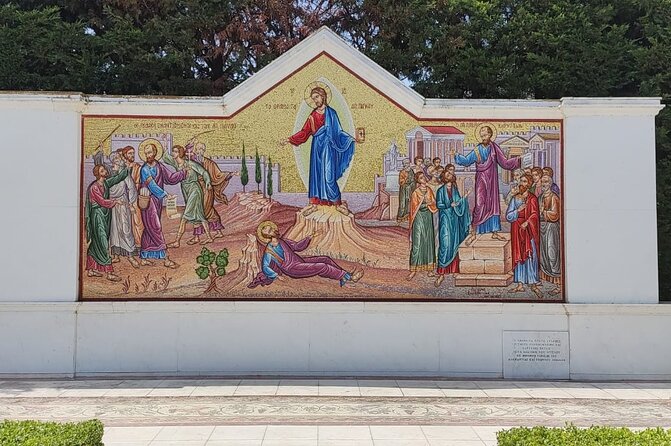
You finish where the day’s meaning gets gently re-framed. The tour ends at the Church of Saint Paul (Apostolos Pavlos Church) in Corinth’s modern area.
Inside, there’s a striking mosaic by artists Pastorutti and Tsotsonis that depicts Paul’s journey and mission in the city. It’s a contemporary tribute, but it works well as a conclusion because it turns the day’s walking into something reflective instead of purely factual.
This final stop is included with about 20 minutes on-site. It’s also a good moment to check your photos and decide what you want to read more about later.
If you’re not especially religious, this section still helps. It shows how places tied to Paul’s story continue to influence the cultural and spiritual identity of the area.
Price and value: what $169.03 includes, and what costs extra
At $169.03 per person, this is a private, driver-led day trip from Athens to Corinth. Whether it feels like a good value depends on two things: how much you want personalization, and whether you’re okay with paying additional site/museum fees.
What you do get for the price:
- Air-conditioned vehicle (important on warm days)
- WiFi on board
- Professional English-speaking tour drivers with in-depth history knowledge
- Bottled water
- Hotel and Port pickup/drop-off
- Private setup for groups of 1–4 people using a sedan vehicle
What costs extra:
- Entrance fees to Ancient Corinth and the Archaeological Museum: €15.00 per person
- There is no separate licensed guide included for archaeological sites and museum interiors
So the real value question is this: do you prefer a comfortable, planned route with a guide who can connect the dots? If yes, the price makes more sense. If you’re hoping for a full-on, museum-grade interpretive team inside every site, you’ll need to adjust expectations because the tour driver is the main interpreter.
Also worth noting: this experience is booked about 65 days in advance on average. If your trip dates are fixed, book early to avoid the “all the good slots are gone” situation.
How the guide experience shapes the whole day
This tour lives or dies by the person in the driver’s seat. The names you may encounter show a pattern: guides who are patient, attentive, and willing to work with your pace.
In practice, you’ll see this in small but meaningful habits:
- helping with getting in and out of the vehicle
- providing cold water along the way
- answering questions with context, not just facts
- adjusting where you spend time for photos or extra interest
- adding practical pointers, like restroom timing
I’ve also seen the day described as especially good for people traveling with older family members, because the tone tends to be calm and supportive. If that describes you, this private format is a real advantage.
If you want a strictly biblical program, here’s the honest consideration: the tour is tied to Paul’s footsteps, but it’s still grounded in site context and local history. It tends to connect Scripture and place rather than run like a church service or verse-by-verse lecture.
Who should book this Corinth Paul tour from Athens
This one fits best if you:
- want a private day trip with flexibility
- care about Paul’s movement through a real city, not just a list of ruins
- enjoy mixing major landmarks with the smaller, story-linked stops
- prefer a driver-guide who can explain the “why” of each location
It’s also a strong choice if you’re travel-time sensitive. You’re getting travel included in a 5–6 hour window, with pickup from Athens hotels or the port.
If you’re short on time in Greece and you’re curious about Christianity’s early growth in the region, this is a focused way to make that connection.
Should you book? My straight answer
Book it if you want your Corinth day to feel connected—canal engineering to port travel to marketplace speech to hilltop fortress—so Paul’s story lands in the geography. The private setup, comfortable transport, and the way guides handle pacing and questions is exactly what makes this experience work.
Skip or rethink it if entrance fees add up for your budget, or if you specifically need a licensed on-site guide in every museum and ruin interior. And if you’re expecting a strictly biblical tour format, go in knowing it’s history-led, Scripture-linked, and place-driven.
If you’re even slightly excited by the idea of standing near the Agora and imagining Paul’s public moment, this day is a very solid match.
FAQ
How long is the Private Tour of Apostle Paul’s Footsteps in Ancient Corinth?
It’s about 5 to 6 hours, including travel time.
Is this tour private?
Yes. It’s a private tour/activity, and only your group participates.
What’s the starting point and is pickup included?
Pickup is offered. The driver provides hotel and port pickup/drop-off, and in case of hotel/apartment they wait at the entrance. For the port, they wait at the gate with a sign holding your name.
Is airport pickup included?
Airport pick-up is optional and comes with an additional cost of €50 per booking.
What language is the tour offered in?
The tour is offered in English.
What is included in the tour price?
Included items are air-conditioned vehicle, WiFi on board, professional English-speaking tour drivers, bottled water, and hotel/port pickup/drop-off.
Are entrance fees included?
No. Entrance fees for archaeological sites and the museum are €15.00 per person.
What vehicle do groups use?
For groups of 1–4 people, the tour uses sedan vehicles.
Are child seats available?
Child seats are available upon request.
What should I bring or wear?
Wear comfortable shoes for walking. Bring a hat and sunscreen, since Greece can be hot and sunny.
What if the tour is canceled due to weather or I need to cancel?
The experience requires good weather. If it’s canceled due to poor weather, you’ll be offered a different date or a full refund. There is free cancellation up to 24 hours in advance for a full refund.
You Might Also Enjoy

More Private Tours in Athens

More Tours in Athens

More Tour Reviews in Athens
- All Day Cruise -3 Islands to Agistri,Moni, Aegina with lunch and drinks included
★ 5.0 · 4,958 reviews