REVIEW · ATHENS
Athens: Acropolis, Parthenon and Acropolis Museum Guided Tour
Book on Viator →Operated by Athenian Tours · Bookable on Viator
The Acropolis makes more sense with a guide. I like how the licensed English guide connects monuments to real stories you can picture, and I love that you pair the hilltop views with the Acropolis Museum, where you see surviving originals close up. In prior groups, guides such as Angel and Natasha are praised for turning the site into something you can understand quickly, with humor and lots of answers.
One drawback to plan around: you’re walking a steep hill, and group tours don’t allow elevator use, so sturdy shoes and punctual arrival matter.
In This Review
- Key highlights I’d prioritize before you go
- Why this Acropolis tour feels smarter than a self-guided afternoon
- Meeting at Mitseon 2 and the flow that keeps you on schedule
- Stop 1: The Acropolis walk from Dionysus Theater to the Parthenon
- Dionysus Theater and the dramatic origins
- Asclepius sanctuary: healing has a place on the hill
- The top gateway and the Parthenon’s “set pieces”
- A quick note on the “Parthenon stop”
- Why there’s a planned break before the museum
- Stop 2: Acropolis Museum for originals you can actually see
- Ground floor: daily life, not just monuments
- First floor: archaic statues and the feeling of being near the originals
- Top floor: the Parthenon frieze and the view
- Beyond the Parthenon postcard: what to look for while you’re up there
- Tickets, skip lines, and what your $41 price really means
- Practical tips that make the Acropolis day feel easier
- Who this guided Acropolis and museum tour is best for
- Should you book this Acropolis, Parthenon and Acropolis Museum guided tour?
- FAQ
- How long is the Acropolis, Parthenon and Acropolis Museum guided tour?
- Is the tour offered in English?
- Where do I meet the guide?
- Where does the tour end?
- Are Acropolis and Acropolis Museum tickets included in the price?
- If I choose without tickets, how much do admission tickets cost?
- Can I skip the line to enter the Acropolis?
- Is elevator access included for the Acropolis hill?
- Is this tour suitable for children or people with mobility impairments?
- What is the cancellation policy for a refund?
Key highlights I’d prioritize before you go

- Guided storytelling at the main monuments so the Acropolis stops feel connected, not random
- Dionysus Theater and Herodes Atticus areas folded into the walk, not treated like a side quest
- Acropolis Museum originals you can stand near, including the Parthenon frieze on the top floor
- Separate-entrance museum flow (when you choose the with-tickets option) to keep time from getting eaten by lines
- Small group size (max 24) helps the pace stay comfortable and question-friendly
- Bathroom break planned before the museum so you’re not scrambling on the hill
Why this Acropolis tour feels smarter than a self-guided afternoon

The Acropolis can be breathtaking and confusing at the same time. From below, it’s all one big silhouette. Up close, you need a map in your head: which building is which, why it was built, and what people thought they were doing up there.
This tour solves that with an expert guide and a tight pairing: you see the monuments first, then you go to the Acropolis Museum to match what you just looked at with the surviving sculptures and architectural pieces. That second stop is the difference between taking photos and actually understanding why the Parthenon mattered so much.
You can also read our reviews of more guided tours in Athens



Meeting at Mitseon 2 and the flow that keeps you on schedule

You meet at Mitseon 2 (Athina 117 42), a short walk from the Acropolis Metro. The tour ends at the Acropolis Museum, Dionysiou Areopagitou 15. That end point is handy because it means you’re not immediately fighting traffic or transfers after you’re tired from the climb.
Punctuality is not optional here. Acropolis entry times are strict, and if you’re late, you may not be accommodated. The tour also runs on a hill route, and the terrain can get slippery when wet, so you’ll want to come ready for walking and stairs.
Group size is capped at 24, and the guides are allowed to adjust the order for comfort. That flexibility matters because weather and crowding can change fast at the top.
Stop 1: The Acropolis walk from Dionysus Theater to the Parthenon

Your hill experience starts with an up-close look at the cultural “backstage” of ancient Athens, not just the shiny postcard buildings.
Dionysus Theater and the dramatic origins
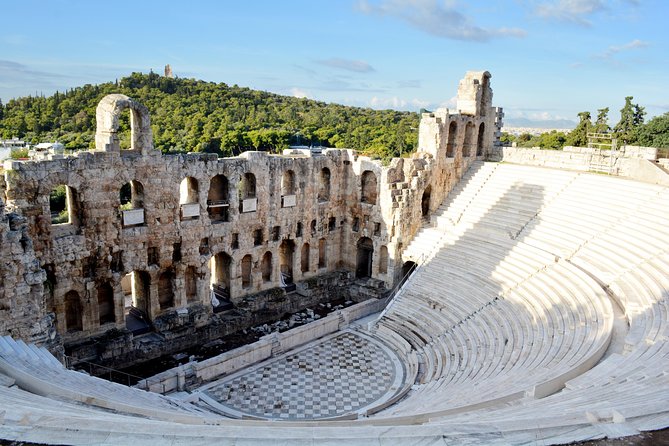
On the way up, you visit the Dionysus Theater, tied to the first performances of famous ancient comedies and tragedies. The point isn’t just that dramas happened here. It’s that this is where civic life, religion, and entertainment overlapped. When your guide connects that idea to what you’re standing beside, the site feels alive instead of stone-and-columns flat.
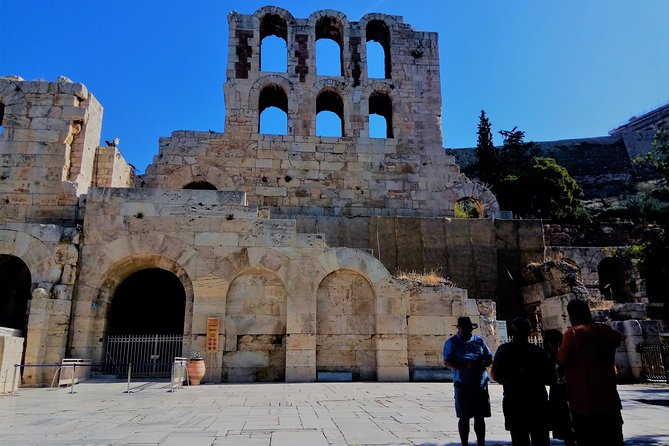
The walking route also includes the Odeon of Herodes Atticus, a major stop for understanding how the Athenians used performance spaces. If you’re a fan of theater, this is one of the most satisfying parts of the day because the Acropolis becomes more than a temple complex.
Asclepius sanctuary: healing has a place on the hill
You’ll also see the sanctuary of the healing god Asclepius. That’s a great reminder that the Acropolis wasn’t only about politics and ceremony. It also held everyday meaning for how people believed health worked—another reason the guide’s narration helps so much.
You can also read our reviews of more museum experiences in Athens



The top gateway and the Parthenon’s “set pieces”
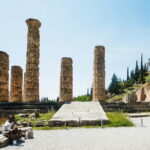
Once you reach the main upper zone, you’ll hit the big architectural landmarks:
- Propylaea (the gateway)
- Temple of Nike
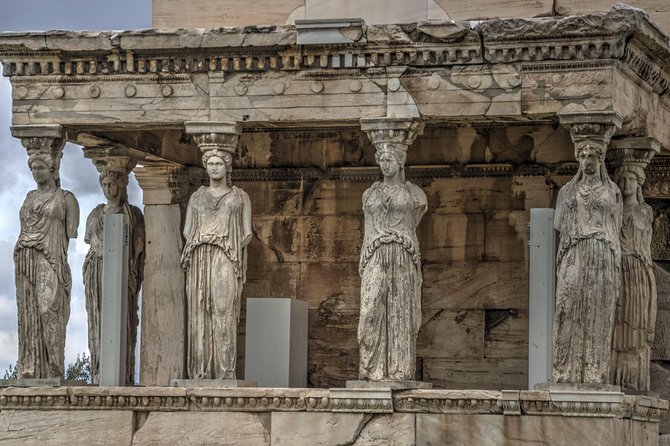
- Erechtheion (famous for its asymmetrical layout and sculpted female figures)
- And of course the Parthenon, described as a 5th-century B.C symbol tied to democracy and the Pericles era
The tour includes time at each stop, so you’re not just passing by. You get short, focused moments to look for design cues—especially helpful at the Erechtheion, where the asymmetry is exactly why it’s so memorable.
A quick note on the “Parthenon stop”
Even though the Parthenon is part of the hill complex, the schedule sets aside a shorter, dedicated moment to take in this 5th-century zenith of Doric architecture and its dedication to Athena, patroness of Athens. Think of it like a concentrated photo-and-details window: enough time to register the look, not enough time to get lost.
Why there’s a planned break before the museum
After the hill segment, you get a short break before heading to the museum, including time to use the bathroom. This is practical and underrated. On the Acropolis, you often realize too late that you planned your timing for views, not for your body.
Also note: there aren’t cafés on site—your only on-hill snack option is basically limited to a water fountain. Bring water and be ready for a warm sun day or a windy one at the top.
Stop 2: Acropolis Museum for originals you can actually see
The Acropolis Museum is where the tour turns from sightseeing into understanding. It’s a few minutes’ walk from the Acropolis area, so the mental connection stays strong.
Ground floor: daily life, not just monuments
On the ground floor, you’ll see artifacts connected to Athenian everyday culture—wedding customs, children’s toys, healing techniques, and religious practices. This part matters because it gives context. The Acropolis wasn’t built in a vacuum. It sat above real people with real routines and beliefs.
First floor: archaic statues and the feeling of being near the originals
On the first floor, you’re close to objects from the Acropolis era, including archaic statues from the 6th century B.C and large elements from the entrance area. You’ll also get to walk near the Caryatids—the famous sculpted figures associated with the Erechtheion—and big pieces that show how the entrances were meant to hit you visually.
Top floor: the Parthenon frieze and the view
On the last floor, you’ll see the original Parthenon frieze. This is the moment that usually sticks with people because the museum version helps you spot what your eyes may have missed up on the hill. You also get the sweeping view with the Acropolis right there in front of you.
You do have a fixed visit length in this guided format (the museum stop is about two hours). If you like slow reading and lots of extra wandering, you might wish you had more time. If you want a guided match between hill and museum, that timing is usually a good fit.
Beyond the Parthenon postcard: what to look for while you’re up there

A guided walk helps because it turns buildings into clues. When you stand by the Doric details at the Parthenon, you’re not just seeing columns—you’re seeing a design language.
Here’s what you’ll benefit from focusing on during the short stop:
- Order and repetition: how Doric style creates a calm, sturdy feel
- The dedication to Athena: it’s tied to the identity of Athens itself
- Placement: the way structures sit on the hill helps explain why the Acropolis dominates the city
The guide’s stories are especially useful here because the meanings behind the monuments are not always obvious at a glance.
Tickets, skip lines, and what your $41 price really means
The tour price starts around $41.12 per person, but whether you pay for entry tickets inside that depends on what option you choose.
What’s included by default:
- An English speaking licensed guide
- Skip-the-line support in the sense of ticket-office line time for the Acropolis and Museum if you selected that ticket option
- Tickets to the Acropolis & Acropolis Museum are included only if option selected
- You may enter the Acropolis Museum through a separate entrance when tickets are included
What to know before you assume shortcuts:
- No one can skip the line to enter the Acropolis itself.
- Elevator access to the Acropolis hill isn’t allowed on group tours.
If you choose the option without entry tickets, you’ll need to pay on arrival or buy ahead:
- Acropolis ticket: €30 per person
- Acropolis Museum ticket: €20 per person
And if you opt out of bringing tickets, you should have cash and follow the instructions given at check-in.
There’s also a small wrinkle worth noting: on days when the Acropolis or Museum offers free entry, the tour price is adjusted so you aren’t charged for those complimentary tickets.
Practical tips that make the Acropolis day feel easier

Based on how the experience tends to play out, these are the tips that matter most:
- Wear comfy shoes with grip. The hill is steep and paths can be slippery.
- Bring water, a hat, sunglasses, and an umbrella if rain shows up. There’s no café culture up there.
- Go into the day expecting a workout. You’ll be walking up and around for multiple stops, with breaks, but it’s still active.
- If you’re visiting in winter or shoulder seasons, plan for cold wind at the top. One review tip specifically called out bringing warm clothes when the weather turns.
- Keep your questions ready. Several guides are praised for answering anything from mythology to construction details.
- If audio happens via devices, be aware it can be affected by other group equipment.
Also, if you want fewer crowds, starting earlier can help. One review praised going early in the day as a comfort boost.
Who this guided Acropolis and museum tour is best for
This tour is a strong match if you:
- Want a first-time Athens introduction that connects sites logically
- Like mythology, religion, and politics tied directly to what you’re seeing
- Prefer a guide who keeps a steady pace with planned breaks
- Want the Acropolis Museum’s originals without having to figure out what matters on your own
It’s not the best fit if you:
- Need mobility assistance. The tour notes it’s not suitable for people with mobility impairments.
- Are traveling with very young kids. It’s not suitable for children under 6.
- Plan to spend most of your day wandering the museum independently. The guided visit time is set, and you’ll get less free-form exploration than a purely self-guided museum session.
Should you book this Acropolis, Parthenon and Acropolis Museum guided tour?
Yes—if your goal is understanding, not just photos. The guide-led combination of the hilltop route and the museum originals is the biggest value. You’ll get a clearer picture of how the Parthenon fits into Athens’ identity, plus the satisfaction of seeing surviving sculptures like the Parthenon frieze in the museum.
Skip it or adjust expectations if you want total freedom and lots of unscheduled museum time. Also, if stairs and steep, slippery paths are a problem for you, this format won’t be comfortable because there’s no elevator access on group tours.
If you book, show up early, wear good shoes, and be ready to ask questions. That’s when this tour turns into more than a checklist. It becomes a story you can actually follow from the Dionysus Theater up to the Parthenon—and then back down into the artifacts that explain it.
FAQ
How long is the Acropolis, Parthenon and Acropolis Museum guided tour?
It runs about 3 to 4 hours, depending on timing and the flow of visits.
Is the tour offered in English?
Yes, it is an English-speaking guided tour.
Where do I meet the guide?
You meet at the Athenian Tours office at Mitseon 2, Athina 117 42, Greece, at least 15 minutes before the start time.
Where does the tour end?
The tour ends at the Acropolis Museum, Dionysiou Areopagitou 15, Athina 117 42.
Are Acropolis and Acropolis Museum tickets included in the price?
It depends on the option you choose. Tickets are included if you select the option with tickets.
If I choose without tickets, how much do admission tickets cost?
The Acropolis ticket is €30 per person and the Acropolis Museum ticket is €20 per person (adult tickets only).
Can I skip the line to enter the Acropolis?
No. The tour notes that no one can skip the lines to the Acropolis.
Is elevator access included for the Acropolis hill?
No. Elevator use to the Acropolis is not permitted on group tours.
Is this tour suitable for children or people with mobility impairments?
It is not suitable for children under 6 and it is not suitable for people with mobility impairments.
What is the cancellation policy for a refund?
You can cancel for a full refund if you cancel at least 24 hours before the experience start time. If you cancel less than 24 hours before, the amount paid is not refunded.
You Might Also Enjoy


More Guided Tours in Athens

More Tours in Athens


More Tour Reviews in Athens
- All Day Cruise -3 Islands to Agistri,Moni, Aegina with lunch and drinks included
★ 5.0 · 4,958 reviews