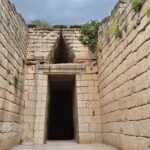
REVIEW · ATHENS
Acropolis of Athens and Acropolis Museum Tour
Book on Viator →Operated by Athens Walking Tours · Bookable on Viator
The Acropolis hits harder with a guide. This small-group tour pairs a guided climb with a guided visit to the Acropolis Museum so the stones up top connect to the objects you’ll see inside. I like that the best moments are planned: strategic stops at key ruins and a view break, then a museum walkthrough that keeps the story in order. One thing to consider: the schedule is strict at entry time, and the walking is real, with uneven and sometimes slippery marble.
I also appreciate the small-group feel (max 24) and the practical add-ons like earsets, an Athens map, and an Athens Guide Magazine. Guides such as Dimitris, Rina, Yolanda, Maria, and Margarita are often singled out for turning myths, architecture, and museum pieces into something you can actually picture. If you’re hoping for a slow, lingering stroll, that’s not this tour’s vibe, but if you want the highlights with real context, it fits well.
If you can swing it, I’d strongly consider booking the ticket upgrade (when offered) so you’re prepaying your site entry and reducing what can be a long peak-season wait. And plan on doing this early in the day when possible—heat and crowds are the two annoying villains of Athens’ Acropolis.
In This Review
- Key things I’d prioritize on this tour
- Where you meet, how entry works, and why timing matters
- Walking the Acropolis: Parthenon views, Propylaea, Athena Nike, and the Erechtheion
- Theatre of Dionysus and the Odeon of Herodes Atticus: drama, acoustics, and power
- Asclepeion stop: the wellness angle you might miss alone
- The Acropolis Museum: matching objects to what you just stood beside
- Price and value: what you pay for, and what you may still need to add
- Stairs, heat, rain, and slippery marble: practical advice that actually helps
- Who should book this Acropolis + Museum tour?
- Should you book this tour?
- FAQ
- How long is the Acropolis of Athens and Acropolis Museum tour?
- Is the tour in English?
- Are Acropolis and museum tickets included in the price?
- Does the tour include skip-the-line service?
- Where do I meet the guide?
- What should I bring for the day?
- Is it okay for people with mobility issues?
- Are baby strollers allowed on the Acropolis?
Key things I’d prioritize on this tour

- Skip-the-line via the ticket upgrade: it can reduce waiting, though security and crowd volume can still slow things down.
- Earsets so you can hear clearly: helpful on windy steps and noisy areas where voices carry poorly.
- Myth and architecture at the same stops: you see what you’re looking at, and you learn why it matters.
- Museum after the summit: the artifacts feel less random because you’ve just walked the ruins they belong to.
- A guided rhythm that includes a view break: not just sprinting through big monuments.
- Strict entry times: arrive on time because they can’t hold spots for latecomers.
Where you meet, how entry works, and why timing matters

The tour meets near Dionysiou Areopagitou 3 (Athina 117 42). After a short walk, you’ll go through airport-style security at the Acropolis area, and in busy periods that can mean a wait of up to 30+ minutes.
Here’s the practical point: the Acropolis has strict entry times. That means you’ll want to be there early, because the rules are built around time slots and they can’t wait if you’re late. No drama though: once you’re in, the guide keeps the visit moving at a smart pace.
This is also why many people book ahead. The tour is commonly reserved about 38 days in advance, which tells you it’s not a last-minute plan that always stays available.
You can also read our reviews of more museum experiences in Athens


Walking the Acropolis: Parthenon views, Propylaea, Athena Nike, and the Erechtheion
This is the part people dream about. You ascend the sacred hill and then you get a guided “read” of the site—what you’re looking at, how it worked, and how the pieces fit together across different eras.
You’ll spend time at the Parthenon, with a focus on what makes it special beyond the photo-op: Doric columns, decorative friezes, and the big panoramic payoff over Athens from up top. Expect a photo window here too (you don’t want to miss it, because the light changes fast at elevation).
Along the way, you stop to marvel at:
- Propylaea, the main gate—an important “arrival moment” before you’re fully inside the heart of the complex
- Temple of Athena Nike, known for its Ionic style and victory-themed storytelling
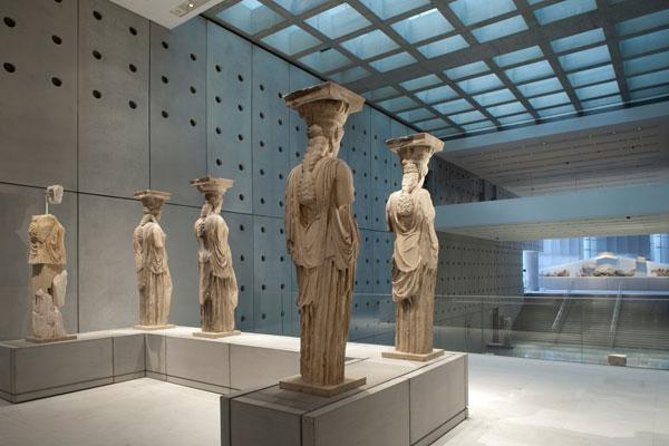
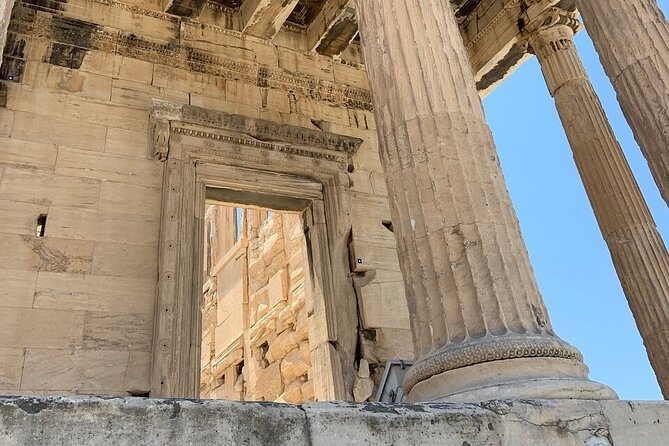
- Erechtheion, famous for the Caryatid maidens and for its myth-based setting
The guide also helps you connect details to the bigger picture, which is where the whole experience becomes more than sightseeing. Even in tough conditions, guides like Maria have been praised for steady pacing and commentary—so you’re not stuck with a silent, confused walk up slippery stone.
Theatre of Dionysus and the Odeon of Herodes Atticus: drama, acoustics, and power
One of my favorite “hidden” angles on the Acropolis is the performance side. This tour includes the Theatre of Dionysus, and that matters because it connects Athens to the origins of theatre as a civic event—not just entertainment.
You’ll see the hillside seating carved into the rock. The guide explains how Athenian audiences experienced tragedies and comedies, which makes the space feel built for voices and collective emotion rather than just an old seating bowl.
Then you also visit the Odeon of Herodes Atticus, a Roman theatre still used for concerts and performances. That contrast is the point. You’re seeing how an idea—staging stories with an audience—survives, changes, and keeps working long after the original empire is gone.
Asclepeion stop: the wellness angle you might miss alone
Besides the bigger monuments, you get a guided look at the Asclepeion area included with the tour. This is one of those stops that feels easy to skip if you’re wandering on your own, because it doesn’t scream like the Parthenon from a distance.
With a guide, you’re more likely to understand why this kind of place belonged on the Acropolis complex at all. It adds variety to the walk and helps you see that Athens wasn’t only about temples and politics.
It also gives you a mental break from the most crowded, most photographed points. Even when the site is busy, your guide can usually steer the group toward calmer moments to regroup.
The Acropolis Museum: matching objects to what you just stood beside

After the outdoor walking, you head to the Acropolis Museum for about 1 hour 30 minutes of guided time. The smart move here is the order: you see the ruins first, then you get artifacts that explain what you’re actually looking at.
The museum visit follows a chronological feel for the history of Athens and the evolution of art and culture. Instead of reading placards like a homework assignment, the guide points out the highlights and helps you connect them back to the structures on the hill.
This is also where you notice the difference between things that were preserved versus items replaced on-site with replicas for protection. The museum is where many of the original pieces live, so the story becomes more tangible.
If you want more after the tour ends, you can linger in the museum on your own. That’s useful because 90 minutes of guided highlights can only cover so much in a big collection.





Price and value: what you pay for, and what you may still need to add

The tour price is $56.84 per person, and entrance fees are not included unless you select the ticket option. If you don’t, plan for site fees of €30 for the Acropolis and €20 for the Acropolis Museum per person.
That ticket add-on is the big “math” piece. But value-wise, you’re paying for more than entry:
- an English-speaking professional guide
- earsets so you can hear clearly while walking and standing
- a small-group format
- guided time at both the Acropolis and the museum
- a guided visit that includes stops people often miss
For me, the decision is simple. If you’re going in peak season or during hot months, I’d rather pay for the time saved and the guidance than try to muscle through the site alone with a phone map and guesswork.
If you’re the kind of traveler who genuinely wants context—myth behind sculpture, why certain gates and temples matter—this tour tends to feel like a good buy even with the local site fees.
Stairs, heat, rain, and slippery marble: practical advice that actually helps
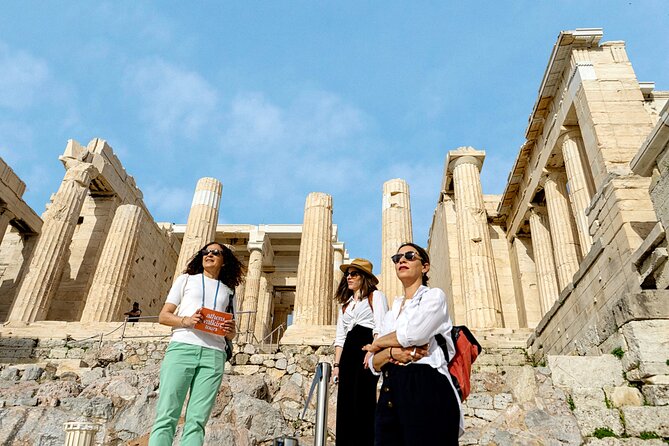
This tour requires moderate physical fitness. You’ll be walking uphill, climbing stairs, and spending time on uneven ground. It’s not the place to treat shoes as an afterthought.
Based on the realities of the site:
- Wear comfortable shoes with grip
- Bring a hat and sunscreen
- Bring a bottle of water (and refill when you can)
Rain doesn’t shut this place down. The tour runs rain or shine, and rain gear has been provided in past tours. Still, wet conditions can make the marble more slippery, so watch your footing near steps and wherever people stop to take photos mid-stair.
If you’re traveling with older parents or someone with mobility limits, do your homework. One review noted the tour is not ideal for mobility issues and that wheelchair guests can’t be accommodated because the only wheelchair-accessible route is through a different entrance than the one used. If that’s your situation, consider a different format or a tailored route.
Baby strollers are also not allowed on the Acropolis area, and there’s no cloakroom at the side entrance used. If you’re traveling with an infant, a baby pouch is the practical workaround mentioned.
Who should book this Acropolis + Museum tour?
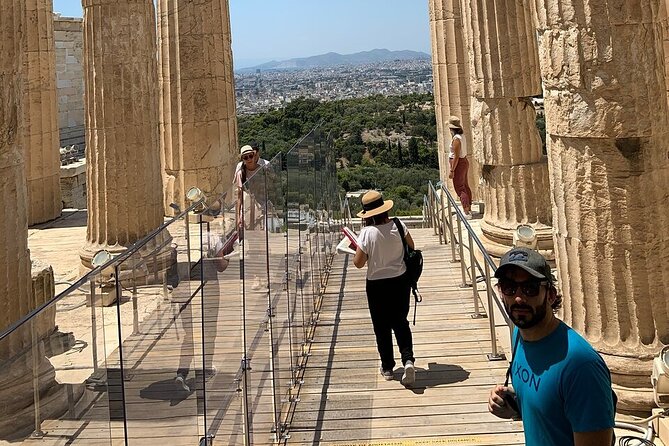
This tour is best for people who want the highlights with structure. If you like walking tours that explain what you’re seeing—rather than a quiet, independent climb—this fits nicely.
It’s also a good choice if you’re short on time. Two big chunks—Acropolis and museum—happen in one outing, and the museum part isn’t treated like an afterthought. Guides like Niobe have been praised for breaking up the climb into manageable intervals, which can make the uphill feel less intimidating.
If you hate group schedules and want to wander freely for hours, you may feel constrained. Also, because entry times are strict and late arrivals can’t be waited for, this isn’t a tour for anyone who needs lots of flexible buffer time.
Should you book this tour?
Yes, if you want the Acropolis to feel understandable instead of just stunning. The combination of a guided summit walk and a guided museum visit is the real value here: you’re not just collecting landmarks, you’re learning how the artifacts connect to the buildings.
Book it especially if:
- you’re traveling in busy months when waits and crowds are common
- you want earsets and a guide to manage the flow
- you want the myth and architecture explained at the places where it actually belongs
Skip it or reconsider if:
- your mobility needs require a more accessible route than what’s described
- you want a totally free-roaming day
- you’re likely to arrive late and you can’t manage the strict entry timing
If you book early, show up on time, wear grippy shoes, and come ready for stairs, this tour is a strong way to get the most meaning out of one of the world’s most famous sites.
FAQ
How long is the Acropolis of Athens and Acropolis Museum tour?
It runs about 3 hours 30 minutes (approx.).
Is the tour in English?
Yes. The tour is offered in English.
Are Acropolis and museum tickets included in the price?
Entrance fees are not included unless you choose the ticket option. The Acropolis entry fee is listed as €30 per person, and the museum entry fee as €20 per person.
Does the tour include skip-the-line service?
There is skip-the-ticket line service if you book with the ticket option. It can reduce wait time, though it doesn’t always eliminate it due to security and crowds.
Where do I meet the guide?
The start meeting point is Dionysiou Areopagitou 3, Athina 117 42, Greece. The tour ends at the Acropolis Museum, Dionysiou Areopagitou 15, Athina 117 42, Greece.
What should I bring for the day?
Bring a hat and wear sunscreen, and bring a bottle of water. Comfortable shoes and clothes are also recommended.
Is it okay for people with mobility issues?
The tour requires moderate physical fitness, and it cannot accommodate wheelchair guests based on the entrance route used. Comfortable shoes are important due to uneven and slippery surfaces.
Are baby strollers allowed on the Acropolis?
No. Baby strollers are not allowed on the Acropolis archaeological site, and there is no cloakroom at the side entrance used. A baby pouch is recommended.
You Might Also Enjoy



More Museum Experiences in Athens



More Tours in Athens


More Tour Reviews in Athens
- All Day Cruise -3 Islands to Agistri,Moni, Aegina with lunch and drinks included
★ 5.0 · 4,958 reviews