REVIEW · ATHENS
Athens Private Walking Tour: Acropolis monuments, Plaka and local food
Book on Viator →Operated by Athens Walks Tour Company · Bookable on Viator
Acropolis views, then real food in Plaka. This private Athens walking tour pairs big-ticket ruins with hands-on local street life, plus a flexible start time so you can work it into your day. You also get the Acropolis admission included as part of the walk, which is a smart way to avoid ticket hassle and time-wasting.
I especially like how the tour stays personal. Guides in the Athens Walks team (including people like Maria, Daphne, Vicki, and Demetrius) are the kind who answer your questions without turning the day into a lecture, and they adjust the route to what you care about most.
One thing to plan for: this is a moderate walking experience on hills and cobblestones, and the food isn’t included in the base price. Budget about 15 euros per adult for tastings and drinks, and you’ll have a smoother, less stressful day.
In This Review
- Key highlights worth caring about
- Acropolis plus neighborhoods in one 4-hour loop
- The Acropolis monuments: what you actually learn on the walk
- Parthenon, Temple of Athena Nike, and the details to watch
- Theatre of Dionysus and Odeon of Herodes Atticus: where performance history lives
- Erechtheion on the north side: the Athena story gets more personal
- Plaka and Anafiotika: the hillside Athens that feels like an island
- From market streets to souvlaki: how the food portion plays out
- Monastiraki’s mix: Hadrian’s Library, Agora vibes, and a flea-market wander
- Price and value: what $300.35 buys you in Athens
- Who should book this private walking tour (and who should skip it)
- Should you book this Athens private walking tour?
- FAQ
- How long is the Athens private walking tour?
- What are the main stops during the tour?
- Is Acropolis admission included in the price?
- Are food and drinks included?
- Is the tour truly private?
- Do you offer vegetarian options?
- What if I cancel last minute?
Key highlights worth caring about
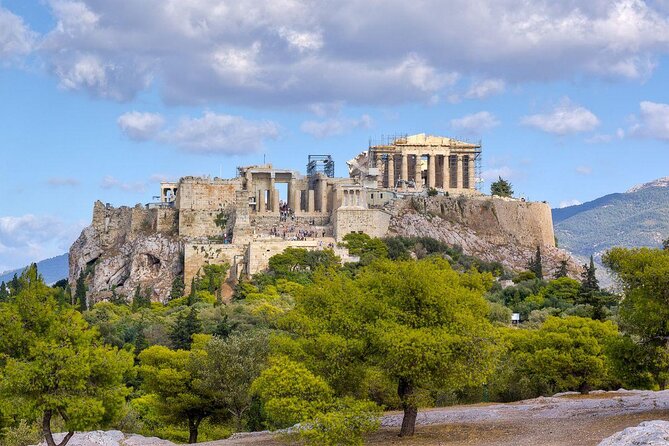
- Two hours on the Acropolis with admission included so you can focus on the monuments, not ticket lines
- 100% exclusive private group for just your party, with a flexible plan
- Food tastings in Plaka and market streets, built around classics like souvlaki and loukoumades
- Acropolis-to-neighborhood pacing that adds Plaka and Monastiraki after the ruins
- Photo-friendly, ask-and-adjust guiding with room for family moments and extra questions
Acropolis plus neighborhoods in one 4-hour loop
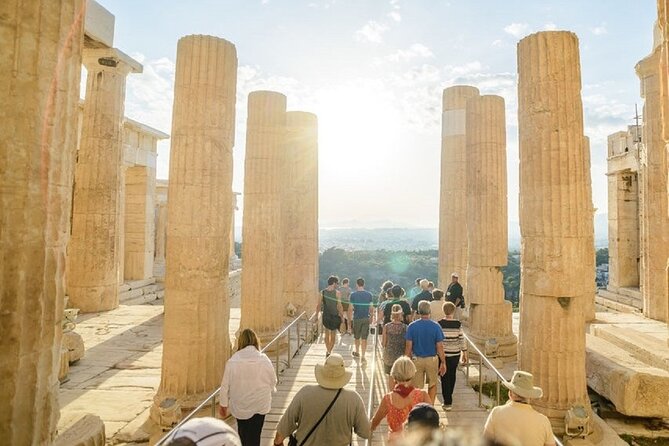
Athens can be an information overload. You can do the Acropolis on your own, sure, but you’ll miss the connections that make the place click. This is designed to give you a clean arc: ancient top-of-the-city monuments first, then the living Athens around Plaka and Monastiraki.
The timing is also practical. The Acropolis portion is listed at about 2 hours, which is long enough to see the main sights and understand what you’re looking at, without burning your whole day. The remaining time turns into a walking neighborhood tour, where you can shift from marble mythology to everyday Greek habits—cafes, shops, street snacks, and market energy.
And since it’s private, you can slow down for photos, stop to ask questions, or take a detour when something grabs your interest. That matters on the Acropolis, where the best views come with position and patience. It also matters later in Plaka, where you’ll want time to browse without feeling rushed.
You can also read our reviews of more walking tours in Athens


The Acropolis monuments: what you actually learn on the walk
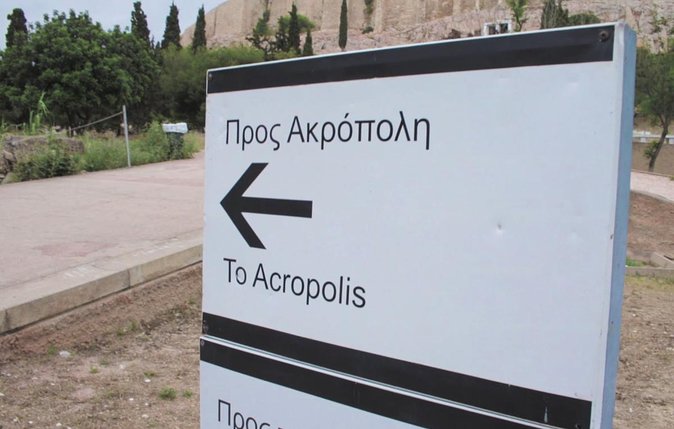
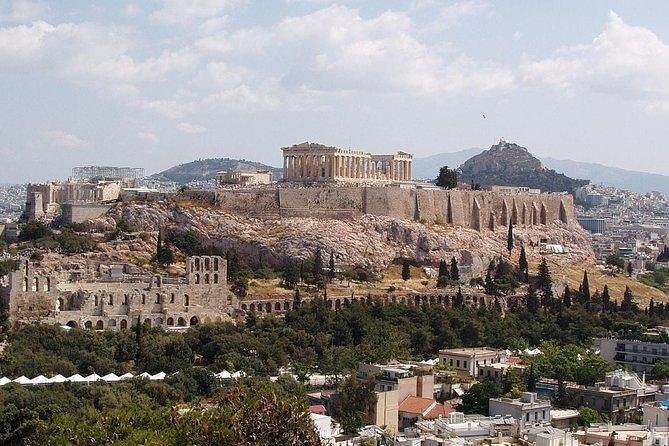
The Acropolis is a rocky citadel above Athens, famous for buildings tied to gods, power, and civic pride. The word itself comes from Greek roots meaning high city, which fits the experience: you start up there feeling like you’re looking at a whole worldview, not just a single temple.
What makes the guided approach feel valuable is how it connects each stop to the bigger story. You’re not only seeing famous landmarks—you’re being guided through how different structures relate to Athena, civic life, and the evolution of the site across centuries.
Also, having entrance fees included for the Acropolis is a real value move. It reduces friction. You show up, go in with your guide, and spend your energy on seeing, not organizing.
A quick practical note: this portion is structured for moderate fitness, and the Acropolis area involves uneven ground. Wear shoes you’d trust on stone steps and narrow paths.
Parthenon, Temple of Athena Nike, and the details to watch
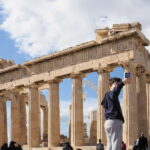
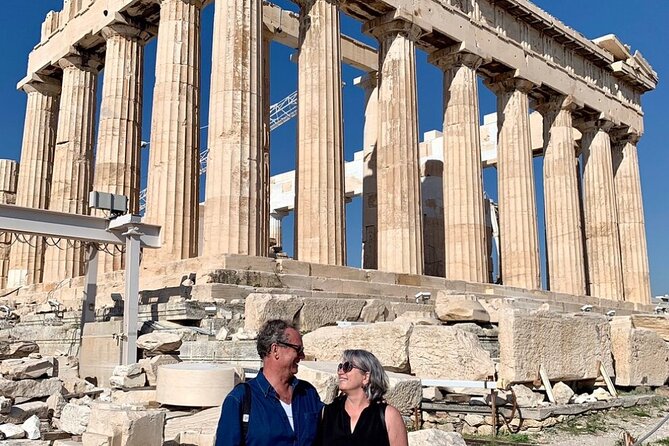
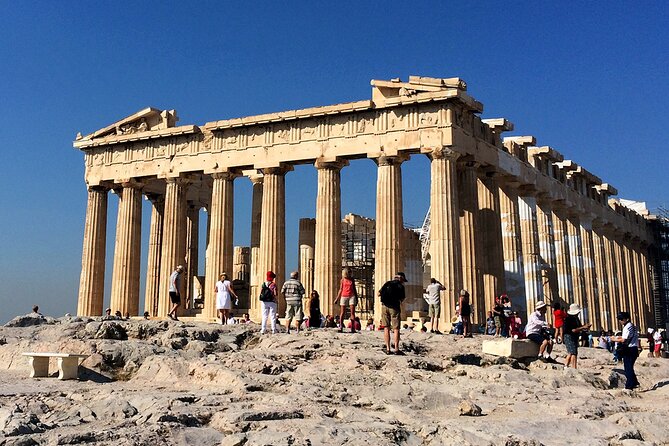
You’ll spend your first major stretch with the Parthenon. It’s described as a former temple dedicated to Athena, Athens’ patron goddess, with construction beginning around 447 BC during the Delian League peak. Even if you’ve seen photos, seeing it in person changes the scale. Up close, you start noticing how the building’s design signals purpose: this wasn’t just a religious stop, it was an argument about identity and power.
Next is the Temple of Athena Nike, built around 420 BC and noted as the earliest fully Ionic temple on the Acropolis. The name Nike connects you back to Athena in another form—victory and protection. If you’re the type who likes to spot how styles signal eras, Ionic details here are the kind of thing your guide can point out in a way that makes the architecture less intimidating.
Then you’ll move through the site’s other key structures, which helps you avoid the common mistake of treating the Acropolis like one photo spot. It’s a cluster of statements—religious, political, and architectural—stacked on one hill.
Theatre of Dionysus and Odeon of Herodes Atticus: where performance history lives

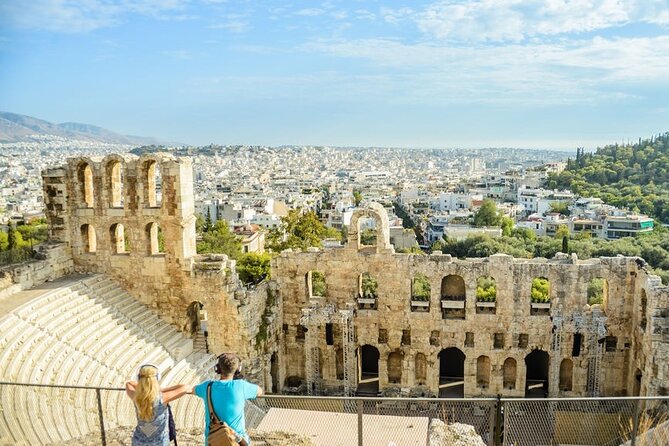
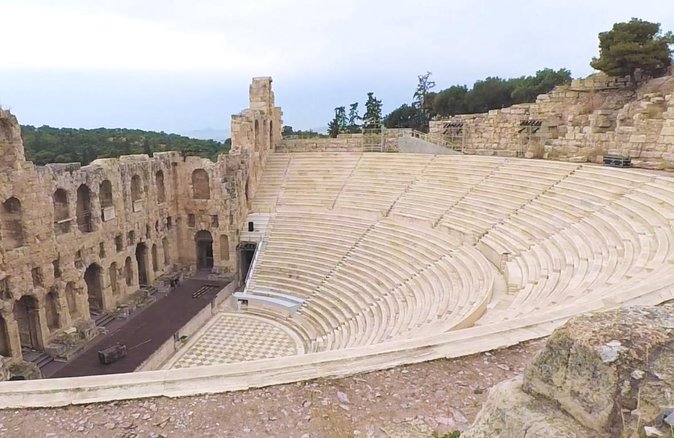
The Theatre of Dionysus adds a different flavor. Built on the south slope of the Acropolis hill, it belonged to the sanctuary of Dionysus Eleuthereus. It also hosted the City Dionysia, one of the major festivals tied to theater culture. Standing near the theatre area, it’s easier to understand why Athens cared so much about public performances: they weren’t entertainment only; they were part of civic identity.
Then comes the Odeon of Herodes Atticus, a Roman theatre structure on the southwest slope. It was completed in AD 161 and later renovated in 1950. This is a great contrast stop, because it shows how Athens kept reusing and reshaping the hill over time. The message is simple: the city kept building culture on the same high ground.
If you’re into history that doesn’t feel like a textbook, these stops help. They turn the Acropolis from a set of temples into a place where people gathered—then, now, and across empires.
Erechtheion on the north side: the Athena story gets more personal
On the north side, you’ll encounter the Erechtheion, also tied to Athena (specifically Athena Polias). This is an Ionic temple-telesterion, and the wording matters: it’s not just one simple temple box; it belongs to a site that served multiple functions across time.
I like including this stop because it gives you a sense of how Athena wasn’t a single icon. She was the city’s protector and civic symbol, showing up through multiple structures and dedications.
The Erechtheion area is also a good point to slow your pace and look for the architectural shifts. Your guide can help you connect why different buildings exist in the same place. Without that, it’s easy to feel like you’re wandering among similar-looking ruins.
You can also read our reviews of more food & drink experiences in Athens






Plaka and Anafiotika: the hillside Athens that feels like an island
Once you’re done with the big monuments, the tour drops into Plaka, described as having a village feel. Expect narrow cobblestone streets, tiny shops, and that steady flow of people drifting between cafes and family-run tavernas. This is one of the best transitions Athens offers: from ancient power to daily life, right under the shadow of the Acropolis.
There are also small details that make Plaka worth walking instead of just passing through. Sidewalk cafes stick around late, and there’s even a classic-movie stop known as Cine Paris showing movies al fresco. Nearby Anafiotika gives a Greek-island vibe, with whitewashed homes that make the neighborhood feel like it escaped from the Aegean and landed under the Acropolis.
This is where your private timing helps. You can stop at a shop, check out ceramics or jewelry, or just take a break with a view. If you’re traveling with someone who gets tired of ruins, this part often wins them over.
From market streets to souvlaki: how the food portion plays out
Food is where this tour becomes more than sightseeing. The sample menu includes souvlaki (pork or chicken) and loukoumades. That’s a smart mix: savory grilled street food first, then sweet dough bites soaked in sugar syrup or honey, finished with cinnamon and sometimes sesame.
You’ll also hit a market featuring locally sourced seafood, meats, fruits, and vegetables, plus street eats. That matters because it frames the tastings in context. You’re not just eating random items; you’re sampling through the lens of how Athenians shop and snack.
One extra practical point: food and drinks are not included in the base price. The listing estimates about 15 euros per adult for that part, which helps you set expectations. In the happiest versions of this tour, you also end up with a coffee stop—Greek coffee shows up in the experiences people talk about—plus a few extra bites that can add up quickly in a good way.
If you have a vegetarian diet, there’s a vegetarian option. Just make sure you flag it when booking so your guide can plan the tastings accordingly.
Monastiraki’s mix: Hadrian’s Library, Agora vibes, and a flea-market wander
The final neighborhood stop is Monastiraki, lively and layered. It’s known for major landmarks and for the kind of street energy that makes you slow down without meaning to. You’ll pass iconic nearby history points like the ruins of Hadrian’s Library, the Ancient Agora, and the rebuilt Stoa of Attalos, with a museum holding Athenian artifacts.
Then there’s the Monastiraki Flea Market, with shops selling artisanal soaps, handmade sandals, and souvenir T-shirts. You don’t need to bargain like a pro, but you will want to look closely—these are the kinds of stalls where a good guide can help you decide what’s worth your time.
And because Monastiraki sits close to so many views, it’s a nice wrap-up. You end the tour back near Monastiraki Square, and the whole area is full of tavernas and restaurants, many with Acropolis sightlines. It’s a convenient launchpad for your next meal plan.
Price and value: what $300.35 buys you in Athens
At $300.35 per person, this isn’t a cheap walk. The value comes from the combination of what’s included and what’s made private.
Here’s the clear math logic:
- Acropolis entrance fees are included, which you’d otherwise pay separately.
- It’s 100% exclusive to your group, meaning you’re not sharing the day with strangers or fitting into a big-group script.
- The itinerary includes major sights and two neighborhood zones, not just one attraction with a long transfer.
- Your start time is flexible, which can save you from awkward timing decisions.
The biggest cost you’ll add on top is food, since tastings and drinks aren’t in the price. The estimate is around 15 euros per adult, so you can plan your budget up front.
Is it “worth it”? If you want the Acropolis explained in plain language and paired with real food stops, I think it’s easier to justify. If you’re trying to do Athens on a shoestring, you might prefer self-guided sightseeing and spend the money on a great meal instead. But for a first trip, or a trip where you want everything organized and personal, this price starts to make sense fast.
Who should book this private walking tour (and who should skip it)
This is a strong fit if you:
- want a first-time Athens orientation that connects ruins to neighborhoods
- like having someone answer questions without dragging you through too much walking
- care about food and want tastings that feel local, not just a checklist
- are traveling as a couple, honeymoon pair, or small family and want a more personal pace
It’s less ideal if you:
- hate walking on uneven surfaces or feel uncomfortable with hills
- prefer to choose every restaurant stop yourself, with no pre-planned tastings
- want a food day without budgeting extra beyond the headline price
The private format is the deciding factor. If that matters to you, book it. If you’d rather keep things DIY, you might find better value elsewhere.
Should you book this Athens private walking tour?
I’d book it if your priority list is Acropolis understanding plus neighborhoods you can actually live in during your trip. The tour structure makes sense: two hours on the monuments, then Plaka and Monastiraki for the streets, snacks, and browsing that make Athens feel like Athens.
Do a quick self-check before you commit. If you’re comfortable with moderate walking and you can handle the fact that food and drinks cost extra, this tour offers a well-timed mix that keeps you moving without rushing.
If you’re the type who loves architecture but also wants loukoumades and a proper souvlaki bite at the right moment, you’ll likely enjoy this day a lot. And if you end up with a guide like Maria, Vicki, Daphne, Christina, or Demetrius, you’re in good company—people consistently highlight the friendly, patient way they tailor the pace and show you both the highlights and the smaller stops that make the day feel personal.
FAQ
How long is the Athens private walking tour?
The tour lasts about 4 hours.
What are the main stops during the tour?
You’ll visit the Acropolis and then explore Plaka, a market area for street eats, and Monastiraki.
Is Acropolis admission included in the price?
Yes. Entrance fees of Acropolis are included.
Are food and drinks included?
No. Food and drinks are excluded from the price, and the estimate given is about 15 euros per adult.
Is the tour truly private?
Yes. It is 100% exclusive to your group.
Do you offer vegetarian options?
Yes. A vegetarian option is available if you advise at booking.
What if I cancel last minute?
Cancellation is free for a full refund if you cancel at least 24 hours in advance. If you cancel less than 24 hours before the start time, the amount paid won’t be refunded.
You Might Also Enjoy

More Walking Tours in Athens

More Tours in Athens


More Tour Reviews in Athens
- All Day Cruise -3 Islands to Agistri,Moni, Aegina with lunch and drinks included
★ 5.0 · 4,958 reviews