REVIEW · ATHENS
Athens: Philosophy and Democracy Walking Tour
Book on GetYourGuide →Operated by Athens Classic Tours · Bookable on GetYourGuide
Athens can feel like a lot of stone and dust at first. This philosophy and democracy walking tour turns those ruins into a story about how ideas shaped a city. You’ll connect politics, science, ethics, and everyday life as you move through the places where Athenians argued, voted, taught, and planned.
I especially like the way the guide makes the big ideas human and practical, not academic. The best part for me is the balance: you get real landmarks like the Tower of the Winds and the Ancient Agora, while the talk stays clear enough for first-timers. The group size is also small (up to 15), so the pace feels personal rather than rushed.
One heads-up: this walk is labeled easy, but it’s still steady walking, and it’s rain or shine. Also, it’s not suitable for people over 70, and if you’re traveling with a very small child or you’re heat-sensitive, you’ll want to plan carefully.
In This Review
- Quick reasons to go
- Getting your bearings: where this tour starts and what it does differently
- Kerameikos to Monastiraki: the emotional start and the Athens you can still shop for
- Hadrian’s Library and the Roman Agora: when learning and power share a sidewalk
- Tower of the Winds: the stop I’d book again just for this
- Plaka passing and the Ancient Agora: where politics met commerce
- Pnyx Hill: the democracy story becomes physical
- Philopappos Hill and the Acropolis pass: ending with perspective
- Why the guide’s style matters more than you think
- Price and value: why $49 can work in Athens
- What to wear and how to plan your day around the walk
- Who should book this and who should skip it
- Should you book this Athens philosophy and democracy walking tour?
- FAQ
- How long is the Athens Philosophy and Democracy Walking Tour?
- Where do we meet for the tour?
- Is the tour guided in English?
- Are admissions to sites included?
- Does the tour run in bad weather?
- Can kids join, and do they pay?
- Is this tour suitable for older adults?
Quick reasons to go
- Panos-style storytelling that makes philosophy and politics feel like street-level reality
- Tower of the Winds explained as a working wind indicator and clock (octagonal marble tower)
- Hadrian’s Library + Roman Agora pairing, so learning isn’t limited to one “main square”
- Pnyx Hill framed as a key democracy location, with hilltop views as a payoff
- Small group (max 15) for a tour that stays interactive at walking speed
- Family-friendly value since children up to 14 join for free
Getting your bearings: where this tour starts and what it does differently
I like starting my first Athens day with something that gives me a mental map. Meeting at the Statue of Theseus (opposite the train station, across the road) works well because you’re soon moving from “I’m here” into “this is how the city made decisions.”
This tour is built around one smart idea: Athens wasn’t only an empire of buildings. It was also a machine for ideas. You’ll see the places that supported education and public debate, then hear how those same forces shaped democracy and philosophy. Think of it as a guided tour for your brain, not just your camera roll.
And because it runs 3.5 hours, it’s long enough to build context but short enough that you don’t lose the rest of your day to ruins fatigue.
You can also read our reviews of more walking tours in Athens

Kerameikos to Monastiraki: the emotional start and the Athens you can still shop for
The tour kicks off at the Kerameikos Archaeological Site, a cemetery area that also became a long-running stage for civic memory. This is where you learn that Athens kept prominent citizens close in the collective story of the city. Pericles is tied to this space through a famous speech, and the guide uses that kind of link to show how public life was never separate from education, leadership, and debate.
Then you move toward Monastiraki, where the present day helps you understand the past. You get to see antique stores and the flea-market vibe—exactly the kind of place where you can imagine traders and neighbors crossing paths. The point isn’t to shop as hard as you can. The point is to recognize that public spaces were the original social networks.
I like that this section gives you two textures fast: Kerameikos for civic memory and Monastiraki for the everyday pulse of Athens.
Hadrian’s Library and the Roman Agora: when learning and power share a sidewalk
From Monastiraki, you shift into the calmer, more formal world of Hadrian’s Library and the nearby Roman Agora. Even if you’ve seen “library ruins” in other countries, this stop hits because the guide frames education as part of civic identity. Athens was famous for thinking, but it also built institutions that supported the work.
You’ll also get a sense of how layers of rule changed the look of the city while the habit of public life continued. Athens became a place people traveled to, argued in, and studied—then later empires added their own architectural statements.
This is a good spot for photos, but it’s also a great time to slow down and actually listen. The tour’s pacing here helps the sites make sense as connected chapters, not random stops.
Tower of the Winds: the stop I’d book again just for this
If you want one highlight that feels both practical and surprising, it’s the Tower of the Winds. The guide explains it as an octagonal marble tower used as a wind indicator and clock. That detail turns it from “nice ancient building” into “this is a piece of early technology.”
You’ll also hear how it functioned like an early meteorological station, with the idea that weather forecasting mattered for daily life. That’s the kind of context that changes how you look at ancient science. It’s not just theories on paper; it’s tools and decisions that affect real people.
I like that this stop sits in the Roman Agora area, because you can see how different eras kept using the same streets for public purposes. The tower becomes a symbol of Athens thinking about the world in measurable ways.
Plaka passing and the Ancient Agora: where politics met commerce
As you pass through Plaka, you get narrow streets and the kind of preserved neighborhood feel that makes Athens look like a postcard. It’s brief, but it matters. You need a quick visual break after the heavier ruins context, and Plaka helps you reset.
Then you reach the Ancient Agora of Athens, the best-known example of an agora as a working public center. This wasn’t just a place to “hang out.” It was where political decisions, commercial activity, administration, and social life overlapped.
The guide’s approach makes this one of the most important segments of the tour. You’re not only looking at stones; you’re learning how Athens organized public debate in a shared physical space. That connection is what makes the later philosophy and democracy talk land.



Pnyx Hill: the democracy story becomes physical
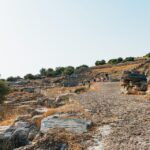
Next comes Pnyx Hill, one of the historic locations connected with Athenian democracy. This is where I noticed the tour shifts from explaining ideas to showing what those ideas required from a city.
A hill location matters because it’s built for gathering and voice. Even if you don’t memorize every historical detail, you can feel why public debate needed space, visibility, and structure. The guide uses this to connect democracy to the daily reality of participation.
After Pnyx, you also see the Philopappos Monument area and then head for the viewpoint payoff. The best part isn’t only the city panorama. It’s the timing: you’ve spent hours hearing about governance and thought, and then you get a wide view of the modern city built over the same terrain.
Philopappos Hill and the Acropolis pass: ending with perspective
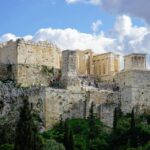
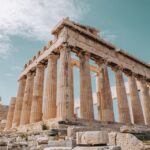
The tour finishes around Philopappos Hill, and along the way you also pass the Acropolis. Since it’s a pass-by rather than an all-in Acropolis visit, you don’t get that long line-and-climb day. Instead, you get a practical, high-level look that ties back to what you heard earlier.
For me, that makes this a strong “morning orientation” tour. You’re not stuck for the rest of the day in one major complex. You end with enough context that when you do your own deeper Acropolis day later, you’ll recognize what the guide was setting up.
Why the guide’s style matters more than you think
Most city tours talk at you. This one tends to teach in a story format. Multiple participants specifically highlighted Panos as the guide who made history come alive and turned complex philosophy into something you can actually use.
That storytelling effect isn’t just entertainment. It’s practical. When philosophy is explained through places—Agora discussions, civic meeting grounds, institutions tied to learning—your brain stops treating the subject as trivia. It starts connecting it to how people make decisions, argue honestly, and test ideas.
I also appreciate the pacing people mentioned: you spend almost 3.5 hours walking and thinking, and it doesn’t feel like a lecture marathon. If you’re doing Athens for the first time, that pacing helps you leave with clarity instead of overload.
Price and value: why $49 can work in Athens
At $49 per person for 3.5 hours, the value depends on what you want from Athens.
If you’re hoping to simply “see a few famous sites,” you might feel ticketed attractions are a better match. But if you want the context that makes those sites click—especially the link between democracy, philosophy, and daily civic life—this price starts to look fair fast.
Two reasons it feels like good value:
- You get a coordinated route through major areas without needing to build your own plan from scratch.
- Site admissions are not included, yet the tour still emphasizes standout viewing points and connections that don’t require you to purchase more tickets just to learn.
Also, the group size cap (max 15) keeps the experience from turning into a shuffle. And children up to 14 join for free, which can be a real budget win for families.
What to wear and how to plan your day around the walk
This tour is described as rain or shine and easy overall, with only a few steps at the end. Still, bring comfortable shoes. Athens sidewalks can be uneven, and you’ll be walking steadily for the full 3.5 hours.
A practical strategy:
- Do this early in your trip if you can. One reason is simple: you’ll get the “why Athens looked this way” framework fast.
- If you’re sensitive to heat, plan your rest and water around midday. The route includes hilltop viewpoints, so your body will feel those climbs.
If you’re traveling with kids, the reviews suggest it can be a bit much for younger attention spans, but kids in the upper range (like 12–14) often handle it well when they’re interested. If your child is curious about stories and ideas, this can land really well.
Who should book this and who should skip it
Book it if you:
- Want Athens to feel like a thinking city, not just a sightseeing list
- Like guided explanations that connect philosophy to real public spaces
- Want a smaller-group morning that sets you up for the rest of your trip
Consider skipping or swapping for something else if you:
- Are over 70 (the tour is listed as not suitable)
- Prefer mostly inside-the-museum time rather than walking and viewing
- Need a very relaxed pace with minimal standing and hilltop stops
Should you book this Athens philosophy and democracy walking tour?
Yes, if you want Athens to make intellectual sense quickly. This is one of those rare tours where the topic is “big,” but the delivery stays tied to visible places—Kerameikos, Monastiraki, Hadrian’s Library, the Roman Agora, the Tower of the Winds, and up to the democracy-linked hill terrain at Pnyx and Philopappos.
If your main goal is the Acropolis complex itself, you’ll likely want a separate Acropolis-focused day later. But as a first orientation and an ideas-to-landmarks connection, this tour is excellent value for the time.
FAQ
How long is the Athens Philosophy and Democracy Walking Tour?
The tour lasts about 3.5 hours.
Where do we meet for the tour?
Meet in front of the Statue of Theseus, opposite the train station across the road.
Is the tour guided in English?
Yes. The tour has a live guide in English.
Are admissions to sites included?
No. Admissions are not included for the sites along the route.
Does the tour run in bad weather?
Yes. The tour runs rain or shine.
Can kids join, and do they pay?
Children up to 14 years old join for free.
Is this tour suitable for older adults?
It is not suitable for people over 70.
You Might Also Enjoy



More Walking Tours in Athens

More Tours in Athens

More Tour Reviews in Athens
- All Day Cruise -3 Islands to Agistri,Moni, Aegina with lunch and drinks included
★ 5.0 · 4,958 reviews