REVIEW · ATHENS
Athens: Acropolis and Parthenon Guided Walking Tour
Book on GetYourGuide →Operated by Athenian Tours · Bookable on GetYourGuide
Greek drama starts before you even reach stone. This is a guided walk that gets you past lines and into the Acropolis with real context, not just facts. I love the way the tour leads you through big moments like the Propylaea gate and the Theater of Dionysus, then ties them to how Athenians actually lived. I also love the payoff at the Erechtheion, where you get up close to the six sculpted female figures and the architecture clicks into place. One catch: it’s still a hike with stairs and uneven ground, so it’s not a good match if you have mobility limits or heart issues.
You’ll meet your guide at Athenian Tours’ office on Mitsaion 2 and spend about 2 hours moving between major highlights. Expect a guided route that includes the Theater of Dionysus, the Asklepieion, the Odeon of Herodes Atticus, Temple of Athena Nike, Propylaea, the Parthenon, and the Erechtheion—with disposable earphones provided for larger groups.
In This Review
- Key things I’d bank on before you go
- Entering the Acropolis: why this tour works as a 2-hour plan
- Meeting at Mitsaion 2 and getting set for a smooth start
- Skip-the-line tickets: saving time so you can actually see things
- Theater of Dionysus: where you start hearing Athens think
- Odeon of Herodes Atticus: a Roman-era echo in Greek territory
- Asklepieion of Athens: the healing temple stop that breaks the “temples only” pattern
- Temple of Athena Nike and the Propylaea gateway: the walk turns into a view lesson
- The Parthenon: how to read democracy in stone
- Erechtheion: the six female figures that make the architecture unforgettable
- What about pace, heat, and comfort?
- Photos, rules, and the audio piece you might notice
- Guides can make or break the Acropolis stories
- Price and value: what $35.57 buys you in the real world
- Who this tour suits best (and who should skip it)
- Quick booking reality: tickets and the “Without Tickets” detail
- Final call: should you book this Acropolis walk?
- FAQ
- How long is the Acropolis and Parthenon guided walking tour?
- Where do I meet the guide?
- What’s included in the ticket price?
- Are tickets included, or do I need to buy them separately?
- Is video recording allowed during the tour?
- What should I bring with me?
- Is the tour suitable for wheelchair users or limited mobility?
- Are pets, strollers, or large bags allowed?
- Is the tour cancelled if I’m late with tickets?
Key things I’d bank on before you go
- Skip-the-line tickets that help you spend more time looking and less time stuck in queues
- South Slopes-style entry can feel easier than the other side, based on past group routing
- Theater stops that connect ancient tragedy and comedy to what you’re seeing
- Healing-temple stop at Asklepieion, a smart change of pace from temples-only
- Erechtheion caryatids (the six female figures) that make the architecture memorable
- Earphones for groups over 5, though crowded areas can affect audio quality
Entering the Acropolis: why this tour works as a 2-hour plan
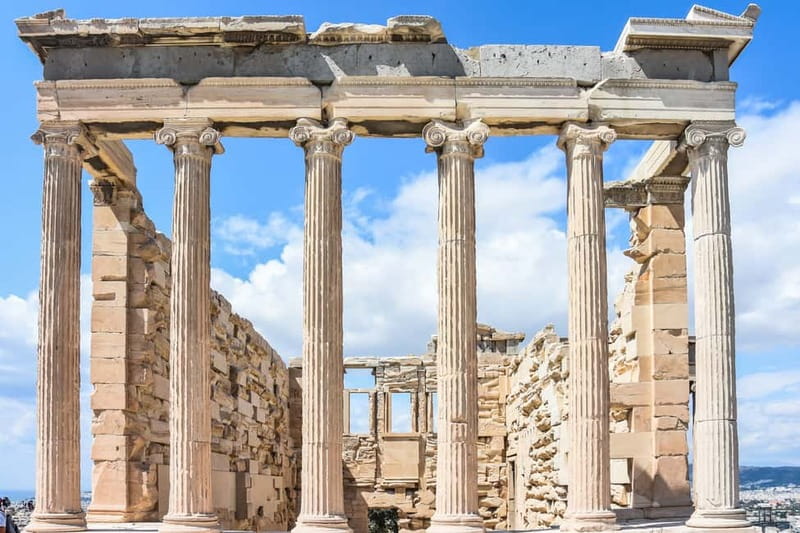
The Acropolis is one of those places where you can show up with a guidebook and still feel a bit lost. The site is huge, the ruins look dramatic but hard to place, and the crowds can turn your visit into a series of “look, look, go.” This tour helps because it doesn’t just point. It guides your eyes and your attention in the order that makes sense.
The sweet spot is the timing: you get a focused run at the core monuments without turning the whole visit into an all-day marathon. The tour is designed around a set rhythm—walk, stop, story, look again—so you keep momentum even when you’re battling Athens sun.
And the best part is that the big names you came for—Parthenon, Theater of Dionysus, Erechtheion—don’t feel like random checkmarks. You learn what each place was for, so the stones stop being “old” and start being “useful.”
You can also read our reviews of more walking tours in Athens


Meeting at Mitsaion 2 and getting set for a smooth start
Meet your guide at Athenian Tours’ office at Mitseon 2 (also written as Mitsaion 2 on the meeting info) in central Athens. That starting point matters because it keeps your first 10–15 minutes from turning into a scavenger hunt.
From there, you’re moving through the most important part of the experience: getting up to the Acropolis area in a way that keeps you moving. In fact, one review-style detail that stands out is that groups have been routed through the South Slopes entrance, described as easier than the North Slope. Even if your exact entrance can vary, the practical takeaway for you is simple: plan to show up with comfortable shoes and accept that some of your time will be spent on getting to elevation, not just looking at monuments.
Quick expectations you can count on:
- You’ll be on your feet most of the tour (comfortable walking shoes are non-negotiable).
- You’ll use guided audio gear at times (disposable earphones for groups over 5).
- You’ll have photo opportunities throughout, with one rule: video recording of the guide isn’t allowed.
Skip-the-line tickets: saving time so you can actually see things
This is a tour where the “skip-the-line” piece is the real value driver. At the Acropolis, lines can chew up your energy fast—especially on hot days. By using skip-the-line tickets, you spend less time waiting and more time standing where the view and the details actually reward you.
Here’s what I like about this approach: it protects the best part of your brain. Waiting in a line drains attention. Once you’re inside, you’re ready to notice small things—how a column flares, how a doorway was positioned, how a stage was built to carry voices. A guided route gets you there faster.
One practical note: audio can be affected in crowded moments because other groups’ equipment can interfere. If you’re in a noisy pocket, don’t panic—just ask your guide to repeat or angle closer to hear better.
Theater of Dionysus: where you start hearing Athens think
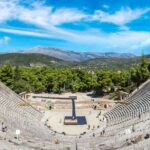
The first “wow” stops you’ll hit are the theater spaces. The Theater of Dionysus is one of those places that instantly feels like a time machine—because the shape of the space explains the function.
Your guide will walk you through what this theater was used for: famous ancient plays where comedies and tragedies were performed. When you’re standing in the right area, you can almost feel how performances depended on audience arrangement and acoustics. It’s not just “ancient theater ruins.” It’s a working idea preserved in stone.
A nice bonus is that once you understand this theater as a cultural engine, you start seeing the Acropolis as more than a political monument. Athens wasn’t only about wars and laws. It was also about storytelling, public identity, and entertainment with rules.
Odeon of Herodes Atticus: a Roman-era echo in Greek territory
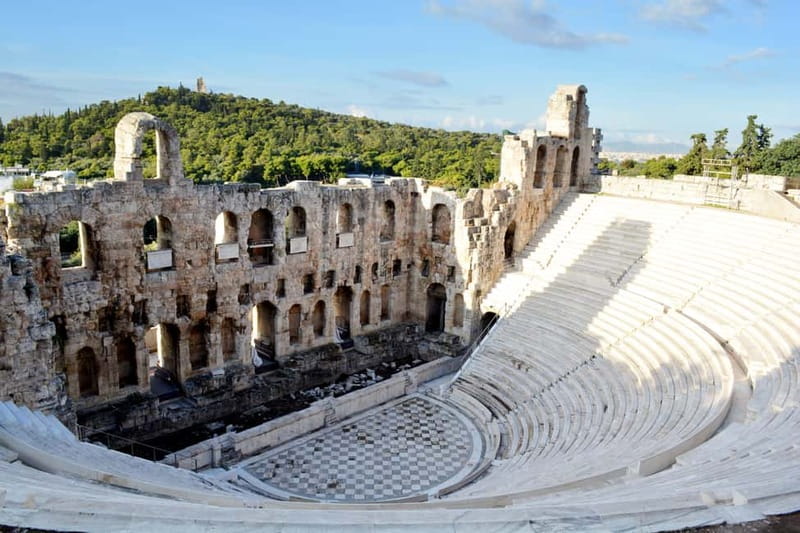
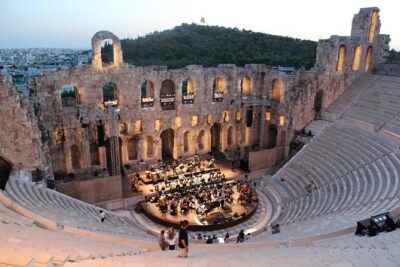
After the main theater, you’ll move on to the Odeon of Herodes Atticus, a Roman theater built in memory of the wife of Herodes Atticus. Even if you don’t know Greek or Roman dates offhand, you’ll feel the shift: the Acropolis isn’t frozen in one century. Layers of power and patronage kept rewriting what this hill represented.
This stop works because it broadens the narrative. You learn that the hill’s role didn’t end when the ancient Greek period did. It kept attracting attention, building projects, and commemorations.
You can also read our reviews of more guided tours in Athens


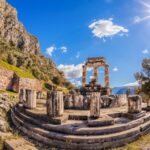
Asklepieion of Athens: the healing temple stop that breaks the “temples only” pattern
One of the more interesting curveballs in this tour is the Asklepieion of Athens—a healing temple built in honor of Asclepius and Hygeia. Most Acropolis visits focus almost entirely on “temple and politics,” so this one gives you a different emotional angle.
When you’re told the purpose—healing, gods of health—you notice the site differently. It’s not only about grandeur. It’s about ritual, belief, and the idea that the body and spirit could be supported through worship.
If you like history that includes everyday concerns—sickness, care, fear, hope—this stop adds weight to the overall experience.
Temple of Athena Nike and the Propylaea gateway: the walk turns into a view lesson
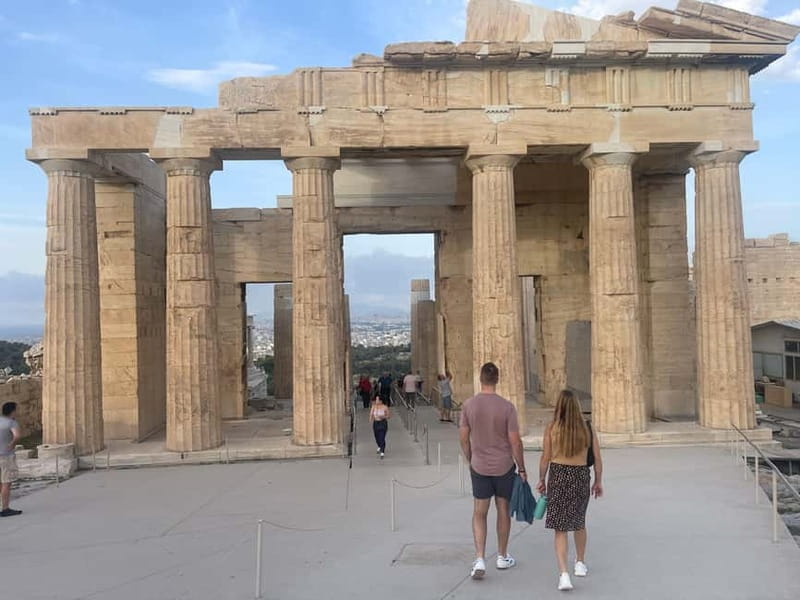
Next, you’ll work your way toward the top gateway: the Propylaea. This is where the tour earns its “walking tour” reputation. Instead of arriving at the Parthenon area and rushing, you build up to it.
Your guide will have you climb to the gateway and take in views of the Temple of Athena Nike along the way. The Temple of Athena Nike is smaller than the Parthenon, but it’s part of what makes the Acropolis feel designed rather than accidental.
The Propylaea moment helps you reset your perspective. You’re no longer just seeing ruins. You’re understanding sightlines—how the city opened out below, how the hill’s structures frame an experience of power and identity.
The Parthenon: how to read democracy in stone
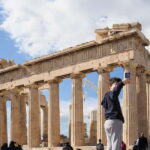
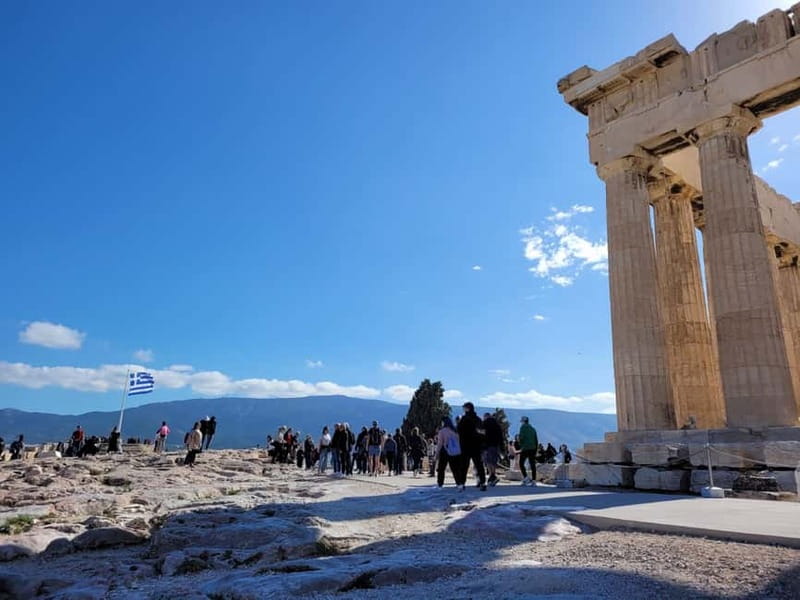
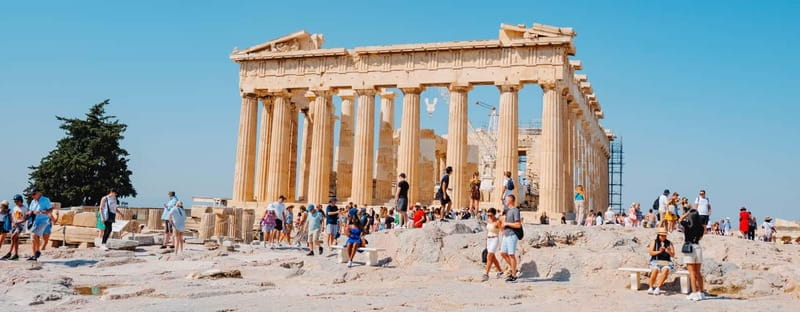
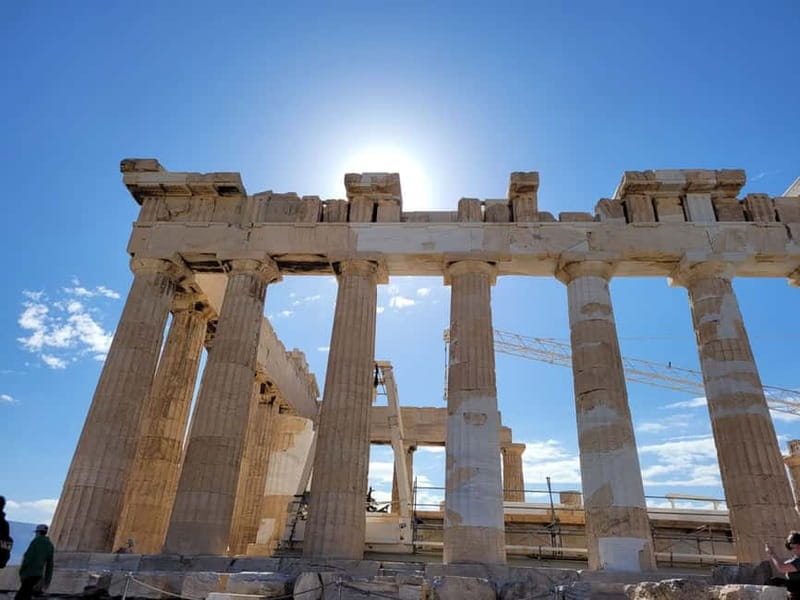
Eventually, you reach the Parthenon, dedicated to the goddess Athena, patroness of Athens. This is the monument everyone wants. The key is whether you can understand what you’re looking at while you’re looking at it.
Your guide frames it with the kind of story that makes the Parthenon feel more specific than “big famous temple.” You’ll learn about its importance as a 5th-century zenith of Doric order architecture. But more importantly, you’ll connect it to the symbolic story people associate with Athens—its place in Western civilization and democracy.
Here’s the practical benefit: once you understand the Parthenon as a statement, you start noticing architectural choices as meaning. You stop asking, “Is this the Parthenon?” and start asking, “Why would they build it this way?”
Also, if you’re sensitive to heat, take advantage of whatever shade breaks your guide can find. Past groups noted that good guides have looked for shaded spots while keeping the tour moving.
Erechtheion: the six female figures that make the architecture unforgettable
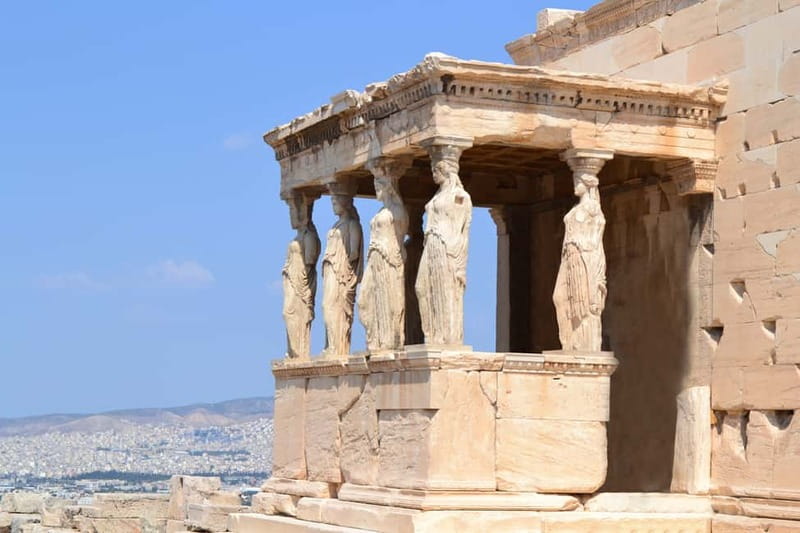
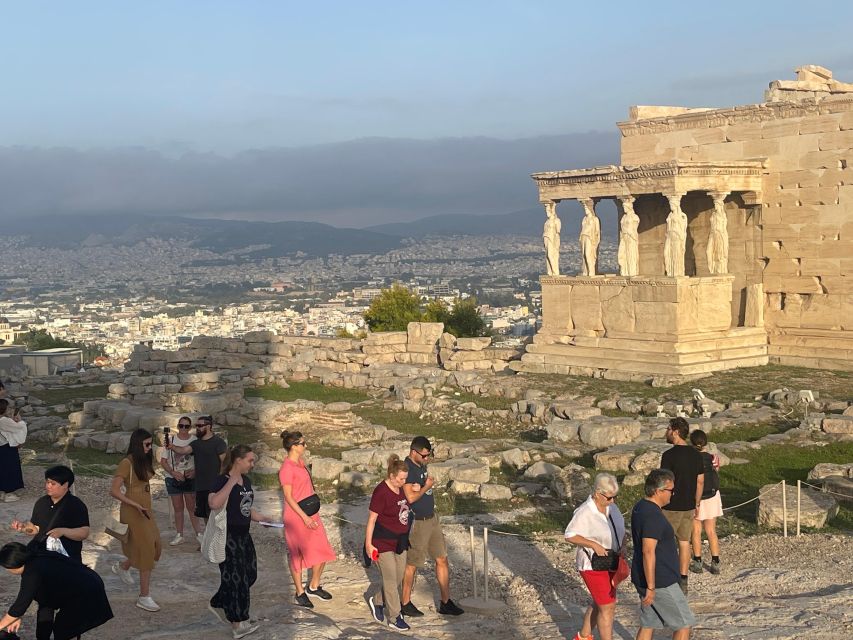
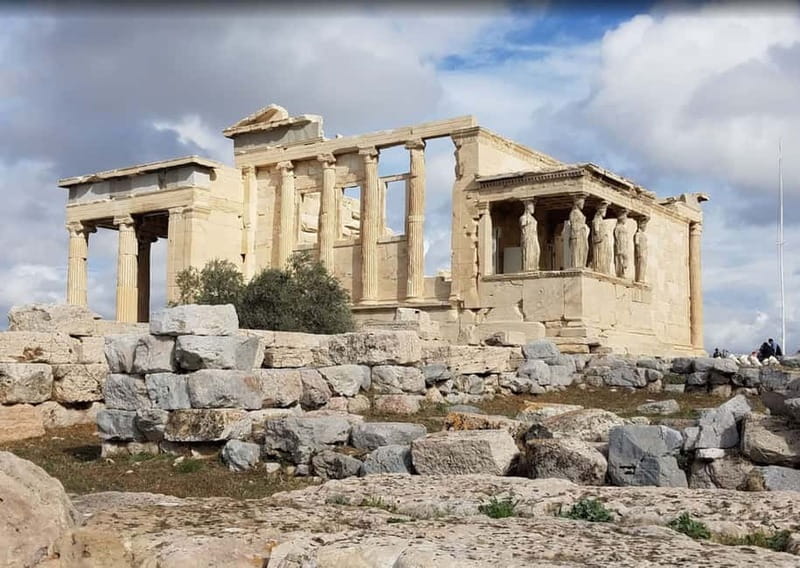
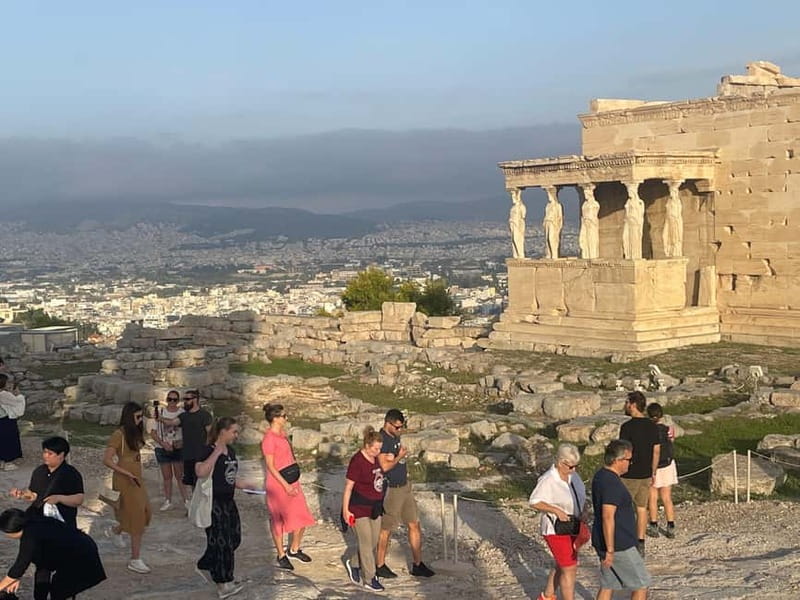
The final big emotional finish is the Erechtheion, known for its asymmetrical composition and—most famously—the supports featuring six sculpted female figures (often called caryatids).
If you’ve only seen pictures, you might think the Erechtheion is just “a weird temple.” Up close, it turns into something else: a masterclass in balance and variation. The asymmetry stops feeling like a flaw and starts feeling like a deliberate design solution.
Your guide’s job here is crucial. Without it, you might notice the six figures and then move on. With it, you understand they aren’t decoration. They’re part of how the structure carries weight and communicates identity. It’s the kind of stop that makes your photos look different, because you start photographing meaning instead of just faces.
What about pace, heat, and comfort?
The tour is short—about 2 hours—but it’s not a sit-and-sip experience. You’ll walk, climb, and stop often enough for good stories.
A few things to plan for:
- Bring water, sunscreen, and a sun hat.
- Wear comfortable shoes. The ground around ruins can be uneven.
- If you’re traveling with a stroller, forget it—baby strollers aren’t allowed.
- Luggage or large bags aren’t allowed either.
If you’re doing Athens in summer, I strongly recommend a morning slot when possible. One guide experience highlighted a booking choice made because the day got hot. Even when your tour is well-paced, heat is still heat, and you’ll have a better time if you avoid peak burn.
Photos, rules, and the audio piece you might notice
Photography is permitted throughout the tour. That’s great, because you’ll want to capture the Propylaea framing, Parthenon viewpoints, and the Erechtheion figures.
Two rules worth knowing:
- Video recording of the tour guide isn’t permitted.
- Audio can be affected during crowded times due to other groups’ equipment.
So if your earphones start sounding spotty, don’t assume the entire tour is broken. Just adjust your position, listen for the next instruction, and keep moving to the next stop where you’ll get a clearer context.
Guides can make or break the Acropolis stories
One reason this tour’s overall rating stays so high is the people running it. Multiple guides have been singled out by name, including Simon, Kostas, Iris, Alexia, and Christos. Across those mentions, a pattern shows up: guides who explain architecture and mythology clearly, keep groups moving at a comfortable pace, and help people find shade when the weather turns unfriendly.
If you care about storytelling that links the ancient world to modern language and customs, you’ll likely appreciate the style. If you prefer long silent wandering, this might feel more directed than you want—but for most first-timers, that structure is exactly why it works.
Price and value: what $35.57 buys you in the real world
At $35.57 per person, this isn’t a bargain tour, but it’s not overpriced for what you get at the Acropolis.
You’re paying for three value anchors:
- Skip-the-line access, which protects your limited time
- An English-speaking guide who turns monuments into context
- Entrance coverage to the Acropolis, plus the guided focus on major structures
The “2 hours” matters too. Many people do the Acropolis on a day when they also want time for the Plaka, the Agora, or a museum. This tour compresses the critical highlights into a tight format, which is often the difference between a great day and a rushed one.
So ask yourself this: do you want a self-guided visit where you read a few signs and hope the rest clicks? Or do you want a guided walk where you know what you’re seeing and why it mattered—without spending half your day trapped in lines?
Who this tour suits best (and who should skip it)
This Acropolis and Parthenon guided walking tour is a strong fit if you’re:
- A first-time visitor who wants the key monuments in a single run
- The kind of person who enjoys stories about religion, politics, and daily life behind the stones
- Comfortable walking on uneven historic ground
It’s not suitable for:
- Children under 6
- Wheelchair users and people with mobility impairments
- People with heart problems
- Anyone planning to bring pets, strollers, or large bags
If you’re in any of those groups, you’ll likely want a different format that matches your pace and access needs.
Quick booking reality: tickets and the “Without Tickets” detail
One thing you should read carefully before you go: you need tickets in advance and on time for the tour to run. The guide can supply only adult, full-price entry tickets at the meeting point, paid in cash.
There’s also a “Without Tickets” option mentioned, with instructions to buy entry tickets to Acropolis & Museum before coming and confirm time slots. If you want peace of mind, plan to handle your entry tickets ahead of time so you don’t risk last-minute mismatches.
On days when the Acropolis or Acropolis Museum offers free entry, the tour price adjusts so you aren’t paying for complimentary tickets.
Final call: should you book this Acropolis walk?
Yes, if you want the Acropolis to make sense quickly. This tour earns its keep by combining skip-the-line access with a guided route that hits the Theater of Dionysus, the healing-temple detour, the Propylaea climb, the Parthenon, and the Erechtheion’s six sculpted figures. In a compact 2 hours, it turns the hill into a story you can actually follow.
Skip it only if you need step-free access or you’re not up for walking/climbing. Otherwise, bring your hat and water, choose a cooler time of day if you can, and let the guide do the work of making these monuments feel alive.
FAQ
How long is the Acropolis and Parthenon guided walking tour?
It lasts about 2 hours.
Where do I meet the guide?
Meet your guide at Athenian Tours’ tour office at Mitsaion 2 (Mitseon 2), 11742. The tour ends back at the same meeting point.
What’s included in the ticket price?
Included items are an English-speaking guide, entrance tickets to the Acropolis, and skip-the-line tickets. Disposable earphones are provided for groups over 5 people.
Are tickets included, or do I need to buy them separately?
The tour requires tickets in advance and on time. If you choose a situation where you don’t bring tickets, the guide can supply adult full-price entry tickets at the meeting point (paid in cash).
Is video recording allowed during the tour?
Photography is permitted, but video recording of the tour guide is not permitted.
What should I bring with me?
Bring a passport or ID card, comfortable shoes, a sun hat, sunscreen, and water.
Is the tour suitable for wheelchair users or limited mobility?
No. It’s not suitable for people with mobility impairments, wheelchair users, or people with heart problems. The elevator can’t be used for Acropolis access on group tours.
Are pets, strollers, or large bags allowed?
No. Pets, baby strollers, and luggage or large bags aren’t allowed.
Is the tour cancelled if I’m late with tickets?
The tour can be conducted only if you have the tickets in advance and on time before the starting hour. If you need tickets provided by the guide at the meeting point, plan for cash and adult full-price tickets.
You Might Also Enjoy



More Walking Tours in Athens


More Tours in Athens

More Tour Reviews in Athens
- All Day Cruise -3 Islands to Agistri,Moni, Aegina with lunch and drinks included
★ 5.0 · 4,958 reviews