
REVIEW · ATHENS
Athens: Acropolis Entry Ticket & VR Audio Guided Tour
Book on GetYourGuide →Operated by SIGHTS OF ATHENS-GRAY LINE · Bookable on GetYourGuide
The Acropolis feels different when you control your pace. This setup pairs a pre-booked timed ticket with a phone-based VR audio guide, so you can move through the monuments in a logical route without waiting in a snarl of lines. It also gives you multi-language narration while you take in the big hits like the Parthenon and the Theater of Dionysus.
I like two things most. First, the timed entry and separate access help you get inside without losing your whole morning to crowd flow. Second, the audio guide covers the main stops in 9 languages, including Arabic, Japanese, and Chinese, which makes it easier for mixed-language groups to enjoy the same walk.
The main drawback is practical: you’ll be relying on your phone’s screen and battery. If your signal is spotty, the glare is strong, or the audio app hiccups, you may have to keep checking the device more than you’d like.
In This Review
- Key things to know before you go
- Timed Entry + Separate Entrance: Your Head Start at the Acropolis
- The “Self-Guided” Format: VR Audio Means You Set the Tempo
- Your Walking Route: Theater of Dionysus to the Parthenon
- Stop by Stop: What to Watch for (and Where People Get Frustrated)
- Theater of Dionysus
- Parthenon
- Propylaea and Temple of Athena Nike
- Erechtheion
- Odeon of Herodes Atticus
- The VR Layer: A Practical Use, Not Just a Gadget
- Views Over Athens: When the Route Feels Worth the Heat
- Price and Value: Is $53 Worth It?
- Who This Works Best For
- Practical Before-You-Go Checklist (No Guesswork)
- Should You Book This Acropolis VR Audio Tour?
- FAQ
- How do I receive my Acropolis ticket?
- Where do I enter the Acropolis?
- What time window can I enter with a timed ticket?
- What’s included with this ticket?
- Are earphones provided?
- Which languages are available in the audio guide?
- How long should I plan for the visit?
- Is the experience wheelchair accessible?
- Are pets or baby strollers allowed?
- Can I cancel for a refund?
Key things to know before you go
- Timed entry means you enter in a specific window, not whenever you wander up
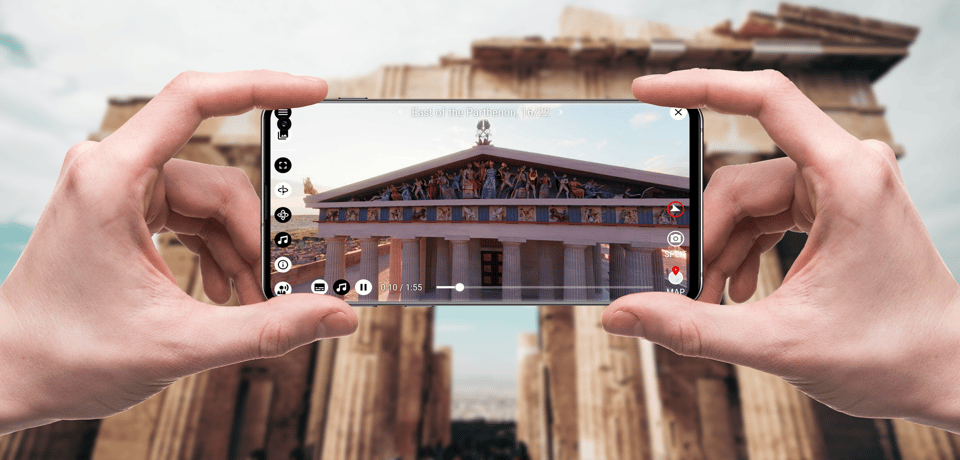
- VR audio on your phone adds a visual layer to what you see now
- 9-language audio helps you follow the monuments without a live guide
- The route begins at the Theater of Dionysus and moves toward the Parthenon and key temple structures
- A good experience depends on having a charged smartphone and working headphones
- You can enter via Main/South (and north is also mentioned as a possible entry side)
Timed Entry + Separate Entrance: Your Head Start at the Acropolis

The biggest time-saver here is the promise of a booked slot. Once you pick your date and time, you can’t change it, and entry is allowed only at your selected time or within a 15-minute window before or after. Translation: show up when you mean to, because the site will not wait for you like a museum that runs on vibes.
This is also built around avoiding the worst queue moments with a separate entrance setup. Instead of wrestling for standing room while everyone else arrives, you get directed to your access point and you start walking. That’s a big deal at the Acropolis, where your time is the resource you can’t refill.
You’ll use the Main or South entrance by presenting your PDF ticket on mobile or printed. The activity info also notes a north entrance option, so the safest plan is to follow the exact instructions you receive and use the entrance side they tell you to use on the day.
You can also read our reviews of more tours and experiences in Athens



The “Self-Guided” Format: VR Audio Means You Set the Tempo

This isn’t a live-guided lecture. You’re in charge, using a phone app that combines virtual reality with an audio tour you can start and follow as you walk. The pitch is simple: you see the monuments in the real world, then the app gives you a glimpse of how the Acropolis Hill and surroundings looked in ancient times.
That VR layer is where the experience can feel more than just photos and facts. The audio guide is what keeps it connected: it’s designed to walk you through the major sites in sequence, so you aren’t stuck wondering what you’re looking at or what matters most.
The audio guide is available in English, Spanish, German, Italian, Polish, Russian, Chinese, French, Portuguese, Arabic, and Japanese. (Yes, that’s a lot of language choice, and you’ll notice it helps even when you’re not fluent. You can switch to a language that matches your group’s comfort level.)
One important reality check: the app expects you to use your phone. That can be tricky if your screen is hard to read in direct sun. Plan for bright daylight conditions, and treat your phone like a tool you manage, not a passive accessory.
Your Walking Route: Theater of Dionysus to the Parthenon

Your walk has a clear logic, and it starts at the Theater of Dionysus. That opening stop matters because it frames what the Acropolis was doing socially and culturally, not just architecturally. Even if you’re not an expert on Greek theater, the setting helps you feel why these monuments weren’t isolated ornaments.
Next comes the Parthenon, described as a UNESCO World Heritage Site dedicated to Athena, the goddess of wisdom and warfare. The Parthenon is the headline, so it’s also where you want to slow down. With audio running, you can focus less on guessing and more on noticing details while you connect them to the story you’re hearing.
After the Parthenon, you continue to several signature structures:
- Propylaea (the grand entrance area to the sacred space)
- Temple of Athena Nike
- Erechtheion
- Odeon of Herodes Atticus
Each stop is part of the bigger “why this hill” picture. You’re not just collecting landmarks; you’re moving through a set of spaces with distinct purposes. The order matters because it keeps you from jumping around and losing the sense of flow.
Practical note: this is still a walk through an ancient archaeological site, which means uneven ground and lots of standing. If you’re fast at reading plaques, great. If you move slowly, just keep an eye on time so you don’t feel rushed near the end.
Stop by Stop: What to Watch for (and Where People Get Frustrated)
Theater of Dionysus
Start here and you’ll get the best chance to set context early. If you wait until later in the route, you may lose some of the emotional payoff that comes from beginning with a place designed for performance and public life. Keep your attention up and out as well as at the steps around you.
You can also read our reviews of more guided tours in Athens





Parthenon
This is where VR can help, because the contrast between what you see now and what the app shows can make the monument feel more “alive.” The audio guidance also helps you understand what you’re looking at without needing to stop and read long explanations.
One caution: if your phone battery is low, the Parthenon is not the best place to discover it. Save your phone power for the heart of the route.
Propylaea and Temple of Athena Nike
These areas are a bridge between the main temple spaces and the approach into the sacred core. The audio tour tends to connect these transitions so you understand why the route moves the way it does.
If the sun is intense, you’ll likely have to angle your phone to reduce glare. The key is to use your phone when you need it, not as a permanent staring device.
Erechtheion
This stop is a major photo moment, but photos won’t teach you the significance by themselves. The audio guide is designed to do that. Let the narration set the focus, then take a few minutes for your eyes to catch up.
Odeon of Herodes Atticus
This is one of the places where the Athenians’ long use of public spaces feels most obvious. The audio route keeps you from treating it like a random viewpoint stop.
The general takeaway from experience with this type of app is simple: if audio playback resets or gets glitchy, it can pull your attention away from the monument. If you notice that happening, pause and re-orient so you don’t spend your best views wrestling with controls.
The VR Layer: A Practical Use, Not Just a Gadget
The VR feature is described as a glimpse of how the Acropolis Hill and its surroundings looked in ancient times. That’s a useful promise because it avoids VR being a gimmick detached from what you’re actually standing next to.
How to make VR work well in the real world:
- Plan to have your phone ready before you arrive at the entrance area.
- Keep your headphones accessible so you can start narration quickly.
- If you’re sensitive to screen brightness, switch your attention between the monument and the device instead of trying to do both at once.
Some people also find that audio doesn’t automatically behave perfectly at each point. In that case, you’ll want to treat the app like a guided checklist: when you reach a new stop, verify the audio is playing from the right section before you settle into a photo moment.
Views Over Athens: When the Route Feels Worth the Heat
As you wander, you get views of Athens, the surrounding mountains, and the Aegean Sea in the distance. That’s one of those things you can read in a brochure, but it’s another thing when it’s framed by stone steps and real sightlines as you walk.
The best strategy is to build in short pauses. Don’t try to rush every monument. Let the audio run, then take a minute to look out. The view isn’t separate from the history; it’s part of why the Acropolis was such a powerful location.
If you’re traveling in bright daylight, expect sun and glare. In those conditions, the phone is harder to read and the temptation is to stop using it. That’s fine, as long as you remember you only get the best full context when the narration is working.
Price and Value: Is $53 Worth It?

At $53 per person for a 2-hour experience, you’re paying for three things at once: the Acropolis entry ticket, the VR application, and a multilingual self-guided audio tour. That’s meaningful value if you’re the kind of visitor who likes a plan but hates slow group schedules.
You should weigh what you’re not getting. There’s no live guide included, and earphones are not included. If you want someone to answer questions on the spot, translate complicated details on the fly, or keep you on a tight timeline, this format may feel too hands-on and too dependent on your device.
Age also works a bit differently here. The offer includes a regular adult ticket and says it must be purchased at full price regardless of age. So if you’re bringing younger visitors, this isn’t a discounted family ticket setup based on the data you provided.
Where this ticket shines is autonomy. The route is pre-arranged, your entry is booked, and the history is delivered through narration in your language. You get to decide how long you linger at each stop.
Who This Works Best For
I think this experience is a strong fit if you:
- Want a self-paced walk with a clear structure
- Prefer audio over listening to a live guide for hours
- Travel with people who need different languages available at the same time
- Like using tech as a support tool rather than a replacement for looking at the site
It’s also wheelchair accessible, which matters for a place like this. If you use mobility support, the self-guided nature can give you more control over pace than a group tour.
It may be a weaker fit if you:
- Don’t want to rely on a phone screen while walking
- Know your phone battery drains fast, or you hate troubleshooting apps
- Expect a live, human guide to explain everything
Practical Before-You-Go Checklist (No Guesswork)
A smooth visit here is all about preparation. Bring headphones and a charged smartphone. The entry requires a PDF ticket you can show on mobile or print, and the instructions and app access should arrive by email or WhatsApp messenger the day prior (also possibly in spam).
Plan around timed entry rules: the date and time slot can’t change after selection. Entry is allowed only at your slot or within that 15-minute window, so give yourself a buffer to get oriented at the entrance.
Also note what’s not allowed: pets and baby strollers are listed as not allowed. If you’re traveling with either, you’ll need an alternate plan.
Should You Book This Acropolis VR Audio Tour?
If you want to see the Acropolis and Parthenon with less time wasted in crowds, and you’re comfortable guiding yourself with a phone-based audio + VR setup, then booking makes sense. The combination of timed entry, a structured route (starting at the Theater of Dionysus and moving through key sites), and 9+ language options gives you a lot of control for the money.
I’d only hesitate if you know your phone use is unreliable, your screen is hard to see in sunlight, or you strongly prefer a live guide. In those cases, this experience can turn into constant device management instead of monument time.
My take: for visitors who like independence, this is a practical way to make the Acropolis more than a quick sightseeing stop. You’ll still need your energy for walking and sun, but you’ll be paying for a clear route and audio context that follows you from stone to stone.
FAQ
How do I receive my Acropolis ticket?
You’ll receive the ticket by email or WhatsApp messenger. The app and instructions also come to email/WhatsApp the day prior (including possibly in spam).
Where do I enter the Acropolis?
You can enter from the Main or South entrance by presenting your PDF ticket. The meeting info also notes you can enter from the north or south entrance, so follow the instructions you receive.
What time window can I enter with a timed ticket?
Entrance is allowed only at your selected time slot or within a 15-minute window before or after.
What’s included with this ticket?
Included are the entry ticket for the Acropolis and Parthenon, the VR application, and the multilingual self-guided audio tour. A live guide is not included.
Are earphones provided?
No. Earphones are not included, but you’re asked to bring headphones.
Which languages are available in the audio guide?
The audio guide is available in English, Spanish, German, Italian, Polish, Russian, Chinese, French, Portuguese, Arabic, and Japanese.
How long should I plan for the visit?
Plan on about 2 hours.
Is the experience wheelchair accessible?
Yes, it is listed as wheelchair accessible.
Are pets or baby strollers allowed?
No. Pets and baby strollers are listed as not allowed.
Can I cancel for a refund?
Yes. Free cancellation is available up to 24 hours in advance for a full refund.
You Might Also Enjoy




More Tickets in Athens



More Tours in Athens

More Tour Reviews in Athens
- All Day Cruise -3 Islands to Agistri,Moni, Aegina with lunch and drinks included
★ 5.0 · 4,958 reviews