REVIEW · ATHENS
Argolis Olympia & Delphi Three-Day Tour
Book on Viator →Operated by H.P.Tours - Hellenic Private Tours · Bookable on Viator
Ancient Greece hits different when you slow down. This private 3-day route links myth-famous sites like Olympia and Delphi with smart timing, so you can see key ruins without the worst bus crowds. I especially like the focus on the “how it was used” details—Temples, sanctuaries, theaters—rather than just names on a map.
What I really liked is the day structure: lots of iconic stops, but spread with realistic breaks and a comfortable, air-conditioned vehicle. You’ll also have WiFi on board for quick mapping, ticket planning, and message checks between long drives.
The one catch: meals, hotel, and site entry fees aren’t included, so you’ll want to budget ahead (and plan for a long day of driving between regions).
In This Review
- Key points worth clocking before you go
- Why this route feels smarter than big-bus days
- Price and what you’re really paying for
- Your vehicle, your driver, and the guide question
- Day 1: From the Corinth Canal to Epidaurus, Nafplio, Mycenae, and onward
- Corinth Canal (your first lesson in geography)
- Ancient Corinth + the Temple of Apollo + St. Paul’s trial site
- Archaeological Museum of Corinth
- Epidaurus Theatre: where acoustics become the experience
- Nafplio and Tolon: the seaside break that prevents burnout
- Mycenae: Lion Gates, the Acropolis, and the Treasury of Atreus
- Olympia overnight (about 10 hours of driving on Day 1)
- Day 2: Olympia’s temples and museum, then the drive north to Delphi
- Olympia archaeological site: Zeus, Hera, and Pheidias’ workshop
- Olympia Archaeological Museum: where the finds make sense
- Scenic transit: Charilaos Trikoupis bridge and a quick coast break
- Day 3: Delphi’s oracle world, Arachova, and Hosios Loukas monastery
- Castalia spring and the sanctuary circuit
- Delphi Archaeological Museum: the pieces behind the myths
- Arachova: quick mountain-town charm
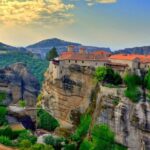
- Hosios Loukas: mosaics, frescoes, and a calm ending
- Meals, timing, and how to make the most of “free time”
- Should you book this Argolis Olympia and Delphi tour?
- FAQ
- Is this tour private?
- Do you provide hotel accommodation?
- Are meals included?
- Are entrance fees included in the price?
- Is airport pickup and drop-off included?
- Can I add licensed local guides?
Key points worth clocking before you go
- Private group, no random add-ons: your party stays together the whole time.
- Crowd management through timing: you’ll visit some places when big tours are less dominant.
- Comfort + communication: bottled water, WiFi, and drivers fluent in English.
- Olympia and Delphi get proper attention: temples, museums, and key monuments on focused schedules.
- Optional licensed guides: if you want deeper explanations inside sites, you can add them.
- Entrance fees are extra: plan on about 60 euros per adult for admission.
Why this route feels smarter than big-bus days
This tour’s biggest advantage is simple: it’s designed to move you through famous places without you being “part of the wave.” You’ll often arrive at archaeological sites at times that reduce the crush from large groups. That means you can actually read details, take your photos without shoulder-to-shoulder frustration, and spend real time in the spaces that mattered.
You also get a driver who is responsible for the road and your schedule. The tour notes that drivers are certified and English-fluent, plus the vehicles are well maintained and comfortable. In a region where distances add up fast, that matters more than people expect.
And the route is built for story. Day 1 leans Peloponnese: Corinth, Epidaurus, Nafplio, Mycenae. Day 2 shifts into Olympia. Day 3 finishes in Delphi and adds a quieter cultural stop at Hosios Loukas. You’re not just checking boxes—you’re tracing how different parts of Greece became “centers” at different times.
You can also read our reviews of more tours and experiences in Athens.
Price and what you’re really paying for
The cost is listed as $2,388.27 per group (up to 2) for the three days. That’s not cheap on paper, but the value comes from what’s included and what’s not.
Included:
- private transportation in an air-conditioned vehicle
- bottled water
- WiFi on board
- professional drivers who handle logistics in English
Not included:
- meals
- hotel accommodation
- entrance fees (total cost noted as 60 euros per adult)
- optional airport pickup/drop-off
- optional licensed local guides (additional cost listed)
So you’re paying for privacy, convenience, and an efficient itinerary that connects multiple major regions. If you tried to build the same plan yourself, you’d still need transportation that works across long drives and multiple sites, plus you’d have to coordinate when you arrive—where the crowd advantage really happens.
Your vehicle, your driver, and the guide question
This is a private tour, and that’s a real difference on the ground. No unknown passengers show up mid-day, and you’re not stuck waiting for strangers who are slow with stairs or photos.
One detail I’m glad they’re explicit about: drivers are not licensed to accompany you into the sites. That’s why the tour offers optional three local licensed tour guides upon request (additional cost listed). Practically, this can change the vibe:
- If you’re happy reading on your own and using your app, you may be fine with just the driver.
- If you want interpretation inside places—who built what, why the layout matters, what you’re looking at—you’ll probably want the local guide add-on.
Even the reviews you’ll see for this operator point to what makes the experience enjoyable: a strong driver and a guide who keeps things organized and responsive. One reviewer highlighted a guide named Panos as making the trip feel like a true 10/10. Another mentioned an excellent driver, Michael, who was helpful and recommended good places to eat while answering lots of questions.
Day 1: From the Corinth Canal to Epidaurus, Nafplio, Mycenae, and onward
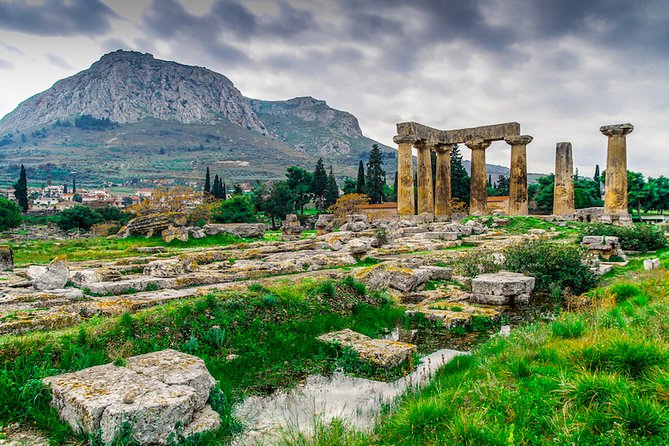
Day 1 is where Greece starts packing in the big names. It moves from a modern engineering landmark to ancient cities and then into the Peloponnese power story.
Corinth Canal (your first lesson in geography)
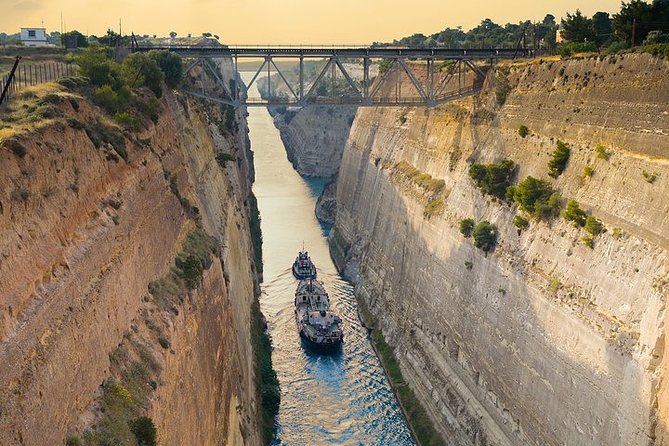
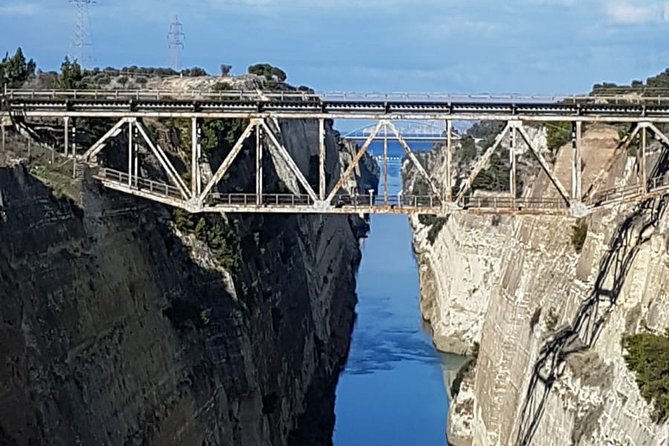
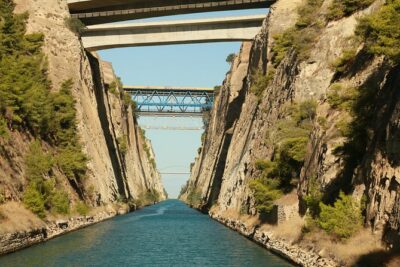
You begin at the Corinth Canal, which cuts between the Gulf of Corinth and the Saronic Gulf. The key fact I’d keep in mind is that it has no locks and is only 21.4 meters wide at its base, making it difficult for most modern ships. It’s not just a scenic stop; it’s a reminder that geography shaped shipping, politics, and identity here.
This is a short stop, but it’s a good warm-up. You get your bearings for the route you’re about to take and you understand why the Peloponnese can feel like its own world.

Ancient Corinth + the Temple of Apollo + St. Paul’s trial site
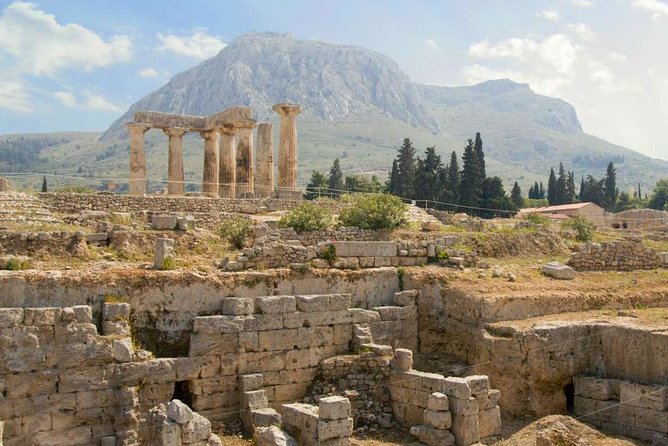
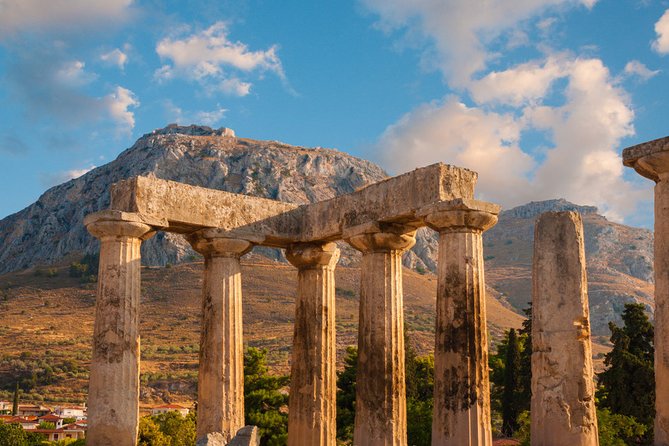
Next is Ancient Corinth. You’ll see the temple of Apollo, described as one of the earliest Doric temples in the region, dating to around 560 B.C.E. It sits on a rocky hill north of Acrocorinth, which helps explain why Corinth kept attracting power—visibility and control.
Then there’s the St. Paul’s Step portion of the experience. The tour references tradition tying Paul’s trial to the Bema, an elevated rostrum in the Roman Forum of ancient Corinth. Even if you don’t go deep into the historical debate, the physical site helps you understand how public speech, law, and authority worked in Roman-era city life.
Archaeological Museum of Corinth
The Archaeological Museum of Corinth keeps the day from becoming all walking and no context. It includes finds from prehistoric periods and then moves through later eras: Geometric, Archaic, Classical, Hellenistic, and Roman/Byzantine/Frankish. You’ll also see items tied to sanctuaries like Asklepios and early Christian burial contexts.
If you like your ruins with a little explanation attached, this museum stop is a strong add-on. It gives you a way to connect what you saw outdoors to real objects.
Epidaurus Theatre: where acoustics become the experience
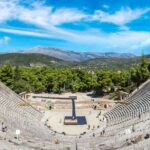
Then comes Epidaurus, tied to the sanctuary of Aesculapius (healing and culture) and famous for its theatre. The tour emphasizes its unique acoustics and notes that the theatre retains an original circular orchestra and is still used today. Even if you aren’t sitting through a performance, you can feel why a space like this mattered to ancient civic and religious life.
One practical note: this is a “walk + climb + stairs” kind of stop. Wear shoes you trust.
Nafplio and Tolon: the seaside break that prevents burnout
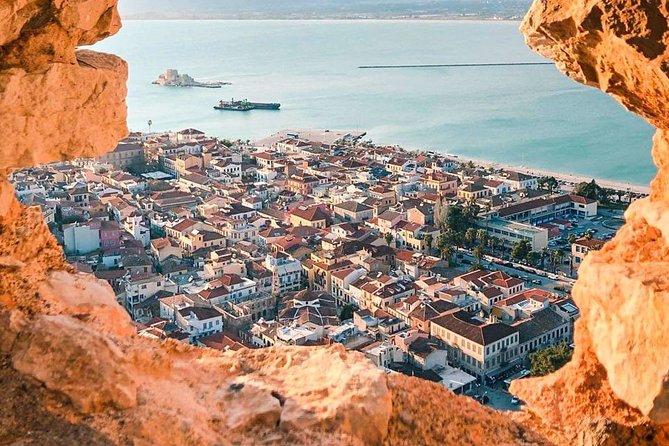
After Epidaurus, you reach Nafplio, a seaport town that served as capital at different points in Greek history. It’s also positioned up the hills near the Argolic Gulf, so the town naturally rewards strolling at human speed.
Then there’s Tolon, about 7 km from Nafplio, where the plan is lunch at a traditional family-run restaurant with views of the Saronic gulf. Since meals aren’t included, this is a “choose your expense” moment. I like it because you’re not forced into a single option—you’re in a place where food can be part of the memory, not an afterthought.
Mycenae: Lion Gates, the Acropolis, and the Treasury of Atreus
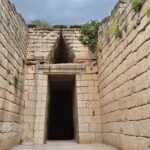
The final major stop of the day is Mycenae. The tour frames it as a Late Bronze Age center of power from the 16th to the 11th century B.C.E. You’ll move through the Cyclopean walls, then up toward the Acropolis, passing the famous Lion Gates.
The itinerary specifically mentions the steep path and buildings leading to the Palace, linked in story to Agamemnon and his return from the Trojan War. Then you visit the Treasury of Atreus, described as the Tomb of Agamemnon, on a hill opposite the palace.
This is one of those sites where your imagination does half the work. The stone scale alone is enough to make you understand why it became a symbol of power.
Olympia overnight (about 10 hours of driving on Day 1)
After Mycenae, you drive through mountains to Olympia and spend the night at a local hotel. The plan lists 10 hours for that portion, so you should treat Day 1 as a full-intensity day, not a light sampler.
Hotel is not included, so check what’s offered for your dates and confirm the arrangement clearly. After a long driving day, you’ll want real rest.
Day 2: Olympia’s temples and museum, then the drive north to Delphi
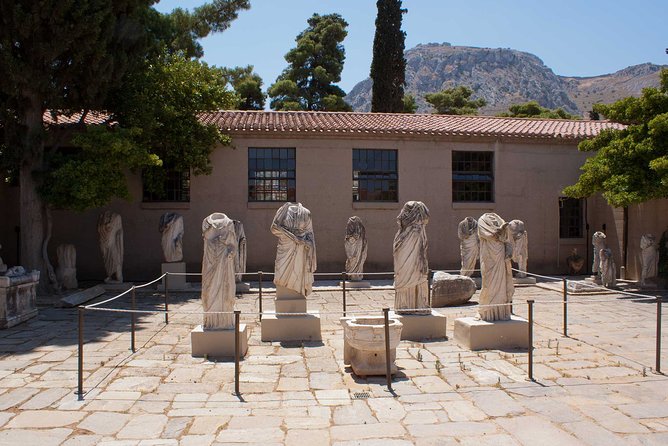
Day 2 starts with the core Olympia experience. The pacing here is smart: temples, then museum, then travel.
Olympia archaeological site: Zeus, Hera, and Pheidias’ workshop
You visit the Temple of Zeus, described as the largest temple in the Peloponnese and a prime Doric example. In the Altis precinct, the emphasis on its central placement helps you picture the ritual focus.
Then it’s Temple of Hera, one of the oldest monumental temples in Greece, placed in the northwest corner of the sanctuary precinct and historically connected to the Olympic Flame lighting every four years.
Nearby is the workshop of Pheidias, where the tour notes the famous sculptor crafted the giant chryselephantine statue. Even without seeing the full statue today, the location gives you context for how large-scale artwork was produced.
Olympia Archaeological Museum: where the finds make sense
The Archaeological Museum of Olympia is one of Greece’s key museums, and the plan highlights that it covers the sanctuary’s long timeline, from prehistoric times to early Christian period. You’ll see sculpture pieces, the museum’s famous bronze collection, and a large terracotta collection.
If you’re the type who gets more interested after seeing artifacts, this museum stop is a payoff. It turns Olympia from “stone ruins” into a story about artists, ceremonies, and daily religious life.
Scenic transit: Charilaos Trikoupis bridge and a quick coast break
You then drive toward Delphi, with an en-route stop at the Charilaos Trikoupis bridge, a major cable-stayed crossing over the Gulf of Corinth. The tour points out that it links Rio and Antirrio and notes its opening near the 2004 Olympics and use for the Olympic Flame. You don’t need a history degree to appreciate the scale—it’s a clear reminder that Greece still builds big.
Later you stop briefly at Nafpaktos Old Port for a picture or coffee by the sea, then Galaxidi for another coastal break. The plan even includes the local nickname for Galaxidi’s port, tied to “Widows’ Port,” referencing wives waiting for sailors whose ships didn’t return. That little background makes the stop feel human, not just scenic.
Then you continue to Delphi for the night.
Day 3: Delphi’s oracle world, Arachova, and Hosios Loukas monastery
Day 3 is where mythology meets walking shoes. You start with several Delphi highlights close together, then add the museum, and finish with two cultural stops.
Castalia spring and the sanctuary circuit
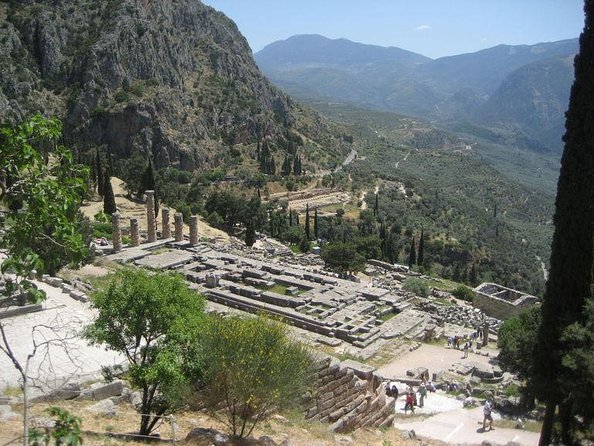
On the morning at Delphi, you visit Castalia spring, the ancient Sanctuary of Apollo, the Treasury of the Athenians, the ancient Stadium, the ancient Theatre, and the bronze Charioteer. The itinerary also includes the Temple of Athena Pronea and the Gymnasium.
This is the kind of grouping that works well with fewer crowds. Delphi is big, so seeing it as a connected circuit helps. You can connect the oracle setting to the athletic and religious spaces rather than treating them like separate tickets.
Delphi Archaeological Museum: the pieces behind the myths
Next is the Archaeological Museum of Delphi. It focuses on the history of the Delphic sanctuary and the oracle connected to Apollo. The tour notes collections include architectural sculpture, statues, and smaller objects tied to the sanctuary’s religious, political, and artistic activities across centuries.
The museum’s format is also described: a two-storey building with multiple exhibition rooms and conservation labs for pottery, metal objects, and mosaics. Translation: it’s not only showpieces. It’s about how artifacts are preserved and understood.
This is the day’s best option if your feet start protesting. Sit for a bit, and use the museum to “reset” your perspective.
Arachova: quick mountain-town charm
You then stop in Arachova, about 10 km from Delphi. The tour frames it as traditional, mixing old and new, and tied to holy grounds on the mountain of Apollo. This is a shorter stop, so treat it as a chance to stretch, take a look at the town, and pick up something simple if you want a souvenir.
Hosios Loukas: mosaics, frescoes, and a calm ending
To finish, you visit the Monastery of Hosios Loukas. The description is specific about why it matters: it was established by the monk Loukas and he’s buried in the crypt, with a striking gold mosaic of the saint at the entrance.
The plan also calls out the Katholikon and the attached smaller temple, the Theotokos, erected between 997 and 1011. It notes that frescoes and mosaics are beautifully preserved, and that underneath the Katholikon is the crypt.
The comparison they make is to Hagia Sophia in Istanbul and St. Mark’s Basilica in Venice. I’d treat that as a “level-of-detail” clue, not a direct match. The point is: your last stop ends with craft and faith, not just stone monuments.
Meals, timing, and how to make the most of “free time”
Meals aren’t included, but you do get planned breaks and a lunch moment in Tolon. That’s helpful because it gives you fewer forced decisions and fewer “where do we eat?” moments.
For the rest, I’d do two things:
- Keep a light snack strategy. Ruins days can run long, and you don’t want to arrive hangry.
- Watch your energy on the temple days. Olympia and Delphi are both on paths with uneven ground and lots of walking.
If you add the optional licensed guides, think about where you’ll benefit most. Delphi and the big Olympia structures are the obvious candidates because the places are complex, and interpretive help can make the layout click faster.
Also, the reviews reinforce this kind of practical support. One reviewer credited Michael the driver for helping with restaurant recommendations and answering questions in a way that made the trip feel fun and effortless.
Should you book this Argolis Olympia and Delphi tour?
I’d book it if you want:
- private time in major sites without bus-crowd pressure
- a route that covers Corinth, Epidaurus, Mycenae, Olympia, and Delphi in three days
- English-fluent, professional drivers handling the logistics
- a plan that includes museum time, not just outdoor ruins
I’d think twice if:
- you don’t want to add extra costs for hotel and meals
- you prefer to set your own pace and skip long driving days
- you dislike walking-heavy days like Epidaurus, Mycenae, and Delphi’s circuit
FAQ
Is this tour private?
Yes. It’s totally private, and only your group participates with no unknown passengers.
Do you provide hotel accommodation?
Hotel accommodation is not included.
Are meals included?
No. All meals are not included.
Are entrance fees included in the price?
Entrance fees are not included. The total cost is listed as 60 euros per adult.
Is airport pickup and drop-off included?
Airport pickup and drop-off are not included. There is an additional cost for that.
Can I add licensed local guides?
Yes. The tour offers three local licensed tour guides upon request, depending on availability, with an additional cost listed.
You Might Also Enjoy
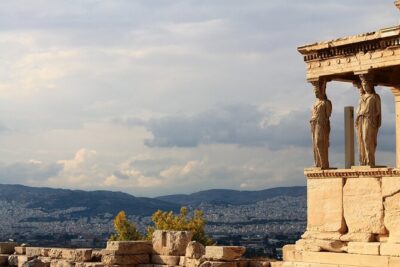
More Tours in Athens
More Tour Reviews in Athens
- All Day Cruise -3 Islands to Agistri,Moni, Aegina with lunch and drinks included
★ 5.0 · 4,958 reviews