REVIEW · ATHENS
Ancient Corinth, Epidaurus, Nafplio full day private tour from Athens
Book on Viator →Operated by My Athens Transfers · Bookable on Viator
One day, three ancient giants. This private Athens outing packs Corinth Canal views, the Theatre of Epidaurus, and a relaxed taste of Nafplio into an 8–9 hour day. I love how the route follows the story of early Christianity, including the chance to trace St. Paul’s footsteps around Ancient Corinth, and I also love that Epidaurus isn’t just a stop on paper—you get to stand in a theatre famous for its acoustics. One thing to weigh: this is mainly a driver-led day, not a licensed guide who walks into every site with you unless you request that add-on.
You’ll start with pickup from your address, settle into an air-conditioned car, and get onboard Wi‑Fi and bottled water for the ride. Lunch is included (with an authentic Greek traditional food option), plus there’s time to roam Nafplio’s waterfront and castle viewpoints. The drawback is simple: you do some of the exploring at your own pace while the driver waits.
Key highlights you’ll actually feel in the day
- Corinth Canal viewpoint: see the narrow Isthmus of Corinth and ships threading through at sea level
- Ancient Corinth + Pauline context: connect the ruins to Paul’s New Testament letters
- Epidaurus theatre: one of the best-preserved ancient theatres for sound and sightlines
- Akrokorinthos (Acrocorinth): fortress views from a commanding hilltop
- Nafplio time to linger: lunch, harbor views, and Venetian-era streets without rushing
In This Review
- A Private Athens Escape That Doesn’t Feel Like a Race
- Corinth Canal: The Strait That Makes the Peloponnese Feel Like an Island
- Ancient Corinth, the Archaeology, and St. Paul’s Footsteps
- Corinth Museum Stop: Short Time, Useful Context
- Temple of Apollo and Akrokorinthos: Two Different Kinds of Awe
- The Temple of Apollo
- Akrokorinthos (Acrocorinth) and the View of the Isthmus
- Epidaurus Museum and the Perfect Theatre for Acoustics
- The Ancient Theatre of Epidaurus
- Sanctuary of Asklepios: Healing Myth as Public Space
- Nafplio: Lunch, Harbor Views, and Venetian-Era Walking
- Palamidi Castle: The Steps Are Real, and the Views Pay Off
- Lunch in a Typical Greek Restaurant: Where the Day Becomes Human
- Price and Logistics: Is It Worth $229.14 per Person?
- Who Should Book This Tour (and Who Might Prefer Something Else)
- Should You Book It?
- FAQ
- How long is the Ancient Corinth, Epidaurus, Nafplio day trip?
- Is pickup from Athens included?
- Are entrance tickets included?
- Is lunch included?
- Do you provide a licensed tour guide?
- Is this tour private?
A Private Athens Escape That Doesn’t Feel Like a Race
This tour is built for people who want a full day out of Athens without dealing with a car rental, transfers, or confusing bus schedules. Because it’s private, your driver can adjust timing, and you can get picked up at your hotel or apartment. You’re also not stuck waiting around with strangers—your group stays together the whole time.
The most practical part is the pacing. You don’t get a nonstop sprint from stop to stop. You get short, realistic windows at the major sites—then a longer breathing room in Nafplio for lunch and browsing. That mix is exactly what makes it work for an 8–9 hour day: enough time to feel the places, not so much time that you’re exhausted by mid-afternoon.
Corinth Canal: The Strait That Makes the Peloponnese Feel Like an Island
You’ll begin with the Corinth Canal. It’s only about 6.4 km long, cut at sea level through the Isthmus of Corinth, and it has no locks—meaning ships pass through using the canal’s narrow channel rather than being raised or lowered. The canal is also surprisingly tight: about 21.4 meters wide at the base, so you really understand why it’s not a road for every ship class.
From high up, you get the best views: steep limestone walls dropping toward the water, and vessels moving through below you. This is one of those moments where the scenery is doing history’s job—showing how geography shaped trade and travel patterns for centuries.
Tip: bring a lens (or at least your phone on standby). The canal is short, but the views are repeat-worthy from a couple of angles.
You can also read our reviews of more private tours in Athens


Ancient Corinth, the Archaeology, and St. Paul’s Footsteps
The big draw here is Ancient Corinth, one of the largest and most important cities of Greece. The ruins connect the ancient city-state world to later Roman rebuilding, and it matters because Corinth was also central to early Christianity. Corinth appears in Paul’s two letters (1 and 2 Corinthians) and also shows up in Acts as part of Paul’s missionary travels.
When you’re standing at the site, the story comes together quickly: Corinth wasn’t just a place people visited—it was a place that mattered. In 400 BC the city population is estimated around 90,000, and later the Romans demolished the city in 146 BC, then built a new Corinth in 44 BC as the provincial capital.
What to expect during your time there:
- You’ll see the core ancient areas, plus the sense that modern Corinth sits nearby (about 5 km northeast).
- You’ll likely want to slow down and look for the bigger patterns: where public life would have happened, where movement through the city would have flowed.
A practical note: Ancient Corinth’s entrance fee is not included, and you’ll purchase it on-site (listed as €15 per person). So if you like cashless travel, plan ahead.
Corinth Museum Stop: Short Time, Useful Context
Right at the Ancient Corinth area is the Archaeological Museum of Corinth. It was constructed between 1931 and 1932 with the goal of showing finds from the nearby excavations. It sits within the broader archaeological zone, under the Greek Archaeological Service’s jurisdiction.
Even if your time is brief, this museum helps you read the ruins. It’s the kind of stop that makes later look-ups easier back in your hotel room. You’ll also get a better sense for what’s been found across the site, including key areas such as the Lechaion Road and springs like Hadgimoustafa, plus features like the Agora and fountains.
Museum ticket isn’t included (also purchase on-site). The upside is that this stop keeps you from feeling like you’re just doing picture-taking. It adds meaning, fast.
Temple of Apollo and Akrokorinthos: Two Different Kinds of Awe
After Ancient Corinth, you’ll hit a couple of strong “contrast” stops.
The Temple of Apollo
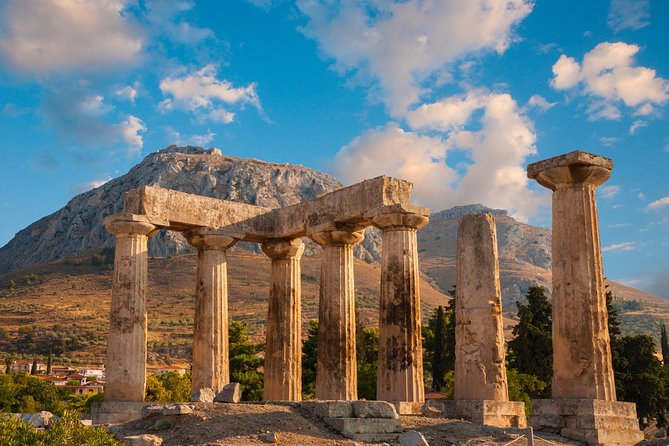
The Temple of Apollo at Corinth dates to 550 BC. It’s not meant to be a half-hour lecture—it’s more of a visual anchor. The stop is short and the ticket is free. In practice, it gives you a quick ancient reference point before you move higher toward the fortress.
You can also read our reviews of more tours and experiences in Athens
- All Day Cruise -3 Islands to Agistri,Moni, Aegina with lunch and drinks included
★ 5.0 · 4,958 reviews

Akrokorinthos (Acrocorinth) and the View of the Isthmus
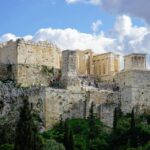
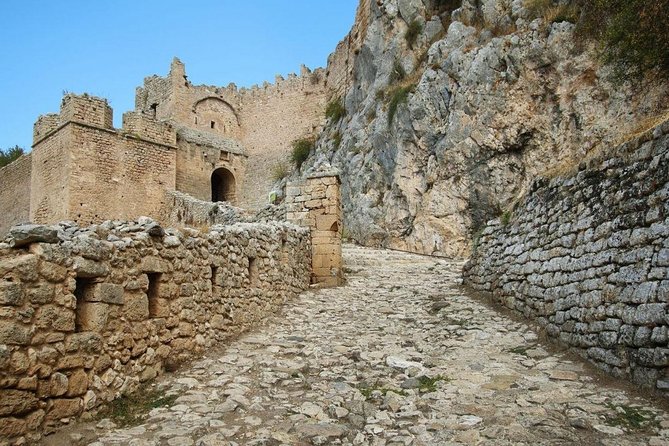
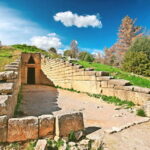
Then comes Akrokorinthos, also known as Acrocorinth. It’s the hilltop acropolis—literally a monolithic rock overlooking Corinth. The fortress had one job above all: defense. Because it commanded the Isthmus of Corinth, it could slow or repel invaders moving by land into the Peloponnese.
You’ll feel that military logic in the view. Even if you don’t think like a strategist, you can look outward and understand why this location mattered.
Good to know: this stop can involve a strenuous walk depending on where you go and how you pace it. One review specifically mentioned the hike to the castle being strenuous and advised good walking shoes and decent health. If you’re prone to knee issues, plan your pace and take breaks.
Epidaurus Museum and the Perfect Theatre for Acoustics
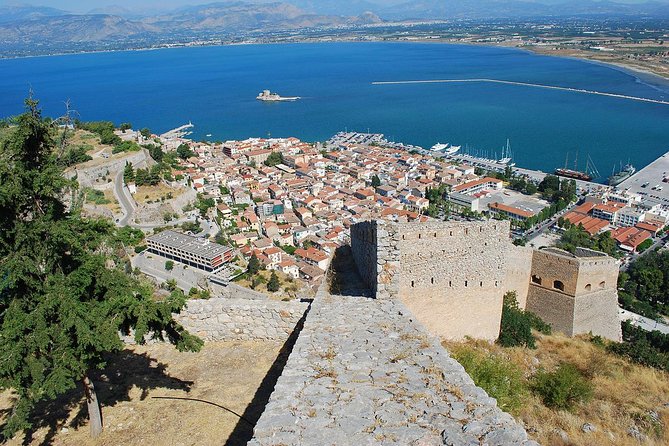
Epidaurus is where the day turns from “cities” into “experience.” First you visit the Epidaurus Archaeological Museum. It opened in 1909 and is known for reconstructions and displays—especially columns, inscriptions, and rebuilt temple elements from the surrounding area. If you’re the type who likes to understand what you’re about to see, this stop helps.
But the real reason people remember Epidaurus is the theatre.
The Ancient Theatre of Epidaurus
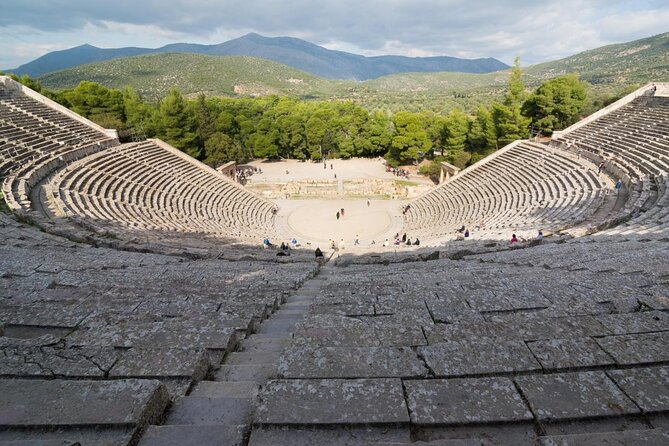
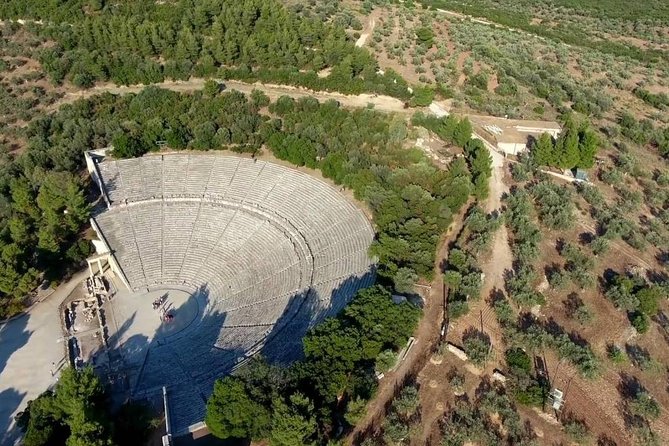
This is famous for acoustics and aesthetics—often described as one of the most perfect ancient Greek theatres for how sound carries. It keeps the classic Hellenistic structure: theatron (seating), orchestra, and skene. And during Roman times it didn’t undergo the same kind of heavy modifications that many Greek theatres saw.
When you stand there, it’s not just the architecture. It’s the way the space invites attention. The theatre works as a reminder that ancient entertainment wasn’t random—it was built for communication and shared experience.
Note: the Epidaurus admission and Epidaurus Archaeological Museum admission are not included (listed as €20 per person total for Epidaurus & its museum). Purchase on-site.
Sanctuary of Asklepios: Healing Myth as Public Space
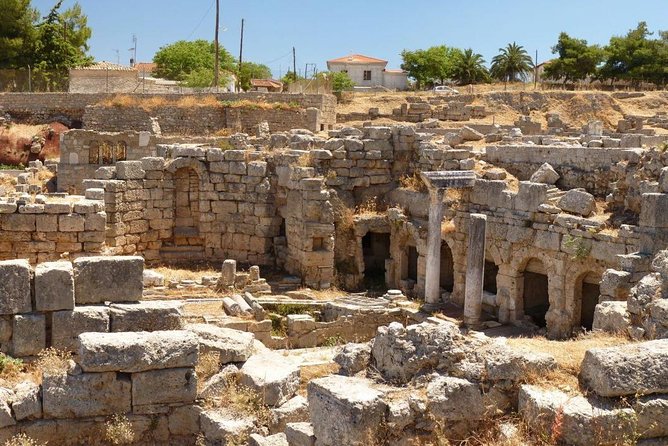
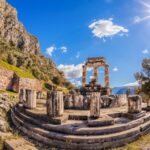
Just after the theatre, you’ll visit the Sanctuary of Asklepios. This sanctuary is dedicated to Asclepius, the ancient Greek god associated with medicine, and it was the main holy site for his cult.
You’ll be in the right mindset if you think of it as more than a temple. It was a rival to other major cult centers like Olympia and Delphi, meaning it drew people from far beyond the local area. The temple is dated to the early 4th century BC. One intriguing historical note included in your tour description: if non-Christian worship still existed in the 4th century AD, the temple would have been closed later under late Roman persecution edicts.
In other words, you’re standing in a place where spirituality, wellness, and civic identity were tied together—and where that meaning changed as empires and beliefs changed.
This stop is short (about 15 minutes) and the temple admission is listed as free.
Nafplio: Lunch, Harbor Views, and Venetian-Era Walking
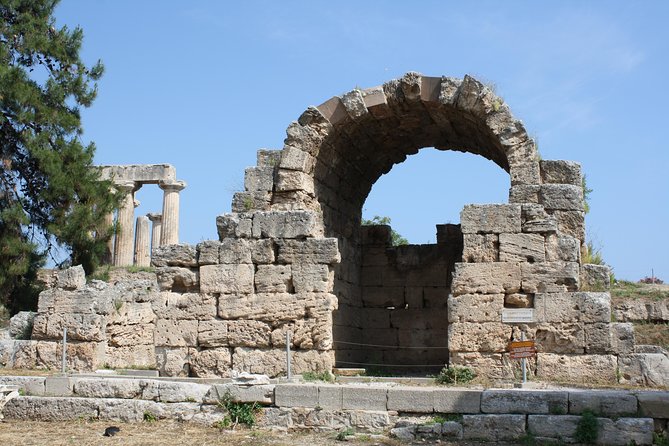
Then you switch gears to Nafplio, often called the Naples of the East for its mixture of architecture, cobbled squares, and forts. Nafplio also sits as a seaport town with hills rising toward the Argolic Gulf.
The day gives you free time for lunch, coffee, or shopping. This is where the private format shines: you can eat where you feel like eating, linger near the water, or wander back streets without worrying about regrouping with a big tour.
You’ll also see key visual stops around the waterfront:
- Bourtzi: a small Venetian castle sitting out in the harbor. You’ll get photo time from the harbor side, and it’s one of those views that looks better than you expect from postcards.
- Acronauplia: the oldest part of the town, once its own settlement, later folded into fortifications. It even served as a prison before tourism-friendly development turned the view into a hotel complex.
Palamidi Castle: The Steps Are Real, and the Views Pay Off
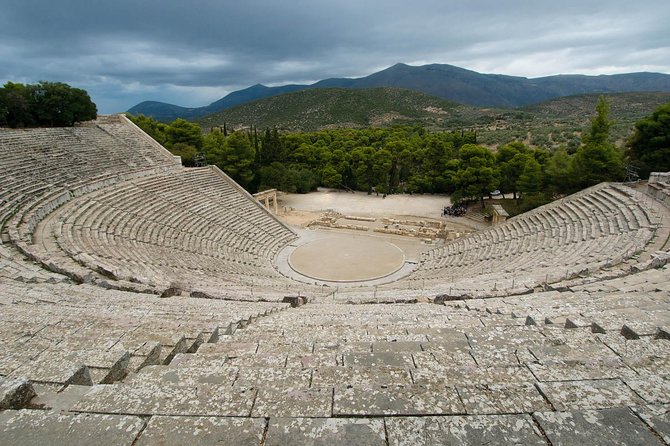
Your final major stop in Nafplio is Palamidi Castle. It’s a fortress built by the Venetians during their second occupation (1686–1715). Palamidi sits on a hill crest about 216 meters high.
This part matters because the tour doesn’t just drop you near a fort. It gives you a reason to climb: the fortress overlooks the Argolic Gulf, Nafplio, and the surrounding countryside. And you’ll also get a real sense of how fortified this town was.
Here’s the practical detail you’ll want to keep in mind: there are 913 steps from town to the fortress, and local talk often mentions “999 steps.” Either way, expect more stairs than you’d casually plan for. If you’re in good shape, it’s a fun challenge. If stairs are an issue, you’ll want to pace it or consider how much you can comfortably handle.
Lunch in a Typical Greek Restaurant: Where the Day Becomes Human
Lunch is included. The tour also offers an upgrade option for an authentic lunch in a typical Greek restaurant. Either way, the point is that you’re not eating a rushed sandwich between ruins—you’re sitting down in the middle of the day.
That matters because your earlier stops are structured around ancient sites. Nafplio is where you can reset: eat slowly, cool down, and let your brain file what you just saw. In a day like this, that lunch break can be the difference between a fun day and an overstuffed day.
If you care about dining style, go with your driver’s recommendation when you’re offered one. Drivers like Alex and George are specifically mentioned as accommodating with timing and suggestions, and the added flexibility can help you match the meal to your energy level.
Price and Logistics: Is It Worth $229.14 per Person?
At $229.14 per person, you’re paying for three big things: a private vehicle, door-to-door pickup, and a tightly packed route through three of Greece’s most famous ancient areas.
Here’s how that tends to translate in real value:
- You avoid the hassle of renting a car for a long day and handling parking near major sites.
- You get an air-conditioned ride, Wi‑Fi onboard, and bottled water—small perks that matter when the day is hot.
- You save time by having a driver coordinate the schedule, waiting between your site visits.
The hidden cost to plan for is admissions. Ancient Corinth has an on-site ticket (listed as €15), and Epidaurus plus its museum has another on-site ticket (listed as €20). Corinth Canal and several Corinth viewpoints are listed as free, so the fees are concentrated at the two anchor sites.
Also, remember the tour is private but driver-led. That’s not automatically bad—good drivers can explain context clearly, in fluent English. Just know you’re not guaranteed a licensed guide inside each archaeological site unless you request that add-on.
So is it worth it? If you want a full itinerary with low stress and can handle a self-paced experience at each site, yes. If you want a licensed guide walking you through everything with detailed narration at each entrance, you’ll want to request the extra guide option.
Who Should Book This Tour (and Who Might Prefer Something Else)
This is a strong fit if you:
- Want to see Corinth, Epidaurus, and Nafplio in one go without car logistics
- Like connecting ancient sites to real stories, especially Paul-related context
- Appreciate a day with time to breathe in a town, not just museums and walking
It may not be your best match if you:
- Need a licensed guide inside each site to make the ruins click
- Are sensitive to long driving days (there is a lot of road time from Athens)
- Don’t want to deal with stair counts at Palamidi or any hilltop walking around Akrokorinthos
One encouraging pattern from the experience descriptions: drivers are often described as flexible—adjusting time for lunch or rerouting if a site is unexpectedly closed. That adaptability can turn “a long day” into “a smooth day.”
Should You Book It?
If you’re choosing between this and renting a car plus cobbling together buses, I’d lean toward booking. The private pickup, the waiting-free logistics, and the mix of major sites plus Nafplio downtime is what makes this day feel like a real vacation instead of a homework assignment.
Just be honest with yourself about what you want from the ruins. If you’re comfortable exploring at your own pace with clear explanations from your driver, you’ll probably love this. If you want a guide in every doorway, request the licensed tour guide add-on so you get the level of interpretation you’re hoping for.
FAQ
How long is the Ancient Corinth, Epidaurus, Nafplio day trip?
It runs about 8 to 9 hours.
Is pickup from Athens included?
Yes. Pickup and drop-off are included from your preferred address, hotel, or apartment, and the pickup time can be adjusted.
Are entrance tickets included?
Not all of them. Ancient Corinth and the Archaeological Museum of Corinth require an on-site ticket (listed as €15 per person). Epidaurus and its Archaeological Museum also require an on-site ticket (listed as €20 per person). Corinth Canal and some other stops are listed as free.
Is lunch included?
Yes. Lunch is included, with an option for traditional Greek food.
Do you provide a licensed tour guide?
The driver is not a licensed tour guide who enters the sites with you. A licensed tour guide can be requested depending on availability for an additional cost.
Is this tour private?
Yes. It’s a private tour with only your group participating. Wi‑Fi is available on board, and the vehicle is air-conditioned.
You Might Also Enjoy

More Private Tours in Athens


More Tours in Athens




More Tour Reviews in Athens
- All Day Cruise -3 Islands to Agistri,Moni, Aegina with lunch and drinks included
★ 5.0 · 4,958 reviews