Two hours can change how you see Athens.
This 2-hour walking tour helps you get your bearings fast, then zooms in on the city’s biggest sights from smart angles—especially Acropolis photo spots—with clear history and practical guidance along the way.
I especially love the mix of famous landmarks and the side streets between them. You’ll hit Thiseio, Monastiraki, the Ancient and Roman Agoras, and Plaka, but in a way that feels like you’re being shown the city’s logic, not just ticking boxes.
One consideration: the pace is brisk. Several stops are brief pass-bys (around 5 minutes), so if you want to linger or read every plaque on your own, this is better for orientation than for deep solo time.
In This Review
- Key things to know before you go
- A smart 2-hour Athens orientation (with photo angles)
- How the small group pace actually helps (and where it can feel rushed)
- Acropolis viewpoints, then Thiseio: start with the city’s big picture
- Monastiraki Square and the Agora circuit: markets, power, and everyday Athens
- The Changing of the Guard and the Hellenic Parliament front
- Plaka and the photo stops: oldest neighborhood mood plus church art
- Tips list and guide style: what you’re really paying for
- Price and value: is $36.04 worth 2 hours?
- When the weather matters, and what flexibility looks like
- Should you book this Athens walking tour?
- FAQ
- How long is the Athens walking tour?
- What is the price per person?
- How many people are in a group?
- Is the tour offered in English?
- Do I need to bring a paper ticket?
- Where does the tour start and end?
- Are the stops free to enter?
- Is the tour dependent on weather?
- Is free cancellation available?
Key things to know before you go
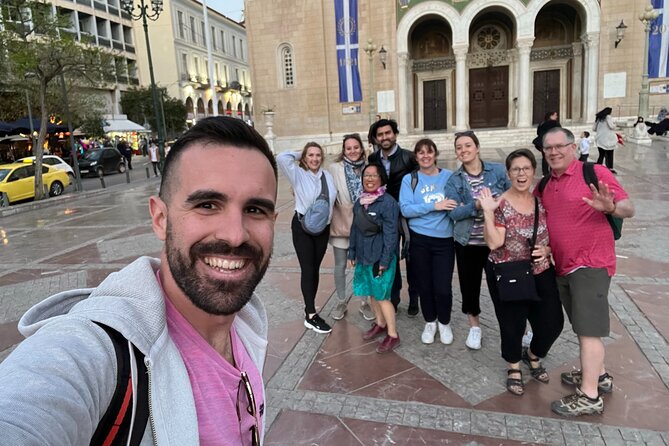
- Small group (max 10) means more chances to ask questions and get real advice.
- Photo-ready viewpoints include multiple Acropolis angles and quick stops designed for pictures.
- Markets and civic Athens show up in Monastiraki, Ancient Agora, Roman Agora, and the flea market area.
- Changing of the Guard time is built in, not just mentioned from afar.
- You get a tips list for sightseeing, food, shopping, and what to do next.
- Mostly free stops, so your money goes to the guide, not admission fees.
A smart 2-hour Athens orientation (with photo angles)
If Athens is overwhelming on day one, this is exactly the kind of walk that helps. The tour is set up as a quick orientation loop through the central historic area, finishing in the Monastiraki hub. In about two hours, you’ll see a lot of Athens without feeling like you spent your whole trip queueing.
The tour’s structure also matters. Instead of one long stop, you get a string of short, focused moments: viewpoints for photos, squares for context, and neighborhoods where locals actually spend time. The guide’s job is to connect what you’re seeing to the why—so when you later walk back on your own, it makes sense.
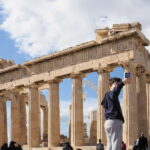
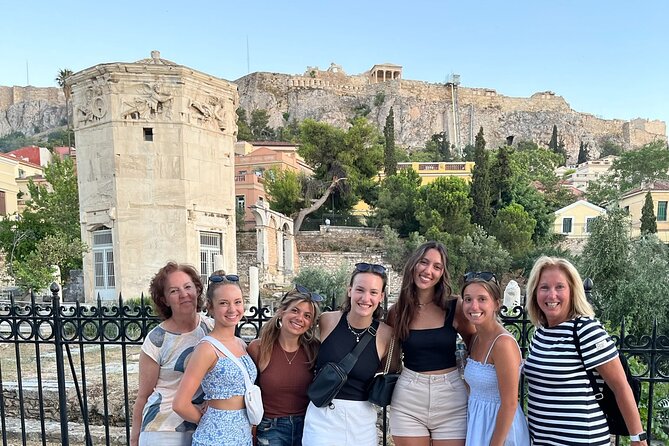
And the photo component isn’t random. One of the early highlights is admiring the Acropolis from different angles of the city center. That’s a huge deal, because the Parthenon looks different depending on where you stand. You’ll also get guidance on where to stand for close-up views in the city center area, so you’re not just pointing your camera and hoping.
You can also read our reviews of more walking tours in Athens


How the small group pace actually helps (and where it can feel rushed)
The tour caps at 10 people, which changes the vibe. With a small group, you can ask questions on the spot—like what to prioritize on the Acropolis day later, or how to read what you’re seeing around Parliament and the ceremonial guards. I like that the guide isn’t forced into a strict script; the group size makes it easier to tailor explanations.
At the same time, the itinerary is clearly built for “see and understand” rather than “slow and linger.” Many stops are timed at about 5 minutes, with a couple longer ones (like 15 minutes near the Hellenic Parliament). So expect to move at a steady clip.
This pace is ideal if:
- you want confidence navigating central Athens quickly,
- you’re planning to return to the big sites later with better context,
- you’re jet-lagged and still want to do something meaningful.
It’s less ideal if you’re hoping for lots of quiet time inside churches or a slow wandering pace through neighborhoods. You’ll get the highlights and the direction—then you’ll likely come back for the longer personal version.
Acropolis viewpoints, then Thiseio: start with the city’s big picture
The tour begins by aiming you toward the Acropolis—even before you’re right in the main zone. You’ll spend time admiring the Acropolis from different angles near the city center, with history background so the stone you’re seeing doesn’t feel like disconnected ruins. This is a smart way to start because Athens instantly becomes more legible when you understand how the city’s landmarks relate to each other.
Next up is Thiseio, one of the oldest neighborhoods in the historical center. This stop is short, but it’s chosen for a reason: you get a taste of the “Athens everyday” layer sitting next to major monuments. It’s also a helpful warm-up, since Thiseio gives you a sense of scale and street rhythm before you head toward larger squares and ceremony areas.
Then you’ll come back toward the Parthenon with another set of angles for close-up city-center views. Seeing it from more than one direction helps you understand why certain viewpoints are so popular—and it makes your later self-guided walking feel more intentional. If you’ve only ever seen the Parthenon from postcards, this part can surprise you in a good way.
Monastiraki Square and the Agora circuit: markets, power, and everyday Athens
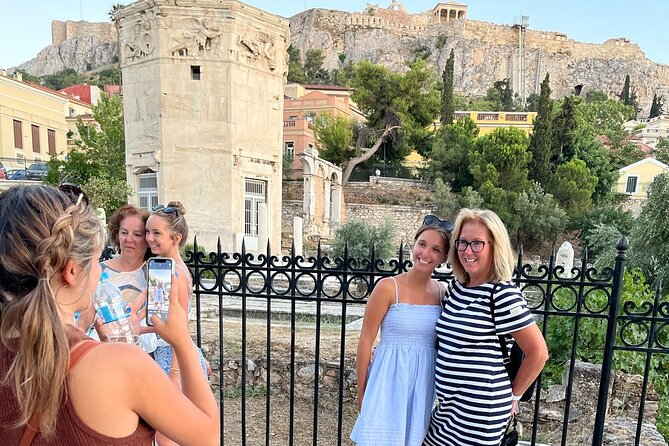
After the opening viewpoints and Thiseio, the tour shifts into “busy Athens” mode with Monastiraki Square. The description you’ll feel on the ground is exactly what you want for orientation: the square is packed with all-day bars, restaurants, cafes, and open-air flea market energy. It’s the kind of place where you can mentally reset your bearings—main streets, side alleys, and the direction back toward major landmarks all become clearer.
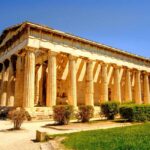
From there, you pass into the Ancient Agora of Athens, which the tour frames as part of old civic life—plus you get it through the lens of markets. The guide also points out that it connects to the idea of an open marketplace culture that’s still echoed in today’s shopping streets.
Then it continues to the Roman Agora, where the focus shifts to Roman influence in Greece during its period. Even though this is a quick stop, it helps you avoid the common mistake of thinking Athens is only Greek, only ancient, and only one era. You start to notice layering: Greek foundations, Roman changes, and then the modern city built over top.
Why this “Agora circuit” works in a short tour: it gives you three different lenses—Greek civic space, Roman era shifts, and market culture—without requiring you to read a textbook. You’ll walk away with a mental map of how power and commerce moved through the city.
The Changing of the Guard and the Hellenic Parliament front
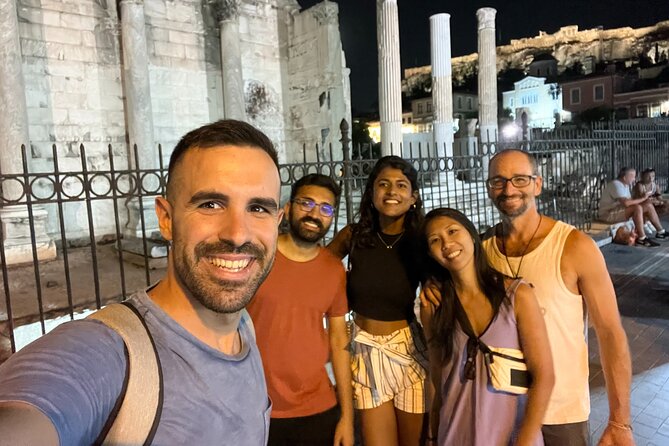
One of the best parts of this walk is that the Changing of the Guard ceremony is actually built into the route. You’re not just told the guards exist—you get time to see the ceremony live, and the guide provides inside context about daily life, training, and what the symbolism represents.
That matters because the guards can look like a strict performance from a distance. With the explanation, you’ll understand what’s formal, what’s disciplined, and why the uniform details are not random. It turns a quick sight into something with meaning.
After that, you’re placed in front of the Hellenic Parliament, where you’ll learn about the history of the 18th-century building and what politics and life in Athens have looked like around this space. Even if you’re not a political history nerd, Parliament is a perfect “stand back and watch Athens function” place. You can feel the city’s rhythm while still getting background.
The route also includes a pass by Syntagma Square Fountain, described as the biggest square in Athens, full of fountains and live events, directly in front of Parliament. If you’ve got limited time, this is a good way to grasp how modern public life sits next to historic symbolism.
You can also read our reviews of more tours and experiences in Athens

Plaka and the photo stops: oldest neighborhood mood plus church art
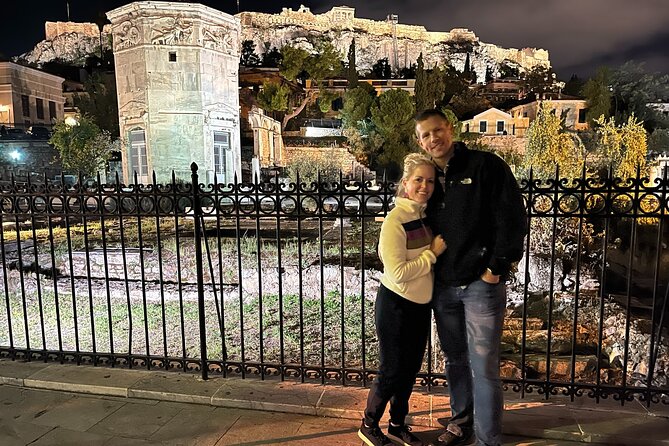
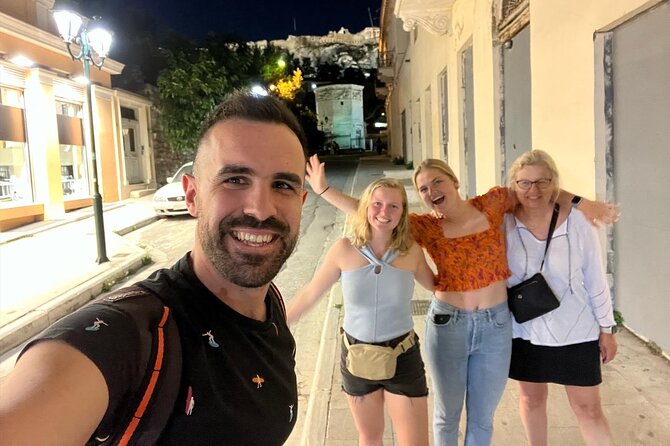
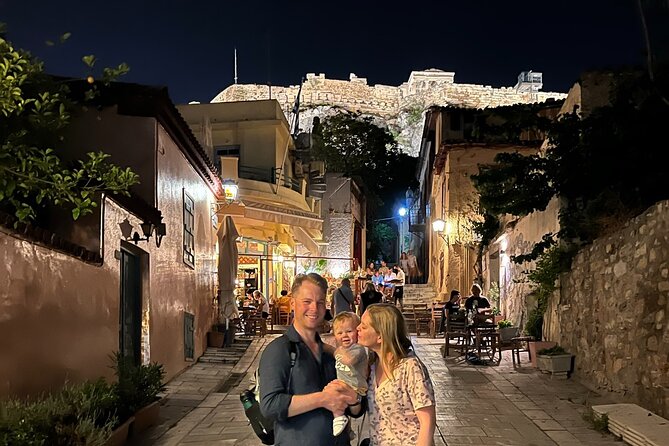
Once you reach Plaka, the tour leans into atmosphere and details. Plaka is framed as the oldest neighborhood of Athens and described as looking like a small island in the heart of the city. In practice, that means you’ll find a maze-like feel, with side streets and look-at-this angles that feel more intimate than the broad view zones.
You’ll also get pointed toward secret photo spots within Plaka—short stops designed for quick framing and close looks. This is a big reason the tour works for first-timers. You’re not left guessing where to stand when you want a great shot.
Next is the Holy Metropolitan Church of the Annunciation to the Virgin Mary. You’ll pass by the largest church of Athens and get notes on why its exterior and interior architecture is considered a one-of-a-kind piece of art. Since this stop is brief, treat it as your “eyes open” moment. If you want longer time inside, it’s the kind of place you’ll likely revisit after getting oriented here.
Then the route shifts toward Athens’ shopping and local vibes with Athens Flea Market. This is a pass-by stop focused on souvenirs and browsing energy. You’ll also hit Plaka stairs, which are presented as a famous meeting point for locals and tourists, with restaurants, bars, and rooftop terrace options nearby. For many people, this becomes a perfect final anchor point: you get a sense of where to go when you’re ready for a drink or a snack after the walk.
Tips list and guide style: what you’re really paying for
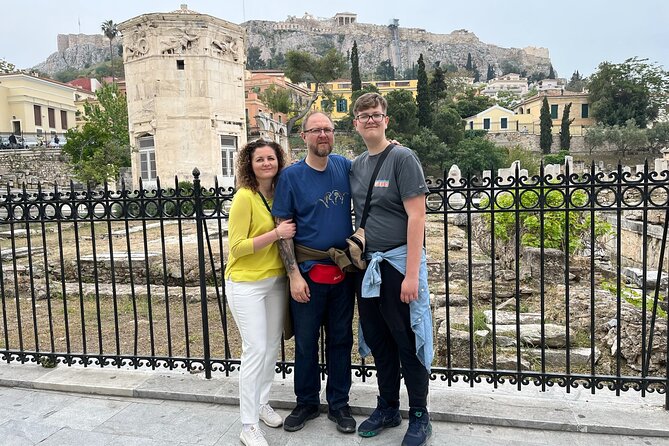
The tour includes more than movement. You get a list of tips and recommendations for sightseeing, food, shopping, and other activities. That’s where a walking tour earns its keep. A good guide doesn’t just show you what’s famous; they help you plan what to do next with your limited time.
In particular, guides like George (named in past experiences) are praised for giving useful context and pointing people toward places they would not have found alone. Another named guide, Dimitris, shows up in the pre-tour communication some people described as thoughtful and organized. I take that as a sign that the experience aims to get you ready before you even meet.
Also, the tour is offered in English and uses a mobile ticket, which keeps things simple on the day. There are also private tours in French available upon request for an extra charge. If you’re traveling with a French-speaking group and want a less mixed experience, that option can be a smart add-on.
Price and value: is $36.04 worth 2 hours?
At $36.04 per person for about 2 hours, the value depends on how you travel. If you’re the type who likes to build a plan from day one—then come back later for longer visits—this price usually makes sense.
Here’s what you’re buying:
- A small group size (max 10), not a big cattle-car situation.
- A route that hits multiple major Athens zones fast, including viewpoints for the Acropolis and quick orientation through Plaka.
- Practical, immediately useful advice: where to go next for sights, food, and shopping.
You’re also getting many stops marked as free (most segments are presented as free admission). So your cost isn’t inflated by ticket fees you didn’t ask for. You’re paying for guidance and time efficiency.
The only time I’d hesitate is if you already know Athens very well, or if you want a slow museum-style tour with lots of time at each site. This is more like a guided “map in motion” than a long-form history class.
When the weather matters, and what flexibility looks like
This is a walking tour, and it explicitly requires good weather. If it’s canceled due to poor weather, you’ll be offered a different date or a full refund. That means you should pick your day with a bit of breathing room if your trip schedule is tight.
Also, because many stops are brief, weather disruptions can have a bigger impact than on tours where everything happens indoors. If you’re traveling in a season with changeable conditions, plan your most flexible day for the tour.
Should you book this Athens walking tour?
Book it if you want a fast, guided orientation through central Athens—especially if it’s your first day. The combination of Acropolis angles, Monastiraki energy, a live look at the Changing of the Guard, and Plaka photo stops is a strong use of time.
Skip it if you prefer long, slow time at fewer sites or you want deeper independent exploration without moving between many short stops. In that case, you might be happier with a longer-format tour focused only on the Acropolis area or only on Plaka.
If your goal is to leave Athens with a clearer mental map and a short list of what to do next, this one fits that job very well.
FAQ
How long is the Athens walking tour?
It lasts about 2 hours.
What is the price per person?
The price is $36.04 per person.
How many people are in a group?
The tour has a maximum of 10 travelers.
Is the tour offered in English?
Yes, it’s offered in English.
Do I need to bring a paper ticket?
No. You’ll have a mobile ticket.
Where does the tour start and end?
Start: Adrianou 1, Athina 105 55, Greece. End: Monastiraki Square, Apollonos 21, Athina 105 57, Greece, in front of the train station.
Are the stops free to enter?
Many stops are listed as free admission, and the itinerary includes several stops marked free.
Is the tour dependent on weather?
Yes. The tour requires good weather. If it’s canceled due to poor weather, you’ll be offered a different date or a full refund.
Is free cancellation available?
Yes. You can cancel up to 24 hours in advance for a full refund.
You Might Also Enjoy

More Walking Tours in Athens


More Tours in Athens


More Tour Reviews in Athens
- All Day Cruise -3 Islands to Agistri,Moni, Aegina with lunch and drinks included
★ 5.0 · 4,958 reviews