
REVIEW · ATHENS
Athens: Women in Ancient Greece Guided Walking Tour
Book on GetYourGuide →Operated by Culture Hunters · Bookable on GetYourGuide
Meet Athens through the lives of women. This tour lets you read ancient Athens and the Acropolis area through stories tied to Greek women and goddesses.
I especially love the way the guide makes big monuments feel personal, not just postcard stops. I also like the lineup of women you meet along the way, from Sappho to Aspasia, plus myth links that explain why women’s roles were talked about the way they were.
One consideration: you only get exterior views of archaeological sites, since tickets aren’t included.
In This Review
- Key takeaways
- A women-first walking tour that changes how you see Athens
- Where you start: Monastiraki Square and the Church Pantanassa
- Hadrian’s Library and Plaka: walking through Athens’ “everyday” backdrops
- The Gate of Athena Archegetis: when a goddess name becomes a real clue
- Ancient Agora from a different angle: stories over stone
- Pnyx and early votes: democracy on one side, myth and women on the other
- The viewpoint stop and Acropolis moments without the crowd rush
- Filopappou Hill: ending with views and reflection
- How the tour feels in real life: pace, steps, and comfort
- Price and value: why this costs $44.04 and who it’s worth it for
- What’s included, what’s not, and how to plan your day
- Who should book the Women in Ancient Greece walking tour?
- Should you book this tour?
- FAQ
- How long is the Athens Women in Ancient Greece guided walking tour?
- Where do I meet the guide, and where does the tour end?
- Are site entrance tickets included?
- What languages is the tour offered in?
- Is there a private group option?
- Is the tour wheelchair accessible?
Key takeaways
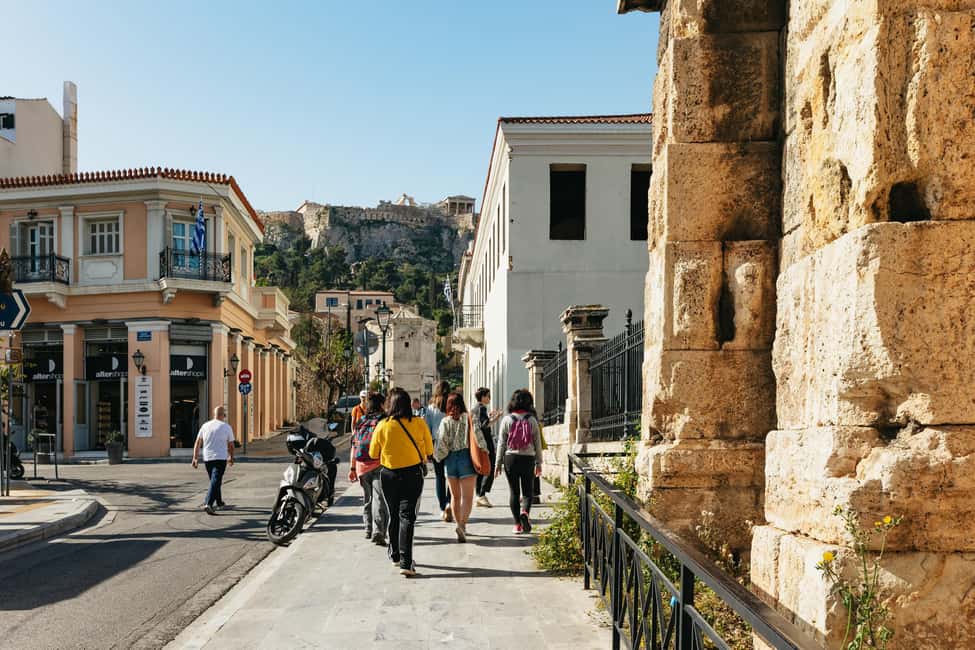
- A women-first lens on Athens at iconic sites like Hadrian’s Library and the Ancient Agora
- Myth meets everyday life through stories featuring Athena, Penelope, Demeter, and Pandora
- Rule-breakers get center stage with mentions of Sappho, Aspasia, and Agnodice
- Pnyx is a highlight for democracy and the tour ties it to the role of women
- Views finish at Filopappou Hill after a scenic stop with panorama views
- Private group option available, plus English or French guidance
A women-first walking tour that changes how you see Athens
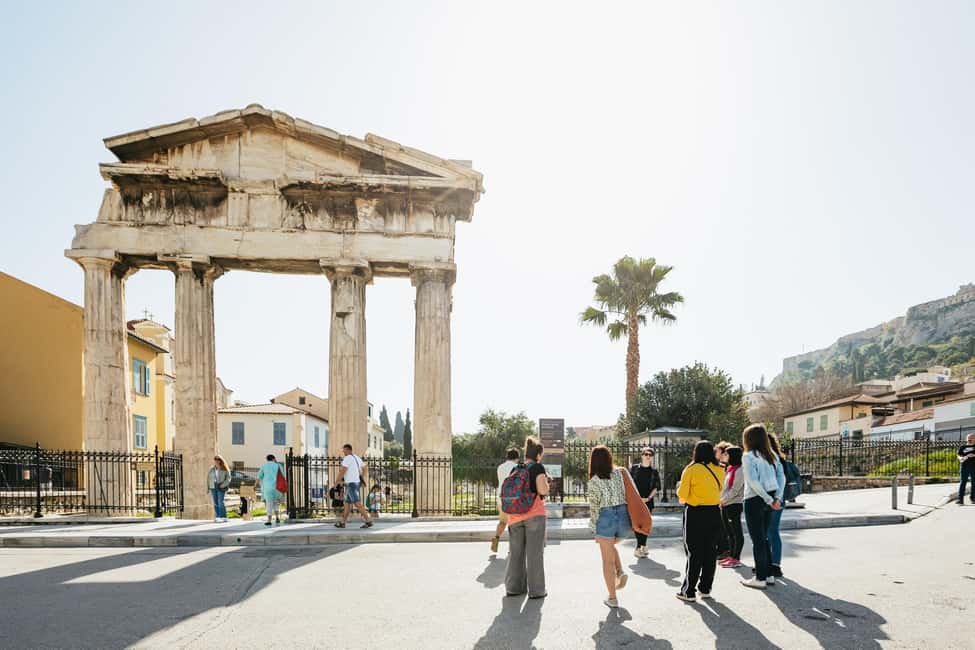
Athens can feel like a men’s club of monuments. This is different. The Women in Ancient Greece guided walk treats the city like a storybook, with female characters, goddess myth, and women’s day-to-day roles woven into what you see.
It’s also a smart way to spend a short morning or afternoon. At about two hours, you’re not trying to conquer every ruin in sight; you’re learning a theme and connecting the dots as you walk.
The vibe stays practical too. You meet in the lively Monastiraki area, move between major ancient spots, and end near where you started—so you can keep exploring afterward without scrambling for transport.
You can also read our reviews of more walking tours in Athens



Where you start: Monastiraki Square and the Church Pantanassa

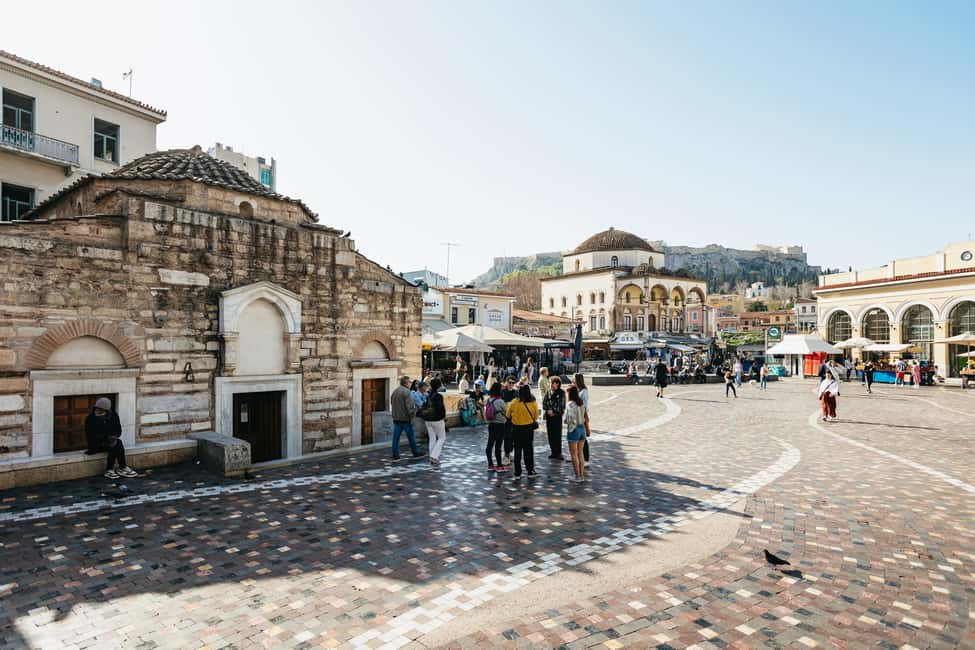
Your tour meeting point is right in the Monastiraki area. Look for the Church of the Virgin Mary Pantanassa, and find your guide holding a sign that says Women in Ancient Greece.
This is a good start location for two reasons. First, Monastiraki is easy to reach on foot from lots of central neighborhoods. Second, you begin in a place that feels like the living Athens around the ancient layers, which helps the women-focused stories land.
From there, you’ll do an easy early pass through Monastiraki itself. Expect a quick orientation before the tour starts linking streets, names, and myth.
Hadrian’s Library and Plaka: walking through Athens’ “everyday” backdrops
One of the first major stops is Hadrian’s Library. Even if you’re mostly seeing it from outside, the guide uses it as a jumping-off point to talk about how the city’s culture formed the space where stories about women were told and retold.
Next comes Plaka. Plaka is where Athens often shows off its charming streets, but on this tour it’s not just scenery. The guide uses the neighborhood feel to keep the theme grounded—turning classical figures into people-shaped stories rather than distant statues.
If you like tours that treat mythology as more than fantasy, you’ll enjoy this section. The walk ties female figures and goddess themes—like Athena, Penelope, Demeter, and Pandora—into how people understood roles and expectations in the ancient world.
The Gate of Athena Archegetis: when a goddess name becomes a real clue
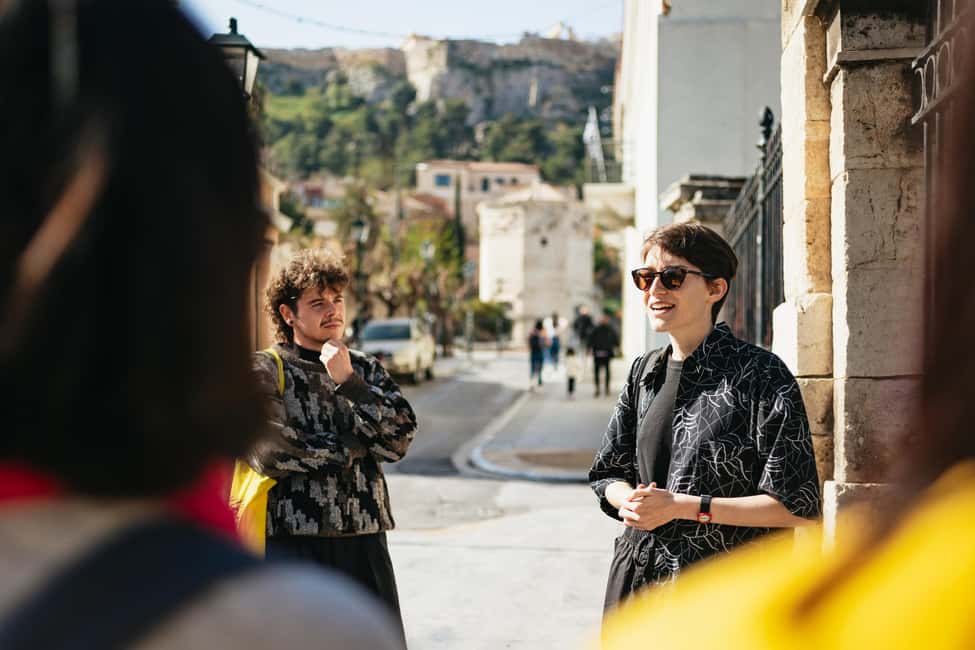
Then you’ll reach the Gate of Athena Archegetis. This is the sort of stop that works because it’s both literal and symbolic: Athena is right there in the architecture, and the tour uses that to show how mythology shaped the way society talked about women.
The best part is that the guide doesn’t keep everything in the clouds. You’ll hear stories connected to what people believed and how women could be imagined within those beliefs—sometimes fitting the script, sometimes pushing against it.
After this, there’s also a secret stop. You don’t come in knowing what it is, and that’s part of the fun. The guide uses it as a mid-walk palate cleanser where the story focus shifts in a surprising way.
Ancient Agora from a different angle: stories over stone
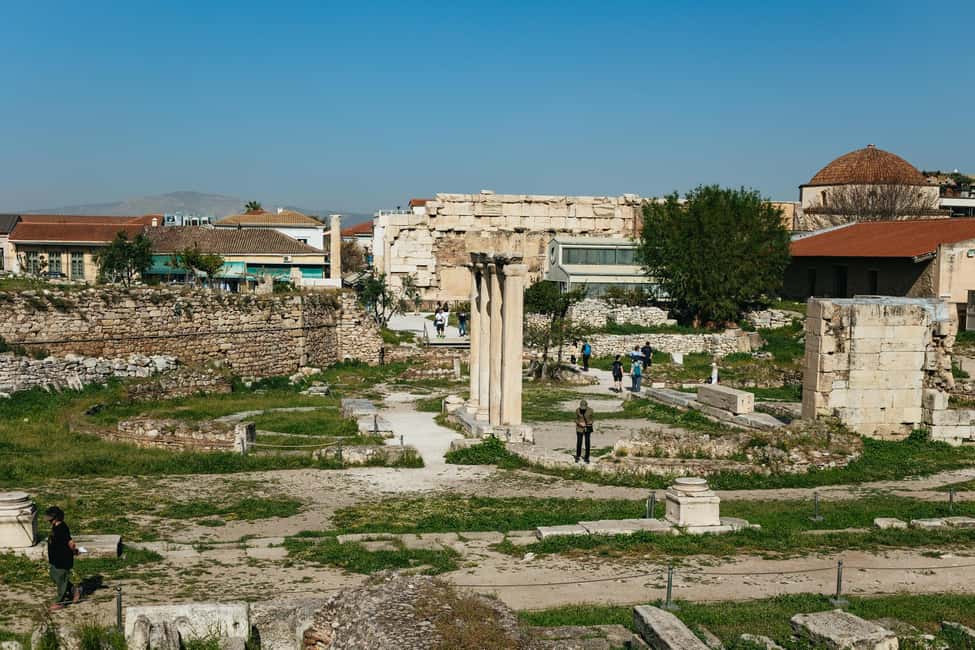
At the Ancient Agora of Athens, you switch from neighborhood streets to a place that’s central to the city’s identity. On most Athens walks, the Agora becomes a lesson in power and politics. Here, the guide keeps asking a parallel question: where do women fit into the story people tell about Athens?
This is where the tour’s theme becomes clear. You’re not just hearing a list of names; you’re learning why specific female figures matter—Sappho, Aspasia, and Agnodice—and how the tour connects them to the societal role women were expected to play.
You’ll also hear plot-like tales along the way, including stories of kidnapped Spartan girls and a mysterious women’s festival in Athens. These aren’t random add-ons. They make the ancient world feel more like a living place with rules, rituals, rumors, and consequences.
You can also read our reviews of more guided tours in Athens




Pnyx and early votes: democracy on one side, myth and women on the other
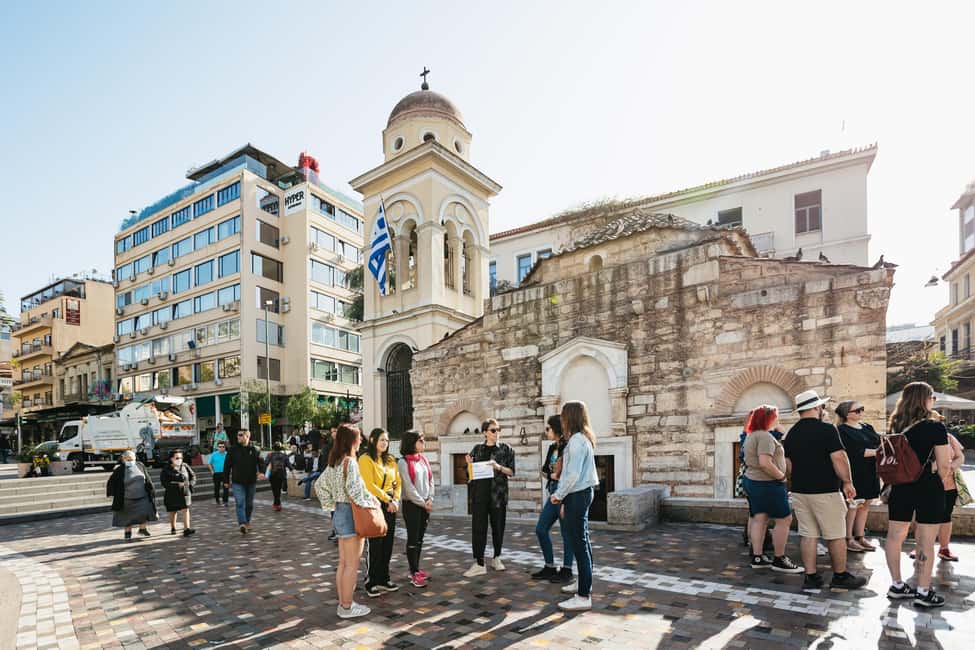
Next you’ll reach Pnyx, a key stop because it’s associated with early democratic votes. The guide uses the setting to remind you that Athens is famous for civic decision-making, even as the theme stays fixed on how women were positioned within that society.
This pairing is thoughtful. You get the political weight of Pnyx, then you hear how women’s roles were shaped through myth and through named women who defied expectations. The tour points you toward the tension between public identity and private reality.
That message becomes especially interesting when you hear about women who broke the mold. The walk highlights figures such as Sappho and Aspasia, plus Agnodice, described in the tour as a doctor who challenged what was assumed to be possible for women. It’s not just “look at this person”—it’s “this is what their existence suggests about the culture around them.”
The viewpoint stop and Acropolis moments without the crowd rush
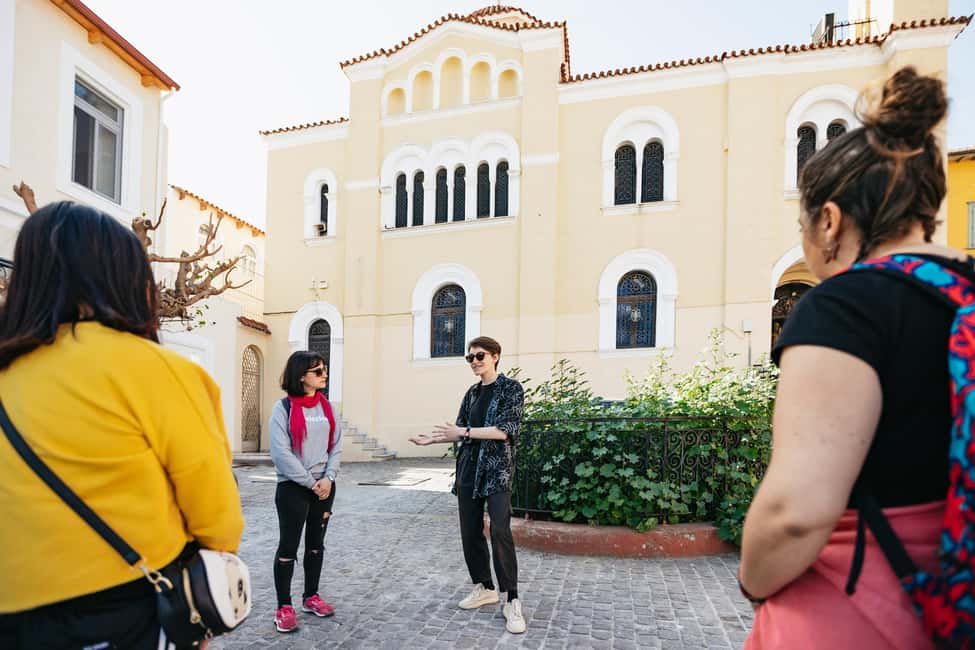
There’s a scenic viewpoint along the way, with a few minutes to look out and re-set your brain. It helps because the walk mixes story intensity with physical movement, and that breath of air keeps the pace comfortable.
Then you’ll get a look up toward the Acropolis, introduced as part of the tour’s arc rather than the single final boss. This matters if you’re trying to avoid the feeling that you only visit Athens by lining up at the biggest structures.
Even if you’ve been to the Acropolis before, the women-focused framing can make those familiar angles feel new. You’re seeing the city’s main landmarks, but you’re also listening for what the guide wants you to notice about how Athens was imagined and organized.
Filopappou Hill: ending with views and reflection
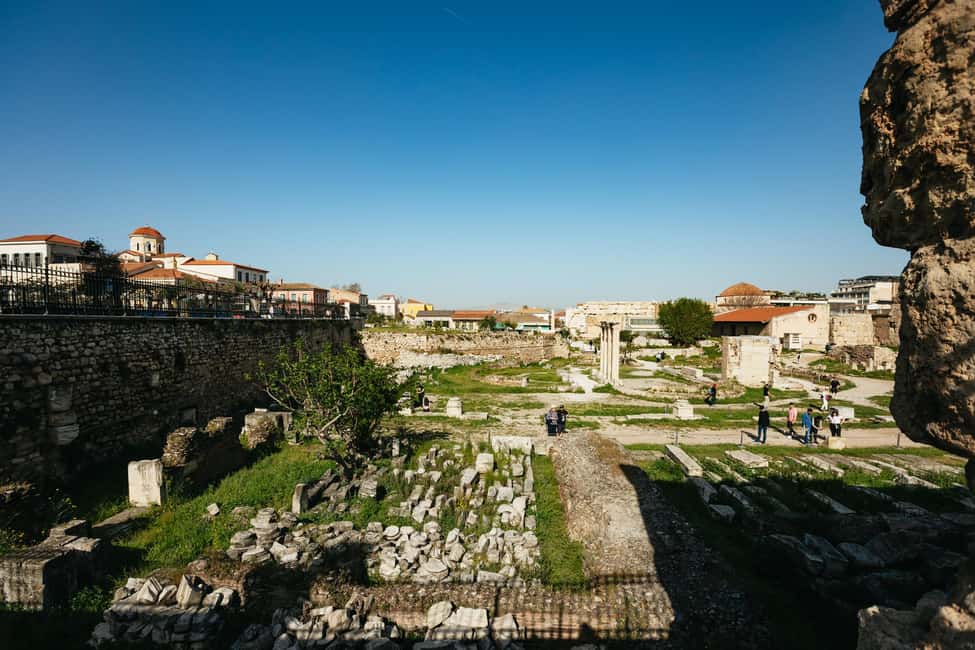
The tour wraps up at Filopappou Hill. It’s scenic in a way that feels like a natural landing for this kind of walking story—less rigid than a ruin checklist, more like a calm finish after you’ve been thinking.
You’ll get a guided stop there, and then the tour ends near where you started. Your drop-off area is listed around a kiosk on Rovertou Galli 69, with the overall experience described as returning to the meeting point area.
If you want to keep the theme going after the walk, Filopappou’s hill area is an easy launch point for more wandering. You can turn this tour into a half-day loop through old Athens without overcommitting.
How the tour feels in real life: pace, steps, and comfort

This is a walking tour with stops that include some time standing and some steps. It’s also not suitable for wheelchair users and may not work for people with health or mobility difficulties.
The duration is short enough that most people can handle it, but you should still dress for movement. Bring a sun hat, sunscreen, and water, because Athens sun is not subtle.
One nice detail: the guide can help you manage heat. In at least some cases, Maelle has planned for comfort by finding shady spots to stand in when possible, which makes a real difference during warm weather.
Price and value: why this costs $44.04 and who it’s worth it for
At $44.04 per person for about two hours, you’re paying for a theme-focused, guided interpretation of Athens rather than an “everything-and-the-kitchen-sink” route.
You also get value in what’s included:
- A live guide (English or French)
- The guided walking tour
- A small gift
- Private group option if you choose that format
The big cost saver is what’s not included. Tickets to archaeological sites aren’t included, and the tour is described as exterior views only. That’s not a flaw if your plan is to explore sites later (or with another ticketed experience). It’s actually a smart budget approach: pay for the story, not the entry fee.
If you already know you’ll visit the Acropolis or other major sites, this tour can be a great way to add meaning and context without double-paying for access.
What’s included, what’s not, and how to plan your day
Included items are straightforward: guide, walking tour, and the small gift. If you book a private option, you’ll have a private group tour format.
What’s not included:
- Food and drink
- Tickets for archaeological sites (exterior views only)
So plan to bring water and, if you’ll be hungry, schedule this before a meal or pair it with a nearby lunch in Plaka afterward. Also, think about timing: the tour is short, so you’ll likely want to keep your day light around it.
For languages, you can expect English or French, depending on the group.
Who should book the Women in Ancient Greece walking tour?
Book this if you want Athens with a point of view. This is a strong choice for people who like history tied to real names and stories—especially when you care about the role of women and how mythology shaped expectations.
It also works well if you’re tired of tours that only follow kings, battles, and philosophers as if everyone else disappeared. The tour specifically brings forward women like Sappho and Aspasia, and it highlights women who challenged norms, including Agnodice.
You might skip it if you want purely archaeological access. Since tickets aren’t included and you get exterior views, you’ll want a separate ticketed plan if entering sites is your priority.
Should you book this tour?
I think you should book it if you want Athens to feel more human and more specific. The women-first framing, the named stories, and the route through major landmarks like Hadrian’s Library, the Ancient Agora, Pnyx, and Filopappou Hill make it a useful alternative to the standard “see everything” approach.
Skip it if mobility is an issue, or if you’re expecting interior entry tickets as part of the package. And if you only have time for one Athens activity, do it only if a women-centered theme is the kind of angle you’ll genuinely enjoy.
If that’s your style, this one is easy to recommend. You’ll leave with a different mental map of Athens—one where women aren’t side notes, but part of the main story.
FAQ
How long is the Athens Women in Ancient Greece guided walking tour?
It lasts about 2 hours.
Where do I meet the guide, and where does the tour end?
Meet your guide on Monastiraki Square in front of the Church Pantanassa. The tour ends back at the meeting point area.
Are site entrance tickets included?
No. Tickets to archaeological sites are not included, and you’ll see the sites from the outside.
What languages is the tour offered in?
The tour guide speaks English and French.
Is there a private group option?
Yes. A private tour is available if you select that option.
Is the tour wheelchair accessible?
No. It includes steps and is not suitable for people with mobility impairments or wheelchair users.
You Might Also Enjoy



More Walking Tours in Athens


More Tours in Athens

More Tour Reviews in Athens
- All Day Cruise -3 Islands to Agistri,Moni, Aegina with lunch and drinks included
★ 5.0 · 4,958 reviews