REVIEW · ATHENS
Athens: The Acropolis Guided Walking Tour in Dutch
Book on GetYourGuide →Operated by LITTLE OWL TOURS · Bookable on GetYourGuide
A ruin is nice. A ruin explained is better. This Dutch guided walk turns the Acropolis into a clear route of sights and stories, from the theater down to the medicine legend. I especially like how the guide keeps you moving while still stopping long enough to notice the details that matter.
Two things I like a lot: you get a licensed guide in Dutch who tells the place like a person, and the viewpoints land at the right moment so the Acropolis feels real, not rushed. In some tours, you may even get a smaller group feel, which makes it easier to ask questions.
One possible drawback: it is mostly uphill on uneven stone, so comfortable shoes and realistic walking expectations are key. If you have limited mobility, this tour is not a good fit.
In This Review
- Key highlights to watch for
- Starting at the Acropolis side entrance: the walk that actually helps
- Theatre of Dionysus: sitting where theatre began
- Odeon of Herodes Atticus and the path of the Asklepieion
- Propylaea: the monumental gate that sets up your temple views
- Erechtheion and Parthenon: learning to look instead of just snapping photos
- The Temple of Athena Nike: small stop, big meaning
- The top of the hill: 360° Athens and where to put your eyes
- The Dutch guide factor: storytelling you can follow
- Price and value: is 95 per person worth it?
- Practical tips that make the day easier
- Should you book this Acropolis tour?
- FAQ
- How long is the Acropolis guided walking tour in Dutch?
- Where do I meet the guide?
- What is included in the price?
- What is not included?
- What should I bring with me?
- Is the tour suitable for people with limited mobility?
- Are strollers, luggage, and pets allowed?
- Can I cancel for a refund?
Key highlights to watch for
- Theatre of Dionysus first so you understand where Greek theatre truly started
- Early-hospital history at the Asklepieion ruins as you climb the sunny side of the hill
- Propylaea framing your temple views before you reach the top
- Major temples with guided attention to the Parthenon, Erechtheion, and Athena Nike
- A 360° Athens view plus time for photos at the top
Starting at the Acropolis side entrance: the walk that actually helps
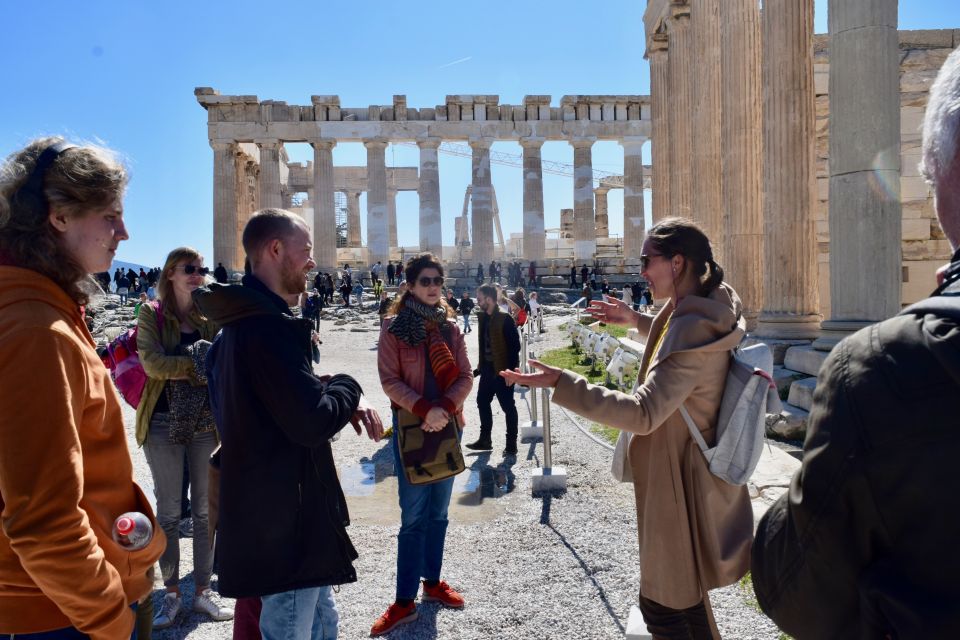
The tour starts at the side entrance of the Acropolis hill, not at some distant gate where you need to play catch-up. That first push uphill matters. In this short 1.5 hours, you want your energy for the stops, not for figuring out where to go next.
Right away, you get a route that builds. You begin with the theatre area, then work your way upward and along the sunlit side of the hill. By the time you reach the monumental gate and temples, you have context, so every new building feels less like random stone and more like a connected set.
Wear comfortable shoes with good grip. The terrain can be uneven and, at times, slippery. Bring water and a hat because Athens sun is not shy, and you will be exposed while climbing.
You can also read our reviews of more walking tours in Athens

Theatre of Dionysus: sitting where theatre began
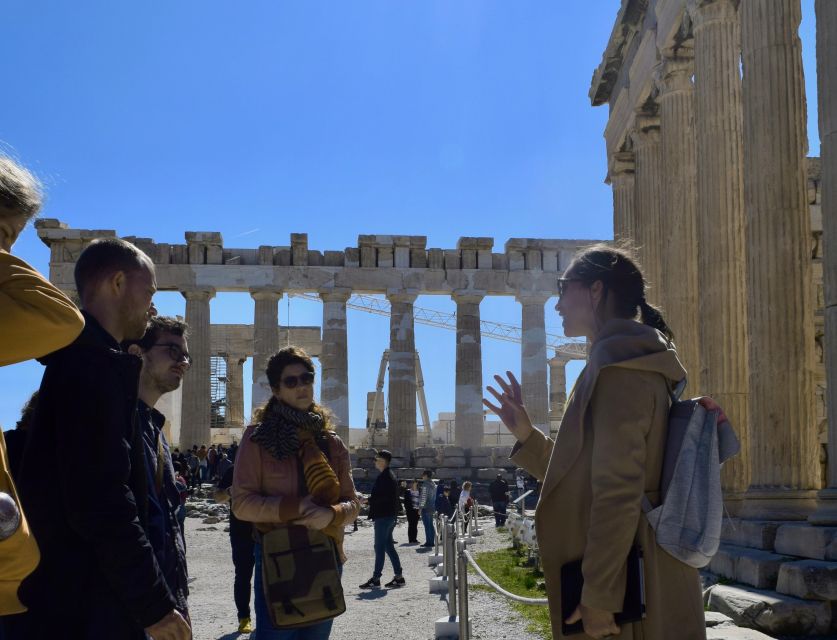
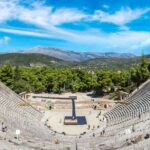
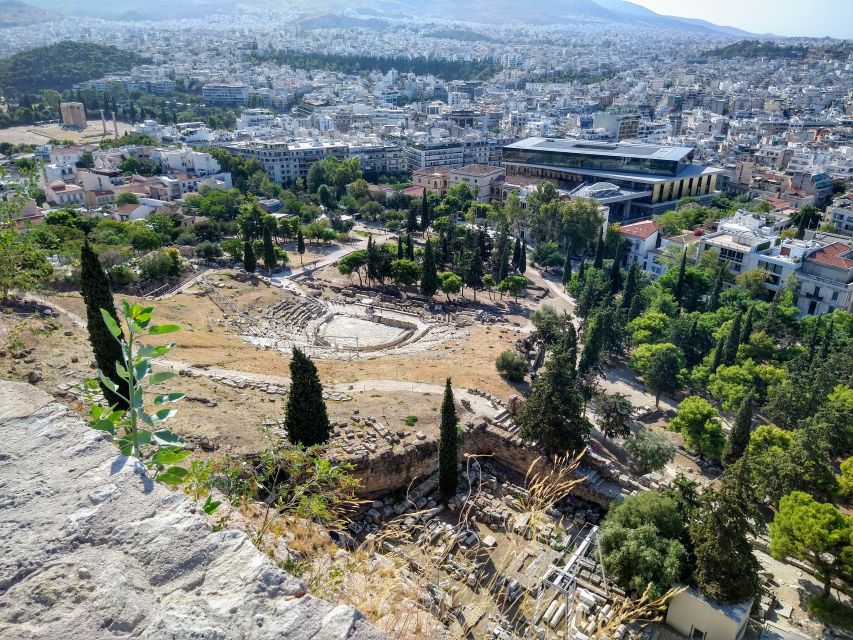
Your first big stop is the theatre of Dionysos. You do not just look at it from below. You get the chance to grab a spot on the ancient seats, which changes how you understand the place immediately.
This is where Greek theatre is tied to daily life, not just to a museum label. Once you sit in the curve of those seats, you start thinking about voices carrying, performances designed for a crowd, and how dramatic stories fit into civic life in Athens.
I like that the guide starts here because it sets the tone: the Acropolis is not only about temples. It’s also about public culture, gatherings, and spectacle.
Odeon of Herodes Atticus and the path of the Asklepieion
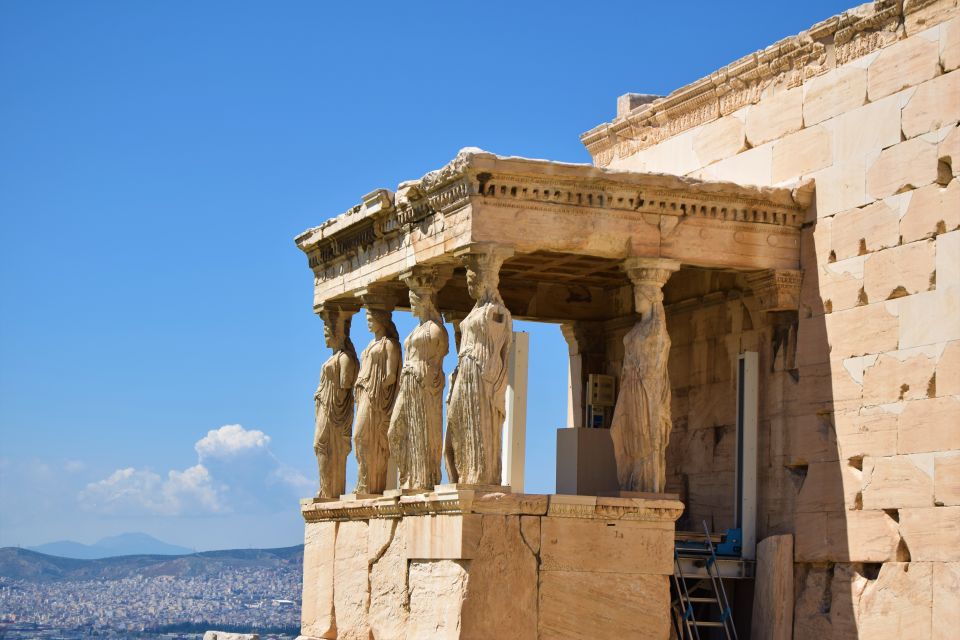
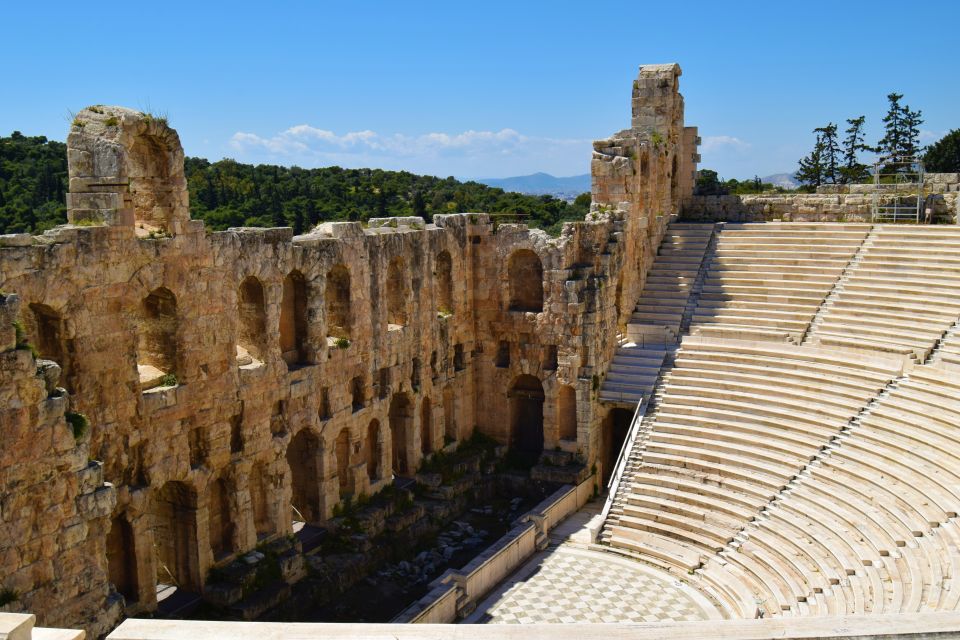
As you keep climbing the southern and sunny side, you pass by the Odeon of Herodes Atticus. The odeon is a reminder that ancient Athens loved arts, but also loved precision. The guide tends to connect what you are seeing to how people experienced sound, events, and crowds.
Then you come to the Asklepieion ruins, described as one of the first hospitals in ancient Greece. This stop is a pleasant surprise if you mostly expect temples and myths. Medicine and worship overlapped in the ancient world, and seeing the remains of an early healing site helps you understand Athens as a city that dealt with real human needs.
It also keeps the walk varied. One moment you are in a theatre story, the next you’re thinking about early healthcare, and then you move toward the grand temple area.
Propylaea: the monumental gate that sets up your temple views
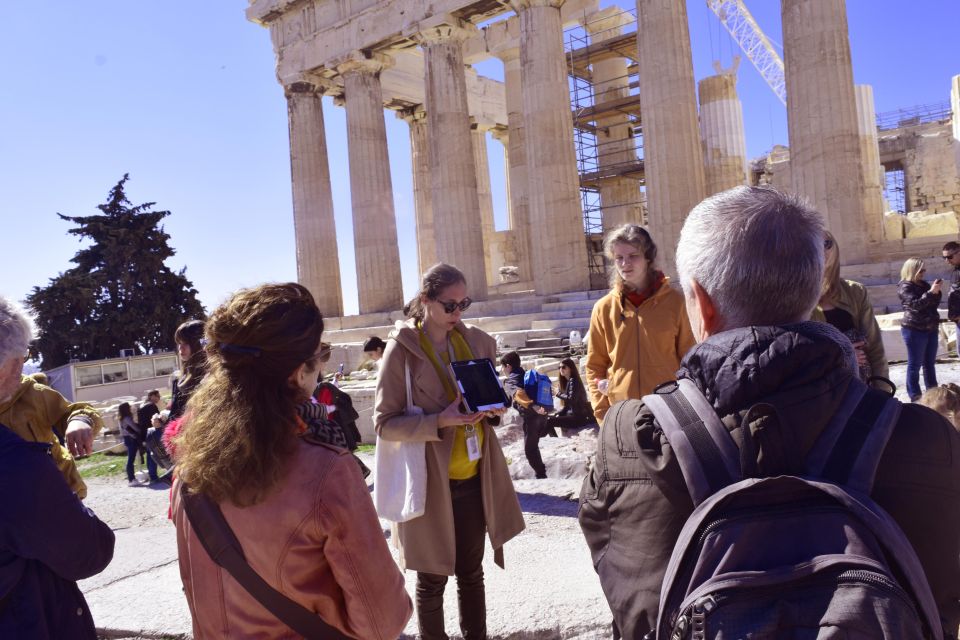
The climb brings you to the Propylaea, the monumental entrance gate to the Acropolis top. This is one of those spots where the structure feels like a funnel for attention. You walk through and suddenly the view opens up in the right direction.
From here, you get the “three-temple” moment: views toward the Parthenon, the Erechtheion, and the Temple of Athena Nike. A good guide does not just point. They help you see what you’re looking at and why the architecture feels so intentional.
This is where the tour also shares the kinds of architectural design choices that were meant to fix perspective and make buildings look right from human scale. Even if you are not an architecture nerd, you will notice how the guide turns vague awe into specific understanding.
Erechtheion and Parthenon: learning to look instead of just snapping photos
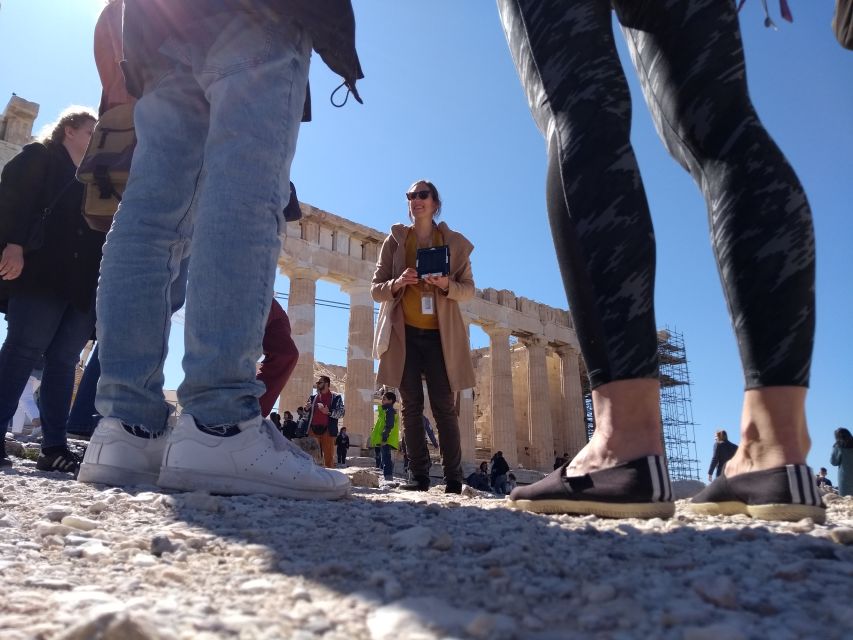
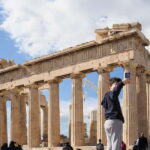
When you reach the temple zone, you will move through the key sights in a guided flow: Erechtheion and then the Parthenon, with Temple of Athena Nike worked into the route as you approach the upper area.
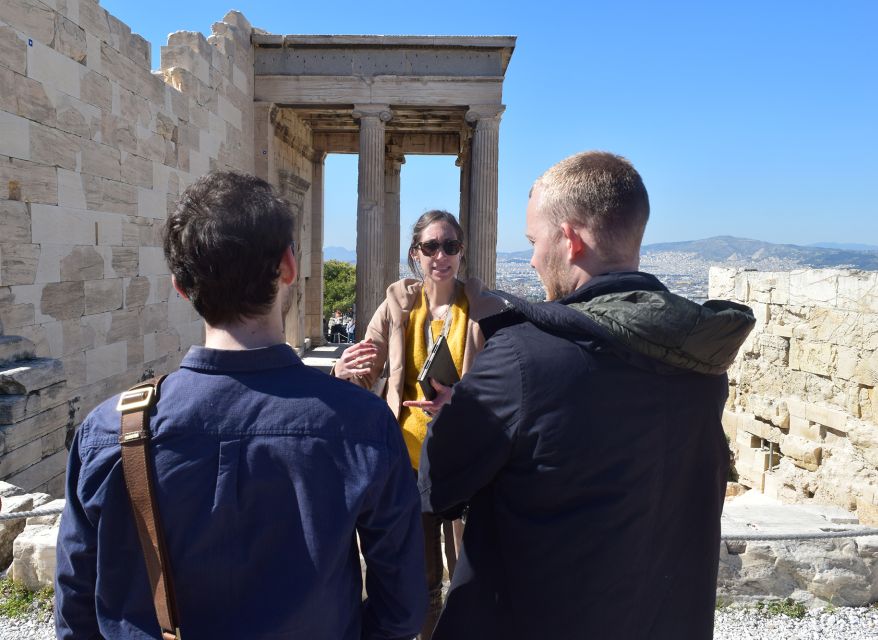
At the Erechtheion, the guide’s job is to translate complexity into something you can actually track with your eyes. That means explaining what makes it stand out and how it fits the sacred space around it.
At the Parthenon, you get more than a highlight stop. The tour is focused on helping you recognize what makes it special and how different parts of the monument relate to each other. This is also a moment where the guide’s Dutch explanations can feel extra valuable, because you can follow the reasoning without having to translate in your head.
One nice bonus is that you are given a photo stop with some free time on/near the Parthenon area. That gives you breathing room to go from guided looking to your own rhythm.
You can also read our reviews of more guided tours in Athens


The Temple of Athena Nike: small stop, big meaning
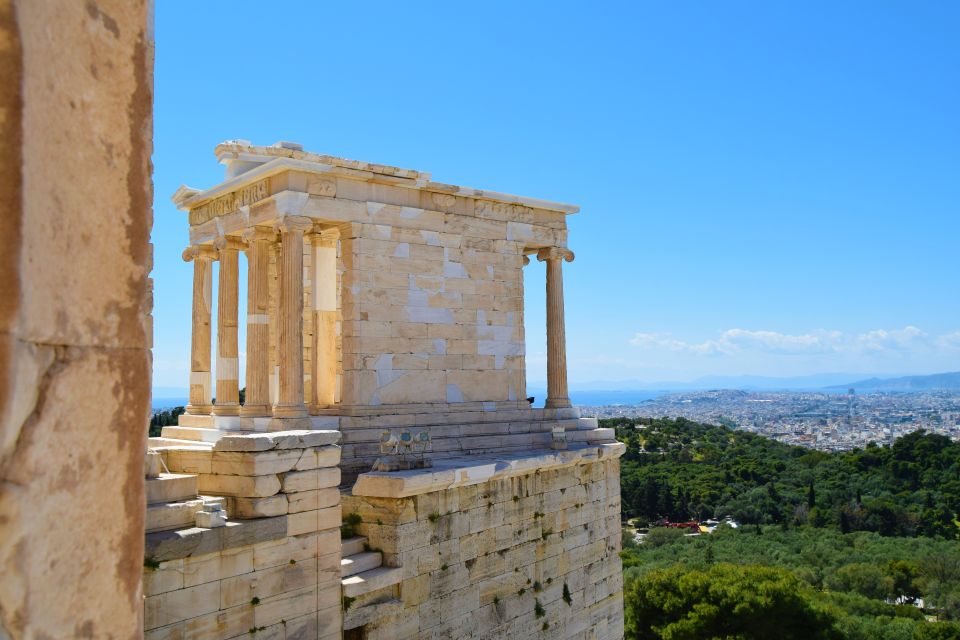
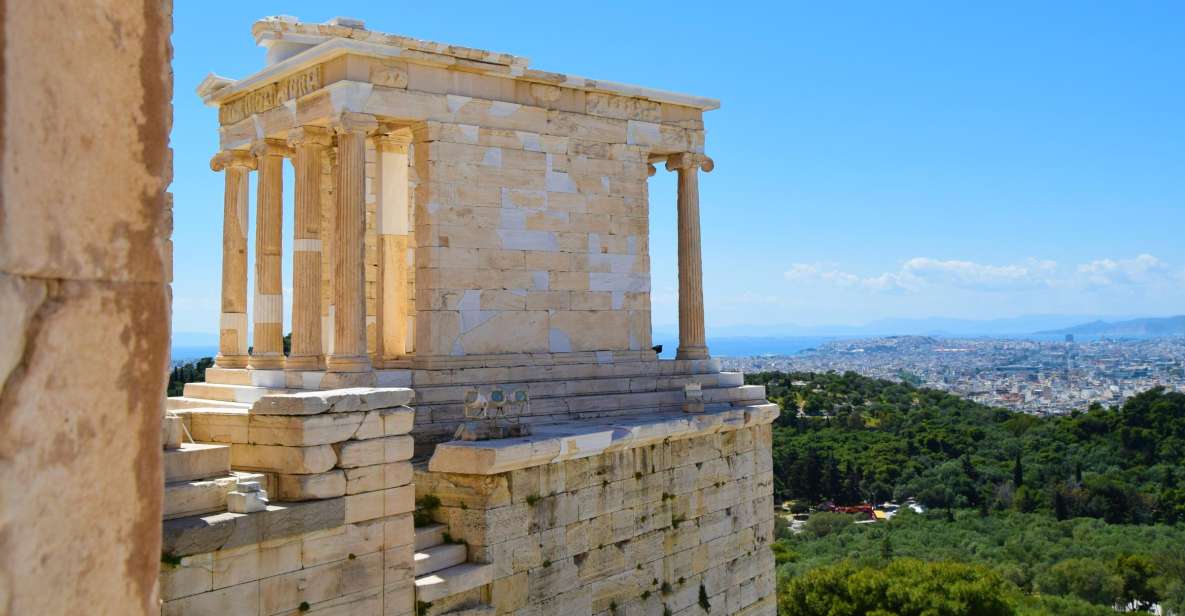
The Temple of Athena Nike is not the largest building on the hill, but it’s a crucial piece of the Acropolis story. The tour treats it with care, not as an afterthought.
It helps to see it in the context of your climb. You are approaching the highest zone, and the guide has already been setting up the idea that this hill is a carefully designed religious and civic center. That makes this stop feel like part of a plan, not just another photo spot.
If you care about myth and symbolism, this is where the stories your guide shares can make the shapes and placement feel purposeful.
The top of the hill: 360° Athens and where to put your eyes
The tour ends up at the top for a 360° view of Athens. This ending is smart because it changes the mood. You stop being stuck in details and start getting oriented.
From the summit, the city layout suddenly makes sense in relation to the Acropolis. You can see why the hill was such a powerful statement. Even if you are tired, this view is worth the last steps because it gives you a mental map you will carry with you as you explore the rest of Athens.
I also like that the tour gives free time after the guided portion. You can linger where you want, instead of feeling like the guide is rushing you out the door.
The Dutch guide factor: storytelling you can follow
This is a Dutch live tour, guided by a licensed guide, and that matters more than many people think. When you are hearing the explanations in your own language, you can actually follow the logic of myths, architecture, and daily life connections without slowing down.
In the experience, Jessica stands out in the style described. Her approach is built on storytelling with added visuals, so you do not just hear names and dates. You get help picturing what the buildings were doing in the original setting, and you can connect past and present without forcing it.
Another detail that comes through: the pacing is designed for attention. You are not trudging for an hour with little to say. Stops come with reasons to look, and the route keeps you from getting lost in the sheer size of the site.
Price and value: is 95 per person worth it?
At $95 per person for 1.5 hours, the question is value. Here’s the honest math: you are paying for (1) a licensed Dutch guide, (2) an Acropolis entry ticket, and (3) skip-the-ticket-line access plus admin fees for pre-booking. That combo can save you real time in a place where waiting can eat your day.
The tour is short, but it packs high-impact moments: theatre seating, the early hospital ruins, the Propylaea entrance, the major temple cluster, and a 360° viewpoint with time for photos.
If you’re the type who enjoys history but gets bored with long self-guided reading, this format is often worth it. If you only want a quick look and you travel well on your own, you might prefer a self-paced ticket. But if you want the Acropolis to make sense fast and in your language, paying for guidance here is a strong value move.
Practical tips that make the day easier
Here are the basics I’d plan around for this specific tour:
- Bring ID or passport, comfortable shoes, sunglasses, a sun hat, and water.
- Expect uphill walking on uneven stone. The guide also notes that the terrain can be slippery at times.
- Know what you cannot bring: strollers, food and drinks, luggage or large bags, and pets are not allowed (assistance dogs are okay).
- Plan for warmth. Even with a guided route, you’ll be outside and moving.
Because there’s no elevator and the walking is uneven, this is not a good pick for people with mobility impairments.
Should you book this Acropolis tour?
I think this is a great choice if you want the Acropolis to feel coherent in a short visit. The route is efficient: you start with the theatre, learn the medicine connection, cross the gate, focus on the big temple cluster, and end with a view that helps you orient in Athens.
Book it if:
- you want Dutch commentary from a licensed guide
- you like storytelling that helps you actually see what you’re looking at
- you have limited time and want the “right stops” without guesswork
Skip it if:
- walking uphill on uneven surfaces is hard for you
- you prefer fully self-guided pacing with no guidance needed
FAQ
How long is the Acropolis guided walking tour in Dutch?
The tour lasts 1.5 hours.
Where do I meet the guide?
Meet outside Metro station Acropoli, exit via Makriyianni / Dionysiou Areopagitou.
What is included in the price?
Your ticket includes Acropolis entry, a guided walking group tour with a licensed guide in Dutch, pre-booking administration fees, and free time to explore the site after the tour. The ticket-line skip is included as well.
What is not included?
Food and drinks are not included, and there is no hotel pickup or drop-off.
What should I bring with me?
Bring passport or ID card, comfortable shoes, sunglasses, a sun hat, and water.
Is the tour suitable for people with limited mobility?
No. The tour is not recommended for people with limited mobility, and there is no elevator.
Are strollers, luggage, and pets allowed?
No strollers, no luggage or large bags, and no pets are allowed. Assistance dogs are allowed.
Can I cancel for a refund?
Yes. You can cancel up to 24 hours in advance for a full refund.
You Might Also Enjoy



More Walking Tours in Athens

More Tours in Athens

More Tour Reviews in Athens
- All Day Cruise -3 Islands to Agistri,Moni, Aegina with lunch and drinks included
★ 5.0 · 4,958 reviews