REVIEW · NATIONAL ARCHAEOLOGICAL MUSEUM OF ATHENS
Athens: National Archaeological Museum Ticket & Audio Guide
Book on GetYourGuide →Operated by Clio Muse Tours · Bookable on GetYourGuide
Ancient Greece, explained in your headphones. The National Archaeological Museum ticket gives you a pre-booked e-ticket, and the included offline smartphone audio guide turns big galleries into a guided story you can pause anytime. The main drawback: the audio tour focuses on highlights, so you’ll still want time for your own wandering.
If you’re into Greek myths, bronze statuary, or the nuts-and-bolts of how art changed over centuries, this is a strong way to visit. It’s self-guided, so you set the rhythm—fast and punchy or slow with extra stops at the big-ticket objects.
In This Review
- Key things to know before you go
- Why this museum ticket feels like a smart time-saver in Athens
- Entry and first impressions: security, signs, and the museum’s vibe
- The offline audio guide on your phone: what it does well
- What the audio guide seems to focus on
- Where the audio can fall short
- A realistic walkthrough: how to plan your route inside the museum
- Stop 1: Get your bearings with the big myths and iconic pieces
- Stop 2: Mycenaean rooms for metalwork and power
- Stop 3: The bronze and classical sections for sculpture you can’t ignore
- Stop 4: Roman-era connections and the Hadrian thread
- Stop 5: Finish with wandering time and the on-site café courtyard
- How long you should plan: 90 minutes isn’t the same as 3 hours
- Value and price: is $31 per person worth it?
- Practical tips for using your phone and headphones without stress
- Compatibility matters
- Download instructions come by email
- Headphones aren’t optional
- Who this is best for (and who might not love it)
- Quick FAQ before you book
- FAQ
- Does this include a live guide?
- What do I get with the ticket?
- Is the audio guide available offline?
- Which languages are available for the audio tour?
- Can I use the audio tour after I visit?
- How long should I plan for?
- What phone types are compatible?
- Is there food included?
- Are pets allowed?
- Should you book the Athens National Archaeological Museum ticket with audio?
Key things to know before you go

- Pre-booked e-ticket means less queue stress before you reach security and enter
- Offline audio guide with maps lets you follow a route without eating your data plan
- Stories you can replay before and after your visit, not just during
- Language options include English plus five others for a smoother experience
- Expect a highlight route, not a full room-by-room encyclopedia
- Crowds can make the layout feel maze-like, so plan on extra time for navigation
Why this museum ticket feels like a smart time-saver in Athens

The National Archaeological Museum is one of those places where you can easily lose an entire day. Even though you’ll be excited the moment you walk in, the practical question is how to experience it without spending your whole trip reading labels and backtracking.
That’s where the e-ticket helps. You’re not starting from scratch at a ticket counter, and that matters in Athens where lines can get long. One review highlighted that having a pre-booked ticket was useful specifically because the queue outside to buy tickets was lengthy—so you’re buying yourself breathing room for the good part: the galleries.
The value here isn’t just “skip a line.” It’s that the museum is large and your time is limited. A self-guided ticket with an audio story gives you structure while still letting you stop for what grabs you—then move on when you’re ready.
Entry and first impressions: security, signs, and the museum’s vibe

After you arrive, you’ll go through the museum’s entry process, including security. The good news is that once you’re past that, access is straightforward. A few things I’d keep in mind:
- Come with a charged phone and, ideally, a stable connection for downloading instructions.
- Pack light if you can. You might encounter bag-handling or checks at the entrance for security.
- Use the museum’s own signage to anchor your bearings. Even with audio, you’ll feel more confident if you quickly learn where the major sections are.
Inside, the museum building feels open and airy, not like a cramped warehouse. One review also called out the air-conditioning as a real plus on hot days. If you’re visiting during summer, that alone can make the difference between enjoying sculptures and feeling like you’re sprinting through them.
The offline audio guide on your phone: what it does well

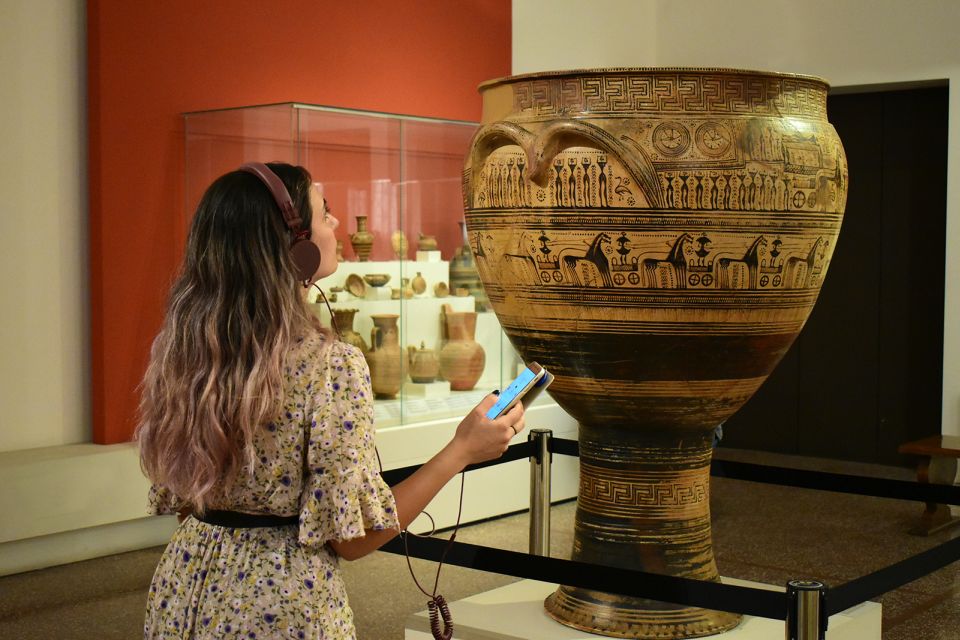
This isn’t a live docent you’re tied to. Instead, you get a downloadable self-guided audio tour that runs on your Android or iOS device with offline text, narration, and maps. Once you download it (after the email instructions you receive post-booking), you can use it during your visit—and you can also take it back out later, when you want to remember what you saw.
I love this approach because it matches how people actually explore museums. You don’t hear the story at the exact moment you’re standing in front of the artifact every time. Sometimes you need a minute to look, and sometimes you want to speed up. The audio guide lets you do both.
What the audio guide seems to focus on
The audio tour tells stories tied to major objects, including:
- the mask of Agamemnon
- the Mycenaean Bull
- a bronze statue of Zeus or Poseidon (as labeled in the tour focus)
- the horse rider
That’s a smart set of targets. These kinds of objects are the ones you can’t fully appreciate from a distance, so the narration helps you “read” what you’re seeing—why it mattered, what era it comes from, and what kind of culture produced it.
Where the audio can fall short
Two practical cautions show up in the feedback you provided:
- The audio tour doesn’t cover every single item in the museum. If you only follow the audio, you might miss side rooms and extra objects that catch your eye.
- Navigation can be a little confusing at times. That doesn’t mean it’s unusable, but it means you should expect a bit of trial-and-error, especially if you’re moving quickly.
My advice: treat the audio guide as your backbone. Then add your own detours. If you give yourself enough time, you won’t feel like you’re missing out.
A realistic walkthrough: how to plan your route inside the museum
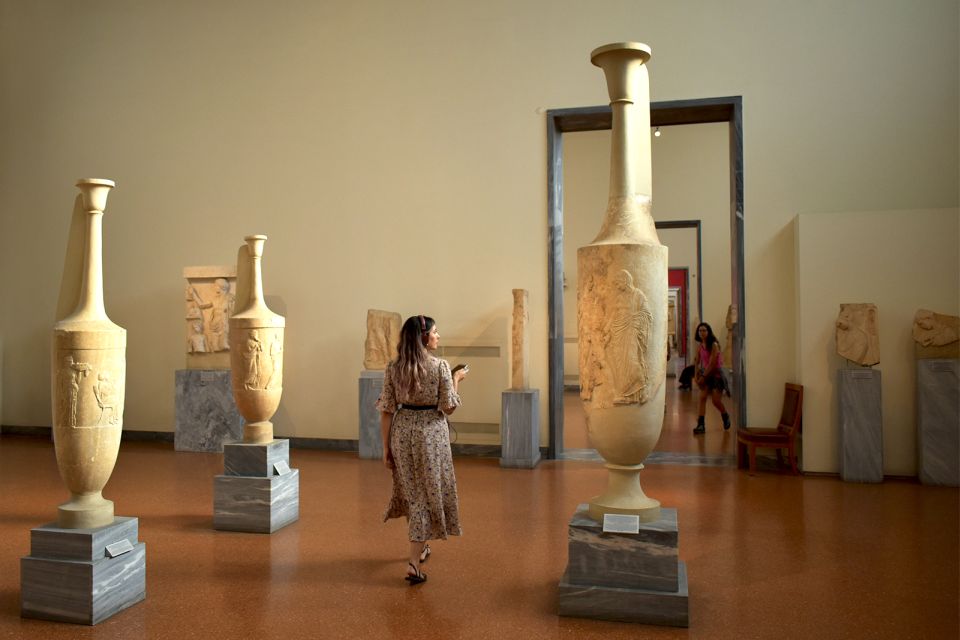
The museum is arranged in a chronological, historical line—so your experience naturally moves through earlier to later periods, including some Roman influence. That structure helps. It means the stories you hear aren’t random facts; they’re part of a timeline of how Greek art and society changed.
Here’s a practical way to think about what to prioritize once you’re inside.
Stop 1: Get your bearings with the big myths and iconic pieces
Your best first move is to head toward the audio tour’s early highlight points and use them as “anchors” for the rest of your visit. This is where objects like the mask of Agamemnon come in.
Why this matters: the museum is so full of masterpieces that it’s easy to flatten your experience into a blur of rooms. A strong starting object gives you a reference point for what you care about—myth, royalty, craftsmanship, religion, power.
If you like narrative, the audio is particularly helpful here because it turns the object into a story you can carry with you as you walk.
Stop 2: Mycenaean rooms for metalwork and power
If you’re going to lean into one era, the Mycenaean displays are a strong bet. The feedback you provided called out Mycenaean art from the metal ages—especially gold, silver, and bronze—as a major highlight.
These rooms are great when you want to understand Greek history beyond the famous classical period. You’ll get a sense that Greek culture didn’t appear fully formed. It grew through earlier societies, trade, and political power.
Tip: when you see metal objects, take an extra minute to look at the condition. Some pieces are incredibly intact, which makes it easier to imagine their original effect.
Stop 3: The bronze and classical sections for sculpture you can’t ignore
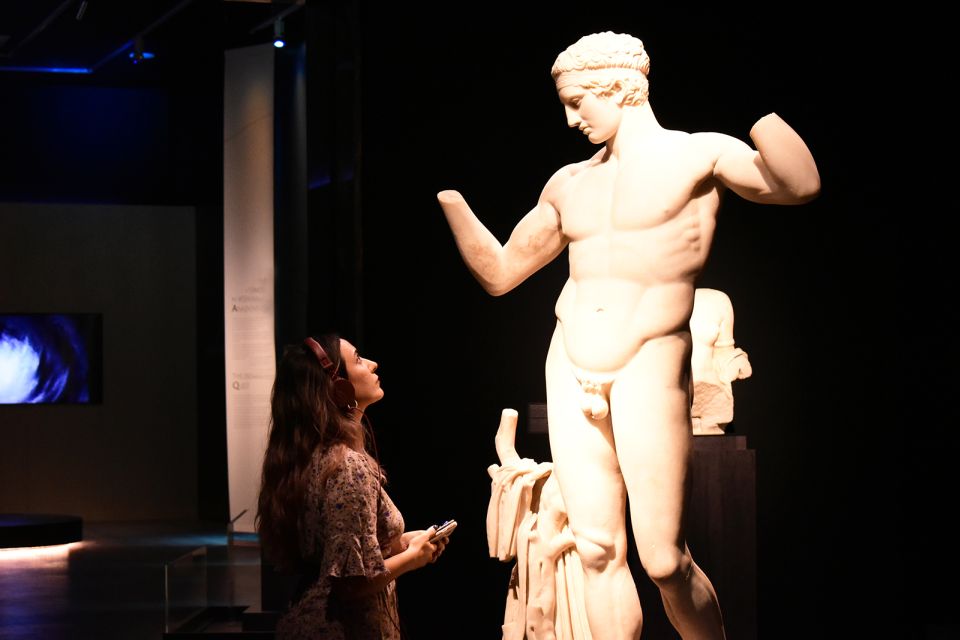
Bronze statuary gets special attention in the tour focus, including a bronze statue of Zeus or Poseidon. In the museum, bronze and classical sculptures are where the “wow” factor often turns into real comprehension.
One review singled out bronze as a favorite section and highlighted remarkable statues overall. That matches the way this museum tends to work: when you hit the sculpture rooms, your brain finally slows down. You start comparing proportions, posture, and artistic choices.
Practical move: don’t rush through the sculpture area. If you do, you’ll end up feeling like you saw them instead of understood them.
Stop 4: Roman-era connections and the Hadrian thread
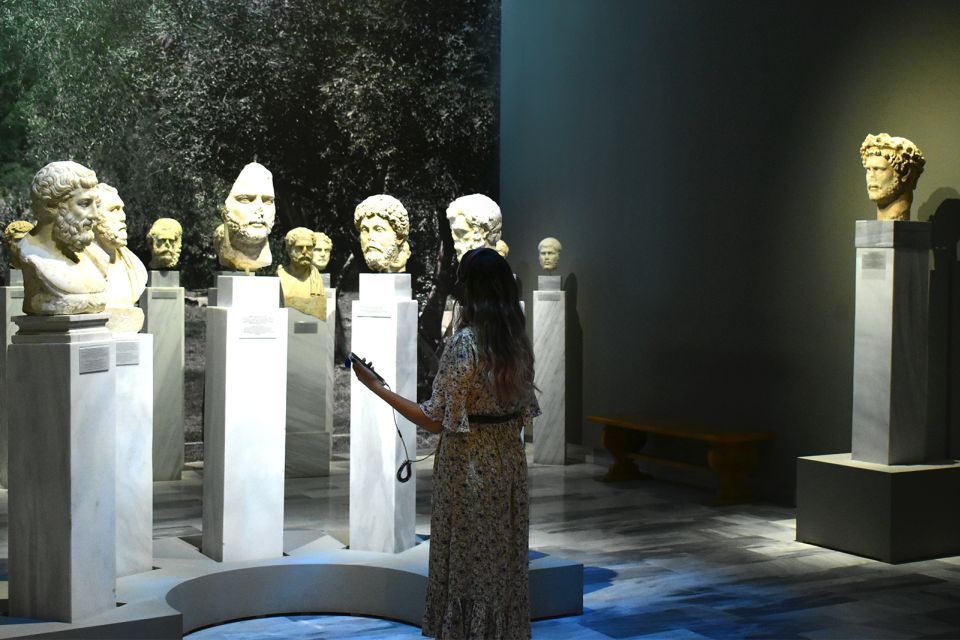
Several notes mentioned the impact of Rome on Greek art, including sculptures connected to Hadrian (including a temporary Hadrian exhibit). Even if your main interest is Greek mythology or Aegean history, it’s useful to see how later rulers valued Greek artistic traditions.
This part of the museum is especially good for you if you like art history as a chain reaction: one culture copies, adapts, and rebrands what came before.
Stop 5: Finish with wandering time and the on-site café courtyard
Don’t underestimate the value of stopping. You’ll walk more than you expect. The museum has a café on the ground floor, and at least one review also mentioned a calm inner courtyard with greenery and art.
That matters because museum fatigue is real. A short break helps you come back with fresh eyes. And if you’ve been focused on audio highlights, the café time is when you can decide whether to add more rooms on your own.
How long you should plan: 90 minutes isn’t the same as 3 hours
Your duration window is wide: 45 minutes to 4 hours depending on availability. In practice, I’d plan based on what kind of visitor you are.
- If you mainly want the highlights and a guided narrative: about 1.5 to 2 hours is often a good fit. One review described a highlight-focused audio experience around that time and said it felt perfect.
- If you want room-to-room looking plus a slower pace: give yourself 2.5 to 4 hours.
One review noted the museum felt not as large as they thought, but still definitely worth it. That’s a reminder that “large museum” doesn’t always mean “endless.” Still, it can feel busy and maze-like, so more time keeps you from turning the visit into a timed scramble.
My rule: if you’re even slightly uncertain about what to skip, book a longer window and let the day flex.
Value and price: is $31 per person worth it?
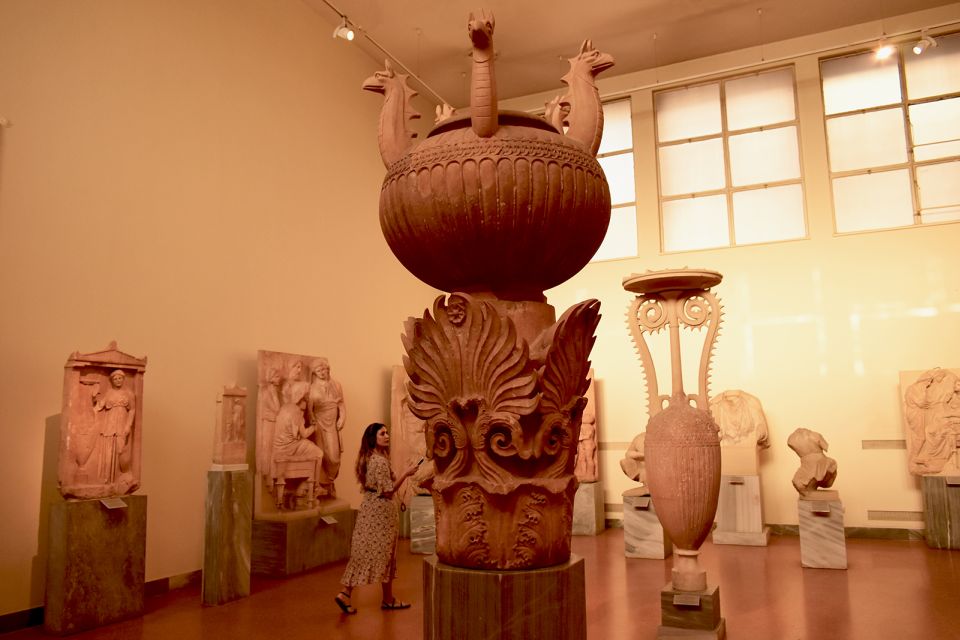
At about $31 per person, you’re paying for two main advantages bundled together:
- a regular entry ticket to the National Archaeological Museum
- an audio guide experience on your phone (with offline content and maps)
The value is clearest if:
- you want to avoid ticket-line hassles
- you like having a storyline so you don’t get overwhelmed by labels
- you prefer pacing yourself instead of following a group schedule
If you’re the type who likes to read every placard and never uses audio, you might feel you paid for guidance you could get for free. But the data you shared includes feedback that the audio tour is easy to follow and hits key artifacts—so for many people, it’s what turns a museum visit into an actual understanding of Greek art.
Also remember: the audio tour can be used repeatedly. That means you’re not only paying for the day-of experience. You can refresh the story later if something stood out.
Practical tips for using your phone and headphones without stress

This activity assumes you’ll provide your own smartphone and headphones. You’ll also want a charged device, since you’re using it for offline audio and maps.
Compatibility matters
The audio tour is not compatible with certain devices, specifically:
- Windows phones
- iPhone 5 / 5C or older
- iPod Touch 5th generation or older
- iPad 4th generation or older
- iPad Mini 1st generation
If you’re unsure, check your exact model before you travel, not after you arrive.
Download instructions come by email
After booking, you’ll receive an email with instructions on how to download your ticket and audio tour. Plan for a little setup time before you head in—especially if your phone storage is tight.
Headphones aren’t optional
You’ll need headphones to listen. It sounds obvious, but it’s an easy thing to forget while packing for a museum day in Athens.
Who this is best for (and who might not love it)
This works well for:
- you if you want a self-paced museum without the cost or schedule hassle of a live guide
- you if you like myth and iconic artifacts and want the stories attached
- you if you’re overwhelmed by huge collections and want a highlight route
It may be less ideal for:
- you if you want a complete, item-by-item museum guide. The audio emphasizes the highlights, and you’ll still need time to see additional rooms on your own.
- you if phone navigation tends to frustrate you. A couple people mentioned the audio tour could be confusing in places, so you should be comfortable using maps and re-finding your way.
Quick FAQ before you book
FAQ
Does this include a live guide?
No. This experience is self-guided with a smartphone audio tour.
What do I get with the ticket?
You receive a regular entry ticket plus a self-guided smartphone audio tour.
Is the audio guide available offline?
Yes. The audio tour includes offline content such as text, narration, and maps.
Which languages are available for the audio tour?
The audio guide is available in English, French, German, Greek, Italian, and Spanish.
Can I use the audio tour after I visit?
Yes. The audio tour can be used repeatedly and at any time, before or after your visit.
How long should I plan for?
The duration listed ranges from 45 minutes to 4 hours. Availability determines starting times.
What phone types are compatible?
It works on Android or iOS phones, but it is not compatible with Windows phones and certain older iPhone, iPod Touch, and iPad models (including iPhone 5/5C or older, and iPad Mini 1st generation).
Is there food included?
No. Food and drinks are not included.
Are pets allowed?
Pets are not allowed, though assistance dogs are allowed.
Should you book the Athens National Archaeological Museum ticket with audio?
Yes, if your goal is a structured, story-based visit without tying yourself to a group. The combination of pre-booked entry and an offline audio guide with maps is a practical way to handle a large museum and avoid feeling lost.
I’d especially book it if you like having context for key objects like the mask of Agamemnon, the Mycenaean Bull, and the bronze statue of Zeus or Poseidon. If you’re the kind of person who enjoys lingering, this is flexible too—download once, then pace yourself with your own wandering time.