REVIEW · ATHENS
Athens Highlights: Myths & Philosophers Private Walking Tour
Book on GetYourGuide →Operated by Be a Greek · Bookable on GetYourGuide
Greek philosophy feels way closer here than in books. I love how the walk ties big ideas to real Athens streets and buildings. You start at Panepistimio Metro Station and move through sites tied to Socrates, Plato, Epicurus, Stoics, and more, with mythology threaded in.
Two things I like a lot: you get live English guidance that connects thinkers to what you’re seeing, and you’re given a real break with included Greek coffee in the Thissio area. One consideration: it’s a mostly walking tour, and it isn’t suitable for mobility impairments, so plan for time on your feet and some uphill moments near the end.
In This Review
- Key highlights at a glance
- Where the tour really starts: Panepistimio and Hansen’s Trilogy
- Socrates and Plato in motion: Apollo and Athena, too
- Greek Parliament and the National Gardens: Epicurus and the Garden school
- Ermou Street and Monastiraki: Hermes, commerce, and city life
- Aristotle and the Lyceum: thinking that fits the street
- Thissio coffee break: pre-Socratics with a real pause
- Ancient Agora to Poikile Stoa: where Stoic philosophy took shape
- Plaka, Anafiotika, and the Cynic attitude near the Acropolis
- Tower of the Winds and Aiolos, then the Areopagus view payoff
- Price and value: is $100 per person fair for this private walk?
- Who should book this Athens myths and philosophers tour
- Who should skip or adjust
- Should you book: my practical take
- FAQ
- How long is the Athens Highlights: Myths & Philosophers Private Walking Tour?
- Where do I meet the guide?
- Is this tour private?
- What language is the guide?
- What’s included in the price?
- Are entrance fees included?
- Is there a coffee stop?
- What should I bring with me?
- Is the tour suitable for people with mobility impairments?
- Can I cancel for a refund?
Key highlights at a glance
- Begin at Panepistimio and orient yourself fast in central Athens before the thinking starts
- Theofilus Hansen’s Trilogy of Athens plus 19th-century sculpture details you can actually see and discuss
- Epicurus in the National Gardens with his Garden school story tied to modern-day “how to live” questions
- Ermou Street, Hermes, and Kapnikarea—philosophy meets the everyday street rhythm of Athens
- Poikile Stoa and Stoicism’s birthplace—ideas given a physical address
- Tower of the Winds to Areopagus Hill—myths and a payoff view over the Acropolis
Where the tour really starts: Panepistimio and Hansen’s Trilogy
This tour works because it begins with the city, not a lecture hall. You meet outside Panepistimio Metro Station, then head into central Athens where architecture and philosophy overlap in a very “this is why people cared” way.
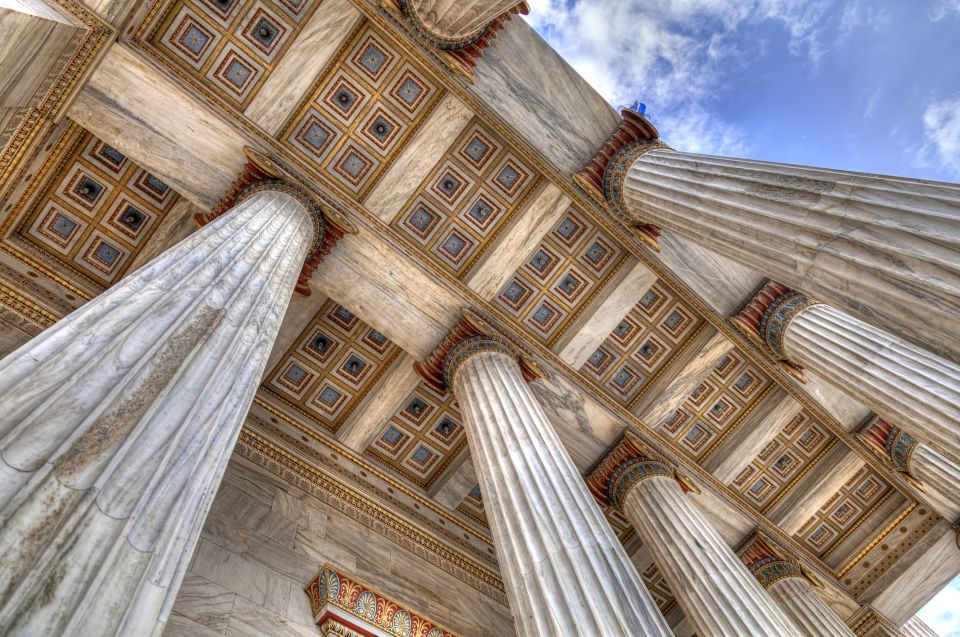
The first big stop is the Academy of Athens area, part of what’s often called the Trilogy of Athens. The buildings here were designed by Theofilus Hansen, and that matters because you’re looking at how 19th-century Athens helped frame (and reframe) an older Greek identity. I like that the guide doesn’t treat the buildings as wallpaper; you look closely at statues and details from famous 19th-century sculptors, then connect them to the philosophers named next.
You also get early context for the tour’s main promise: ideas weren’t floating in a vacuum. They were tied to civic life, public spaces, and the way Athenians moved around the city.
One practical tip: wear shoes you trust. Even before the main sights, the pacing is steady, and you’ll be on sidewalks more than you’d expect for a “4-hour highlights” tour.
You can also read our reviews of more walking tours in Athens

Socrates and Plato in motion: Apollo and Athena, too
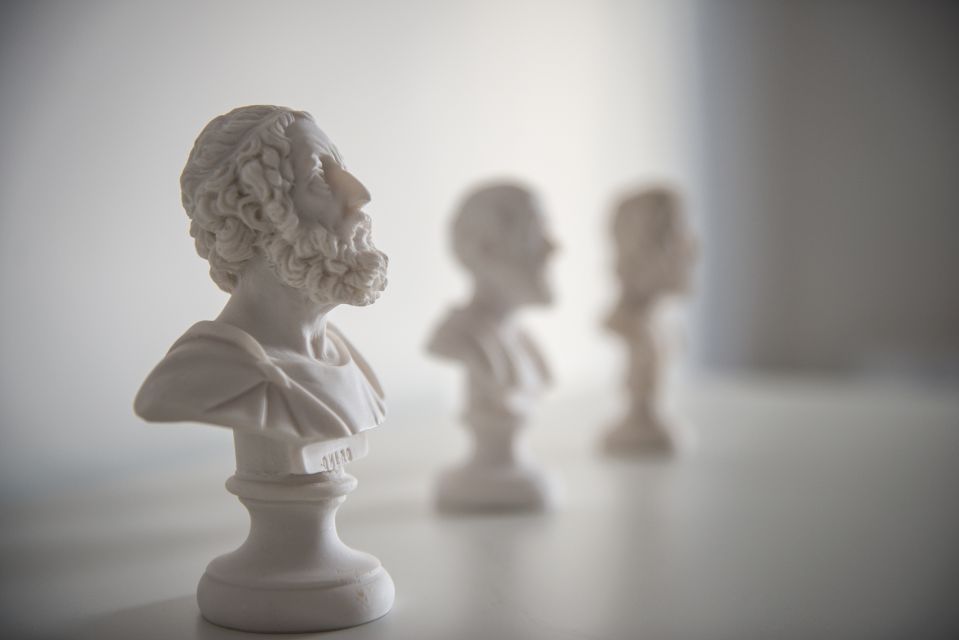
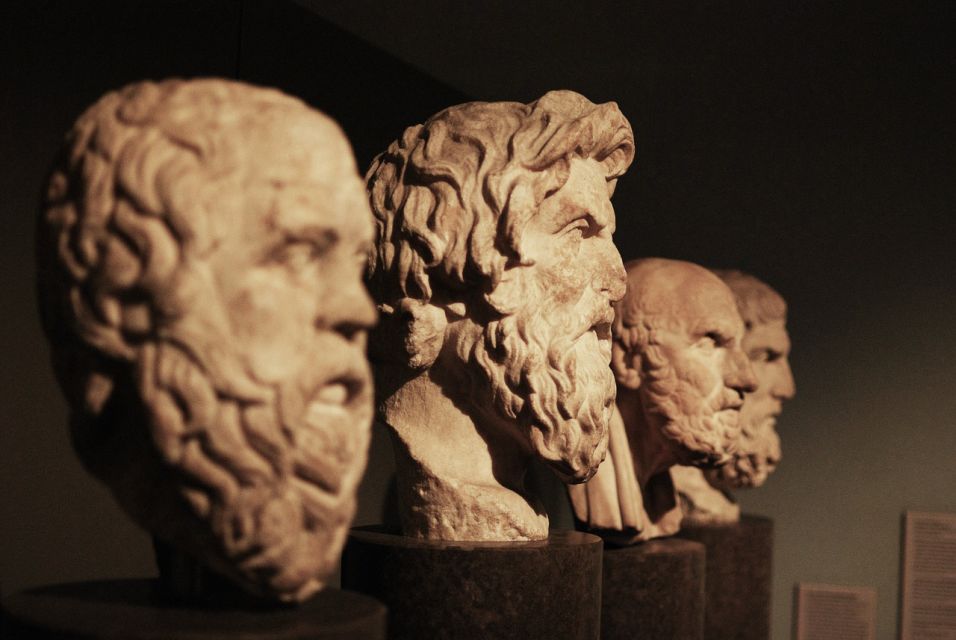
Once you’ve started walking, the guide naturally shifts from buildings to the thinkers. You talk about Socrates and Plato while you’re standing near landmark architecture tied to Athens’ public identity. It’s a simple trick, but it helps: ideas land better when your feet are moving and you can point at what’s around you.
Then the tour brings in Greek mythology with Apollo and Athena. The interesting angle is that they’re presented as different in personality and domain, but connected through shared traits. That makes the myths feel less like random stories and more like a set of symbols people used to explain how the world works.
If you’ve ever read Plato and felt stuck on what the metaphors were doing, this format can help. You’re not just learning names; you’re seeing how mythology, ethics, and civic identity were part of the same conversation in ancient Greece.
Greek Parliament and the National Gardens: Epicurus and the Garden school
From the big philosophical names, the route turns toward a quieter kind of thinking. You head to the Hellenic Parliament and then over to the National Gardens, where you learn about Epicurus and his philosophical school—often associated with the Garden.
This is a smart section for two reasons. First, it’s physically different from the earlier monuments, so your brain gets a break. Second, Epicurus is easier to grasp when you’re near greenery and shade, because the guide can connect his ideas to everyday life rather than abstract debate.
I also like that the tour frames Epicurus as practical. People often talk about philosophy like it’s only for arguments and systems. Here you’re pushed to think about what it meant for daily living—how to live with stress, how to handle desire, and how community shapes your ideas.
You’ll also see that this tour doesn’t treat “philosophy” as a single timeline. It’s more like shifting lenses, with each thinker reacting to what came before.
Ermou Street and Monastiraki: Hermes, commerce, and city life
After the National Gardens, you step back into Athens as a living place. You walk down Ermou Street, named for Hermes, the god associated with merchants and movement. That theme matters because it keeps pulling you away from “museum Athens” and back to street Athens.
The guide also points you toward Kapnikarea, an 11th-century temple. It’s one of those stops where you get a sense of layers—Greek antiquity, later history, and the way Athenians kept reusing sacred space over centuries. You’ll connect the setting to Aristotle and the Lyceum, which keeps the discussion from staying purely myth-based.
Ermou Street and Monastiraki are busy in the normal way. The value here is that the guide uses that energy to make a point: philosophy wasn’t separated from commerce, crowds, or everyday decisions.
If you’re sensitive to crowds, plan for slower moments and be ready to pause for traffic at street crossings. This tour keeps moving, but your guide can adjust the rhythm.
Aristotle and the Lyceum: thinking that fits the street
Aristotle’s presence on this walk is more than name-dropping. You’re shown how his school at the Lyceum fits into the larger story of Greek philosophy, and you get the sense that Aristotle wasn’t only building theories—he was building ways to observe and reason.
In a walking format like this, that matters because you can look at Athens like a set of “observations.” The guide can tie Aristotle-style questions to what you see: how people behave in public spaces, how civic life shapes beliefs, and how you reason from what’s in front of you.
This is also where the tour starts to feel useful for real life, not just ancient life. You’ll notice the questions are strangely current: how do we structure knowledge, how do we test claims, and what should “good thinking” do for you day to day?
You can also read our reviews of more private tours in Athens


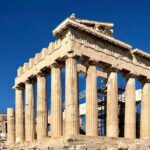

Thissio coffee break: pre-Socratics with a real pause
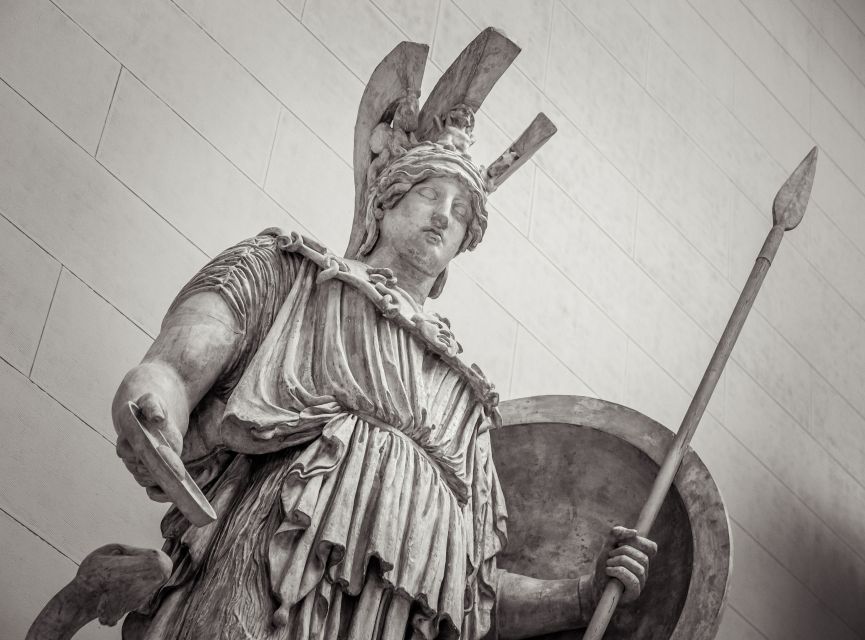
At some point, you’ll stop for Greek coffee in the Thissio area. This isn’t just a snack break. It’s part of the tour’s method: you sit, you reset, and you keep talking about the Pre-Socratic philosophers.
I love this because it treats philosophy like conversation, not homework. The guide uses the coffee stop to keep the discussion human—what earlier thinkers were trying to explain about the world, and how those questions show up even when you’re not naming them.
A couple reviews also hinted that the break can come with a view, which makes sense given Thissio’s vantage points. If you’re the type who likes to photograph and think at the same time, this pause gives you that chance.
Bring sunglasses and sunscreen here. Even in the city center, Athens light and heat can make a “quick stop” feel longer.
Ancient Agora to Poikile Stoa: where Stoic philosophy took shape
Next comes one of the tour’s most concept-heavy stops, and it’s done well because the guide ties it to a specific place. You’ll get near the Ancient Agora and then to the Poikile Stoa, the site where Stoic philosophy is described as being born.
This is the moment where you can really feel the difference between reading philosophy and walking through it. “Stoicism” can sound like a self-help poster. But standing by the kind of public structure associated with philosophical life makes it feel like what it likely was: a discipline practiced with others, in public, with real stakes.
Your guide then connects the discussion to how Stoicism can work for your own stress and decision-making. You’ll hear the theme of endurance, reason, and focusing on what you control—without turning it into a lecture you can’t use.
Tip for getting more out of this section: ask a question. If you’re wondering how Stoicism differs from other ethical systems, say so. This tour style benefits from interaction.
Plaka, Anafiotika, and the Cynic attitude near the Acropolis
Now the walk shifts into the Plaka area and Anafiotika, close to the Acropolis. This is where Athens turns scenic and steep, with alleyways and views that make it feel like you’re stepping into a postcard that also has history in the cracks.
The tour includes Cynic philosophers close by. That’s a fun match for this neighborhood because Cynicism, at its best, is skeptical and practical. It pokes holes in pretending, status, and empty performance. When you’re walking streets that still carry that layered identity, the contrast between “what people claim” and “what life actually is” lands harder.
You also get the chance to work in more myth talk, which keeps the tour moving even when you’re between heavier discussion stops. This part of the city helps you keep pace without losing the thread.
Tower of the Winds and Aiolos, then the Areopagus view payoff
The Tower of the Winds is one of those Athens sights people walk past—until you stop and hear what it represents. Here you learn about Aiolos, the keeper of the winds, and you connect mythology to a very physical feature of the city.
From there, the tour ends at Areopagus Hill. This is your view moment: you look over the Acropolis, and the guide ties the final stretch back to myth and the Olympian gods. It’s a strong finish because it gives you both payoff and closure. You’re seeing the city the way ancient writers might have described it: as a place where gods, myths, and civic life all share the same air.
If you want photos, time your phone battery accordingly. This ending point is popular for views, and you’ll likely pause several times during the climb and at the overlook.
Price and value: is $100 per person fair for this private walk?
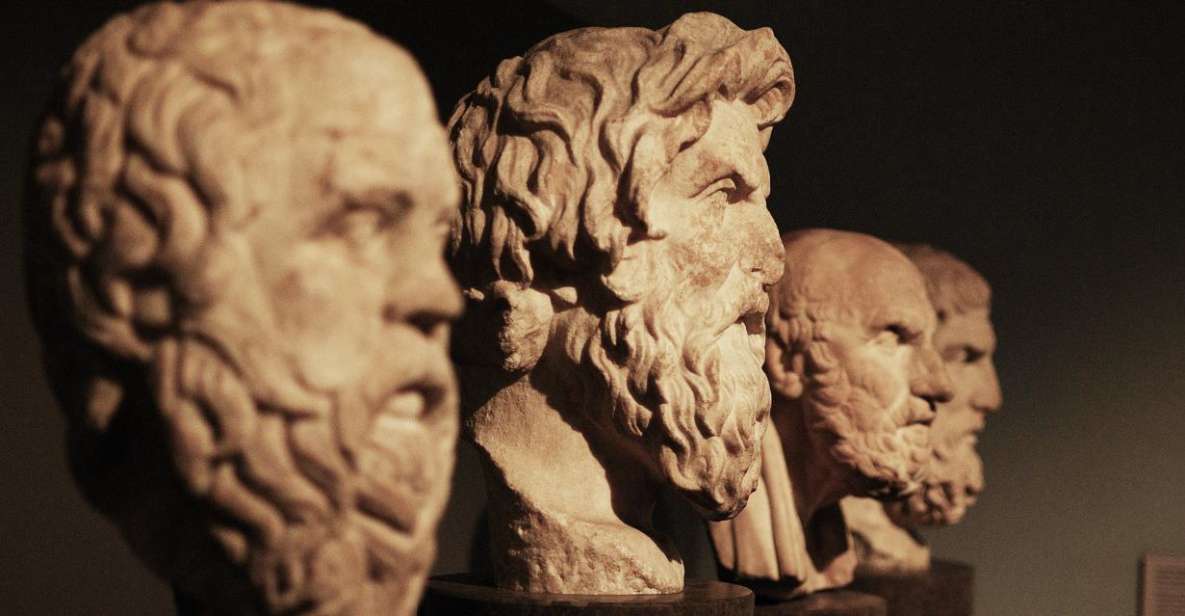
At $100 per person for 4 hours, the value depends on what you want from a trip. If you’re chasing only famous landmarks, you could do it cheaper with a self-guided route. But if you want the connections—Socrates next to specific sights, Epicurus tied to the Garden, Stoicism linked to the Poikile Stoa—a live guide is doing real work.
What you get included:
- An expert live guide in English
- One Greek coffee or other traditional refreshment per person
- All taxes and fees
What’s not included:
- Entrance fees to sights
- Personal expenses like souvenirs
For a private group, paying for interpretation can be worth it fast. You’re essentially buying conversation and context, not just footsteps. And because the route is designed around a theme (myth + philosophy), the guide’s storytelling is the difference-maker.
Who should book this Athens myths and philosophers tour
This tour is a great fit if you:
- Like philosophy but want it explained through real places
- Want Greek mythology connected to ideas, not treated as separate trivia
- Prefer walking with a guide over a museum-only day
- Enjoy asking questions and hearing the “so what does it mean” side
It’s also useful for teachers or students preparing lessons. One guide experience in this style even mentioned tailoring to a high school class goal, which is exactly the kind of practical flexibility you’d want.
Who should skip or adjust
Skip it if mobility is an issue. The tour isn’t suitable for people with mobility impairments, and the end point on Areopagus Hill involves more effort than flat-city sightseeing.
Also, if you hate walking and want minimal time on your feet, this may feel like too much. The included refreshment helps, but it’s not a sit-down, slow museum loop.
If you’re a first-time Athens visitor, this is still workable—but plan to pace yourself and bring the sun protection they recommend.
Should you book: my practical take
Book it if you want Athens to make sense through ideas. This tour is built around a clear thread: myths and philosophers placed in the same streets you can actually stand on. The included coffee break keeps it from turning into pure lecture mode, and the ending view at Areopagus gives you a memorable final stamp.
Don’t book it if you only want a checklist of the “top” sights and nothing else. The value here is interpretive, so if you won’t use that side of the experience, you may feel like you paid for a conversation you didn’t want.
If you’re the kind of person who wonders why ancient people believed what they believed, this is the kind of Athens day that can follow you home.
FAQ
How long is the Athens Highlights: Myths & Philosophers Private Walking Tour?
It runs for 4 hours.
Where do I meet the guide?
You meet outside Panepistimio Metro Station, with starting location options that include University.
Is this tour private?
Yes, it’s a private group tour.
What language is the guide?
The tour is led in English.
What’s included in the price?
You get an expert guide, and you’ll receive 1 Greek coffee or other traditional refreshment per person. Taxes and fees are included.
Are entrance fees included?
No. Entrance fees to points of interest are not included.
Is there a coffee stop?
Yes. The tour includes a pitstop for Greek coffee in the Thissio area.
What should I bring with me?
Wear comfortable shoes, and bring sunglasses and sunscreen.
Is the tour suitable for people with mobility impairments?
No, it is not suitable for people with mobility impairments.
Can I cancel for a refund?
Yes. You can cancel up to 24 hours in advance for a full refund.
You Might Also Enjoy

More Walking Tours in Athens

More Tours in Athens


More Tour Reviews in Athens
- All Day Cruise -3 Islands to Agistri,Moni, Aegina with lunch and drinks included
★ 5.0 · 4,958 reviews