REVIEW · ATHENS
Athens: Guided Street Art Walking Tour
Book on GetYourGuide →Operated by Alternative Athens · Bookable on GetYourGuide
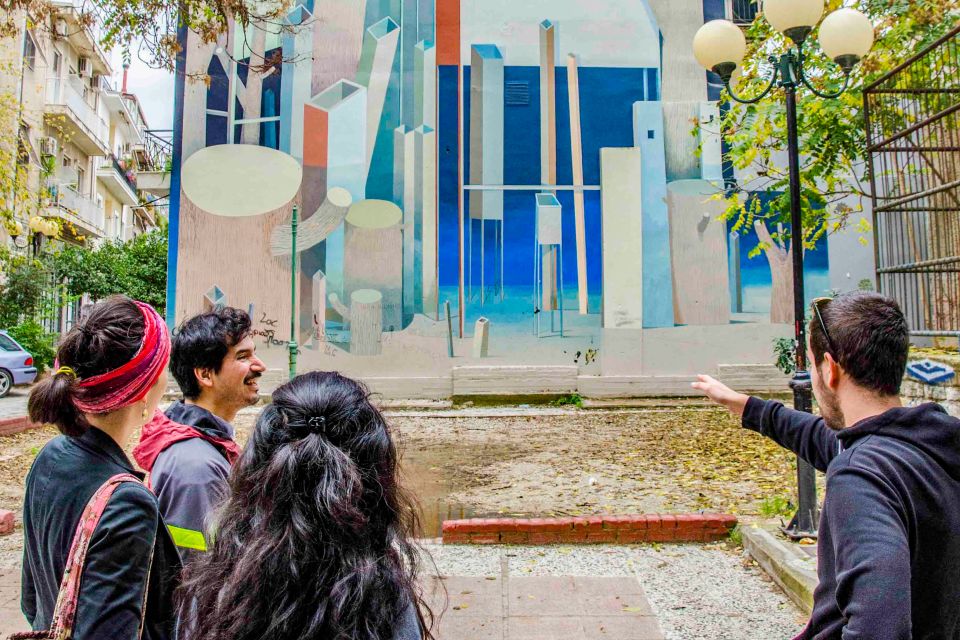
Graffiti turns Athens into a living newspaper. I love that this street-artist guide teaches you how to read the walls, not just admire them. In a few hours you’ll get the stories behind murals, tags, and symbols—especially the way artists respond to Greece’s economic and social pressure.
You’ll also like the three-neighborhood route, which takes you through areas that most first-timers skip. Psyri, Gazi, and Monastiraki make a big difference: you see Athens as a place where contemporary life leaves marks, not only one where ruins do the talking.
One consideration: this is walking-only and not suitable for wheelchair users or people with mobility impairments, so plan for steady footwork and comfortable shoes.
In This Review
- Key things that make this tour worth your time
- Reading Athens Through the Walls: What the Guide Teaches You
- The 3-Hour Route That Starts at Thissio and Ends Back in Psyri
- Psyri’s Street-Art Energy: A Neighborhood Where the Messages Feel Current
- Gazi and the Art of Side Streets: Where Style Meets Pressure
- Monastiraki’s Contrasts: Old-City Footsteps with New-City Writing
- Street Artists and Hidden Messages: WD, iNO, Moralez, and More
- Why a Pro Street-Artist Guide Changes the Whole Tour
- Price and Value for a 3-Hour Athens Walk ($57)
- Who Should Book This Street Art Walk—and Who Might Skip It
- Should You Book This Athens Street Art Walking Tour?
- FAQ
- Where does the Athens street art walking tour start?
- How long is the tour, and how much walking should I expect?
- Which neighborhoods are covered?
- What languages is the live guide available in?
- Is the tour suitable for wheelchair users or mobility impairments?
- What should I bring?
- Can I book with a private group?
Key things that make this tour worth your time

- Guides who speak art and street meaning: not just history, but how symbols work on the street
- Three central neighborhoods: Psyri, Gazi, and Monastiraki, with Athens’ modern edges in view
- Named artists you can look up afterward: WD, iNO, Moralez, and others your guide brings into context
- Politics and crisis in the visuals: how tough decades show up in murals and graffiti
- A pace that works for mixed groups: from art fans to teens, with time to ask questions
Reading Athens Through the Walls: What the Guide Teaches You

Street art can look random until someone hands you the right “reading glasses.” On this tour, that’s the core value: your guide isn’t treating graffiti like decoration. They’re treating it like communication—sometimes loud, sometimes coded, and often emotional.
You start with the basic frame: what street art is, where it comes from in Athens, and why certain styles show up in specific corners of the city. That early setup matters. After it, you’ll notice patterns you would’ve missed on your own: recurring themes, signature visual tricks, and the way an artist’s message adapts to the neighborhood around it.
I especially like that the tour connects the art to modern Greek life. The tour focuses on how Greece’s economic and social crisis has been portrayed by street artists—so you’re not just learning what you see, you’re learning why it shows up. Murals and tags become a kind of public diary. It’s not always pretty, but it’s honest.
And since the guide is also a working street artist in the local scene (names like Nikos Rude come up often), explanations tend to feel practical rather than academic. You’ll get interpretations of what a piece might be saying, plus the craft logic behind it: lettering, symbols, placement, and style.
You can also read our reviews of more walking tours in Athens


The 3-Hour Route That Starts at Thissio and Ends Back in Psyri
This is a 3-hour walking tour, with no transportation included. That affects how you should plan. You’ll want your energy up front, because you’re covering multiple neighborhoods on foot rather than hopping by taxi or bus.
Meeting point is in front of the Association of Greek Archaeologists. Getting there is straightforward:
- Metro to Thissio via the green line, then walk to the meeting area
- Or metro to Monastiraki via the blue line, then walk along Adrianou Street
The tour uses multiple starting options in the central area (Thiseio is one common reference point), but the meeting spot is the real anchor. Either way, you’ll be gathering in the same general zone and then moving outward into the street-art-heavy streets.
You finish in Psyri, which is handy. It’s a good area to reorient after the walk—grab a meal, keep wandering, or take a breather before the rest of your Athens evening plan.
Practical tip: bring comfortable shoes. The route is designed for walking, and you’ll be stopping often to look closely at walls up close.
Psyri’s Street-Art Energy: A Neighborhood Where the Messages Feel Current
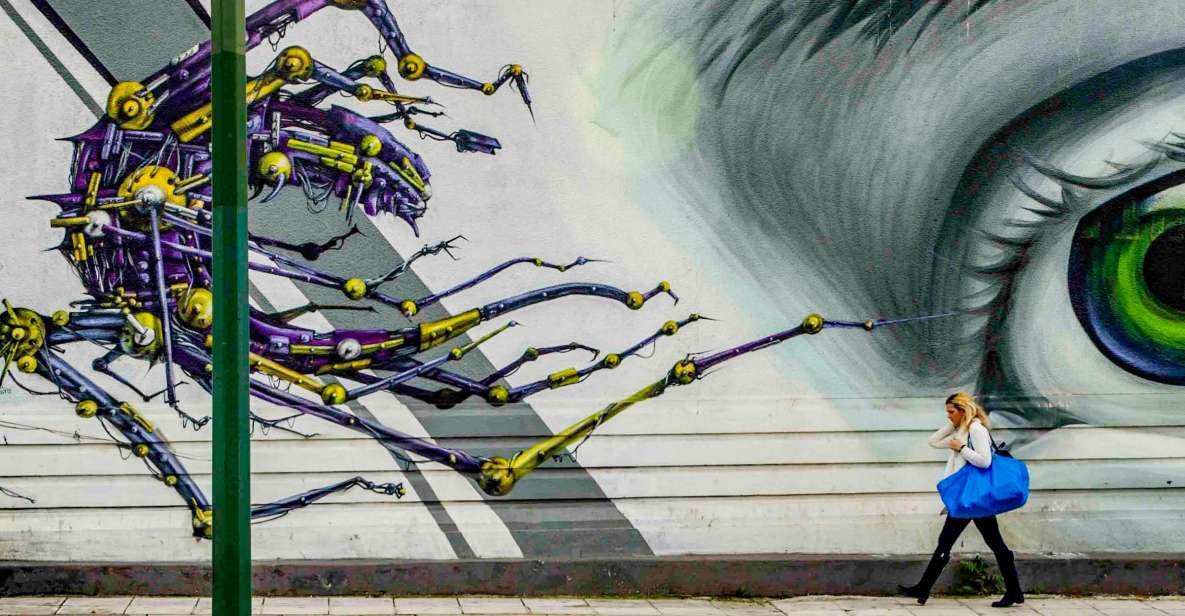
Psyri is one of those parts of Athens that feels like it’s always in conversation with itself. For this tour, it’s not just a stop on the map—it’s a theme starter.
Here, you’ll see how contemporary street art fits into everyday life. The guide points out how certain works relate to the Greek economic and social crisis. That doesn’t mean every piece is political in an obvious way. Instead, you’ll learn to spot symbolism and tone: anger, irony, frustration, and pride can all show up in different visual languages.
One reason Psyri works well for this kind of tour is that the neighborhood itself helps you understand the context. You’re not staring at isolated murals like they’re museum objects. The street art is interacting with its surroundings—building fronts, side streets, and the flow of people moving through the area.
If you like art that has a point of view, Psyri is where that feeling often clicks. Even if you don’t consider yourself an art person, you’ll likely find something to react to.
Gazi and the Art of Side Streets: Where Style Meets Pressure

Gazi is the second neighborhood stop, and it gives the tour variety. If Psyri feels like a quick pulse, Gazi often feels like a working district that also has a creative voice.
This is where the tour’s “how to read street art” approach becomes even more useful. You’ll start connecting styles with meanings. One piece might use recognizable graffiti techniques, while another uses a more graphic or symbolic approach. Your guide ties it to local themes and helps you interpret what the artist might be saying through form and placement.
You’ll also learn about specific artists that your guide brings into the walk. Names like WD and iNO are highlighted, along with artists such as Moralez. Hearing the context behind individual artists helps you move beyond “cool colors” into “what was the artist responding to?”
And the crisis theme stays in play. Street art in Athens often reflects pressure over time—things people experienced, debated, and survived. The guide’s job is to help you understand that the wall isn’t random. It’s part of a larger conversation Greece has been having for decades.
Monastiraki’s Contrasts: Old-City Footsteps with New-City Writing

Monastiraki is where Athens can feel split-screen. You get older streets and heavy tourist gravity nearby, but this tour focuses on what’s happening closer to the ground level—on walls, corners, and the overlooked edges.
This stop is great for two reasons. First, it helps you compare. Street art changes when the surrounding vibe changes. Second, the guide’s interpretation skills really show here, because it’s easier to forget that graffiti can be intentional and carefully communicative when you’re surrounded by classic landmarks.
You’ll likely notice a wider range of styles at this point in the walk. That’s not accidental. Athens has layers, and street artists build on what came before, remixing technique and meaning from past graffiti traditions and local storytelling.
If you came to Athens mainly for the big sights, Monastiraki can still be worth it here—but the value is the alternative lens. You’re training your eyes to read the city as a living text.
You can also read our reviews of more guided tours in Athens



Street Artists and Hidden Messages: WD, iNO, Moralez, and More

The tour stands out because it names artists and connects them to the work you see. That matters. When you know who iNO, WD, or Moralez are (and the kind of message their style often carries), you’ll look at pieces with a sharper question in mind: what is the artist trying to say?
The guide also helps you decode hidden messages. Sometimes that decoding is about politics. Sometimes it’s about identity and the feeling of belonging—or not belonging. Sometimes it’s about simple, human reactions: humor, protest, grief, or stubborn hope.
Another big win is that you learn the origins of street art in Athens. Even if you’re not chasing a full street-art history timeline, that context gives you a framework for why Athens graffiti developed the way it did.
And yes, you’ll come away with a stronger sense of how the Greek economic and social crisis gets portrayed. The guide doesn’t treat murals like generic protests. You’ll understand them as messages shaped by a specific place, a specific time, and an audience that lives there.
Why a Pro Street-Artist Guide Changes the Whole Tour
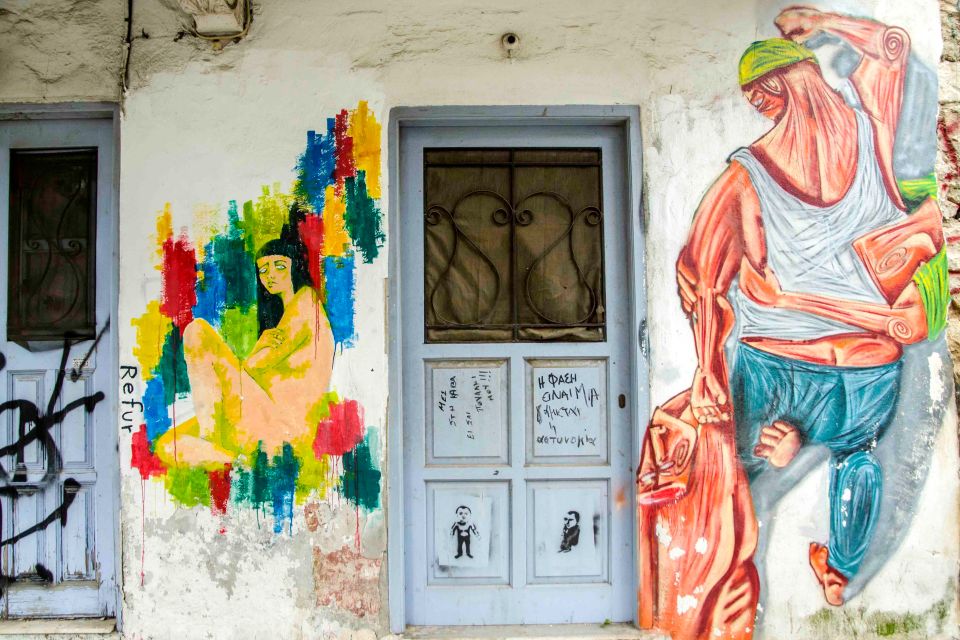
A guide can point out where graffiti is. This tour aims to do more than that. When your guide has firsthand ties to the street-art world, you get explanations that feel built from practice.
That shows up in the way the tour teaches you to interpret. You’ll learn techniques for reading symbols and styles—how certain lettering choices, graphic contrasts, or icon mixes can carry a meaning beyond the visible surface.
It also affects your comfort level. Several guides are described as open, friendly, and good company, including working street artists like Nikos Rude. That matters because the tour takes you through real neighborhoods where you’re not just walking through photo backdrops. You’re moving like a visitor who wants to understand local life.
Also, the pace tends to be steady. People mention that the tour works even for teens and mixed ages, and that there’s time to ask questions. That’s a practical detail. It means you’re not stuck in a rushed parade of quick stops with zero chance to look closely.
And if you like to leave with a next-step plan, you’ll often get specific food and hangout recommendations at the end. One example from past experiences includes advice for lunch nearby, plus a coffee stop with the guide’s local picks.
Price and Value for a 3-Hour Athens Walk ($57)

At $57 per person for 3 hours, you’re paying for more than access to walls. You’re paying for interpretation—someone to translate street art’s visual language into something you can actually understand.
If you walked Athens street art alone, you might find a handful of pieces. But you’d likely miss the deeper meanings tied to specific artists, local styles, and the crisis theme running through much of the work. This tour gives you that “translator” role, plus a route that takes you through three neighborhoods rather than letting you bounce around randomly.
So the value comes down to this: if you’re the type who likes to understand what you see, the price makes sense. If you only want photos and don’t care about the meaning, you might feel less satisfied.
Who Should Book This Street Art Walk—and Who Might Skip It

You should book if:
- You enjoy street art, graffiti, and meaning-driven visuals
- You want Athens beyond the standard postcard loop
- You like local guides who treat art as culture, not just aesthetics
- You’re curious about how modern events show up in art (especially around economic and social hardship)
You might skip it if:
- You need step-free travel or have mobility limitations (this tour is not suitable for wheelchair users)
- You dislike walking-based tours or want lots of indoor time
- You only want top tourist sights and aren’t interested in contemporary Athens
It also tends to work well for younger visitors who can handle street-level walking and like asking questions. People mention teens enjoying it, partly because the guide shares context and keeps the explanations engaging.
Should You Book This Athens Street Art Walking Tour?
Book it if you want Athens that’s alive right now. This tour gives you an expert street-art reading approach, a focused walk through Psyri, Gazi, and Monastiraki, and a clear link between murals and the social reality of modern Greece.
Don’t book it if you’re searching only for ancient monuments or if walking won’t work for you.
If you do book, go in with one simple mindset: try to look at street art like writing. Ask yourself what the artist might be responding to. With the guide’s help, the city stops being background and starts being a story you can actually read.
FAQ
Where does the Athens street art walking tour start?
You meet in front of the Association of Greek Archaeologists. You can reach it by taking the green line train to Thissio, or the blue line to Monastiraki Metro Station and walking along Adrianou Street.
How long is the tour, and how much walking should I expect?
The tour lasts 3 hours and is a walking tour, with transportation not included.
Which neighborhoods are covered?
The guided tour includes Psyri, Gazi (Athens), and Monastiraki, and it finishes back in Psyri.
What languages is the live guide available in?
The live tour guide is available in French and English.
Is the tour suitable for wheelchair users or mobility impairments?
No. It is not suitable for people with mobility impairments or for wheelchair users.
What should I bring?
Wear comfortable shoes.
Can I book with a private group?
Yes. Private group options are available.
You Might Also Enjoy



More Walking Tours in Athens



More Tours in Athens

More Tour Reviews in Athens
- All Day Cruise -3 Islands to Agistri,Moni, Aegina with lunch and drinks included
★ 5.0 · 4,958 reviews