REVIEW · ATHENS
Athens: Guided Mythological Walking Tour & Creation Stories
Book on GetYourGuide →Operated by Secrets of Greece IKE · Bookable on GetYourGuide
Athens has a way of making myths feel close by. This guided walk reframes the city through Athena and the whole Olympic cast, turning street names and building details into story clues. I like that it’s interactive and informative, and I also like that it keeps the focus on how religion shaped daily life in Ancient Greece. One thing to consider: the tour is Spanish-only, so you’ll want to be comfortable following along.
You also get a structured myth framework that keeps the walk from turning into random sight-seeing. The guide connects gods to what you’re actually looking at—decorations, references, and the long shadow these legends cast over Athens.
If you’re expecting a long, stop-by-stop archaeological itinerary with specific ruins named every five minutes, this one may feel more story-driven than site-driven. You’ll still see beautiful, ancient parts of central Athens, just through the lens of myth.
In This Review
- Key highlights you’ll care about
- Meeting at the Academy: setting the myth up front
- A 2-hour myth walk in a small group: how it feels on the street
- Athena’s marks on streets and building details
- Poseidon and the city: the legends behind the city’s identity
- Theseus and why Athens links to his hero story
- Religion in daily life: commerce, love, and surviving expressions
- Guide energy matters: why Spanish-led storytelling lands well
- Price and value: is $28 for 2 hours worth it?
- Who should book this Athena walking tour (and who might not)?
- Should you book it?
- FAQ
- How long is the Athens Guided Mythological Walking Tour & Creation Stories?
- What language is the tour in?
- How much does the tour cost?
- Where is the meeting point?
- What’s included in the experience?
- Is the group size large?
- What’s the cancellation policy?
Key highlights you’ll care about
- Small-group pacing that makes it easier to ask questions and stay engaged
- Spanish live guide with an interpreter presence to keep the story flowing
- Athena + Poseidon themes tied to how the city remembers myth
- Theseus linked to Athens so the hero story feels grounded in place
- Religion behind everyday life, from commerce to love, with echoes in modern expressions
- Guides praised for knowledge and interaction, including Juan Pablo in Spanish-language feedback
Meeting at the Academy: setting the myth up front
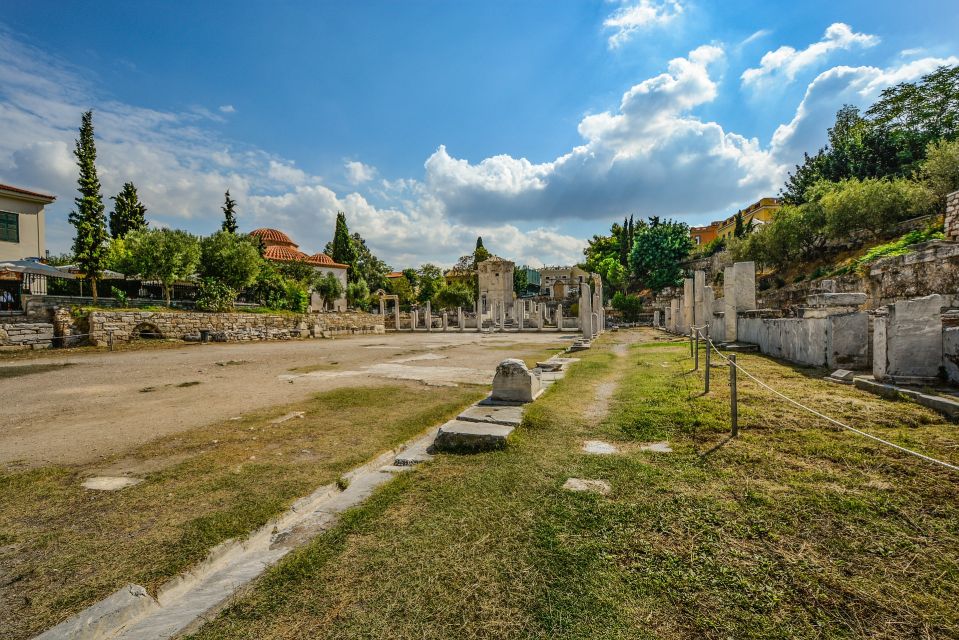
The tour meets at the stairs in front of the Academy. That matters more than you might think. Starting near a recognizable landmark helps you find the group fast, and it puts you in central Athens where myth and city life overlap constantly.
Right away, you shift into the tour’s main mode: you’re not just walking through modern Athens. You’re watching how the ancient Greek world interpreted everything around it—gods, fate, conflict, and human choices. The best part is that this mindset stays with you for the full two hours, so you don’t feel like you’re only getting a quick myth lesson and then moving on.
Also, with a heritage interpreter on hand, the narration has context. You’re not thrown into Greek mythology as if it’s a trivia quiz. You get the cultural why behind the stories.
You can also read our reviews of more walking tours in Athens

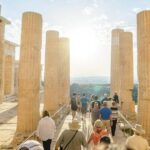
A 2-hour myth walk in a small group: how it feels on the street
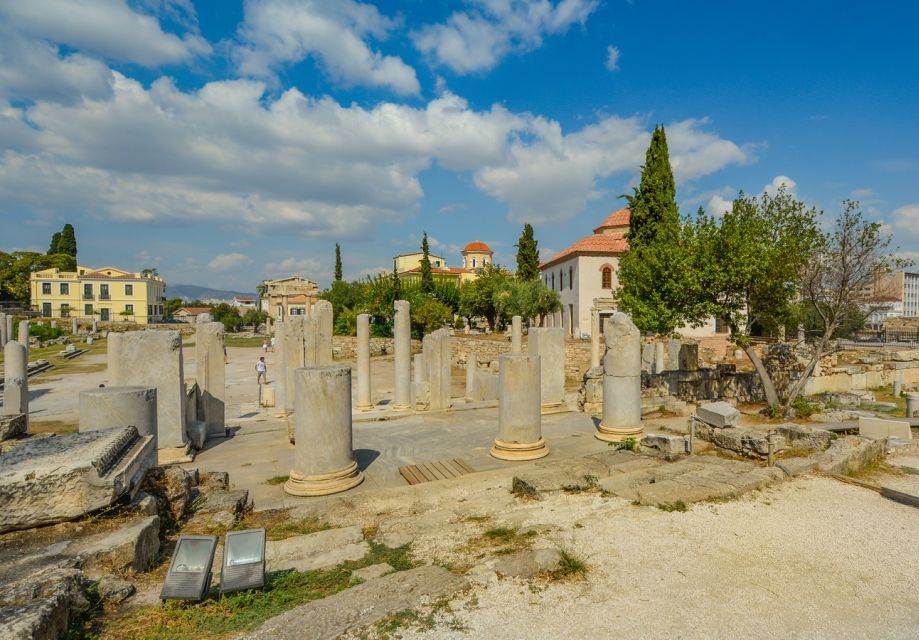
This is a 2-hour walking experience, designed for staying lively without rushing. The highlight list calls out small groups, and that’s what usually makes these kinds of tours work: you can keep eye contact with the guide, and you’re more likely to follow the thread from one legend to the next.
From the feedback, guides are especially praised for being interactive and informative. In Spanish-language impressions, Juan Pablo is repeatedly mentioned as super prepared and very warm—someone who communicates like a person, not like a microphone trapped in human form. That shows you the intent of the tour: it’s meant to feel like conversation with myth as the topic.
Because it’s live, you’ll also get more flexibility than in a strict museum-style script. If a question pops up—why a god shows up in a name, or why a symbol is repeated—you can ask it while it’s still fresh and while the guide is pointing at the real-world cue.
One practical note: wear comfortable walking shoes. Athens sidewalks can be lively, and a two-hour walk adds up quickly. Keep your pace steady so you can actually read the details the guide points out.
Athena’s marks on streets and building details
The core idea is simple and smart: the city carries myth. Not in a dramatic, one-building “only here” way, but in smaller, scattered traces—decorations, references, and street names.
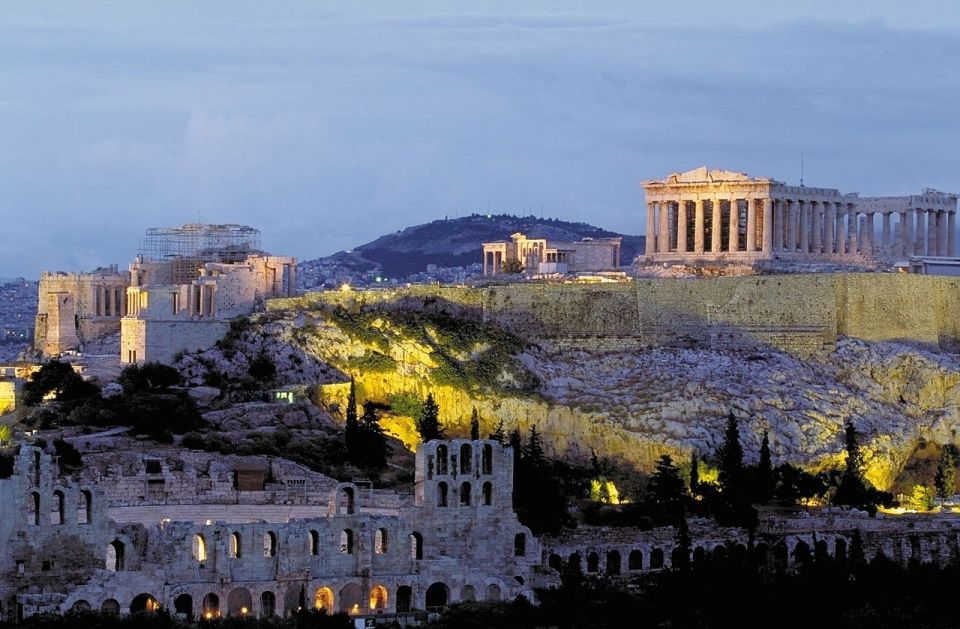
As you walk, the guide frames Athens as a kind of open-air myth map. You’ll learn how the gods left their mark not only through grand stories, but through the everyday visuals people used to identify the world they lived in. In other words, you’re seeing the cultural memory of mythology embedded in the city fabric.
This is where you’ll get your first real payoff: you start noticing the kinds of clues that most visitors miss. Even without a full list of exact stops, you can expect the guide to point to how Athena’s presence shows up in the built environment and in place language. That’s what turns a stroll into a “wait, that connects” moment.
If you like mythology but feel it can stay abstract, this tour does the opposite. It makes myths practical by tying them to the physical city you’re already exploring.
Poseidon and the city: the legends behind the city’s identity
Athens isn’t only Athena’s story. The tour specifically brings in Poseidon, and that’s a key part of understanding why these myths matter culturally.
Poseidon’s inclusion isn’t random fan service. It points to the bigger theme: Greek mythology is often about competition, exchange, and the choices that shape a place. When your guide connects Poseidon to Athens, you’re getting the idea that the city’s identity was explained through divine rivalry and mythic cause-and-effect.
And once you understand that, things make more sense as you keep walking. Myth becomes a way the ancient Greeks organized their world. It explains why certain stories became central, and why the city remembered particular outcomes.
This is also one reason the tour is worth doing even if you’ve heard parts of Greek mythology before. The benefit isn’t just hearing the story again; it’s hearing how the story works as a cultural system and why it’s still reflected in Athens today.
Theseus and why Athens links to his hero story
The tour highlights Theseus as a hero forever linked to Athens’ history. This matters because Theseus isn’t just a name in a textbook. In the myth-world of Greece, heroes function like anchors: they connect divine narratives to human action and city identity.
When your guide ties Theseus to Athens, you’re essentially learning how a hero story becomes part of civic memory. That helps you see why Athens remains such a myth-heavy city even for modern visitors. The hero tale acts like a thread connecting city pride, moral lessons, and the broader myth cosmos.
If you like stories that explain human behavior—bravery, strategy, consequences—Theseus is a strong anchor. You’ll probably find yourself thinking about how the ancient Greeks turned dramatic myth into a way of talking about leadership and belonging.
You can also read our reviews of more guided tours in Athens


Religion in daily life: commerce, love, and surviving expressions
One of the tour’s most interesting claims is that religion shaped all aspects of life in Ancient Greece, including commerce and love affairs. That’s not just historical trivia. It’s a practical lens.
When the guide connects religion to daily life, you’ll start noticing how myth wasn’t kept in a separate box labeled entertainment. It was woven into how people understood value, relationships, and social meaning. Those ancient concepts can leave traces in language and expressions that survive into modern speech.
This is the part of the walk that feels most relevant to contemporary travelers. You stop treating mythology like a dusty subject and start treating it like a living cultural language that people used to make sense of choices.
You’ll still be enjoying a walking tour of Athens. But you’re also learning how to “read” the city with your brain turned on.
Guide energy matters: why Spanish-led storytelling lands well
The experience is led in Spanish. That alone affects how the tour feels, and you’ll want to go into it with realistic expectations.
If you’re comfortable with Spanish conversation, the structure can be really satisfying: the guide can go beyond a basic retelling and actually connect story logic to what you’re seeing. That’s exactly the kind of thing praised in feedback. Spanish-language comments highlight guides as prepared, knowledgeable, and highly engaging.
Juan Pablo is named in the supplied reviews for being especially interactive and friendly—described as knowledgeable and someone who makes the tour feel like chatting with fellow myth lovers. You can also take that as a clue about the tour’s teaching style: the guide isn’t just reading facts; they’re shaping a story for people walking with them.
So if you’re the type who likes asking follow-ups, you’ll likely have a good time here. If you’re not confident in Spanish, you may feel left out of the details that make the tour worthwhile.
Price and value: is $28 for 2 hours worth it?
At $28 per person for a 2-hour guided walk, this tour is priced like a practical add-on to a day of exploring Athens. You’re not paying for museum entry or a long transit-heavy route. You’re paying for story, interpretation, and the ability to make sense of what you’d otherwise see as random streetscape.
What improves the value here is the combination of:
- a heritage interpreter included
- a live Spanish guide
- small groups
- strong feedback on interaction and information
That means you’re less likely to get a “stand here, listen, move on” experience and more likely to get guided attention on the myth connections. In a city full of monuments, that interpretive layer can be the difference between sightseeing and actually understanding why the city is the way it is.
If you’re on a budget, two hours is also a convenient length. You can pair it with other Athens highlights without losing half a day. If you’re on a myth kick, it’s a focused shot at the mythology behind the city’s identity.
Who should book this Athena walking tour (and who might not)?
Book this tour if:
- You like Greek mythology and want it tied to real place clues
- You enjoy guided storytelling more than strict archaeology checklists
- You’re okay with Spanish-only narration
- You want a small-group experience with a guide who can handle questions
Skip it (or at least consider alternatives) if:
- Spanish is a stretch for you and you need explanations in English or a language you’re fluent in
- You prefer a long, site-by-site route with specific monuments named and explored in detail
- You don’t enjoy walking tours in central Athens (even a short stroll can feel like a lot if you’re not used to it)
The sweet spot is travelers who want to understand how mythology shaped Athens—not just what the myths are.
Should you book it?
Yes—if you meet the language fit and you enjoy myth-based interpretation. This tour seems built for people who want their Athens to make sense through story: Athena’s imprint, Poseidon’s role, and Theseus as a civic link, all tied to how religion influenced daily life.
The strongest reasons to book are the guide style and interaction described in the feedback, plus the small-group format. If you’re comfortable following Spanish, you’ll likely get a lot out of the details the guide points to while you’re walking.
If Spanish is a problem, don’t force it. Athens is full of ways to learn, and myth tours work best when you can catch the nuances.
FAQ
How long is the Athens Guided Mythological Walking Tour & Creation Stories?
It lasts 2 hours.
What language is the tour in?
The live tour guide delivers the tour in Spanish.
How much does the tour cost?
The price is listed as $28 per person.
Where is the meeting point?
You meet in the stairs in front of the Academy.
What’s included in the experience?
It includes an accompanying heritage interpreter and a tour in Spanish with a live guide.
Is the group size large?
The tour is described as a small-group experience.
What’s the cancellation policy?
You can cancel up to 24 hours in advance for a full refund.
You Might Also Enjoy

More Walking Tours in Athens


More Tours in Athens

More Tour Reviews in Athens
- All Day Cruise -3 Islands to Agistri,Moni, Aegina with lunch and drinks included
★ 5.0 · 4,958 reviews