REVIEW · ATHENS
Athens: Acropolis, Parthenon & Acropolis Museum Guided Tour
Book on GetYourGuide →Operated by Athens Walks Tour Company · Bookable on GetYourGuide
The Acropolis makes more sense with a guide. You’ll walk the main monuments, then see the sculptures in the Acropolis Museum, where the whole story clicks into place. Two things I’d bet on: you’ll get clear myth-to-history explanations (not random facts), and you’ll see key sights like the Parthenon and the Erechtheion caryatids in a logical route. One thing to consider: you’re on your feet on steep, uneven stone, so comfortable shoes and heat-smart planning matter.
This tour is built around a licensed guide who helps you read what you’re looking at. In past groups, guides like Hermes, Rosa, Alina, and Katerina have been praised for storytelling that turns the gods and architecture into a timeline you can actually remember. You also get practical support like hearing devices, so you won’t miss details when you’re surrounded by wind, crowds, or other tour groups.
The possible drawback is simple: the tour price is only the guide, not the site tickets. You still need to budget for Acropolis entrance (listed at 30€) and Acropolis Museum (10–20€), plus you should expect a hike up. If you’re coming with mobility limits, note that the activity is marked not suitable for wheelchair users, even if some guides have managed accommodations for specific cases.
In This Review
- Key things to know before you go
- Starting at Porinou 5: meeting point, timing, and how the tour runs
- Acropolis on foot: how the Parthenon and its neighbors fit together
- The Erechtheion porch and the Caryatids: the stop that usually steals the show
- Theater of Dionysus: why Athens’ plays are still relevant
- Temple of Asclepius and healing myths: seeing more than one Athens
- What you’ll do at the Acropolis Museum (and why it changes your whole visit)
- Sunday plans, Monday reality: the museum closing shift
- Price and value: what $70 buys (and what you must add)
- Guides make the difference: what past groups consistently highlight
- Practical tips you’ll be glad you followed
- Who should book this Acropolis + Museum tour?
- Should you book this tour?
- FAQ
- How long is the Athens Acropolis, Parthenon & Acropolis Museum guided tour?
- Where do I meet the guide?
- Are entrance tickets included in the price?
- Does the tour skip the ticket line?
- Do I get hearing devices?
- What languages are available?
- Do I need pickup or drop-off?
- What should I bring?
- Is it suitable for wheelchair users?
- What happens on Mondays when the Acropolis Museum closes early?
- Is there free cancellation?
Key things to know before you go
- Skip-the-line help: your guide handles the ticket process so you can spend more time at the monuments.
- Hearing devices included: easier listening when the group is moving and the acoustics are loud.
- Parthenon + museum in the same flow: you’ll see sculptures on site, then track them again in the museum galleries.
- Caryatids and Dionysus: you don’t just glance at stops—you get the meaning behind the Erechtheion and the Theater of Dionysus.
- Monday adjustment: when the museum closes at 16:00, the tour shifts toward the Acropolis monuments and the Ancient Agora.
Starting at Porinou 5: meeting point, timing, and how the tour runs
The experience begins at the Athens Walks office on Porinou 5, on the ground floor. Plan to arrive at least 15 minutes early. That early buffer isn’t fluff—it’s what helps you get sorted into your group, get your hearing devices, and start the walk without that first-five-minutes chaos.
Once you check in, you’ll be assigned to a group. Only one person in your party needs to check in indoors, which is helpful if you’ve got kids, an older parent, or someone who might need an extra minute before walking.
The tour runs 2 to 4 hours, so the pacing can feel purposeful rather than rushed. The big win here is that the guide guides—stops, explains, then moves on—so you’re not trying to translate ancient architecture on your own while also figuring out where the best photo angle is.
You can also read our reviews of more guided tours in Athens



Acropolis on foot: how the Parthenon and its neighbors fit together

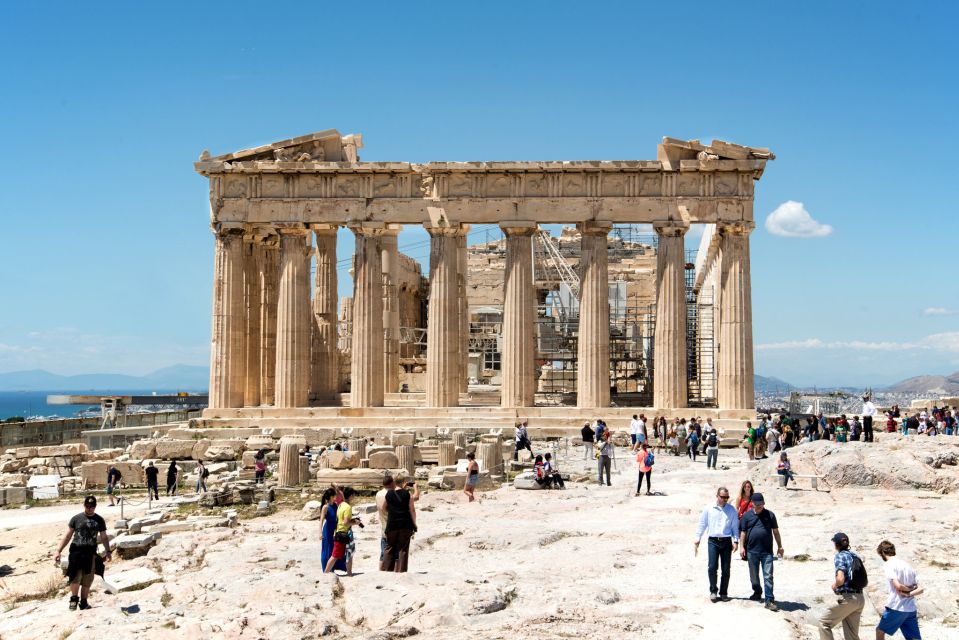
You’ll start at the Acropolis, the hill that basically defined Athens’ “power and identity” story. Up close, the stones can feel like a jumble—columns here, carvings there, ruins everywhere. A good guide turns that into a map.
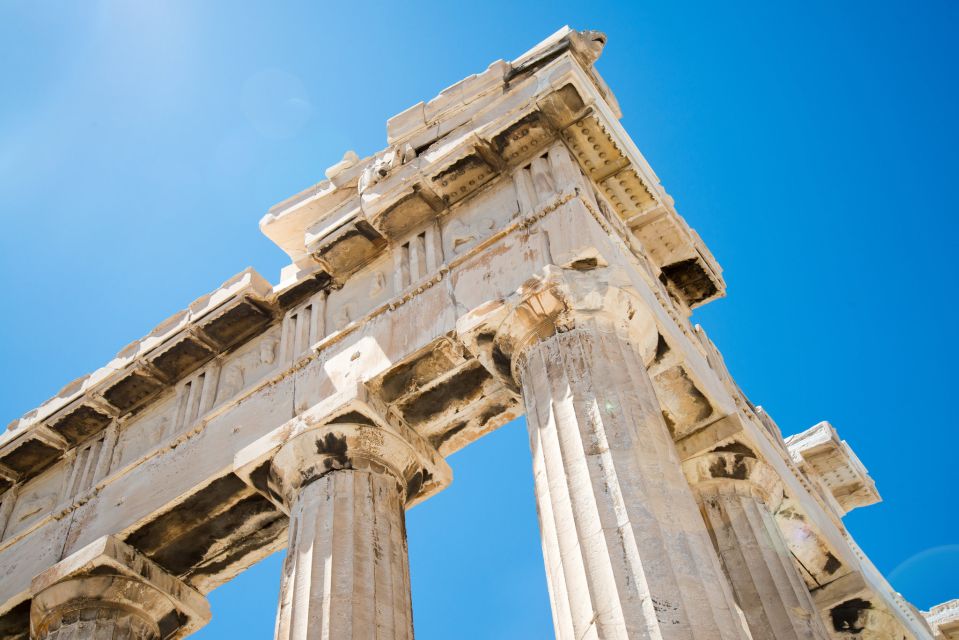
One of the first anchor points is the Parthenon. Even if you’ve seen it in photos, being there changes the scale. Your guide should connect it to the political and cultural role Athens played in classical life—how this wasn’t just a temple, but a statement.
From there, you’ll cover some of the Acropolis’ key “in-between” stops that are easy to miss if you’re just wandering:
- the Temple of Athena Nike (often called the Wingless Victory),
- the gateway of the Propylaea, and
- areas around the main ceremonial route that help explain how people moved through the sacred space.
These stops matter because the Acropolis isn’t one monument. It’s a whole complex, built over time, with different structures designed for different roles. Without that framework, you might enjoy the views but miss the point.
The Erechtheion porch and the Caryatids: the stop that usually steals the show
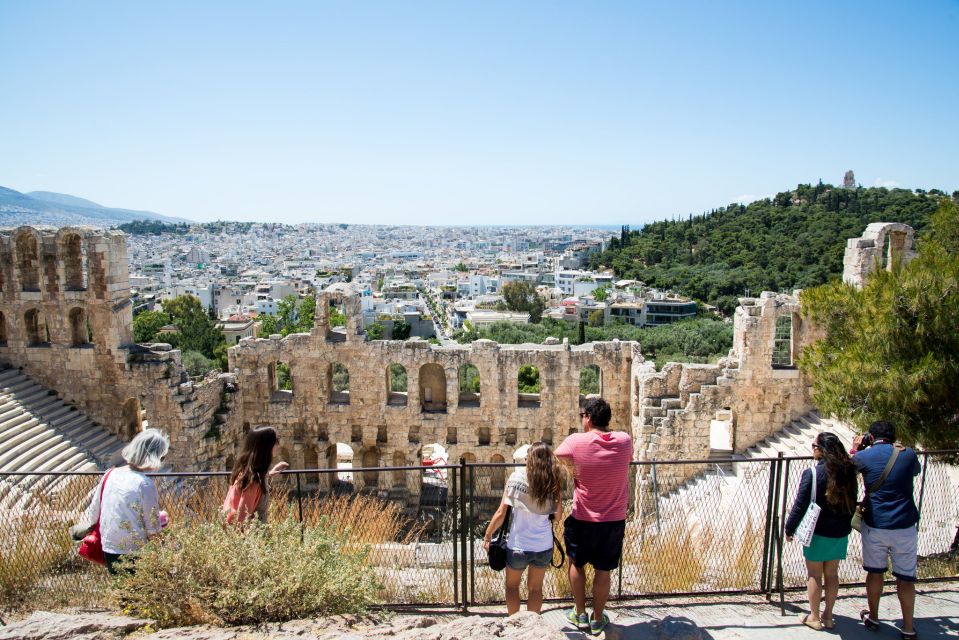
The Erechtheion is famous for its porch and the Caryatids—the carved female figures used as sculptural columns. From a distance, they’re impressive. From up close, they’re oddly human in a way you don’t expect: scale, posture, and the details that show how sculptors wanted you to feel a presence, not just an object.
In a guided setting, the Caryatids become more than a photo moment. You’ll learn what the porch represents and how it fits into the broader religious and architectural design. Then you’ll likely get some time to look—really look—because your guide should explain what you’re seeing before you run past it.
This is also where the “storytelling matters” part becomes obvious. If you only know the Parthenon, the Acropolis can feel like one big highlight. But when the Caryatids and their porch become part of the same explanation, the site feels like a functioning world.
Theater of Dionysus: why Athens’ plays are still relevant
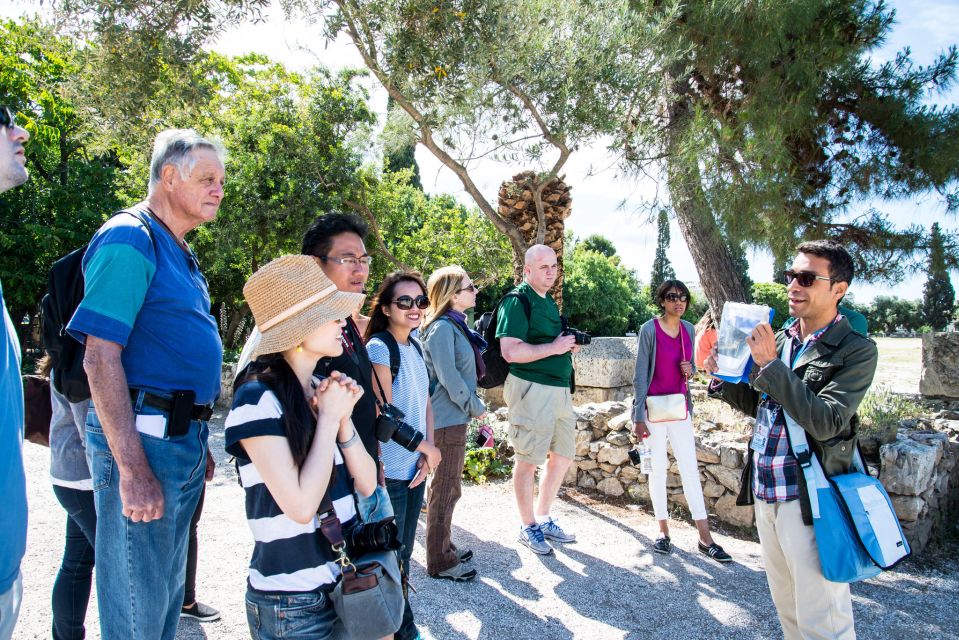
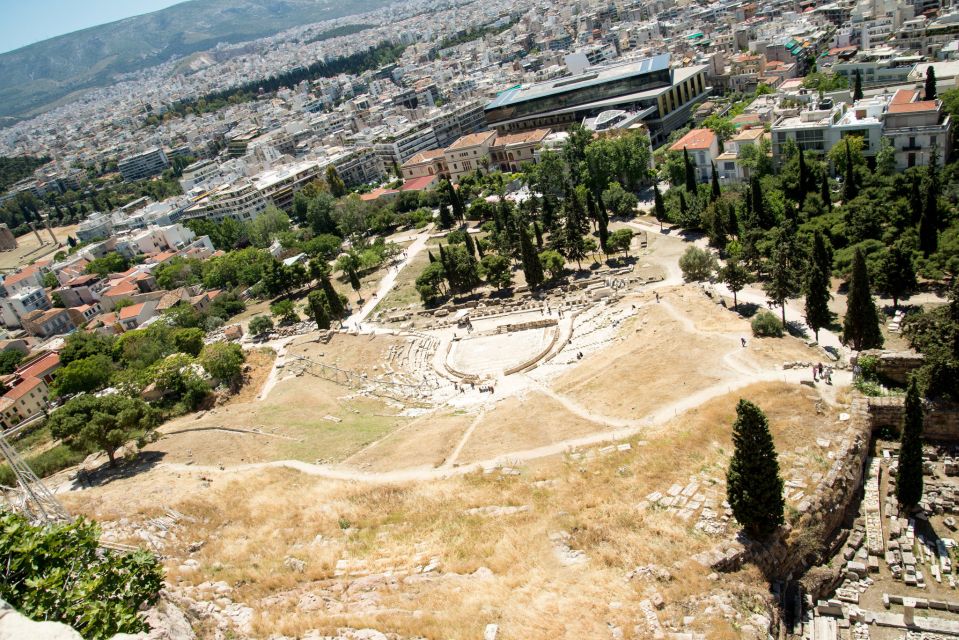
As you move through the complex, you’ll also walk by the Theater of Dionysus. Even if you’re not a theater person, this stop has a strong emotional pull because it links the Acropolis to ideas people still argue about: civic life, performance, storytelling, and what it means to share a society’s values.
Your guide should connect the theater to the famous tradition of performances in classical Athens—often described as among the earliest major theatrical traditions in Western history. You’re not just standing in ruins; you’re standing at a place tied to one of the earliest public stages where ideas could be argued out loud.
One nice detail here: you’ll get chances to pause and take pictures from smart angles. The guide can also point out how the city drops away below the hill, which is a big part of why the Acropolis works so well as a viewpoint.
Temple of Asclepius and healing myths: seeing more than one Athens
The Acropolis tour isn’t only about big political monuments. You’ll also hear about other roles Athens played, including the healing and spiritual side connected with places like the Temple of Asclepius.
This kind of stop helps you understand that classical Athens wasn’t a single theme park. It had religion, civic ritual, public performance, and practical beliefs about health and the divine. When you connect these pieces, the Acropolis starts to feel like it served a whole society—not just rulers and grand festivals.
You’ll also be led through the way the complex relates to a bigger classical timeline. One aim is to help you see how the monuments describe history across more than 2,500 years, not just the “wow” buildings from one moment.
You can also read our reviews of more museum experiences in Athens



What you’ll do at the Acropolis Museum (and why it changes your whole visit)
After the monuments, the best payoff is the Acropolis Museum—especially if you’ve felt a bit lost trying to understand what you saw outside.
The museum is described as state-of-the-art, with galleries that house relics from Ancient Greece in displays designed to help you match what you saw up on the hill. This is where the guide’s storytelling really pays off. You get a “why it matters” explanation in the open air, and then you get the “here’s what it actually is” version indoors.
What to look for during your museum time:
- the sculpture displays that tie directly to structures you visited,
- the way museum labeling and layout make chronological sense,
- and the details you probably missed outdoors because you were busy scanning for the next stop.
Many people underestimate this step. You’ll walk past fragments outside and still feel like you’re seeing only part of the picture. Inside the museum, you should leave feeling you understand the carvings, the artistic choices, and what the stones were meant to communicate.
There’s also a practical benefit: the museum gives you a break from the hill and sun. Even if you’re comfortable outdoors, it’s smart to use indoor time to reset.
Sunday plans, Monday reality: the museum closing shift
There’s one schedule quirk you should know. On Mondays, the Acropolis Museum closes at 16:00. When that’s the case, the tour shifts: you’ll visit the Acropolis monuments and the Ancient Agora instead of completing the museum portion.
If your visit lands on a Monday, that doesn’t mean you lose value. It means you’ll lean more into additional classical Athens context through the Agora. It’s also a reminder to check your departure time so you know how the day will be structured.
Price and value: what $70 buys (and what you must add)
The listed price is $70 per person, which covers the licensed guide. That’s not nothing. A good guide can turn a “check the box” site visit into an experience you remember for years—especially on the Acropolis, where the context is everything.
But you do need to budget for entrance fees:
- Acropolis entrance: listed at 30€ per person
- Acropolis Museum: listed at 10–20€ per person
That means your total cost will be more than the tour headline price. Still, there’s real value here if you hate waiting in line and you want guidance for what you’re looking at. This tour also includes skip-the-ticket-line help, which can be a lifesaver on hot days and peak seasons.
Is it worth it? For most first-timers, yes—because the guide work is the product. For people who love reading on their own, it may feel pricey. But if you want your first Acropolis visit to come with a readable story, you’re paying for the translator of ancient Athens.
Guides make the difference: what past groups consistently highlight
The strongest praise in the experience is usually about the guide quality. Several names come up again and again in descriptions of what makes the tour work: Hermes, Alina, Sophia, Maria, Rosa, and Katerina.
Common threads from those accounts:
- storytelling that explains myths without turning them into boring lectures,
- good English delivery (and in some cases very strong performance in other languages),
- pacing that includes stops, and breaks when the climb feels steep,
- and flexibility for families, including guiding children in a way that keeps them engaged.
One guide, Hermes, is described as having intellect and wit and always being ready for questions. Another guide, Maria, is praised for adjusting plans for tired kids and extreme heat. That’s the key: you’re not just buying route coverage. You’re buying an intelligent human who can adapt.
Practical tips you’ll be glad you followed
This kind of tour makes sense only if your body is prepared for it.
Bring:
- comfortable shoes (non-negotiable),
- sunscreen, sun hat, and sunglasses,
- and your passport or ID card.
If you’re eligible for reduced access (for people under 18, or EU passport holders under 25), bring documentation. The tour notes that young people under 18 have free access, and students under those conditions should bring a passport to ensure reduced ticket eligibility.
A small but important note: no luggage or large bags, and no smoking or pets. Plan to travel light so you’re not stuck figuring out storage while the group waits.
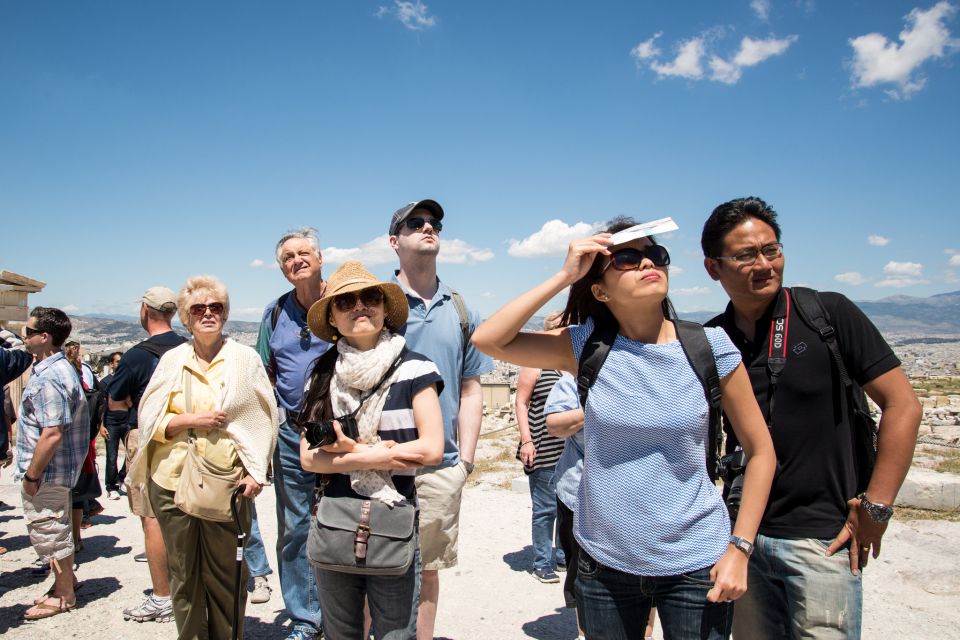
Also, the Acropolis can get brutally hot. One reported group experienced extreme heat around 32°C in June, which is exactly when skipping line time and getting shade breaks can feel like more than a perk—it can keep the day enjoyable.
Who should book this Acropolis + Museum tour?
You should seriously consider booking if:
- it’s your first time in Athens and you want a guided, story-based route,
- you want both outdoor monuments and the indoor sculpture context,
- you care about understanding what the Parthenon, Caryatids, and theater meant in their own time,
- or you’re traveling with kids and want someone skilled at pacing attention.
You might skip it if:
- you prefer doing everything independently with just your own reading,
- you strongly dislike walking on steep, uneven stone,
- or you’re on a tight budget where guide fees plus separate entrance tickets will feel like a stretch.
Should you book this tour?
If your goal is to understand Athens instead of just sightseeing it, I think this tour earns its place. The Acropolis is jaw-dropping on its own, but the museum and the guide turn it from a view into a story you can follow. The fact that you get hearing devices and skip-the-line help adds real comfort and time value.
Book it if you want context, structure, and expert interpretation at the monuments and in the Acropolis Museum. Hold off if you’re mostly chasing photos, or if mobility and walking distance are a bigger concern than learning.
Either way, plan for sun, wear your best walking shoes, and budget for the entrance tickets—the rest is the guide’s job, and that’s the part you’re paying for.
FAQ
How long is the Athens Acropolis, Parthenon & Acropolis Museum guided tour?
It runs for 2 to 4 hours, depending on the starting time and how the visit is paced.
Where do I meet the guide?
Meet at the Athens Walks office at Porinou 5, 11742. They say to look for the ground floor office, and to arrive at least 15 minutes early.
Are entrance tickets included in the price?
No. You must buy your own Acropolis entrance tickets (listed at 30€ per person) and Acropolis Museum tickets (listed at 10–20€ per person).
Does the tour skip the ticket line?
Yes. The tour includes skip-the-ticket-line service.
Do I get hearing devices?
Yes. Hearing devices are provided.
What languages are available?
The tour is offered in English, Italian, German, French, and Spanish.
Do I need pickup or drop-off?
No pickup and drop-off is included.
What should I bring?
Bring your passport or ID card, comfortable shoes, sunglasses, a sun hat, and sunscreen.
Is it suitable for wheelchair users?
It is not suitable for wheelchair users.
What happens on Mondays when the Acropolis Museum closes early?
On Mondays, the Acropolis Museum closes at 16:00. The tour will instead visit the Acropolis monuments and the Ancient Agora.
Is there free cancellation?
Yes, free cancellation is offered up to 24 hours in advance for a full refund.
You Might Also Enjoy




More Guided Tours in Athens

More Tours in Athens


More Tour Reviews in Athens
- All Day Cruise -3 Islands to Agistri,Moni, Aegina with lunch and drinks included
★ 5.0 · 4,958 reviews