REVIEW · ATHENS
Athens: Acropolis Guided Walking Tour without Entry Ticket
Book on GetYourGuide →Operated by Secrets of Greece IKE · Bookable on GetYourGuide
Walking into Athens’ past feels real fast. This guided route climbs the Acropolis of Athens with a licensed Spanish guide, so you’re not just looking at ruins—you’re hearing the myths and festival stories that shaped how ancient Athenians used these spaces. I especially like the way the tour connects the sites to the people who built and used them, and I like the small-group feel, where you can ask questions when something confuses you.
One thing to keep in mind: this tour price does not include your Acropolis entry ticket. You’ll need to buy the ticket ahead of time (and match the correct time slot rules), or you may arrive to a line-and-wait situation before your walking portion even starts.
In This Review
- Key highlights you’ll care about
- Why this Acropolis walk beats wandering alone
- Ticket required: how “without entry” changes your day
- Meeting at Metro Acropolis: simple logistics for a 2-hour plan
- Propylaea and Parthenon: getting your bearings on the main axis
- Dionysus theater and the festival story you can’t get from pictures
- Erechtheion, Caryatids, and Athena Nike: the Acropolis “puzzle pieces”
- Odeon of Herodes Atticus and Asclepius: when the myths get specific
- What the small group and Spanish narration do for you
- Value check: $32.75 for a 2-hour guide (without entry ticket)
- After the tour: how to use your free time wisely
- Should you book this Acropolis walking tour without an entry ticket?
- FAQ
- Is the Acropolis entry ticket included?
- How long is the tour?
- Where do I meet the guide?
- Does the tour include hotel pickup and drop-off?
- What language is the tour guide?
- Are strollers allowed?
- What types of wheelchairs are not allowed?
- If I buy the entry ticket on-site, how early should I arrive?
- What if I cannot get the Acropolis ticket because there’s no availability?
- Is free cancellation available?
Key highlights you’ll care about
- Acropolis explained, not recited: mythology and history tied to what you’re standing in front of
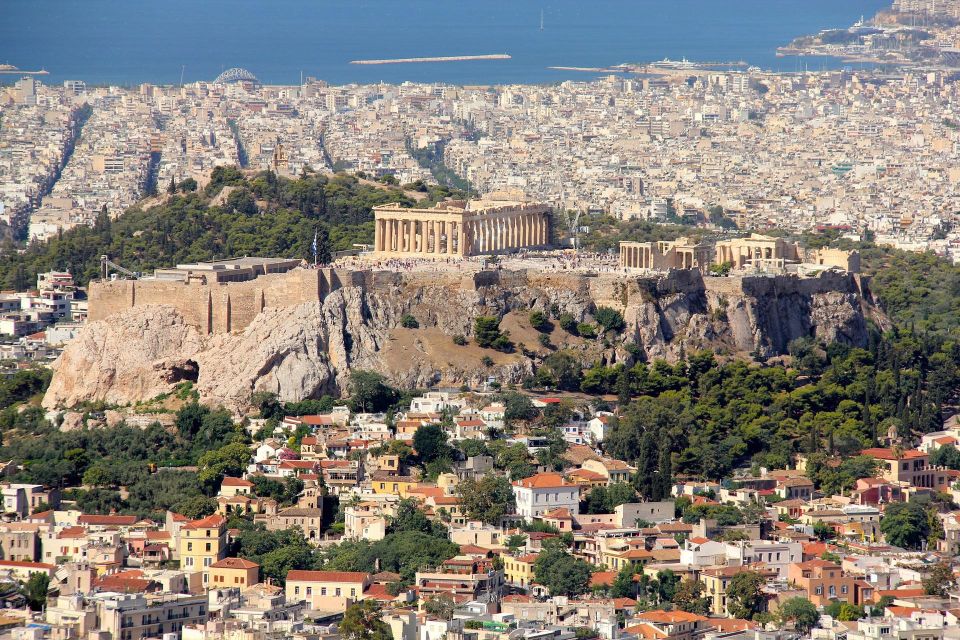
- Iconic stops in a tight 2 hours: Parthenon views, Propylaea gateway, Dionysus theater, and more
- Theater + temple mix: Odeon of Herodes Atticus and the Temple of Athena Nike in one route
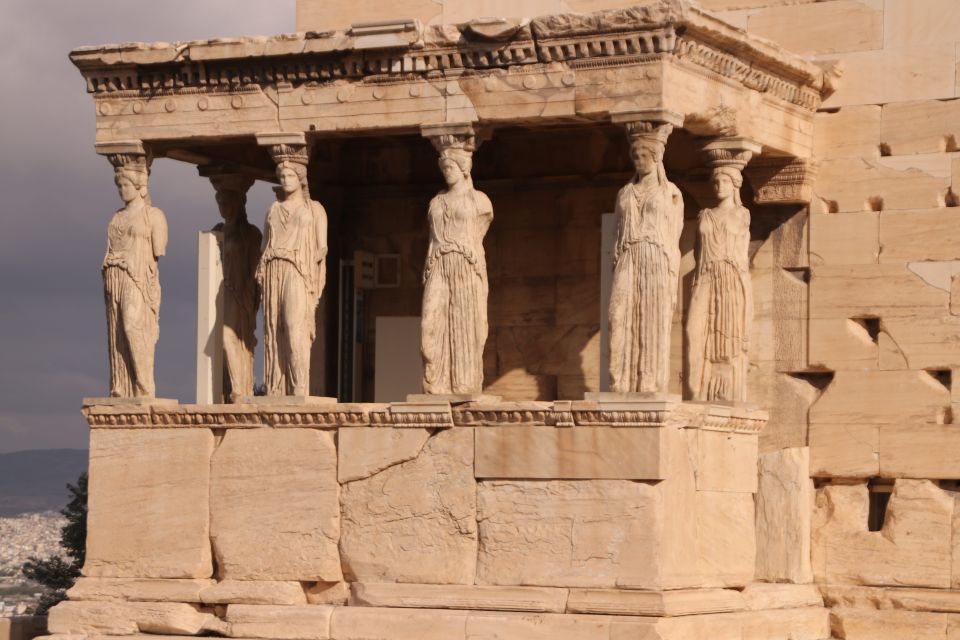
- Caryatids and Erechtheion details: you’ll know what you’re looking at instead of guessing
- Live Spanish guide: the narration stays connected and conversational, with room for questions
Why this Acropolis walk beats wandering alone
The Acropolis can feel overwhelming. You’re surrounded by dramatic stone, but it’s hard to understand what mattered first, what was ceremonial, and what was political. A guided walking format fixes that. You get a logical order and a steady stream of context as you move uphill, so your brain stops treating everything as separate photo backdrops.
Two things make this tour work well for most people. First, it’s paced for sight-focused walking rather than a long museum-style crawl. Second, the guide is licensed and talks in a way that helps you connect ruins to stories—Greek gods, religious festivals, and the kinds of events that brought crowds to these exact slopes.
If you’re visiting in hot season or there are crowds, this kind of guided flow matters. You’ll still see people, but you won’t be spending your energy trying to figure out where to look and why.
You can also read our reviews of more tours and experiences in Athens


Ticket required: how “without entry” changes your day
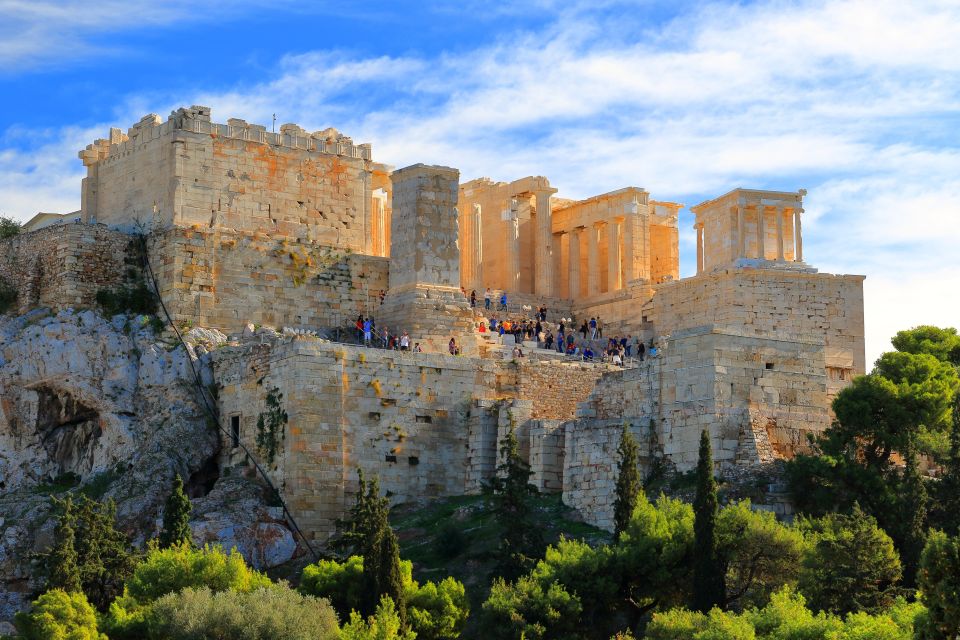
This is the big practical point. Your tour includes the guided tour and a licensed guide, but it does not include the Acropolis entry ticket.
That matters because Acropolis entry works on time slots. The notes are specific:
- Low season (01/11–31/03):
- For the tour at 09:15, you buy the ticket for 09:00–10:00
- For the tour at 14:30, you buy the ticket for 14:00–15:00
- High season (01/04–31/10):
- For the tour at 08:15, you buy the ticket for 08:00–09:00
- For the tour at 17:00, you buy the ticket for 17:00–18:00
Two good-to-know consequences:
- You may need to choose your tour time based on what entry slots are actually available.
- If you buy the ticket wrong, you can end up with frustration right when you want the walk to start smoothly.
If you can’t get the ticket due to lack of availability, the provider says they’ll help you. If you do buy at the ticket office, plan time: the instructions say to go to the ticket office area of the South entrance about 30 minutes before the tour so you can wait in line. Once you get tickets, you head to the meeting point, which is less than 2 minutes on foot from there.
Meeting at Metro Acropolis: simple logistics for a 2-hour plan
The meeting point is straightforward and central: meet your guide at the entrance of the Metro station Acropolis, on street level. You’re asked to arrive between 10 and 5 minutes before the start time. After the tour, you return to that same meeting point.
No hotel pickup is included. So you’ll want to build in transit time to get to that Metro station cleanly—especially if you’re connecting from a different neighborhood.
Also, the tour is live guided in Spanish. If you prefer another language, you’ll need to verify alternatives before booking. On the plus side, Spanish narration tends to be detailed and lively, and it’s easier to ask follow-up questions in the language your guide is using.
Duration is 2 hours. That’s long enough to cover major monuments, but short enough that you’ll still have energy afterward to explore on your own.
Propylaea and Parthenon: getting your bearings on the main axis
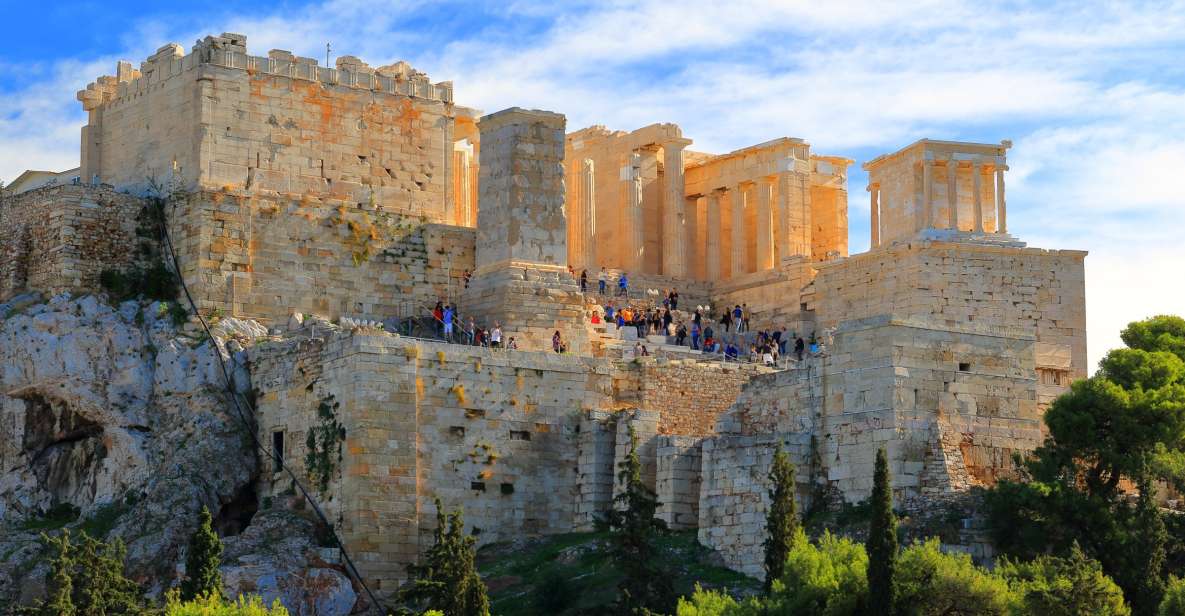
The tour experience really starts when you enter the Acropolis’s monumental approach. You walk through the Propylaea, described as the gateway into the rocky citadel. This is a great place to start with a guide because it sets the “why” behind the layout. You’re not just entering a site—you’re stepping into the ceremonial heart of a city.
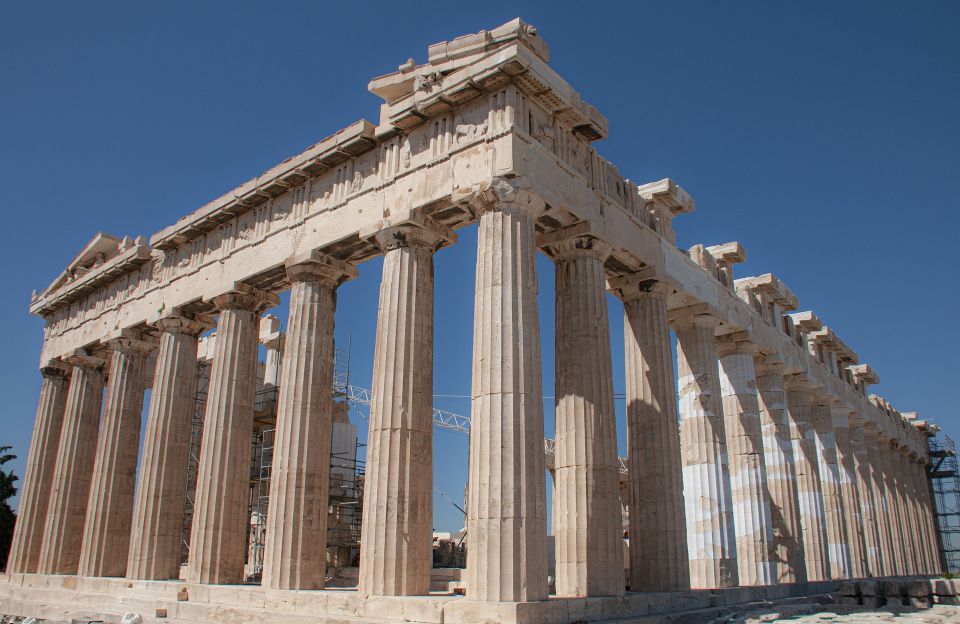
From there, you’ll be pointed toward the temple of the Parthenon and the main structures dedicated to Athena, the protector goddess of the city. Even if you’ve seen Parthenon photos before, the scale hits differently when you’re standing on the same stone ground ancient people stood on, looking toward the spaces built for worship and public meaning.
What I like about having this explained on a walk is how it changes your photo strategy. Instead of only shooting wide views, you start noticing alignments and entrances—small architectural cues that make the whole place feel planned rather than random.
Dionysus theater and the festival story you can’t get from pictures
One of the most memorable parts of this tour is the stop at the theater of Dionysus. You’ll hear that it could hold 17,000 spectators, and that it hosted festivals honoring the birth of a Greek god.
That detail does more than decorate the scene. It gives you a mental image of what this area sounded like. This wasn’t quiet sightseeing. It was mass gathering—people showing up for performances and religious celebration. When you understand that, the theater stops being a pretty ruin and becomes a venue with a job.
A fair consideration: theaters and crowds can feel busy. If you’re someone who dislikes tight spaces with lots of other visitors, you may want to use your guide’s timing to move with the group rather than trying to linger on your own at peak moments.
You can also read our reviews of more walking tours in Athens






Erechtheion, Caryatids, and Athena Nike: the Acropolis “puzzle pieces”
As the tour continues, the vibe shifts from big ceremonial monuments to more delicate, detail-heavy architecture.
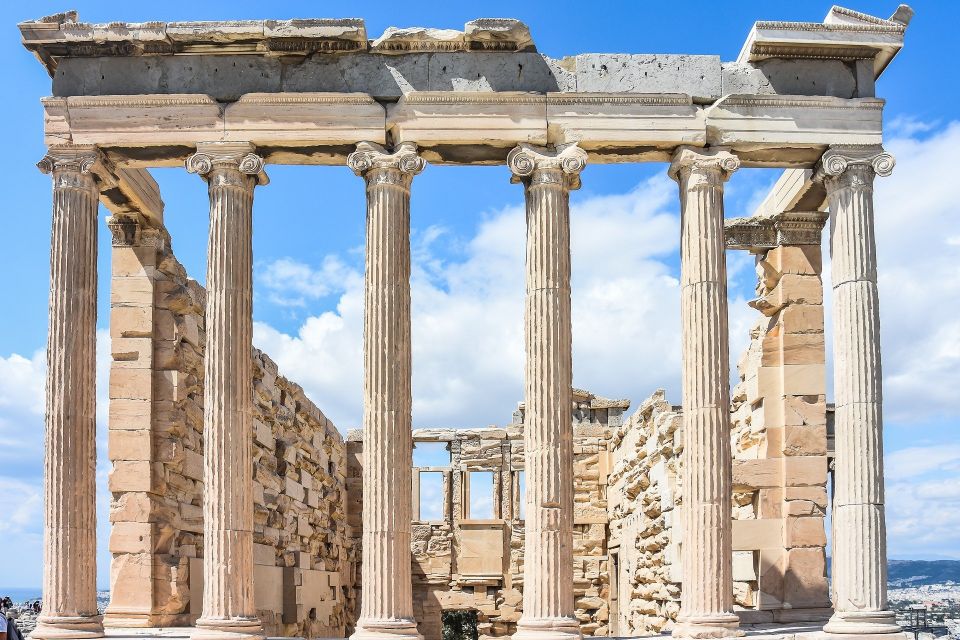
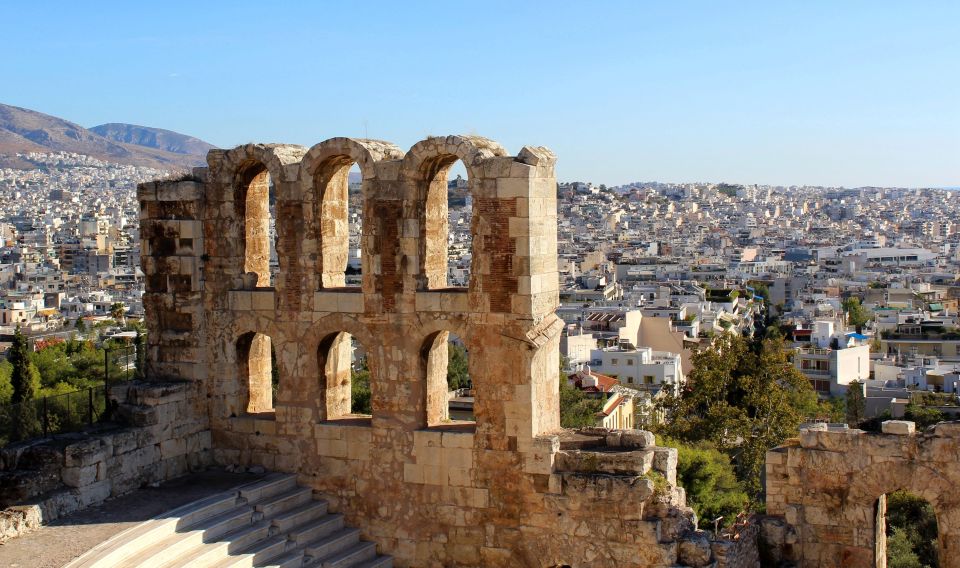
You’ll visit the Erechtheion, described as named after the demi-god Erechtheus, and you’ll also see the Odeon of Herodes Atticus, a giant stone theater. That combination matters: it shows you how the Acropolis wasn’t only about religious worship, but also about performance culture and civic life.
Then comes a set of features that rewards close looking:
- Caryatides: the tour includes the stone carvings of these figures. With a guide, you’re less likely to treat them as generic statues and more likely to understand their role in the structure.
- Temple of Athena Nike: you’ll get to the smallest temple, which is exactly why it’s worth guided attention. Small buildings are easy to overlook, but they often have big meaning. The commentary helps you see what the building communicates, even if you’re short on time.
If you like architecture and symbolism, this is where the tour pays off. You’ll leave knowing what to search for when you continue exploring after the guided portion.
Odeon of Herodes Atticus and Asclepius: when the myths get specific
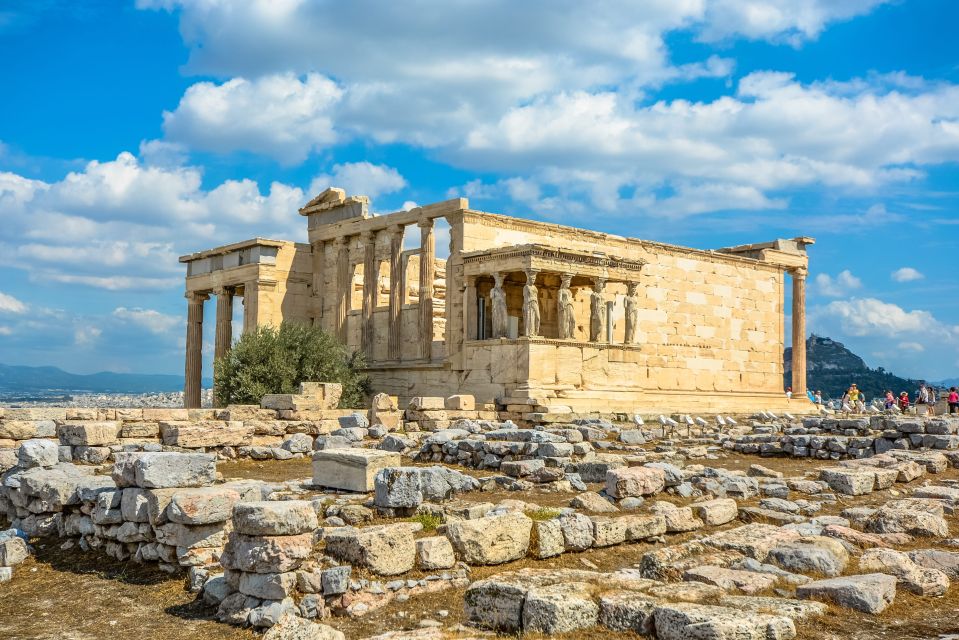
The itinerary includes the temple of Asclepius and the impressive Odeon of Herodes Atticus. These stops help widen your understanding of the Acropolis beyond the Parthenon spotlight.
Asclepius ties the story to healing and religious practice. When you learn that angle, the ruins feel less like background scenery and more like pieces in a larger religious landscape.
The Odeon of Herodes Atticus brings you back to performance. You’ll hear it described as a giant stone theater, and you’ll likely look at it with new eyes because you’ve just been thinking about crowds and festivals at Dionysus. That continuity is one of the tour’s strengths: it doesn’t jump topics randomly. It builds a theme.
And throughout, your guide provides commentary about the ancient Greek myths connected to the ruins. That’s the difference between seeing old stone and understanding why those stones existed where they do.
What the small group and Spanish narration do for you
This tour is promoted as having a small group, and the impact is practical. In a crowded place like the Acropolis, small groups keep things from turning into a shuffle where everyone walks in the same direction with zero chance to ask questions.
This is where the guide’s style shows up. In Spanish, the explanations can be detailed without feeling like a textbook. You can ask questions, and you’re more likely to get real clarification rather than a quick soundbite.
Also, guided interpretation can fix a common problem: you see ten monuments and remember none of them. With this format, you’ll probably remember story threads—Athena’s role as protector, the festival energy at the theaters, and the meaning of key architectural features like Caryatides.
One more practical note: strollers and certain wheelchairs aren’t allowed. If you’re coming with mobility needs or a stroller, check what alternatives exist before booking, because the rules are clear about what is not permitted.
Value check: $32.75 for a 2-hour guide (without entry ticket)
At $32.75 per person, you’re paying for something specific: guided interpretation by a licensed guide for about 2 hours, plus a structured route that focuses on the Acropolis highlights.
The catch is equally clear. You still need the entry ticket separately. So the real comparison isn’t just “is this cheap?” It’s:
- If you would otherwise wander and guess at meaning, a guide is often worth it.
- If you already have a strong guidebook plan and you don’t care about the myths or festival context, you might question the added cost.
For most people, the guide fee makes sense because the Acropolis is more confusing than it looks. When you can understand what you’re seeing while you’re there, you get more from every minute on site.
After the tour: how to use your free time wisely
Once the guided portion ends, you’ll have free time to explore the outstanding site at your own pace. That’s a big advantage. You can slow down at the parts that stuck with you during the narration—maybe the Caryatides area, maybe the Temple of Athena Nike, or maybe the broader viewpoints you care about most.
I recommend doing your post-tour wandering with a goal:
- Revisit one stop and look for the details your guide explained.
- Take a wider view photo set, now that you understand what you’re seeing.
- If you’re still energetic, map your next move based on what photos you want—not just what looks closest.
Ending back at the same Metro-area meeting point also helps your planning. You don’t have to figure out how to get yourself out of a complex maze right when your feet are tired.
Should you book this Acropolis walking tour without an entry ticket?
Book it if you want the Acropolis to make sense while you’re standing on it—especially the mix of theaters, temples, and mythology tied to specific monuments. The licensed Spanish guide plus the small-group feel are strong reasons to choose this over a basic self-guided stroll.
Don’t book it if you’re the type who plans to handle everything solo with your own research and you already know the stories you want to focus on. Also skip it or double-check your plan if you know you struggle with time-slot entry systems, because you’ll need to secure the ticket in advance and match the time slot rules for your chosen tour time.
If you’re aiming for maximum value from limited time in Athens, this is a practical, story-forward way to see the Acropolis highlights without turning your day into a confusing scramble.
FAQ
Is the Acropolis entry ticket included?
No. The guided tour is included, but the entry ticket is not. You must buy your ticket previously (online is mentioned) and match the correct time slot rules.
How long is the tour?
The tour is listed as 2 hours.
Where do I meet the guide?
Meet the guide at the entrance of the Metro station Acropolis, on street level. The tour ends back at the same meeting point.
Does the tour include hotel pickup and drop-off?
No. Hotel pickup and drop-off are not included.
What language is the tour guide?
The live tour guide language is Spanish.
Are strollers allowed?
No. Baby strollers are not allowed.
What types of wheelchairs are not allowed?
Non-folding wheelchairs and electric wheelchairs are not allowed.
If I buy the entry ticket on-site, how early should I arrive?
If you buy at the ticket office, the guidance is to go to the South entrance ticket office area about 30 minutes before the tour so you have time to wait in line.
What if I cannot get the Acropolis ticket because there’s no availability?
The information says that if you can’t get the ticket due to no availability, they will help you.
Is free cancellation available?
Yes. Free cancellation is available up to 24 hours in advance for a full refund.
You Might Also Enjoy



More Tickets in Athens


More Tours in Athens


More Tour Reviews in Athens
- All Day Cruise -3 Islands to Agistri,Moni, Aegina with lunch and drinks included
★ 5.0 · 4,958 reviews