REVIEW · ATHENS
Athens: Acropolis and Ancient Agora Guided Walking Tour
Book on GetYourGuide →Operated by Athens Walks Tour Company · Bookable on GetYourGuide
The Acropolis gets easier when someone explains it. This 4-hour guided walk strings together the Acropolis monuments and the Ancient Agora, with a licensed English guide and wireless hearing devices that keep you connected to the story. I love the route that starts up the South Slopes for scenic views and a calmer feel, and I love how the guide makes sense of what you’re looking at instead of just listing dates. One thing to plan for: you’ll be doing a solid amount of uphill walking, so comfy shoes and water matter.
You’ll meet at Porinou 5, then move building to building—Theatre of Dionysus, Odeon of Herodes Atticus, Temple of Athena Nike, the Parthenon, the Erechtheion with its Caryatids, and then down to the Agora’s major landmarks like the Temple of Hephaestus and the Stoa of Attalos. The big payoff is clarity: you start seeing ancient Athens as a whole working city, not two separate photo stops.
In This Review
- Key things I’d watch for on this Athens tour
- Why this Acropolis + Agora pairing makes sense in 4 hours
- Porinou 5 to the first sights: getting your bearings fast
- South Slopes approach: the scenic climb and what to notice
- Temple of Athena Nike, Propylaea, and the shift from outside to sacred space
- Parthenon time: what the guide actually helps you see
- Erechtheion and the Caryatids: the detail stop that changes everything
- Acropolis break: use the 15 minutes well
- Ancient Agora: turning monuments into daily life
- Temple of Hephaestus and Agora structure: why this part stays with you
- $102 for 4 hours: how the value adds up
- What kind of traveler this tour fits best
- A note on guides: the difference between info and direction
- Should you book this Athens Walks Acropolis and Ancient Agora tour?
- FAQ
- How long is the Acropolis and Ancient Agora guided walking tour?
- Where do I meet the tour, and where does it end?
- What sites are included?
- Are entrance tickets included?
- Do I need to worry about long lines?
- Is the tour offered in English?
- What should I bring?
- Is flash photography allowed?
- Extra questions people ask
- Is it suitable for wheelchair users or mobility impairments?
Key things I’d watch for on this Athens tour
- Skip-the-line entry at both the Acropolis and the Ancient Agora, which buys you time on-site
- Wireless hearing devices so you can actually catch the guide’s explanations
- South Slopes route for a more scenic, less crowded approach upward
- Parthenon + Erechtheion in one flow, with the guide calling out what to look for
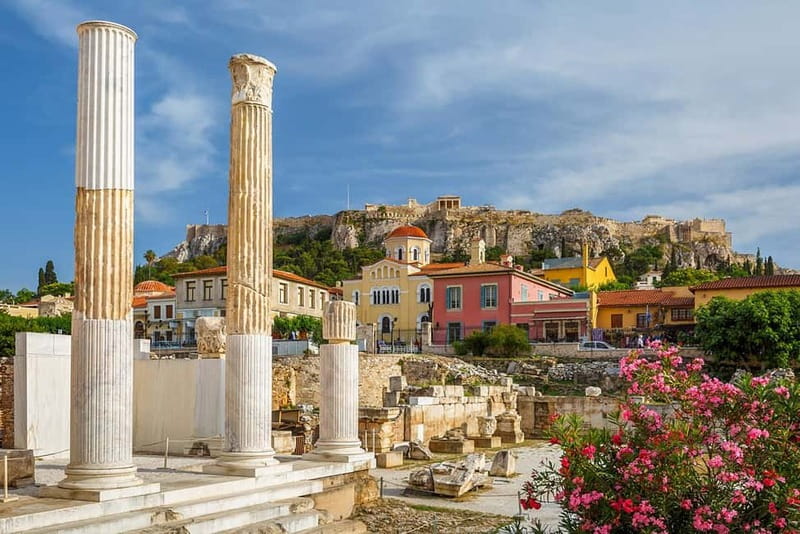
- Agora focus on public life, not just ruins—Temple of Hephaestus and Stoa of Attalos included
Why this Acropolis + Agora pairing makes sense in 4 hours
This tour works because it connects power and everyday life in one pass. The Acropolis was a religious and civic statement—high ground, big monuments, visible symbols. The Ancient Agora was where Athenians debated, traded, and gathered. When you see them back to back, Athens feels less like a museum and more like a system.
Also, the pacing is realistic. You get guided time at the major stops without being trapped in one spot forever. There’s a short break on the Acropolis (so you can cool down and reset your legs), and then the tour continues at the Agora at a walking pace that lets the ruins sink in.
One more practical win: entry tickets for both sites are included, and you use a separate entrance to avoid long lines. That matters because, in peak season, the clock becomes the enemy more than the monuments themselves.
You can also read our reviews of more walking tours in Athens


Porinou 5 to the first sights: getting your bearings fast
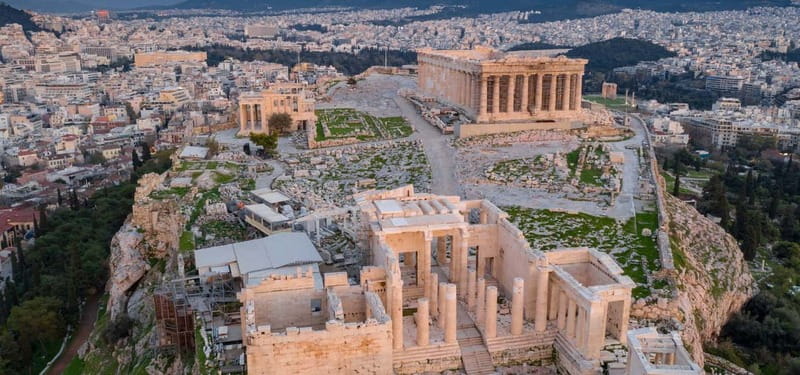
The day starts at Porinou 5 at the Office of Athens Walks. The meeting point is convenient—about a two-minute walk from the Acropolis metro station—and it’s a helpful warm-up because you’re already in the central area before the climb.
Your guide meets you with a quick itinerary overview, then you begin with the lower “stage” of the Acropolis area. Even though the Acropolis gets the spotlight, I like this start because it prevents the classic mistake: rushing to the top and missing how the sites relate to each other at street level.
You’ll first spend time at the Theatre of Dionysus (about 15 minutes). Then you walk toward the Odeon of Herodes Atticus (about 15 minutes of walking). These early stops matter because they frame the Acropolis as part of a lived cultural landscape—art, performance, public gatherings—before you’re surrounded by temple architecture.
South Slopes approach: the scenic climb and what to notice
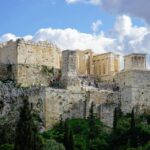
One of the best parts here is the route up the Acropolis via the South Slopes, described as a less crowded and scenic entry. That’s not just comfort. It changes your mindset as you climb: you’re observing the hillside, the archaeological features, and the sense of place as you go.
As you ascend, your licensed guide points out plants and archaeological details along the slopes. Even if you’re not a plant person, you’ll benefit from this because it turns the hill into a readable layer of history. The guide also explains ancient rituals and activities that once took place here, and why the Acropolis mattered to Greek religion and culture.
And then there’s the part you’ll feel in your camera roll: the city views. They’re a real break from staring at stone up close. I find that when the guide builds in these view moments, the monuments later feel less overwhelming.
Temple of Athena Nike, Propylaea, and the shift from outside to sacred space
After the climb begins to pay off, the itinerary drops you into key architectural transitions.
You’ll visit the Temple of Athena Nike next (a short walk). It’s smaller than the big names, but it’s exactly the kind of stop that makes a guided tour worth it. The guide will connect its details to Athena as the goddess of victory, so you don’t just see a neat structure—you understand why it was placed and what it symbolized.
Then you move to the Propylaea (about 10 minutes of guided time). Think of the Propylaea as the ceremonial gateway: it signals that you’re crossing a boundary into a sacred space. When you know that, you notice the transition more clearly instead of treating it like a doorway between ruins.
This is also where the tour’s flow starts to feel efficient: you’re not wandering randomly. Each stop answers the question, what changes here and why?
Parthenon time: what the guide actually helps you see
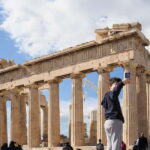
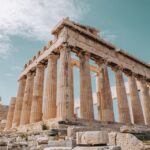
The Parthenon is given a full guided segment (about 30 minutes). That’s long enough to do more than glance at columns. This is where the guide’s explanations matter most because the temple’s role goes beyond its beauty.
Your guide shares stories about its construction and connects it to Athena, but also to a broader civic meaning—how the Acropolis became a symbol of Greek democracy and culture. The goal isn’t to turn this into a lecture. It’s to give you a framework so the Parthenon feels like intentional design, not just famous architecture.
Practical tip: with a site this big, it helps to choose one angle you like and let the guide walk you through it. If you keep switching positions, you’ll lose the sequence. Wireless hearing devices help a lot here since you can focus on listening while you look.
You can also read our reviews of more guided tours in Athens



Erechtheion and the Caryatids: the detail stop that changes everything
After the Parthenon, you’ll visit the Erechtheion (about 15 minutes). This is where the tour earns its “must-do” reputation—at least for people who care about details.
The Erechtheion is known for unique architecture and the famous Caryatids. These are female figures used as supporting columns, and once you know that function, the statues stop being just impressive. They become part of the building’s logic.
The guide will explain the structure’s significance, including how its features relate to the enduring influence of the architecture and the beliefs behind it. I like this stop because it adds variety after the massive symmetry of the Parthenon. You get more texture, more character, and a different way of understanding what “sacred” looked like in stone.
Acropolis break: use the 15 minutes well
You get a 15-minute break on the Acropolis. This is short, but it’s enough time to do what you’ll otherwise put off: hydrate, take photos from a good spot, and reset your pace.
Don’t waste it by disappearing too far. The tour continues to the Ancient Agora, and you’ll want your legs in decent shape for the lower site. Also, plan your camera time around where the light feels best—your guide’s route helps with this, but you still control how you shoot.
And quick rule: flash photography isn’t allowed, so keep your settings ready if you’re shooting late in the day.
Ancient Agora: turning monuments into daily life
Once the Acropolis is behind you, the tour moves to the Ancient Agora of Athens for about 30 minutes of guided time. Here’s the shift: instead of focusing on monumental religion and civic symbolism, you’re looking at a place built for people.
Your guide recounts political, social, and commercial activities that once happened here. The Agora becomes the heart of public life—where citizens, philosophers, and politicians met. That context is the difference between seeing ruins and understanding a functioning urban space.
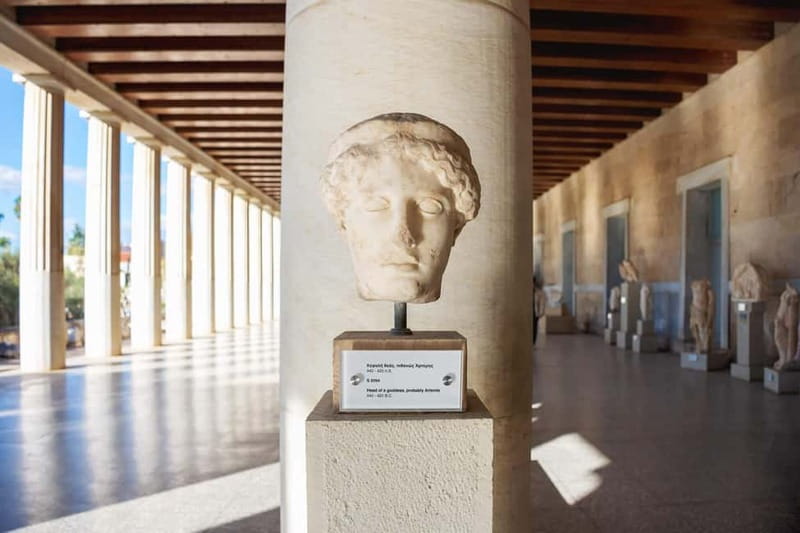
You’ll also visit major landmarks, including the well-preserved Stoa of Attalos, which now houses a museum displaying artifacts from the site. Even if you don’t spend extra time inside the museum beyond what the guide allows, the Stoa is a strong visual anchor because it looks like it was designed to last through centuries of reuse and survival.
Temple of Hephaestus and Agora structure: why this part stays with you
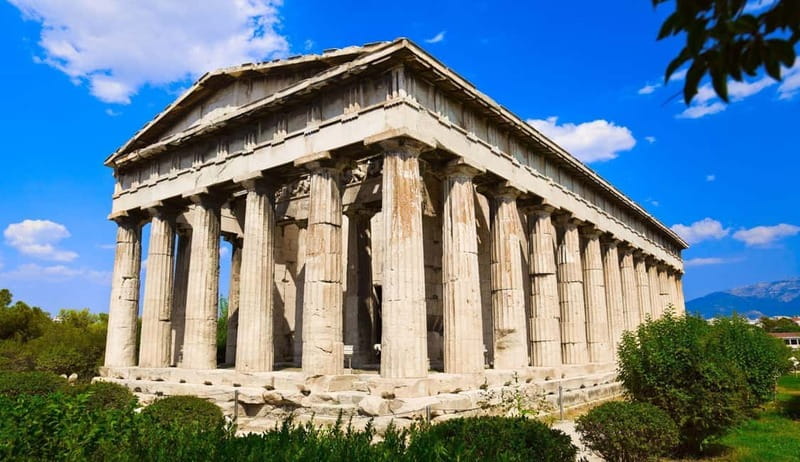
The tour includes the Temple of Hephaestus (about 10 minutes walking). It’s one of the best-preserved ancient temples, and that preservation does something for your imagination. You can more easily picture the space as it would have functioned—something you can’t always do with fragments.
Your guide explains that the temple was dedicated to Hephaestus, the god of craftsmanship. That detail matters because it connects the temple to what the Agora represented: practical work, skill, and the kind of city economy where craftspeople and traders were part of the daily rhythm.
At the same time, your guide points out other Agora highlights and monuments and statues that once adorned the area. Even if you’re looking at foundations now, the story helps you reconstruct the “full” scene.
$102 for 4 hours: how the value adds up
At $102 per person, this is not a cheap activity. But you are paying for three things that usually cost extra when booked separately: a licensed guide, site entry tickets for both the Acropolis and Agora, and skip-the-line access.
Add in the wireless hearing devices, and the value improves. Without that, a guided tour can turn into a guessing game—especially in busy areas. With it, you can keep your eyes on the buildings while still tracking the explanation.
Then there’s time value. If you’re squeezing Athens into a short visit, losing an hour to lines is the difference between seeing the important bits and taking only a highlights-and-photos approach. This tour’s design is meant to protect your sightseeing time, not just your ticket purchase.
What kind of traveler this tour fits best
I’d send this tour to travelers who want their Acropolis visit to feel guided and readable. If you like architecture, symbols, and understanding how public life worked in ancient Athens, you’ll get a lot out of it.
It also fits people who don’t want to gamble on doing it alone. The route—starting at Porinou 5, using a South Slopes entry, and pairing the Acropolis with the Agora—reduces decision fatigue.
If you’re traveling with very young kids, this is not the best match: it isn’t suitable for children under 6. And if mobility is an issue, it’s not suitable for people with mobility impairments or wheelchair users. The walking is described as moderate, with a notable climb involved.
A note on guides: the difference between info and direction
One of the strongest themes from the experience is that the guide matters. The kind of guides you may meet—like Anastasia—are described as extremely organized and effective, with strong explanations. Others, like Yanis/John, are also praised for being friendly and informative.
In practical terms, that means you’ll get more than dates. You’ll get direction on where to look, what details matter, and how each building connects to the big picture.
That’s the real value of a guided tour: it turns wandering into meaning. And in Athens, meaning is what you’re really buying.
Should you book this Athens Walks Acropolis and Ancient Agora tour?
If you want one guided outing that covers the Acropolis’s top monuments and then carries you to the Agora with context, this is a strong choice. The skip-the-line access plus included tickets helps you use your time well, and the wireless hearing devices keep it enjoyable even when you’re surrounded by crowds.
I’d book it if you:
- want guided explanations at the Parthenon and Erechtheion
- care about how ancient Athens worked as a civic and public-life city
- prefer a guided route over figuring out the best path on your own
I’d skip it (or plan a different format) if you:
- have trouble with uphill walking
- need wheelchair-friendly access
- are traveling with a child under 6
FAQ
How long is the Acropolis and Ancient Agora guided walking tour?
The tour lasts about 4 hours.
Where do I meet the tour, and where does it end?
You meet at the Office of Athens Walks on Porinou 5. The tour ends back at the meeting point.
What sites are included?
You’ll visit the Acropolis highlights (including the Parthenon, Erechtheion, Temple of Athena Nike, and the Propylaea) and the Ancient Agora highlights (including the Stoa of Attalos and the Temple of Hephaestus).
Are entrance tickets included?
Yes. Entry tickets to both the Acropolis and the Ancient Agora are included.
Do I need to worry about long lines?
The tour includes skip-the-line entry through a separate entrance at both the Acropolis and the Agora.
Is the tour offered in English?
Yes, the live guide provides the tour in English.
What should I bring?
Bring comfortable walking shoes, a hat, camera, sunscreen, and water.
Is flash photography allowed?
No, flash photography isn’t allowed.
Extra questions people ask
Is it suitable for wheelchair users or mobility impairments?
No. It isn’t suitable for people with mobility impairments or for wheelchair users.
You Might Also Enjoy


More Walking Tours in Athens

More Tours in Athens

More Tour Reviews in Athens
- All Day Cruise -3 Islands to Agistri,Moni, Aegina with lunch and drinks included
★ 5.0 · 4,958 reviews