REVIEW · ATHENS
4 Days Classical Private Tour/ Corinth,Mycenae,Nafplio,Sparta,Olympia,Delphi
Book on Viator →Operated by GREECE TAXI · Bookable on Viator
Ancient Greece, in four days of smart logistics. I like how this tour strings together Corinth, Mycenae, Mystras, and Delphi without wasting half your time stuck in planning mode. I also really value the private setup: pick-up and drop-off at your Athens (or Piraeus) place, and a vehicle that keeps you moving.
Two big wins for me are the onboard Wi‑Fi for the long drives and the way the route balances big-name sites with places that feel calmer once you arrive. You’ll also get a real-world feel for how the guides think about timing and crowds; the driver Nikolaos, in particular, is the kind of guide who keeps things smooth and answers your questions with patience and warmth.
One thing to consider: admission fees are not included for many sites and museums, and the extra cost depends on season (winter vs summer).
In This Review
- Key things to notice before you go
- A private “classics loop” that actually feels like a trip
- Price and logistics: what you pay, what you’ll budget for
- How the vehicle setup affects your comfort
- Day 1: Corinth Canal, Ancient Corinth, and Mycenae’s royal ruins
- Corinth Canal (short walk, big photo payoff)
- Ancient Corinth and Temple of Apollo (where Paul’s letters meet Doric stone)
- Corinth museum (less time than you think, more value than you expect)
- The Treasury of Atreus and the Mycenae site (where myths feel physical)
- How to handle the day without burning out
- Nafplio overnight and Palamidi Castle: the view is worth the legs
- Palamidi Castle (count your steps, then enjoy the payoff)
- Nafplio town (why people keep returning)
- Day 2: Nafplio museums, Acronafplia, Sparta’s core monuments, then Mystras UNESCO
- Dendra-to-armor detail at the Museum of Nauplion
- Akronafplia Fortress (old walls, modern views)
- Argos quick context
- Sparta’s museum and the bones of the city-state
- Mystras and Mount Taygetus (UNESCO + a darker historical layer)
- Day 3: Olympia’s sanctuary, the Olympic Games museum, and a Gulf-side scenic shift
- Olympia archaeological site (the stadium and the sanctuary layout)
- Olympia Museum (statue power that makes names stick)
- Museum of the Olympic Games (how the event worked)
- Rio–Antirion Bridge: a scenic pause with a ferry
- Nafpaktos and Galaxidi (ports that feel easy)
- Overnight on Mount Parnassus (so you wake up closer to Delphi)
- Day 4: Delphi’s oracle core, Athena Pronaia, plus Livadia and Thebes
- Delphi sanctuary: the navel of the world
- Delphi Archaeological Museum (where the sanctuary becomes a collection)
- Tholos of Athena Pronaia (small and technical, in the best way)
- Livadia and the oracle of Trophonius
- Thebes Museum (Boeotia beyond the postcards)
- What you’ll like most (and who should pick this exact route)
- Practical tips that make the difference on days 1–4
- Should you book this 4-day private route?
- FAQ
- Is this tour private?
- What’s included in the price?
- Are museum and archaeological site tickets included?
- Does the tour offer a hotel for overnight stays?
- Can I hire an archaeological guide for the sites?
- What day are museums closed?
Key things to notice before you go
- Private group only, so you control the pace and stop durations.
- Hotel drop-off and pick-up in Athens or Piraeus saves serious hassle.
- Onboard Wi‑Fi makes the long road days feel less like a chore.
- Four UNESCO World Heritage Sites in one tight loop: Corinth, Mycenae, Mystras, Delphi.
- Overnight stays in Nafplio and Olympia change the trip from a rushed day-tour to something more human.
- You can add a licensed archaeological guide for walks at sites, if you want extra depth.
A private “classics loop” that actually feels like a trip

This is the kind of tour that works because it respects your attention span. Instead of jumping between far-flung places with constant transfers, you stay in a rhythm: drive, arrive, walk, pause, and move on. The private vehicle matters here. You’re not sharing time with strangers who want a different pace, different photo style, or different priorities.
I especially like how the route groups sites by region. Day 1 leans hard into Corinth and Mycenae, Day 2 shifts into Nafplio and Sparta’s orbit, Day 3 covers Olympia and the scenic north coast route toward central Greece, and Day 4 focuses on Delphi plus a couple of Boeotian stops. It’s a classical route, but the planning is practical.
You can also read our reviews of more private tours in Athens


Price and logistics: what you pay, what you’ll budget for
The headline price is $1,376.08 per person for a 4-day private tour starting at 8:00 am. That cost covers private transportation for four days (including fuels, toll roads, ferry tickets, and parking) plus a professional English-speaking tour driver/leader.
What’s not included is the big variable: admission fees. You’ll pay per ticketed museum/site, and the per-site amount changes by season:
- In winter (Nov 1 to Mar 31): €10 per person per paid site/museum
- In summer (Apr 1 to Oct 30): €20 per person per paid site/museum
The good news is not everything is paid. Many stops in the route are listed as free entries (for example: Corinth Canal, Temple of Apollo remains, several museums, and several monuments). Still, you should plan for extra costs.
Accommodation is another variable. The tour can arrange hotels, but overnights are not included in the main price. The operator offers selected boutique or 3/4 hotels with breakfast with extra costs per double room per night (and weekend pricing). The driver’s room is complimentary. If you already have your own lodging plans, you can do your own hotel reservation, but you’d still need an extra room for the driver.
How the vehicle setup affects your comfort
You pick the vehicle size based on your group:
- Sedan/SUV: up to 3 adults, or family of 4 (kids up to age 10 free)
- Minivan: 1 to 7 persons (kids up to 10 free)
- Minibus: 1 to 14 persons (kids up to 10 free)
On a route like this, vehicle choice impacts two things: the “ease factor” in tight towns and the comfort during long drives. If your group includes kids, the free-kid policy for up to age 10 can be a real value.
And yes, the tour highlights onboard Wi‑Fi, which helps a lot on the long road segments.
Day 1: Corinth Canal, Ancient Corinth, and Mycenae’s royal ruins

Day 1 is built like a narrative. You start with the modern engineering marvel at the Corinth Canal, then step into the layered past of Ancient Corinth, and close the day at the source of Mycenaean power: Mycenae.
Corinth Canal (short walk, big photo payoff)
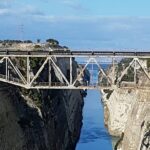
You get time for photos and a quick stroll. What makes this stop worth it is the vantage: you can walk across the pedestrian bridge and admire the canal from above. It connects the Aegean and Ionian seas, and it’s also a reminder that people have been changing Greece’s geography for centuries.
- Time: about 15 minutes
- Ticket: free
- What to watch for: comfortable shoes for the bridge area and good photo spots near the viewpoints.
You can also read our reviews of more tours and experiences in Athens

Ancient Corinth and Temple of Apollo (where Paul’s letters meet Doric stone)
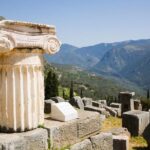
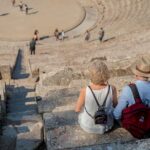
At Ancient Corinth (Archaia Korinthos), you’re walking among ruins of one of Greece’s major cities. The site is also deeply tied to early Christian history through Saint Paul’s letters (First and Second Corinthians), plus the Acts of the Apostles. You’ll feel the change from Roman destruction and rebuilding, but you’re still standing on meaningful layers.
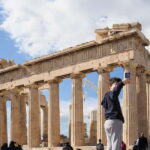
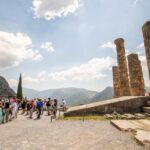
Then you move to the Temple of Apollo, built around 550 B.C. in the Doric style, on a rocky hill. The remains here are early Doric and visually commanding—especially because the temple sits on an elevation that used to act like a stage.
- Ancient Corinth: about 1 hour, paid (combined ticket)
- Temple of Apollo: about 10 minutes, free entry
Corinth museum (less time than you think, more value than you expect)
The Archaeological Museum of Corinth gives you context. It’s not just “stuff in cases.” You see material from prehistoric through Hellenistic periods, plus Roman and Byzantine finds, including pieces connected to the Asklepieion.
- Time: about 30 minutes
- Ticket: free
The Treasury of Atreus and the Mycenae site (where myths feel physical)
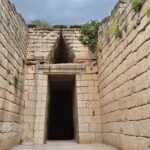
Then comes one of the strongest “wow, that’s real” stops: the Citadel and Treasury of Atreus—the tholos tomb associated with Agamemnon’s name (thanks to Heinrich Schliemann’s influence). Even if the naming story is debated, the architecture itself is the star: monumental tholos design from around 1250 B.C.
You’ll then visit the Archaeological Site of Mycenae. This is the Acropolis with defensive walls, plus major landmarks like the Lions Gate and corbelled tomb architecture. The site is tied to the myths of Agamemnon and to the larger Mycenaean civilization—so it’s both archaeological and story-driven.
- Treasury of Atreus: about 15 minutes, paid
- Mycenae site: about 1.5 hours, free entry
- Mycenae museum: about 30 minutes, free entry
How to handle the day without burning out
Day 1 is packed with “big-stone” sites. If you want to enjoy it, slow down your photo strategy: take fewer photos, but stand in the places where you can see how walls and tombs were placed. That’s where the feeling clicks.
Nafplio overnight and Palamidi Castle: the view is worth the legs

Nafplio is the trip’s palate cleanser. After the day of stone ruins, you wake up to a coastal, older-town feel.
Palamidi Castle (count your steps, then enjoy the payoff)
Palamidi Castle is a fortress with strong Venetian fortification architecture. It’s preserved well, and it sits high enough to give you sweeping views across the Argolic Gulf and the town below.
Yes, there are lots of stairs. The route describes 913 steps from town to fortress, with more than a thousand total to reach the top. If you’re even a little unsure about your stamina, go slowly and take breaks. Bring water.
- Time: about 1.5 hours
- Ticket: not included
Nafplio town (why people keep returning)
Nafplio grew into an important port under different rulers: Venetians, Ottomans, and more. It also became capital during the early Greek Revolution period. The practical takeaway: Nafplio gives you evening time for wandering and dinner without needing another drive.
The tour can arrange hotel stays here (selected boutique or 3/4 options with breakfast), or you can book your own place with an extra driver room.
Day 2: Nafplio museums, Acronafplia, Sparta’s core monuments, then Mystras UNESCO
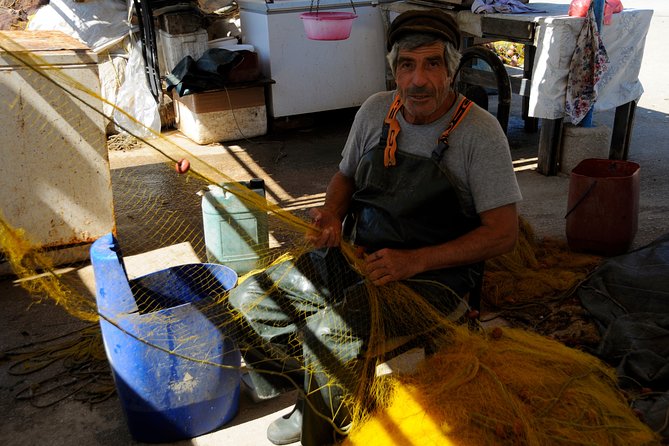
Day 2 feels like stepping from coastal beauty into hard-edged Spartan history and then into the Byzantine world at Mystras.
Dendra-to-armor detail at the Museum of Nauplion
The Archaeological Museum of Nauplion sits in a Venetian stone building. The standout detail here is the Bronze Age armor from the Dendra region, displayed with related tools and equipment.
- Time: about 1 hour
- Ticket: not included
Akronafplia Fortress (old walls, modern views)
Acronafplia is Nafplio’s oldest castle area. You can spot remnants that reach back toward Bronze Age layers, and then see how Romans, Franks, Venetians, and Turks expanded the fortress over time. Even when you’re not reading every wall, the views do the teaching: the bay northwards, the city below, and beaches to the south.
- Time: about 30 minutes
- Ticket: free
Argos quick context
You also get a stop connected to Argos, one of the most continuously inhabited cities in the world (as described in the tour notes). It’s the largest city in Argolis and has monuments that point to the deep timeline of settlement.
No specific duration is listed, so think of this as a context stop while moving through the area.
Sparta’s museum and the bones of the city-state
In Sparta, the Archaeological Museum of Sparta gives you the baseline: it’s the oldest provincial archaeological museum in Greece (in the tour’s description) housed in a neoclassical building built in the 1870s. Then you move outside to Acropolis and the Ancient Theater—a site that helps you see why Sparta mattered in Archaic and Classical periods.
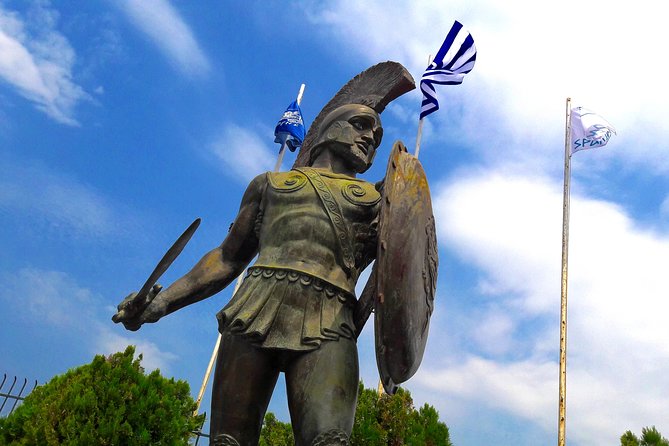
Then, a short but memorable highlight: the Leonidas Monument. It’s positioned in front of a stadium and associated with Thermopylae. The tour notes reference Molon labe and a monument dating back to the 5th century B.C., believed to relate to Leonidas.
- Sparta museum: about 30 minutes, paid
- Acropolis and theater: about 1 hour, free
- Leonidas Monument: about 15 minutes, free
Mystras and Mount Taygetus (UNESCO + a darker historical layer)
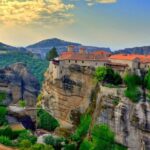
The Archaeological Site of Mystra is where the trip turns from classical Greece into medieval Byzantium. Mystras is a ruined city built around a fortress and shaped through Venetian and Ottoman occupations before being abandoned in 1832—leaving a remarkably preserved medieval structure in a dramatic setting.
This part also ties into Mount Taygetus, described as a major natural defense for Sparta and connected to the ancient practice of punishment (the tour notes mention Ceadas/Caeadas, including what recent evidence suggests). I’d treat this part respectfully and keep the focus on what the site shows: how geography becomes policy.
The tour also identifies Mystras as a UNESCO World Heritage Site.
- Mystra: about 2 hours, paid
- Mount Taygetus: included as a stop with historical context
Day 3: Olympia’s sanctuary, the Olympic Games museum, and a Gulf-side scenic shift
Day 3 is Athens-to-Delphi energy, but it starts in one of the most important names in Greek culture: Olympia.
Olympia archaeological site (the stadium and the sanctuary layout)
Olympia was the center of the Olympic Games, held every four years in antiquity beginning in 776 BCE. The archaeological site sits in a quiet valley, laid out across ruins from Bronze Age to Byzantine eras, including the stadium where the Games happened.
- Time: about 2 hours
- Ticket: not included
Olympia Museum (statue power that makes names stick)
The Archaeological Museum of Olympia is where the story gains detail. The tour notes emphasize major finds like:
- Hermes of Praxiteles (around 340 BCE)
- Nike of Paionios of Mende (around 420 BCE)
- multiple helmet dedications linked to Marathon-era victories
Even if you don’t memorize dates, seeing objects with the original dedication context helps the place feel less like a lecture and more like a living museum.
- Time: about 1 hour
- Ticket: listed as free
Museum of the Olympic Games (how the event worked)
This smaller museum makes the Games readable: the core events (foot racing, wrestling, boxing, chariot racing) and details like the association with Hercules/Pelops and what happened to women who tried to watch despite prohibitions.
- Time: about 30 minutes
- Ticket: free
Rio–Antirion Bridge: a scenic pause with a ferry
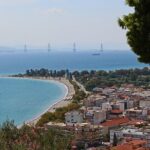
Then the trip gets playful. You take a ferry at Rio–Antirion Bridge to admire the structure linking Rio to Antirrio. The bridge is one of the world’s longest multi-span cable-stayed bridges, and it opened right before the Athens 2004 Olympics—also tied to the Olympic flame transport in the tour notes.
- Time: about 20 minutes
- Ticket: free (for the included ferry experience)
Nafpaktos and Galaxidi (ports that feel easy)
You then stop in Nafpaktos (Lepanto in parts of its history) and Galaxidi, a small port with restaurants and a natural harbor setting. These are good breaks for your brain after hours of ancient sites.
- Nafpaktos: about 1 hour, free
- Galaxidi: about 30 minutes, free
Overnight on Mount Parnassus (so you wake up closer to Delphi)
The day ends with driving via Mount Parnassus, described as sacred to Dionysus, Apollo, and the Muses in mythology. You stay overnight in a traditional village on the slopes.
- Time: about 12 hours on the day’s segment for the overnight drive context
- Ticket: free
Day 4: Delphi’s oracle core, Athena Pronaia, plus Livadia and Thebes
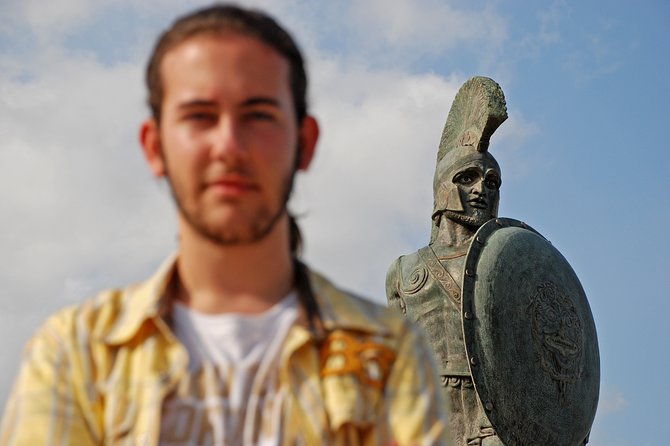
Day 4 is classic Greece in its most “thoughtful” form: prophecy, sculpture, and the places between the big ticket sites.
Delphi sanctuary: the navel of the world
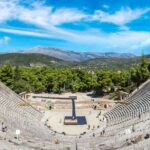
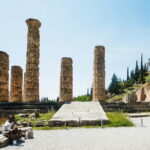
Delphi is where the seat of the Pythia oracle shaped decisions across the classical world. The site occupies the south-western slope of Mount Parnassus with views down toward the coastal plain and the valley of Phocis. UNESCO recognition here makes sense because many city-states built monuments there, showing shared Hellenic identity.
You’ll visit Temple of Apollo at Delphi. The tour also references the stone monument known as the omphalos (navel).
- Time: about 1.5 hours
- Ticket: not included
Delphi Archaeological Museum (where the sanctuary becomes a collection)
The Archaeological Museum of Delphi is one of Greece’s important museums. It focuses on the sanctuary’s history, with collections reflecting religious, political, and artistic activity from the 8th century BCE onward into late antiquity.
- Time: about 1 hour
- Ticket: free
Tholos of Athena Pronaia (small and technical, in the best way)
The Tholos of Athena Pronaia is a circular building created between 380 and 360 BCE. The exterior has 20 Doric columns, and the interior columns are Corinthian order—so you see stylistic crossover in one compact structure.
- Time: about 30 minutes
- Ticket: free
Livadia and the oracle of Trophonius
Next comes a calmer stop: Livadia, tied to the oracle of Trophonius, mentioned in the tour notes with references including Croesus and Mardonius, plus Pausanias.
- Time: about 30 minutes
- Ticket: free
Thebes Museum (Boeotia beyond the postcards)
Finally, the Archaeological Museum of Thebes focuses on collections from excavations across Boeotia spanning a huge time range—from paleolithic to post Byzantine periods. The tour lists this as paid in general/summer and reduced in winter.
- Time: about 1 hour
- Ticket: not included
You finish with return to Athens in the evening.
What you’ll like most (and who should pick this exact route)
This tour is best for you if:
- You want a private, English-speaking driver/leader who handles the “how do we get there” piece.
- You care about UNESCO sites but don’t want to spend days hopping buses.
- You prefer fewer headaches: pickup, drop-off, ferry, and parking all handled.
- You like your history with context: Olympia’s events explained, Delphi’s sanctuary made understandable, Sparta’s monuments tied to what they meant.
It may be less ideal if:
- You want zero extra costs. Admission fees add up, especially in summer.
- You expect a licensed archaeologist to walk you through every site. The driver is not described as a licensed guide for site walks, and you’d need to hire an archaeological guide separately if you want that.
Practical tips that make the difference on days 1–4
- Start with good walking shoes. Some stops are short, others like Palamidi and Mystras can feel like a workout.
- Bring a light layer and water. Even when museums are open, Greece heat plus walking adds up.
- Plan your photo expectations. Ancient Greece rewards stillness; you’ll enjoy it more if you stop often to look, not just snap.
- If you’re traveling on a Tuesday, know that museums have closures listed for that day (the tour specifies museums only).
Should you book this 4-day private route?
I’d book it if you want a high-value private circuit that connects the big classical landmarks (Corinth, Mycenae, Mystras, Delphi) with strong museum time and two overnight bases that make the trip feel less like a blur.
I’d hesitate if you’re on a tight budget for entry fees and you dislike the idea of paying extra per site. Also, if you want a deep, licensed archaeological guide at every stop, plan to add that service in advance.
In short: if you want a smooth, custom-feeling journey across Greece’s core classics, this one is built well.
FAQ
Is this tour private?
Yes. It’s a private tour/activity, and only your group participates.
What’s included in the price?
Pick up and drop off from your Athens (or Piraeus) accommodation (or airport by request), private transportation with air-conditioned vehicles, fuels/tolls/ferry tickets/parking, and a professional English-speaking experienced tour driver/leader. Accommodation for the driver is also included.
Are museum and archaeological site tickets included?
No. Admission fees are not included. The tour lists season-based per-site pricing: €10 per person in winter and €20 per person in summer.
Does the tour offer a hotel for overnight stays?
Accommodation is not included in the main price, but the operator can arrange hotels for you with breakfast for an extra cost per double room per night. Driver’s room is complimentary.
Can I hire an archaeological guide for the sites?
Yes. The tour notes that you can hire an archaeological guide for walks at an additional charge of €180 per booking, if requested in advance.
What day are museums closed?
The tour notes that museums are closed every Tuesday (museums only).
You Might Also Enjoy




More Private Tours in Athens

More Tours in Athens


More Tour Reviews in Athens
- All Day Cruise -3 Islands to Agistri,Moni, Aegina with lunch and drinks included
★ 5.0 · 4,958 reviews