REVIEW · ATHENS
4-Day Private Tour of Classical Greece from Athens
Book on Viator →Operated by Ancient Greece Tours & Transfers · Bookable on Viator
If you want Greece without the stress of sorting buses and tickets, this private Classical Greece circuit is a smart way to do it. I especially like the hotel pickup and drop-off and the fact that you ride in a comfortable vehicle with onboard Wi‑Fi while ticking off major ancient landmarks. One thing to plan for: the big site entrance fees are not included in the tour price, so budget for those upfront.
This is the kind of trip where you get clear structure, but still have room for real breaks—museum time, walking time, and even lunch stops chosen for views. I also like that the stops are historically connected, from Thermopylae’s dramatic hinge moment to Delphi’s oracle and then onward to Olympia and the Peloponnese’s Mycenaean and Corinthian world.
The possible drawback is simple: since it is a private tour driven by professionals, not a licensed guide inside every ticketed site by default, you may want to request a licensed tour guide if you expect expert commentary while you’re in museums and ruins.
In This Review
- Key highlights worth caring about
- Private four-day route from Athens: what makes it work
- Price and value: what you’re paying for, and what you still must budget
- Day 1: Thermopylae’s story, then Delphi’s oracle world
- Day 2: Olympia’s temples, the stadium context, and the museum layer
- Day 2 to Day 3: Nafplion’s fortress views and the Epidaurus sound trick
- Day 4: Acrocorinth’s fortress heights and Corinth’s layered religious sites
- Time, comfort, and the small practical advantages that matter
- Food breaks and shopping: plan for your own budget, but know it’s built in
- Who this tour fits best (and who might not love it)
- Should you book this Classical Greece private tour?
- FAQ
- What sites are included in this 4-day tour from Athens?
- Is hotel pickup and drop-off included?
- What about transportation and comfort during the tour?
- Are entrance fees included in the tour price?
- Do I need to pay for a licensed guide inside sites and museums?
- What kind of meals are included?
- Can I cancel and get a refund?
Key highlights worth caring about
- Hotel pickup and drop-off in Athens: you start and end at your lodging, not a distant meeting point.
- Wi‑Fi in the private vehicle: handy for navigation, maps, and keeping everyone synced.
- Thermopylae plus Delphi on Day 1: two iconic “place-based” stories in one day.
- Olympia in detail: temples, the stadium context, and museum time with major artifacts.
- Epidaurus and Mycenae pairing: world-famous theater acoustics next to gold-rich Bronze Age sites.
- Acrocorinth and Corinth Canal: fortress views plus modern engineering added to the ancient mix.
Private four-day route from Athens: what makes it work
This tour is built around a very practical idea: let someone else handle the long driving days so you can focus on the sites. Athens is the hub, and you go out in a sequence that feels logical instead of chaotic. You’ll spend nights in key bases—Delphi, Olympia, Nafplion, and either Ancient Corinth or Loutraki—so you’re not doing nonstop “drive all day, sleep in the car” travel.
Because it is fully private, only your group rides along. That matters more than people expect. You can move at a pace that fits you, stop when the timing makes sense, and avoid the herd-style rhythm of larger group tours.
You also get the comfort extras that make a difference on a long itinerary: bottled water, refreshing wipes, and fresh handmade Greek biscuits. Small perks, yes, but after a few hours on the road they stop feeling small.
You can also read our reviews of more private tours in Athens


Price and value: what you’re paying for, and what you still must budget
The price is $1,529.22 per person, and it’s for a fully private multi-day experience with a professional driver and in-depth knowledge of Greek history, private transportation, and hotel/port pickup and drop-off.
The value is strongest in three areas:
First, you’re buying time and logistics. Hotel-to-hotel pickup means you’re not managing schedules, parking, and public transport transfers on a packed ancient route.
Second, the tour includes onboard Wi‑Fi, which helps on days where you might want to look up context, check maps for viewpoints, or keep plans coordinated.
Third, the route is packed with major sites: Thermopylae, Delphi, Olympia, Nafplion, Epidaurus, Mycenae, and Corinth. You’re not just hitting one “top attraction” and calling it a day.
Now the part you should not ignore: entrance fees are not included. The provided total is €135.00 per person for site admissions at Delphi, ancient Olympia, Mycenae, Epidaurus, and ancient Corinth. That means your overall trip cost will be tour price plus that add-on, plus whatever you spend for food and drinks.
Also note a request you may want to think about in advance: if you want a licensed tour guide who goes with you into sites and museums, that is additional on request. The driver does have in-depth knowledge, but a licensed on-site guide can change the experience if you want more detailed interpretation.
Day 1: Thermopylae’s story, then Delphi’s oracle world
Day 1 starts at Thermopylae, and it’s not a quick photo stop. You begin with the Thermopylae memorial area, tied to the famous conflict between Greek city-state forces led by King Leonidas of Sparta and the Persian Empire under Xerxes.
What I like about this stop is how much it helps you understand the layers of meaning at one place. You’ll see the monument known as the Gates of Fire, connected in Greek mythology to the hot springs and the entrances to Hades. Then there’s the Leonidas monument, erected in 1955 by sculptor Vasos Falireas—a brass sculpture of the Spartan king with spear and shield. It’s a very direct visual reminder that this wasn’t just a battle; it became a symbol.
After that, the Thermopylae Museum focuses on the 480 BC battle and frames why this event mattered beyond the immediate fight. If you’re the type who likes history to come with a story arc, the museum helps glue the rest of your day together.
You can also have time for the hot springs facilities described as high-end hydrotherapy with balneotherapy focus. The springs are also treated like a real system: out of 60 pending, 34 springs have been officially recognized. Even if you skip the hydrotherapy itself, it’s a strong reminder that Thermopylae is physical geography plus legend.
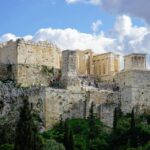
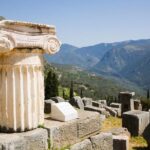
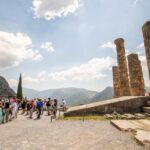
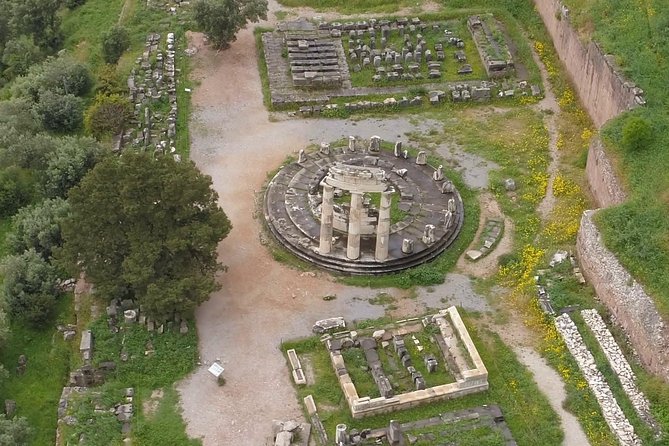
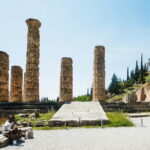
From there, you drive to Delphi, check into your chosen hotel, and then get a full Delphi day at the UNESCO site. Delphi is famous for the oracle—the Pythia—and the idea that Delphi was the center of the world. That perspective matters here because you’ll see how the sanctuary’s power grew over time, and how it hosted religious life plus athletic and cultural events like the Pythian games.
You’ll visit the Temple of Apollo, the Ancient Theater, the Stadium, and treasuries that show off city pride. A few highlights to look for:
- The Omphalos stone, linked to the symbolism of the earth’s center.
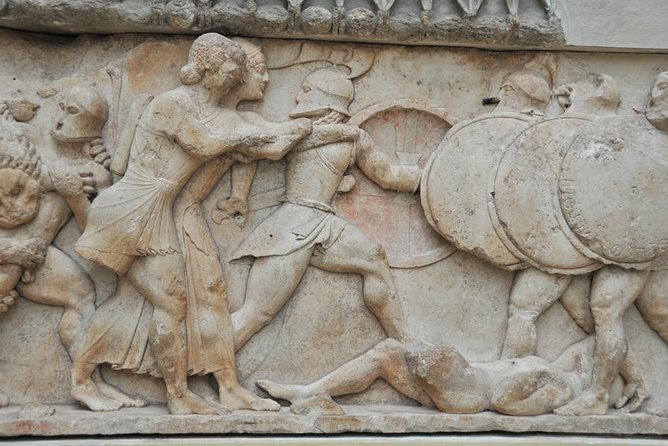
- The Athenian Treasury metopes, featuring mythic scenes such as Theseus and the Minotaur and Heracles episodes.
- The Naxian Sphinx dated to 560 BC, one of the early creature depictions with a lion’s body, bird wings, and a woman’s head.
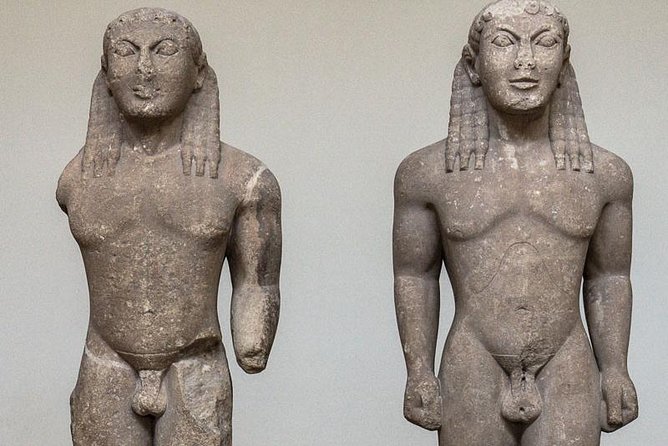
- Statues and works like Kleobis and Biton, and the Charioteer from the complex with a four-horse chariot.
Then you’ll move indoors to the Delphi Archaeological Museum, where the finds from Delphi’s excavations are housed. This is usually where the artifacts feel less like distant ruins and more like something that once sat under someone’s hands.
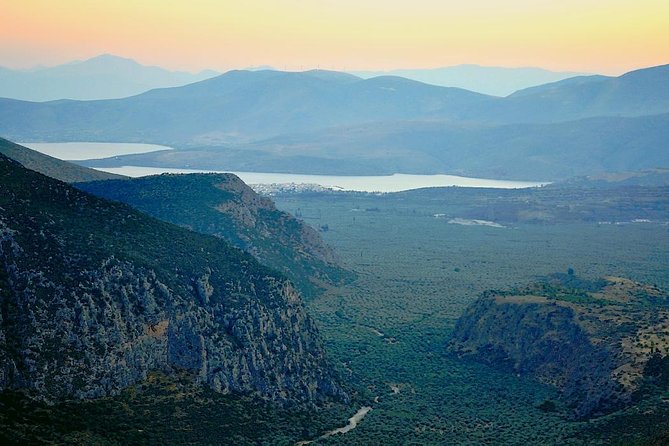
Lunch comes with a view setup—time to eat by the caldera overlooking Itea and Amfissa—which helps make the day feel less like a checklist.
If you want a more personal Greek meal, there’s an option for dinner at La Belle Helene with home cooked food. The note in the experience is that you can meet Konstantina, which turns dinner into a human moment rather than just “restaurant stop #1.”
Day 2: Olympia’s temples, the stadium context, and the museum layer
Olympia is the kind of place where ruins can feel too big without guidance. This day helps fix that by walking you through the key religious and athletic anchors.
You start in the broader Olympia area, then you spend focused time at the archaeological site:
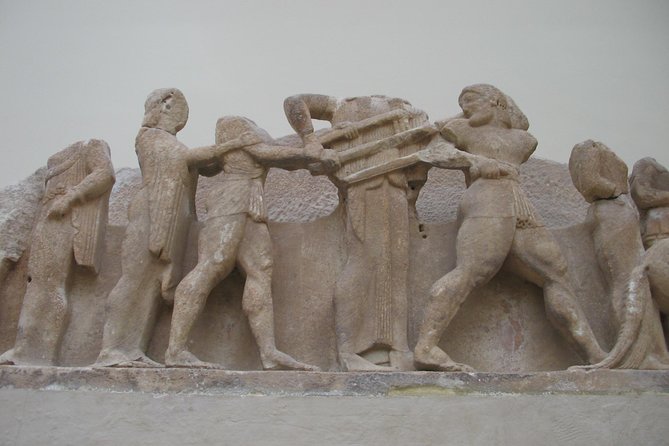
- The Temple of Zeus is a classic Doric statement from the 5th century BC, described as the model of fully developed Doric temple architecture.
- The Temple of Hera (Heraion) built around 590 BCE connects directly to the Olympic flame tradition in modern times.
- The Philippeion, a circular monument dedicated to Zeus by Philip II of Macedonia after Chaeroneia in 338 BCE, completed by his son Alexander the Great.
- The Hippodrome and stadium context, where you can picture horse and chariot races and the starting/finishing line layout.
- The Palaestra tied to gymnasium training for boxing, wrestling, and jumping.
Then you go to the Workshop of Pheidias, described as the place where the sculptor crafted the chryselephantine statue of Zeus. Even if you never see the statue itself, knowing it was made there adds a layer of realism.
After the ruins, you shift to the Archaeological Museum of Olympia, where artifacts from the site are displayed, including the Statue of Zeus reference described as a huge seated figure about 13 meters tall. You won’t feel like you’re just looking at empty stones.
There’s also museum variety, not just one room and done. The experience includes Filoxenia (Φιλοξένια) N. Χ. Κωστόπουλος, the Museum of the History of the Olympic Games in Antiquity, which has been in operation since 2004. It’s based on a collection by Georgios Papastefanou and focuses on spreading the Olympic idea through education.
And there’s an extra science-minded stop: the Museum of Archimedes, described as interactive with replicas of inventions. If you like the “Greek thinkers weren’t only philosophers” angle, this helps balance the day.
A big plus here is pacing. The morning starts with breakfast, then you get a structured site visit, followed by museum time, then downshift into staying overnight in Olympia and enjoying dinner or village strolling.
Day 2 to Day 3: Nafplion’s fortress views and the Epidaurus sound trick
On Day 3, you’re in Nafplion, a coastal town with a lively historic spine and a waterfront. You get the major visual anchors:
- Palamidi Castle on a hill 216 meters up, with the famous 999 steps to reach it. If you take the stairs, you earn the view, and your legs feel the point.
- Freedom Square, with an obelisk that thanks the French for contributions in the War of Independence.
- Bourtzi, the Venetian water fortress in the harbor.
- Constitution Square and the story of Greece’s constitution era.
- Sites like the first Hellenic Parliament housed in a mosque built in 1730, plus churches like St. Spyridon linked to the assassination of Ioannis Kapodistrias in 1831.
This town stop is great if you want more than ruins. You can treat it like a reset day: short walks, coffee breaks, and time to shop for small souvenirs in the old-town feel.
Food suggestions are actually part of the plan here, which I appreciate. You’ll have recommendations for Antica Gelateria di Roma for gelato and Pergamonto for loukoumades.
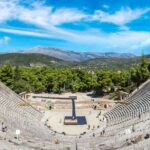
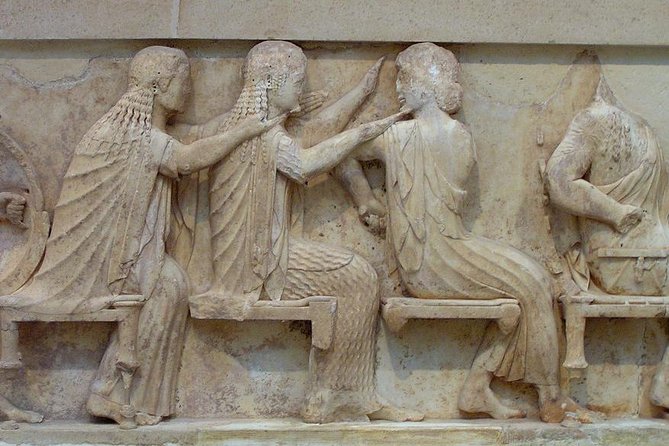
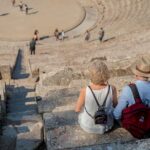
Then you go into your “ancient performance and medicine” day with Epidaurus. The amphitheatre is the star, especially because it’s famous for its acoustics. The experience describes you can drop a coin or pin on stage and still have it heard even if you sit near the last seats. It’s the kind of thing that makes you stop talking and just listen.
After the theater, you’ll visit the Epidaurus Archaeological Museum, noted for reconstructions of temples and columns with inscriptions. Then you’ll go to Asclepius, a sanctuary dedicated to the demi-god of medicine. Even if you’ve seen “temple ruins” before, this one tells a different story: healing retreat rather than political power.
From Epidaurus, you head to Mycenae, the late Bronze Age powerhouse connected with the mythical kingdom of Agamemnon. The highlight here is seeing how the physical remains match the storytelling tradition:
- Lions Gate, the main entrance built in the 13th century BC.
- Grave Circles A and B, royal cemeteries near the citadel.
- Cyclopean Walls, made of huge limestone boulders.
- The Royal Palace areas, including the Throne Room suite and Grand Staircase.
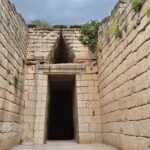
- The Treasury of Atreus, a beehive tomb around 1250 BC.
- The Tomb of Clytemnestra, another tholos tomb also dated to 1250 BC.
- The Mycenaenean Archaeological Museum, where gold grave goods, masks, jewelry, weapons, worship idols, and frescoes are displayed.
Mycenae is one of those stops where the museum matters. Without it, you might remember the walls and gates but miss how much this world looked like metal, color, and power inside.
You can also read our reviews of more tours and experiences in Athens

Day 4: Acrocorinth’s fortress heights and Corinth’s layered religious sites
Day 4 brings you to Akrokorinthos (Acrocorinth) first. This acropolis is a monolithic rock overlooking ancient Corinth. What I love about it is that it’s less about one single structure and more about the way you read the site from a distance. You can see the dominance of the place: a fortress that controls the view.
You’ll walk through details like the three circuit walls reinforced with towers, then the Peirene Spring inside the walls, described as a gift of Asopus to Sisyphus. You can also see traces of the Temple of Aphrodite on the highest peak area, plus features such as the Frankish Tower, built during Frankish times and tied to remains of churches, mosques, houses, fountains, and cisterns.
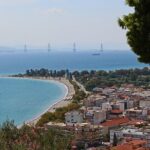
The views over the Corinthian Gulf and the SW coast of the Peloponnese are a payoff all by themselves. You might not realize it, but after days of ruins and museums, a viewpoint can reset your brain and make everything else easier to remember.
Next, you head back down toward ancient Corinth proper. You’ll see a blend of Greek, Roman, and religious layers:
- The Hadgimoustafa spring, described as an Ottoman-era fountain.
- The Ancient Corinth Archaeological Museum with artifacts from the local site and nearby areas.
- The Temple of Apollo, with monolithic columns and built around 560 BCE.
- The Agora described as 160 meters by 70 meters, with shops, small temples, altars, and the Bema where Apostle Paul addressed Corinthians in 52 AD.
- Roman buildings and the theatre and Odeon/Asklepieion area.
- Lechaion road leading toward the port of Lechaion.
There’s also a stop at St. Paul’s church with a mosaic mural depicting Saul’s vision from Christ as he traveled to Damascus. Even if you’re not deep into early Christian sites, the mosaic gives a human angle to the place.
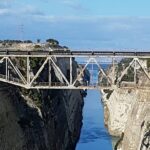
Then the trip adds “modern over ancient” in a useful way. You’ll witness Ancient Diolkos, described as an ancient passageway from the time of Periander, and then go to the Isthmus Canal. This is presented as a major project and 19th-century engineering masterpiece that played a role in Mediterranean trade. It’s a reminder that Greece’s geography keeps shaping history, long after the temples.
You also pass through Kechries Port tracing the footsteps of St Paul, and you’ll have lunch by the Saronic Sea in the village of the Baths of Helen of Troy area before returning to Athens.
Time, comfort, and the small practical advantages that matter
On multi-day tours, it’s usually the “in-between” stuff that decides whether the trip feels good. Here, you get a private luxury vehicle, Wi‑Fi, bottled water, refreshing wipes, and biscuits. That helps on long days where you’d otherwise rely on random snacks and stop-and-go convenience stores.
You also get hotel/port pickup and drop-off, which is a huge time saver if your lodging is in a busy area. Your driver/guide meets you at the lobby for hotels or contacts you for an AirBnb so you can meet at the entrance.
Because it’s private, you aren’t juggling multiple groups. And because the tour is listed in English, you can expect the main flow to be easy to follow.
If you like a strict schedule, this tour gives it. If you like to pause for a view, it tends to be easier to do so in private settings—just keep in mind that some parts are tied to site hours and museum entry timing.
Food breaks and shopping: plan for your own budget, but know it’s built in
Food and drinks are not included, so you’re free to choose what fits your appetite and budget. The good news is the tour includes structured lunch and dinner options at times that match the site flow.
You’ll get lunch time at Delphi overlooking the caldera views, and later a terrace-style meal connected to the Corinth area with views of the Temple of Apollo. At the end of the trip, there’s also a lunch by the Saronic Sea at the Baths of Helen of Troy village area.
For snacks and shopping, the plan includes time to stroll and pick up souvenirs. You’re also given specific food suggestions in Nafplion, like gelato at Antica Gelateria di Roma and loukoumades at Pergamonto. That kind of guidance helps you spend time enjoying rather than searching.
Who this tour fits best (and who might not love it)
This tour is a good match if you want:
- A major ancient-route overview with minimal logistics work
- Comfort on long drives with Wi‑Fi and private transportation
- Clear bases for sleeping (Delphi, Olympia, Nafplion, Corinth/Loutraki)
You might not love it if:
- You want to design every stop yourself without paying for structure
- You expect all museum and on-site interpretation to be done by a licensed guide included in the price (you’d need to request that extra guide option)
- You don’t want to pay separate entrance fees on top of the tour price
Should you book this Classical Greece private tour?
I’d book it if you want a smooth, well-paced way to see the “big weights” of Classical Greece with someone else handling the driving and timing. The combination of Thermopylae’s memorial storytelling, Delphi’s oracle sanctuary, Olympia’s temples plus museum depth, and Corinth’s layered sites is a strong arc that makes the days feel connected rather than random.
One practical move before booking: budget the €135 per person entrance fees and decide if you want to add a licensed tour guide for inside commentary at museums and sites. If you enjoy history as more than scenery, that add-on can be worth it.
If you’re flexible, you’ll get the best value out of the private format—especially on long travel days between Athens and the Peloponnese.
FAQ
What sites are included in this 4-day tour from Athens?
You’ll visit Thermopylae, Delphi (archaeological site and museum), Olympia (site and museum), Nafplion (major sights around town), Epidaurus (amphitheatre, archaeological museum, and Asclepius sanctuary), Mycenae (site and archaeological museum), and Ancient Corinth plus Akrokorinthos. You’ll also see the Isthmus Canal area and other stops connected to the Corinth region.
Is hotel pickup and drop-off included?
Yes. Your driver/guide picks you up and returns you to your hotel in Athens, meeting you at the lobby. For AirBnb stays, the guide contacts you so you can meet at the entrance. Airport and port pickup are also offered as an option.
What about transportation and comfort during the tour?
The tour includes transportation by a private luxury vehicle. The vehicle has onboard Wi‑Fi, and you’ll also have bottled water and refreshing wipes during the ride.
Are entrance fees included in the tour price?
Not included. Entrance fees are listed as €135.00 per person for the sites of Delphi, ancient Olympia, Mycenae, Epidaurus, and ancient Corinth.
Do I need to pay for a licensed guide inside sites and museums?
Entrance coverage and on-site interpretation are not included by default as a licensed guide. A licensed tour guide who accompanies guests into sites and museums is available for an additional cost upon request.
What kind of meals are included?
Food and drinks are not included. The plan includes breaks such as breakfast and lunch stops, plus an optional dinner at La Belle Helene, but you should expect to pay for meals on your own unless a meal is specifically mentioned as part of an option.
Can I cancel and get a refund?
You can cancel up to 6 days in advance for a full refund. Changes made less than 6 full days before the experience start time are not accepted, and cancellation closer to the start time reduces or removes the refund based on the timing rules provided.
You Might Also Enjoy


More Private Tours in Athens

More Tours in Athens

More Tour Reviews in Athens
- All Day Cruise -3 Islands to Agistri,Moni, Aegina with lunch and drinks included
★ 5.0 · 4,958 reviews