REVIEW · ATHENS
From Athens: Delphi and Meteora 2-Day Guided Tour
Book on GetYourGuide →Operated by Key Tours · Bookable on GetYourGuide
Two days with Delphi and Meteora feels like time travel. Delphi sets the stage with the Oracle-era Temple of Apollo, then Meteora lifts it into the clouds with cliff-top monasteries. I especially like how the story is carried by guides like Haroula and Marianna, and I like that you get real time at both UNESCO sites without planning headaches.
The trade-off is simple: this is a fast, packed route. Delphi can feel a bit rushed depending on heat and museum access, and bad weather in Meteora (fog or drizzle) can limit what you see from the rocks even though the monasteries still impress.
In This Review
- Key things to know before you go
- Athens to Delphi: why the drive is part of the experience
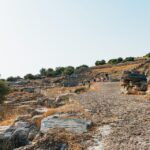
- Delphi Archaeological Site: Apollo, the Oracle setting, and the stadium drama
- Kalambaka overnight: get close to Meteora, not far away
- Meteora monasteries: cliff views, stairs, and the dress rules that matter
- Thermopylae stop on the way back: Leonidas, but make it a fast story
- Pace, guide style, and the stuff that can make or break the day
- The guides
- Group size and logistics
- The main pacing complaint: Delphi time
- Toilet and meal breaks
- Price and value at about $271 per person
- Should you book this Delphi and Meteora 2-day tour?
- FAQ
- How long is the Delphi and Meteora guided tour from Athens?
- Do I get pickup and drop-off from Athens hotels?
- What languages is the live guide available in?
- What meals are included?
- Is accommodation included, and what type?
- How much is the hotel accommodation tax?
- How many Meteora monasteries do you visit?
- What should I wear for the monasteries?
- Is the tour wheelchair accessible?
Key things to know before you go
- Temple of Apollo + the Oracle setting: You’ll walk the sacred ground where the Pythia was tied to prophecy traditions.
- Ancient theater and Pythian Games stadium: Delphi wasn’t just religion; it was performances and competition too.
- Kalambaka is the smart base: The overnight stay keeps you close to Meteora so you’re not racing the clock.
- Two monasteries on the rocks: You’ll visit two sites with admission included, with time for photos.
- Monastery dress rules are strict: Long sleeves and no shorts for men; women need coverage for entry.
- A carbon-offset option: You’re reducing your footprint for this bus-heavy trip with an offset program.
Athens to Delphi: why the drive is part of the experience
If you’re doing Delphi and Meteora in one weekend, the bus ride is where you reset. You’re traveling in a non-smoking, air-conditioned coach, which matters when the Greek sun is doing its best work. The route passes by places like Thebes, Levadia, and Arachova, and those names aren’t just geography trivia—they help you understand the route Greeks actually use to move between regions.
Pickup is built for convenience: you’re typically picked up from most central Athens hotels about 1 hour before departure. You should confirm your exact pickup point and time by contacting the operator, since hotel entrances and meeting spots can vary. If you prefer to meet closer to the start, you can also meet at the operator’s office about 15 minutes before.
This day is also timed to get you to Delphi while the site is more manageable. One recurring theme from the experience is that arriving earlier helps you tour with less crowd stress. It doesn’t eliminate crowds—Delphi and Meteora are popular for a reason—but it makes a difference in how you feel walking through ruins and stairs.
Practical tip: start wearing your comfortable shoes right away. The walking is real by day two, and you’ll cover uneven stone and stairs at both sites.
You can also read our reviews of more guided tours in Athens

Delphi Archaeological Site: Apollo, the Oracle setting, and the stadium drama
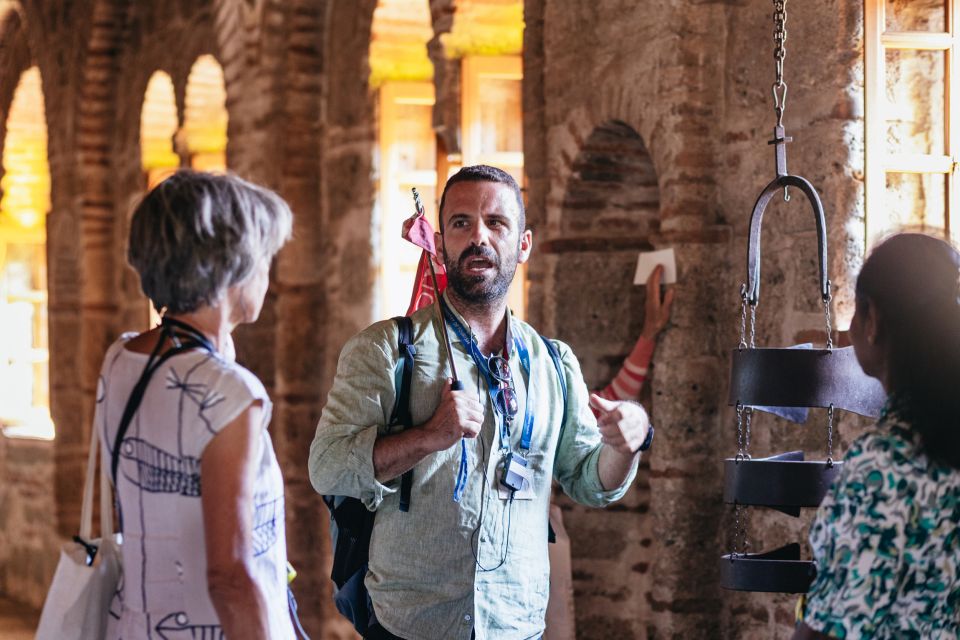
Delphi is famous for a reason, but the payoff isn’t only the big-name ruins. It’s the way everything connects: religion, sports, performance, and civic identity all lived in the same valley.
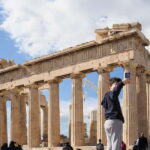
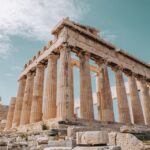
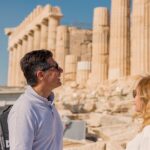
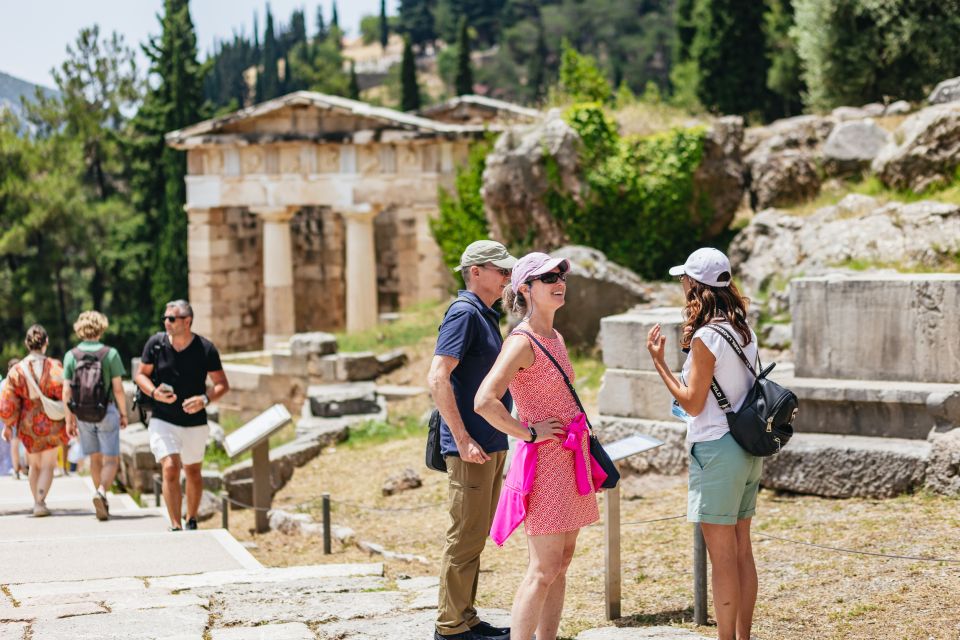
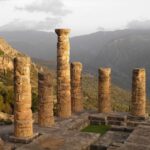
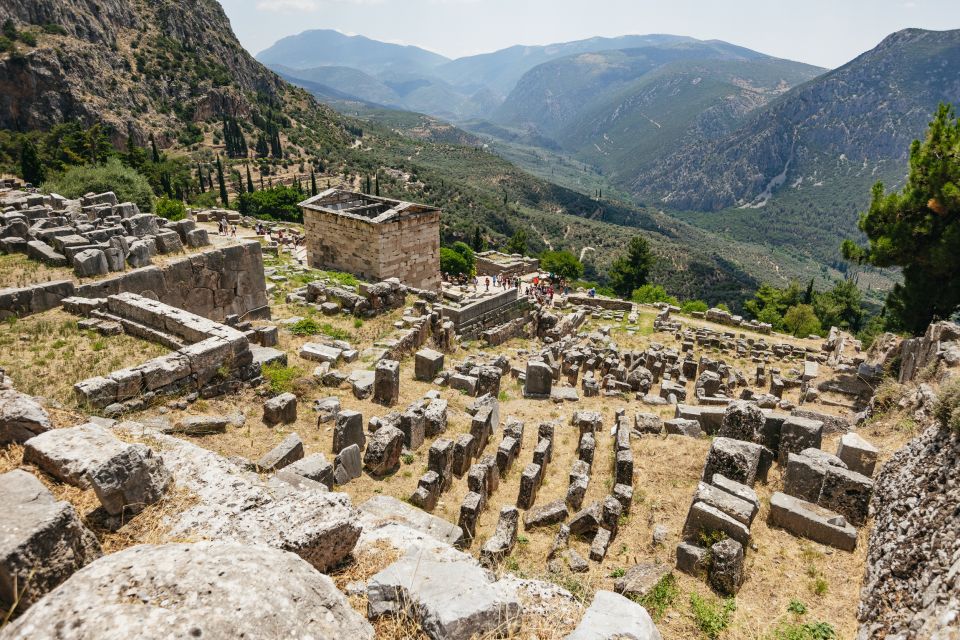
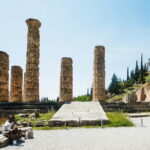
At the ruins of the Temple of Apollo, you’ll see the remnants of a shrine tied to the Oracle traditions. The tour guide frames the story—centered on the Pythia, the priestess associated with foretelling the future—so the stones feel connected to people, not just dates. The Temple itself dates to the 4th century B.C., which helps you place what you’re looking at within a larger timeline.
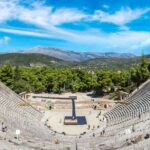
Then comes Delphi’s “stage and arena” side. You’ll also visit the ancient theater, said to seat around 5,000 spectators. It hosted plays, poetry readings, and festivals, which is a reminder that Delphi wasn’t only about spiritual questions. And don’t skip the stadium area: the Pythian Games, a predecessor to the modern Olympics, were held here every four years. Watching ruins through that lens makes them feel active—even if you’re only looking at foundations.
How long you’ll feel you get at Delphi can vary. Some people wish they had extra time, especially if they want the museum. Since admission is included for the archaeological site but not explicitly for the museum, treat museum time as something that might depend on the day’s schedule and how long you linger under shade.
Heat note: Delphi can run hot. The good news is the site has shaded pockets, and your guide will usually keep you moving between key stops efficiently.
Kalambaka overnight: get close to Meteora, not far away
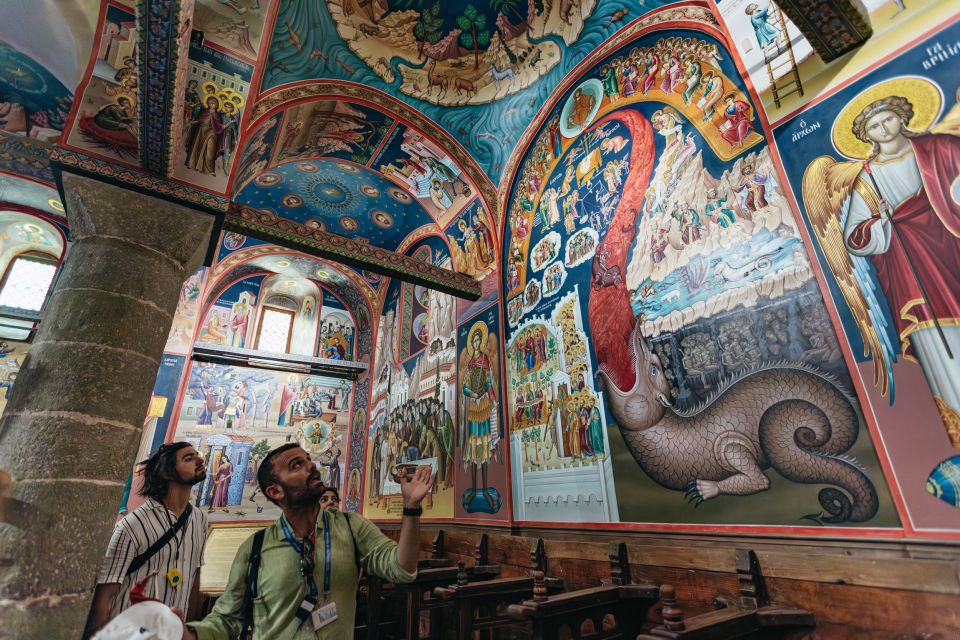
After Delphi, you head to Kalambaka, a town that’s basically built around the view of the Meteora rocks. This overnight step is one of the reasons the tour works. Staying there prevents a long, exhausting day-tripping commute that would eat your energy.
Your accommodation is included, in either a 3-star or 4-star hotel depending on the option you choose. Breakfast is included, and dinner is included as part of the stay. That matters because you’re not hunting for meals after a long travel day—you can just eat, recover, and sleep.
One detail to plan for: hotel taxes aren’t included. You’ll pay hotel accommodation tax at check-in to the hotel directly—€5 per room per night for 3-star and €10 per room per night for 4-star. Also, standard bookings are for a double or triple room; if you want a single room, it requires a separate single-room booking.
What should you expect from the hotel experience itself? Reviews suggest rooms are generally clean and meals are solid, but you might find some beds firmer than what you’re used to. Nothing unusual for Greece, but it’s worth knowing so you pack like you’re going to walk and sleep.
A small extra that can make your evening memorable: once you’re there, you can ask the hotel staff about arranging transport to look at the rocks at sunset. One guest mentioned booking a taxi through the hotel front desk for a sunset viewpoint, and it sounded like a great use of the night light.
Meteora monasteries: cliff views, stairs, and the dress rules that matter
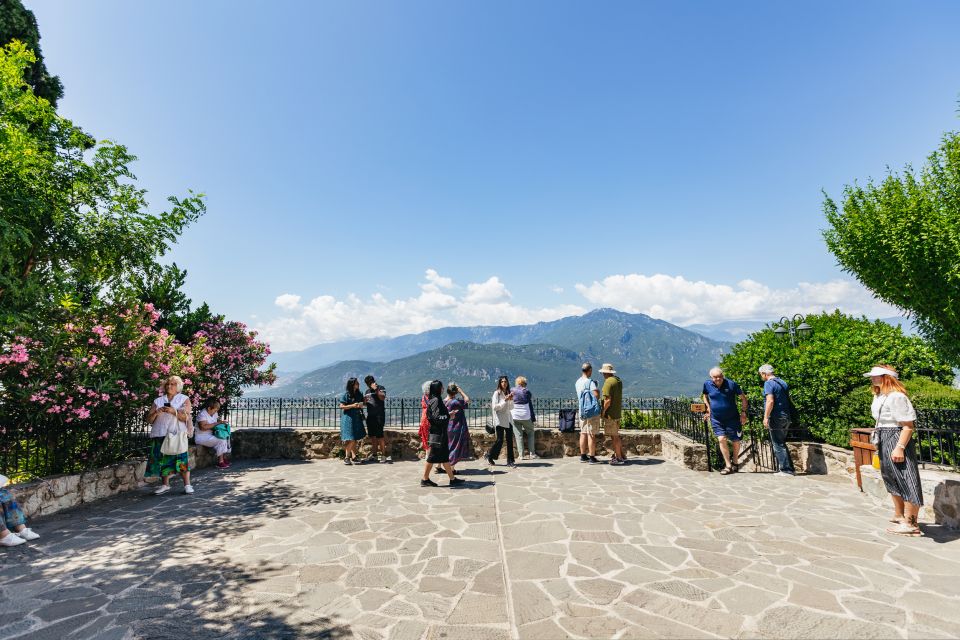
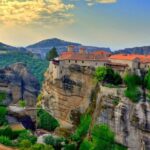
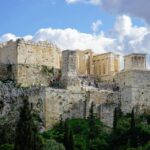
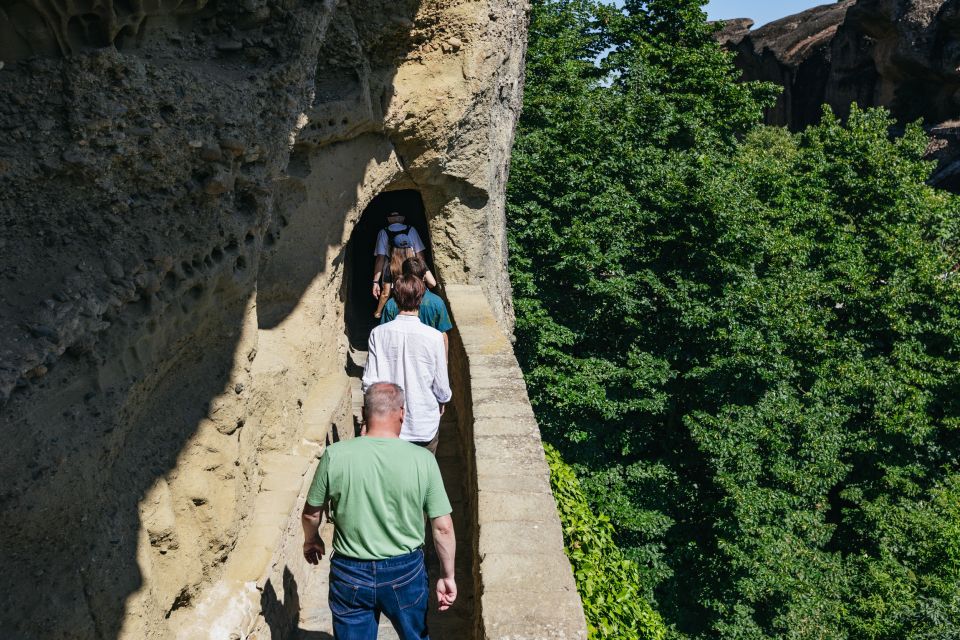
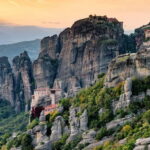
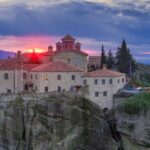
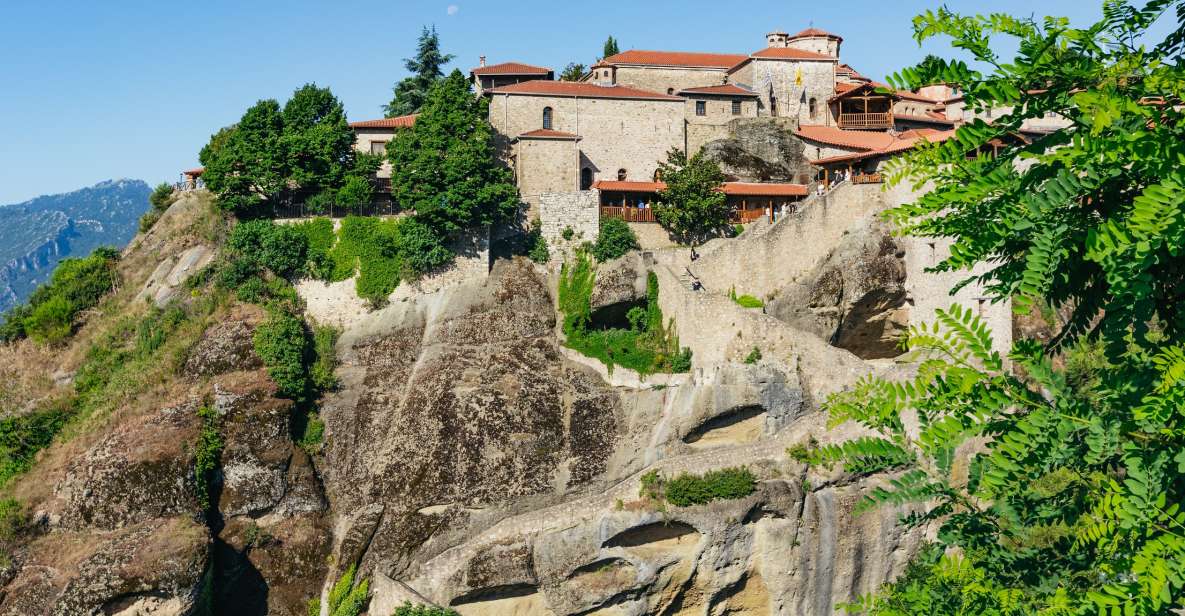
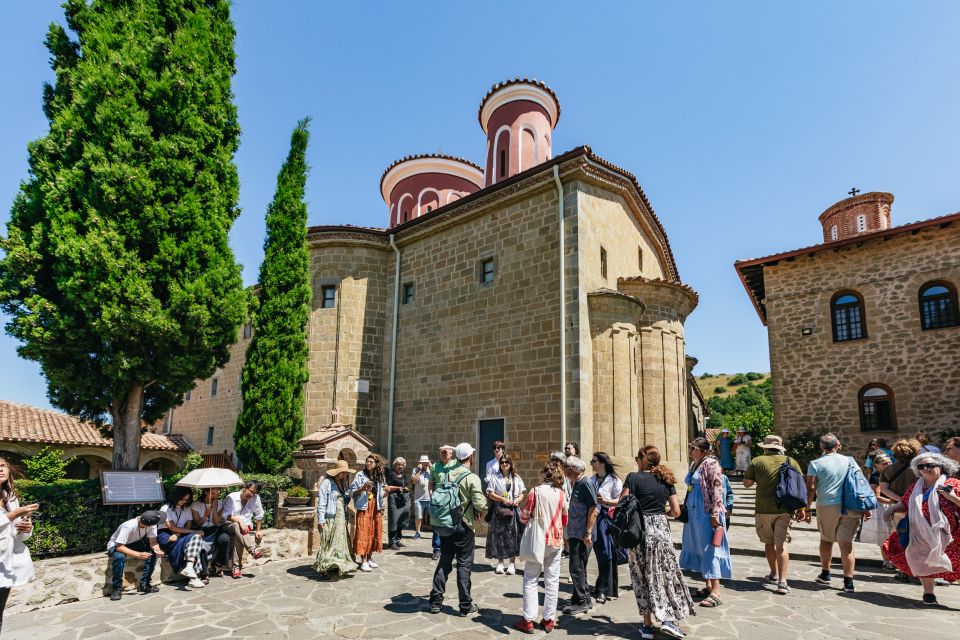
Meteora is the moment you remember later. The cliff-top monasteries look almost unreal, like architecture pinned to rock with faith and stubbornness. On this tour day, you’ll visit two monasteries with admission included.
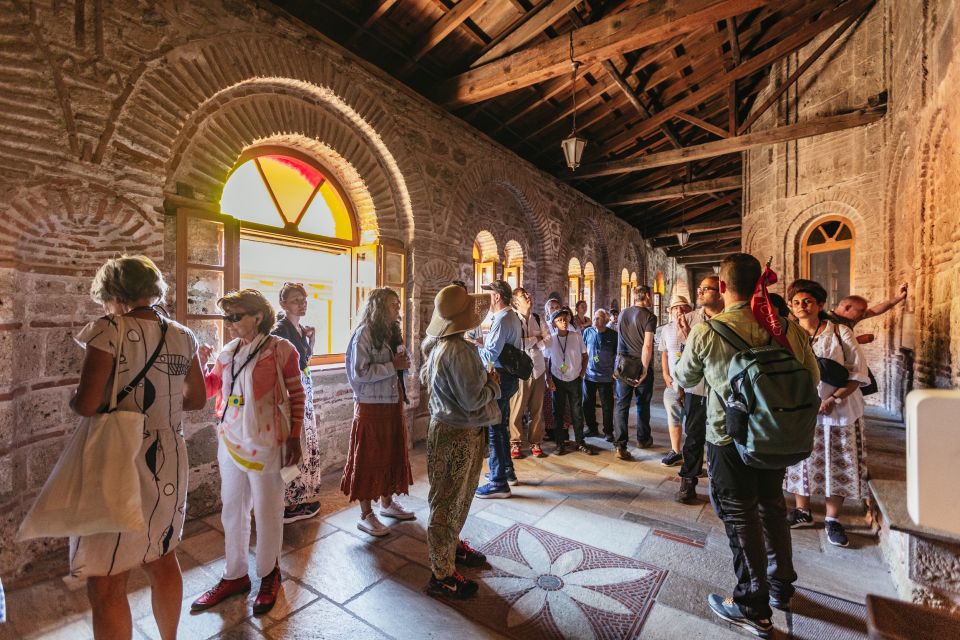
The main “wow” is the viewpoint. Even when you’re walking between stops, you get sweeping valley views—plus the layered feeling of rock towers rising on all sides. Weather can change the experience fast. If you hit fog or drizzle, your visibility may drop, and some distant views might be muted. Still, the monasteries themselves remain striking, and the atmosphere can feel eerie in a good way.
The bigger practical issue at Meteora is not the scenery—it’s entry requirements. You must follow the dress code:
- Women should not wear short skirts, and they need long sleeves.
- Men are not allowed to wear shorts.
If you show up underdressed, you’ll likely be asked to adjust before entry. One guest noted receiving a wrap/scarf at the monasteries when their outfit didn’t meet expectations, even though they thought trousers would be fine. So plan ahead: bring leggings or long pants and sleeves you’ll actually want to wear for a few hours.
Mobility note: this is not suitable for wheelchair users. There are steps and uneven areas. Even if you’re not using a wheelchair, pace yourself because the walking adds up after the morning drive and before/after the guided stops.
Photo tip: bring something that helps you steady your hands, like a small tripod or brace, especially if it’s breezy at the viewpoints. The angle of those rock towers makes quick photos feel harder than you think.
Thermopylae stop on the way back: Leonidas, but make it a fast story
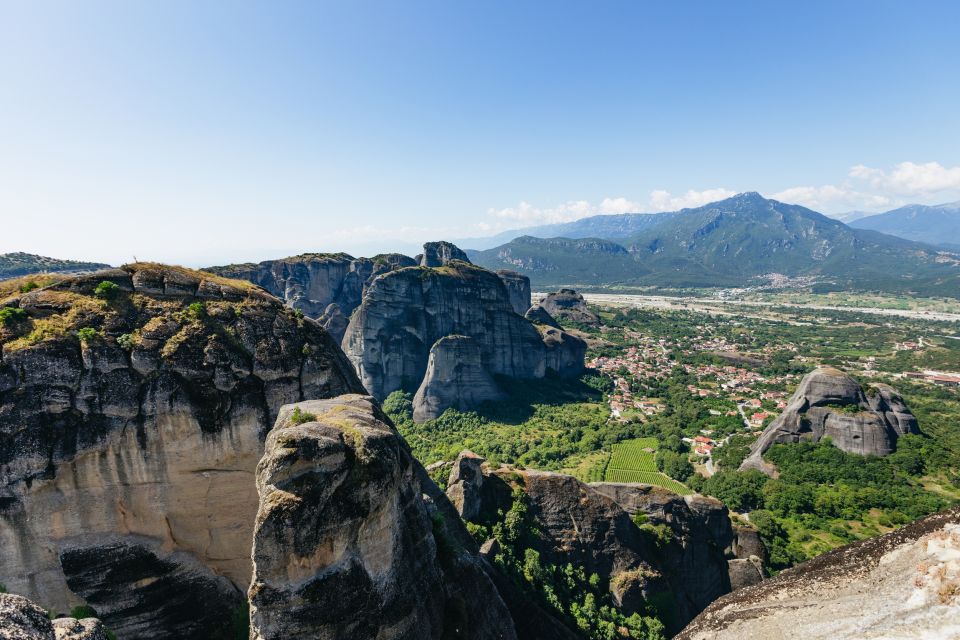
On the return journey to Athens, the tour includes a short stop at the monument to Leonidas, the King of Sparta who died in 480 B.C. at the Battle of Thermopylae.
This isn’t meant to replace a full historical stop. Think of it as a pause button where your guide can connect what you just saw in Greece’s ancient world to a different kind of story—warfare, myth, and how those memories shaped Greek identity. It’s a quick stop, but it helps keep the trip from feeling like only two scenic sites stitched together.
If you like context, this is where you’ll appreciate the guide’s ability to connect timelines without making it feel like a lecture.
You can also read our reviews of more tours and experiences in Athens


Pace, guide style, and the stuff that can make or break the day
What makes this tour work isn’t just the locations. It’s how they’re handled.
The guides
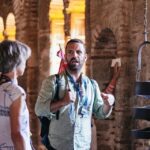
You’ll travel with a professional guide who explains what you’re seeing in either English or Spanish. Names that show up in past groups include Haroula, Marianna, and Dosia. The best part of a strong guide here is that they don’t treat ruins like random facts. They give you story links—why a theater mattered here, why the games belonged here, why the Oracle tradition attached to this place.
Some guides also use audio aids. One person specifically mentioned radio devices to hear explanations on-site, which is a huge help in large areas where voices can carry poorly.
Group size and logistics
Group size can vary. One guest had a small group of fewer than 10 people, while another noted groups could be larger (up to around 40). If you’re sensitive to crowd noise, plan to rely on your guide’s structure and arrive early for key photo moments.
Pickup can also feel like a mini bustle. Some people noted multiple tour guides meeting at pickup points for different tours. The quick fix is simple: watch for your guide/tour name call, and confirm your bus details with the staff at the start.
The main pacing complaint: Delphi time
Delphi is the stop where people most often wish they had more time—especially if they want the museum. That doesn’t mean the tour is poorly run. It means the route has to balance travel time, guided time, and the reality that Meteora is a long day with stairs and viewing areas.
Toilet and meal breaks
Rest stops are timed, and they’re appreciated on a long coach day. Still, a few people felt the number and length of toilet breaks could cut into attraction time. Your best strategy is to use the earlier breaks, then don’t feel tempted to wait until the last possible second.
Meals: breakfast and dinner are included. Lunch is usually not included; you’ll eat at scheduled stops on the route. Food quality seems to be mixed depending on the stop—some lunches sound great, some less so—so if you care a lot about lunch, consider packing snacks for in-between.
Dietary needs: one guest mentioned celiac disease and said the guide helped coordinate gluten-free options via restaurants they were sent to. That doesn’t guarantee every restaurant will have the same options, but it’s a good sign that the guide can be proactive if you communicate your needs clearly.
Price and value at about $271 per person
At $271 per person for 2 days, the value is less about “cheap” and more about what’s packaged together.
You’re getting:
- Pickup and drop-off from selected Athens hotels
- Luxury coach transport (air-conditioned, non-smoking)
- One night in a 3- or 4-star hotel (option-dependent)
- Breakfast and dinner included
- A professional live guide
- Admission to the Delphi archaeological site
- Admission to two Meteora monasteries
- A carbon-offset program option for the emissions from the trip
If you were to piece this together yourself, the costs and hassle add up fast: transport scheduling, guides, ticket lines, and the logistics of reaching Kalambaka and Meteora twice. This tour compresses the work into a single booking.
My take: choose this when you want high-impact ancient sites with minimal planning. If you’re the kind of traveler who wants to wander slowly, read every museum placard, and build in lots of free time for lunch and photos, you might feel the pace. In that case, you’d likely want a longer stay in Delphi or Meteora.
Should you book this Delphi and Meteora 2-day tour?
Book it if you want:
- Two UNESCO stops handled for you in one weekend
- A guide who connects the ruins to stories (Temple of Apollo, Oracle traditions, Pythian Games, Meteora’s monastery world)
- A comfortable coach + hotel base that saves time and stress
Skip or adjust expectations if you:
- Want a long, museum-centered day at Delphi (this can feel tight)
- Need full accessibility support (this tour isn’t suitable for wheelchair users)
- Are traveling with strict clothing constraints for monasteries and don’t want to plan attire in advance
If you’re flexible, wear good shoes, pack the right layers for Meteora, and accept that the schedule is tight, this is one of the more efficient ways to see Delphi and Meteora without turning your trip into logistics math. And yes, Meteora will probably still take your breath away—even if the sky is a little moody.
FAQ
How long is the Delphi and Meteora guided tour from Athens?
It runs for 2 days.
Do I get pickup and drop-off from Athens hotels?
Yes. Pickup and drop-off are included from selected hotels in Athens. The exact pickup points and time are provided by the operator.
What languages is the live guide available in?
The guide is available in Spanish and English.
What meals are included?
The tour includes breakfast and dinner. Meals and drinks beyond that are not included unless otherwise specified.
Is accommodation included, and what type?
Yes. You’ll get one night in a 3-star or 4-star hotel depending on the option you select, with breakfast included and dinner included as part of the stay.
How much is the hotel accommodation tax?
You pay it directly to the hotel: €5 per room per night for 3-star hotels and €10 per room per night for 4-star hotels.
How many Meteora monasteries do you visit?
You visit 2 monasteries, and admission to them is included.
What should I wear for the monasteries?
Women should avoid short skirts and should wear long sleeves. Men are not allowed to wear shorts.
Is the tour wheelchair accessible?
No. The tour is not suitable for wheelchair users.
You Might Also Enjoy
More Guided Tours in Athens
More Tours in Athens

More Tour Reviews in Athens
- All Day Cruise -3 Islands to Agistri,Moni, Aegina with lunch and drinks included
★ 5.0 · 4,958 reviews