REVIEW · ATHENS
Greek Mythology Storytelling Walk
Book on GetYourGuide →Operated by Alternative Athens · Bookable on GetYourGuide
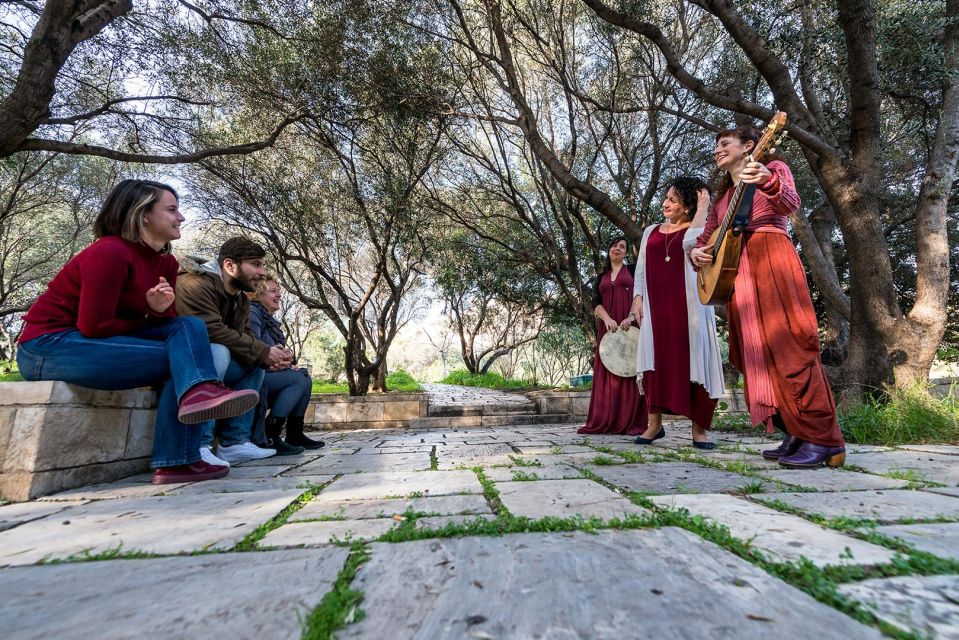
Myths start on street level. This Greek Mythology Storytelling Walk turns central Athens into a storybook, with live professional storytellers guiding you through key sites tied to Zeus, Dionysus, and Athena. I especially like the way the myths are explained as meaning-for-people stories, not dry names on a plaque, and I love that you walk real neighborhoods instead of hopping between far-off stops.
You’ll also want to plan around the small “tour reality” stuff: Plaka can be busy with souvenir shops, and there’s no food or drink included, so bring water and keep your energy up. The good news is it’s a short, manageable 2-hour walk with comfortable-shoes energy rather than long hiking mode.
In This Review
- Key highlights you’ll care about
- Zeus, Athena, and Dionysus: Why this storytelling walk works
- Starting in Plaka: finding the meeting point fast
- Zeus in Plaka and Europa: myth inside a modern tourist neighborhood
- Odeon of Herodes Atticus and the theater street feel
- Dionysus on Dionysiou Areopagitou: wine, rites, and the arts
- Pnyx: the best place to hear Athena’s contest with Poseidon
- Walking comfort, timing, and what to wear
- Price and value: is $53 worth a live mythology walk?
- Who should book this Greek mythology storytelling walk
- Final call: should you book it?
- FAQ
- Where is the meeting point?
- How long is the Greek Mythology Storytelling Walk?
- What’s included in the price?
- Is food or drinks included?
- What language is the tour in?
- What should I wear or bring?
- Is it suitable for all ages?
- Is it accessible for people with mobility impairments or hearing needs?
Key highlights you’ll care about
- Plaka mythology first: Zeus and Europa are woven into the oldest part of Athens, right where modern life is happening.
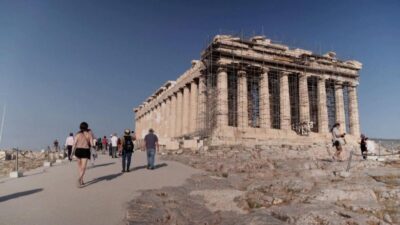
- Acropolis perimeter on foot: You’ll circle key views around the Sacred Rock using the pedestrian streets near the old theaters.
- Dionysus on Dionysiou Areopagitou: Wine-and-theater god stories land in the exact theatrical zone where the neighborhood feels built for performance.
- Pnyx for Athena: You finish at Pnyx with a close-up feel toward the Acropolis gateway area (the Propylae).
- Small-group potential: When bookings are light, the experience can feel more personal and the storyteller’s pacing improves.
- Simple format, strong payoff: 2 hours, guided storytelling, and a walk that most people can handle comfortably.
Zeus, Athena, and Dionysus: Why this storytelling walk works
Greek mythology can feel like a spreadsheet until someone makes it human. This tour does that fast. Instead of starting with the Acropolis stones, it starts with the gods’ personalities—Zeus as the powerful problem, Athena as the clever decision-maker, and Dionysus as the god who doesn’t know when to quit.
That mix matters because it helps you remember what you’re hearing. Zeus isn’t just thunder and lightning here; you hear his origin and how he rose to power. Athena isn’t just wisdom as a concept; you hear about her birth and the contest that shaped Athens’ identity. And Dionysus isn’t only an icon of wine—his ties to the theatrical arts make the walking route feel smarter than a random loop around the center.
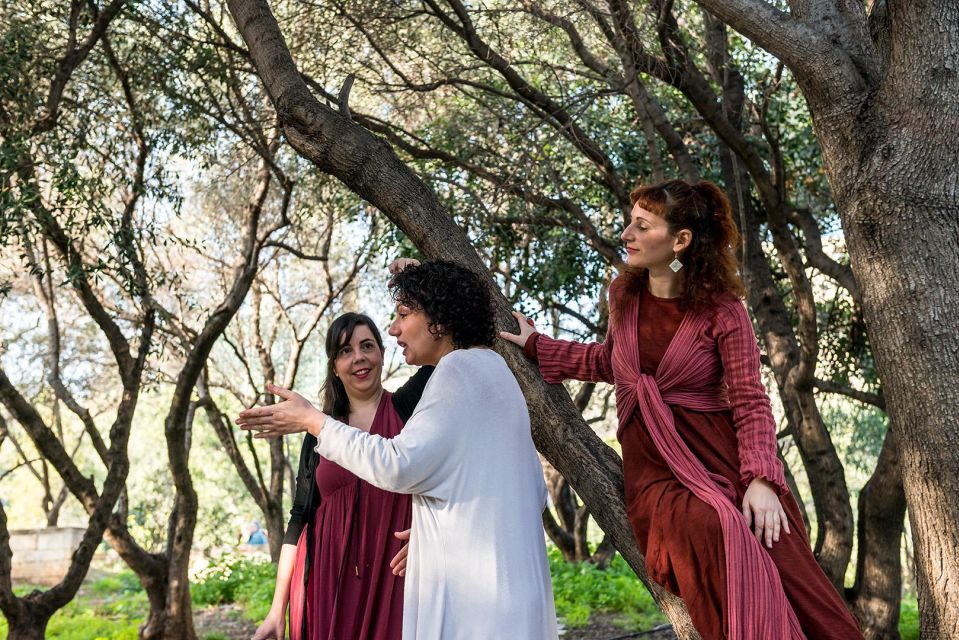
And the live part isn’t a decoration. Professional storytellers change the experience. You’re not reading; you’re listening, reacting, and letting the story carry you from one spot to the next.
You can also read our reviews of more walking tours in Athens

Starting in Plaka: finding the meeting point fast
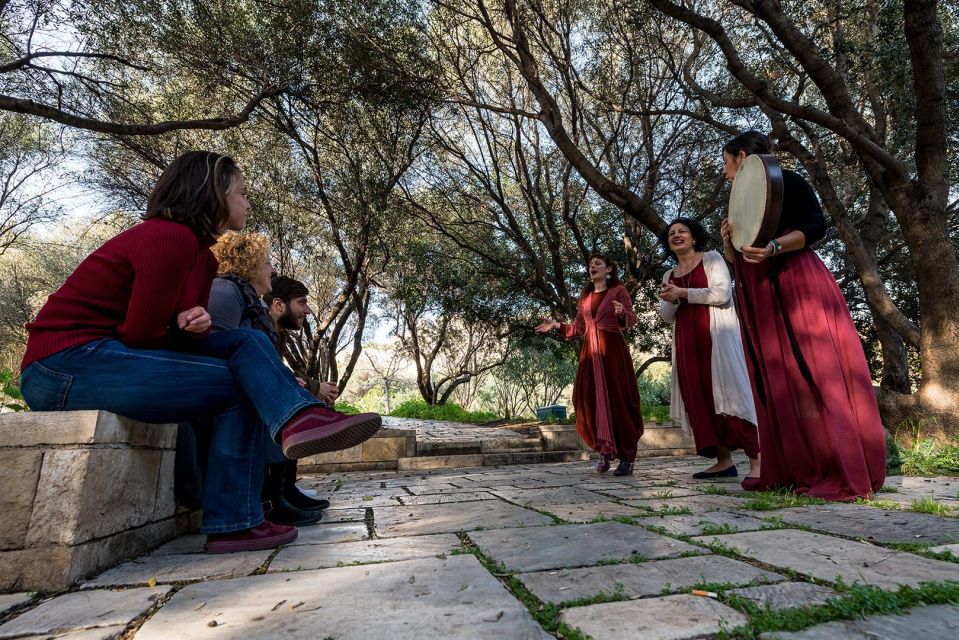
You’ll meet at the corner of Nikis & Kidathineon in Plaka, and your guide holds an Alternative Athens sign. This is a helpful detail because that area is full of side streets and small storefronts, so having a visible sign makes it much easier to assemble on time.
I recommend arriving 10 minutes early. Not because you’ll be stuck in suspense, but because Plaka street corners can look similar from a distance. A quick warm-up scan for the sign saves you stress and lets you start listening on the right note.
Once you start, the walk stays manageable. It’s designed for an all-ages audience, and the pacing is built around storytelling moments rather than “keep up” distance.
Zeus in Plaka and Europa: myth inside a modern tourist neighborhood
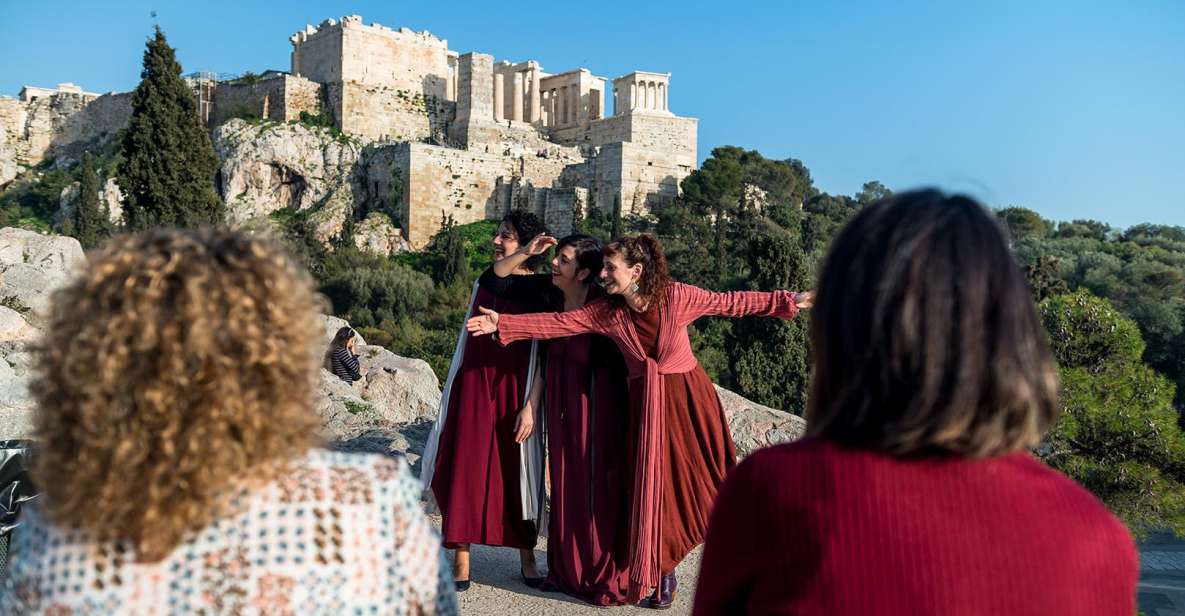
Plaka is where you’ll begin your Zeus stories, and this is one of the best choices the tour makes. Plaka is the tourist center now—crowded, souvenir-heavy, and busy with foot traffic. But the tour steers you toward places that still feel meaningful to local residents, so the mythology isn’t floating above the city. It lands on real streets.
Here’s what you should expect: Zeus comes first, including the story of his birth and how he gained power over his gruesome father. Then the tour shifts to Zeus’ love affair with Europa—important not just as a romance, but because the story gave a name to an entire continent.
Why this works for you as a visitor: Europa is one of those myth details that sticks because it connects a story to the real world you already recognize. If you’ve ever heard the name Europe and wondered why it exists, this is the kind of moment that makes the myth feel useful, not just decorative.
Practical consideration: Plaka’s shops can pull your attention. The tour helps with that by turning your wandering eyes into listening ears, but you’ll still want to keep your phone away for the early minutes so the story sets the pace.
Odeon of Herodes Atticus and the theater street feel
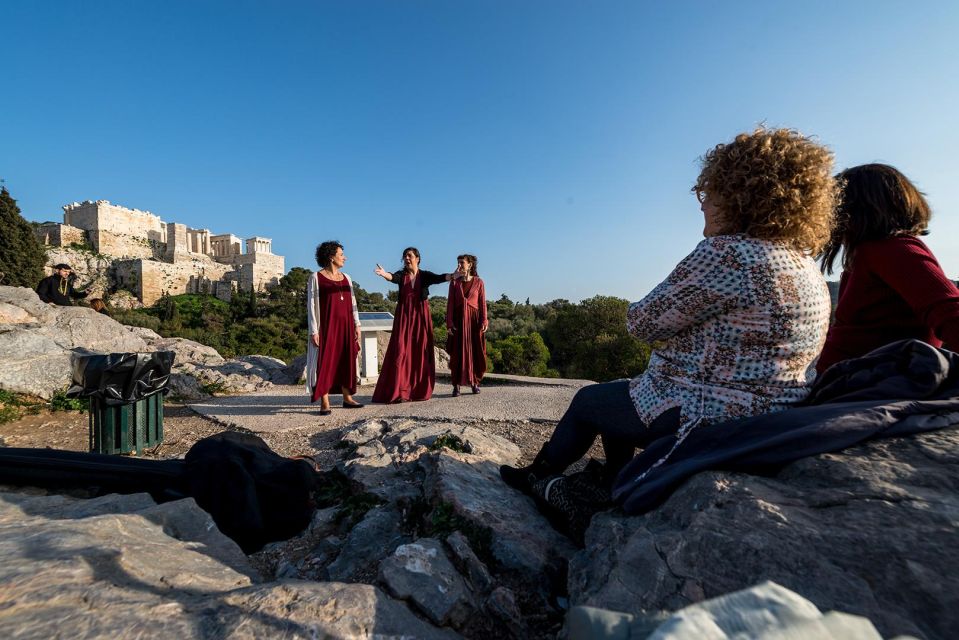
After Plaka, the walk continues toward the Odeon of Herodes Atticus area. Even if you’re not focused on ancient architecture details, this segment gives you context: Athens wasn’t only a city of temples. It was a city built for public performance and public speech.
That matters because the tour’s next god—Dionysus—belongs to theater as much as to wine. So by the time you’re walking along the pedestrian spine near the old theaters, you’re already primed. You’ll feel the route makes thematic sense, not just geographic logistics.
In this part of town, the air often feels like it’s made for photos. But I’d treat pictures as a reward, not a distraction. Let the storyteller take the lead, then look around after a key beat—when you understand what you’re looking at, the views become clearer and more satisfying.
Dionysus on Dionysiou Areopagitou: wine, rites, and the arts
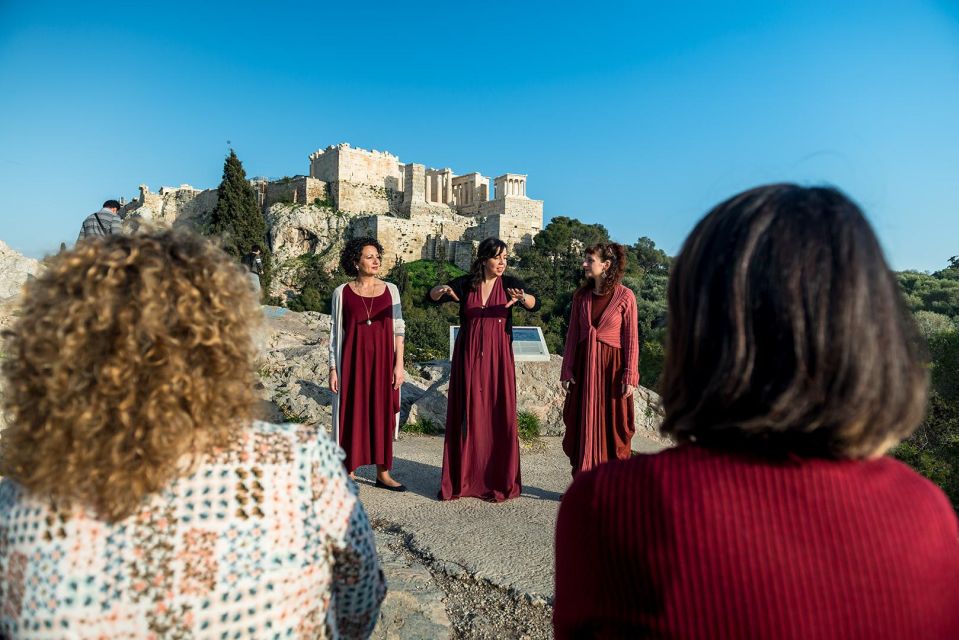
Your Dionysus storytelling happens along Dionysiou Areopagitou, the marvellous pedestrian street around the Acropolis. This is a smart route choice because that street is famously built for strolling, and it sits in the right zone for understanding the old theatrical atmosphere. You’re not just learning about Dionysus; you’re walking where performance culture is literally part of the streetscape.
You’ll hear why Dionysus is tied to:
- wine
- the theatrical arts
- popularity in Greece and early Rome
Then the story brings a realistic political twist: Dionysus eventually fell out of favor with the Romans, who frowned on the excesses associated with celebrating his rites. That part is useful because it shows mythology moving through history. Gods don’t live in a vacuum—culture and power affect which stories get embraced.
For you, this is where the tour gets extra memorable. It turns “myths are old” into “myths were contested.” Even if you don’t remember every character name afterward, you’ll likely remember that the Romans and Greeks didn’t agree on what was acceptable about Dionysus.
Small caution: This is still a walking tour through central Athens streets. Keep an eye on where you step, especially around heavier foot-traffic areas.



Pnyx: the best place to hear Athena’s contest with Poseidon
The final stop is Pnyx, and it’s a strong ending. Pnyx is positioned for big-picture feeling and close-up geometry, so your mind links story to stone.
From Pnyx, you’ll get an outstanding close-up view of the Propylae of the Acropolis, the gateway to the Sacred Rock. That gateway view does something subtle: it turns Athena from an idea into a “why Athens chose her” explanation.
Here’s what the tour covers at the end:
- the birth of Athena
- her contest with her uncle, Poseidon
- Athena’s victory for patronage of the city
- the idea that the city took her name as a result
This ending is valuable because it ties identity to mythology. You’re not just hearing a family drama; you’re learning a reason behind the name Athens. It’s the kind of story that makes the next time you stand near the Acropolis area feel more personal.
If you’re a visual learner, Pnyx is your friend. Watching the sightlines while the story is told makes it easier to picture the city’s symbolic logic.
Walking comfort, timing, and what to wear
The tour lasts 2 hours, and the walking segments are short enough that most people with normal mobility should find it manageable. The total experience is structured around three major storytelling zones plus the final Pnyx. Expect to be on your feet, but not in a “good luck, you’ll be sore later” way.
Bring comfortable shoes and comfortable clothes. That sounds obvious, but in central Athens it matters: you’ll be on uneven stone in places, and the terrain can change quickly once you move away from the widest pedestrian stretches.
Weather check helps too. If it’s hot, you’ll want water. If it’s cool, bring a layer. The tour itself doesn’t include food or drinks, so plan your personal fuel.
Price and value: is $53 worth a live mythology walk?
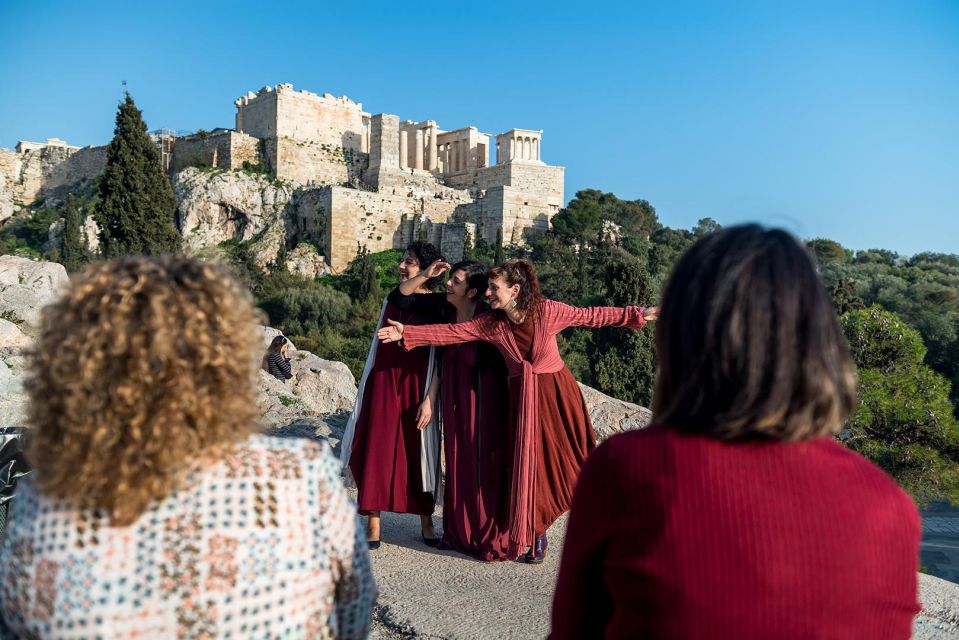
At $53 per person for about 2 hours with a professional storyteller and a professional tour leader, the value depends on what you want from Athens.
If you’re the kind of traveler who loves:
- stories that connect names to meaning
- learning “why this matters” while you walk
- a guided narrative instead of self-guided reading
…then this price makes sense. You’re paying for production quality and timing. A good storyteller gives you momentum, and momentum is what most museum experiences lack.
If you’re expecting detailed hands-on access to restricted areas or long archaeology lectures, you might feel it’s expensive. But this tour isn’t trying to be that. It’s a focused, short Athens experience that uses the city as your stage.
One more value angle: if your group is small, you can get a more personal performance. There’s nothing in the basic structure that says it must be huge, and when it’s not, the storytelling feels more tailored.
Who should book this Greek mythology storytelling walk
This is a solid match for:
- first-time visitors to central Athens who want context for the Acropolis area
- people who like mythology but want it explained like a story, not a syllabus
- families looking for an all-ages activity that doesn’t feel like a classroom
- travelers who prefer walking tours over museum audio guides
It’s not a match if you:
- need accessibility accommodations for mobility impairments (it’s not suitable)
- rely on hearing assistance (it’s not suitable for hearing-impaired people)
- are traveling with very young children (not suitable for children under 3)
Also, if you’re the type who gets restless in tourist-heavy streets, be ready for Plaka’s souvenir intensity. The tour is designed to steer you through it with purpose, but it’s still Plaka.
Final call: should you book it?
I’d book this if you want Athens to feel like a living story. The mix of Zeus in Plaka, Dionysus along Dionysiou Areopagitou, and Athena at Pnyx gives you a meaningful arc: origins, power, culture, and identity—all in two hours.
Skip it only if you need food stops included, require accessibility accommodations, or want a quiet, low-people experience. Otherwise, this is one of the more practical ways to turn the Acropolis neighborhood into something you can remember without needing a thick guidebook.
FAQ
Where is the meeting point?
The tour meets at the corner of Nikis & Kidathineon street in Plaka. The guide will meet you holding an Alternative Athens sign.
How long is the Greek Mythology Storytelling Walk?
It runs for 2 hours.
What’s included in the price?
You get the storytelling performance, a professional storyteller, and a professional tour leader.
Is food or drinks included?
No. Food and drinks are not included.
What language is the tour in?
The tour is in English.
What should I wear or bring?
Wear comfortable shoes and comfortable clothes. Consider bringing water since food and drinks aren’t included.
Is it suitable for all ages?
It is for all-ages, but it is not suitable for children under 3.
Is it accessible for people with mobility impairments or hearing needs?
It is not suitable for people with mobility impairments or for hearing-impaired people.
You Might Also Enjoy



More Walking Tours in Athens

More Tour Reviews in Athens
- All Day Cruise -3 Islands to Agistri,Moni, Aegina with lunch and drinks included
★ 5.0 · 4,958 reviews