REVIEW · ATHENS
Athens: The Acropolis Museum Guided Tour
Book on GetYourGuide →Operated by ATHENS WALKING TOURS · Bookable on GetYourGuide
The Acropolis, but with the lights on. This 75-minute guided trip through the Acropolis Museum turns Greek ruins into something you can picture fast, even when it’s busy outside. I love how the guide connects what you’re seeing indoors to the world waiting above on the hill.
I also love the focus on big, clear visual moments: Athena votive offerings and excavations revealed through glass floors. One possible drawback: the time moves, so if you like to linger on every statue or photo op, you may feel a little rushed.
In This Review
- Key highlights to look for
- The Acropolis Museum made legible indoors
- Inside the 75 minutes: Athena, Caryatids, and the museum’s “see-through” archaeology
- Archaic Gallery daylight and the Parthenon-aligned glass atrium
- Plexiglass 3D exhibits and the neighborhood beneath the Acropolis
- Panoramic ruins views: why this tour prepares you for the hill
- Modernist building by Bernard Tschumi and Michael Photiadis
- Price and the real value math (including the entrance fee)
- Meeting at 3 Dionysiou Areopagitou: how to start on time
- Who this tour suits best
- A quick word on guides: humor, clarity, and real passion
- Should you book the Acropolis Museum guided tour?
- FAQ
- How long is the Acropolis Museum guided tour?
- What is included in the price?
- Are entrance fees included?
- Where is the meeting point?
- Is the tour available in English?
- What should I bring?
- Is the tour affected by weather?
- Are large bags allowed?
- Is the tour wheelchair accessible?
Key highlights to look for
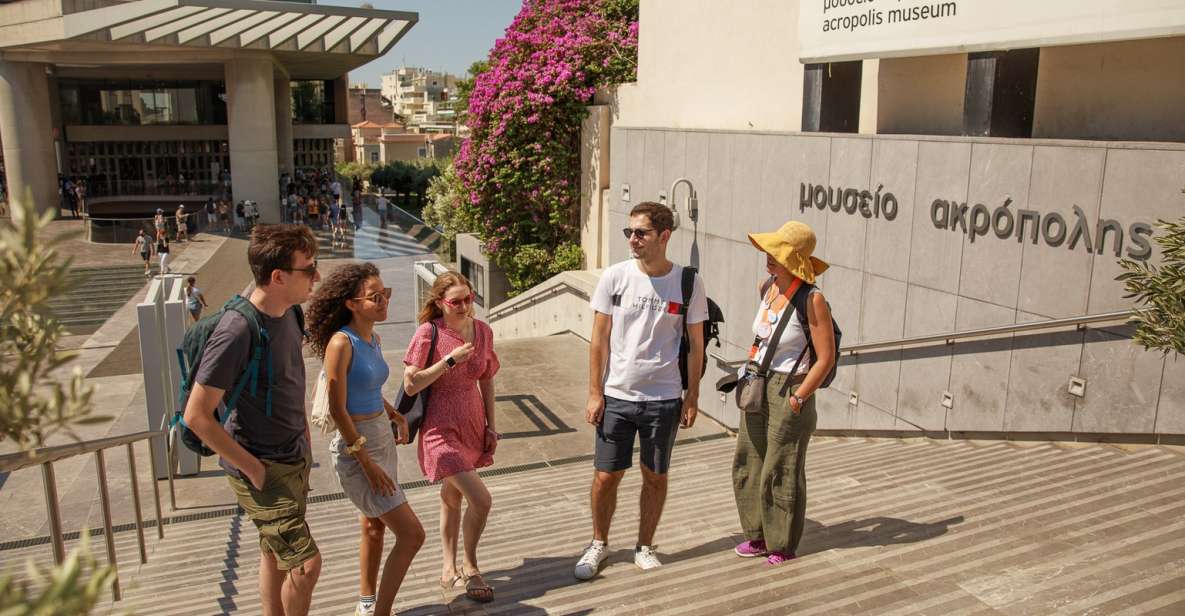
- Licensed local guide who brings the museum to life in plain English
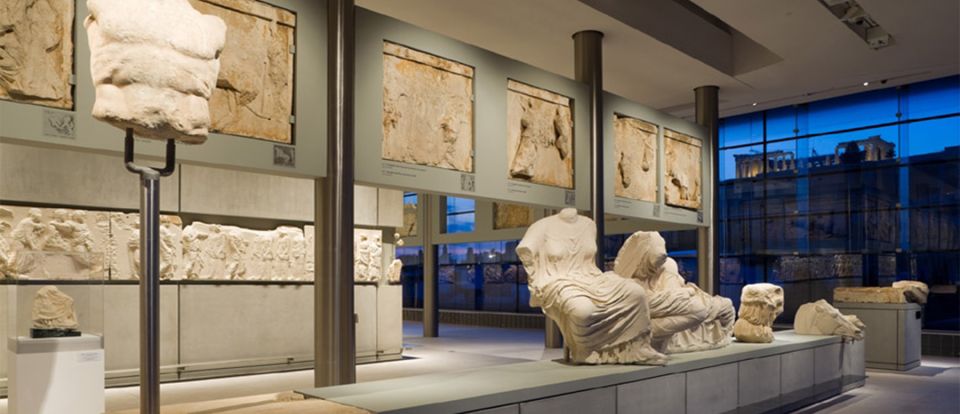
- Glass floors and visible excavations that show the neighborhood beneath your feet
- Votive offerings to Athena plus standout Caryatids statues for context
- A Parthenon-aligned glass atrium designed to match what you’ll later see outside
- 3D exhibits and a plexiglass floor that help you picture ancient Athens in layers
The Acropolis Museum made legible indoors

The best thing about this tour is that it teaches your eyes before you go back up to the hill. The Acropolis can feel like a pile of marble at first. In the museum, the story gets arranged into a logical path, so the sights outdoors click sooner.
You’re not just walking through rooms—you’re learning how and why artifacts ended up where they are now. With a licensed guide, you get a framework for the 5th century BC (the peak of the Classical era), plus the practical context you’d otherwise miss with a quick self-guided pass.
And yes, the museum is stunning. But what really matters is how quickly you start recognizing themes—religion, civic pride, craftsmanship, and what everyday life looked like in the area.
You can also read our reviews of more guided tours in Athens



Inside the 75 minutes: Athena, Caryatids, and the museum’s “see-through” archaeology

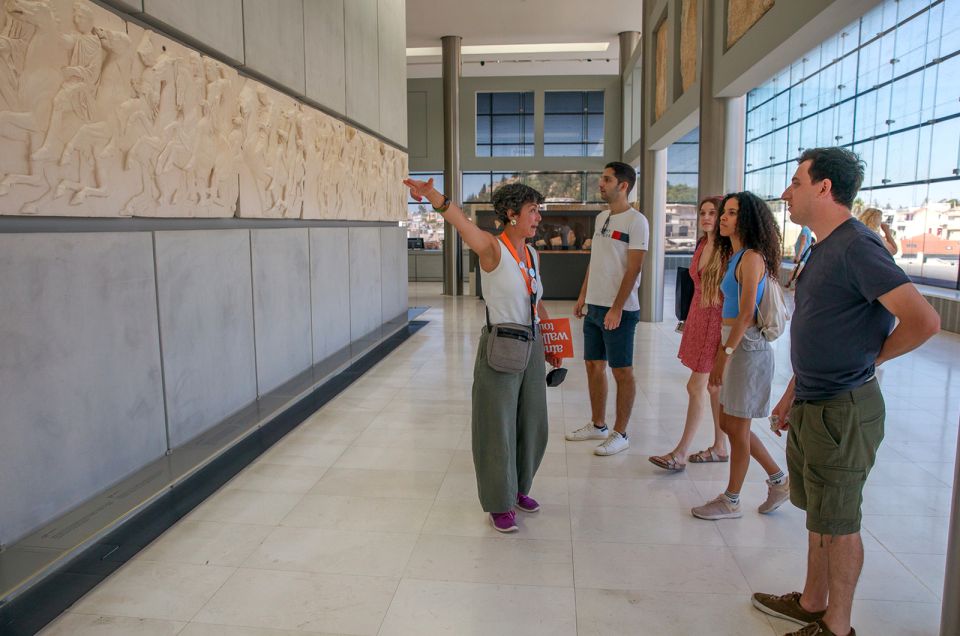
This is a fast, focused tour. You’ll move through the museum’s key galleries and exhibits with enough pacing to understand what you’re looking at without getting buried in details.
One of the tour’s most memorable beats is the excavations visible through glass floors. It’s one thing to read about ancient foundations. It’s another to watch the layers appear under your feet as the guide explains what you’re seeing and why it matters. If you love the moment when archaeology stops being abstract, this is a highlight.
The guide also puts religion and myth into context through the votive offerings to Athena. You’ll see offerings tied to worship and civic identity, not just random objects. That connection helps you understand why Athena shows up repeatedly when you’re thinking about the Acropolis.
You’ll also hear about the famous sculptural tradition represented by the Caryatids statues. These figures aren’t just decorative. With the guide’s framing, you’ll start to see them as part of a larger visual language—how the city communicated power and beauty through stone.
Archaic Gallery daylight and the Parthenon-aligned glass atrium
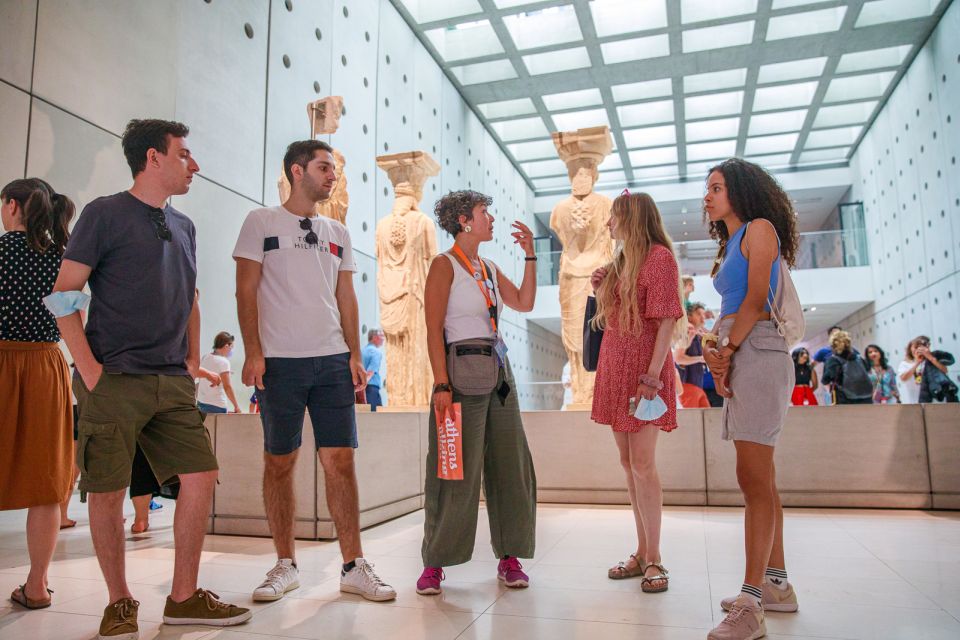
The museum’s first-floor Archaic Gallery is designed to work with natural light. That matters because so many key artifacts—especially sculpture and carved relief—are easier to read when your eyes aren’t fighting overhead glare.
Then comes one of the museum’s signature moves: a glass atrium aligned with the Parthenon. It’s not a gimmick when you understand the goal. The building tries to connect the museum interior to the structure outside, so your brain can link space, form, and purpose instead of treating the Acropolis as a separate trip.
If you’re the kind of person who cares about architecture (or you just want your photos to look better), this is where you’ll feel the building’s intention. The guide helps you notice alignment and sightlines, not just admire the glass.
Plexiglass 3D exhibits and the neighborhood beneath the Acropolis
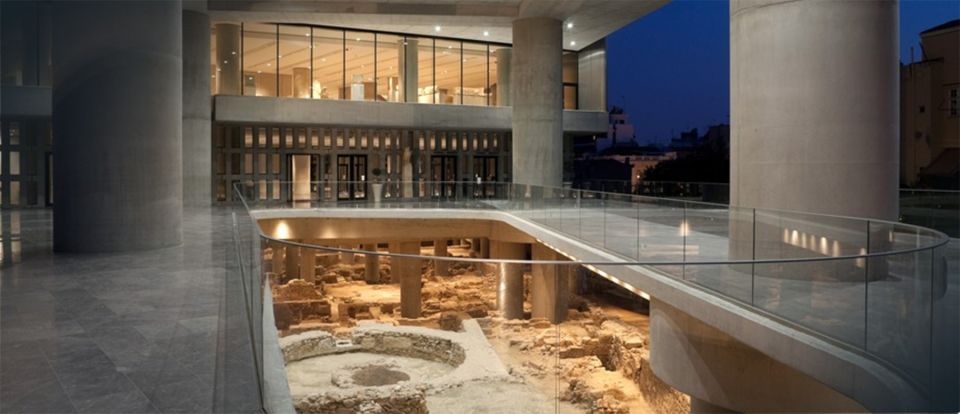
If the Parthenon is the headline, the surrounding neighborhood is the supporting cast. This tour helps you meet that cast.
You’ll get 3D exhibits that show the ancient setting in a clearer way than a signboard ever can. Then you’ll step into the effect of the plexiglass floor, where ruins of an ancient Athenian neighborhood become visible. That moment is powerful because it changes your mental map: you stop thinking only in temples and monuments and start picturing everyday life nearby.
This is also where the guide’s teaching style shows. The best guides don’t just point at objects. They help you ask the right questions: Who lived here? What did this area do? How does this layer relate to the next one? When that clicks, the whole museum visit becomes easier to remember.
Panoramic ruins views: why this tour prepares you for the hill
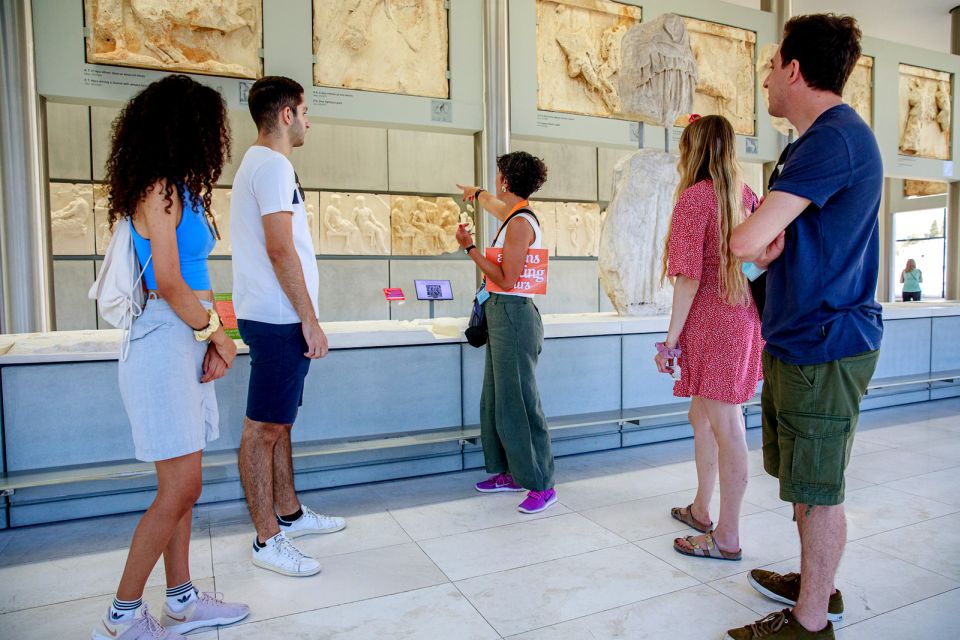
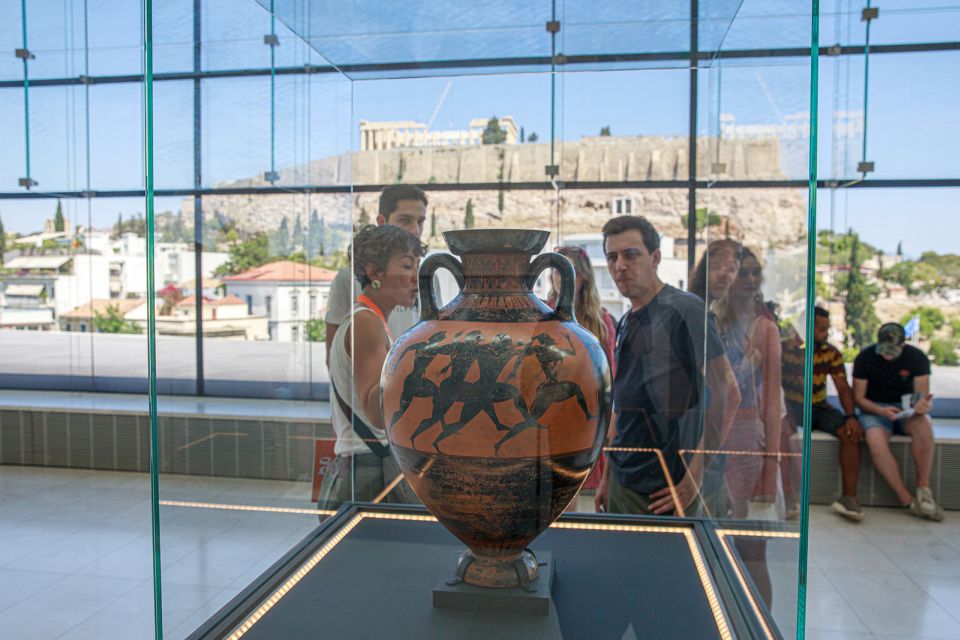
One of the tour highlights is the chance to enjoy panoramic views of the Acropolis ruins from inside the museum. That’s not just for sightseeing. It’s for orientation.
When you can see the ruins from a new angle before you climb the steps outdoors, the site becomes less intimidating. You’ll likely recognize shapes and locations you didn’t know how to interpret on your first glance.
It’s a small thing, but it pays off. You won’t walk onto the Acropolis feeling like you’re starting from zero.
You can also read our reviews of more museum experiences in Athens


Modernist building by Bernard Tschumi and Michael Photiadis
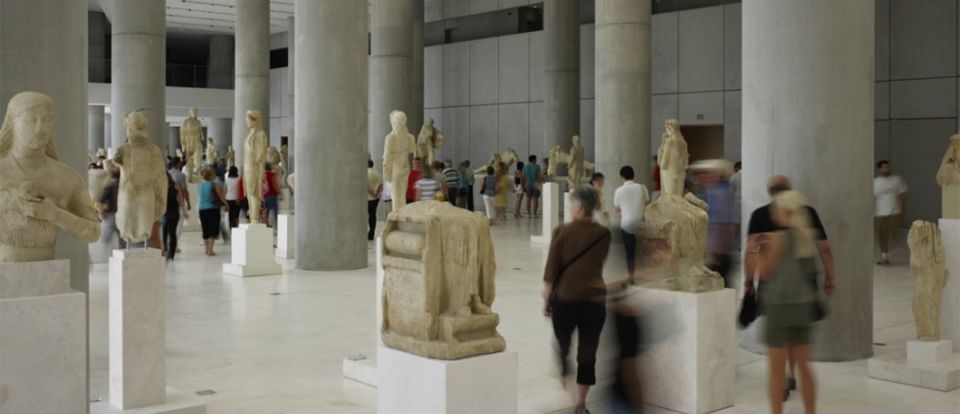
This museum isn’t a classic box. It’s a modernist structure by Bernard Tschumi and Michael Photiadis, and it plays a real role in the experience.
You’ll notice the design choices that guide your movement and your sightlines—especially where glass, light, and alignments come together. The architecture supports the idea of layering: past and present, indoors and outdoors, object and context.
The guide’s job here is simple but valuable: they help you understand why the building looks the way it does and how it supports the archaeology. When that happens, the design stops being just a backdrop and becomes part of the story.
Price and the real value math (including the entrance fee)
The tour price is $41 per person for a 75-minute guided experience with a local licensed guide and skip-the-ticket line service. Entrance fees are not included, and the listed estimate is about €20 per adult.
So what are you really paying for? Not just a guide’s voice. You’re paying for time saved on lineups, plus the guide’s ability to explain what you’re seeing in the museum’s most confusing moments—especially when artifacts don’t come with obvious context for first-time visitors.
If you’re going during peak hours, skipping the ticket line can be the difference between getting an organized visit and spending your precious energy waiting. If you’re traveling in a busy season, I’d treat this as a quality-of-life purchase.
Also, this is the kind of tour where “doing it later” can hurt value. If you go to the museum after you’ve already seen the Acropolis without context, you’ll still enjoy the museum—but you’ll get less payoff from the way it prepares you for the hill.
Meeting at 3 Dionysiou Areopagitou: how to start on time
Meeting point is 3, Dionysiou Areopagitou St., at the Lukumades & Pilino stores. Your staff will be waiting with an orange Athens Walking Tours sign at the beginning of the pedestrian walkway that runs from Hadrian’s Arch area (near Syngrou) toward the Acropolis.
Here’s the practical trick: treat this as a meeting on the approach, not inside the museum doors. Give yourself a few minutes to find the exact corner and line up with your group. When you arrive late, the tour still moves, and you end up rushing through the early moments you really want.
If you’re pairing this with an Acropolis outing, keep your schedule flexible. Timing can be affected by the earlier portion of a longer plan, especially in hot weather when groups move slower.
Who this tour suits best
This tour is ideal if you want a guided overview that helps you understand what’s in front of you without turning your day into a marathon.
It’s especially good for:
- First-time visitors to Athens who feel a little lost when they arrive at major sites
- People who enjoy architecture and design because the building plays a big role
- Anyone who wants to go to the Acropolis with better context, not just better photos
It might be less perfect if:
- You love slow museum wandering and want long pauses at every artifact
- You need total silence to concentrate (a guide means constant explanation)
One more note: groups can be sizable at times, so the guide may keep things moving to ensure everyone sees the main exhibits. That’s usually a plus for pacing, but if you prefer a very intimate feel, consider booking an early slot when crowds are lighter.
A quick word on guides: humor, clarity, and real passion
The reviews show a consistent pattern: the guide approach matters a lot here. Many guides bring a mix of clear explanation and humor, and that combination keeps you engaged through the fast pace.
You may hear different styles depending on who’s leading, but on past departures people have mentioned guides such as Dimitris, Natasha, Annie, Niobe, and Margherita. Common thread: they don’t just list facts. They connect myth, daily life, and art into something you can follow without effort.
If you tend to learn best by conversation—asking questions, hearing stories tied to objects—this kind of guide makes the tour feel like a conversation with the city.
Should you book the Acropolis Museum guided tour?
I think this is a smart booking if your goal is to understand the Acropolis before (or right alongside) the outdoor monuments. The museum’s layout, the glass-floor archaeology, and the Parthenon-aligned design are exactly the kind of experience that improves dramatically with a good guide.
Book it if you want:
- Strong context in 75 minutes
- A guided path through the museum’s most important visual moments
- A smoother, more meaningful Acropolis visit afterward
Skip it (or switch to a longer format) if you know you want lots of unstructured time. The tour is well-paced, but it is not designed for slow drifting.
If you’re in Athens for a limited number of days, I’d treat this as a high-return first step.
FAQ
How long is the Acropolis Museum guided tour?
It runs for 75 minutes.
What is included in the price?
The tour includes a local licensed guide and skip-the-ticket line service.
Are entrance fees included?
No. Entrance fees are not included and are estimated at about €20 per adult.
Where is the meeting point?
Meet at 3, Dionysiou Areopagitou St., at the Lukumades & Pilino stores, where staff holding an orange Athens Walking Tours sign will wait.
Is the tour available in English?
Yes. The live tour guide is English.
What should I bring?
Bring your passport or ID card and wear comfortable shoes.
Is the tour affected by weather?
Tours run in all weather conditions, including rain or shine.
Are large bags allowed?
No. Luggage or large bags are not allowed.
Is the tour wheelchair accessible?
Yes. The tour is wheelchair accessible.
You Might Also Enjoy




More Guided Tours in Athens

More Tours in Athens


More Tour Reviews in Athens
- All Day Cruise -3 Islands to Agistri,Moni, Aegina with lunch and drinks included
★ 5.0 · 4,958 reviews