REVIEW · ATHENS
Acropolis & Acropolis Museum Group tour in German or Dutch
Book on Viator →Operated by Little Owl Tours · Bookable on Viator
You can see Athens ancient and in one sweep. This small-group Acropolis and Acropolis Museum tour focuses on the big monuments plus key context, with a licensed guide who talks you through what you’re looking at. You start at the metro station, walk the hill step-by-step, then finish inside the museum where the finds make more sense.
I especially love the way the pacing feels human. You get guided time at major spots like the Parthenon and Erechtheion, plus stops that most first-timers skip, like the Theatre of Dionysus and Temple of Athena Nike.
One thing to plan for: you’re walking up the hill and you’ll end on top of the Acropolis, so bring water and think through how you’ll get down after.
In This Review
- Key Highlights Worth Booking
- Why This Acropolis + Museum Tour Works (and Not Just Because It’s Famous)
- Meeting at Acropoli Metro: Easy Start, Smart Orientation
- Stop-by-Stop: What You’ll See on the Acropolis Hill
- Passing the Sacred Hill and Catching a 360-Degree View
- Theatre of Dionysus Eleuthereus: Where Greek Drama Began
- Temple of Athena Nike: Victory in Stone
- Propylaea: The Monumental Entrance Gate
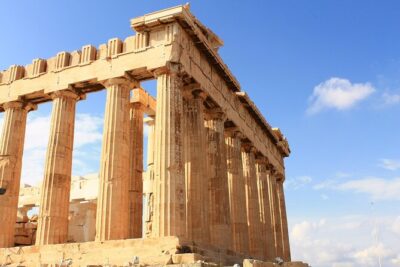
- Parthenon: The Biggest Temple, But With a Story
- Erechtheion: Caryatids and the Feel of the Human Scale
- Acropolis Museum: Where the Pieces Start Making Sense
- The Guide Factor: What Makes This Tour Feel Personal
- Price and Value: Paying for Entry Plus Expert Time
- What to Pack and How to Plan Your Athens Morning
- Who This Tour Is Best For (and Who Might Want Something Else)
- Should You Book This Acropolis + Museum Tour?
- FAQ
- How long is the Acropolis and Acropolis Museum group tour?
- What language is the tour offered in?
- How many people are in the group?
- Are entrance fees included?
- Where do I meet the guide, and where does the tour end?
- What happens if the weather is bad?
Key Highlights Worth Booking
- Small group (max 20) for better questions and less “herding cats” on the slopes
- Licensed guide who’s an archaeologist or historian, with clear storytelling about what shaped the site
- Acropolis Museum included so you connect sculptures and artifacts to the buildings you just saw
- 360-degree view time from the top of the hill, when the crowds can feel a bit farther away
- Headphones-style audio used by the guide in ways that make it easier to hear even if you step aside
- Skip-the-line entry arranged for the Acropolis sites, so you spend less time waiting in limbo
Why This Acropolis + Museum Tour Works (and Not Just Because It’s Famous)
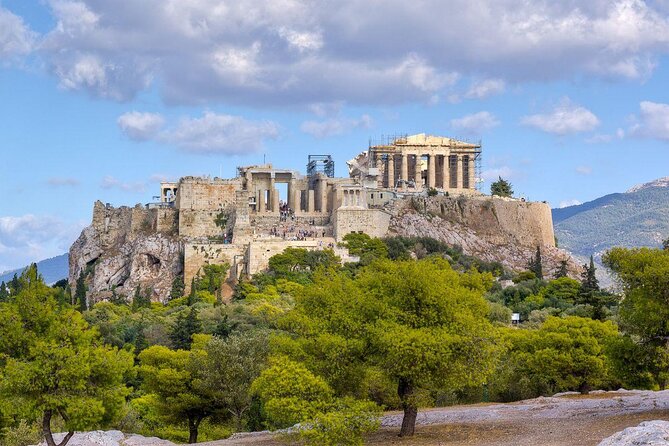
The Acropolis is one of those places that looks straightforward from photos. In real life, it’s complicated: layers of construction, changes across centuries, and a whole set of meanings wrapped into stone. What makes this tour valuable is that it gives you the map in your head while you’re still standing in front of the monuments.
I like that the tour is built around walking the hill in a logical order, rather than bouncing around randomly. You get stop-by-stop context, so the Parthenon doesn’t feel like an isolated postcard. It connects to entrances like the Propylaea, to religious symbolism like Temple of Athena Nike, and to the “everyday stage” context around the Theatre of Dionysus.
If you want a less crowded feel, this small-group format is a big part of that. With a cap of 20, you’re less likely to get stuck behind a giant tour wave every time the group pauses for photos.
You can also read our reviews of more museum experiences in Athens

Meeting at Acropoli Metro: Easy Start, Smart Orientation
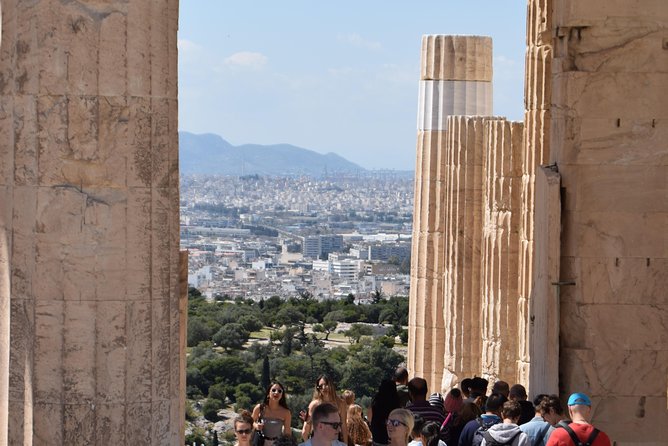
You’ll meet near the entrance flow of the Acropoli metro area—specifically at the exit of the Acropoli metro station—and then you’re guided toward the site entrance.
This matters more than it sounds. Starting close to public transport means you can build your Athens morning without a complicated plan. And the guide doesn’t just point you toward the stairs; you get orientation early, so your first minutes on the hill already feel purposeful.
Also, based on past experiences with the guides from this operator, they tend to use audio support (microphone/headphones). That’s a real comfort when you’re in busy spaces or when you want to step away briefly without completely losing the story.
Stop-by-Stop: What You’ll See on the Acropolis Hill
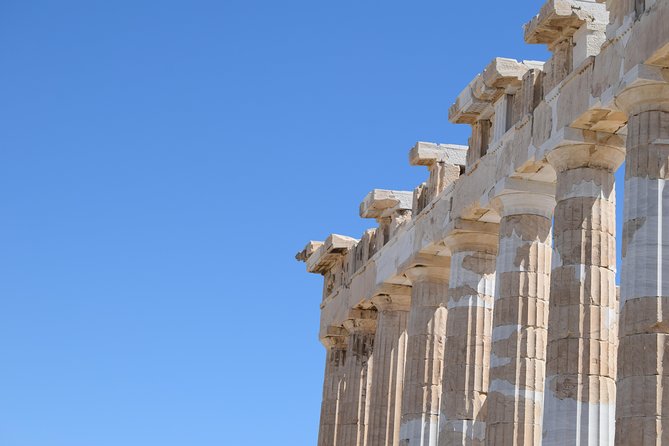
The tour flows through a classic greatest-hits set of Acropolis monuments, with a few “context stops” that make the site come alive instead of just impressing you for ten minutes.
Passing the Sacred Hill and Catching a 360-Degree View
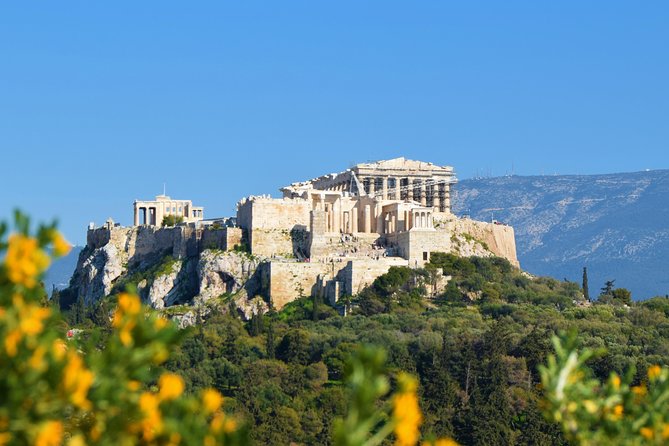
After you enter, you pass monuments along the way and then reach the top for a stunning 360-degree view over Athens. It’s the kind of moment that helps everything click: you’re not looking at ruins in a vacuum. You’re looking at a city layout that the ancient Athenians could literally see around them.
Practical tip: if you care about photos, this is one of the best times to slow down. After you return to inside details, the mood shifts from panorama to sculpture and architectural lines.
Theatre of Dionysus Eleuthereus: Where Greek Drama Began
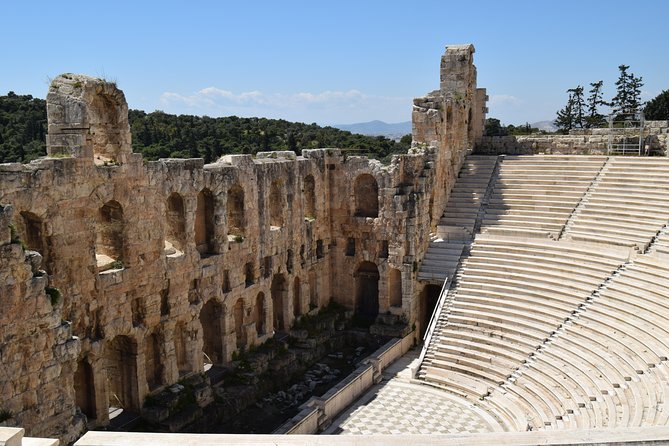
Next up is the Theatre of Dionysus Eleuthereus. The big idea here is simple: this is the birthplace of ancient Greek theatre.
Why this stop is worth your time: most Acropolis tours focus heavily on religion and temples. Theatre adds a different angle—how civic life and storytelling worked in Athens. It’s also a mental palate cleanser before you tackle the densest cluster of temple structures.
Time on this stop is short (about 15 minutes), so treat it like a guided “why it matters” session rather than a long sit-down.




Temple of Athena Nike: Victory in Stone
Then you’ll see the Temple of Athena Nike, the temple of the goddess of victory. It’s a compact stop (around 5 minutes), but it’s meaningful because it shows how Athena’s role wasn’t just abstract. Victory was political, military, and civic.
If you’ve ever wondered why Athenians built so much for gods tied to state identity, this is where you start getting the pattern.
Propylaea: The Monumental Entrance Gate
You’ll move to the Propylaea, described as the monumental entrance gate to the top of the hill. This is another “short but important” stop (about 10 minutes).
Here’s what I’d pay attention to: think of the gate as the site’s transition device. Before you feel wowed by the Parthenon, the Propylaea sets the stage—literally—signaling that you’ve moved from ordinary space into sacred space.
Parthenon: The Biggest Temple, But With a Story
The Parthenon is the star, and you’ll spend about 20 minutes there. It’s described as the biggest temple on the Acropolis hill, dedicated to Athena.
What you’ll want from a guided stop here is not just facts like who built it. You want a sense of what the building communicated. A strong guide will connect architecture to symbolism and explain how parts of the design relate to the whole.
In the guides’ style reported by prior guests, you’ll often get explanations supported by photos on an iPad. That can help you see details you might otherwise miss—especially on carvings or architectural lines that are hard to interpret at a glance.
Erechtheion: Caryatids and the Feel of the Human Scale
After the Parthenon, you’ll visit the Erechtheion, known for the Caryatids—female columns. You get about 10 minutes here.
This stop is where the Acropolis becomes more emotional. Columns that look like people are not what you expect from a purely monumental site. You’ll likely notice how the guide frames the Caryatids in terms of artistry and function, rather than treating them as just famous statues.
If your group has kids or teens, this is also a strong spot for questions. People tend to ask about how they were made and why that design was chosen.
Acropolis Museum: Where the Pieces Start Making Sense
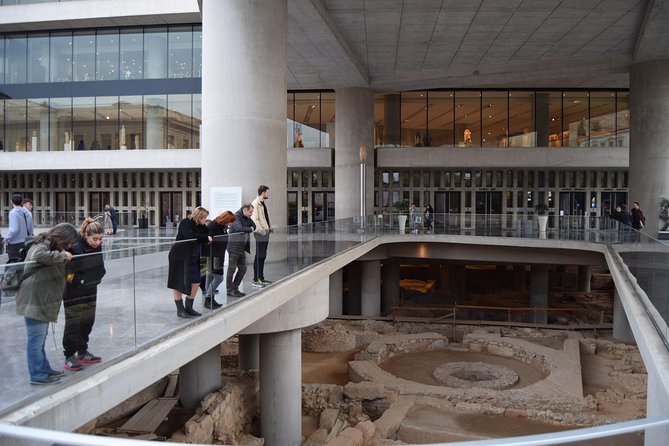
The tour then moves indoors to the Acropolis Museum, with about an hour there. The museum is described as new and as the home for treasures from Acropolis Hill.
This is where you get a payoff. Up on the hill, you’re looking at buildings. In the museum, you can shift into viewing objects and seeing how they connected to the architecture you just walked past.
Why the museum slot is valuable:
- You stop guessing what you’re seeing.
- Details become easier to read and compare.
- You can connect the “big temple” story to individual sculptures and artifacts.
Based on previous experiences with this operator’s guides (including archaeologists who lead Dutch tours), the explanations are often animated and interactive, with a lot of room for questions. People also mention that the guide keeps things moving without turning it into a lecture marathon.
The Guide Factor: What Makes This Tour Feel Personal
The tour includes an expert licensed guide (archaeologist or historian) and keeps the group size small (max 20). That combination matters because the Acropolis is a high-noise environment. Without a real guide, it’s easy to leave with the feeling that you saw everything but understood very little.
One guide mentioned in past experiences, Maria, has been described as having a PhD in archaeology. Another guide, Jessica, is repeatedly highlighted for being professional, enthusiastic, and fun—someone who can answer questions with humor and keep explanations clear.
There’s also a recurring pattern in guest feedback: the best moments aren’t only the landmarks. It’s how the guide builds context during short waits and transitions, turning what could be downtime into useful understanding.
If you’re traveling with family, this matters too. Previous groups included kids, and the guide style seems to work well across ages, especially because the route is short enough to stay energetic and focused.
Price and Value: Paying for Entry Plus Expert Time

The tour price is $69.77 per person, and you typically book about 15 days in advance on average. Entrance fees are not included. You’ll need approximately 50 EUR per adult for entry, and the operator arranges this with skip-the-line tickets.
So what are you really paying for here?
- Expert guide time for about three hours, focused tightly on the core highlights and key context
- Small-group attention (max 20), which often means fewer distractions and more chances to ask why
- A structured route that mixes outdoor monuments with the museum payoff
Is it cheap? Not really. But it’s also not an overpriced “just walk with a flag” setup. If you’re the type who enjoys learning why things look the way they do (and not just taking photos), this format tends to feel worth it.
If you’re purely budget-focused and you don’t care about context, you could DIY. But if you want the Acropolis to feel like a story you can actually follow, the guide cost becomes the point.
What to Pack and How to Plan Your Athens Morning
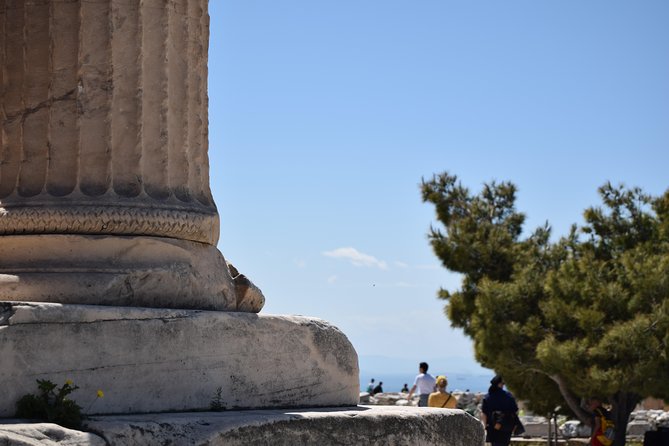
This tour lasts about 3 hours and involves moderate walking up and around the Acropolis hill. Food and drinks aren’t included, and bottled water isn’t included either, so bring water. This is especially important in warmer or sunny weather.
Also remember the tour ends on top of the Acropolis. That means you should plan your next step before you arrive. If you’re using public transport, it’s worth checking your route so the end location doesn’t surprise you.
Finally, the tour requires good weather. If weather is poor, you’ll be offered a different date or a full refund. That’s one of those practical realities with outdoor archaeology.
Who This Tour Is Best For (and Who Might Want Something Else)
I’d especially recommend this tour if you:
- Are visiting Athens for the first time and want the Acropolis and museum connected in one morning
- Want a small-group experience with a guide who will answer questions
- Prefer listening and learning over reading every sign
- Are traveling with mixed ages, including kids or teens (the guide style seems to work across age groups)
You might consider a different option if:
- You strongly dislike walking uphill and want a lighter, slower route
- You already feel totally comfortable with Acropolis basics and just want minimal guidance
Should You Book This Acropolis + Museum Tour?
If you care about understanding what you’re seeing, this is an easy yes. The combination of a licensed guide, a small group, a hill walk that includes the key monuments, and then a museum hour where the artifacts give meaning back to the architecture is a smart use of time.
Book it if you want your Athens morning to feel structured but not stiff—lots of “look here, notice that” moments, plus a guide who can explain history and architecture in a way that sticks.
If you’re only chasing photos and you hate paying for guiding, then it might feel unnecessary. But for most people—especially first-timers—this tour hits the sweet spot between time, access, and real context.
FAQ
How long is the Acropolis and Acropolis Museum group tour?
It lasts about 3 hours.
What language is the tour offered in?
The tour is offered in German or Dutch.
How many people are in the group?
It’s a small group with a maximum of 20 participants.
Are entrance fees included?
No. Entrance fees are not included. The tour mentions an entrance fee of about 50 EUR per adult, arranged with skip-the-line tickets.
Where do I meet the guide, and where does the tour end?
The guide meets near the exit of the Acropoli metro station. The tour ends on top of the Acropolis Hill.
What happens if the weather is bad?
The experience requires good weather. If it’s canceled due to poor weather, you’ll be offered a different date or a full refund.
You Might Also Enjoy


More Museum Experiences in Athens

More Tours in Athens


More Tour Reviews in Athens
- All Day Cruise -3 Islands to Agistri,Moni, Aegina with lunch and drinks included
★ 5.0 · 4,958 reviews