REVIEW · ATHENS
Ancient Sparta Ancient Corinth Private Tour from Athens/ Nafplio
Book on Viator →Operated by GREECE TAXI · Bookable on Viator
A day that packs two legends of Greece. This private trip takes you from Athens into the Peloponnese to see Corinth Canal, the Spartan core, and Ancient Corinth, with a dedicated English-speaking driver who helps you connect the dots as you travel.
I especially like the round-trip pickup convenience and the way the plan builds in photo stops, walk time, and enough breathing room to eat along the route. The one caution: it’s a long day and some museum stops cost extra, and a couple are closed on Tuesdays, including the olive oil museum.
In This Review
- Key points worth knowing before you go
- The value: why this long Peloponnese day feels worth it
- Pickup, timing, and how to plan your day without stress
- Corinth Canal: a quick stop that pays off for photos and scale
- Sparta: the social system angle (and why it’s more than ruins)
- Archaeological Museum of Sparta: quick, classic, and schedule-dependent
- The Sparta Acropolis and Ancient Theater: where the scale surprises you
- Leonidas Monument: the short stop with the punchiest symbolism
- Optional stop: the Olive and Greek Olive Oil Museum (great if it’s open)
- Ancient Corinth: walking through a key crossroads of Greek and early Christian history
- Archaeological Museum of Corinth: finishing with artifacts, not just stones
- What you pay for vs. what you still need to budget
- How the driver changes the day (and why “private” matters here)
- Who should book this tour
- Should you book? My straight call
- FAQ
- What is the tour duration?
- How much does the private tour cost?
- What’s included in the price?
- Are museum tickets included?
- Which stops are closed on Tuesdays?
- Is the olive oil museum part of the tour?
- Can you pick me up from Nafplio instead of Athens?
- Does the driver act as an archaeologist guide inside the sites?
- Can I cancel for a refund?
Key points worth knowing before you go

- A proper private setup: your own vehicle, your own driver, and your group only
- Corinth Canal photo time: you’ll have a short stop to walk and look down into the canal
- Sparta highlights in layers: ruins plus a theater setting that’s bigger than you expect
- Olive museum is optional: great if open, but it’s closed on Tuesdays
- Ancient Corinth is the big payoff: plan on real walking through the site
- Driver-led context: books, audio documentary, and smart stop choices (not an archaeologist guide)
The value: why this long Peloponnese day feels worth it
At $265.50 per person, you’re paying for the big comfort item: direct private transport plus a driver who structures the day for you. You also get fuel, tolls, and parking handled, which matters on a route like this where everything is spread out across the Peloponnese.
This tour also doesn’t just list ruins and call it a day. The itinerary mixes quick “see-it” stops (like the canal viewpoints) with longer on-site time where you can actually orient yourself. That mix is what keeps a 10-hour day from feeling like a mad dash.
If you’re traveling as a couple, the price can feel like a splurge—until you price out multiple taxis plus museum tickets plus the stress of timing. For families, the vehicle options (and free kids under 12) can make it easier to justify.
You can also read our reviews of more private tours in Athens


Pickup, timing, and how to plan your day without stress
This tour runs about 10 hours. Start time is flexible, but you’ll have the best experience if you can do 8:00 am or earlier in winter. The earlier you leave, the less the day feels like it’s fighting traffic and daylight.
Pickup is offered from your hotel or apartment in Athens center up to 7 km. If you’re coming from Piraeus (or the cruise terminal), there’s an extra 15€ per way for longer pickup areas. There’s also a Nafplio option, where pickup and drop-off is handled from there and the cost changes lower since Sparta and Corinth are closer to Nafplio.
What to expect in the van or sedan:
- Air-conditioned, high-cleanliness vehicles (sedan/minivan/minibus depending on group size)
- A driver who provides informative books and audio documentary content as you go
- Plenty of opportunities to stop for photos and short breaks
One practical note: this is private and flexible, but you still have shared site opening hours and travel time. The tour is adjustable in pace, not unlimited.
Corinth Canal: a quick stop that pays off for photos and scale
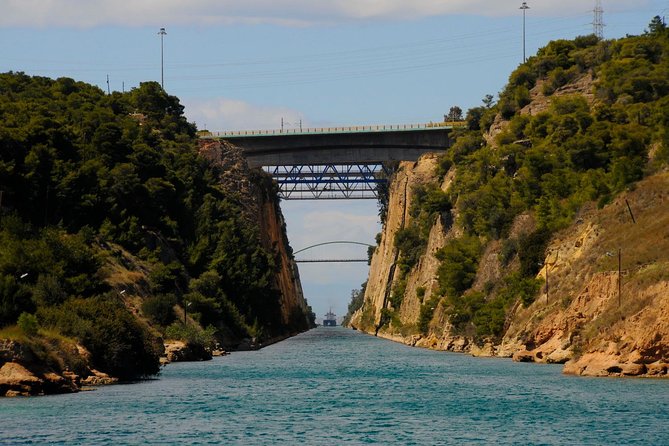
The Corinth Canal is one of those places that looks “simple” on a map but hits hard in real life. It’s a man-made connector between the Aegean and Ionian seas, plus the Peloponnese peninsula.
Your stop here is about 15 minutes, and it’s timed for what makes the place special:
- Photography time
- A walk across a pedestrian bridge
- Big views from about 80 m high
If you’re the type who likes to understand a landmark’s purpose, this is a great early stop. It sets up the whole geography of the day—Greece isn’t just ruins, it’s also engineering and transit.
Sparta: the social system angle (and why it’s more than ruins)
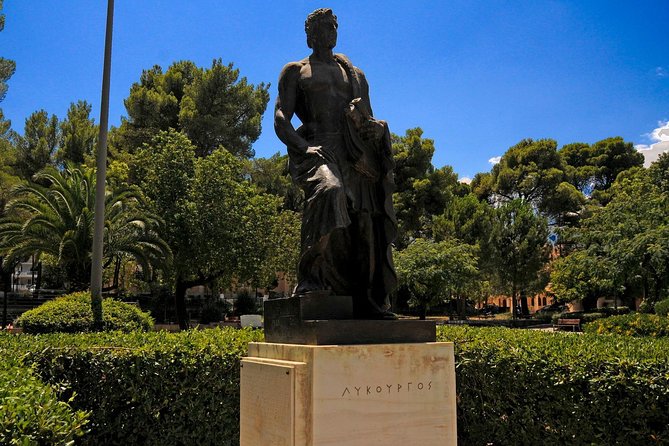
Sparta often gets reduced to swords and slogans. This tour gives you a better frame by stopping at the Spartan core for about 30 minutes, with context about how the society was organized.
You’ll hear the basics of the Spartan system:
- The constitution attributed to Lycurgus
- A focus on military training and physical development
- The division of people into categories such as Spartiates (citizens), perioikoi (free residents tied to commerce), and helots (state-owned serfs)
That matters because it helps you read what you see later. When the landscape is quiet and the ruins are smaller than the Acropolis, it’s easy to feel underwhelmed—unless you understand why Sparta looked the way it did and what it valued.
Archaeological Museum of Sparta: quick, classic, and schedule-dependent
After the Spartan stop, you’ll have time for the Archaeological Museum of Sparta for about 30 minutes. It’s the oldest provincial archaeological museum in Greece, housed in a neoclassical building built between 1874 and 1876.
Cost is 10€ in summer and 5€ in winter (with Tuesday closures). The ticket here is not included, so if museum time is important to your travel style, you’ll want to build your expectations around the calendar.
If your group enjoys artifacts and explanations (as opposed to only open-air ruins), this stop helps balance out the day.






The Sparta Acropolis and Ancient Theater: where the scale surprises you
This is one of the most satisfying parts of the day: an hour at the Acropolis and Ancient Theater of Sparta.
You’ll see Roman-era construction using local white marble, plus the theater itself built during the late first century B.C. It’s described as one of the largest theaters of the Classical world, with an estimated capacity of about 16,000 people. The auditorium has suffered damage through later periods, including the Byzantine era, so you’re seeing fragments and erosion as part of the story.
Why this stop works:
- It’s long enough to actually look around
- You get a setting that makes “Sparta was different” feel real
- The free admission time keeps the day’s cost predictable
If you want to take photos, this is a good place for it because the theater shape and stone blocks create strong angles—even when there’s not much standing to pose beside.
Leonidas Monument: the short stop with the punchiest symbolism
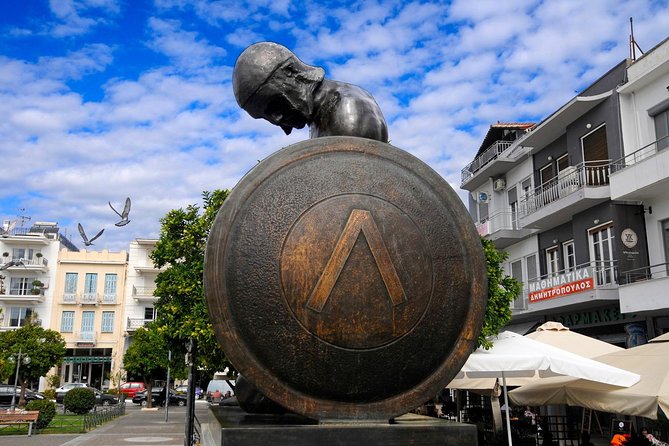
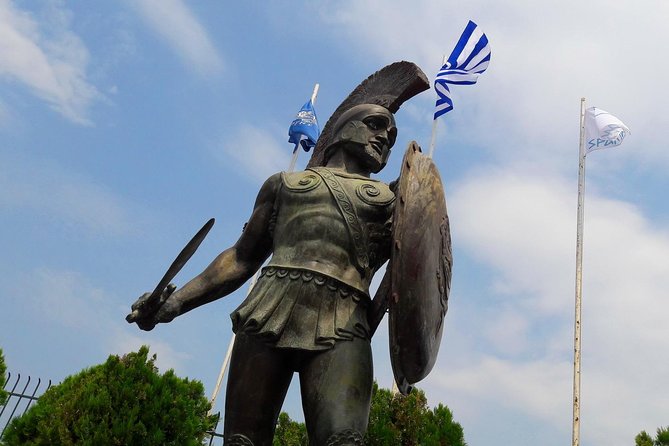
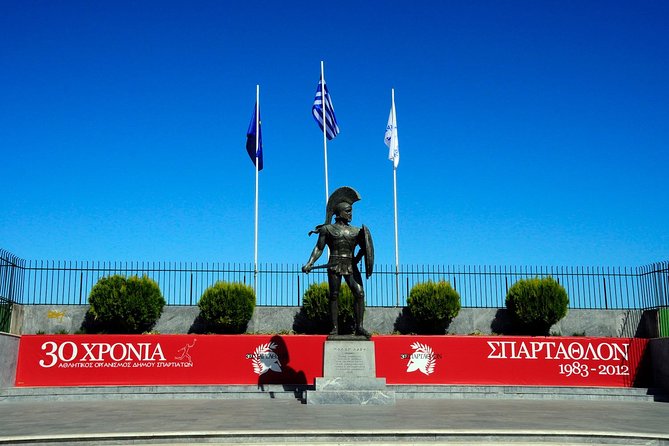
Next comes a 15-minute visit to the Leonidas Monument. The statue sits in front of a stadium area, and the whole site references Thermopylae and Leonidas’s famous line, Molon labe (Come and get them).
Even if you know the story already, the monument helps you feel the cultural momentum behind Sparta—how later ages used Sparta as a symbol.
There’s also an archaeological layer here. Excavations north of the modern town uncovered a limestone structure dating to the 5th century B.C. It’s believed to be connected to Leonidas’s tomb, though the use isn’t fully verified. If you like history that leaves room for mystery, you’ll appreciate the nuance.
Optional stop: the Olive and Greek Olive Oil Museum (great if it’s open)

This museum is optional, and it’s easy to make the wrong call if you don’t check the day. It costs 5€ and is closed on Tuesdays.
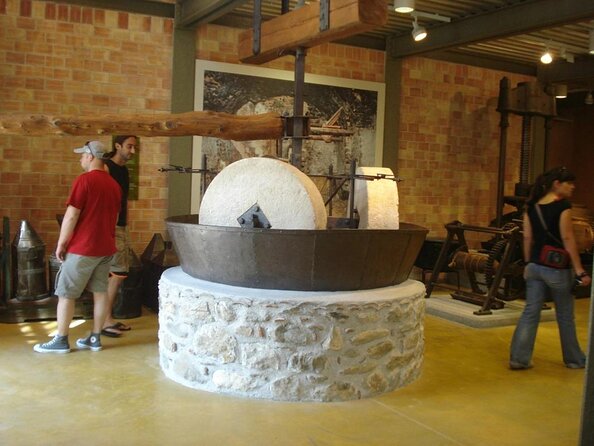
When it’s open, it’s about much more than oil tasting. The museum covers:
- Olive and olive oil culture, history, and technology
- Connections from prehistoric times to the early 20th century
- Fossilized olive leaves from Santorini (50,000–60,000 years old)
- Linear B tablets from the 14th century B.C. presented as replicas, representing early written references to olive and oil
It also lets you look at olive production through different lenses: economy, nutrition, religion, art, and technology. For food lovers and people who like “how something was made,” this can be a standout.
The trade-off: because it’s optional and time-limited (about 20 minutes), you’ll want to keep an eye on the full schedule so you don’t lose too much time in Ancient Corinth later.
Ancient Corinth: walking through a key crossroads of Greek and early Christian history
Then you hit the main attraction: Ancient Corinth, for about 1 hour 10 minutes.
Corinth is described as one of the largest cities in Ancient Greece, and the experience of walking through it is meant to feel like stepping back in time. You’ll also get the layered cultural framing:
- For Christians, Corinth is linked to Saint Paul’s letters (First and Second Corinthians)
- It’s also tied to Acts of the Apostles in Paul’s missionary journeys
This is a place where your senses help more than your memory. Even if you don’t know every stone name, the plan and layout give you a sense of how a major city moved and functioned.
The ticket situation here matters:
- Ancient Corinth has a combined ticket that costs 15€ in summer and 8€ in winter
- That ticket includes the museum (as described for the site)
Admission for the next museum stop is handled differently depending on how the ticket covers things for your season, but you should plan on some extra time to read signage and take breaks.
Archaeological Museum of Corinth: finishing with artifacts, not just stones
You’ll have about 30 minutes for the Archaeological Museum of Corinth. The provided schedule notes that in winter it’s closed on Tuesday.
The “site includes and Museum” language suggests your Corinth ticket covers the museum there, with the museum time treated as part of the same experience. Either way, this last stop helps convert what you saw outside into objects you can examine up close.
What you pay for vs. what you still need to budget
The price includes private transport with a clean air-conditioned vehicle, fuel, tolls, parking, and pickup/drop-off. You also get a driver with English-language historical commentary plus books and audio documentary support.
What is not included is where you’ll spend a few extra euros:
- Olive and Greek Olive Oil Museum: 5€ (optional; Tuesday closed)
- Archaeological Museum of Sparta: 10€ summer / 5€ winter (closed Tuesday)
- Ancient Corinth combined ticket: 15€ summer / 8€ winter
- Archaeological Museum of Corinth: described as included with the site museum ticket
There’s also a note for gratuities (1€ per person). Not huge, but it’s better to plan than scramble.
If you want “value,” this is one of those tours where the real expense is time and logistics. The museums you pay for tend to be the ones that add context. The big open-air sights (Corinth Canal, Sparta areas, Leonidas Monument, and the theater) are listed as free.
How the driver changes the day (and why “private” matters here)
Even with a fixed route, the private format is what keeps the day from feeling generic. A good driver can:
- Choose the best photo angles and viewpoints
- Time stops so you’re not stuck in the wrong place at the wrong moment
- Adjust the schedule when your group moves slower or needs breaks
In the feedback you’ll see drivers named like Christos, Nikolaos, Takis, Makis, and Philippe. The common thread is that their commentary connected the landscape to what you were looking at, not just dates and names. That’s the difference between walking past a theater and understanding why it mattered.
One more important detail: the driver is not an archaeologist guide walking you through the sites like a licensed specialist. If you want an archaeologist to guide inside the ruins and museums, you’d need to hire one separately.
Who should book this tour
This is a good match if you:
- Want a high-impact day trip that covers multiple icons of the Peloponnese
- Prefer private transport over public bus schedules
- Enjoy short, well-chosen site stops plus one longer walk through Ancient Corinth
- Like history framed by how societies worked, not just stone monuments
It may not be the best fit if you:
- Want lots of museum time with minimal driving
- Are traveling on a strict schedule around Tuesdays, since multiple museum elements can be closed
- Expect an in-depth archaeologist lecture at every stop (you’d need to arrange that separately)
Should you book? My straight call
If you’re time-crunched and want to see Corinth Canal + Sparta + Ancient Corinth in a single, private day, this tour makes sense. The value is strongest when you take the day as a “route with context,” not as a checklist.
Book it if:
- You can handle a long day
- You’re okay paying a few museum fees on top of the base price
- You’re traveling outside Tuesday for the olive oil museum and Sparta’s museum plans (or you’re fine skipping the optional stop)
Skip it (or be more cautious) if:
- You’re only interested in one location deeply and don’t want the travel mix
- Tuesday closures would break your ideal plan, and you’d feel disappointed if optional stops aren’t available
FAQ
What is the tour duration?
It runs about 10 hours (approx.).
How much does the private tour cost?
The price is listed at $265.50 per person.
What’s included in the price?
You get a private vehicle (air-conditioned and cleaned to a high standard), round-trip pickup and drop-off from your selected Athens area (or Nafplio option), and a professional English-speaking driver. Fuel, tolls, and parking fees are included, and the driver provides informative books and an audio documentary as you travel.
Are museum tickets included?
No. Museum admission fees are not included. The Olive and Greek Olive Oil Museum is optional and costs 5€. Ancient Corinth has a combined ticket (15€ in summer, 8€ in winter). The Archaeological Museum of Sparta costs 10€ in summer and 5€ in winter.
Which stops are closed on Tuesdays?
The Archaeological Museum of Sparta is closed on Tuesdays. The Olive and Greek Olive Oil Museum is closed on Tuesdays. The Archaeological Museum of Ancient Corinth is noted as closed on Tuesdays in winter time.
Is the olive oil museum part of the tour?
It’s optional. If there’s time and it’s open, you can include it; it costs an extra 5€ and is closed on Tuesdays.
Can you pick me up from Nafplio instead of Athens?
Yes. Pickup and drop-off are offered from Nafplio, and the cost changes accordingly because Sparta and Corinth are closer. You’d select the Nafplio option for pricing.
Does the driver act as an archaeologist guide inside the sites?
No. The driver provides historical information and documentary-style context, but they are not an archaeologist guide. If you want an archaeologist licensed guide to walk you through sites or museums, you need to hire one additionally.
Can I cancel for a refund?
Yes. Free cancellation is available, and you can cancel up to 24 hours in advance for a full refund. If you cancel less than 24 hours before the experience start time, the amount paid is not refunded.
You Might Also Enjoy



More Private Tours in Athens


More Tours in Athens


More Tour Reviews in Athens
- All Day Cruise -3 Islands to Agistri,Moni, Aegina with lunch and drinks included
★ 5.0 · 4,958 reviews