REVIEW · ATHENS
Hydra Island & Mythical Full Peloponnese Private 9-Day Tour
Book on Viator →Operated by EUDAIMONIA Private Tours · Bookable on Viator
Hydra and myth-soaked roads in one plan. I love the private, just-for-your-party setup and the way planning and explanations get handled by Nikos and Theo, so the days feel smooth instead of stressful. You also get two nights of accommodation plus breakfast and lunch on two days, which is a real value on a trip this big. One thing to consider: site admissions and the Hydra boat and train tickets are not included, so you’ll want to budget for those along the way.
This is the kind of itinerary that works when you want variety: UNESCO ruins, fortress towns, cliff monasteries, and a car-free island. You’ll be driving through the Peloponnese in a brand-new vehicle, with bottled water and an in-car info booklet to help you connect the dots as you go.
If you’re up for some walking and a bit of climbing, it’s a fantastic way to see a lot of Greece without feeling rushed. If you prefer slower days with no stairs at all, pay extra attention to the steps and the short hikes built into the plan.
In This Review
- Key things to know before you go
- Why this Peloponnese route works as more than a checklist
- Private tour comfort: pickup, vehicle style, and how the days feel
- Day 1 in the Corinth–Nafplio triangle: canal photos to Epidaurus acoustics
- Day 2 on Hydra: car-free island walks and the Kountouriotis house
- Day 3 through Parnon to Monemvasia: coastal coffee and a fortress arrival
- Day 4 on the Mani Peninsula: caves, pirate-era towns, and Vatheia views
- Day 5 toward Mystra and Olympia-adjacent stories: Byzantine heights and olive culture
- Day 6: Messene’s scale plus Apollo Epikourios
- Day 7: Olympia’s stadiums and museum sculptures, then Arcadia villages
- Day 8 in Arcadia: water-power museum, a cliff monastery hike, and Stemnitsa lunch
- Day 9: Kastria Cave of the Lakes, Kalavryta lunch, and the Diakopto–Kalavryta train
- Price and value: what you get around $6,193 per person
- What’s not included: admissions, boat, and the optional guide choice
- Who this tour suits best (and who should rethink it)
- Should you book Hydra Island & Mythical Full Peloponnese Private 9-Day Tour?
- FAQ
- How many people is this private tour for?
- What’s included in the price?
- Are entrance fees included for ancient sites and museums?
- Do you get pickup and drop-off?
- What level of physical activity should I expect?
- What’s the cancellation policy timeframe?
Key things to know before you go
- Private tour for 1–7 people means fewer compromises and more flexibility with your pace.
- Local context with a driver/guide helps your stops make sense, especially at the big ancient sites.
- Hydra is car-free, so you’ll explore on foot with views as your main activity.
- Palamidi’s 999 steps and a 20-minute monastery hike mean moderate fitness helps.
- Brand-new vehicles (2020–2022) plus bottled water cut down on the small annoyances of long drives.
- Most major “musts” are scheduled early or in focused windows, so the day doesn’t just feel like traffic.
Why this Peloponnese route works as more than a checklist
A trip through the Peloponnese can turn into a pile of sites if you don’t have a way to connect them. This one is built around flow: coastal punctuation, fortress towns, and ancient centers that feel linked by geography and time.
I also like that the plan mixes the famous names with places that add texture. One day you’re at the ancient Theatre of Epidaurus with its famous acoustics. Another day you’re on a boat in the Diros Caves watching stalactites and stalagmites appear under careful lighting. Then you swing back to human-scale villages like Nafplio and Stemnitsa, where lunch is part of the experience, not a pause button.
And because it’s private, you’re not stuck trying to keep pace with a group that wants to sprint while you’d rather linger. That difference matters on a route this spread out.
You can also read our reviews of more private tours in Athens


Private tour comfort: pickup, vehicle style, and how the days feel
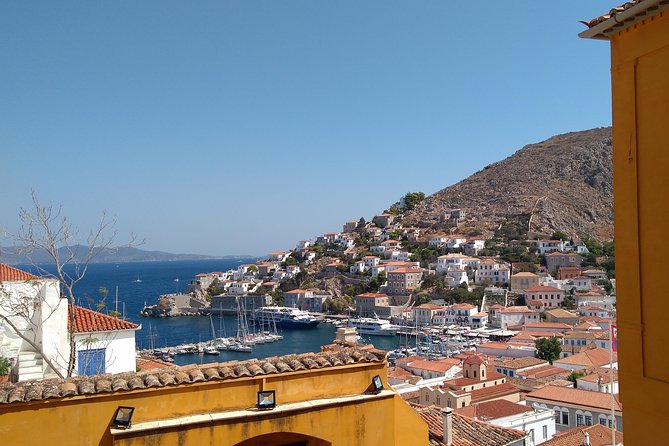
The tour is designed as a private experience for 1–7 people, with pickup offered. It starts at 8:00 am, so you get daylight for the driving-heavy parts and earlier access windows for the biggest sites.
Logistics are handled in the background: you get a brand-new vehicle (2020–2022), bottled water, and an in-car information booklet for the tour stops. That booklet isn’t just trivia. It helps you remember what you’re looking at once you’re standing in front of it—especially at ancient ruins where the details can blur if you only have quick passes.
A driver/guide leads the way. If you want an extra layer of explanation, a professional licensed guide is optional. For many people, the built-in local guidance is enough. If you’re the type who loves deep background on inscriptions, building phases, and exact historical connections, you’ll likely appreciate the option.
Fitness-wise, you should be comfortable with moderate walking. The itinerary includes stairs (like Palamidi) and a hike (the monastery walk), plus the usual “stand and look” time at museums and ruins.
Day 1 in the Corinth–Nafplio triangle: canal photos to Epidaurus acoustics
Day 1 is a strong opener because it puts you in motion immediately, then settles into classic Argolis sights.
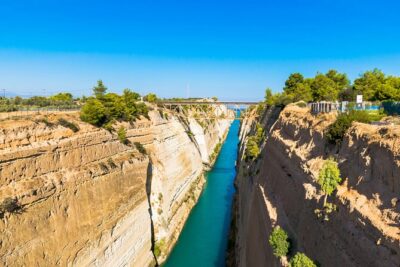
You start with a quick photo stop at the Corinth Canal, where the canal connects the Gulf of Corinth with the Saronic Gulf. It cuts through the Isthmus of Corinth, and the effect is dramatic: the Peloponnese feels like an island because of how narrow the connection is.
Next comes Ancient Corinth (Archaia Korinthos). The big prosperity starts later (from the 8th century), but the site has earlier habitation too. You’ll have about an hour to wander, and you’ll want to pace yourself. Ancient Corinth is one of those places where a little guidance makes a big difference because the ground has layers.
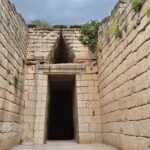
Then you drive to Mycenae, a UNESCO site tied to the Mycenean civilization and stories like King Agamemnon. You get around two hours here, including time for the accompanying museum. If you want to understand why myths have roots in real places, Mycenae is one of the best stops for that feeling.
After that, you arrive in Nafplio, the area’s first capital and one of the most beautiful towns in Eastern Peloponnese. It’s also where the tour turns from “ancient sites and ruins” into “classic Greece town life.” You get about two hours—enough to stroll and soak in the mood.
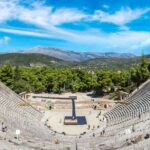
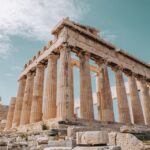
In the afternoon, you visit the Ancient Theatre of Epidaurus. This is where the tour name Mythical Peloponnese makes sense. Epidaurus is known as the oldest theater and is famous for its acoustics. Even in a short visit, you can feel why people still talk about how sound travels there.
The day rounds out with Nafplio Port time (optional evening exploration) and Palamidi Castle. Palamidi is all about views, and it comes with a workout: 999 steps down to old Nafplio. The trick is to plan for it like a viewpoint hike, not like a casual stroll.
Day 2 on Hydra: car-free island walks and the Kountouriotis house
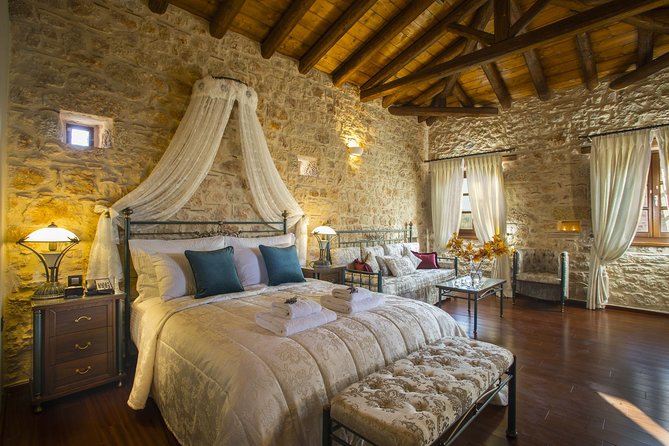
Hydra is one of the tour’s headline moments, mainly because it’s so different from the mainland. You spend about five hours in Hydra Town, exploring on foot. Hydra is famous for a historic, cosmopolitan atmosphere—rich shipping families, artists, and a place where life doesn’t revolve around cars.
No cars, no noise, just streets, sea views, and the slow pace that makes Hydra feel like it’s operating by its own clock. You’ll likely find yourself pausing often, even if you think you’ll only do a quick wander—Hydra has that effect.
After exploring the town, you visit the Lazaros Koundouriotis Historical Mansion, also known as the National Historical Museum. The house dates to 1750 and is a great example of upper-class island life during the 18th and 19th centuries, tied to Hydra’s shipping families. If you like how buildings tell social stories, this is worth your time.
Then you head back toward the mainland area for Ermioni, where you catch the boat to Hydra. The crossing is quick (about 25 minutes each way), and it’s scheduled as an easy connector to keep your Hydra time intact.
Day 3 through Parnon to Monemvasia: coastal coffee and a fortress arrival
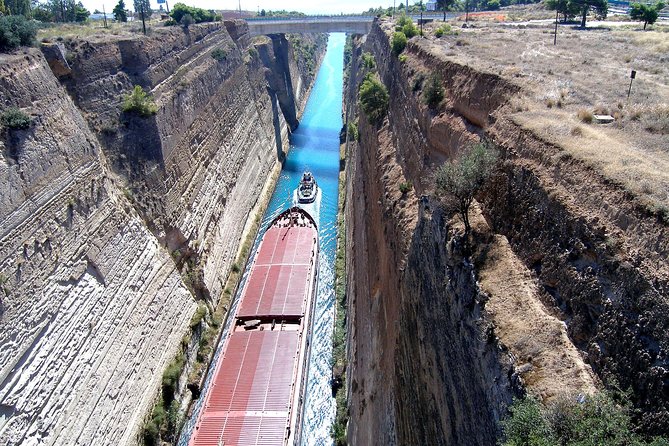
Day 3 is all about moving from coast to mountains and then ending with a dramatic medieval setting.
You leave Nafplio and go toward Tyros, taking a more scenic coastline route rather than motorway driving. You’ll stop for Greek coffee by the water, then climb into the Parnon mountain range. There’s even a lunch at a mountain village built into the rhythm, so the day doesn’t feel like constant driving followed by one rushed stop.
Next you pass through Leonidio, known for the Dafonas Gorge and for the region’s sweet eggplant (aubergine). It’s a short stop, but it helps break up the day and gives you a taste of how locals relate to the land.
You then visit Monastery Panagias Elonis, described as cliff-hanging, with views over red mountain rocks. It’s the kind of stop that works best when you slow down and just take in the angles—because the setting is the lesson.
After that, you reach Kosmas, a small mountain village on Mount Parnon. The standout here is the authentic lunch place under huge plain trees in the town’s main square. This is where you’ll likely feel the tour’s value: you’re not only traveling to sights—you’re also eating in places that fit the geography.
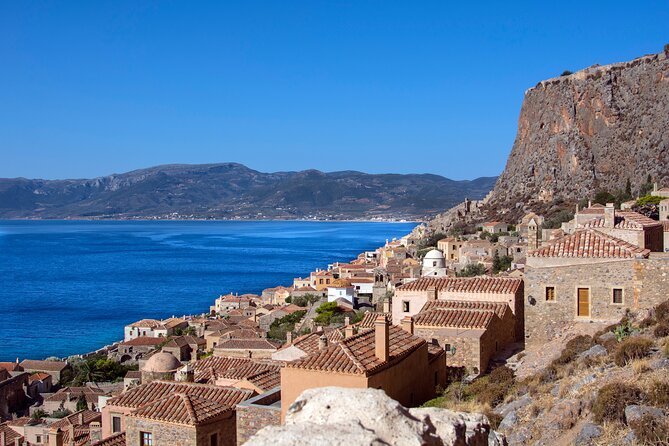
Finally, you arrive at Monemvasia Castle Town early enough to explore. Monemvasia is carved on the back side of a sea rock in medieval times. Even without getting overly technical about fortifications, you can see how the geography helped defend it. You’ll get about two hours, so it’s a “first look” visit—best for orientation, photo stops, and soaking up the scale.



Day 4 on the Mani Peninsula: caves, pirate-era towns, and Vatheia views
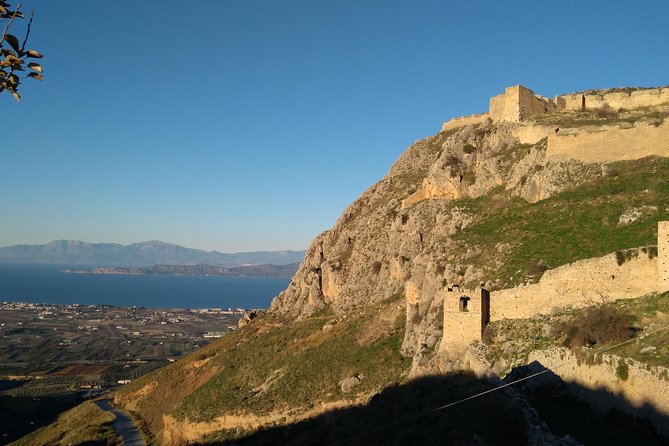
The Mani Peninsula is famously wild, and the tour gives you real time to experience that character.
You begin with Mani Peninsula itself, with about an hour to take it in. From there, the highlight becomes nature and rock science: Caves of Diros. You experience the cave system via an expertly guided boat. The lighting is part of what makes the caves memorable, bringing out rock formations and the timing feel of stalactites and stalagmites.
After the cave, you continue to Areopoli, a stone-built town where pirates were a permanent threat. That threat context matters: it helps you understand why towns and structures in Mani look the way they do.
Then you stop in Vathia, often called the most photographed location on the Mani Peninsula. It’s an abandoned village now, but it’s still visually powerful—especially for the views that stretch out from the castle-town layout. The description notes a restoration story from the late 1980s that didn’t fully continue, which gives the place an extra layer of reality beyond postcard pictures.
Day 5 toward Mystra and Olympia-adjacent stories: Byzantine heights and olive culture
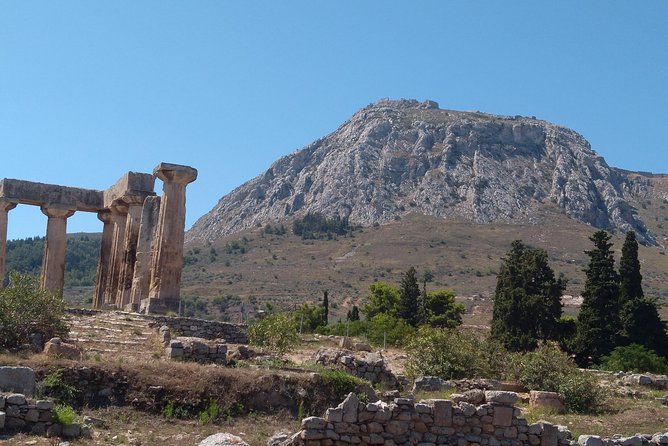
Day 5 leans into history with a Byzantine contrast.
First is Mystra, specifically the Archaeological Site of Mystra. Mystra is a Byzantine castletown with fantastic views over Sparta and the Laconic olive groves. You get around two hours. If you like walking through ruins that still feel like a living city, Mystra is one of those rare stops where the shapes help you imagine everyday life.
Next, you visit the Leonidas Monument. It’s a statue in front of a football stadium setting, and it ties to the story of Leonidas at Thermopylae and the famous phrase Molon labe. It’s short, but it’s a memorable photo stop with a clear message.
Then there’s an optional cultural add-on: the Museum of the Olive and Greek Olive Oil in Sparta. You get about 30 minutes. This museum focuses on the culture, history, and technology of olive and olive oil production, from prehistoric times to the early 20th century. If you want Greece that feels practical and agricultural—not only heroic battles—this is your chance.
Day 6: Messene’s scale plus Apollo Epikourios
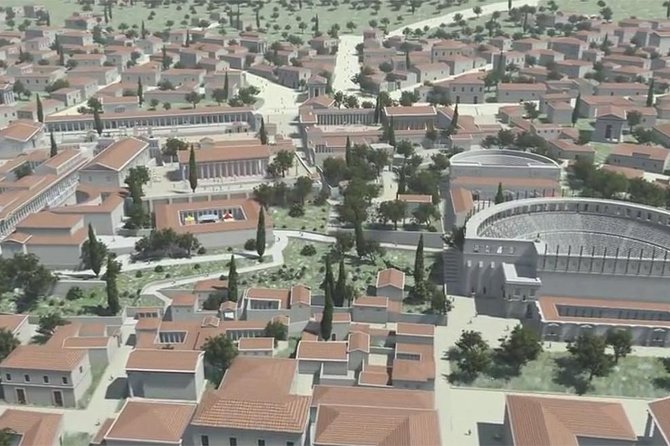
Day 6 is a quieter, often less “overcrowded” feeling day, even though it’s packed with real ruins.
You start with Messene, an ancient city with impressive size, form, and preservation. You get about two hours. The fortifications, public buildings, houses, and funerary monuments help you see the whole system of an ancient polis, not just one temple or one theater.
Next comes Temple of Apollo Epikourios, with about an hour on site. The listing doesn’t add detail beyond that, but the key takeaway is simple: you’re going into a sacred landscape with a temple tied to Apollo. If you’re the type who enjoys architectural mood—stone, proportions, and setting—this stop tends to land well.
Day 7: Olympia’s stadiums and museum sculptures, then Arcadia villages
Olympia is the kind of site that changes how you look at sports history. You visit the Archaeological Site of Olympia first, with about an hour and a half. Olympia hosted the original Olympic Games founded in the 8th century B.C., and you’ll see training areas, a stadium, and temples dedicated to Hera and Zeus.
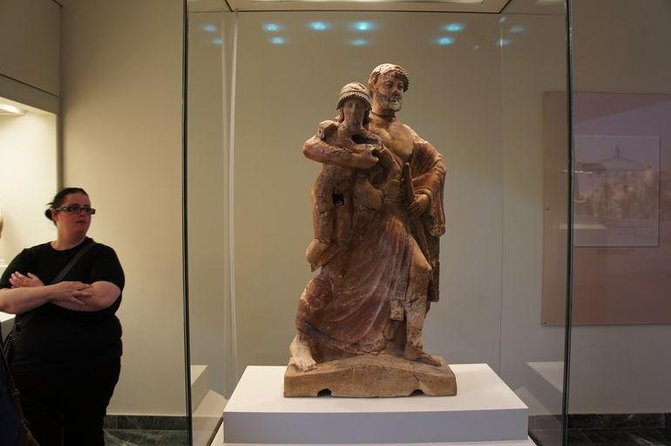
Then you visit the Archaeological Museum of Olympia for about 30 minutes. This is where the sculptures can hit hardest, especially marble temple decoration linked to the marble temple of Zeus and works like Hermes carved by Praxiteles. Even with the short museum window, it’s a strong pairing with the ruins.
After Olympia, you head toward Arcadia, described through stone-built villages and a mountain feel. You get about an hour and a half before overnighting and being ready to explore on the last full day.
This is where the tour’s structure matters. You’re not just leaving you with “one last day in cities.” You’re ending in the kind of countryside where walking and village squares are the activity.
Day 8 in Arcadia: water-power museum, a cliff monastery hike, and Stemnitsa lunch
Day 8 is where you switch gears again—from grand ruins to daily craft and scenic monasteries.
You stop in Dimitsana, one of the most beautiful stone-built villages of central Peloponnese. You get about 30 minutes, just enough time to see the shape of the place and enjoy its atmosphere.
Then you visit the Open air Hydrokinesis (water power) Museum. This one feels practical and unusual: it shows the old way of creating and using water energy, with a reconstructed watermill, tannery, and gunpowder mill. It’s about pre-industrial technology, and that can be a refreshing change from only seeing temples and theaters.
Next is Moni Agiou Ioanni Prodromou, a cliff-hanging monastery you reach after a 20-minute hike through the forest. Plan for that hike and wear decent shoes. Even though it’s not long, it’s in a way that feels like it belongs to the site, not an add-on.
You end with Stemnitsa, a popular village known for jewelry making and a great lunch spot. You get about an hour, which is right for eating and browsing without turning the day into shopping time.
Day 9: Kastria Cave of the Lakes, Kalavryta lunch, and the Diakopto–Kalavryta train
Final day keeps the “wow” factor going, but in a more emotional, scenic way.
You start at Kastria Cave of the Lakes, described as mythical and unique for its rare nature-created galleries and strange stalactite formations. You get about an hour. Caves are always memorable, but this one’s tone comes from its name and the sense that it’s unusual compared to more famous cave systems.
Then you go to Kalavrita for lunch. It’s at the foot of Mt. Chelmos and is a must-visit for Athenians during cold months because of its ski center, but the town’s charm goes beyond winter sports. You’ll see stone-built houses, small squares, charming alleys, and tavernas lined by huge plane trees. The lunch timing gives you a real break instead of a constant-drive finale.
After lunch, you ride the Diakopto–Kalavryta railway, about an hour. The train loops through Vouraikos Gorge and is known as one of the most scenic train routes in Greece. The ride ends at the Corinthian Gulf shores. This is a great way to end because the scenery becomes the main event, not another site ticket line.
Then you return toward Athens and make the optional final touch: Ancient Corinth (Archaia Korinthos) again for a shorter window (around 45 minutes). It’s listed as optional, so you’ll want to decide based on your energy levels and how much you enjoyed the earlier stop.
Finally, you finish with Syntagma Square drop-off in Athens, or optionally port of Piraeus or the airport.
Price and value: what you get around $6,193 per person
At about $6,193.21 per person, this is not a budget tour. It’s closer to a premium private-experience package because it’s built around:
- Private driving and local handling for 1–7 people
- Two nights accommodation included
- Breakfast and lunch for two days
- Brand-new vehicle (2020–2022) plus bottled water and an in-car booklet
- A route that strings together major Peloponnese anchors—Corinth and Mycenae, Epidaurus, Hydra, Mani, Mystra, Olympia, Arcadia, and the cave and train finish
When you compare to doing this independently, the biggest value is the mental load. You’re not coordinating parking, timing, and transfers across multiple regions. You also have someone helping you understand what you’re seeing, and in a private tour that explanation can happen in the moment instead of via a guidebook app.
Based on what you’d likely feel during a trip like this, the price makes sense if you want comfort, time efficiency, and a narrative route rather than a DIY scramble.
What’s not included: admissions, boat, and the optional guide choice
To avoid surprises, know what you’ll pay separately. Admissions are not included for listed sites. That also includes the boat to Hydra and the train tickets for the Diakopto–Kalavryta railway.
A professional licensed guide is optional. If you don’t book that option, you still have a driver/guide and the in-car information booklet. But if your dream is detailed archaeology or layered interpretation, you might choose the optional guide add-on for one or two of the most important sites.
Also note the tour mentions shopping stops aren’t included unless you want them, which is usually a good thing if you’re trying to spend time seeing instead of buying.
Who this tour suits best (and who should rethink it)
This tour is ideal for you if:
- You want a private route through a wide range of Peloponnese highlights
- You like both ancient sites and “everyday” Greece towns with real lunch stops
- You’re comfortable with moderate walking and a few stair moments
- You value planning help and communication, especially if you want your days shaped around your style (Nikos and Theo are specifically mentioned for service and logistics)
You might rethink it if:
- You want a fully restful pace with minimal walking
- You dislike cave and monastery outings (even short hikes and boats can feel like effort for some people)
- You’re not interested in budgeting for admissions, Hydra boat, and train tickets
Should you book Hydra Island & Mythical Full Peloponnese Private 9-Day Tour?
If your ideal Greece trip combines Hydra’s car-free calm with major historic stops like Epidaurus, Mycenae, Mystra, and Olympia, this tour fits the brief. It’s also a strong pick if you want a stress-light experience: newer vehicles, bottled water, an info booklet, and private logistics that let you focus on the places.
The decision mostly comes down to one question: are you happy to add separate costs for site tickets, the Hydra boat, and the scenic train? If yes, this is the kind of route that feels like it was built for your time—big highlights, good breaks, and a finish that’s genuinely scenic.
FAQ
How many people is this private tour for?
It’s a private tour for 1–7 related people. If you have more than 7 people, you need to contact the provider.
What’s included in the price?
The tour includes two nights’ accommodation, breakfast and lunch for two days, bottled water, an in-car information booklet, and a private tour using brand new vehicles (2020–2022).
Are entrance fees included for ancient sites and museums?
No. Admissions for sites, the Hydra boat, and train tickets are not included.
Do you get pickup and drop-off?
Pickup is offered, and the day ends with a drop-off in Athens at Syntagma Square or optionally at the port of Piraeus or the airport.
What level of physical activity should I expect?
The tour says you should have a moderate physical fitness level, with activities that include walking and stairs, plus a short hike to a monastery.
What’s the cancellation policy timeframe?
You can cancel up to 6 days in advance for a full refund. Between 2–6 days you receive a 50% refund, and less than 2 days before start time is not refunded.
You Might Also Enjoy


More Private Tours in Athens

More Tours in Athens

More Tour Reviews in Athens
- All Day Cruise -3 Islands to Agistri,Moni, Aegina with lunch and drinks included
★ 5.0 · 4,958 reviews