REVIEW · ATHENS
Delphi Full Day Tour
Book on GetYourGuide →Operated by Hellenic Private Tours · Bookable on GetYourGuide
The day feels like a time machine with brakes. You get Delphi’s key ruins plus the English-speaking driver who keeps the stories straight, and I love how the pace is private. The one thing to watch is that major sites need paid entrance tickets and lunch isn’t included.
This tour runs in modern Mercedes vehicles (taxis, minivans, or minibuses depending on your group), with WiFi and bottled water. It’s also flexible, so the order can shift if you want more time at one stop or skip something that doesn’t interest you.
You’ll start with the Byzantine beauty of Hosios Loukas, then angle through Arachova and into Delphi for the Oracle-era sites. Expect a long day on the road, but it’s built to make the drive worth it, with a lunch break and a finish at more Delphi landmarks.
In This Review
- Key points that make this Delphi day work
- From Athens to Delphi via Levadia: the calm before the ruins
- Hosios Loukas Monastery: Byzantine power on a mountain slope
- Arachova stop: a quick break in a ski-town favorite
- Delphi Archaeological Site: where Apollo, prophecy, and politics all met
- Castalia Spring, Sanctuary of Apollo, and the Treasury of the Athenians
- The stadium, theater, and bronze Charioteer: festival life at Delphi
- Lunch with Itea Gulf views, then Temple of Athena Pronea and Gymnasium
- Price and logistics: what $589 buys (and what costs extra)
- Who should book this private Delphi day?
- Practical tips for a smooth 10-hour Delphi swing
- Should you book this Delphi Full Day Tour?
- FAQ
- How long is the Delphi full day tour?
- Where does pickup and drop-off happen?
- Are entrance tickets included for Delphi and Hosios Loukas?
- Is lunch included in the price?
- Do I need a licensed tour guide?
- Is the tour wheelchair accessible?
Key points that make this Delphi day work
- Private, flexible routing lets you adjust the order and timing based on what you care about most.
- Hosios Loukas (10th century) brings Byzantine mosaics and a quiet, meaningful contrast to the Greek ruins.
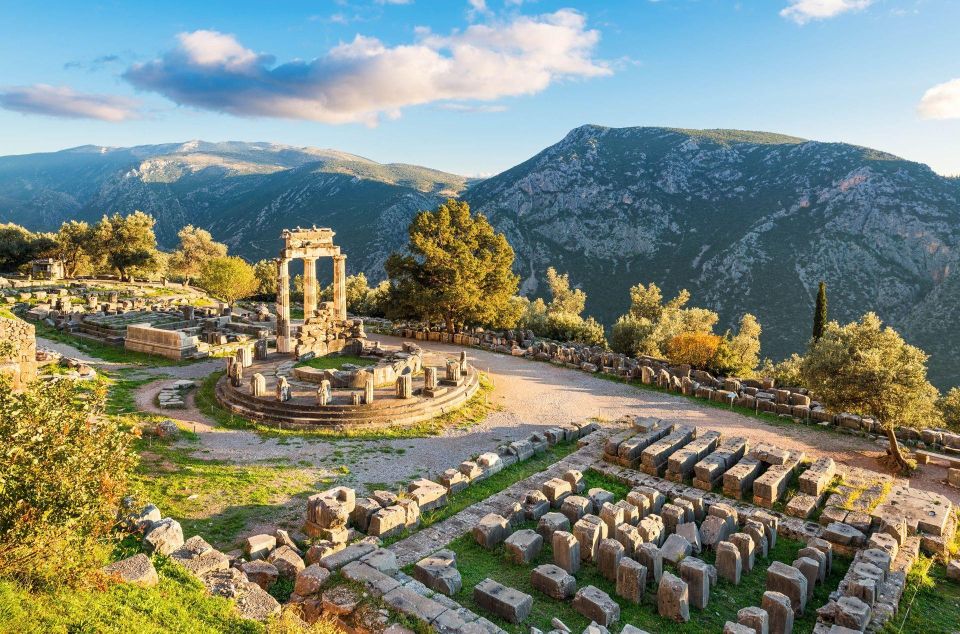
- Delphi’s must-see circuit includes Apollo sites, the stadium, theater, the bronze Charioteer, and the museum.
- Real-life driver value: drivers like Panos and Jimmy are praised for kindness, clean vehicles, bottled water, and site-by-site history.
- Lunch with Itea Gulf views gives you a breather instead of squeezing food between sites.
- Two pickup options (Athens or Piraeus) make it easier to fit into a cruise or city stay.
From Athens to Delphi via Levadia: the calm before the ruins
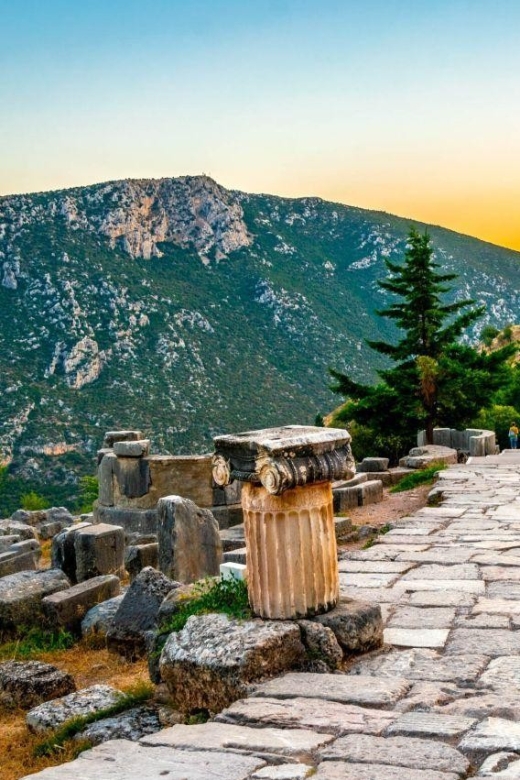
Delphi is about 70 miles northwest of Athens, and this day starts with that steady out-of-town travel. You’ll drive along the national highway through Levadia, then work your way toward a major stop before Delphi even enters the picture.
I like this approach because it reduces that feeling of arriving at Delphi already exhausted. By the time you reach the sanctuary area, you’re not just rushing from sign to sign. You’re ready to slow down and actually look at details: building shapes, the way water and roads shaped worship, and how the terrain influenced where people gathered.
This is also one of those tours where private transport matters. In a group bus you’re locked into timing and waiting. Here, the driver can adapt if you want extra photos at a viewpoint, a quick restroom stop, or a slightly different order.
You can also read our reviews of more tours and experiences in Athens
- All Day Cruise -3 Islands to Agistri,Moni, Aegina with lunch and drinks included
★ 5.0 · 4,958 reviews

Hosios Loukas Monastery: Byzantine power on a mountain slope
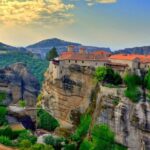
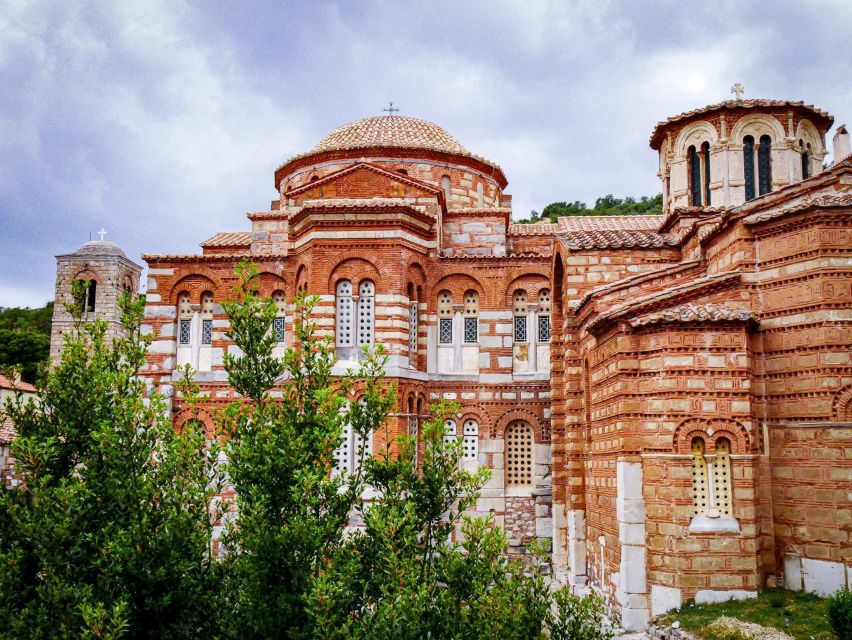
Before Delphi, you’ll head to Hosios Loukas Monastery, widely considered one of Greece’s finest Byzantine monuments. It was built in the 10th century and sits on a picturesque slope in the western foothills of Mount Helikon, near the ancient town of Steiri.
What makes this stop more than a quick detour is the character of the place. The monastery was founded in 945 AD by Hosios Lucas, a hermit whose legacy is tied to relics kept at the Catholicon (the main church). You’ll also see mosaics and architecture that explain why people still treat this site as a major monument, not just a pretty stop on the way to something else.
If you only visit archaeological ruins, Delphi can feel like one long sweep of stone. Hosios Loukas adds a different visual language: Byzantine design, sacred spaces, and a quieter tempo. It’s also a good mental reset right before you get into myth and oracle talk.
Practical note: the entrance for Osios Loukas Monastery is 10 euros per person, and it’s not included in the tour price. Wear comfortable shoes, because even on a short visit you’ll likely be walking across uneven ground.
Arachova stop: a quick break in a ski-town favorite
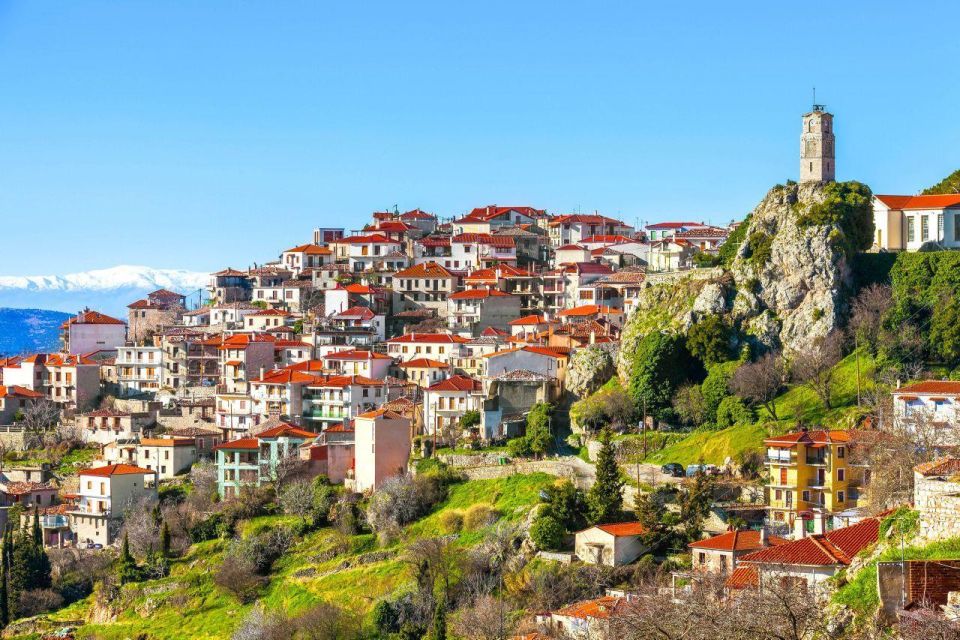
On the way to Delphi you’ll pass through Arachova, a picturesque town on the south slopes of Mount Parnassus. It has a reputation as a popular road trip destination for Athenians, especially during winter thanks to the ski center.
Your stop here is meant to be more than a passing window view. You’ll get about a half hour for sightseeing, which is enough to stretch your legs, grab water if you need it, and take in the mountain-town vibe before the Delphi crowds (and the Delphi walking) start.
This brief pause also helps you manage the day’s rhythm. Delphi requires attention. Arachova gives you a moment to reset your brain without cutting into the time that matters most at the main sanctuary and ruins.
Delphi Archaeological Site: where Apollo, prophecy, and politics all met
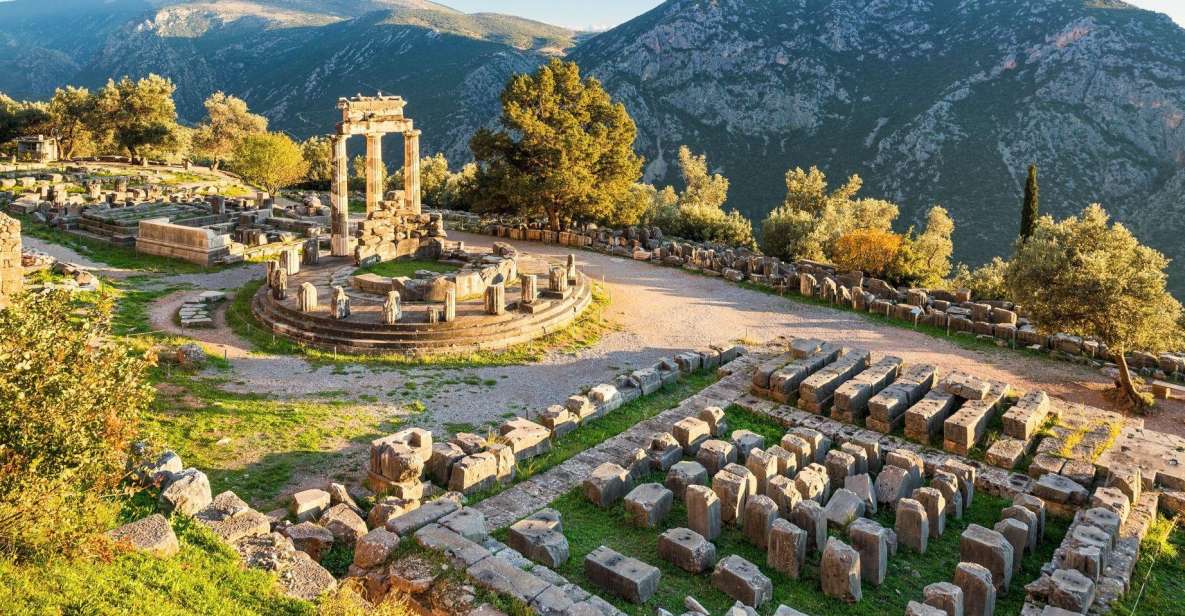
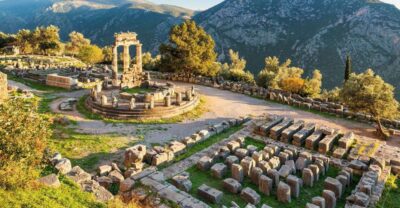
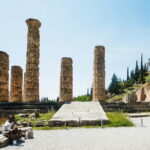
At Delphi, you’re not just touring a ruin field. You’re stepping into a site that was central to Greek religious life and public decision-making. Delphi is described as the navel of the earth in Greek mythology, and it’s tied to the Delphic Oracle—Apollo’s voice delivered through the Pythia (the priestess).
Here’s what’s special about seeing Delphi in a focused way: you can connect the dots between worship spaces and the performance culture around them. You’ll see the infrastructure of belief—places where people came to consult, to plan, and to hope for guidance before major events.
Your Delphi time includes several core stops, and the route is designed so you’re not bouncing around randomly. You’ll begin with Castalia spring and move through the sanctuary area associated with Apollo, then continue into monuments that show Delphi wasn’t only about prophecy, but also about community gatherings and major festivals.
Delphi’s setting also does part of the work for you. The ruins sit on the southwestern slope of Mount Parnassus in the valley of Phocis, so you get constant visual context for why people built and worshiped where they did.
Castalia Spring, Sanctuary of Apollo, and the Treasury of the Athenians
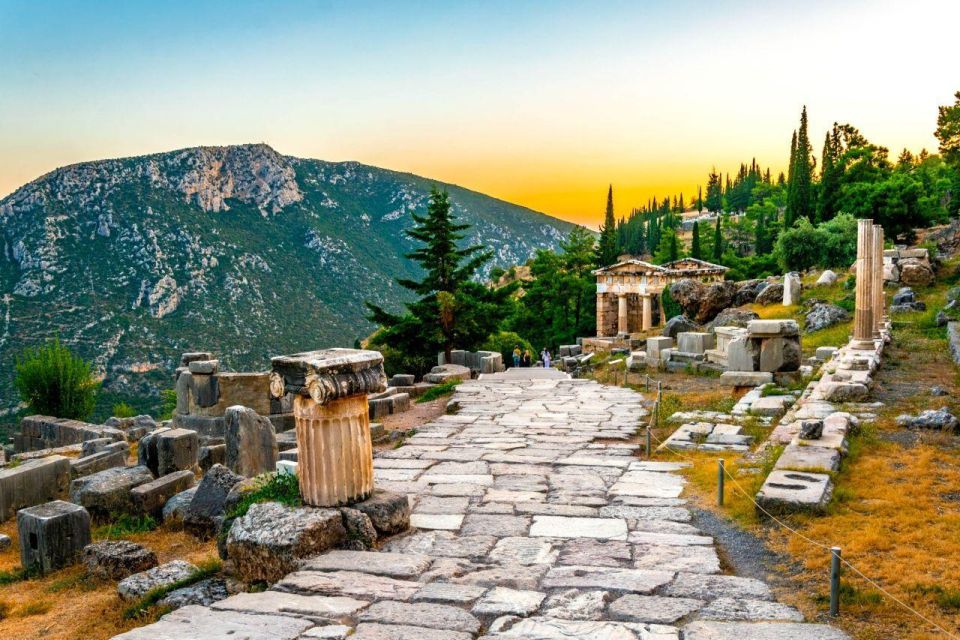
Start at Castalia spring, which is part of Delphi’s ritual landscape. Water at sacred sites wasn’t an afterthought; it was woven into cleansing and symbolism. Even if you’ve seen springs elsewhere in Greece, Castalia helps you understand why Delphi felt spiritually charged long before you look at any statue or temple front.
Next comes the ancient Sanctuary of Apollo, the core religious center. This is where the myth matters: Apollo spoke through the oracle. People came for everything from big public policy questions to personal affairs, so the sanctuary wasn’t just for priests—it was for real life decisions.
Then you’ll see the Treasury of the Athenians. Treasuries like this show how different city-states participated in Delphi’s prestige. The architecture and layout make it easier to understand that worship came with competition, pride, and public display. Delphi was a stage, not a quiet chapel.
If you enjoy spotting how different functions connect—religious, civic, athletic, artistic—this section of the day gives you that full story in one compact route.



The stadium, theater, and bronze Charioteer: festival life at Delphi
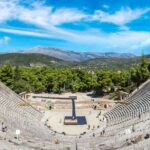
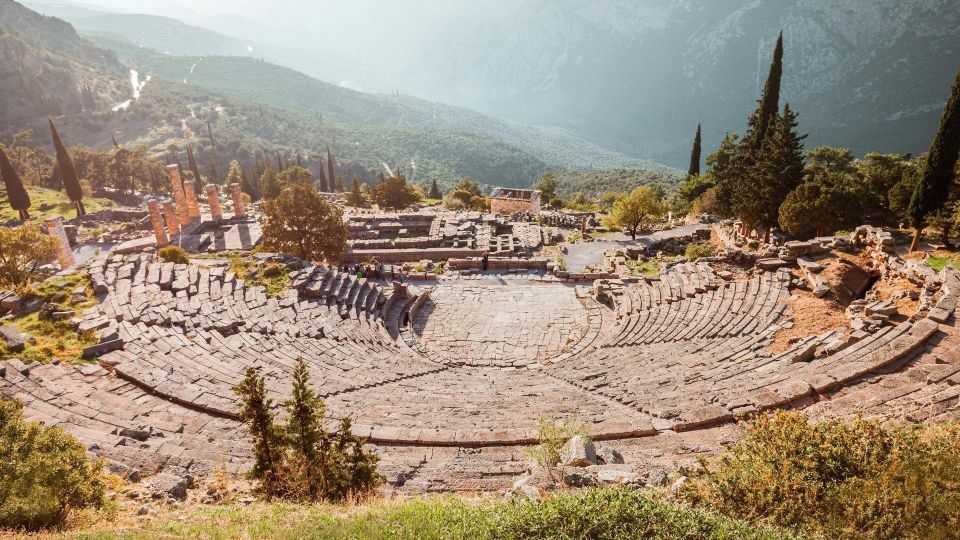
Delphi wasn’t only prophecy and temples. It was also festival culture. One stop that helps you see that is the ancient Stadium, known for the Python Games—one of four Pan-Hellenic games held every four years.
Then there’s the ancient Theatre, which reminds you that performance and public assembly were part of Delphi’s identity. When you picture the oracle alongside a festival schedule, Delphi starts to feel less abstract. It becomes a destination people traveled to for worship and spectacle.
A highlight most visitors remember is the bronze Charioteer. It’s a standout because it’s not just another wall or foundation. It’s a preserved artifact that adds a human scale to the site. Seeing it in the context of everything around it helps explain why Delphi attracted so much attention.
You’ll also visit the museum as part of the Delphi time. The museum gives you a chance to slow down and place objects into a clearer setting, especially if you want more context than stone alone can provide.
Entrance fees for Delphi and the museum are 20 euros per person, also not included in the base tour price.
Lunch with Itea Gulf views, then Temple of Athena Pronea and Gymnasium
After the main Delphi circuit, you’ll take a lunch break at a local restaurant. What makes it worth aiming for is the view over the Itea Gulf. This is when you stop walking, cool down, and recharge your legs before the last set of sites.
Following lunch, you’ll visit the Temple of Athena Pronea and the Gymnasium. These stops round out your understanding of Delphi as a multi-purpose religious and social hub. Athena’s presence reinforces the idea that Delphi’s sacred identity wasn’t only Apollo. And the gymnasium speaks to the broader training and civic life linked to the festival world.
One smart way to use this final stretch is to think back to the Oracle story. The Pythia sat on a tripod seat over an opening in the earth, Apollo possessed her, and prophecy shaped decisions. Then you get to see the rest of the place where people gathered, trained, watched, and worshiped as a full community.
After these last visits, you drive back to Athens by the national highway.
Price and logistics: what $589 buys (and what costs extra)
The headline price is $589 per group up to 2 for a 10-hour private day. For many couples or small parties, the value is in having your own transport and driver for the full schedule rather than sharing time with strangers.
Let’s look at where extra money comes in:
- Osios Loukas Monastery: 10 euros per person
- Delphi and Museum: 20 euros per person
- Lunch: not included
- Optional: a licensed tour guide can be arranged for an extra cost upon request and availability
So your total isn’t just the $589. Still, for a private day that covers major stops with modern vehicles, WiFi, bottled water, and door-to-door pickup from Athens city center or Piraeus, it can work out well—especially if you value not hunting for buses, not timing transfers, and not losing half the day to logistics.
Also note: the day is adjustable. If your group wants to spend more time at Delphi and less at a viewpoint, or if you want to swap the order slightly to match your interests, that’s where private format turns into actual savings of energy.
Who should book this private Delphi day?
This is a great match if you:
- want maximum value per hour (big sites, one coordinated day, no public-transport stress)
- prefer a quieter pace than group tours usually offer
- care about the stories behind Delphi’s myths, monuments, and festival culture
- like having an English-speaking driver who can explain what you’re seeing
It can also be a smart choice for first-time visitors to Greece who want a high-impact day trip from Athens without feeling like they’re just ticking boxes.
If you’re the type who likes deep museum reading and might want a licensed guide, consider requesting that extra guide option. The base driver is English speaking and history-informed, but a specialist guide can add even more depth if you’re hungry for details.
Practical tips for a smooth 10-hour Delphi swing
A few simple habits will make the day easier:
- Bring comfortable shoes. You’ll walk around archaeological areas and monastery grounds.
- Plan for sun and glare. Bring sunscreen, a sun hat, and sunglasses.
- Expect a full day. Even with private transport, you’ll have a mix of driving and walking.
- Have ID ready. A passport or ID card is required.
- If you have accessibility needs, the tour is listed as wheelchair accessible, and it’s private, so you can ask for sensible pacing.
Because the tour is private and flexible, you can treat it like a customized route rather than a rigid script. If something feels less interesting than expected, you can adjust. That flexibility is one of the practical reasons people rate this kind of tour so highly.
Should you book this Delphi Full Day Tour?
Book it if you want a structured, high-impact day that pairs Delphi’s most important monuments with Hosios Loukas and a real lunch break. The price is high compared with shared tours, but you’re paying for private transport, door-to-door convenience, and the chance to shape timing around what you care about.
Pass or compare if you’re on a strict budget for entrances and meals, because tickets at Delphi and Hosios Loukas and lunch add up. Also compare alternatives if you prefer a strict schedule with a fixed guide style, since this day is designed to adjust order and time.
If you’re choosing between a do-it-yourself day and this private approach, my advice is simple: for Delphi, transportation and timing matter. A private plan can turn a stressful long day into something that feels smooth and worth your time.
FAQ
How long is the Delphi full day tour?
The tour duration is 10 hours.
Where does pickup and drop-off happen?
Pickup and drop-off are available in Athens (city center) and Piraeus Port.
Are entrance tickets included for Delphi and Hosios Loukas?
No. Entrance fees are not included. Osios Loukas Monastery costs 10 euros per person, and Delphi and the museum cost 20 euros per person.
Is lunch included in the price?
No. Lunch or snacks are not included.
Do I need a licensed tour guide?
A licensed tour guide is not included. You can request one for an extra cost upon request and availability.
Is the tour wheelchair accessible?
Yes, the tour is listed as wheelchair accessible.
You Might Also Enjoy

More Full-Day in Athens
- All Day Cruise -3 Islands to Agistri,Moni, Aegina with lunch and drinks included
★ 5.0 · 4,958 reviews
More Tours in Athens

More Tour Reviews in Athens
- All Day Cruise -3 Islands to Agistri,Moni, Aegina with lunch and drinks included
★ 5.0 · 4,958 reviews