REVIEW · ATHENS
Delphi Arachova & Monast. Hosios Loukas from Athens Private Tour
Book on Viator →Operated by Greece Athens Transfers & Tours · Bookable on Viator
Ancient Delphi plus a Byzantine monastery in one day. This private Athens outing strings together Hosios Loukas (UNESCO Middle Byzantine monastery) and Delphi’s oracle landscape, then adds the Delphi Archaeological Museum and a quick mountain-village photo stop. I love the calm pacing you get with hotel-to-hotel pickup, and I also like the practical touches: onboard Wi‑Fi plus bottled water, so the long day doesn’t feel like a slog.
Here’s the main thing to weigh: you’ll get a driver with deep historical context, but they’re not licensed to act as a museum/site guide inside. Also, entrance tickets aren’t automatically included unless you pick the option that adds them, so your final cost can depend on what you choose.
In This Review
- Key highlights worth planning around
- Athens to Delphi: the road trip that sets the tone
- Hosios Loukas monastery near Distomo: Byzantine art with UNESCO gravitas
- Delphi Archaeological Museum: where the statues get their context
- The Temple of Apollo and the oracle story
- Tholos of Athena Pronaia: the circular building you’ll want to spot
- A break in Arachova: quick photos and a reset on the Parnassus slopes
- Price and value: what $166.80 really buys you
- The driver setup: great Q&A, then you explore on your own
- Who this private Delphi day trip fits best
- Should you book this Athens to Delphi private tour?
- FAQ
- How long is the Delphi and Hosios Loukas private tour?
- Where can you be picked up, and where does the tour end?
- Is Wi‑Fi included on the tour?
- Are entrance tickets included?
- Will the driver guide you inside the museum or archaeological sites?
- What if the weather is poor, or I need to cancel?
Key highlights worth planning around
- Private ride + hotel/port pickup: door-to-door makes a big difference when you’re aiming to cover a lot in one day.
- Hosios Loukas at the start: Middle Byzantine architecture with a UNESCO setting before the Delphi crowds.
- Delphi with built-in time blocks: museum time, then the Temple of Apollo and nearby structures, in a logical order.
- Photo-friendly mountain stretch: the drive through Thebes’ valleys and the look back toward Delphi are part of the experience.
- Driver-guided context, not in-site escort: expect great explanations, then plan to explore main sites on your own.
- Arachova stop: a quick break to reset and grab a few shots on the slopes of Parnassus.
Athens to Delphi: the road trip that sets the tone
This is the kind of day trip that feels smoother because you don’t spend it wrestling with public transport. The experience runs about 8 to 9 hours, and the Athens–Delphi drive is roughly 2 hours 30 minutes each way (plus site time). That timing matters: you want a tour that doesn’t just move fast, but also gives you enough hours on the ground.
One underrated part is the journey itself. You pass through the area around Thebes, including valleys and cotton fields, which gives you a very real sense of central Greece beyond the city. If you’re prone to feeling rushed, a private vehicle helps you settle in early. It also keeps you protected from the timing headaches of buses—especially if you’re starting from a cruise port or airport.
The onboard setup is practical for a full day: Wi‑Fi is included, plus bottled water. If you’re juggling maps, tickets, or just keeping your group online without worrying about roaming charges, it’s a small comfort that pays off.
You can also read our reviews of more private tours in Athens


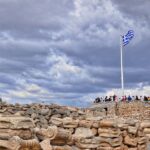
Hosios Loukas monastery near Distomo: Byzantine art with UNESCO gravitas
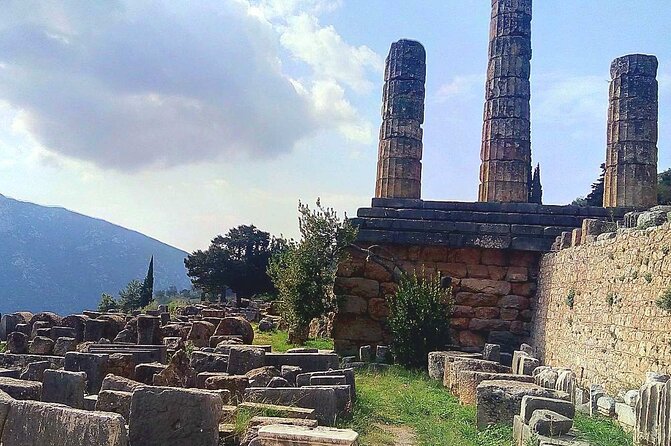
Hosios Loukas is a historic walled monastery near Distomo, and it’s one of the most important monuments of Middle Byzantine architecture and art. It’s also a UNESCO World Heritage Site, and the UNESCO connection isn’t just a label—it shows in the way the complex sits on the slopes of Mount Helicon.
You’ll have about 30 minutes at the monastery, and that’s enough for a first, meaningful look without turning it into a sprint. The monastery was founded in the early 10th century AD by the hermit Hosios Luke of Steiris (Luke’s relics remain there), which gives the site a strong spiritual and historical anchor. Even if you’re not a Byzantine-architecture fanatic, it helps to know what you’re seeing: the main shrine is the tomb of St. Luke, and the monastery’s story includes the belief that Luke’s relics exuded myron, a perfumed oil linked to healing miracles.
Because the time window is tight, you’ll want to do two things quickly:
- First, orient yourself at the main shrine area so you understand what’s central.
- Then, look for the details you can’t rush: the stonework, the layout, and the way the complex feels “enclosed” compared to Delphi later.
A practical note: monastery admission is listed as free. That’s a nice win early in the day.
Delphi Archaeological Museum: where the statues get their context
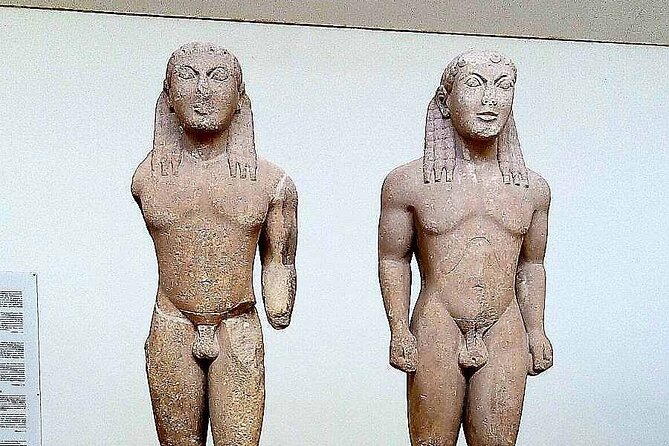
Delphi has the reputation for dramatic ruins, but the museum is where the site really clicks. Your museum stop is about 45 minutes, and admission is not included unless you choose the ticket option that adds entrances.
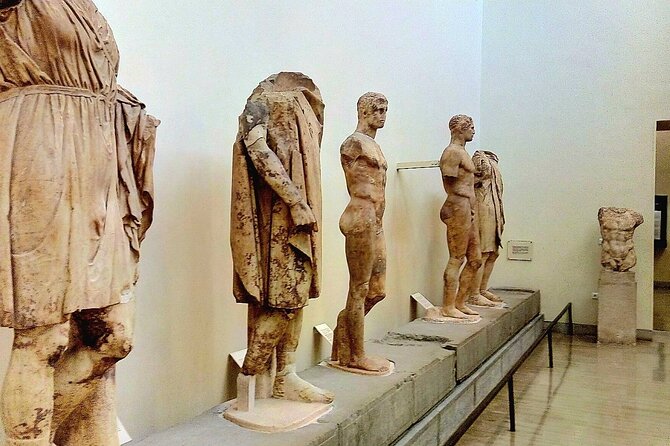
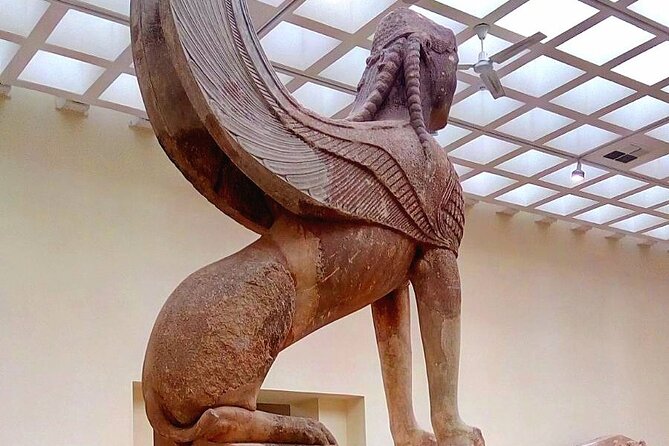
The Delphi Archaeological Museum is run by the Greek Ministry of Culture and organized in 15 rooms arranged in chronological order. That layout matters because Delphi isn’t one moment in time—it stretches across eras. The museum covers discoveries from the Late Helladic (Mycenean) period through early Byzantine times.
What I like about this stop is the “translation” effect. Outside, you see structures and think guesses. Inside, you start connecting the dots: what was placed there, what it represented, and how the sanctuary evolved. If you’re trying to make sense of Delphi’s oracle reputation, the museum is the place where you’ll get your bearings fast.
Time check: 45 minutes can feel short, but it’s enough if you keep your eyes on a few themes—how Delphi’s role changes over centuries, and what artifacts relate to the sacred sanctuary setting.
The Temple of Apollo and the oracle story
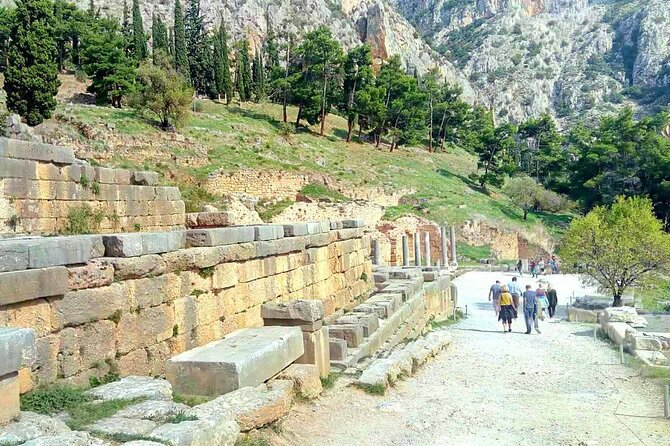
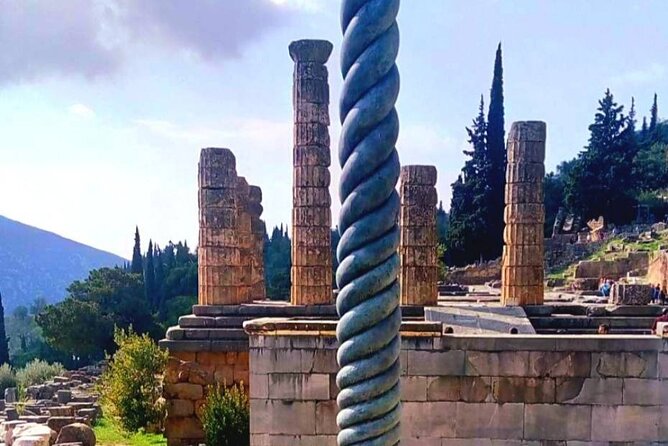
Next comes the star attraction: Delphi’s archaeological site, including the Temple of Apollo. This stop is about 45 minutes, and it’s UNESCO-listed. The temple occupied the most prominent position in the Delphic Panhellenic sanctuary.
Here’s the useful context to carry with you while you’re walking the ruins: the temple is tied to the oracle of Apollo, and the Pythia—the priestess—delivered responses inside the temple. One tradition says the location was chosen because of a sacred chasm beneath the site, said to emit vapors that the Pythia inhaled.
You don’t need to buy into the myth to enjoy the experience. The real value is that the story gives purpose to the space. When you stand among the partially restored colonnade remains (today’s visible structure dates to the 4th century BC), you can picture how people once came to ask questions and interpret the answers.
Admission for the main site is listed as not included under the default option, so budget for tickets depending on whether you add the entrance-included option. As a ballpark, adults visiting Delphi typically pay around €12 in peak season or €6 off-season, and there are discounts for seniors, students, and people under 25 who qualify via EU rules.
If you’re sensitive to crowds, a private tour still helps because your schedule is yours. Still, Delphi is popular, so you’ll want comfortable shoes and a phone-ready plan for slow moments.
Tholos of Athena Pronaia: the circular building you’ll want to spot
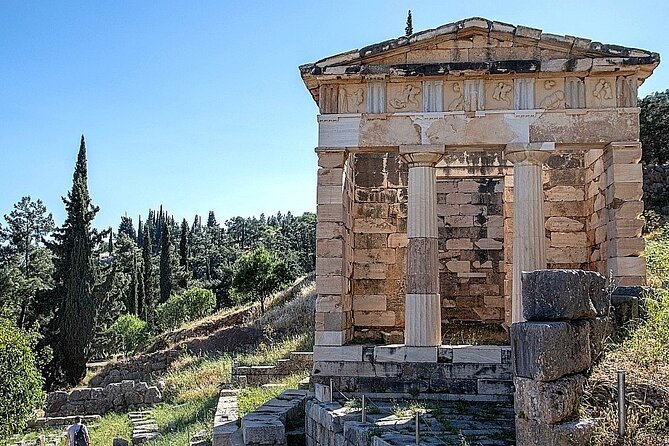
Right after Apollo’s area, you’ll also see the Tholos of Athena Pronaia. This is a circular structure inside the Delphi archaeological site, built in the 4th century BCE. It has a ring of Doric columns around a central chamber, and it served as a sanctuary dedicated to Athena Pronaia, a form of Athena associated with Delphi.
Your time here is about 15 minutes. That’s short, but Tholos is one of those structures where the shape tells the story immediately. If you only do one thing, do this: stand where you can take in the full circular form, because it’s the defining feature.
This stop is listed as free admission. So you get an extra architectural payoff at no additional ticket cost.





A break in Arachova: quick photos and a reset on the Parnassus slopes
On the way back to Athens, the tour passes through Arachova, a mountain village on the hills of Mount Parnassus. Your stop here is around 10 minutes, and it’s described as a photo opportunity.
This isn’t a time for a long lunch (there isn’t time). Instead, it’s a chance to shift gears: stretch your legs, get a few shots of the mountain-town vibe, and appreciate that Delphi isn’t isolated—it’s part of a wider mountain region.
If you want more than photos, you’d need a longer stay in the Arachova area. For this day plan, though, it functions as a pleasant visual punctuation mark.
Price and value: what $166.80 really buys you
At $166.80 per person, this tour isn’t positioned as a budget option, and one of the key tradeoffs is straightforward: it’s private.
So what are you paying for?
- Door-to-door pickup and drop-off from Athens-area addresses or the cruise port.
- A private vehicle (minibus/van/SUV/sedan depends on your group size).
- Onboard Wi‑Fi and bottled water for comfort on a long day.
- A driver who can explain history and context during transit.
- Time-efficient routing through Hosios Loukas, Delphi, and Arachova.
Where value can slip for some people is if you were hoping for a licensed museum guide inside every site. The listing makes clear that the driver is not licensed to accompany you inside museums or sites. That means you may still need to rely on your own reading/signage during the actual museum and ruin exploration.
One review note in the provided info sums up the concern: some felt the cost was high given the lack of an in-site licensed guide and suggested a group tour instead. I think that’s a fair comparison to consider.
But if your goal is a calmer schedule, better pickup convenience, and a driver who can handle logistics and answer questions while you’re in transit, the price starts to look more reasonable. You’re buying time on site, comfort between stops, and a flexible private day.
The driver setup: great Q&A, then you explore on your own
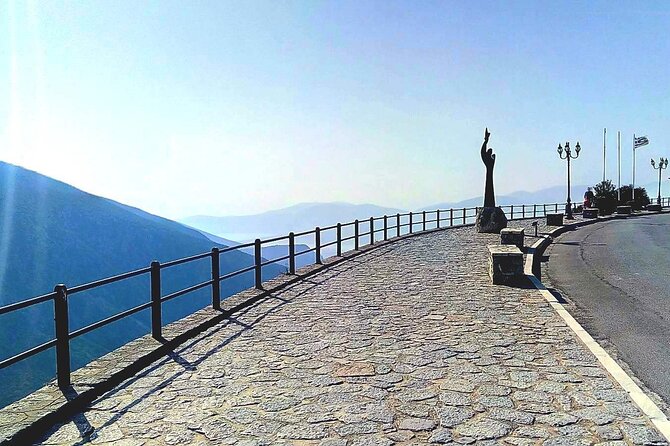
This is a private tour, and your driver is described as a professional with deep historical knowledge. In the feedback you shared, drivers like Xenofontas are highlighted for patience and answers—one person even mentioned political and historical questions. Another driver, Thodoris, is mentioned for getting someone back to the port during busy Athens rush hours.
That pattern matters: you’ll often get more than just directions. You’ll get a coherent story linking the stops—monastery origins, Delphi’s sanctuary purpose, and the way the sites fit into the wider Greek timeline.
Still, be aware of the limitation: the driver is not licensed to accompany you in museums or archaeological sites. Translation: they can help you understand what you’re about to see, but you shouldn’t expect a guide walking inside each building and delivering a formal narration under the rules for museum escort.
Practical tip: if you’re someone who likes a lot of interpretation during the actual museum time, plan your reading energy ahead of arrival. If you like to ask questions while walking, make sure you do that at the start of each stop, when you still have your driver’s attention before you move into areas they can’t escort.
Who this private Delphi day trip fits best
This tour makes the most sense if you:
- Want private pickup from your hotel or the cruise port and don’t want to piece together transport.
- Care about having time at both Delphi ruins and the Delphi museum.
- Enjoy panoramic scenery on the way—there’s a strong focus on views as you travel through central Greece toward Delphi.
- Are traveling with a group where private pacing prevents constant re-grouping.
It can also be a good match for people who like structure. The itinerary gives clear time blocks: monastery (30 min), Delphi time (30 min), museum (45 min), Apollo area (45 min), Tholos (15 min), Arachova (10 min). That helps you plan your own priorities during your free minutes.
If you’re extremely budget-driven, or you strongly prefer a licensed guide inside the museum and ruins, you may find a group tour or an option with a licensed on-site guide better for the money.
Should you book this Athens to Delphi private tour?
Book it if you want a single-day plan that’s built around logistics, comfort, and a smart sequence: Hosios Loukas first, then Delphi’s museum and sanctuary, then a quick mountain-town photo stop. The inclusion of Wi‑Fi and the door-to-door pickup can make the day feel manageable, especially when you’re starting from Athens or need to work around cruise timing.
Skip or reconsider if you’re counting every dollar and you expect the driver to function as a full licensed guide inside every stop. In that case, the cost may feel hard to justify unless you’re also valuing the private comfort and the driver’s explanations during transit.
If you want an easy win: choose the entrance option if you’re sure you’ll want to cover the Delphi museum and archaeological site without stopping to calculate ticket costs mid-day. That’s one less decision when the hours are ticking.
FAQ
How long is the Delphi and Hosios Loukas private tour?
The tour runs about 8 to 9 hours. The drive from Athens to Delphi is approximately 2 hours 30 minutes.
Where can you be picked up, and where does the tour end?
You can be picked up from your hotel, apartment, Airbnb, Athens airport, or the Piraeus port. The activity ends back at the meeting point.
Is Wi‑Fi included on the tour?
Yes. There is Wi‑Fi on board, plus bottled water.
Are entrance tickets included?
Entrance tickets depend on the option you choose. Admission to the monastery and Tholos is listed as free, but the Delphi Archaeological Museum and major site entrances (like the Temple of Apollo area) are listed as not included unless you pick the admission-included option.
Will the driver guide you inside the museum or archaeological sites?
No. The driver is not a licensed tour guide to accompany you inside museums or at the sites. They can still provide context and help during the day, but you’ll explore inside areas on your own.
What if the weather is poor, or I need to cancel?
The tour requires good weather. If it’s canceled due to poor weather, you’ll be offered a different date or a full refund. You can cancel up to 24 hours in advance for a full refund.
You Might Also Enjoy



More Private Tours in Athens

More Tours in Athens


More Tour Reviews in Athens
- All Day Cruise -3 Islands to Agistri,Moni, Aegina with lunch and drinks included
★ 5.0 · 4,958 reviews