REVIEW · ATHENS
Athens: National Archaeological Museum Private Guided Tour
Book on GetYourGuide →Operated by Christos Theodoropoulos · Bookable on GetYourGuide
The Antikythera makes ancient Athens click. In this private guided tour, you’ll walk the museum with a licensed archaeologist and leave with the big story of Greek art and culture, not just random statues and jars. I like that you focus on must-see artifacts like the Antikythera mechanism, and I also like how the guide stitches together centuries of history into something you can actually hold onto.
One thing to keep in mind: the museum is enormous, so 2 hours means you’ll see the highlights rather than everything.
In This Review
- Key Things to Know Before You Go
- Athens’ National Archaeological Museum: Why This Place Matters
- A Private 2-Hour Format That Actually Feels Manageable
- Where the Tour Starts on Patission Street
- The Museum’s Five Big Collections, in Plain Human Terms
- Prehistory Antiquities: From 6,000 BCE to 1050 BCE
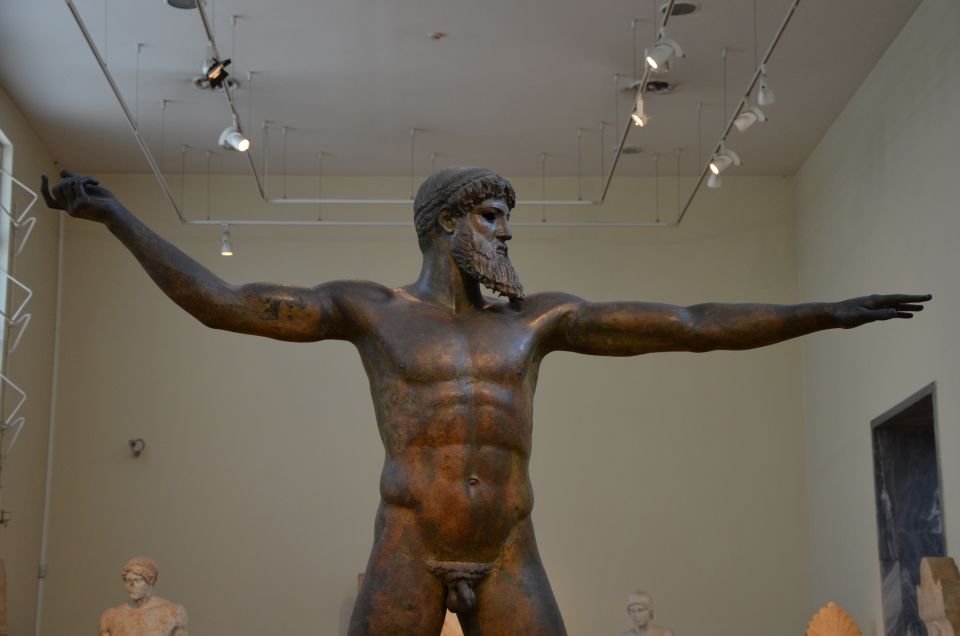
- Sculpture Collection: The 7th to 5th Centuries BCE
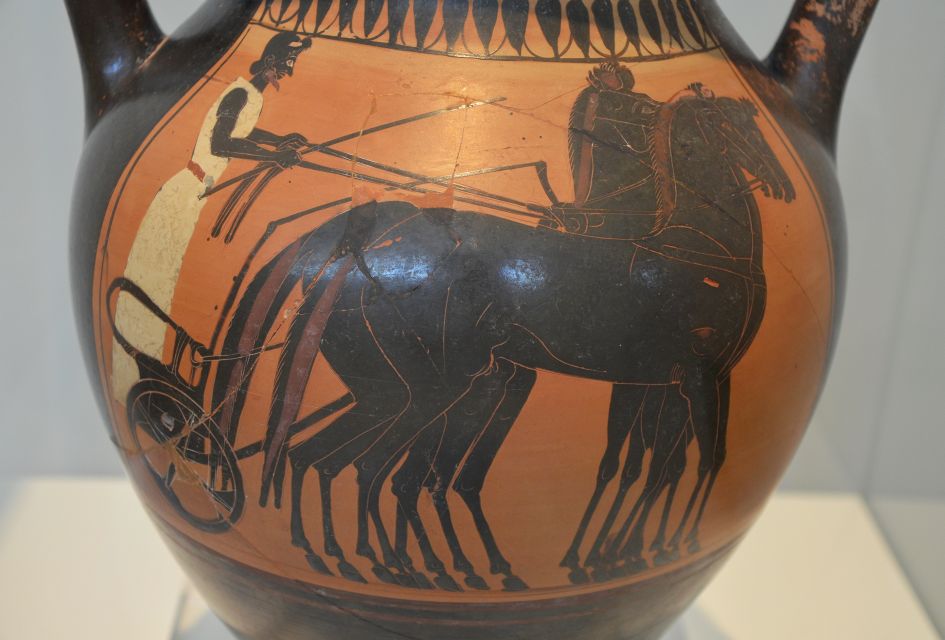
- Vase and Minor Objects Collection: Pottery to the Roman Period
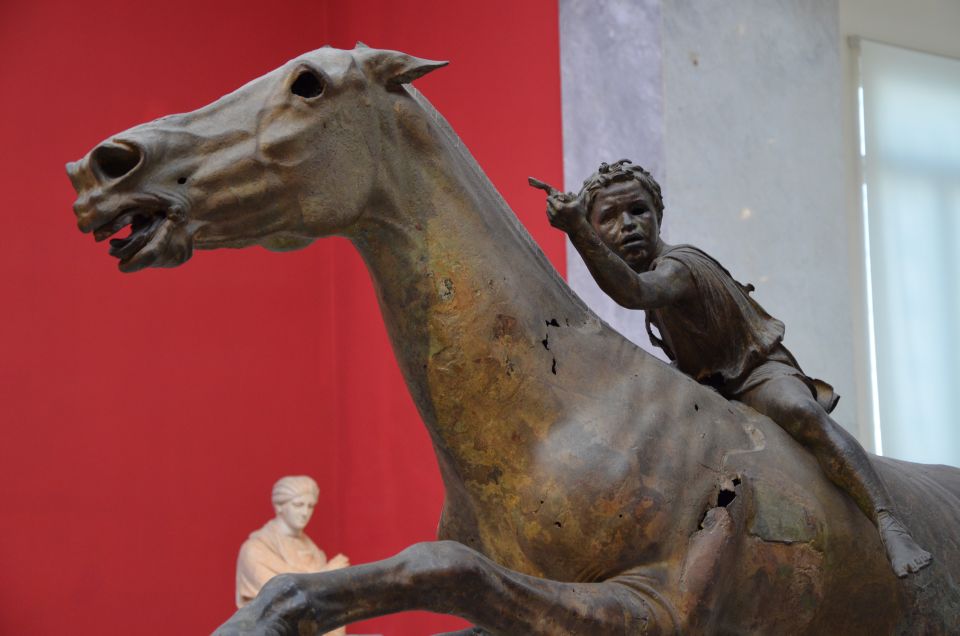
- Bronze Collection: Statues, Figurines, and More
- Egyptian and Near Eastern Antiquities: A Rare Scope in Greece
- The Antikythera Mechanism Stop: More Than a Cool Fact
- How Christos Brings the Museum to Life
- Price Value: $400 Per Group Up to 6 People
- How Much You’ll Actually See in 2 Hours
- Who This Tour Fits Best (And Who Might Skip It)
- Before You Go: Practical Tips That Save Time
- Should You Book This Tour?
- FAQ
- Is the museum ticket included?
- How long is the guided tour?
- Is this a private tour or a group tour?
- What languages is the live guide available in?
- Where do we meet the guide?
- Do we get to see the Antikythera mechanism?
- What’s included in the price besides the guide?
- What’s the cancellation policy?
Key Things to Know Before You Go

- Licensed archaeologist guide who can turn room-to-room chaos into a clear timeline
- Antikythera mechanism coverage, with context that makes the object easier to understand
- A top-tier way to experience the museum’s five main permanent collections without losing time
- Private pacing for couples and families, including room for questions
- You’ll see how Greek civilization develops from prehistory through late antiquity
Athens’ National Archaeological Museum: Why This Place Matters
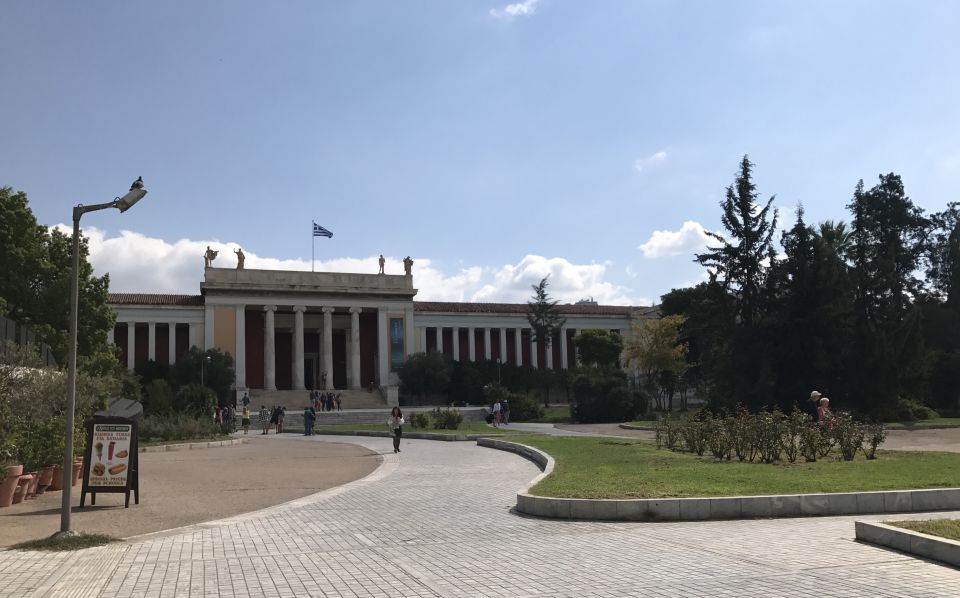
If you want to understand Greece beyond postcards, the National Archaeological Museum is a strong starting point. It’s the largest museum in Greece and one of the world’s great collections of ancient art. The museum is housed in a grand neoclassical building designed by L. Lange and remodeled by Ernst Ziller, which already signals you’re walking into a serious institution, not a quick stop.
What makes it especially rewarding is the scope. You’re not stuck in one era. The museum’s collection spans from early prehistory all the way to late antiquity, and it includes finds from excavations around Athens as well as across Greece. With more than 11,000 exhibits and around 8,000 square meters of exhibition space, the museum can feel like a whole civilization contained under one roof.
You can also read our reviews of more guided tours in Athens



A Private 2-Hour Format That Actually Feels Manageable
This is a small-group experience priced per group (up to 6 people) for a total duration of 2 hours. That time window matters. In a museum this large, a normal self-guided visit can turn into a blur of labels and side glances. With a private guide, you get a plan for what to prioritize and how to connect the dots between objects.
Live guiding is available in Turkish, English, German, and Greek. In practice, that means you can pick the language that lets you ask questions comfortably and follow the explanations without straining. The guide is an experienced licensed archaeologist, which is a big deal here because Greek artifacts often come with the kind of context you can’t guess from appearance alone.
Where the Tour Starts on Patission Street

You meet at the museum itself, at the steps in front of the main entrance, 44 Patission Street (10682). This is useful because you don’t need to solve a bunch of handoffs or figure out a separate rendezvous point around the city.
Once you’re inside, you’ll move through the museum with a guide who focuses on the highlights you’d want even on a short visit. Since the museum has multiple floors and lots of galleries, getting your bearings early helps a lot.
The Museum’s Five Big Collections, in Plain Human Terms
The National Archaeological Museum organizes its permanent collections into five major areas. A big part of the value of this tour is that you see how those collections work together as a story of Greek civilization.
Prehistory Antiquities: From 6,000 BCE to 1050 BCE
The Prehistoric Antiquities collection covers a huge arc, from the 6th millennium BCE onward into the early Mycenaean period up to 1050 BCE. It includes major Aegean civilizations such as Neolithic, Cycladic, and Mycenaean, plus important finds from the prehistoric settlement at Thera.
Why this matters for you: when people think of ancient Greece, they often jump straight to classical Athens. Prehistory shows the groundwork—how ideas, styles, and technologies developed long before the famous periods. If you like seeing how cultures evolve, this section gives you that missing “how we got here” piece.
You can also read our reviews of more private tours in Athens




Sculpture Collection: The 7th to 5th Centuries BCE
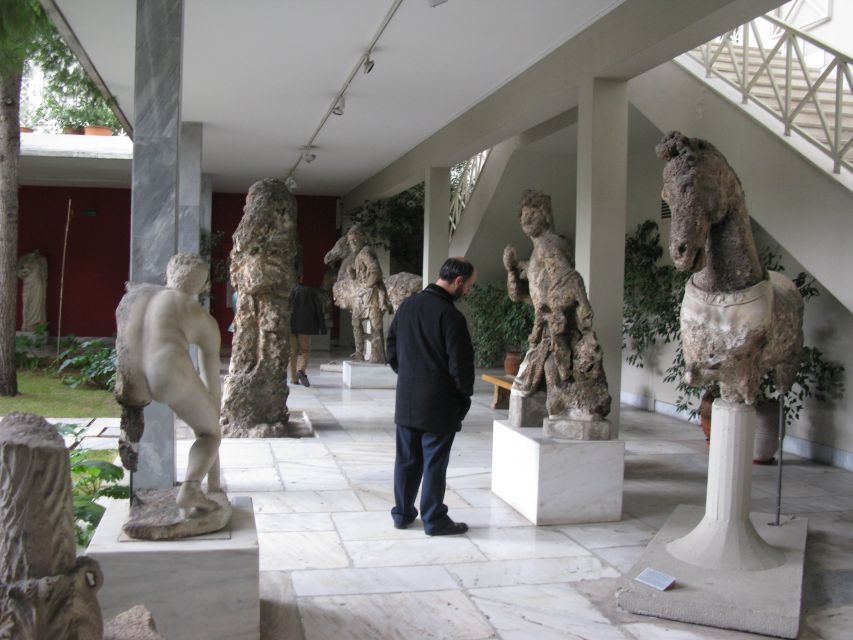
The Sculpture Collection traces how Greek sculptural style develops from the 7th to the 5th centuries BCE. This is where the museum’s artworks start to feel less like “ancient stuff” and more like visual problem-solving—how bodies are proportioned, how faces are conveyed, and how movement and idealization are handled across time.
Practical tip: sculpture rooms can be crowded and visually dense. A guide helps you slow down at the right pieces so you don’t just walk past the works you came for.
Vase and Minor Objects Collection: Pottery to the Roman Period
The Vase and Minor Objects collection spans from the 11th century BCE through the Roman period. It also includes the Stathatos Collection, which focuses on minor objects from all periods.
Why you’ll appreciate it: pottery and small items often explain daily life better than big statues do. Even when the forms are beautiful, the value is in what the items suggest about people—what they valued, what they used, and what symbols meant.
Bronze Collection: Statues, Figurines, and More
In the Bronze Collection, you’ll see fundamental statues, figurines, and smaller objects. Bronze is a material that carries its own story—how it was made, what kinds of objects survived, and how techniques changed.
This is the sort of section where your guide’s explanations can prevent the classic mistake of thinking everything is just decorative. You start noticing patterns and meaning, not only style.
Egyptian and Near Eastern Antiquities: A Rare Scope in Greece
The museum also houses the only Egyptian and Near Eastern Antiquities collection in Greece, with works dating from the pre-dynastic period (around 5,000 BCE) through the Roman conquest.
Even if you didn’t plan to study Egypt or the Near East, this part helps you understand that Greek civilization didn’t develop in a bubble. Trade, influence, and cultural contact were real—and the artifacts make that tangible.
The Antikythera Mechanism Stop: More Than a Cool Fact
One of the standout highlights is the Antikythera mechanism, described as the world’s oldest analogue computer. It’s the kind of object that attracts attention instantly, because it doesn’t fit the usual “statue and pottery” expectations.
What makes it worth a guided stop is context. A mechanism only becomes meaningful when you understand what it’s doing and how it fits into the intellectual world that created it. With a guide, you’re less likely to treat it as a standalone spectacle and more likely to connect it to broader ancient Greek curiosity—especially their drive to model the world mathematically.
How Christos Brings the Museum to Life
Your guide for this experience is listed as Christos Theodoropoulos. Several bookings highlighted how he keeps the museum from becoming overwhelming. The common thread is pacing: he shows you the highlights, but he also builds connections across periods so the museum feels like a coherent story.
One practical advantage: he’s flexible with how the tour unfolds within the time you have. In at least one case, he tailored the visit to a personal interest in ancient jewelry and arranged a private showing of a jewelry room that is usually locked at certain times of year. That’s not something you should expect every time, but it tells you the guide isn’t just reading from a script. If you have a specific interest—pottery styles, sculpture development, or even small objects—this kind of responsiveness can make the tour feel more like a custom lesson.
Reviews also pointed out that he uses clear explanations and answers questions, including in families with kids. If you’re traveling with younger people, that matters. The museum can be a slog without a person turning the lights on.
Price Value: $400 Per Group Up to 6 People
The price is $400 per group up to 6, with the museum entry ticket not included (10€). Here’s how to think about value.
- If you fill the group (6 people), you’re roughly at $67 per person for the guided portion, then add the 10€ ticket.
- If you’re only two people, it’s closer to $200 per person plus the ticket.
So is it worth it? I think it’s best when you want structure and you care about context more than just checking items off a list. If you’re the type who likes to understand what you’re looking at—and you hate spending your limited time in Athens lost in galleries—this private format can be a smart use of your budget.
It also makes financial sense when you travel in a small group or with multiple generations. One guide-guided 2-hour “orientation” can save you from a much longer, unsatisfying museum attempt later.
How Much You’ll Actually See in 2 Hours
Let’s be realistic: 2 hours in a museum with thousands of exhibits is not “complete coverage.” It’s strategic highlights. That’s not a drawback if you go in with the right expectations.
Your guided experience is designed to help you:
- identify what’s important in each collection area
- understand how Greek art and culture evolve over time
- leave knowing what you saw, and why it matters
After the tour, you can always stay and explore at your own pace. Since you’ll have a clearer map in your head, you’re more likely to enjoy extra time you choose to add.
Who This Tour Fits Best (And Who Might Skip It)
This private tour fits best if you:
- want a guided “storyline” rather than label-reading
- care about understanding the Antikythera mechanism and other major objects
- are traveling with a small group (up to 6) and want shared value
- prefer asking questions and getting direct answers
You might skip it if:
- you’re happy wandering the museum independently and you don’t mind spending time decoding the collection on your own
- you’re only interested in a tiny handful of objects and you’re comfortable building your own route
Before You Go: Practical Tips That Save Time
The museum entry ticket is 10€ and not included, so plan to budget that extra cost. Wear comfortable shoes. Even with a guide, you’ll be moving through multiple spaces and taking time to look closely.
If you have a specific interest, bring it up early with your guide. One of the strongest signs of quality here is that Christos can adjust within the tour context, including at least one instance involving access to the jewelry room.
If you want the most out of your time, go into the tour with a couple of goals. For example: see the Antikythera mechanism, understand the arc of prehistory to classical sculpture, and notice how small objects and pottery reflect daily life.
Should You Book This Tour?
Book it if you want a smart, time-efficient way to experience one of Greece’s biggest museums with expert context. At $400 per group up to 6, it’s a strong value when you can share the cost, and it’s a great option when you don’t want to spend your Athens day piecing together a museum story from scratch.
I’d skip it only if your priorities are purely visual browsing and you already plan to spend lots of time on your own inside the museum. If you want your visit to feel like it has a spine—start to finish—this private guided format with Christos Theodoropoulos is one of the best ways to get that in just 2 hours.
FAQ
Is the museum ticket included?
No. The museum entry ticket costs 10€ and is not included in the tour price.
How long is the guided tour?
The tour duration is 2 hours.
Is this a private tour or a group tour?
It’s a private group experience.
What languages is the live guide available in?
The live guide is available in Turkish, English, German, and Greek.
Where do we meet the guide?
Meet at the Athens National Archaeological Museum at the steps in front of the main entrance, 44 Patission Street, 10682.
Do we get to see the Antikythera mechanism?
Yes. The Antikythera mechanism is listed as one of the highlights included in the tour.
What’s included in the price besides the guide?
The tour includes an experienced licensed archaeologist guide. Hotel transfer is not included.
What’s the cancellation policy?
You can cancel up to 24 hours in advance for a full refund.
You Might Also Enjoy


More Guided Tours in Athens

More Tours in Athens


More Tour Reviews in Athens
- All Day Cruise -3 Islands to Agistri,Moni, Aegina with lunch and drinks included
★ 5.0 · 4,958 reviews