REVIEW · ATHENS
Ancient Athens E-Bike Tour
Book on Viator →Operated by AyoToursAthens · Bookable on Viator
Athens in two hours feels like cheating—in the best way. This standing e-bike Trikke tour is built for covering big sights fast, with a small group and live guidance as you glide past the Acropolis area. The main consideration is that you’ll pay extra entry tickets for some archaeological sites and you’re standing for the ride.
I like that you get close enough to feel the scale of the Acropolis area without wearing yourself out on steep walks. I also like the flexibility of the tour approach—your guide can shift the emphasis so you see what you’ll want to revisit later, instead of rushing through a checklist. If you’re hoping for a fully ticket-included museum crawl, budget will need a bit of attention.
Before you book, think about comfort: this is a motorized standing bike, so your body position matters more than on a normal sightseeing bus. On hot days, you’ll still want water and sun protection, even if the e-bike does the heavy lifting.
In This Review
- Key highlights worth knowing before you ride
- Why a standing Trikke makes sense for Athens
- The route: Athens’ big ancient sights, linked by smart stops
- Theatre of Dionysus area: where Greek drama took root
- Odeon of Herodes Atticus: a Roman theatre still doing its job
- Acropolis: see it from a close, practical side
- Pnyx: democracy started here (and you can feel the slope)
- National Observatory of Athens: first observatory on the hill of Nymphs
- Ancient Agora: the main market heart of the city
- Keramikos: ceramics and the meaning behind the neighborhood name
- Monastiraki: the heart of Athens by way of crowds and choices
- Roman Agora and Tower of the Winds: Rome’s version of the Agora
- Plaka: your post-tour wandering neighborhood
- Price and value: what 72.09€ covers (and what it doesn’t)
- Timing, group size, and how the tour runs in real life
- Safety and comfort: the standing-bike factor
- Who should book this, and who should skip it?
- Practical tips to get more out of it
- Should you book the Ancient Athens E-Bike Tour?
- FAQ
- How long is the Ancient Athens E-Bike Tour?
- What’s included in the price?
- Are entry tickets included for the archaeological sites?
- What are the tour hours?
- How big is the group?
- What if the weather is bad?
Key highlights worth knowing before you ride
- Standing e-bike speed without the sweat: Cover more Athens in less time than walking.
- Acropolis-area viewpoints: See the hill and monuments from practical angles, not just far-off photos.
- A tight loop of major sights: Theatre of Dionysus area, Odeon, Pnyx, Agora zone, Plaka, and more in about two hours.
- Helmet and insurance included: Safety gear is part of the package.
- Maximum 12 people: Small-group feel makes it easier to manage and adjust on the fly.
- Some sights are included, some are not: You’ll want to plan for extra monument tickets.
Why a standing Trikke makes sense for Athens

Athens is amazing, but it’s not gentle. The city’s key ancient sites are spread across hills, ruins, and neighborhoods with uneven ground. Walking the full highlights route can mean a lot of time in the sun and several slow, exhausting climbs.
A standing e-bike (Trikke) changes the rhythm. You still get to stop, look, and absorb details, but you move between spots quickly. You’re not spending your whole energy just getting from one viewpoint to the next. In a short window, that matters.
And since the bike is motorized, you’re not “earning” every meter with your legs. That’s the whole point: you can enjoy the sights without feeling like you just ran a marathon before lunch.
You’ll also get a helmet and customer insurance as part of the tour. That’s not glam, but it’s a smart inclusion when you’re zipping around city streets.
You can also read our reviews of more cycling tours in Athens



The route: Athens’ big ancient sights, linked by smart stops
This tour is designed as a fast circuit. You’ll start and end back at the same meeting point near Leof. Andrea Siggrou 22 (Athina 117 42). From there, the stops connect the ancient heart of Athens to the neighborhoods most people want to revisit for food and wandering.
Expect short stop-times with actual on-foot moments to look around and take in the stories behind each site. The guide’s job is to point you at what matters so you don’t end up staring at ruins without context.
Here’s what you can expect at each main stop, and why it’s worth it.
Theatre of Dionysus area: where Greek drama took root
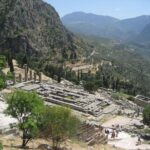
One of the first major stops centers on the Theatre of Dionysus, often described as the birthplace of theatre in ancient Greece. The idea isn’t just that plays happened here—it’s that this was a foundation moment for the whole Western tradition of stage performance.
The tour notes that the Acropolis Hill ticket includes the Theatre of Dionysus area. Separate pricing is also listed for the theatre, so the best approach is to plan based on the bigger ticket options and what they cover.
If you like origins—where an idea begins—this stop gives you that feeling fast. It’s also a nice contrast to the monumental “wow” of the Acropolis. Theatre is about people watching other people. It’s human-scale history.
Odeon of Herodes Atticus: a Roman theatre still doing its job
Next up is the Odeon of Herodes Atticus, a Roman theatre still used for performances. The tour information ties it to the second century A.D., built as a memorial gift connected to the death of Herod Atticus’ wife.
This is the kind of stop that helps you see how ancient Athens stayed alive. Yes, the city changed. But the functions—gathering people, staging events—kept echoing for centuries.
Keep an eye on how the structure “holds” sound and sightlines. Even if you’re not catching a performance, seeing an operational theatre teaches you something about ancient engineering and community life.
Acropolis: see it from a close, practical side
The Acropolis is the headline. The tour gives you a close look at the hill from a nearby side so you’re not only viewing it from a distance. You’ll be able to take in the rock of the Acropolis as the central landmark, with the Parthenon as the famous focus at the top.
This matters because Athens can tempt you into doing “one big photo stop.” A closer viewpoint helps you understand how the monuments relate to the hill itself—height, angles, and where you can best observe from street level.
One catch: the Acropolis-related ticket is not included. The tour information lists 20€ for the Acropolis Hill ticket, so budget for that separately.
You can also read our reviews of more tours and experiences in Athens





Pnyx: democracy started here (and you can feel the slope)
From the Acropolis area, you’ll head to Pnyx, presented as the place where democracy began. You’ll be in an archaeological area that’s also a park, which means it’s less of a hard, enclosed site and more of a space you can actually stand in and take in.
The practical value of this stop is that it puts political history into physical geography. Pnyx is a hill. Hills change how crowds gather and how speakers address people. Standing e-bike speed gets you there quickly; the stop gives you time to grasp why this location made sense.
Admission here is listed as free for this stop.
National Observatory of Athens: first observatory on the hill of Nymphs
Another inclusion is the National Observatory of Athens. The tour ties it to the first observatory of Athens and places it on the hill of Nymphs inside an archaeological area that functions like a park.
This is a good stop if you like the “science side” of ancient and post-ancient Athens. It also helps balance the route so you’re not only seeing temples and theatres.
Here, admission is listed as included in the tour.
Ancient Agora: the main market heart of the city
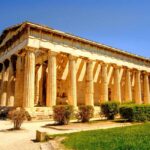
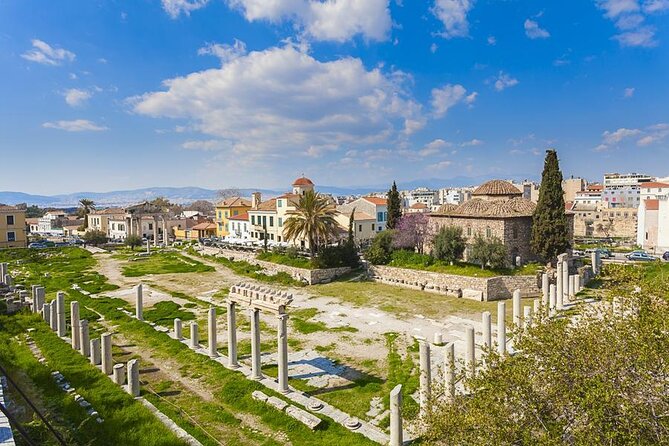
The Ancient Agora of Athens is where daily civic life happened—market, meeting points, and the practical engine of the society. The tour presents it as the most important side of ancient Greece in that sense: not just grand monuments, but the place where commerce and community met.
Admission is included for this stop, and the tour info lists a ticket price of 4€. That detail suggests the tour may handle some entry while you may still see ticket requirements depending on timing and site rules. Don’t ignore small ticket lines—plan for a possible add-on.
Even in brief time, the Agora works well with a guided stop because the ruins can look “random” if you don’t know what you’re looking at.
Keramikos: ceramics and the meaning behind the neighborhood name
Next is Keramikos, an archaeological area close to the Ancient Agora. The tour makes the name practical: Kerameikos is tied to where ceramics were produced, and that’s why the name sticks in the neighborhood.
This stop is great if you want Athens to feel lived-in, not just ceremonial. A ceramics district sounds less dramatic than the Acropolis, but it’s exactly the kind of place that shaped the city’s economy and daily life.
This stop is listed as free.
Monastiraki: the heart of Athens by way of crowds and choices
Then you’ll reach Monastiraki, described as the second most crowded square in Athens and considered the heart of the city. The point of this stop is less about a monument and more about atmosphere and your next moves.
It’s also a useful pause at the end of the ancient section. If you want a quick bite or you’re planning where to go after the tour, Monastiraki is the place to orient yourself.
Admission is listed as included here.
Roman Agora and Tower of the Winds: Rome’s version of the Agora
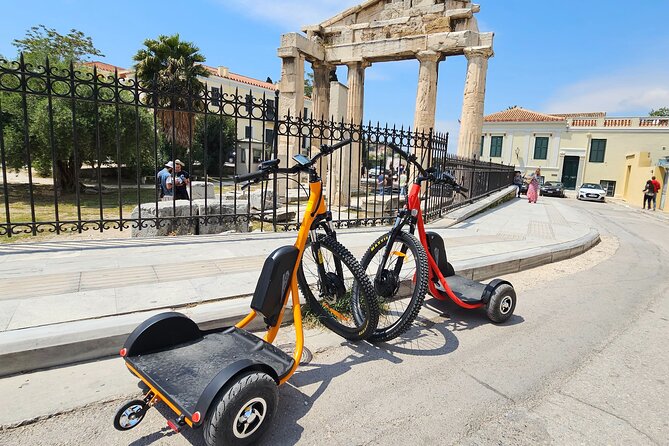
The tour also includes the Roman Agora, built in the second century A.D. as a Roman-era counterpart to the Greek Agora. You’ll see the Tower of the Winds noted within the area.
This is one of those “two layers of time” moments: Greek civic tradition continues, and then Rome reframes it with Roman construction and planning. The Tower of the Winds helps you picture the city as a place that measured time and weather, not just worshipped it.
For planning, the tour notes 4€ for the Roman Agora ticket, while also marking it as free. If you’re trying to budget tightly, treat this as a small add-on possibility.
Plaka: your post-tour wandering neighborhood
Finally, you’ll reach Plaka, described as a traditional neighborhood in the heart of Athens that feels like a Greek island. That’s exactly why this stop is smart: once you’ve seen the ancient core, Plaka gives you the reward—streets, photos, tavernas, and the chance to keep wandering at your pace.
This stop is listed as free (admission ticket free).
Price and value: what 72.09€ covers (and what it doesn’t)
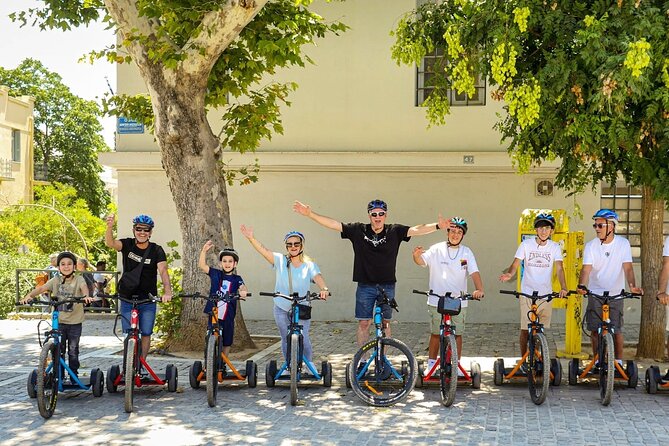
At $72.09 per person, you’re paying for the experience package, not the full monument bill.
What you get included:
- Use of Trikke (the motorized standing e-bike)
- Helmet
- Customer insurance
What you pay extra:
- Tickets for multiple archaeological sites (not included)
The “big ticket” items in the tour info are 20€ entries tied to the Acropolis Hill area and the Theatre/Odeon context. The smaller add-ons listed are 4€ for the Ancient Agora and 4€ again for the Roman Agora (with some notes that suggest a free admission status). You’ll also see several sites marked free, which helps keep the total from getting out of hand.
So how do you judge value? You do it in terms of time and effort saved. Two hours in Athens can vanish fast if you’re walking between hills. With the motorized bike, you’re converting your time into viewing. That’s the real product.
If you’re comfortable paying a bit extra for key entrances anyway, the setup is a good trade. If you want a fully ticket-covered bundle with no extra cost uncertainty, you might prefer a different format.
Timing, group size, and how the tour runs in real life
This tour runs Monday through Saturday, 10:00 AM to 4:00 PM, within the broader operating window listed for 2023 through 2026. The tour duration is about 2 hours, and confirmation is received at booking time.
The tour caps at 12 travelers, and that small group size matters more than it sounds. On a standing bike, too many people can mean traffic flow becomes slow and stopovers become rushed. With a smaller group, you’re more likely to get smooth riding and better guidance when you need it.
The tour also uses a mobile ticket, which is convenient for Athens, where everything seems to be “show it on your phone” until it isn’t.
One more practical note: the activity requires good weather. If conditions are poor, it can be rescheduled or refunded (based on the tour’s policy). For planning, pick a day with decent skies if you can.
Safety and comfort: the standing-bike factor
This is where the tour’s promises actually affect your day.
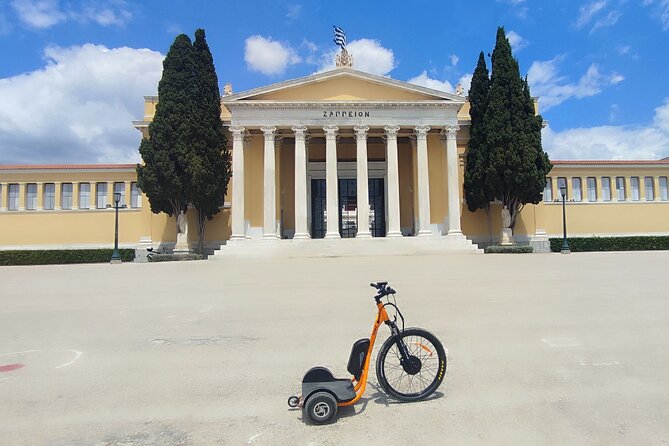
You’ll ride a standing e-bike on a motorized Trikke, and the tour emphasizes ease, comfort, and safety, including helmet use and insurance. Also, you’re not required to pedal. That means less leg fatigue, which helps on a route filled with hills and uphill angles.
Still, you are standing. If you have balance issues or you know standing for 20–40 minutes in motion is hard, think carefully.
For everyone else, the best approach is simple:
- wear comfortable shoes with grip
- use your helmet properly
- take the breaks offered at stops rather than trying to “opt out” of the guided viewing
Also, bring sun protection. Even with an e-bike doing the climbing, Athens sun does what Athens sun does.
Who should book this, and who should skip it?
This tour is a strong fit if you want:
- maximum sightseeing in limited time
- an easier way to hit Acropolis-adjacent sights without turning your legs into sand
- guided explanations so you understand what you’re looking at, not just where it is
It’s also a solid family option. The tour’s feedback includes families with kids, and the bikes are described as easy to learn.
You might skip it if:
- you need fully seated transport
- you want to avoid all extra ticket payments
- you’re uncomfortable standing while moving through city streets
Practical tips to get more out of it

- Budget for admissions that aren’t included, especially the 20€ Acropolis Hill-related ticket area.
- Plan your next meal nearby. Monastiraki and Plaka are perfect for continuing the day after the ride.
- Start with a light plan. This tour gives you a strong framework, but you’ll still want time after it to wander freely, especially around Plaka.
- Listen for the why, not only the what. The strongest moments are the explanations tied to real locations—democracy at Pnyx, theatre at Dionysus, markets at the Agora.
Should you book the Ancient Athens E-Bike Tour?
Book it if you’re trying to see Athens’ headline ancient sites without spending half your vacation climbing hills on foot. At about 2 hours, with Trikke + helmet + insurance included and a small group of up to 12, the value is strongest for time-stretched travelers and anyone who prefers guided context over self-directed guessing.
Think twice if you’re sensitive to standing while moving or if you’re strict about paying only the posted price—because monument tickets are not included, and several stops carry extra costs.
If your goal is to get your bearings fast—Acropolis, Agora, theatre history, and the streets that lead to dinner—this is the kind of tour that can make your later exploring easier.
FAQ
How long is the Ancient Athens E-Bike Tour?
It lasts about 2 hours.
What’s included in the price?
The tour includes use of the Trikke, a helmet, and customer insurance.
Are entry tickets included for the archaeological sites?
No. Tickets to the archaeological areas are not included, and separate prices are listed for several sites.
What are the tour hours?
The tour operates Monday through Saturday from 10:00 AM to 4:00 PM.
How big is the group?
The tour has a maximum of 12 travelers.
What if the weather is bad?
This experience requires good weather. If it’s canceled due to poor weather, you’ll be offered a different date or a full refund.
You Might Also Enjoy



More Cycling Tours in Athens
More Tours in Athens




More Tour Reviews in Athens
- All Day Cruise -3 Islands to Agistri,Moni, Aegina with lunch and drinks included
★ 5.0 · 4,958 reviews