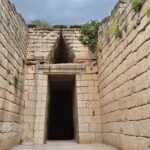
REVIEW · ATHENS
Athens Escape City Game “The Journey Through Time”
Book on GetYourGuide →Operated by Culture Hunters · Bookable on GetYourGuide
Time travel beats the usual Athens tour. The Athens Escape City Game, The Journey Through Time, turns well-known sights into a clue-solving route, with a story that moves through Greek eras. I especially like the mystery backpack that makes you look at landmarks in a new way, and the team challenges that keep everyone engaged. The one real catch: you must have a charged smartphone with internet, and the walk-and-stand format is not suitable for mobility impairments.
This is a 150-minute, private-group activity priced at $34 per person, designed for teams of 2 to 6 (ages 8 to 99). You’ll meet your Game Master at the Acropoli Metro Station entrance in front of the Leonidas chocolate shop, get your backpack and instructions, then return for the wrap-up at the same spot.
The game runs in English or French, and it’s actively supported. Your Game Master can help by message at all times, but they do warn that a small part of the story touches on war and violence if minors are in your group.
In This Review
- Key Things to Know Before You Play in Athens
- Time Travel Through Athens: What This Escape Game Actually Does
- Getting Started at Acropoli Metro Station and Leonidas Chocolate Shop
- Makrygianni and Secret Stops: How the Early Clues Set the Pace
- Plaka to Temple of Olympian Zeus: A Route That Mixes Old Streets and Big Monuments
- Syntagma Square and the Tomb of the Unknown Soldier: Where the Game Meets Modern Athens
- National Garden and Queen Amalia: Slower History Moments Built In
- The Backpack, Clues, and Game Master Hints: How You Avoid Getting Stuck
- Price and Value: Is $34 Worth 150 Minutes in Athens?
- Who This Athens Escape Game Suits Best (and Who Might Want Another Option)
- Should You Book The Journey Through Time?
- FAQ
- Where is the meeting point for Athens Escape City Game The Journey Through Time?
- How long is the game?
- Is this activity private, and how many people can play together?
- What languages are available?
- What do I need to bring?
- Do I need internet for the game?
- Is hotel pickup included?
Key Things to Know Before You Play in Athens
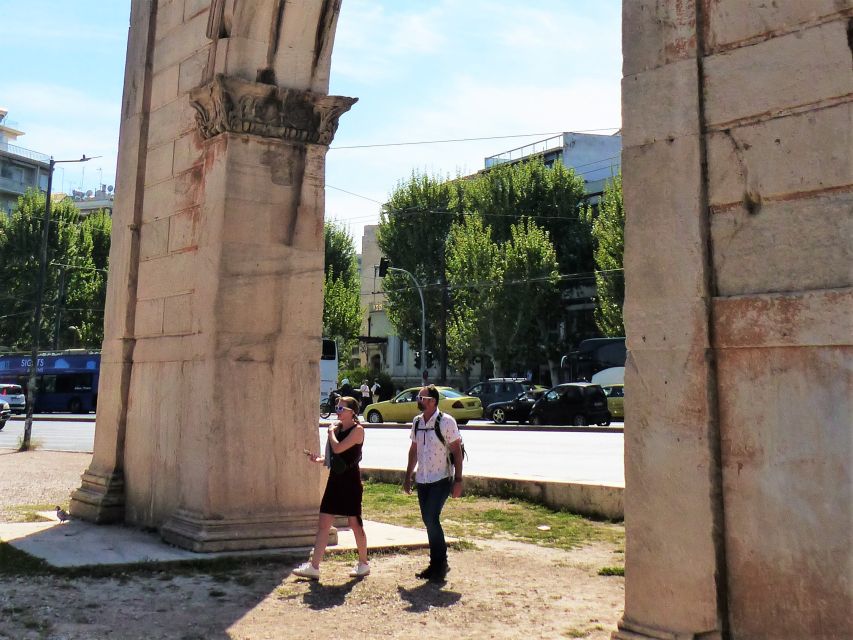
- A story that jumps eras: from the Acropolis era to modern Athens moments you can actually see on foot
- Smartphone-driven hints: one charged phone with internet for your team to message your Game Master
- Short sightseeing segments: quick self-guided blocks (often 10 minutes) that feel like mini scenes
- Landmarks plus lesser-seen stops: iconic Athens sights mixed with mystery detours
- Family-friendly team play: workable for mixed ages, with a heads-up about a war/violence theme segment
Time Travel Through Athens: What This Escape Game Actually Does

Think of this as a city walk where the route is the puzzle. Instead of passively touring, you solve clue challenges that push you from one historical moment to the next, then back toward the present. The game is built around teamwork: you’ll carry a backpack with maps, games, and other mysterious objects, and you’ll use those tools along the way.
What makes it more than a gimmick is how it changes your attention. You stop treating landmarks like photos and start treating them like information sources. When you’re answering questions to progress, you naturally slow down, scan details, and notice angles, inscriptions, and nearby street cues you’d probably miss on a normal walk.
You also get the benefit of guided storytelling without being stuck with a long lecture. The structure uses short scenes and clue checkpoints, so the history feels like something you navigate rather than something you memorize. If you like learning by doing, it fits well.
One practical note for planning: you are walking and you’ll need to be able to stand for stretches between clue challenges. And because you might need hints, you’ll want your phone charged well before you start.
You can also read our reviews of more city tours in Athens



Getting Started at Acropoli Metro Station and Leonidas Chocolate Shop

Your start point is Acropoli Metro Station, right in front of the chocolate shop Leonidas. Your Game Master will be holding a sign, and you’ll receive the backpack filled with the game materials plus your instructions and the opening story.
This meeting setup matters. It keeps the experience grounded right at the heart of the action, and it prevents that common problem with self-guided games where you spend your first 20 minutes figuring out where the puzzle actually begins. You get dropped into the story quickly.
A few details to take seriously:
- Bring a passport or ID card, since it’s required.
- Bring a fully charged smartphone with internet for your team. That phone is how you contact your Game Master if you hit a wall.
- Wear shoes you’re comfortable walking in for about 150 minutes total.
You’ll finish back at the same starting area, where you return the backpack and meet your Game Master again.
Makrygianni and Secret Stops: How the Early Clues Set the Pace
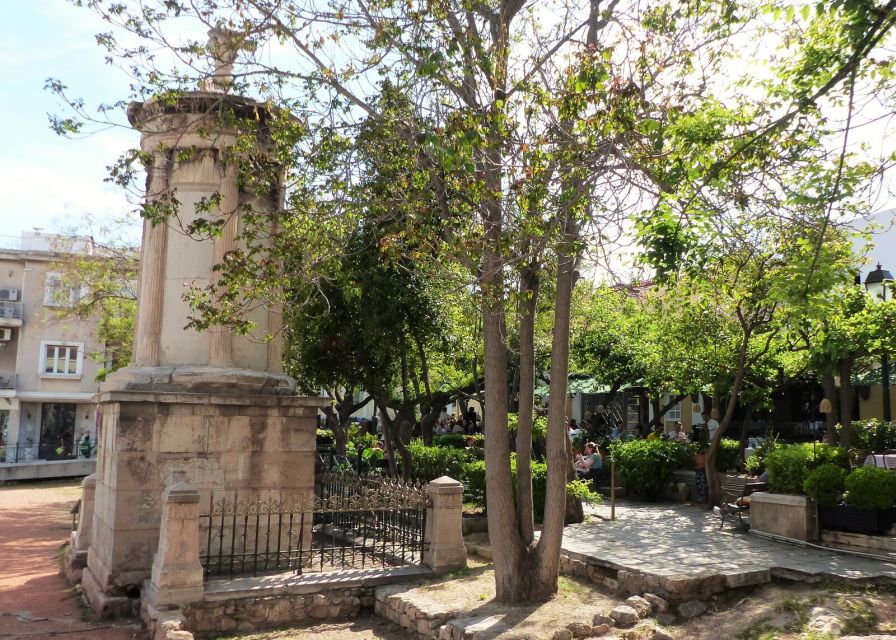
The route begins with a stop at Makrygianni, followed by sightseeing blocks labeled as secret stops. Even without exact on-the-map details for every “secret” location, the pattern tells you what to expect: you get short stretches where you look around, follow clues, and connect what you’re seeing to the story in your backpack.
Makrygianni is close enough to the Acropolis zone that you feel like the city is funneling you toward major sights. This early part of the game is also where you learn how the puzzle style works. You’re likely to see a mix of tasks—some that rely on observation, others that require problem-solving—so this first hour is about getting into the rhythm.
The “secret stop” segments are valuable because they break the usual sightseeing loop. If you usually follow a straight line between major monuments, this forces detours and rewards curiosity. It’s also one reason the game can feel surprisingly different from the standard Acropolis-area walk: your attention gets redirected by story beats and clue tasks, not just by your legs.
The only drawback is also the nature of the format: if your team likes very slow, relaxed walking or long photo stops, the game’s pacing can feel a bit tighter. The segments are short by design, so you’ll need to balance solving with taking a few photos.
Plaka to Temple of Olympian Zeus: A Route That Mixes Old Streets and Big Monuments
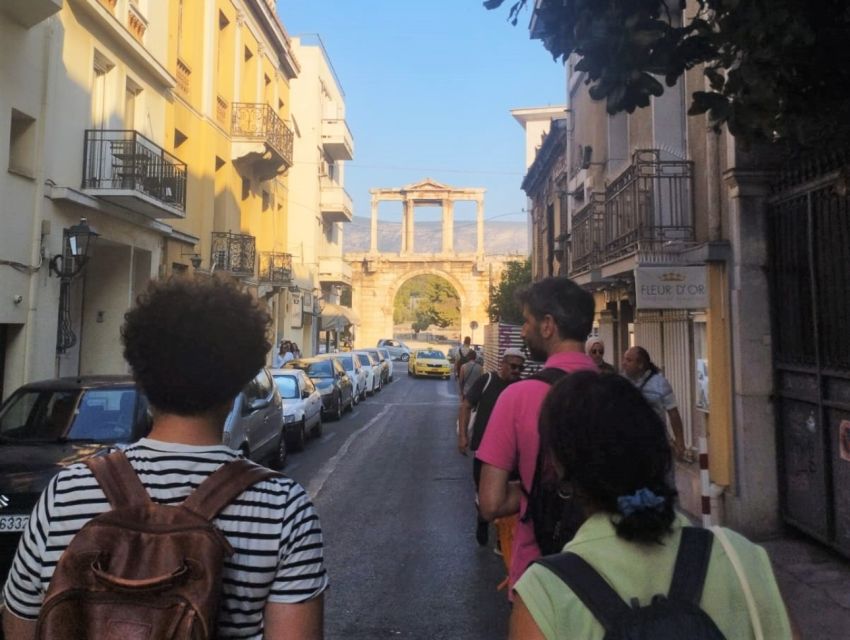
Next up is a longer sightseeing block in Plaka, Athens, with time set aside specifically for looking around and solving. Plaka is the part of Athens that most people picture when they imagine “old Athens,” with atmospheric streets that help you get into the historic mindset fast.
In a game like this, Plaka is more than scenery. It gives you a walkable maze feeling, which is exactly what clue-based city play needs. You’re moving, scanning, and connecting small details to the next step. When your team is debating answers, the surroundings keep you oriented and engaged.
From there, you pass by the Temple of Olympian Zeus. “Pass by” matters: you’re not necessarily lingering like you would on a standard visit, but you still get to thread it into the story. The value here is variety. You go from intimate old-street vibes in Plaka to the scale of one of Athens’ most famous classical statements. Even a quick passage can recalibrate your mental map of the city.
If you’re the kind of traveler who loves seeing contrast—small lanes versus monumental ruins—this section gives you that. If you want deep time on one site with an expert explaining everything in detail, this format is not that. It’s a puzzle route, so attention moves on.
Syntagma Square and the Tomb of the Unknown Soldier: Where the Game Meets Modern Athens
When the route reaches Syntagma Square, you’re stepping into modern Athens energy. This is a strong shift from the ancient-focused moments, and that’s the point of the game: it treats Athens as a continuous story, not a stop-and-start museum map.
You then pass by the Tomb of the Unknown Soldier and the Hellenic Parliament. Again, you’re not settling in for a long viewing, but you’re in the right zone for big civic atmosphere. These pass-by moments are useful because they anchor the “present” part of your time journey. The story doesn’t stay trapped in antiquity; it connects ancient themes to the city’s later identity.
In my book, this is where the game becomes especially fun for teams who like variety. You’re solving clues while the city itself changes scale and mood around you. It keeps the walk from becoming one long history lecture. You stay in motion, and the landmarks act like time markers.






National Garden and Queen Amalia: Slower History Moments Built In

The final major sightseeing block is at the National Garden, Athens. Your experience here includes a themed connection to Queen Amalia and the idea of a more personal Athens past, which makes this part of the route feel less like “rush from monument to monument” and more like a breather.
You’ll also see additional secret stop and lesser-known segments later in the route. Even without knowing the exact locations in advance, these later blocks usually work like the game’s finishing stretch: enough time to reset your team, check puzzle progress, and tie up loose threads before the final return to Acropoli Metro Station.
This section is especially good if your group has mixed interests. Someone who likes gardens or quieter streets can find their pace here, while puzzle solvers can still stay engaged without the route being purely hard-scape city walking.
The other advantage: it’s a good place to mentally refresh before you head back to the finish point. By the time you reach the National Garden, the game rhythm tends to be familiar, so you can focus more on finishing strong.
The Backpack, Clues, and Game Master Hints: How You Avoid Getting Stuck
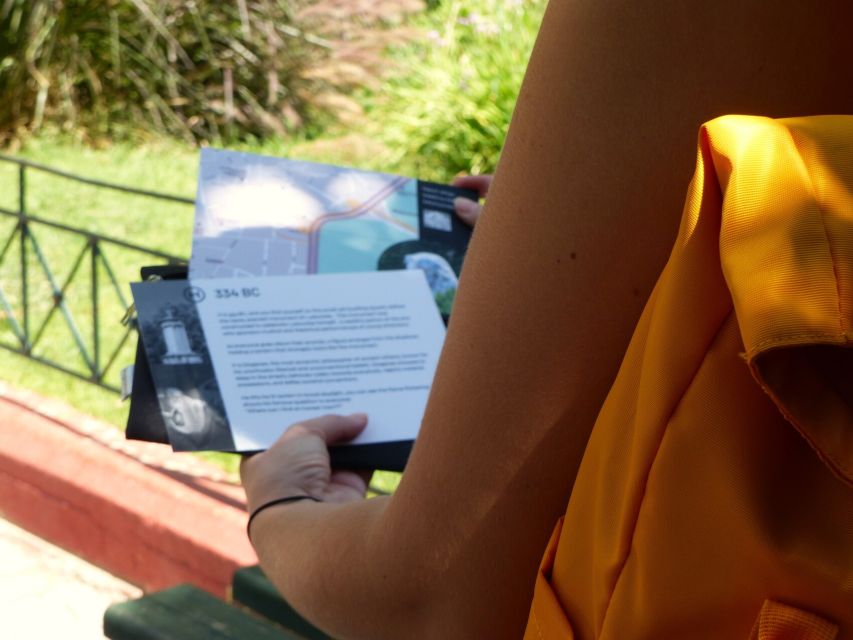
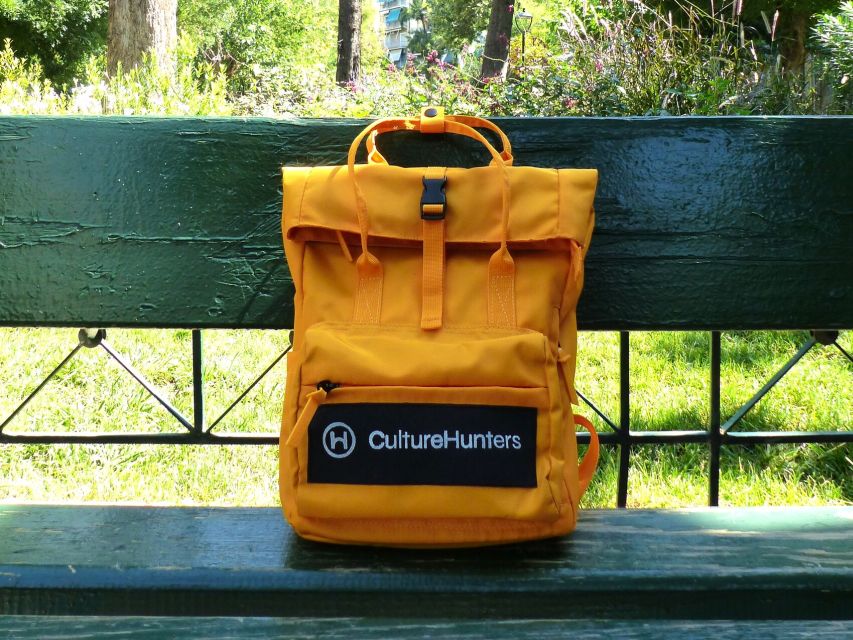
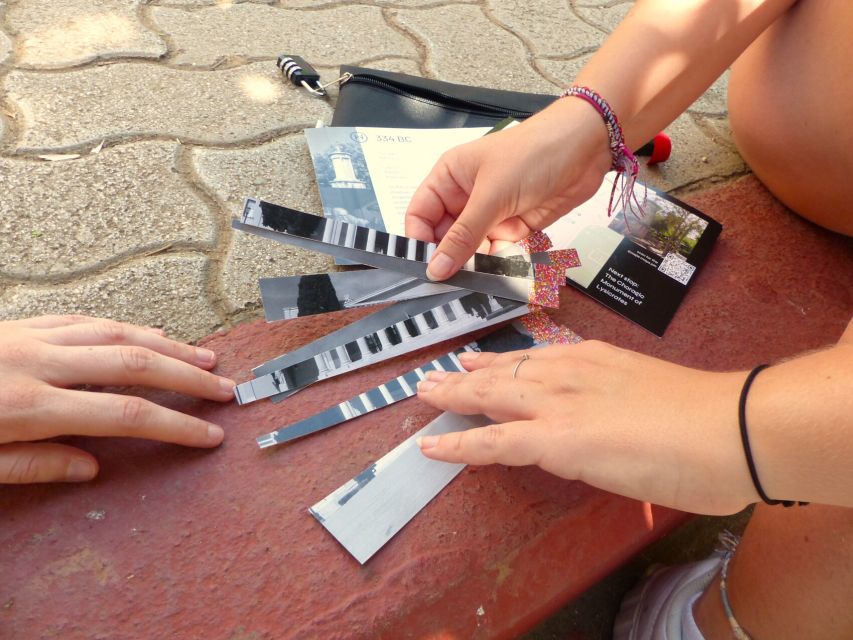
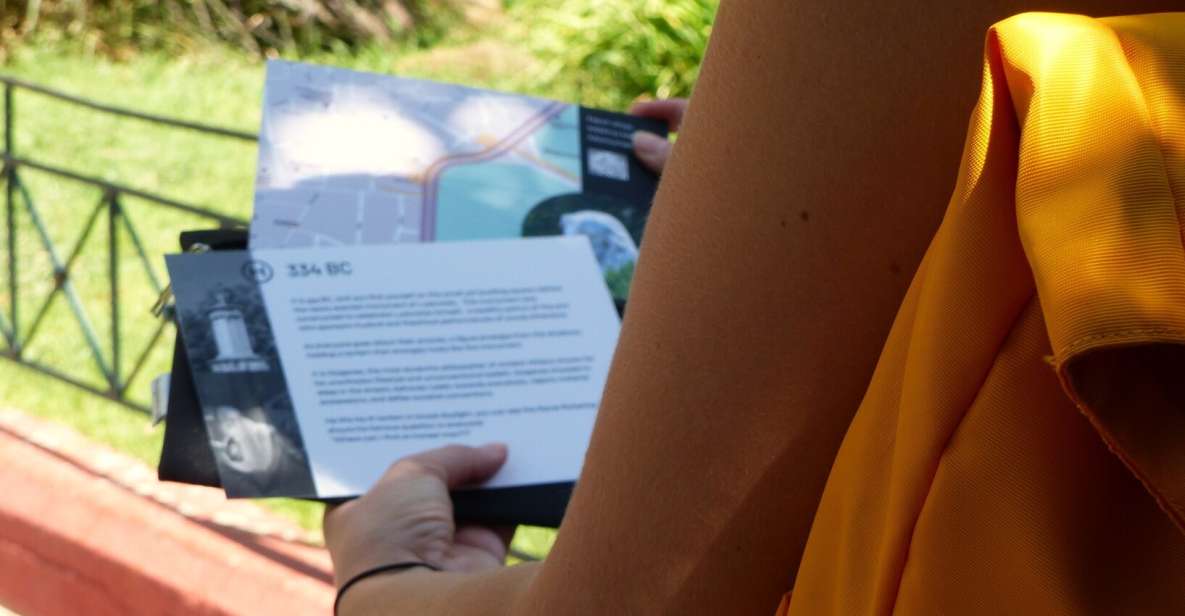
The backbone of the whole experience is the backpack filled with maps, games, and mysterious objects. This turns the walk into an interactive kit. Instead of relying on your own guessing, you have physical prompts and game components that support the clue challenges.
You’re not left alone, either. Assistance is available by message at all times if you need hints. That’s where the smartphone requirement becomes essential, not optional. One charged phone with internet lets your team reach the Game Master, and it helps you keep the game moving without wasting time wandering in circles.
The game is designed for teams of 2 to 6, so group size affects the feel:
- Smaller teams often solve faster because decisions are quicker.
- Larger teams benefit from multiple perspectives, especially on clue tasks that require observation.
One name that comes up in feedback is Maëlle. People mention her puzzle design and also call out thoughtful extras at the end, including personal recommendations tied to your route. If you’re hoping for a Game Master who makes the story feel clever rather than random, that’s a good sign to look for when you book.
Price and Value: Is $34 Worth 150 Minutes in Athens?
At $34 per person for 150 minutes, this game is priced like an activity you’d tack onto a busy day rather than an all-day replacement. The key value is that you’re getting:
- A structured route through major Athens landmarks
- A built-in narrative that connects those landmarks to eras of Greek history
- Active teamwork that turns the walk into a challenge, not just sightseeing
Compared with paying for a standard walking tour, the value comes from participation. You’re not just hearing about Athens; you’re doing tasks that force you to notice details. Compared with many casual scavenger hunts, the value comes from the Game Master support and the included backpack components.
If you’re in a private group, this can be a smart way to guarantee everyone stays engaged. It works especially well when your group has mixed ages, because the format is interactive enough to keep older kids and adults focused, while still being structured for younger participants (with the note about a war/violence theme segment).
Just remember what’s not included: there’s no hotel pickup or drop-off. You need to get yourself to Acropoli Metro Station and back on your own.
Who This Athens Escape Game Suits Best (and Who Might Want Another Option)
This experience is built for teams of 2 to 6 and ages 8 to 99. That wide range is rare, and it’s a strong argument for families and multigenerational groups. If you’ve got grandparents and teens traveling together, this can be a rare activity where everyone has a role.
It’s also one of the better choices when you want to see more than the most famous monuments without turning your day into a checklist. The itinerary mixes iconic places with “secret stop” segments that keep you from feeling like you’re only doing the obvious route.
Two considerations to keep in mind:
- The game includes a small part that refers to the theme of war and violence if your group includes minors. If that’s a concern for your family, it’s worth planning around it.
- It is not suitable for people with mobility impairments, since it’s a walking game with short sightseeing blocks.
If you’re someone who hates group puzzles or gets stressed when you don’t know an answer, you might find the “need hints by message” element reassuring. But if you strongly prefer passive sightseeing with no problem-solving, you may not enjoy the format as much.
Should You Book The Journey Through Time?
Book it if you want Athens to feel like a living story you can play your way through. I think it’s especially worth it when:
- You want a break from standard guided tours
- Your group enjoys clues, discussion, and small bursts of exploration
- You’re aiming to cover big sights like the Acropolis area and civic Athens without losing your day to long lectures
Skip it if:
- You need an accessibility-friendly activity
- Your group dislikes walking and short stops
- You don’t want any theme content related to war/violence for minors
If you do book, I’d plan your day so you can start on time and keep your phone charged. That one detail can make the difference between smoothly solved puzzles and a frustrating slowdown.
FAQ
Where is the meeting point for Athens Escape City Game The Journey Through Time?
You meet at Acropoli Metro Station, in front of the chocolate shop Leonidas. The Game Master will be holding a sign.
How long is the game?
The duration is 150 minutes.
Is this activity private, and how many people can play together?
It’s designed for private group play, with teams of 2 to 6 people.
What languages are available?
The experience is offered in English and French.
What do I need to bring?
Bring a charged smartphone, plus your passport or ID card.
Do I need internet for the game?
Yes. You need one smartphone for your team (charged with internet) to communicate with the Game Master if you need hints.
Is hotel pickup included?
No. Hotel pickup and drop-off are not included. You’ll get yourself to the meeting point and back.
You Might Also Enjoy


More City Tours in Athens



More Tour Reviews in Athens
- All Day Cruise -3 Islands to Agistri,Moni, Aegina with lunch and drinks included
★ 5.0 · 4,958 reviews