REVIEW · ATHENS
Acropolis & Agora: The Rise & Fall of Democracy
Book on GetYourGuide →Operated by Alternative Athens · Bookable on GetYourGuide
Democracy isn’t just a word here. The best part of this Athens tour is how it turns the Acropolis and Ancient Agora from famous ruins into a clear political story, with a guide who ties the stones to the big question: how people-power was supposed to work. I like that guides such as Maria, Anastasia, and Nathalia bring the system to life with specific focal points and lots of context, not just quick photo stops.
You’re also getting a smart comparison lens: ancient democracy versus modern democracy, including what still works and what often fails when ideals meet real politics. One thing to plan for: this is a walking, outdoor-focused route with steps on the Acropolis area, so it’s not a good fit if you need mobility support or slower, fully accessible pacing, and it also has strict rules about bags and strollers.
Key points worth your attention
- Acropolis + Agora together: you get the propaganda setting first, then the political testing ground.
- A guide-led political storyline: democracy’s values, purpose, and why it eventually unraveled are built into the walk.
- Designed for photos but not rushed: you’ll get time to pause and frame shots, not just march through.
- Ancient-meets-modern comparison: you’ll leave with a clearer sense of what democracy relies on.
- Small group format: easier questions and a more human pace than a giant bus tour.
- Optional entry ticket coverage: you may be able to include or pre-purchase site access depending on what you choose.
In This Review
- Acropolis to Agora: why the route tells a democracy story
- Entering the Acropolis: propaganda, planning, and political messaging
- Odeon of Herodes Atticus and Propylaea: small stops that fix your orientation
- Erechtheion and Temple of Athena Nike: the details that explain the big picture
- Parthenon time: getting beyond the exterior
- Ancient Agora: where democracy was first tested
- Temple of Hephaestus: daily life meets civic power
- Comparing ancient and modern democracy: what you’ll actually take away
- Value check: is $69 for 3 hours worth it?
- Practical comfort notes that make or break the day
- What kind of traveler will love this most?
- Should you book the Acropolis & Agora: The Rise & Fall of Democracy tour?
- FAQ
- How long is the Acropolis & Agora tour?
- Where is the meeting point?
- What sites are visited during the tour?
- What languages are the guided tours offered in?
- Is the price per person or per group?
- Are entry tickets included?
- What do I need to bring?
- What is not allowed during the tour?
- Who is this tour not suitable for?
- Can I cancel and get a refund?
Acropolis to Agora: why the route tells a democracy story
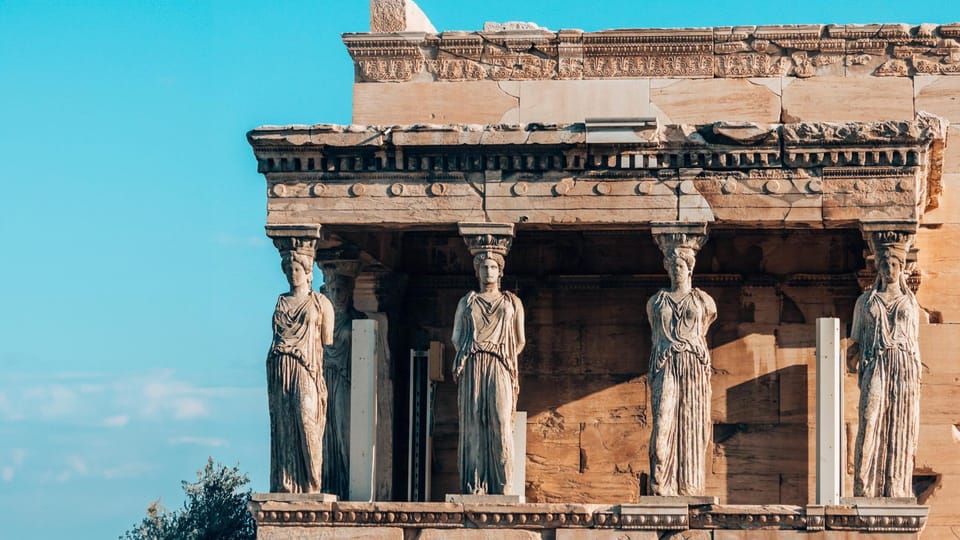
This tour works because it doesn’t treat the Acropolis and the Agora like two separate sightseeing checkboxes. It treats them like two chapters that explain the rise, the promise, and the problems of Athenian democracy.
On the Acropolis, you see the monumental side of Athens. Big buildings, strong symbolism, and careful placement all make the point that politics was never just laws on paper. Then the route moves you to the Ancient Agora, where Athens functioned as a living city: political debate, commerce, and administration happening in the same public space.
The guide’s job here is to connect what you can see with what Athens was trying to do. That’s where you start hearing how Greek democracy was an experiment—radical for its time—and why it didn’t stay stable forever. If you’re the kind of person who wants more than a caption, this is the right style of tour.
Entering the Acropolis: propaganda, planning, and political messaging
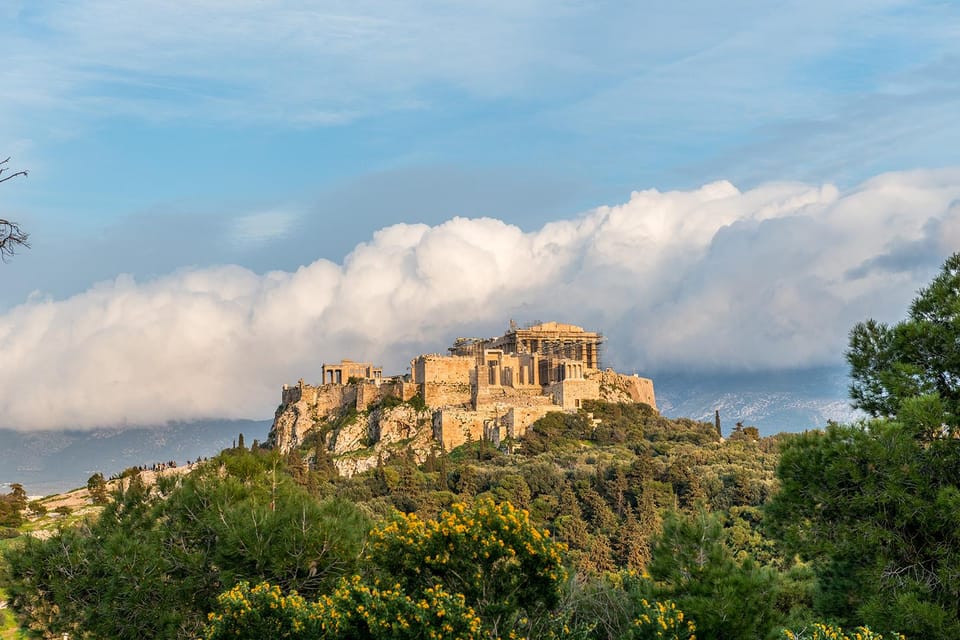
You start with guided access to the Acropolis of Athens, and the tour immediately frames it as more than a view. The Acropolis is presented as a monument tied to ancient Athenian political messaging. That matters, because it changes how you look at the Parthenon and its neighbors.
Instead of staring only at beauty, you’re prompted to notice how monumental architecture communicates authority. In other words, you begin to understand how a city can promote values publicly while still dealing with internal pressure and disagreement.
From there, the tour adds short guided stops that help you read the site like a map. Even if you only have a few hours, these mini-lessons keep you from feeling lost among the stone.
You can also read our reviews of more tours and experiences in Athens.


Odeon of Herodes Atticus and Propylaea: small stops that fix your orientation
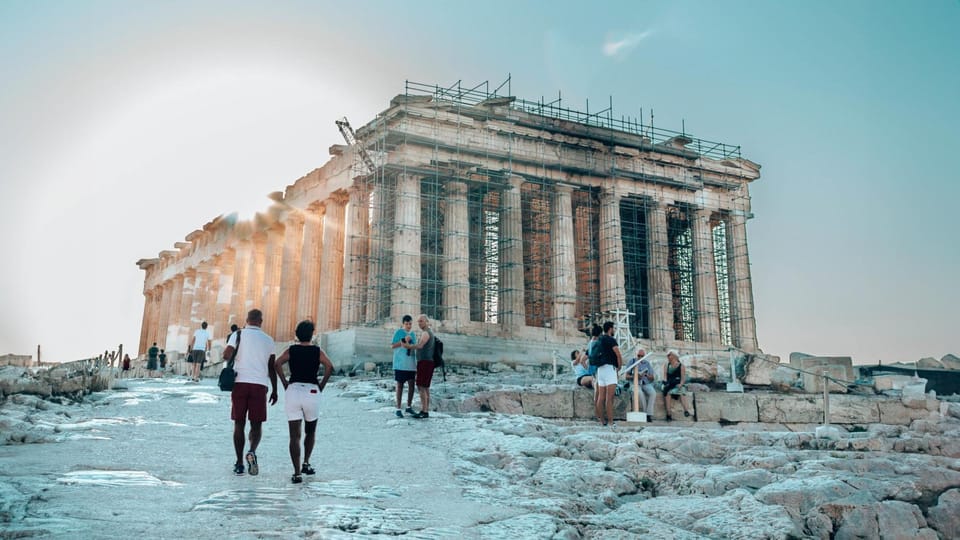
Next you visit the Odeon of Herodes Atticus, followed by the Propylaea. These aren’t the “everyone posts this” moments, which is exactly why they’re useful.
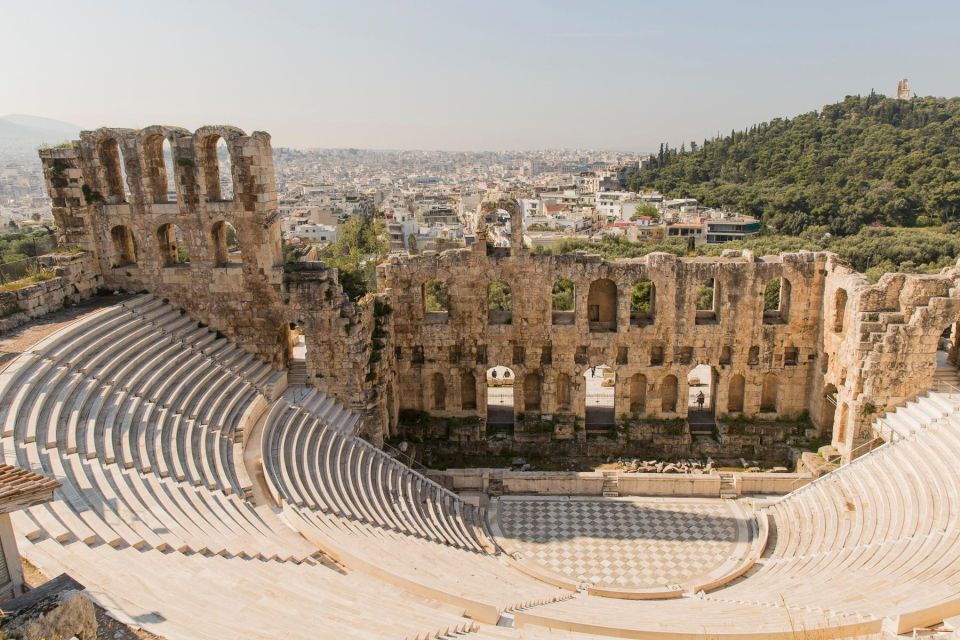
At the Odeon of Herodes Atticus, the focus is on place and structure: a reminder that Athens had spaces for gathering and public life. Then the Propylaea helps you understand movement through the Acropolis—how entrances and pathways guide what you see first, what you’re meant to notice, and how the site creates a sense of order.
If you’ve ever felt overwhelmed by the Acropolis, this kind of orientation is gold. It helps you get your bearings fast, so the later stops feel more meaningful, not just taller.
Erechtheion and Temple of Athena Nike: the details that explain the big picture

You’ll also have guided time at the Erechtheion and the Temple of Athena Nike. This is where the tour balances “big idea” history with specific architectural cues.
The Erechtheion is known for complexity and variation in design, and your guide uses that to reinforce the idea that Athens built with purpose. The Temple of Athena Nike brings you back to the theme of identity: the city’s values were stamped into sacred spaces, not kept separate from civic life.
You’ll spend short, focused time at each stop, so you don’t feel like you’re sprinting. It’s the kind of pacing that works well if you’re trying to understand the site without burning your energy.
Parthenon time: getting beyond the exterior
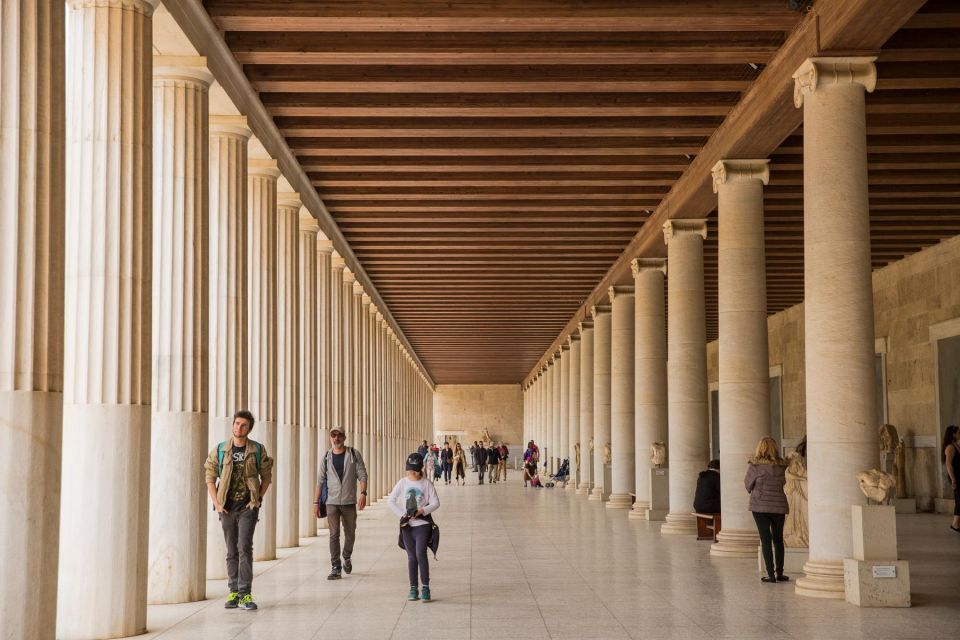
The Parthenon gets about an hour of guided time, which is a generous chunk in a 3-hour tour. That’s important because this is where many tours fail: they skim the one stop that people came for and you end up with mostly walking and quick glances.
Here, the Parthenon visit is guided with attention to what you should look for. You’re not just learning general facts; you’re being shown focal points so the building starts to “make sense” in layers—design, symbolism, and what it communicated to Athens.
If your goal is to understand why these monuments mattered politically, this is the moment where the tour earns its ticket.
Ancient Agora: where democracy was first tested
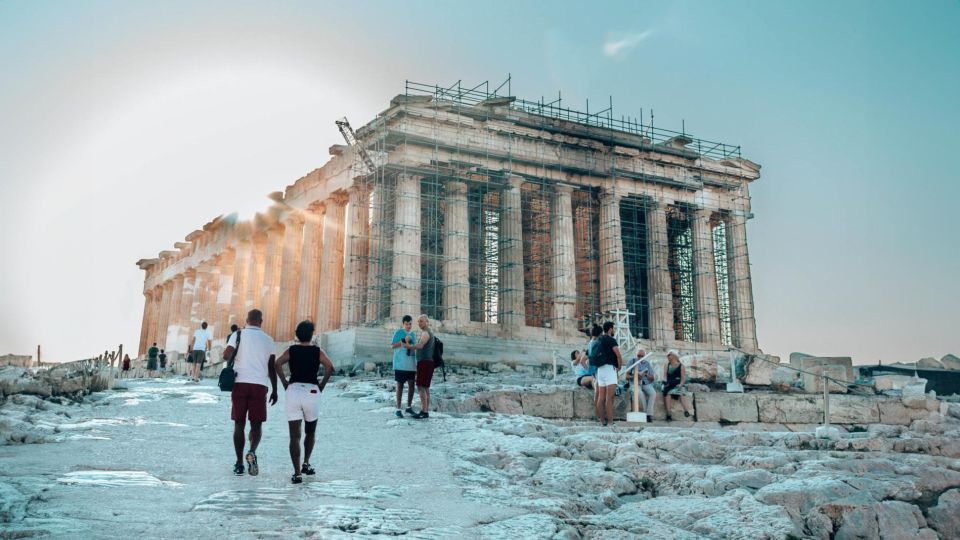
After the Acropolis, you shift to the Ancient Agora, the center of ancient Athens for politics, commerce, and administration. This change of setting is a big deal. The city moves from high-status monuments to everyday civic space.
That’s where the tour’s democracy storyline becomes real. You’ll learn how democracy was supposed to function and what its principles and values were. The tone is also honest: it’s presented as an experiment, with reasons for its eventual failure.
A strong point from the guide style is how they point out what matters in the Agora’s museum and surroundings. For example, Maria’s approach is specifically praised for giving the group clear focal points in the Ancient Agora museum area, which makes your observations much easier during the walk.
Even with only about half an hour here, you’ll likely leave with a better mental picture of how a “people-power” system depended on public spaces and shared civic rituals.



Temple of Hephaestus: daily life meets civic power
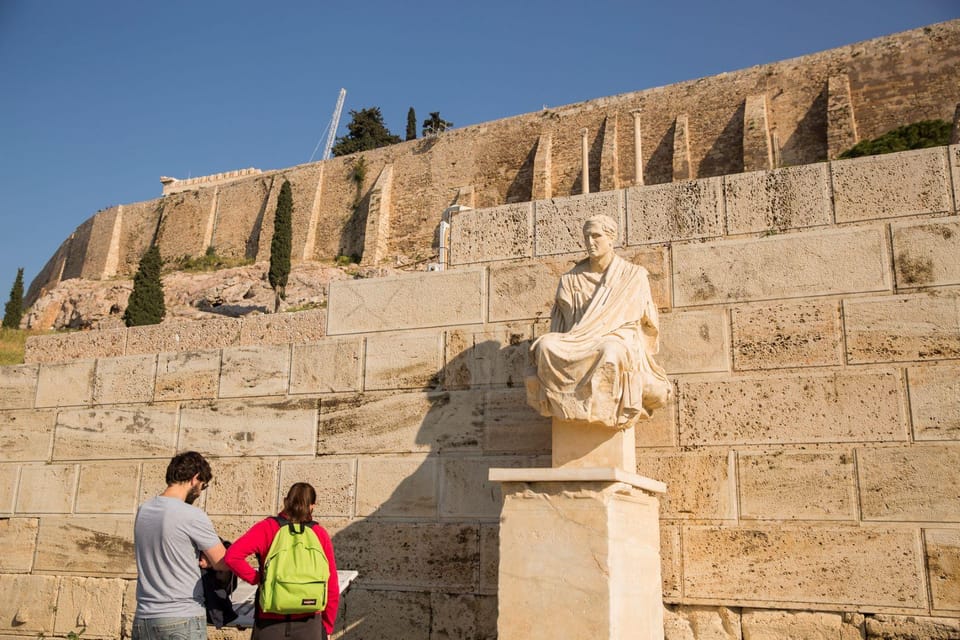
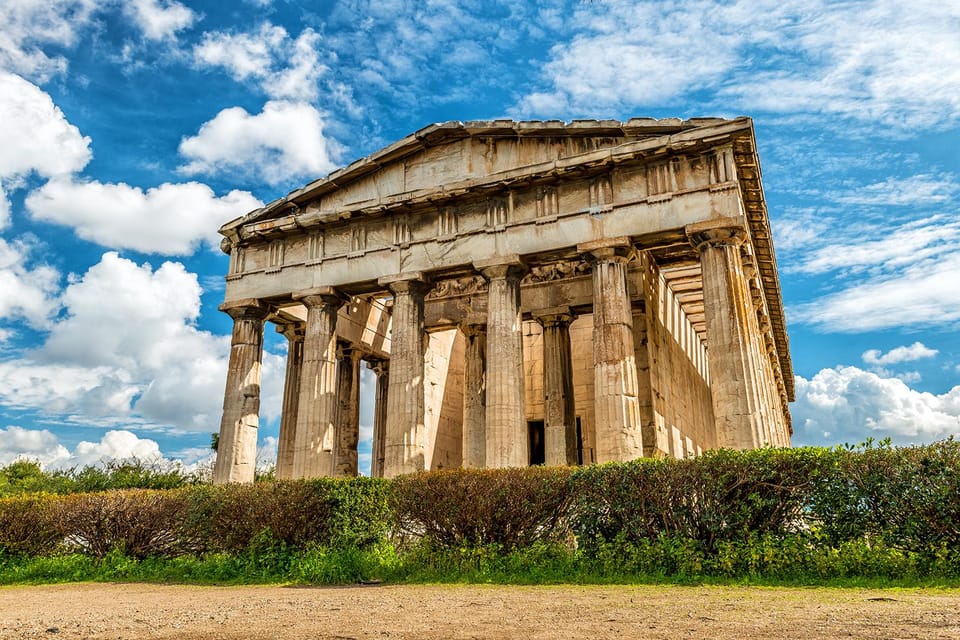
The tour also includes the Temple of Hephaestus for guided time. This stop fits the Agora theme perfectly: religion and civic life weren’t separate worlds.
In plain terms, you get a sense that politics wasn’t only speeches and rules. It lived alongside the normal rhythms of the city. Seeing a respected temple in the middle of civic space helps you understand why democracy wasn’t abstract. It was enacted in the same places people worked, traded, and talked.
It also gives the walk a natural rhythm. After the Acropolis intensity and steep, stone-heavy pacing, this section can feel more “human scale,” even though you’re still on a historical stage.
Comparing ancient and modern democracy: what you’ll actually take away

One of the most useful parts of this tour is the explicit comparison between ancient Greek democracy and contemporary democracy. This isn’t done as a trivia lesson. It’s framed as a set of questions.
What structural elements of the democratic regime still serve society? Where do things often fail? What can we learn by looking at what happened over 2,600 years ago and how the experiment kept evolving?
This is where a good guide can turn stones into a mirror. You start noticing the tension between ideals and real behavior: participation, accountability, and how power is shaped by institutions. The tour’s angle is not just history. It’s a thinking exercise.
If you enjoy political discussion but prefer grounded, concrete examples, you’ll find this approach satisfying.
Value check: is $69 for 3 hours worth it?
At $69 per person for a 3-hour guided experience, the value mostly depends on one thing: whether your ticket option includes entry to the sites or you choose to add/pre-purchase access.
When entry tickets are included (or pre-purchased by the provider), you’re paying for a certified guide plus a tight route through the two most famous historical anchors in Athens. That’s efficient, especially if you want context and don’t want to spend your morning figuring out logistics.
Also, small group walking tours tend to be worth it when your priority is understanding. The guide’s job here is not just to translate labels. It’s to connect each stop to the democracy storyline, and reviews highlight that the guides stay friendly, pedagogical, and responsive to questions.
If you’re trying to minimize costs, you’ll want to confirm exactly what your chosen option covers. If you’re trying to maximize understanding, you’ll probably feel the time is well spent.
Practical comfort notes that make or break the day
This tour is designed as a walking route, and the rules reflect that. Bring comfortable clothes and shoes because you’re spending time outdoors and moving between stops, including the Acropolis area.
You should also plan around the restrictions: baby strollers, pets, and backpacks aren’t allowed. That means you’ll want a smaller day bag (and ideally nothing bulky) so you can keep pace with the group.
The tour also isn’t suitable for everyone: it’s not listed as appropriate for children under 8, wheelchair users, or visually impaired people. If that’s your situation, it’s worth finding an alternative format that can match your needs.
What kind of traveler will love this most?
Book this if you fit at least a couple of these boxes:
- You want Athens beyond the usual photo route.
- You like guided context and clear focal points, especially at the Agora.
- You’re curious about democracy as a system, not just a slogan.
- You enjoy comparing past and present with a critical eye.
You might not love it if you want a quiet, self-paced wander with minimal guide input. This is guided and story-driven, not casual. And if you need extra time at each monument, three hours can feel short—though the Parthenon portion is a generous start.
Should you book the Acropolis & Agora: The Rise & Fall of Democracy tour?
Yes, if you want your Acropolis and Agora visits to come with meaning. The structure is smart: monumental Athens first, civic Athens next, then a comparison that helps you make sense of what democracy relies on and why it can fail.
I’d skip it only if you strongly prefer independent pacing, or if accessibility or age constraints apply. Otherwise, this is a solid choice for anyone who’s tired of sightseeing that stops at famous names.
If you book, do this one thing: go in with the expectation that you’re learning a political story while walking. When you do, the stones don’t just look impressive—they start to explain themselves.
FAQ
How long is the Acropolis & Agora tour?
The tour lasts 3 hours.
Where is the meeting point?
The meeting point can vary depending on the option booked. One listed option is Dionysiou Areopagitou 45.
What sites are visited during the tour?
You’ll visit the Acropolis of Athens area (including Odeon of Herodes Atticus, Propylaea, Erechtheion, Temple of Athena Nike, and the Parthenon) and then the Ancient Agora area (including the Ancient Agora of Athens and the Temple of Hephaestus). The tour finishes at the Ancient Agora of Athens.
What languages are the guided tours offered in?
The live guide speaks French and English.
Is the price per person or per group?
The price is $69 per person.
Are entry tickets included?
Acropolis & Ancient Agora entry tickets are included if you select the option with tickets. You can also have entry tickets pre-purchased for you.
What do I need to bring?
Bring a passport or ID card, plus comfortable shoes and comfortable clothes.
What is not allowed during the tour?
Baby strollers, pets, and backpacks are not allowed. Assistance dogs are allowed.
Who is this tour not suitable for?
It’s not suitable for children under 8 years, wheelchair users, or visually impaired people.
Can I cancel and get a refund?
Yes. Free cancellation is available up to 24 hours in advance for a full refund. There is also a reserve now & pay later option.
You Might Also Enjoy



More Tour Reviews in Athens
- All Day Cruise -3 Islands to Agistri,Moni, Aegina with lunch and drinks included
★ 5.0 · 4,958 reviews