REVIEW · ATHENS
Athens: Acropolis & Plaka Neighborhood Private Walking Tour
Book on GetYourGuide →Operated by WARMPENGUIN · Bookable on GetYourGuide
The Parthenon hits different with a pro guide. I love how the tour is led by a state-accredited licensed archaeologist, so the monuments feel real instead of just marble dates. I also like the pairing of the Acropolis with a Plaka stroll that includes small side streets and artisan shops. One thing to plan for: the Acropolis has steps and uneven surfaces, so it’s not a smooth walk for anyone with mobility limits.
This is a private walking tour, so you’re not herded with strangers. You get short, focused explanations at each key stop, then you move on—fast enough to stay energized, slow enough to ask questions. The tour is also built for different ages and experience levels, which matters when half your group wants myth stories and the other half wants architecture details.
If you’re visiting Athens for the first time, this is one of the cleaner ways to understand what you’re seeing. And if you’re the type who hates wasting time at the ticket window, you’ll appreciate that you can request skip-the-line help after booking (with Acropolis ticket costs handled separately).
In This Review
- Quick hits you’ll feel immediately
- Why a licensed archaeologist makes the Acropolis click
- Meeting at Makrigianni 7 and how the pacing works
- Theater of Dionysus and the ideas behind ancient performances
- Propylaea, Athena, and the sun-glint story
- Temple of Athena Nike: small stop, big meaning
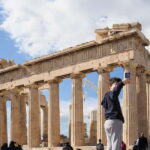
- Parthenon: architecture you can understand, not just admire
- Erechtheion and the Poseidon–Athena conflict
- Odeon of Herodes Atticus: ancient theatre still in use
- Plaka’s layered streets: ancient to Roman to Byzantine
- Optional food stops in Plaka (ideal for families)
- Price and what you’re really buying at $163
- Comfort, shoes, and who should choose this tour
- Should you book this Acropolis and Plaka private walking tour?
- FAQ
- Where is the meeting point?
- How long is the tour?
- Is this a private tour?
- Who will guide us?
- Are Acropolis tickets included?
- Can I get skip-the-line tickets?
- What are the main stops during the Acropolis portion?
- What happens after the Acropolis?
- Is Plaka included for all options?
- Is there an option with food?
- Is the tour suitable for people with mobility impairments?
Quick hits you’ll feel immediately
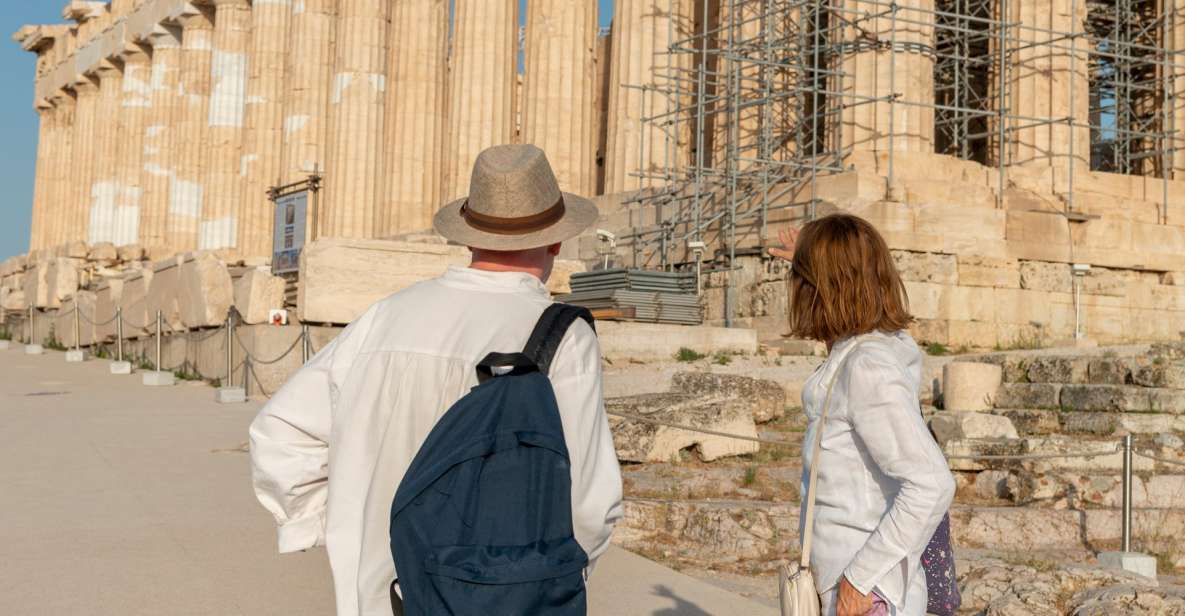
- Licensed archaeologist leadership: you’re walking with someone trained to explain what you’re actually looking at
- Acropolis + Plaka in one outing: you go from the ancient skyline to lived-in neighborhood streets
- Pacing that respects the sun: guides are attentive about keeping you moving and using shaded sides when possible
- Site-by-site context: Dionysus, Propylaea, Nike, Parthenon, and Erechtheion get practical, story-driven explanations
- Plaka continuity across eras: you’ll see layers from ancient Greek through Roman and Byzantine times
- Optional food stops in Plaka: Greek coffee or mountain tea, plus savory bites and sweets for families
Why a licensed archaeologist makes the Acropolis click
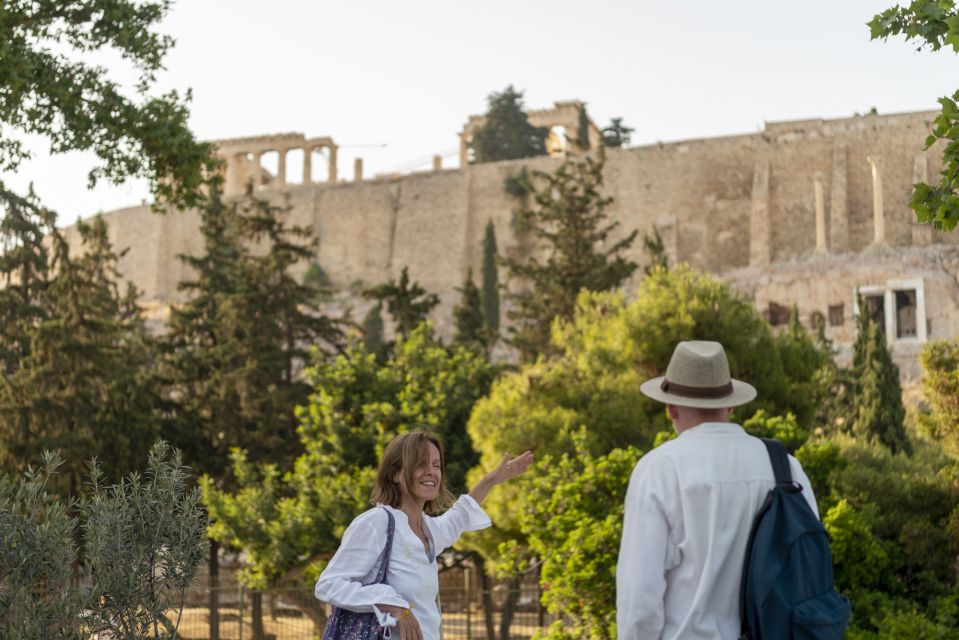
The Acropolis can feel like a checklist when you’re on your own. With a state-accredited archaeologist guiding you, the stops become clues. You’ll learn what certain features were for, why the layout matters, and how the myths tied to each place connect to what’s still visible today.
I especially like how the tour balances big historical themes with small, concrete details. The Theater of Dionysus isn’t presented as just a ruin. It’s framed in terms of performances that happened there roughly 3,000 years ago, and that time anchor helps your brain lock onto the scale. Same idea at the Parthenon: it’s not only beauty, it’s design and purpose explained in human terms.
And because it’s private, the guide can shift tone. Some groups want myth and drama; others want what the buildings communicate. The pace is structured so you still cover the major monuments without turning it into a lecture that drags on.
You can also read our reviews of more walking tours in Athens


Meeting at Makrigianni 7 and how the pacing works
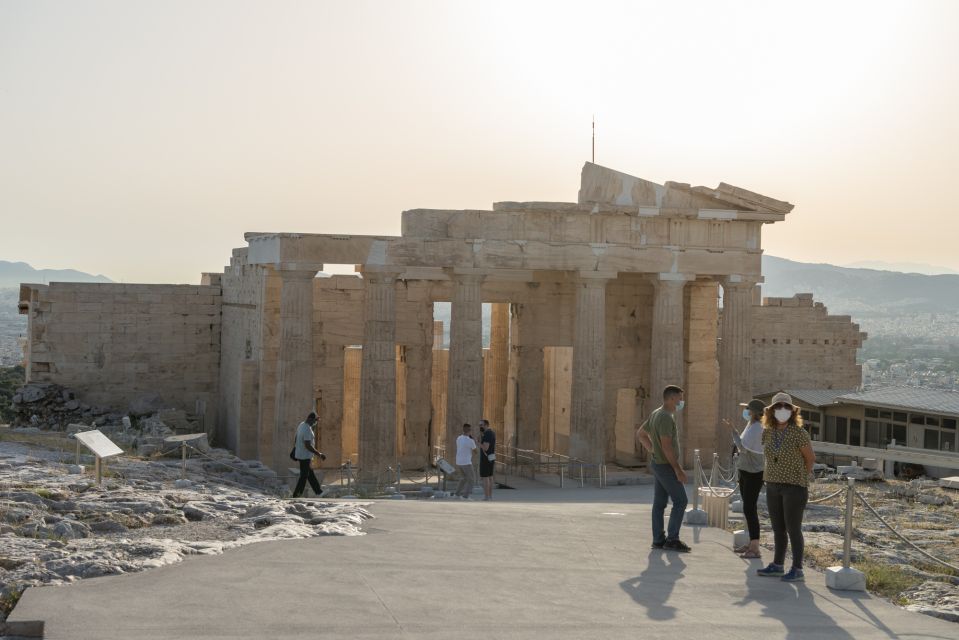
You meet at Makrigianni 7, near the Acropolis Museum. Your guide has a sign with your name, which saves time when you’re arriving with your ticket questions and your sunscreen.
From there, the tour is organized around short guided segments at each highlight. Think of it like walking from one “interpretation moment” to the next. For example, the main Acropolis portion runs about 1.5 hours, then key sites get additional guided time. This structure helps because the Acropolis is huge, and it’s easy to get overwhelmed.
One practical detail I like: guides are attentive to comfort. In past tours, guides such as Eva have been noted for staying aware of movement and shade, so you’re less likely to spend too long baking in full sun while you wait for the next explanation. That kind of “keep it comfortable” thinking makes a real difference over 1.5 to 3 hours.
Theater of Dionysus and the ideas behind ancient performances
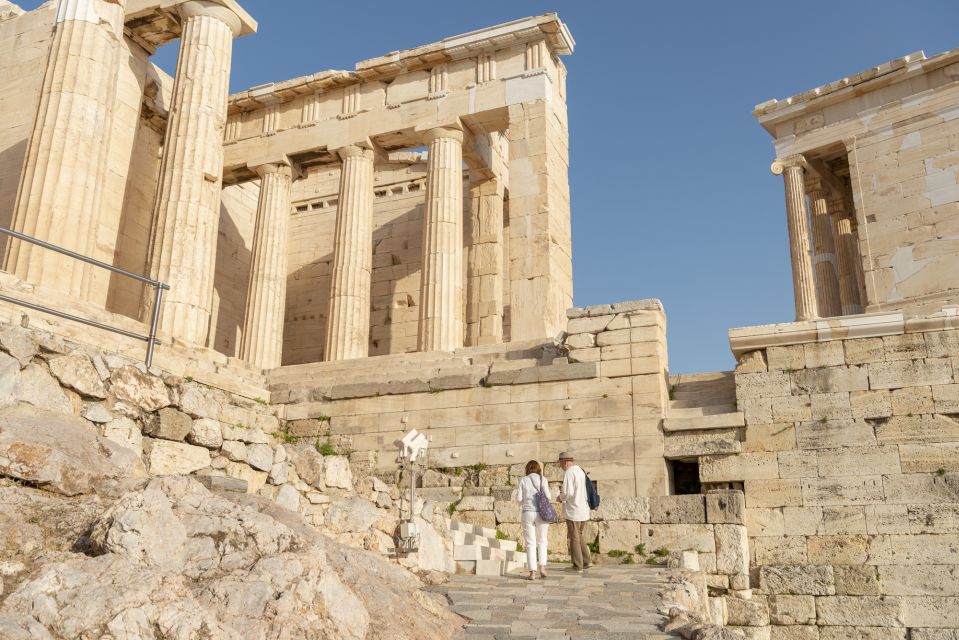
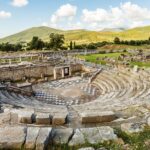
Your Acropolis route starts with the Theater of Dionysus. This spot is famous in a way that’s more than marketing: it connects to some of the plays that were first performed there long ago. When you stand near the space, it becomes easier to picture how audiences experienced theatre, not just read about it later.
You’ll also learn the significance of Dionysus as part of Greek mythology and civic life. Even if you don’t care about theatre, the explanation tends to reframe the whole Acropolis. Suddenly it feels less like a hill with buildings and more like a stage for community identity.
The drawback is simple: even if the guided portion is brief, the Acropolis still requires steady walking and looking uphill/downhill depending on where you stop. Wear shoes you’d trust on uneven stone.
Propylaea, Athena, and the sun-glint story
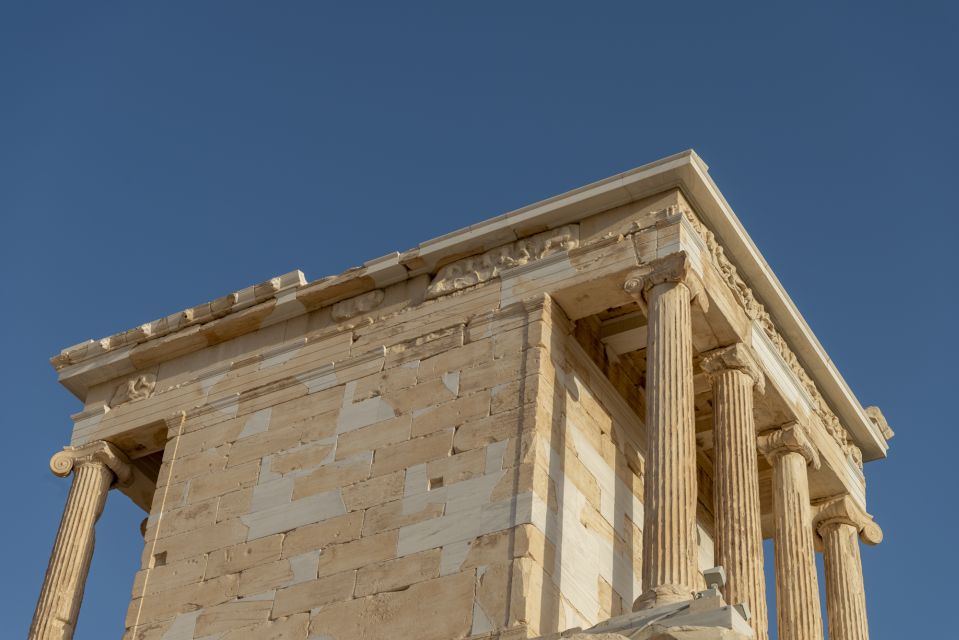
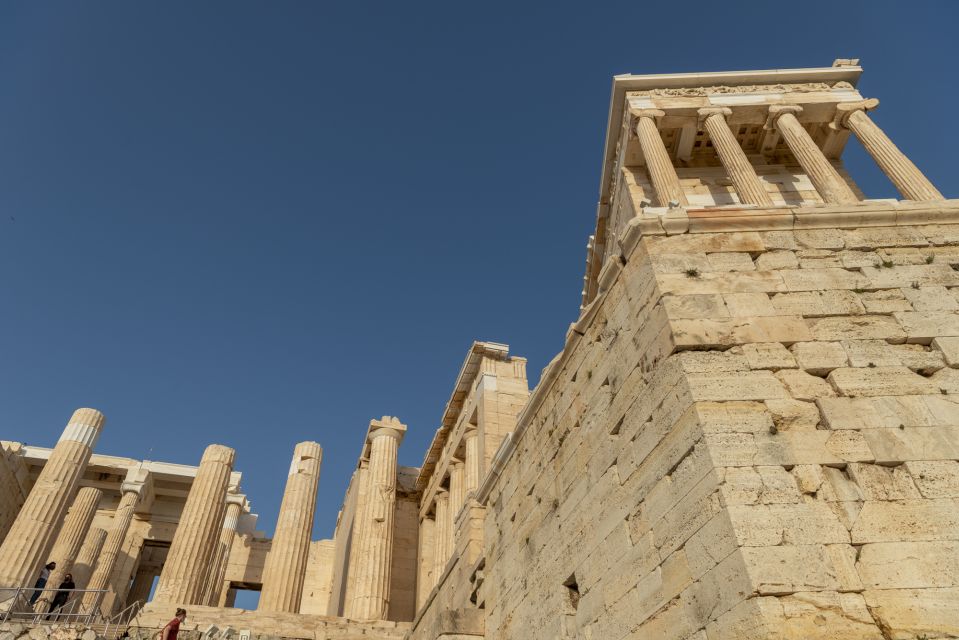
Next up is the Propylaea, the monumental entrance. This is where the tour leans into storytelling. You’ll hear an image-based explanation tied to how the sun would have reflected off elements like bronze on statues—something that helps you understand why the ancient designers cared about sight lines and light.
You’ll also hear about the statue of Goddess Athena that once stood in that area and what sailors might have seen when leaving Athens for voyages across the ancient Mediterranean. That’s a wild mental connection: your visit becomes part geography lesson, part myth.
If you like details you can picture, this stop is a highlight. If you prefer purely technical architecture, ask your guide to point out the practical building logic too—you’ll usually get both when the group has mixed interests.
Temple of Athena Nike: small stop, big meaning
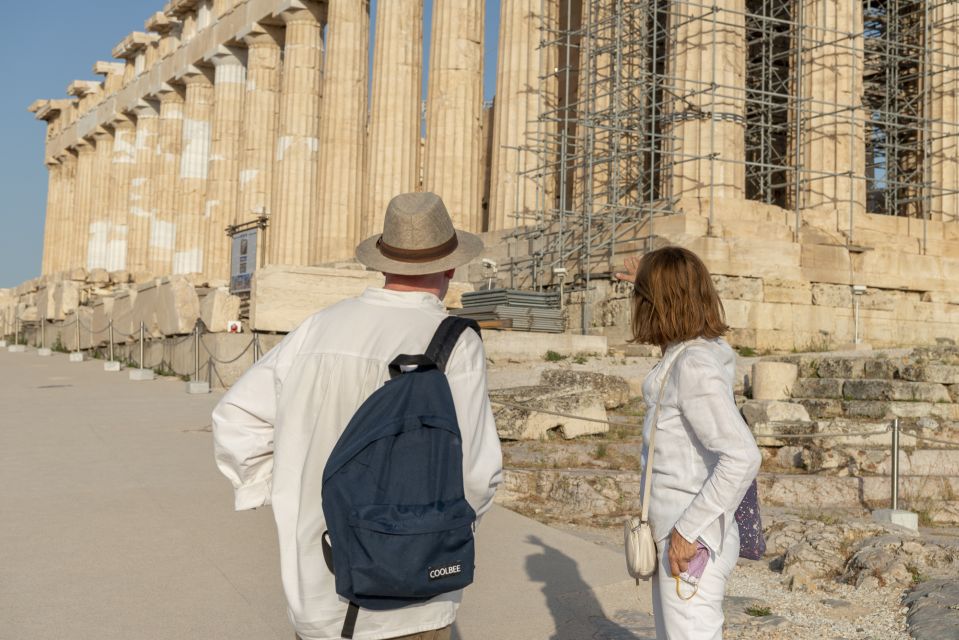
The Temple of Athena Nike is short on time but heavy on story value. You’ll learn what the temple represents and how it ties into the mythology and identity of ancient Athens.
This is a good place to slow down and really look. Even in a compact timeframe, the guide’s role is to direct your eyes: where you’d expect certain visual cues and why this temple mattered enough to be built where it is.
Because the tour keeps moving, you won’t spend forever here. That’s a benefit if you’re trying to see everything without losing momentum, but it also means you may want to take extra photos at the Parthenon and main view zones where there’s more time for lingering.
You can also read our reviews of more private tours in Athens




Parthenon: architecture you can understand, not just admire
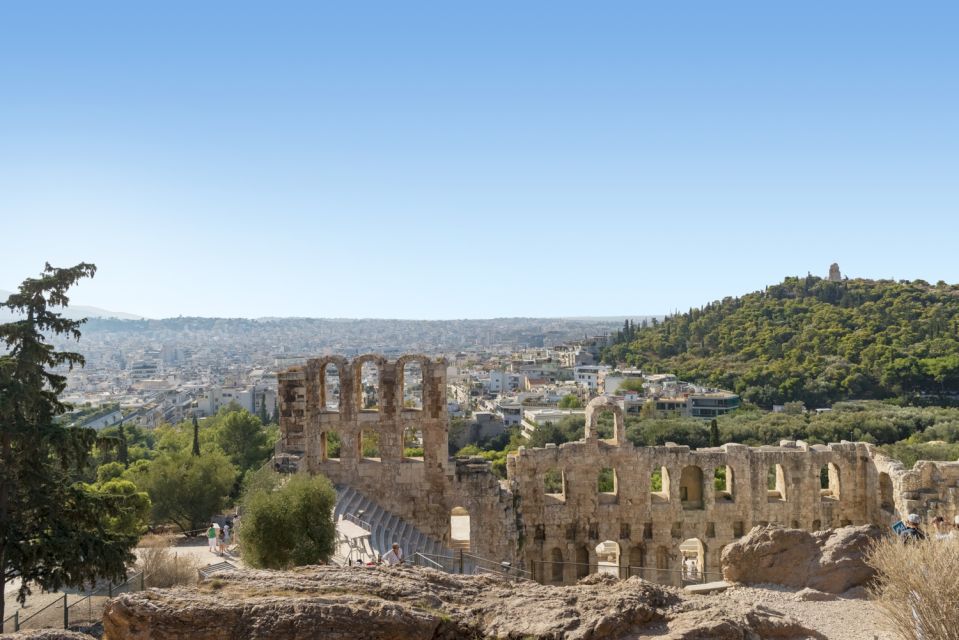
The Parthenon is the obvious star, but the tour’s strength is explaining why it remains so convincing after centuries. You’ll be walked through it as a masterpiece of art and architecture, with myth and cultural context built in rather than dumped as a random side note.
One smart thing about doing this with a licensed guide: you get a clearer sense of what different parts were doing. That turns the Parthenon from a photo into something you can mentally map. The end result is a stronger sense of place—like you could point to where you are and explain what you’re looking at.
In your time here, you’ll also get panoramic views over Athens stretched out below. Even short explanation segments are more memorable when you can connect them to what you see from the hilltop.
Erechtheion and the Poseidon–Athena conflict
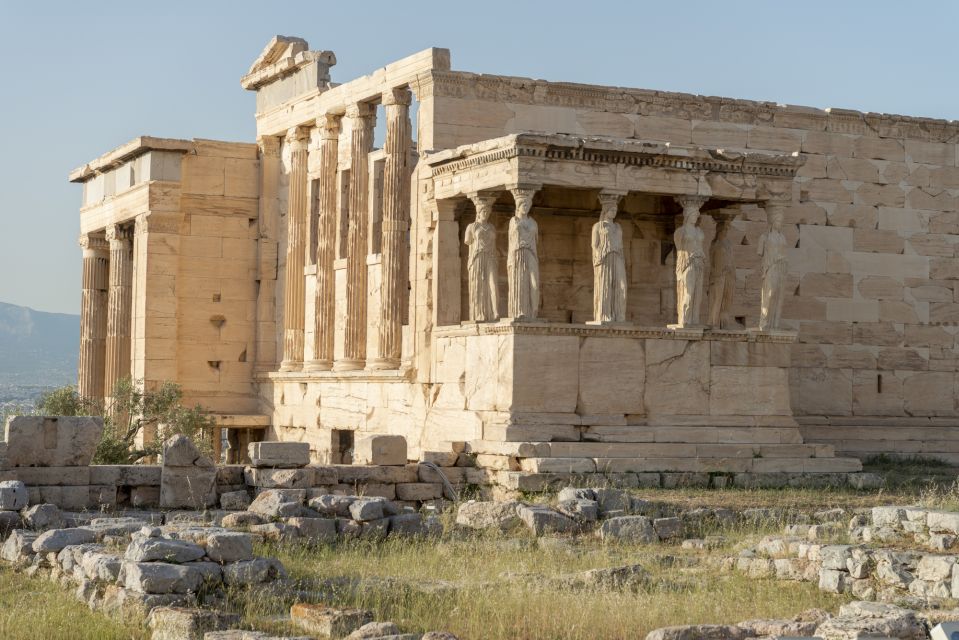
Then you’ll reach the Erechtheion, tied to one of the most famous myth struggles on the Acropolis: the contest between Poseidon and Athena. The guide helps you connect the story to the physical site, which is exactly what makes this stop worth leaving your phone camera on pause for a moment.
Myth can become vague when it’s only told as text. But when you’re standing where the myth is anchored, it feels more like a cultural argument—who gets to be the city’s patron, and why.
If you’re touring with kids, this is usually the moment where attention stays good, because the story has conflict, stakes, and a clear characters-against-characters feel.
Odeon of Herodes Atticus: ancient theatre still in use
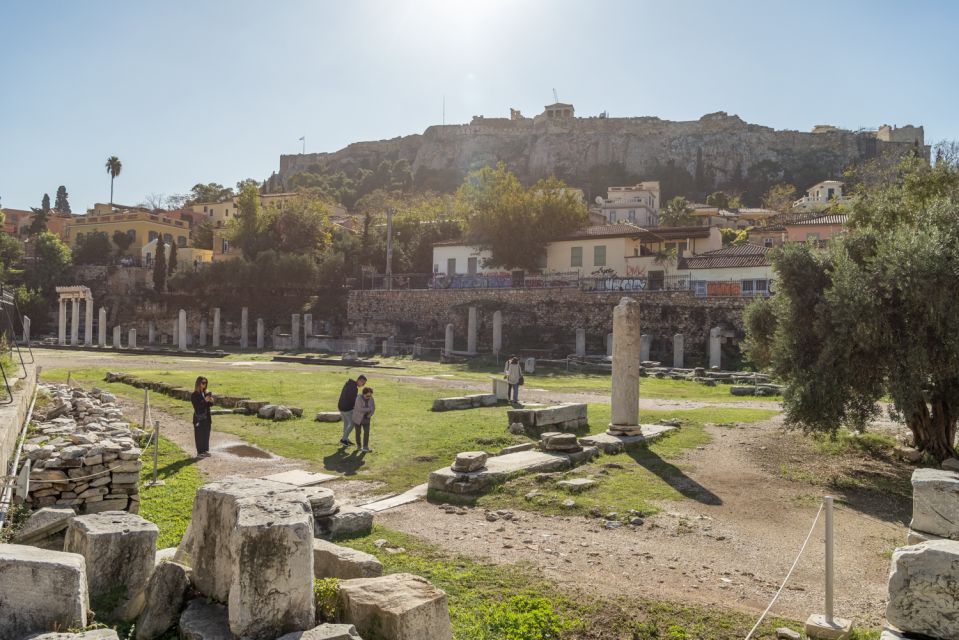
After the major monuments, the tour descends through olive trees to the Odeon of Herodes Atticus. This stop hits differently because it’s not only about ruins. It’s described as a theatre that’s still used in summer.
That detail matters. You’re not just looking backward; you’re seeing how the shape of performance space carries forward. The guide’s explanation helps you notice how an old structure can still function in modern scheduling and audience life.
This is also a natural “breather moment” in the route. The tour keeps moving, but the setting shifts. It’s a change from the high-intensity monument area to a quieter, more human scale space.
Plaka’s layered streets: ancient to Roman to Byzantine
After the Acropolis, the tour brings you down into Plaka, one of Athens’ most story-rich neighborhoods. The key idea you’ll get is continuity. This area has been continuously inhabited since ancient times, and that means the streets you walk today sit above a long sequence of eras.
You’ll pass through small side streets and pretty houses and see monuments connected to ancient Greek, Roman, and Byzantine periods—spanning roughly 3,000 years of history. The guide helps you spot these layers rather than letting it turn into a general sightseeing blur.
I like how the Plaka segment is practical. You’re guided through “prettier” lanes, but also toward off-the-path corners and markets where you can observe local rhythm: artisan jewelry, local eateries, and the mix of authentic products with more standard souvenir stalls.
The tour’s value here is interpretation. Your guide doesn’t just point and name. They explain local history and culture as you walk, so it feels like you’re getting bearings in the neighborhood, not only checking boxes.
Optional food stops in Plaka (ideal for families)
If you choose the food option, you’ll add planned tasting moments in Plaka. The tour includes classic Greek choices such as Greek coffee or mountain tea, souvlaki, or traditional savory pies, plus sweet or cake delicacies.
This isn’t just a snack break. It’s a way to keep momentum and make the Plaka part more memorable, especially for families or anyone who gets restless on long walks. Food turns the neighborhood into something you can sense and compare, and it also slows the pace just enough to enjoy the shops and side streets.
One note: food options only come with the selected option, not by default. If you want it, pick it ahead of time.
Price and what you’re really buying at $163
At $163 per person, this isn’t a bargain-basement deal. The value comes from a few concentrated things happening at once:
- A private group format: you’re paying for attention and pacing control, not seat time on a bus.
- A state-accredited licensed archaeological guide: you’re getting site interpretation from someone trained to explain the monuments you’re standing next to.
- Skip-the-line help available by request: you’re not guaranteed it automatically, but it’s an option to request after booking.
- A full route: you cover major Acropolis highlights plus Plaka with guided context, and that’s harder to self-assemble without spending time figuring out what matters.
There’s also flexibility. If you prefer a shorter visit, there’s an Acropolis-only option listed at about 90 minutes, which can be a smart choice when you have a packed Athens day and just want the core monuments with extra time for photos and views. If you’re staying longer, the Plaka extension plus food can make the afternoon feel complete rather than rushed.
Comfort, shoes, and who should choose this tour
This is a walking tour with steps and uneven surfaces at the Acropolis. The tour data is clear that it isn’t suitable for people with mobility impairments. Even if you can walk, you’ll want solid footwear and a plan for sun and heat.
If you’re coming with a mix of ages or interests, this tour can work well. The guide is set up to pitch information for seasoned history lovers while still telling stories in a way that can land for younger “junior archaeologists.” That balance is hard to replicate on your own, especially if you want to keep moving.
If you’re the kind of visitor who likes to stop for questions, this private format helps. You can ask why something was built a certain way, what a myth might mean in civic terms, or how the timeline connects to what you see.
Should you book this Acropolis and Plaka private walking tour?
Yes, I’d book it if you want the Acropolis explained by someone trained to interpret the site, and you also want Plaka without losing time to aimless wandering. It’s a strong fit for first-timers, families (especially with the food option), and people who want a single outing that covers both monuments and neighborhood character.
Skip it or choose a different style if your priority is maximum time sitting in the sun with self-guided photos, or if mobility limitations make uneven stone and steps a problem. And if you hate any ticket logistics at all, remember that the Acropolis ticket costs aren’t included, though skip-the-line help can be requested.
In short: this tour is a practical way to see the big names of Athens and actually understand them as you walk.
FAQ
Where is the meeting point?
The meeting point is Makrigianni 7, Athina 117 42, close to the Acropolis Museum. Your guide will have a sign with your name.
How long is the tour?
The duration is listed as 1.5 to 3 hours, depending on the option you choose and availability.
Is this a private tour?
Yes. It’s a private tour exclusive to your group.
Who will guide us?
The tour is led by a licensed archaeological expert. The guide languages listed are German, English, Italian, and Greek.
Are Acropolis tickets included?
No. Acropolis ticket costs are not included, and you’re kindly asked to ensure you have admission tickets before your tour.
Can I get skip-the-line tickets?
Skip-the-line tickets are not included, but you can purchase them on request after booking.
What are the main stops during the Acropolis portion?
The tour includes guided stops at the Acropolis highlights such as the Theater of Dionysus, Propylaea, Temple of Athena Nike, the Parthenon, and the Erechtheion, plus the Odeon of Herodes Atticus.
What happens after the Acropolis?
You finish the Acropolis portion, then descend and continue with a guided walk through the Plaka neighborhood.
Is Plaka included for all options?
Plaka is included if you select the option that includes a guided tour of the neighborhood. There’s also an Acropolis-only option.
Is there an option with food?
Yes. If you select the food option, traditional food tastings are included, such as Greek coffee or mountain tea, souvlaki or savory pies, and sweets or cake.
Is the tour suitable for people with mobility impairments?
No. It’s not suitable for people with mobility impairments due to steps and uneven surfaces at the Acropolis.
You Might Also Enjoy

More Walking Tours in Athens

More Tours in Athens


More Tour Reviews in Athens
- All Day Cruise -3 Islands to Agistri,Moni, Aegina with lunch and drinks included
★ 5.0 · 4,958 reviews